White Rabbit of Inaba

Tradition: Japanese Mythology
Alternative Names: Inaba no Shiro Usagi, 因幡の白兎, Hare of Inaba
Category: Rabbit


The Myth

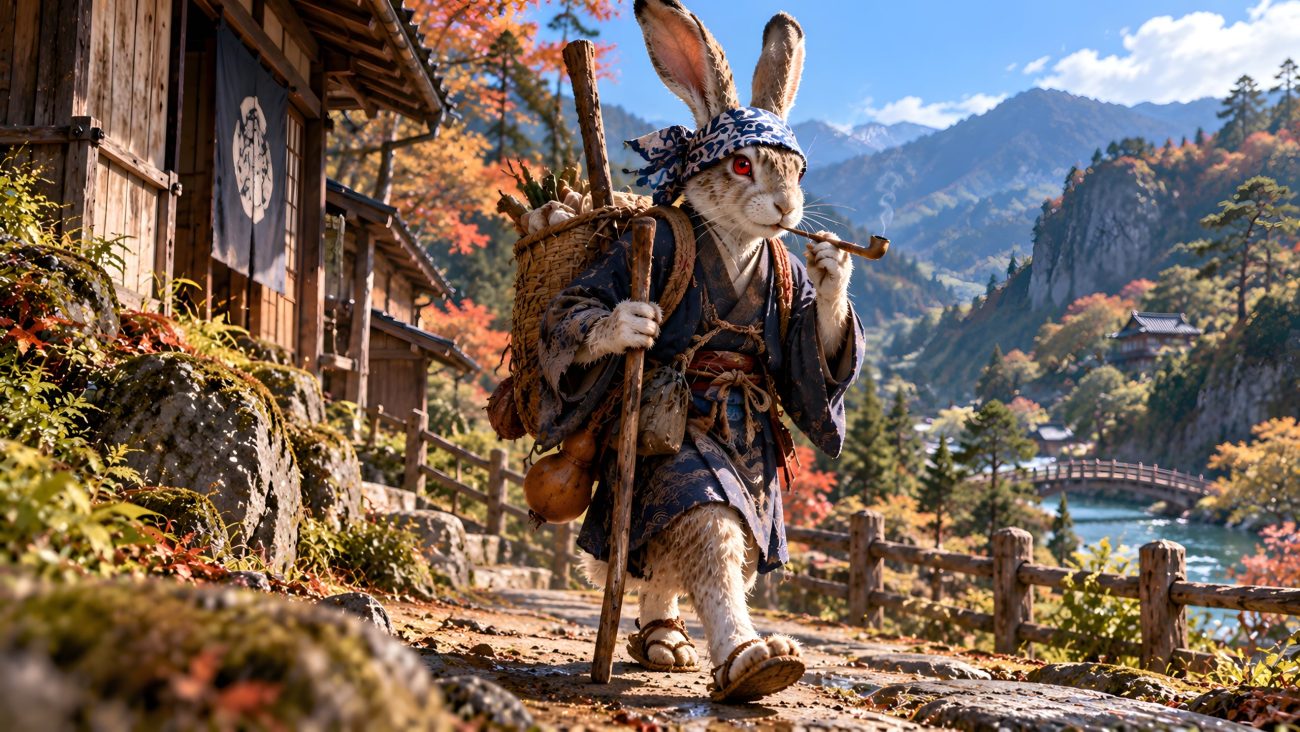
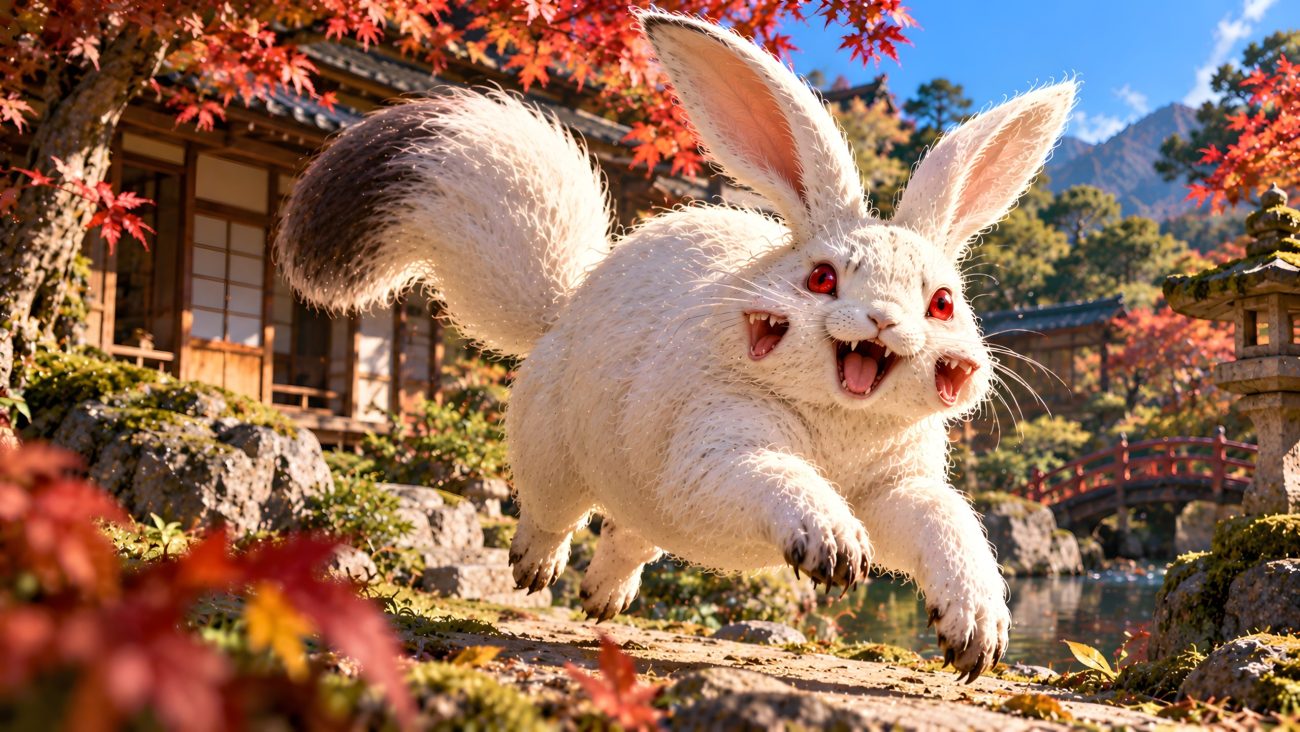
The White Rabbit of Inaba is a clever white hare who tricks sea creatures into forming a bridge across the sea. After convincing them to line up, the rabbit hops across their backs. Just before reaching land, it boasts that it has deceived them. Enraged, the sea creatures tear off its fur, leaving it wounded and in pain.

The rabbit encounters several gods who cruelly advise it to bathe in seawater and let the wind dry its body, making its suffering even worse. Eventually, it meets Ōnamuji, also known as Ōkuninushi, who kindly tells it to wash in fresh water and cover itself with cattail pollen. The treatment heals its wounds, restoring its fur.

Grateful for this kindness, the rabbit predicts that Ōnamuji will marry the beautiful goddess Yakami-hime, despite his many brothers competing for her hand. The prophecy comes true, and the rabbit becomes associated with healing, divine guidance, and matchmaking.


Sources

“Hare of Inaba.” 新版TYZ 妖怪図鑑 (New TYZ Yokai Encyclopedia). https://tyz-yokai.blog.jp/archives/1084458606.html


Lepus Cornutus

Tradition: French Mythology
Alternative Names: Horned Hare, Horned Rabbit, Lepus Cornutus
Category: Rabbit


The Myth

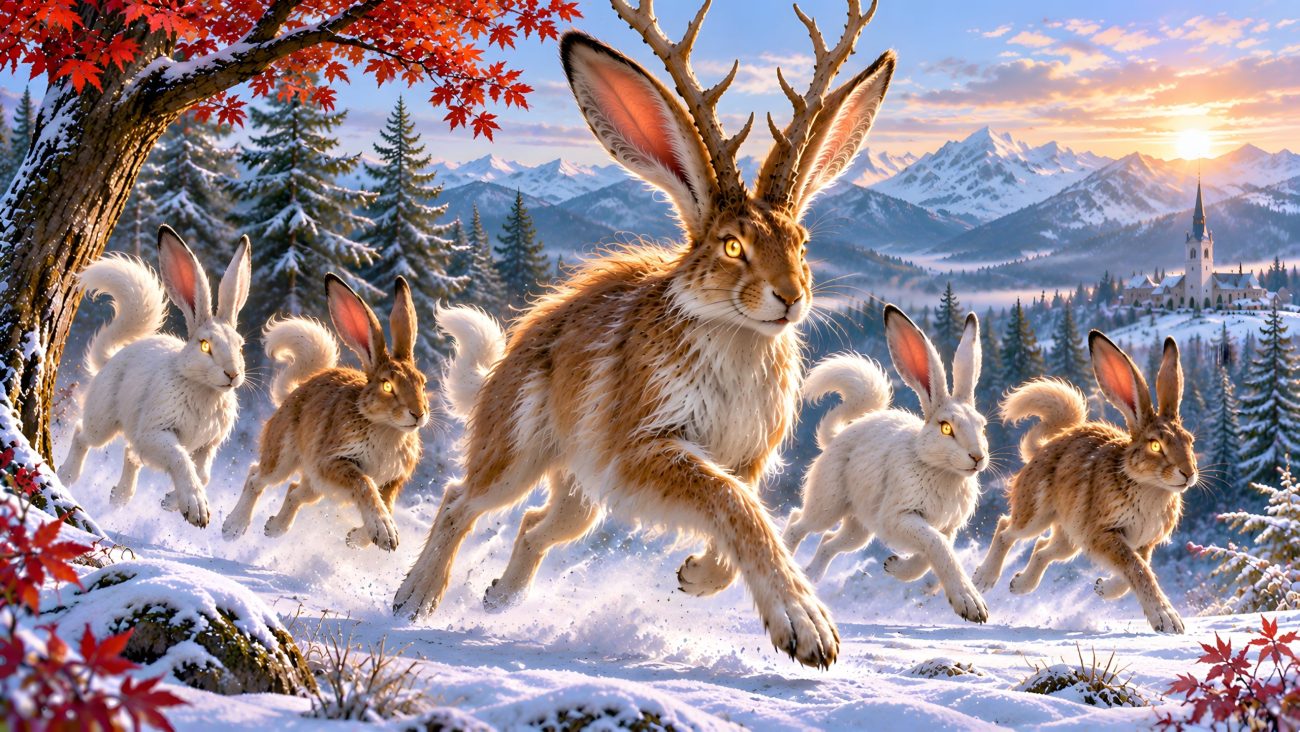
The Lepus cornutus, meaning “horned hare,” was a supposedly real animal described in European writings from the medieval period through the eighteenth century. Although now generally regarded as fictional, it appeared in natural history works alongside genuine animals. Medieval and Renaissance authors sometimes treated horned hares as real creatures, while others used them in humorous or fantastical writing, including François Rabelais in Gargantua and Pantagruel. Conrad Gessner’s Historiae animalium provided an early description of the horned hare as a real animal, claiming that it lived in Saxony.

The creature continued to appear in natural history publications over the following centuries. John Jonston included an illustration in his Historiae naturalis de quadrupetibus libri (1655), and the image was subsequently reused in other works. Gaspar Schott discussed and illustrated the horned hare in Physica curiosa (1662). Gabriel Clauder published an account of a supposed sighting in 1687, while Jacob Theodor Klein included another illustration in Summa dubiorum (1743). These repeated descriptions and images helped sustain the belief that the unusual animal might exist.

By the late eighteenth and early nineteenth centuries, naturalists had largely rejected the horned hare as a genuine species. Pierre Joseph Bonnaterre’s Tableau encyclopédique et méthodique (1789) was apparently among the last major scientific works to present it as real, although an 1817 natural history dictionary still considered the possibility that it might be an exceptionally rare animal. Its origins remain uncertain: the reports may have resulted from imaginative invention or fabricated specimens, while another theory suggests that some sightings involved hares affected by Shope papillomavirus, which can produce horn-like growths on the skin.


Sources

“Lepus cornutus.” Wikipedia: The Free Encyclopedia. Wikimedia Foundation. https://en.wikipedia.org/wiki/Lepus_cornutus


White Hare

Tradition: Swiss Mythology
Alternative Names: White Hare, White Rabbit of Purgatory
Category: Rabbit


The Myth

An old Swiss legend tells of a farmer who secretly diverted his neighbour’s water supply by digging into its channel. The wrongdoing led to a bitter quarrel and an unjust judgment, leaving the dispute unresolved.

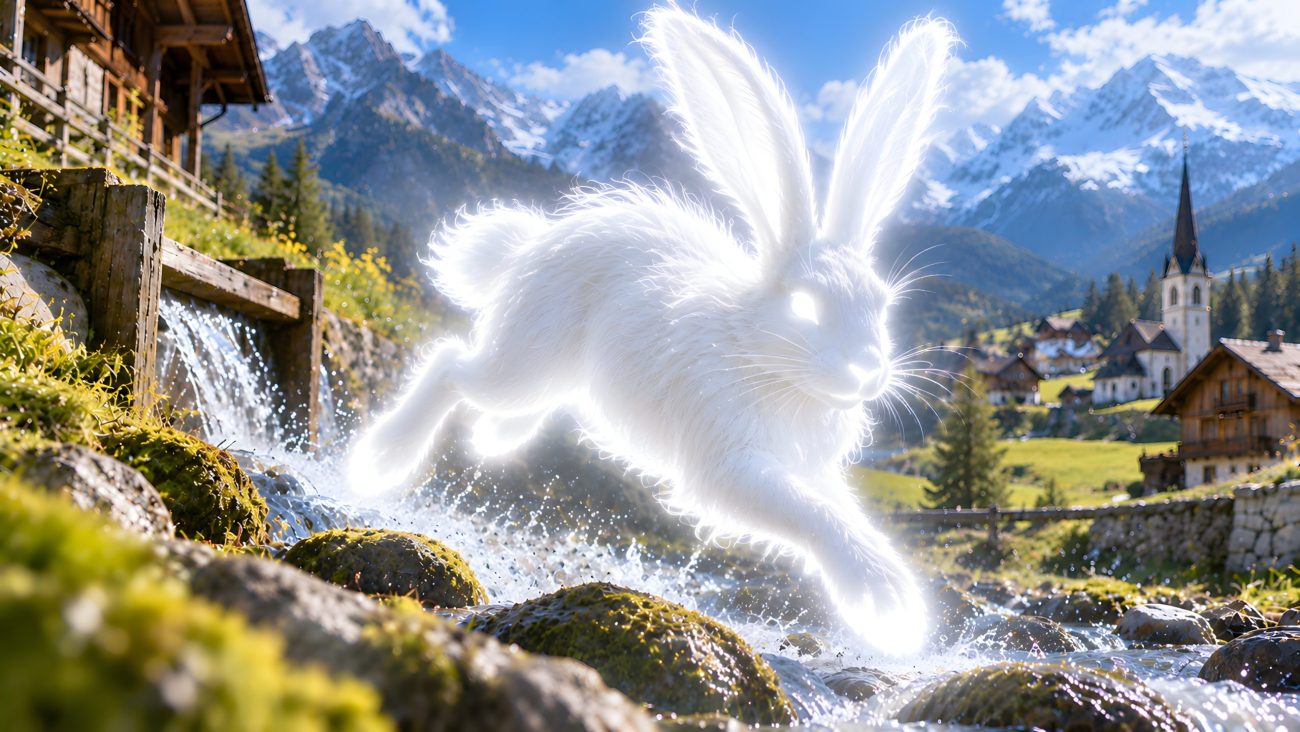
After the farmer’s death, a white hare began appearing at night, reminding people of the injustice he had committed. The apparition continued until the soul of the deceased farmer was redeemed from purgatory.

The tale presents the white hare as a supernatural reminder of wrongdoing that remains unsettled even after death. Its repeated appearances connect the natural world with the fate of the dead, suggesting that injustice must ultimately be acknowledged and atoned for before a troubled soul can find release.


Sources

“Werwolf Born” (Werewolf of Born). SAGEN.at. https://www.sagen.at/texte/sagen/schweiz/solothurn/Werwolf_Born.html


Bohemian Rabbit

Tradition: Czech Mythology
Alternative Names: Holy Deer, Supernatural Hares
Category: Rabbit


The Myth

Legends from the Bohemian Forest in the Czech Republic tell of supernatural animals encountered during sacred times of the Christian calendar. One story takes place shortly after the Swedish period, when a miller and his companion went poaching on Palm Sunday. Following a deer’s tracks into a forest, the miller declared that the animal would have to return. He cut a small heart-shaped piece from the right track and laid it down facing the opposite direction, then the two men hid behind some bushes. After the time it takes to recite two Lord’s Prayers, the stag returned, carrying a shining cross between its antlers. The poachers dared not raise their rifles against the holy animal. Instead, they ran to the church and never hunted deer again.

Another tale concerns Lenz of Kohlheim, who went hunting on a holy night. He was suddenly surrounded by a herd of strange hares. One had crooked horns, another possessed a long tail, and others had enormous, glowing eyes. Thinking the creatures unusual, Lenz shot one and placed it in his hunting bag. As he prepared to return home, the other hares emerged from the bushes and ditches, pursuing him while calling, “Gabriel, where are you?” The captured hare answered from inside the bag, “In there! In there!” The others then called for “Langöhrl” to join them. Terrified, Lenz threw away both the bag and the hare, abandoned his gun, and fled toward the village.

The following day, churchgoers discovered that Lenz’s rifle had been completely bitten apart and eaten away. The tale presents the hares as uncanny beings whose strange appearances and supernatural powers make hunting them dangerous, particularly during a sacred night. Together, the stories warn against hunting at holy times and portray certain animals as manifestations of sacred or otherworldly forces.


Sources

“Heilige Zeit” (Holy Time). SAGEN.at. https://www.sagen.at/texte/sagen/tschechien/watzlik/heiligezeit.html


Lagopus

Tradition: Greek Mythology, Roman Mythology, Italian Mythology
Alternative Names: Hare-Footed Ptarmigan, Lagopus
Category: Rabbit


The Myth

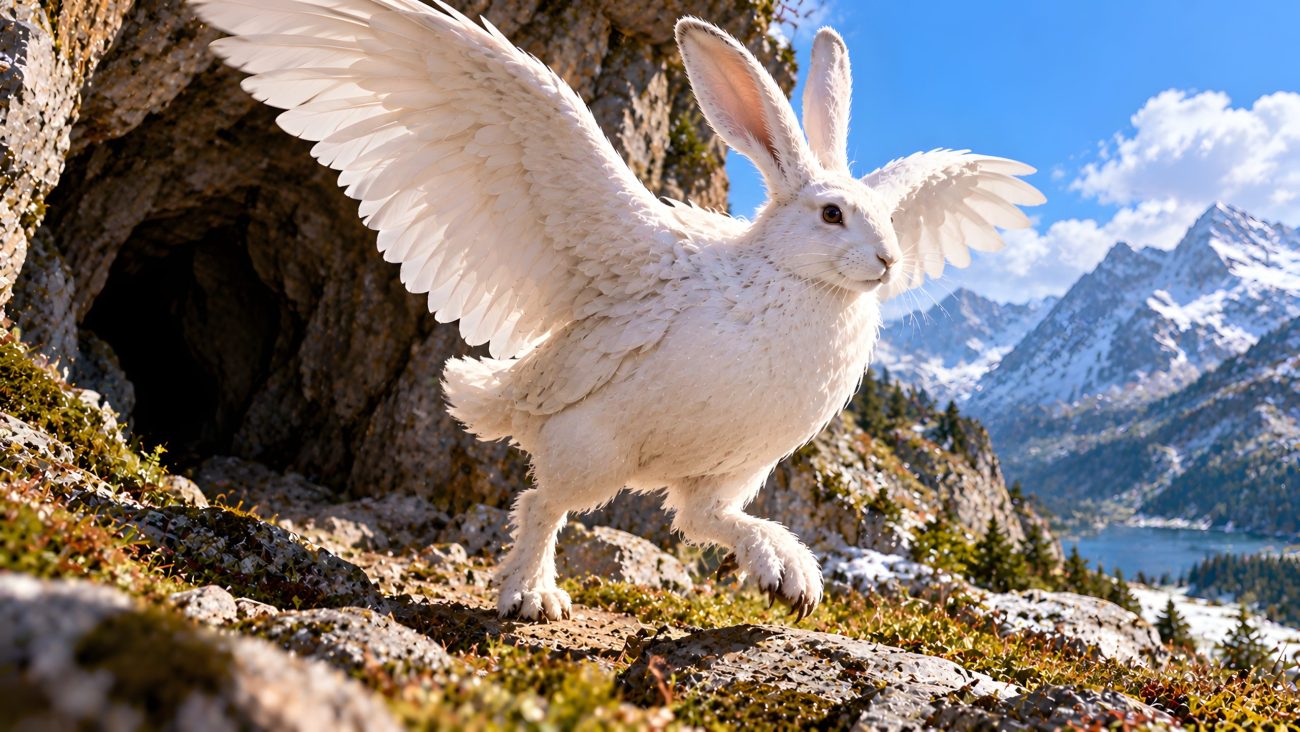
According to Pliny the Elder, the lagopus, whose name means “hare-foot,” is a bird about the size of a pigeon, entirely white, with feet covered in hair resembling those of a hare. Its flesh is considered delicious, but the bird cannot be tamed or kept outside its native habitat. Pliny also states that it putrefies rapidly after being killed.

Thomas de Cantimpré misinterpreted Pliny’s reference to the bird’s native land, concluding instead that the lagopus does not feed in the open air. From this, he reasoned that it must carry its food into a cave to eat. Albertus Magnus extended this interpretation further, deducing that the bird could not fly well.

Although the original description mentions only hare-like feet, later depictions often give the lagopus a hare’s head as well. It is frequently illustrated standing in front of a cave, reflecting the medieval interpretations of its feeding habits.


Sources

“Lagopus.” A Book of Creatures. https://abookofcreatures.com/?s=Lagopus


Aka Usagi

Tradition: Japanese Mythology
Alternative Names: 赤い兎, Red Rabbit, Red Hare
Category: Rabbit


The Myth

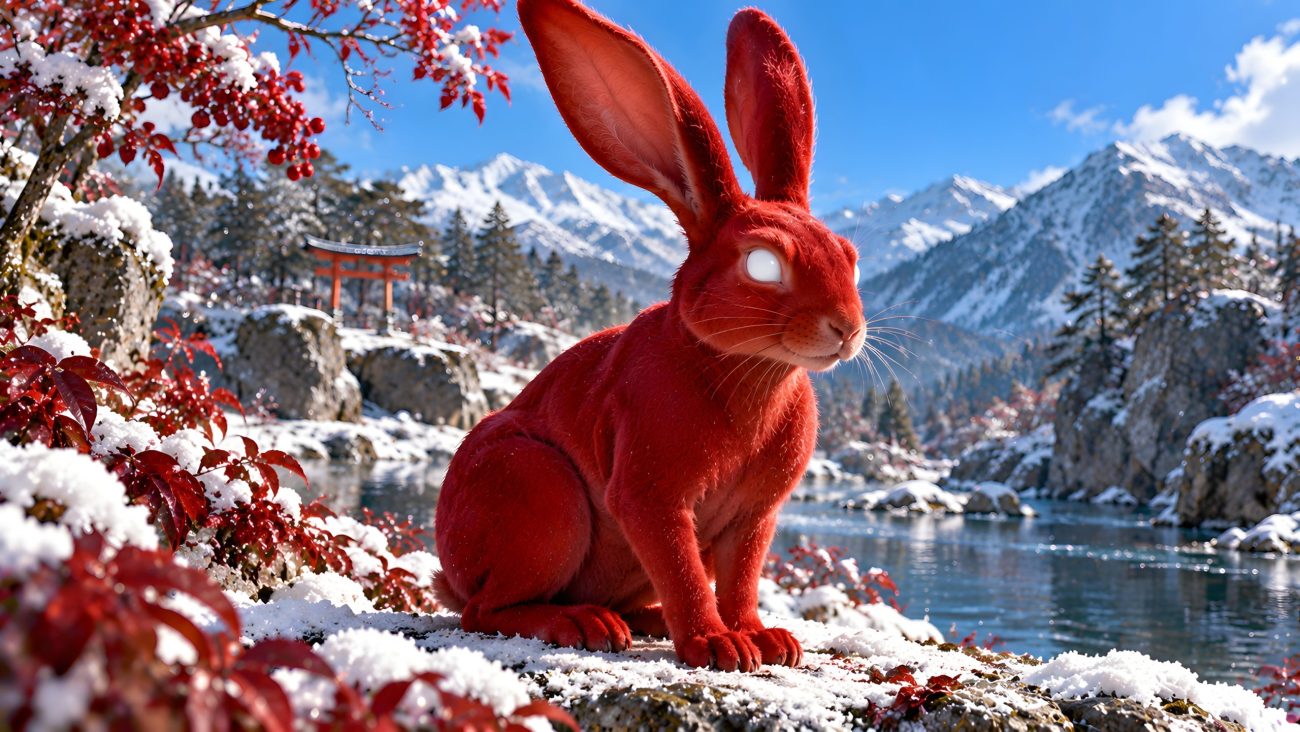
Aka Usagi, meaning “red rabbit,” appears in traditional tales from Narageshita, Kaminoyama, in Yamagata Prefecture, Japan. In one story recorded in Satō-ke no Mukashibanashi (1982), a man hunting rabbits near a mountain stream encounters a red rabbit that darts away at remarkable speed. He pursues it until it disappears into a small thicket in an open field. Using a long wooden tool called a koshikibera, normally used to clear away snow, he digs into the spot where the rabbit vanished. Beneath the snow, he discovers a human corpse.

The dead person is identified as someone from Aioi who had previously gone missing. However, when local people hear about the discovery, they urge the finder to keep silent and avoid becoming involved. They insist that the truth will become apparent when the snow melts in spring. The account was reportedly related as a true incident by the original storyteller, presenting the red rabbit as an uncanny apparition that leads a person to a hidden death.

Another local tale portrays the red rabbit as a messenger of the gods. A white rabbit fleeing from a bear jumps into a field of wild strawberries, staining its fur red. Other animals mistake the transformed rabbit for a divine messenger and begin to revere it. During summer, however, the rabbit bathes in water and its fur returns to its original white colour. Once its disguise disappears, the animals no longer regard it with the same reverence, and its apparent divine authority is lost.


Sources

“Aka-usagi.” 新版TYZ 妖怪図鑑 (New TYZ Yokai Encyclopedia). https://tyz-yokai.blog.jp/archives/1084458407.html


Nami Usagi

Tradition: Japanese Mythology
Alternative Names: 波兎, 波に兎, 波乗り兎, Hato, Wave Rabbit, Rabbit Riding the Waves
Category: Rabbit


The Myth

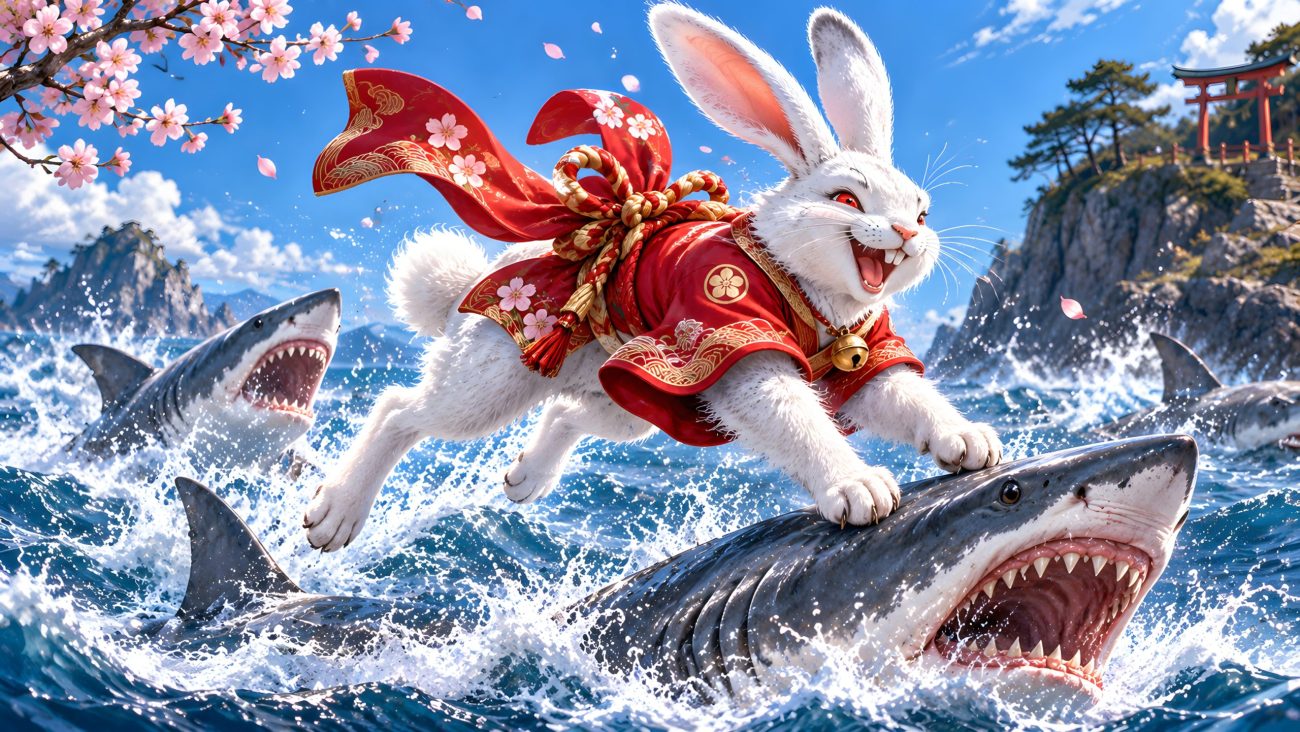
Nami Usagi, meaning “wave rabbit,” is a traditional Japanese artistic motif depicting a rabbit leaping across waves. Also known as Nami ni Usagi or Naminori Usagi, the design became established during the early modern period and has been used as an auspicious decoration on shrine and temple carvings, artworks, household objects, and architectural ornaments. Its origins are uncertain, and several interpretations have developed over time.

One explanation connects the motif with protection against fire. Rabbits riding waves were frequently depicted on roof ornaments, storehouse decorations, and clothing worn during fires, suggesting that the design may have been intended to ward off flames. In Miyoshi, Hiroshima Prefecture, a traditional ceremony known as Ushi Kuyō involves placing a decorated saddle called Tama Usagi on a cow used for puddling rice fields. Its rabbit-and-wave design has been associated with the rabbit as a deity of fertility and agricultural abundance.

Art historians commonly connect the motif to the Noh play Chikubushima. In the play, a courtier travelling across Lake Biwa describes the beauty of trees reflected in the water and moonlight shimmering across the lake, comparing the scene to a rabbit running over the waves. The image refers to the Jade Rabbit associated with the Moon, whose reflection appears to move across the water. The poet Yosa Buson similarly compared moonlight on Lake Suwa to a rabbit crossing the lake. These poetic images may have inspired artists to represent the moonlit waves as a rabbit leaping across them.

Other interpretations link the motif to the myth of the White Hare of Inaba, in which a hare crosses the backs of crocodiles or wani. The scholar Nishida Naoyoshi suggested that the original design may have depicted a rabbit crossing the backs of these creatures before gradually changing into a rabbit riding waves. A further connection appears in a shrine tradition from Yazu, Tottori Prefecture, concerning Dōso Shirousagi Daimyōjin, or White Hare Shrine. According to its origin story, a white hare guided the sun goddess Amaterasu to Mount Reisen and was subsequently worshipped as a local guardian deity. The hare was also regarded as the sacred manifestation of Tsukuyomi, the Moon deity, and rabbit-and-wave carvings found at shrines throughout the region may be connected with this tradition.


Sources

“Namiusagi.” 新版TYZ 妖怪図鑑 (New TYZ Yokai Encyclopedia). https://tyz-yokai.blog.jp/archives/1084424021.html

Usofu-Usagi

Tradition: Japanese Mythology
Alternative Names: 嘘ふ兎, The Lying Rabbit, The False Rabbit, Demon of the Wild Rabbit
Category: Rabbit


The Myth

Usofu-Usagi, meaning “lying rabbit” or “false rabbit,” is a supernatural creature described in Kijidan, a collection of strange tales. The story concerns Kimura Sodayū, a man living in Kamishinmachi, in the mountains near Kanazawa. One night, voices called out to him from outside his house, warning that someone had repeatedly been lurking around his home and spreading lies. Sodayū went outside to investigate, but found nobody. After waiting on his veranda, he heard the mysterious visitor approaching again from the mountain behind his house.

Following the voice through the darkness, Sodayū pursued the intruder toward a small grove. When he reached out to seize the figure, he felt something resembling an animal’s foot. The creature managed to escape, but when Sodayū lit a fire, he discovered that he was still holding a handful of fur resembling a rabbit’s tail. He then remembered that he had cut down a large silk tree near the mountain’s edge four or five days earlier. Because rabbits were believed to make their homes among such trees, he suspected that the mysterious visitor was a rabbit that had become a demon to avenge the destruction of its habitat.

The story was later retold in Folktales of Kaga and Noto, edited by Seizaka Tokio, under the title “The False Rabbit.” That version used regional dialect and attributed the tale to Sanshū Kidan, although the original account appeared in Kijidan, a sequel to that collection. The creature is also listed as “The Lying Rabbit” in the Encyclopedia of Japanese Strange and Yokai (2022). The story presents the rabbit as a supernatural avenger whose strange behaviour is linked to human interference with its natural dwelling place.


Sources

“The Lying Rabbit.” 新版TYZ 妖怪図鑑 (New TYZ Yokai Encyclopedia). https://tyz-yokai.blog.jp/archives/1084401769.html


Obake Usagi

Tradition: Japanese Mythology
Alternative Names: お化け兎, Ghost Rabbit, Shapeshifting Rabbit
Category: Rabbit


The Myth

Obake Usagi, meaning “monster rabbit” or “ghost rabbit,” appears in a children’s story written by Yosano Akiko in her collection Otogibanashi Shōnen Shōjo, published in 1910. Despite its name, the creature is actually a tanuki attempting to disguise itself as a rabbit. One day, a boy named Tarō notices a strange white animal hiding behind an artificial hill in his garden. It resembles a rabbit, but its raccoon-dog-like face, large belly, and long tail make its appearance suspicious. Tarō calls his companions Ume and Hanako to investigate.

When Tarō asks whether it is a rabbit, the creature confidently answers yes. Determined to expose the deception, Tarō points out the animal’s supposed inconsistencies. He remarks that rabbits usually have red eyes, and the creature immediately makes its eyes red. When Tarō criticizes its large, black tail, it transforms it into a small, white one. When he says that a rabbit’s hind legs should be longer, the creature promptly lengthens them. Each time Tarō identifies another feature, the shapeshifter alters its body to match, gradually becoming more convincing.

Eventually, Tarō claims that all rabbits have three mouths, referring to the shape of a rabbit’s mouth. Not understanding this expression, the disguised tanuki sprouts three actual mouths on its face. As the children laugh, it becomes increasingly confused, adding more mouths before Tarō persuades it to beat its belly like a traditional tanuki. When the children call it “Mr. Tanuki,” the creature instinctively answers, exposing its identity. It confesses that it disguised itself as a rabbit because rabbits are praised as good creatures, while tanuki are often portrayed as wicked, particularly in tales such as Kachi-kachi Yama. Tarō reassures it that doing good matters more than what others say, and the repentant tanuki abandons its disguise. It befriends the children and returns home with gifts of sweets and mandarins.


Sources

“Ghost Rabbit.” 新版TYZ 妖怪図鑑 (New TYZ Yokai Encyclopedia). https://tyz-yokai.blog.jp/archives/1084316733.html


Yatsuashi no Usagi

Tradition: Japanese Mythology
Alternative Names: 八足の兎, Eight-Legged Rabbit, Eight-Footed Hare
Category: Rabbit


The Myth

Yatsuashi no Usagi, meaning “eight-legged rabbit,” was an extraordinary rabbit reportedly discovered in Yamato Province and presented to the imperial court in the second month of Enchō 2 (924). Its unusual appearance was recorded in volume twenty of the Zenzen Taiheiki. Because such a creature was considered an unprecedented anomaly, the court ordered diviners from the Bureau of Yin and Yang to determine whether its appearance foretold good or bad fortune.

The Abe family’s diviner explained that the rabbit had originated from a male and female rabbit merging into a single creature. Their faces, considered yin in nature, had already disappeared into one, while the legs of both animals remained, producing a rabbit with eight legs. He argued that there was no need for excessive concern over the omen. When courtiers remained uneasy, he declared that eight legs were auspicious: eight represented the culmination of yin, and the character for “foot” also meant “sufficiency,” suggesting that nothing would be lacking. He further compared the rabbit to sacred bronze tripods depicted with eight legs, reinforcing the interpretation that the creature foretold good fortune.

The diviner also cited a story of a rabbit kept by the king of Chu that disappeared after being exposed to moonlight. This tale was used to explain the rabbit’s supposedly elusive yin nature and support the idea that two rabbits could merge into one. Later, when the courtier Taira no Kiyose questioned the monk Jitchibō Hōin of Mount Hiei about the creature, the monk offered a similar explanation. Although unusual animals were not generally considered auspicious, he noted that white animals, such as white phoenixes and white pheasants, were often celebrated as favorable signs. Since the eight-legged rabbit was reportedly white, he considered it potentially auspicious. He also connected the rabbit to the Moon, where the Jade Rabbit resides, arguing that two rabbits had combined into one just as the character 朋 could be formed from two instances of the character for moon. His explanation impressed the court for its apparent logic.


Sources

“Yatsuashi-usagi.” 新版TYZ 妖怪図鑑 (New TYZ Yokai Encyclopedia). https://tyz-yokai.blog.jp/archives/1084178766.html