Al-Mi’raj

Tradition: Turkish Mythology, Arab Mythology
Alternative Names: Almiraj, ٱلْمِعْرَاج, ʿArāj, Baqrāj, Horned Hare, Miraculous Hare
Category: Rabbit


The Myth

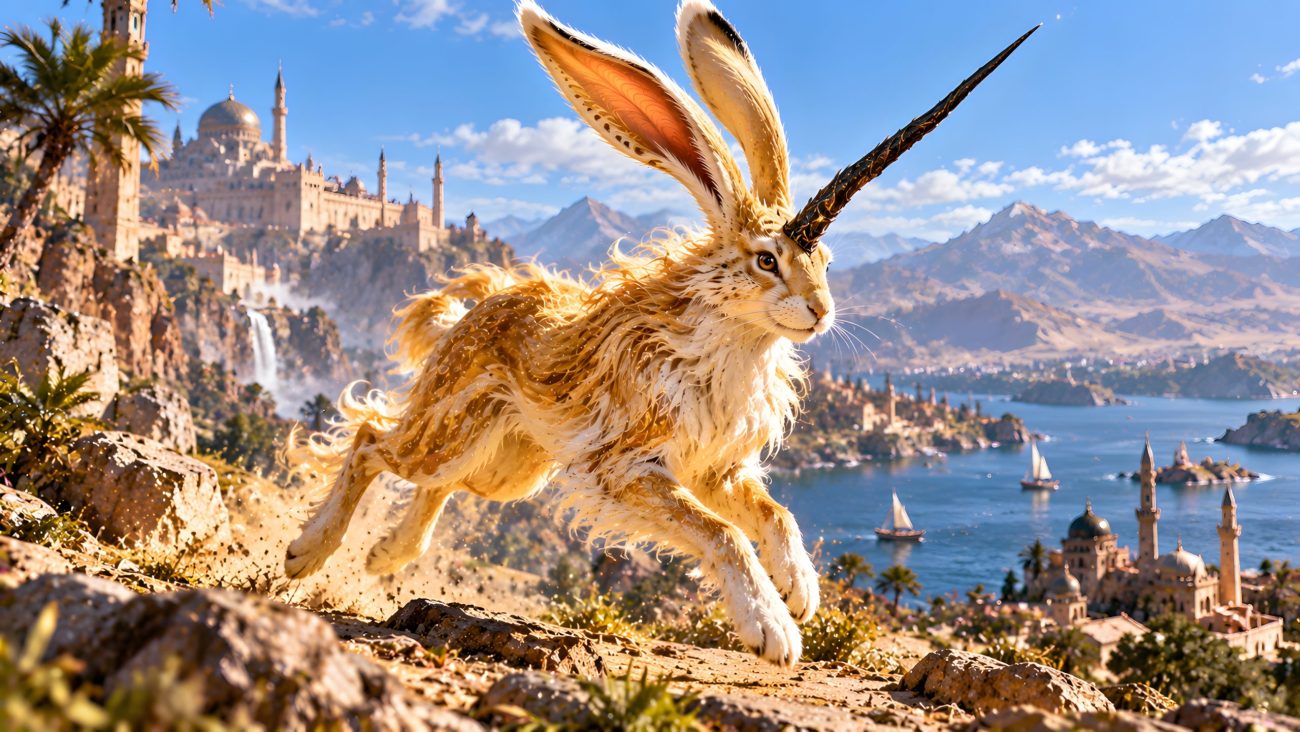
Al-Mi’raj is a mythical animal resembling a yellow or golden hare with a single black horn. Its shiny golden coat and strange appearance make it feared by other animals. According to the stories, any wild beast that sees it immediately flees, whether it is a predator, another mammal, or even a bird.

The creature appears in stories about Iskandar, also known as Alexander the Great. In one account, Al-Mi’raj lives on Dragon Island in the Indian Ocean, where a terrible dragon or giant serpent has been killing livestock. Iskandar helps the island’s inhabitants defeat the monster by using bait that ignites a fire inside its body. Grateful for his help, the inhabitants give him the miraculous horned hare as a gift.

Other versions place the dragon’s island in western Africa and give the creature different names. Some accounts describe it simply as a horned hare, while others portray it as a fierce, dog-like hybrid. Despite these differences, the creature remains extraordinary for its single black horn and its ability to make other animals flee at the sight of it.


Sources

“Al-Mi’raj.” Wikipedia: The Free Encyclopedia. Wikimedia Foundation. https://en.wikipedia.org/wiki/Al-Mi%27raj
Jiibayaabooz

Tradition: American Mythology
Alternative Names: ᒋᐸᔮᐴᔅ, Chipiapoos, Cheeby-aub-oozoo, Spirit Rabbit, Ghost of Rabbit
Category: Rabbit


The Myth

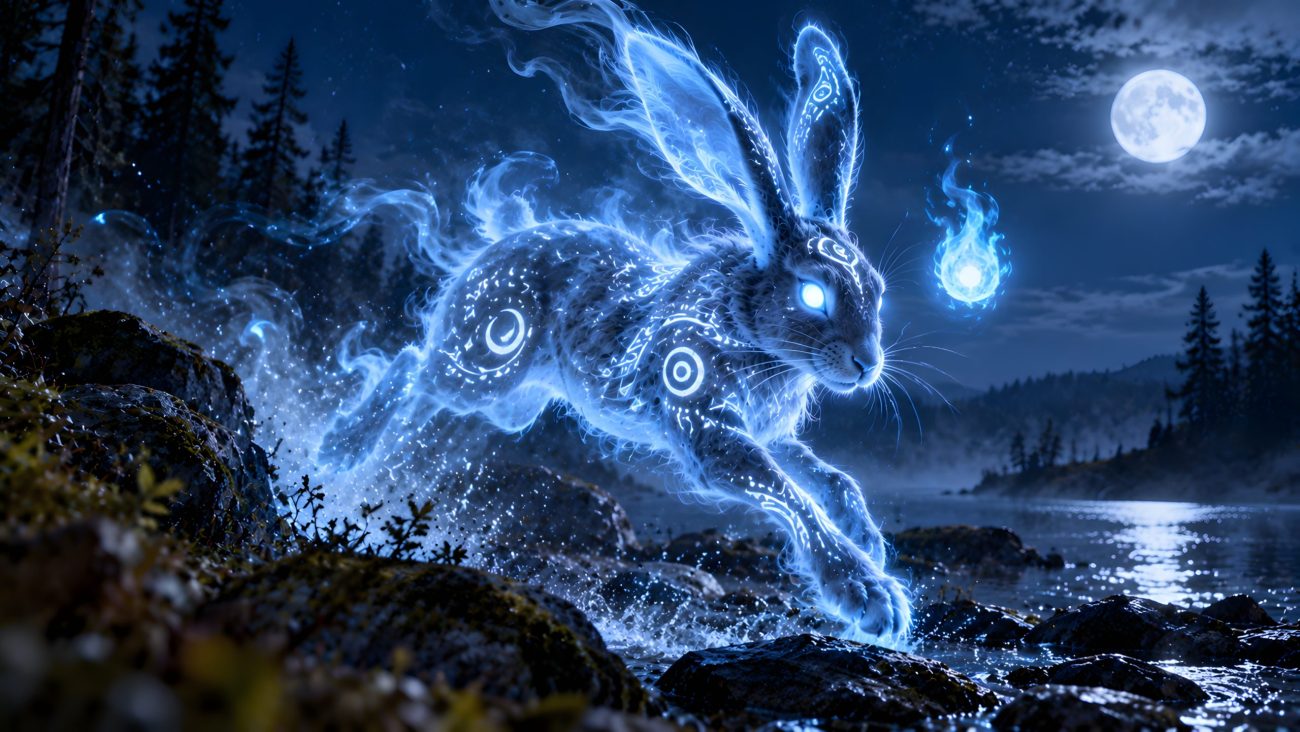
Jiibayaabooz is a rabbit spirit from Ojibwe mythology who was fascinated by the mysterious world of spirits known as manitous. He was the son of Wiininwaa, a human mother, and E-bangishimog, a spirit father. Through dreams and communication with the manitous, he learned about the spiritual world and taught humans how to communicate with spirits through their dreams.

His older brother, Majiikiwis, often teased him, and one of his dares eventually led to Jiibayaabooz’s death. However, death did not end his spiritual work. His ghost continued teaching people about vision quests, purification ceremonies, and the relationship between humans and the spirit world.

Jiibayaabooz eventually became known as the Chief of the Underworld. According to Ojibwe tradition, he also gave the Anishinaabe people the spirit of music, chants, and poetry. A related figure appears in Abenaki mythology as Mateguas, a rabbit who returns from the dead and teaches his brother Gluskab sacred ceremonies to help him cope with his grief. Gluskab then passes these teachings on to humanity.


Sources

“Jiibayaabooz.” Wikipedia: The Free Encyclopedia. Wikimedia Foundation. https://en.wikipedia.org/wiki/Jiibayaabooz


Jackalope

Tradition: American Mythology
Alternative Names: Jack Rabbit, Horned Rabbit, Lepus antilocapra
Category: Rabbit


The Myth

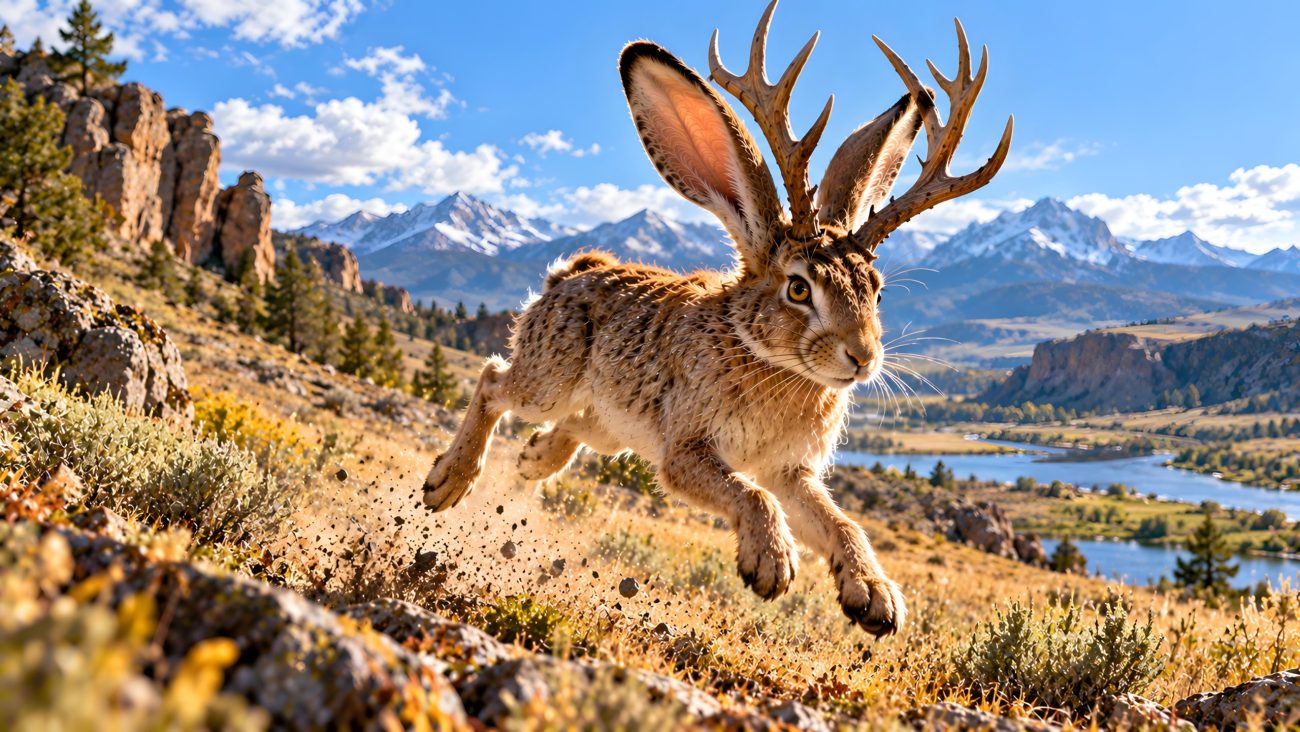
The Jackalope is a legendary North American creature resembling a jackrabbit with antelope-like horns or deer antlers. It is usually portrayed as a rabbit with a hare’s body and branching horns, and is one of the best-known examples of the tall-tale animals called fearsome critters. According to humorous legends, jackalopes are dangerous and difficult to hunt, so hunters must wear stovepipes over their legs to protect themselves from being gored. They are said to enjoy drinking whiskey, imitate human voices around campfires, and sing along with cowboys in a tenor voice. Some stories claim they breed only during lightning storms, which supposedly explains their rarity.

The jackalope became especially popular in the United States during the 1930s, when Douglas Herrick and his brother, taxidermists from Douglas, Wyoming, began attaching deer antlers to jackrabbit carcasses and selling the resulting mounts. Their creations helped turn the creature into a local legend and a popular tourist attraction. Jackalope mounts, postcards, souvenirs, and other merchandise subsequently spread throughout the country, and the animal became associated with Wyoming’s identity.

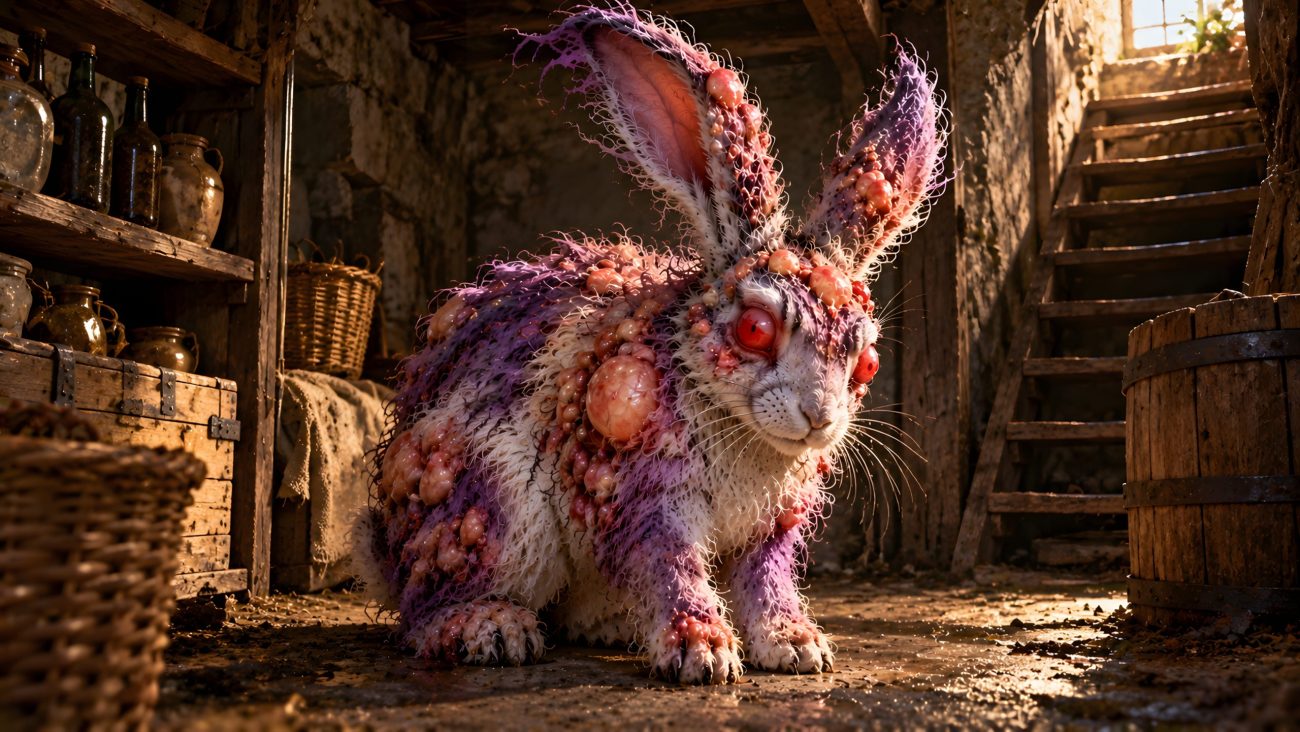
Although the modern American jackalope was popularized through taxidermy and tall tales, legends of horned hares existed in other cultures long before its creation. One possible explanation for some historical reports of horned rabbits is infection with Shope papillomavirus, which can cause horn-like growths on rabbits’ heads and bodies. The jackalope remains a playful mixture of folklore, practical jokes, and regional identity, blurring the line between mythical beast and deliberate hoax.


Sources

“Jackalope.” Wikipedia: The Free Encyclopedia. Wikimedia Foundation. https://en.wikipedia.org/wiki/Jackalope


Black Hare

Tradition: Austrian Mythology
Alternative Names: Black Hare, Schwarzer Hase
Category: Rabbit


The Myth

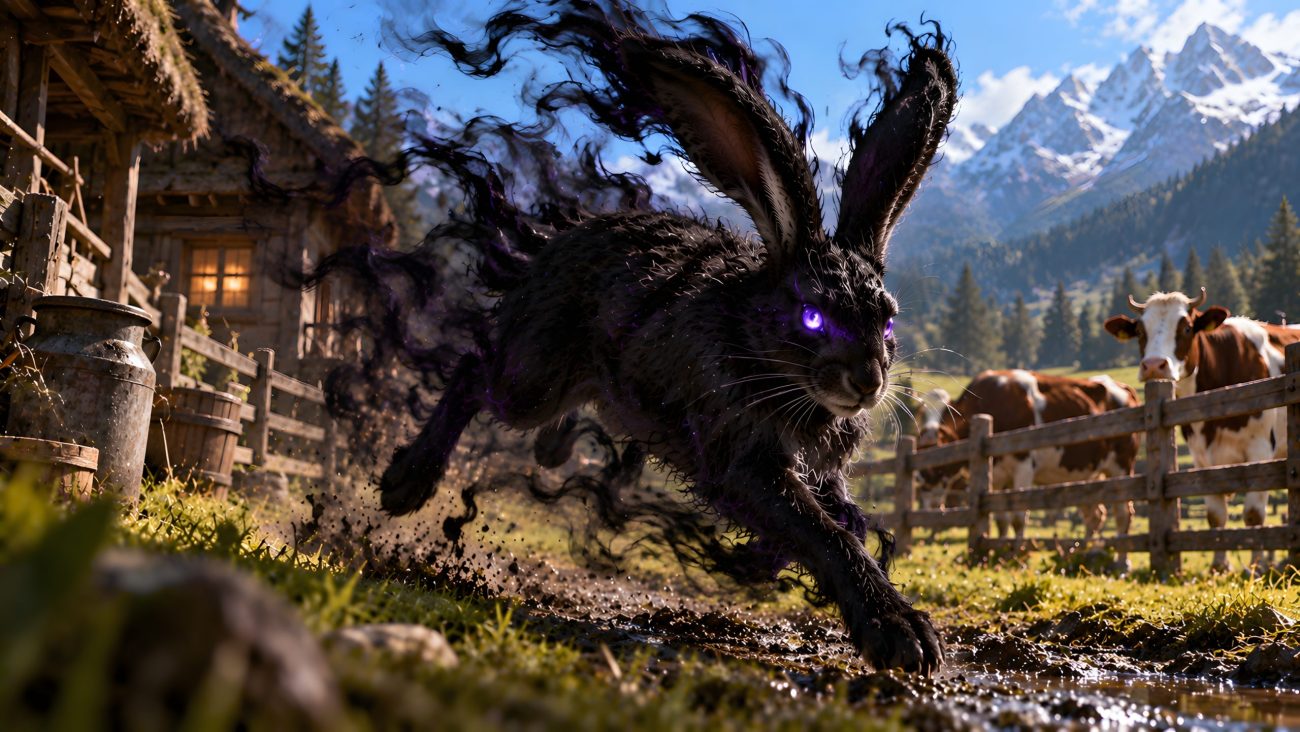
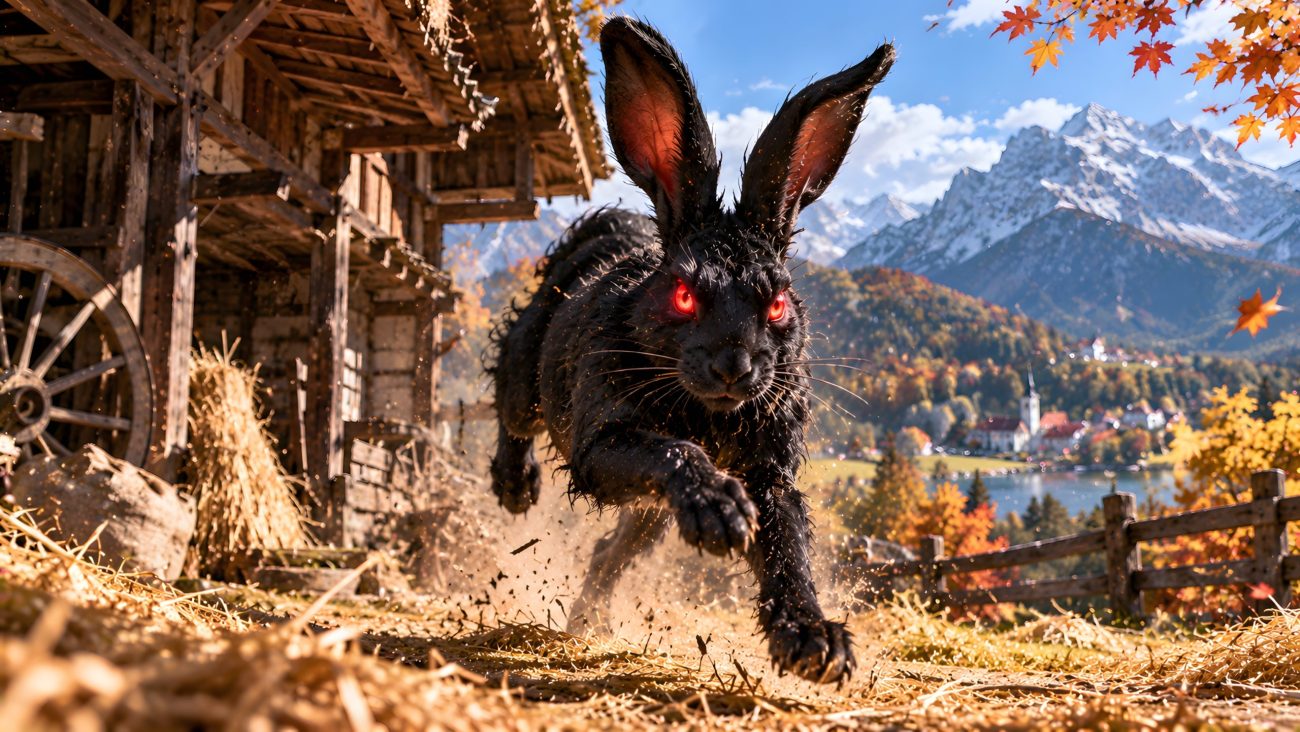
The Black Rabbit is a demonic hare from legends around Linz and Kleinmünchen in Upper Austria. It appears as a coal-black rabbit with glowing red eyes and is believed to be the Devil in animal form, coming to claim the souls of the wicked.

One autumn, during threshing at the old Rauchbauernhäusl in Heilham, a neighbouring farmhand joked that he could hang himself using nothing more than a straw. A maid challenged him to prove it, insisting that the others cut him down immediately if he could no longer breathe. The reckless man found a particularly long, sturdy straw, tied it to a beam, and hanged himself.

At that very moment, the black hare raced through the threshing floor. The farmer, his wife, the farmhand, and the maid all chased after the strange animal, forgetting the man hanging from the beam. When they finally returned, exhausted and unsuccessful, they found the farmhand dead. The black hare had served as a distraction while the Devil claimed his victim. The old farmhouse, already partly ruined, was eventually destroyed by lightning, but the story of the black hare remained in local memory.


Sources

“Der schwarze Hase” (The Black Hare). SAGEN.at. https://www.sagen.at/texte/sagen/oesterreich/oberoesterreich/linz/derschwarzehase.html


Rabbit Spirits

Tradition: Japanese Mythology
Alternative Names: Ghost Rabbits, Spirit Rabbits of the Coloured Balls
Category: Rabbit


The Myth

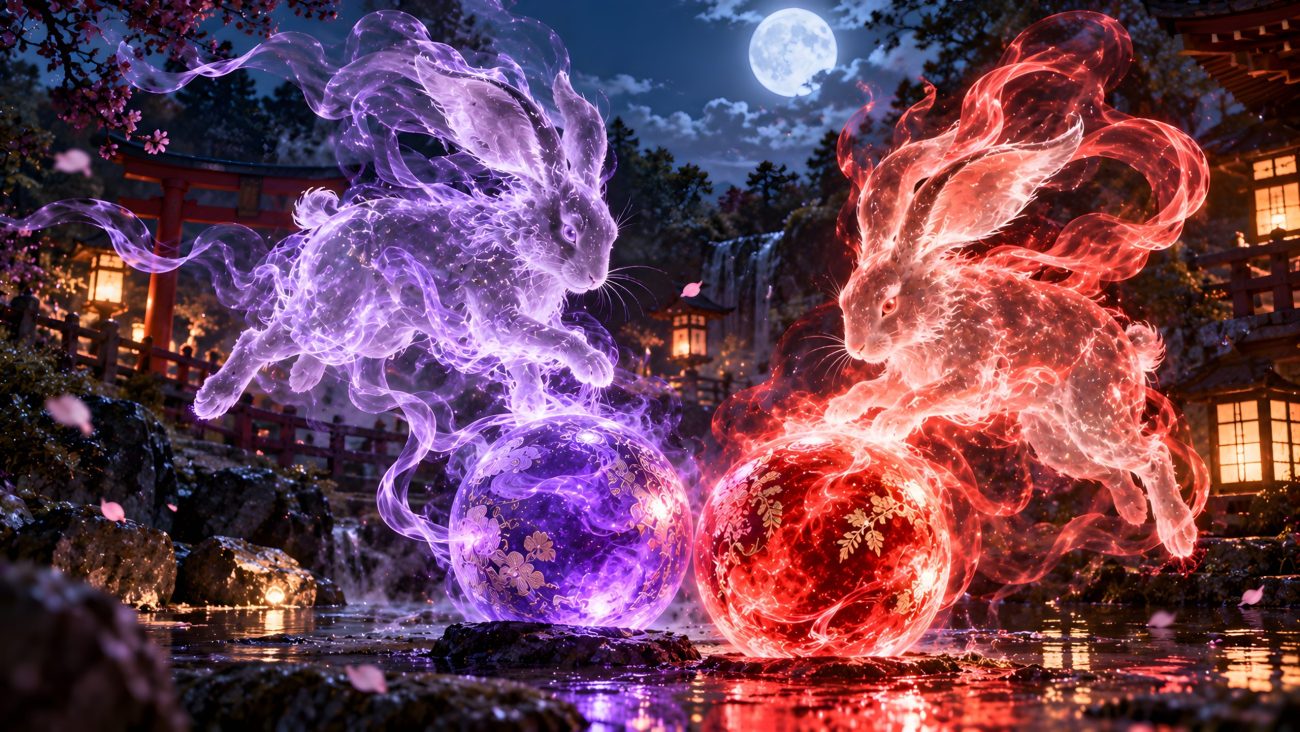
Two mysterious balls, one purple and one red, each contain the spirit of a rabbit. A Japanese girl named Fumiko discovers the balls, but their conditions soon begin to change: the red ball grows larger while the purple one gradually fades away. One night, the rabbit spirit inside the purple ball speaks to Fumiko, revealing that it originally lived in the mountains of Okuyama. The red ball contains the spirit of its sister, and both rabbits were swept away by a flood.

The two rabbits had once been pets belonging to a famous rabbit, but the sister received many more favours and much more attention than her brother. As a result, her spirit grew stronger while his gradually weakened, causing the purple ball to disappear. The brother explains his predicament to Fumiko, who realizes that the two balls must be placed together so the sister can share her energy with him.

When the balls are brought together, the red ball shrinks while the purple ball grows larger. Eventually, Fumiko places both balls inside a well, allowing the two rabbit spirits to remain together for a very long time. Their story reflects the bond between siblings and the importance of sharing strength with those who have been neglected.


Sources

“Usagi-tamashii.” 新版TYZ 妖怪図鑑 (New TYZ Yokai Encyclopedia). https://tyz-yokai.blog.jp/archives/1084281707.html


Ekito

Tradition: Japanese Mythology
Alternative Names: 疫兎, Plague Rabbit
Category: Rabbit


The Myth

Ekito are said to have been rabbits afflicted with deadly diseases, associated with a devastating plague in nineteenth-century Japan. According to the account, Emperor Kōkaku received a large ship as a gift from the English. Unbeknownst to him, the vessel carried numerous diseased rabbits that would bring suffering to the country.

Rumours claimed that the English had abandoned the rabbits in Japan, allowing the animals to spread illness among the population. The resulting outbreak was associated with the so-called Korori, a deadly disease that reportedly killed many people within just three days.

The Ekito became feared as dangerous creatures whose arrival brought disease and death. In this account, they represent the terror of mysterious illnesses introduced from abroad and the devastating consequences attributed to animals carrying infection.


Sources

“Ekito.” 新版TYZ 妖怪図鑑 (New TYZ Yokai Encyclopedia). https://tyz-yokai.blog.jp/archives/1081520348.html


Enlightened Rabbit

Tradition: Japanese Mythology
Alternative Names: Mind-Reading Rabbit, Thought-Reading Hare
Category: Rabbit


The Myth

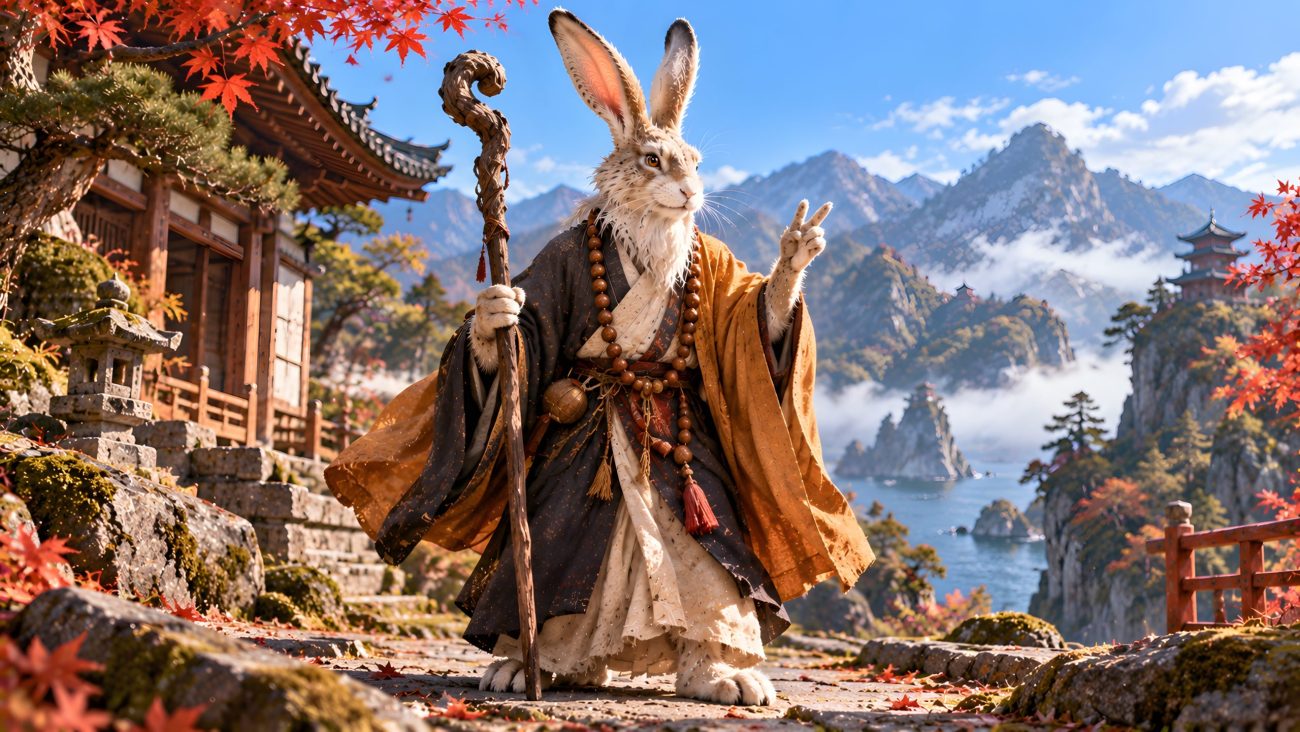
The Enlightened Rabbit is an elderly rabbit with the uncanny ability to speak fluently and read human thoughts. During winter, it visits an elderly couple every day, correctly guessing what both the man and woman are thinking. Its intelligence and eerie insight make it seem capable of understanding the human mind completely.

Growing confident in its powers, the rabbit eventually boasts that it can predict anything. However, the old man unexpectedly strikes it with a piece of bamboo. Stunned by this sudden action, the rabbit discovers something it had failed to foresee: humans sometimes act without thinking.

The tale presents the rabbit as a clever and extraordinary creature whose apparent wisdom has limits. Despite its ability to read minds and anticipate thoughts, it cannot account for human unpredictability.


Sources

“The Enlightened Rabbit.” 新版TYZ 妖怪図鑑 (New TYZ Yokai Encyclopedia). https://tyz-yokai.blog.jp/archives/1055780188.html


Mochitsuki Usagi

Tradition: Japanese Mythology
Alternative Names: 餅搗兎, Mochitsuki Rabbit, Rice-Cake-Pounding Rabbit
Category: Rabbit


The Myth

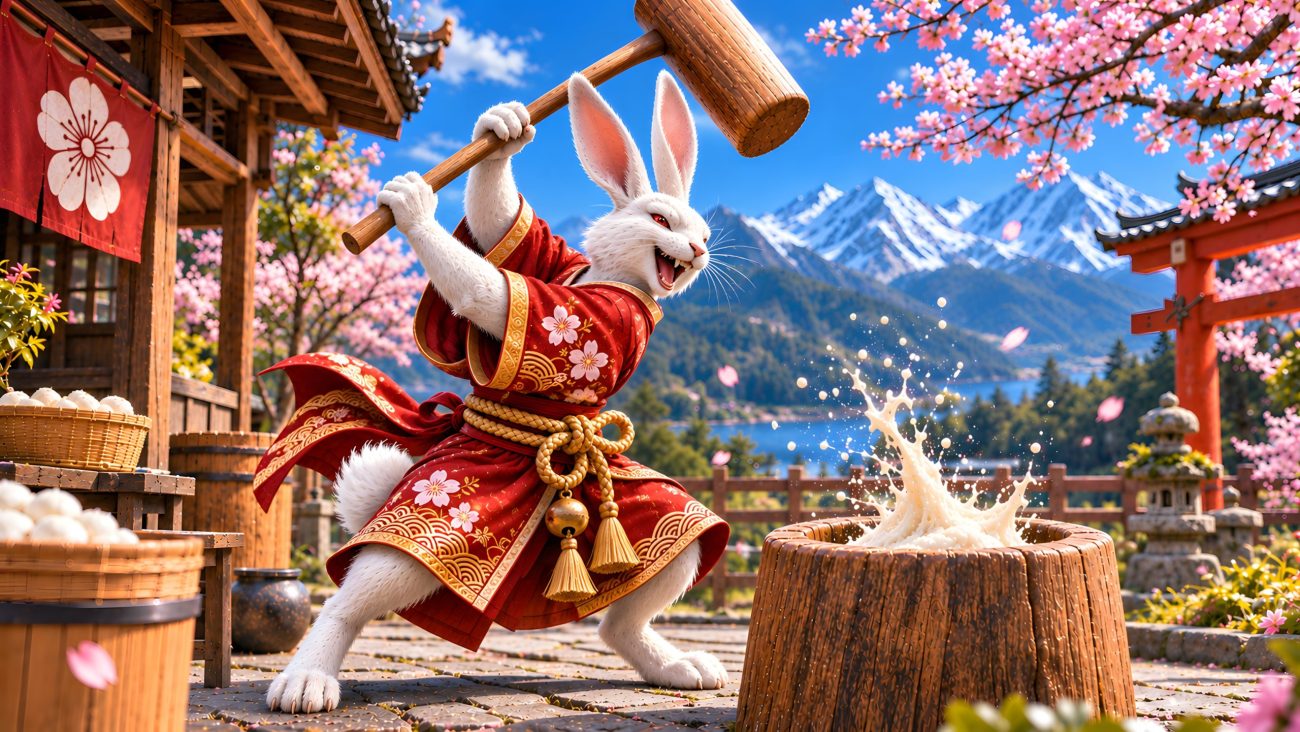
Mochitsuki Usagi, meaning “rice-cake-pounding rabbit,” is a supernatural warrior who appears in the illustrated storybook Kore wa Gozonji no Bakemono ni te Gozasōrō. It serves as a subordinate of Momonguwa, the leader of a monstrous army challenged by the giant yokai Mikoshi Nyūdō. The rabbit wears full samurai armour and carries a wooden mallet used for pounding rice cakes as though it were a weapon.

Despite its martial equipment, the rabbit is distracted by its long ears, worrying constantly about protecting them. During the battle, a monster named Tenaga-hime, fighting for Mikoshi Nyūdō’s army, grabs the rabbit by its ears and makes it cry out in pain. Its concern for its ears proves more troublesome than its duties as a warrior.

The character appears to have been inspired by the familiar image of a rabbit pounding rice cakes on the Moon, a popular interpretation of the patterns visible on the lunar surface. The illustration turns this traditional lunar rabbit into a comical yokai warrior whose most distinctive feature becomes his greatest weakness.


Sources

“Mochi-pounding Rabbit.” 新版TYZ 妖怪図鑑 (New TYZ Yokai Encyclopedia). https://tyz-yokai.blog.jp/archives/1084405576.html


Baker Rabbit

Tradition: English Mythology
Alternative Names: Rabbit Baker, Medieval Baker Hare
Category: Rabbit


The Myth

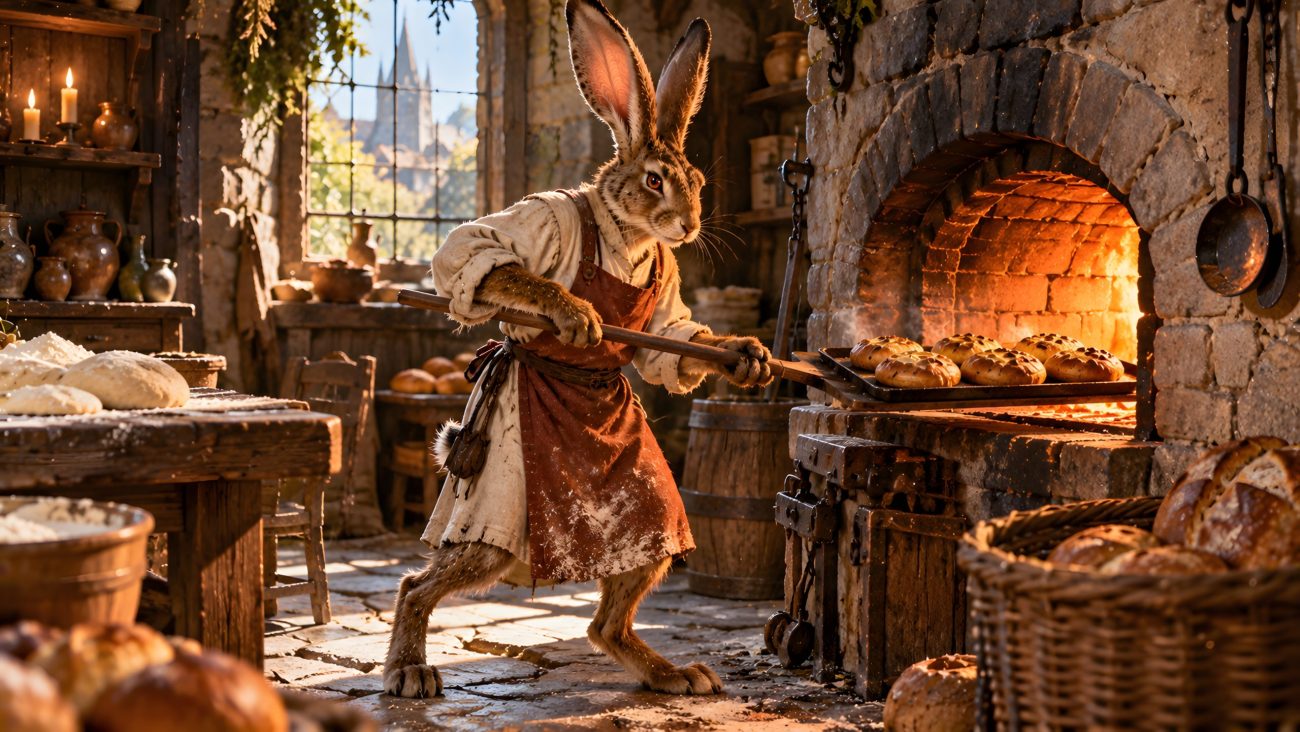
The Baker Rabbit is an unusual medieval illustration of a rabbit working as a baker. Dating to the first quarter of the fifteenth century, it appears in an English pontifical manuscript, Lansdowne MS 451, folio 6r. The rabbit stands upright and pushes a tray of baked goods into an oven, behaving like a human baker. Its dark, almost demonic expression gives the otherwise ordinary scene an unsettling quality.

Medieval art frequently depicted rabbits engaging in human activities, sometimes in humorous or disturbing scenes that reversed the natural relationship between humans and animals. Given the rabbit’s occasional association with violence in medieval imagery, the baker’s sinister appearance invites a macabre question: what exactly is he baking? The suggestion that the pies might contain human flesh is a modern, humorous interpretation rather than an established part of the manuscript’s meaning.


Sources

“Killer Rabbits: When Bunnies Strike Back.” Medieval Manuscripts Blog, British Library, June 2021. https://blogs.bl.uk/digitisedmanuscripts/2021/06/killer-rabbits.html


Milkrabbit

Tradition: Norwegian Mythology
Alternative Names: Milk Hare, Milk Rabbit, Troll Cat, Trollnøste, Trollnøa
Category: Rabbit


The Myth

The Milkrabbit is a supernatural creature associated with witches in Scandinavian folklore. It steals milk from cows and cream from households, carrying the stolen milk back to its mistress. Similar creatures include the troll cat, which may look like an ordinary cat or a ball of yarn, and the milk hare. Witches were believed to create these familiars from materials such as human hair, fingernails, and wood shavings.

The creature secretly sucks milk from cows and spits it into containers near the witch’s home. Some traditions claimed that shooting a troll cat caused milk to spray from its wounds, while harming a cat-shaped familiar could also injure its witch. The familiar was supposed to be buried alongside its mistress, who might otherwise have to leave her grave to retrieve it.

In Norway, stories also tell of people exploiting belief in these creatures to steal milk and blame the theft on a witch’s familiar. A related Icelandic creature is the tilberi, a supernatural milk thief created from a dead man’s rib, stolen wool, and communion wine. Both creatures reflect traditional fears about witches secretly stealing the milk and cream on which rural households depended.


Sources

“Troll Cat.” Wikipedia: The Free Encyclopedia. Wikimedia Foundation. https://en.wikipedia.org/wiki/Troll_cat