Yama Oroshi

Tradition: Japanese Mythology
Alternative Names: 山颪, やまおろし, Mountain Wind
Category: Object


The Myth

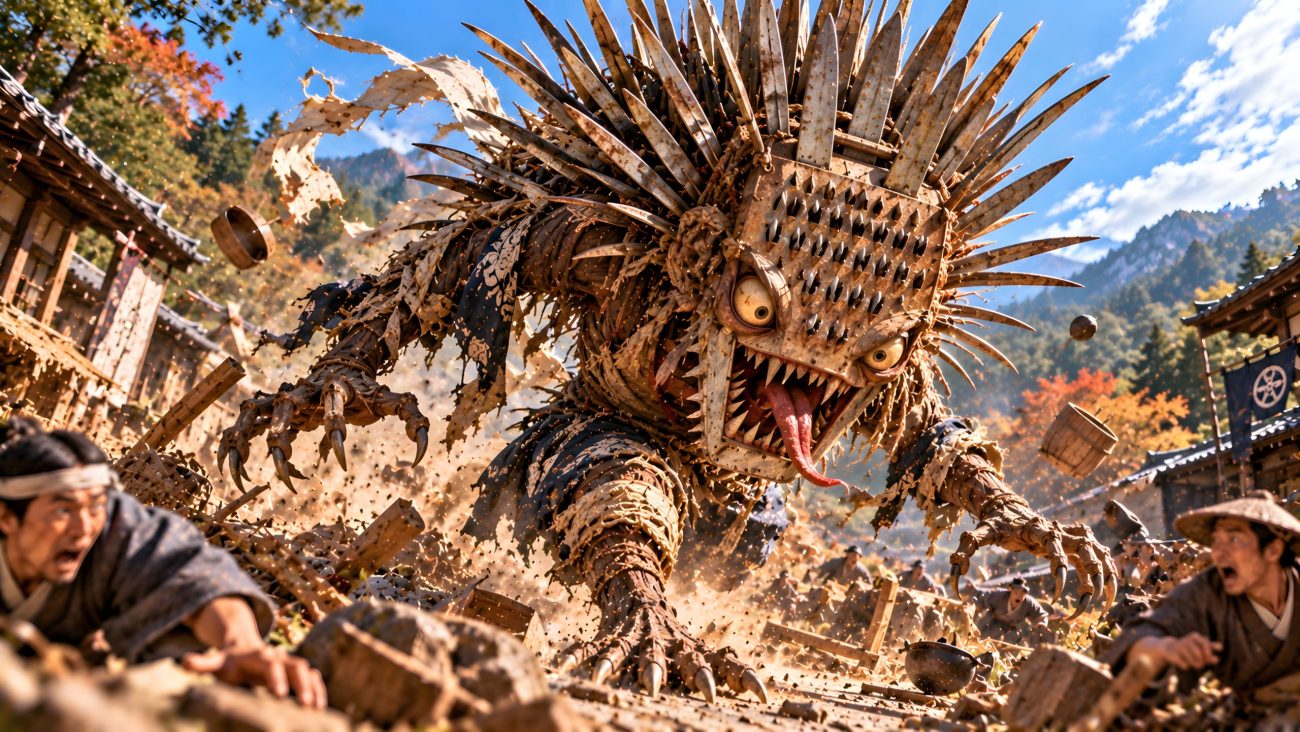
Yama Oroshi is a tsukumogami, a supernatural being formed from an ordinary object that has become old or neglected. It originates from a metal grater that has been improperly cared for and grown too dull to grate food. The discarded utensil develops a body, while the grater’s blunt teeth protrude from its head like the wild spines of a porcupine.

The creature’s name contains a double pun. In Japanese, oroshi refers to a grater, forming part of the name Yama Oroshi. The name also resembles yamaarashi, the Japanese word for a porcupine. This wordplay reflects the creature’s appearance, transforming a familiar kitchen implement into a spiny, animal-like yokai.


Sources

“Yamaoroshi.” Yokai.com. https://yokai.com/yamaoroshi/


Omo Tsuzura no Bakemono

Tradition: Japanese Mythology
Alternative Names: 重い葛籠の化物, 重い葛籠の大入道, Omo Tsuzura no Bakemono, Monster of the Heavy Trunk, Giant of the Heavy Trunk
Category: Object


The Myth

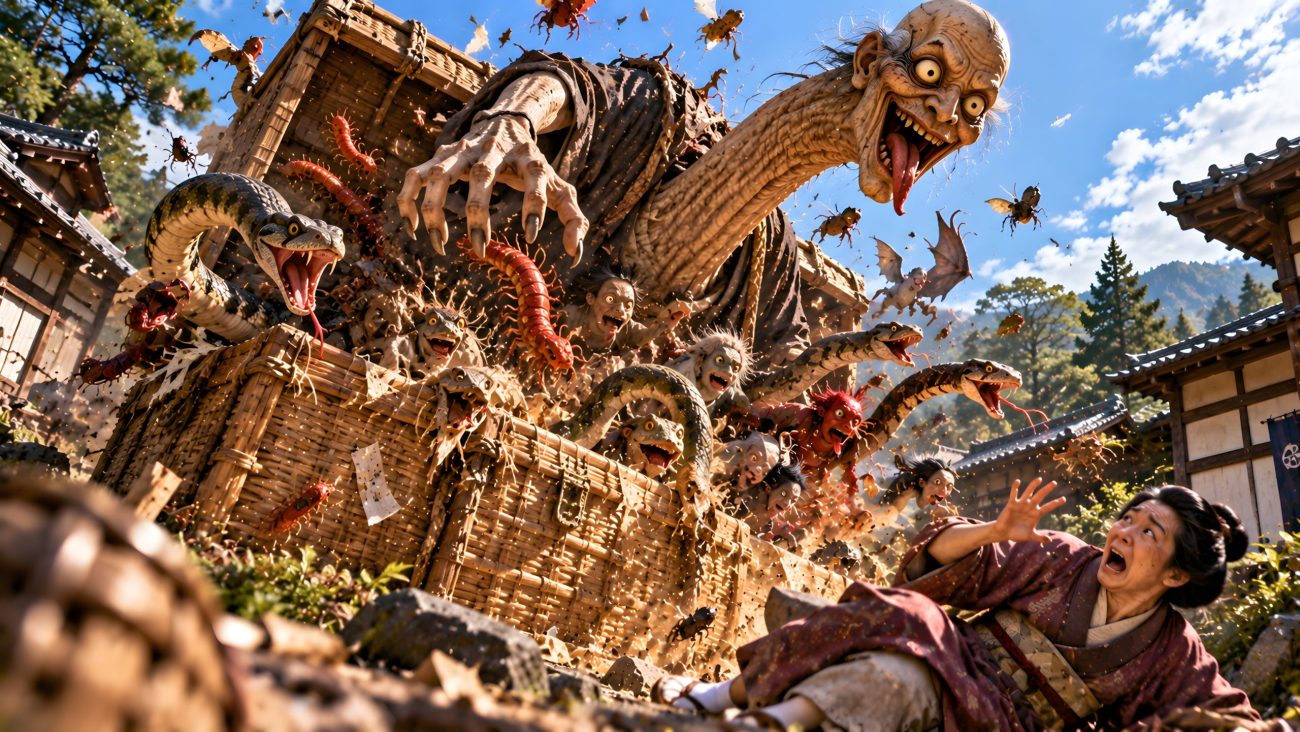
The Monster of the Heavy Wicker Trunk appears in the Japanese folktale Shita-kiri Suzume, or The Tongue-Cut Sparrow. In the story, a kind old man befriends a sparrow, but the bird eats paste prepared by his wife. Enraged, the old woman cuts out the sparrow’s tongue, forcing it to flee. When the old man discovers what happened, he searches the mountains for the bird and eventually reaches the sparrows’ home, where he receives a warm welcome.

Before he leaves, the sparrows offer him a choice between two wicker trunks as a gift: a small, light trunk and a large, heavy one. The old man chooses the smaller trunk and returns home to discover that it contains gold, silver, and other treasures. His greedy wife then visits the sparrows, hoping to obtain an even greater reward. She insists on taking the heavy trunk, but when she opens it on the way home, a multitude of monsters, snakes, and poisonous insects burst out. Terrified, she collapses in fright. This is the basic form of the tale, which became widely popular during the Edo period through illustrated children’s books and other printed stories.

The scene of the greedy woman opening the heavy trunk and confronting the monsters became a popular subject in Japanese yokai art. Artists including Tsukioka Yoshitoshi depicted it in supernatural-themed print series such as One Hundred Tales of China and Japan and New Forms of Thirty-Six Ghosts. Yoshitoshi’s teacher, Utagawa Kuniyoshi, also created a painting titled The Tongue-Cut Sparrow. In a satirical illustrated version published by Utagawa Yoshimori in 1864, the monsters emerging from the trunk were used to represent the forces involved in the Kinmon Incident, a battle near Kyoto’s Hamaguri Gate. The creature also appears frequently in yokai-themed playing cards and sugoroku board games, where it is often represented by a giant monk-like figure with an exceptionally long neck.


Sources

“Omo-tsuzura-bakemono.” 新版TYZ 妖怪図鑑 (New TYZ Yokai Encyclopedia). https://tyz-yokai.blog.jp/archives/1010654282.html


Shirōneri

Tradition: Japanese Mythology
Alternative Names: 白容裔, しろうねり, Shiro Uneri, White Cloth Yokai
Category: Object


The Myth

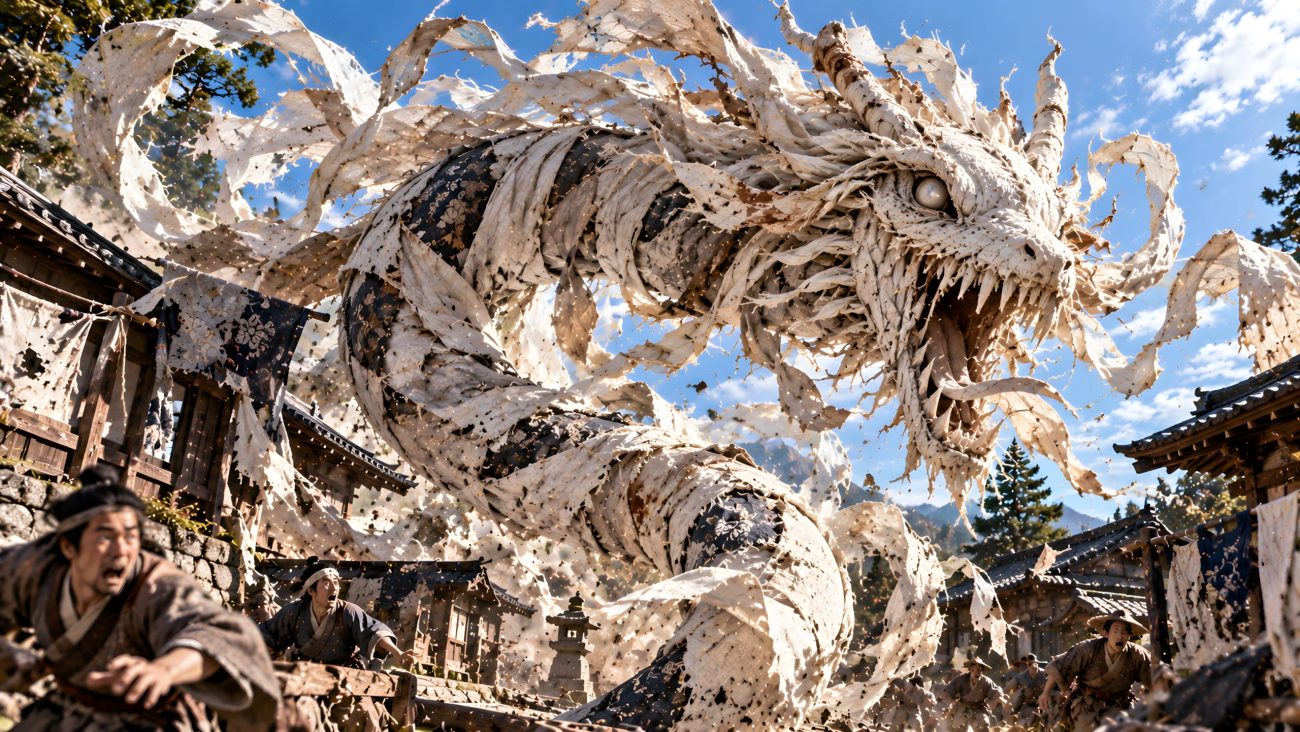
Shirōneri is a yokai depicted in Toriyama Sekien’s Hyakki Tsurezure Bukuro. It appears as an old piece of cloth transformed into a dragon-like creature. Sekien describes it as an aged cleaning cloth that has become supernatural, although he also remarks that he wondered in a dream whether it might have another origin.

Sekien’s description draws on the mysterious term shiroururi, mentioned in the sixty-first section of Tsurezuregusa. The passage tells of Morichika, a priest at Shinnyō-in of Ninnaji, who gave another monk this nickname. When asked what a shiroururi was, Morichika admitted that he did not know, suggesting only that if such a thing existed, it might resemble the monk’s face. The word’s precise meaning remains unclear.

Shirōneri appears to be Sekien’s own creation, inspired in part by this enigmatic anecdote. Later children’s books and yokai references developed the idea into a more threatening creature, sometimes describing an old, foul-smelling cleaning cloth that attacks people. Some modern books also identify anonymous cloth-covered figures in Night Parade of One Hundred Demons picture scrolls as Shirōneri, although those figures were not originally given this name.


Sources

“Shirouneri.” 新版TYZ 妖怪図鑑 (New TYZ Yokai Encyclopedia). https://tyz-yokai.blog.jp/archives/1010654403.html


Awakuidori

Tradition: Japanese Mythology
Alternative Names: 泡喰鳥, あわくいどり, Bubble-Eating Bird
Category: Object


The Myth

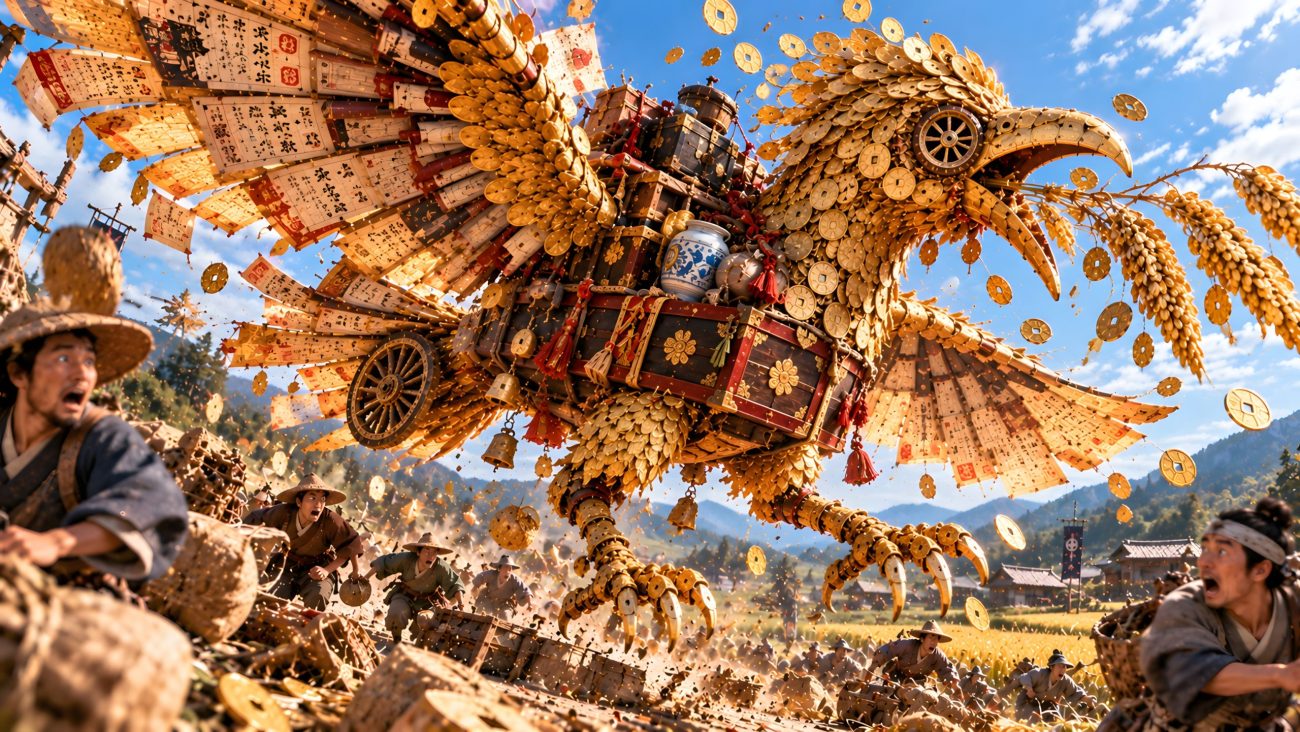
Awakuidori is a satirical bird depicted in the late Edo-period caricature Amakara Watari: Awakuidori. Its body is assembled from objects representing wealth and possessions. Its beak and legs are made of coins, while its head and wings consist of gold coins. Its feathers are formed from various account books, and its body carries household belongings, including chests and trunks arranged aboard a boat. Wheels form its eyes and the base of its tail.

The bird’s name refers to the expression awa o kuu, meaning to be startled, panic, or become flustered. In the illustration, however, Awakuidori is trying to eat ears of millet represented by hole-punched coins, creating a visual pun. The bird is said to live in prosperous, bustling places when the world is peaceful, but to fly towards remote districts and the countryside during times of turmoil. It is highly perceptive of people’s intentions and travels in all directions, preying upon farmers and townspeople and causing them considerable trouble.

Awakuidori’s composition from coins, gold pieces, account books, and household possessions makes it a satire of wealthy people who panic during periods of social upheaval, rushing about while attempting to protect their fortunes. Rather than representing a conventional supernatural predator, the bird embodies the anxiety of the wealthy when disorder threatens their property and financial security.


Sources

“Awakui-dori.” 新版TYZ 妖怪図鑑 (New TYZ Yokai Encyclopedia). https://tyz-yokai.blog.jp/archives/1062371865.html


Terracottal

Tradition: Japanese Mythology
Alternative Names: Terracottal, Terracotta Yokai
Category: Object


The Myth

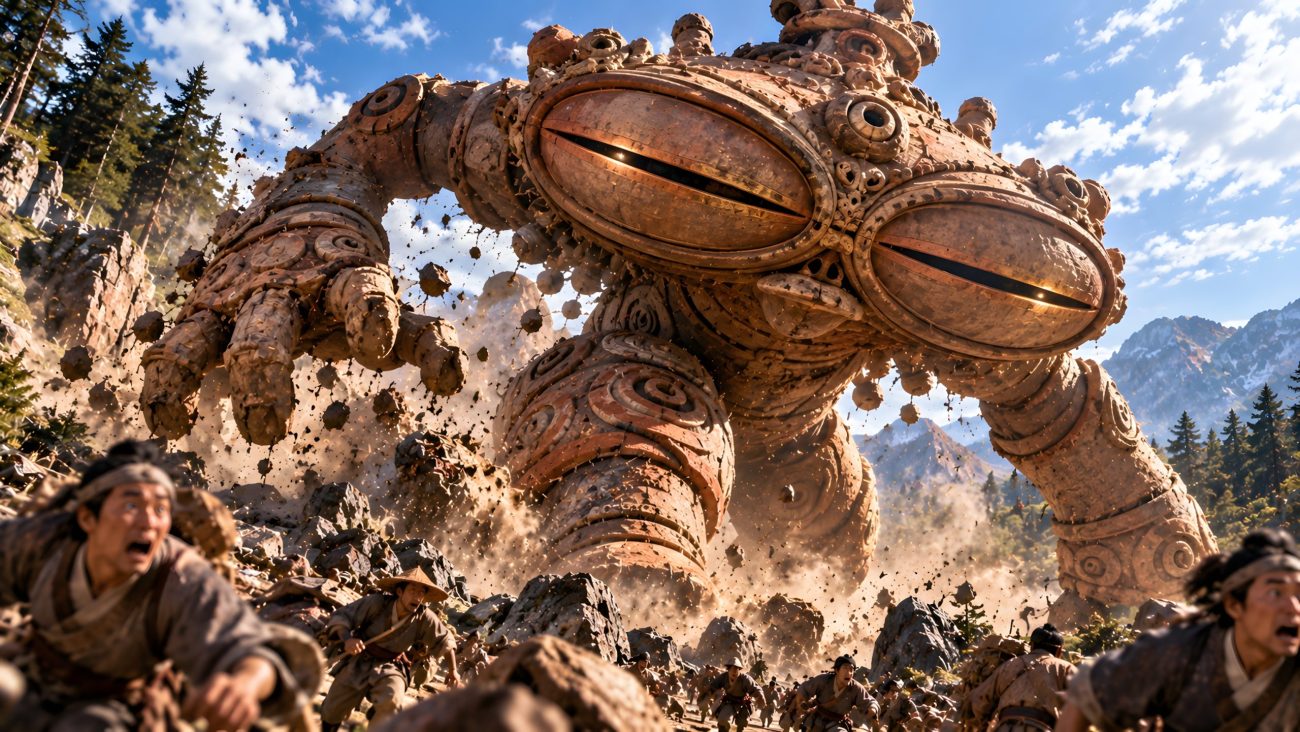
Terracottal is a mysterious being described in Shigeaki Yamauchi’s 1968 book World Horror Thriller Collection (2): Monsters of the World. The story appears in a chapter titled “God or Yokai?” and describes an encounter with a strange creature whose true nature remains uncertain. In ancient times, a pale fireball reportedly fell into the forest at Kamegaoka, in Aomori Prefecture, with a tremendous roar. Wondering whether it was a star or a fragment of the sun, a villager ventured into the forest and encountered a yokai with an enormous eyeball and narrow eyes extending horizontally across its face.

The villagers fled in terror, while their chief offered sacrifices and prayed to the gods. Perhaps in response to these prayers, the creature remained in the forest, and the pale fireball returned to the heavens that same night. According to the story, someone in the village made clay figurines based on the strange being. Thousands of years later, these figures were supposedly unearthed at Kamegaoka. The author leaves the creature’s identity unresolved, suggesting that it might have been a god, a human, a yokai, or even a visitor from outer space. He named it Terracottal, drawing on the word terracotta, which refers to fired or unglazed clay.

The story was inspired by distinctive dogū clay figurines discovered at Kamegaoka in 1886. Known as shakōki dogū, or “light-shielding dogū,” these figures have large, unusual eyes resembling goggles used to protect against snow glare. From around the 1960s, some writers began speculating that such prehistoric figurines represented ancient astronauts or extraterrestrial visitors. These ideas gained international attention through works such as Erich von Däniken’s Chariots of the Gods?, published in 1968. Terracottal emerged from this wave of speculation, illustrating how the term yokai was sometimes used in children’s literature to describe mysterious beings inspired by archaeological discoveries and theories about extraterrestrial life.


Sources

“Terracotta.” 新版TYZ 妖怪図鑑 (New TYZ Yokai Encyclopedia). https://tyz-yokai.blog.jp/archives/1074701727.html


Zenitori

Tradition: Japanese Mythology
Alternative Names: 銭取り, Korekadori, Konjichō, Golden-Winged Bird
Category: Object


The Myth

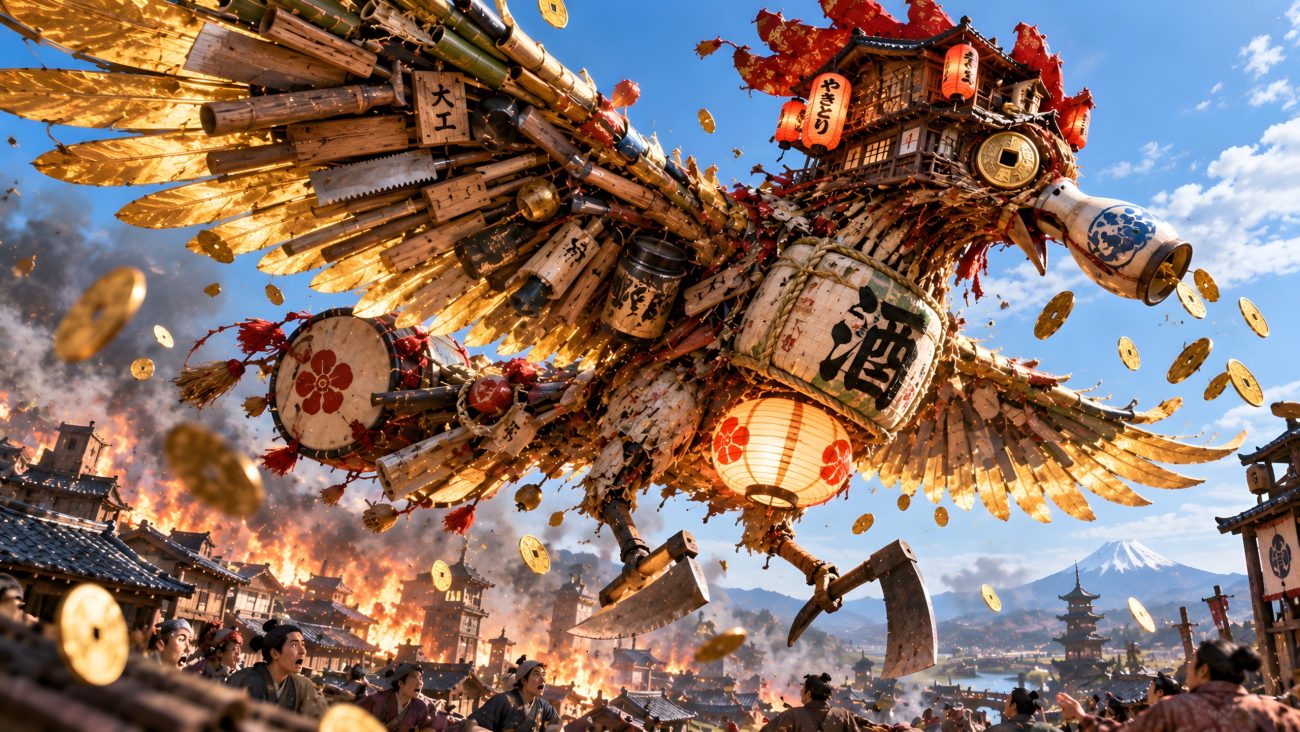
Zenitori is a strange bird depicted alongside Hirin in a kawaraban-style printed work from the late Edo period. The illustration satirises social conditions following a great fire, portraying the bird as a composite of objects associated with trades and businesses that profited from disasters. Its comb resembles a cheap tavern in a lower-class neighbourhood, while its eyes are shaped like coins. Its wings resemble bamboo and wooden boards, its chest is a sake barrel, its beak a sake flask, and its feet are hoes. A lantern forms its belly, and its tail resembles a tambourine.

Normally, Zenitori calls out “Himad, Himad,” but when a creature called Kawa, also known as Yake, appears, it clings to its rear and begins shouting “Zenitori, Zenitori.” As it flies, the bird grows golden and silver wings, earning it the alternative name Konjichō, or Golden-Winged Bird. The name Korekadori means “money collector,” reflecting its association with the accumulation of wealth. Its body also incorporates tools used by carpenters and plasterers, including saws, chisels, planes, ink pots, and trowels.

The bird represents the people who profit from the aftermath of disasters. When a fire destroys a town, firefighters become active, displaced residents gather in taverns, and carpenters and plasterers earn money rebuilding houses and streets. Zenitori’s body combines the tools and possessions of these occupations, suggesting that their prosperity depends on destruction and reconstruction. Its golden wings symbolise the great wealth such people can accumulate through calamity. Similar satirical creatures appeared in illustrations responding to other disasters, including Kasachi and Nangichō after the Ansei earthquake, and Tsūshinchōri during cholera outbreaks.


Sources

“Zenitori.” 新版TYZ 妖怪図鑑 (New TYZ Yokai Encyclopedia). https://tyz-yokai.blog.jp/archives/1078433255.html


Guschg Dairyman’s Doll

Tradition: Liechtenstein Mythology
Alternative Names: The Doll of Alpe Guschg, Guschger Sennendoll
Category: Object


The Myth

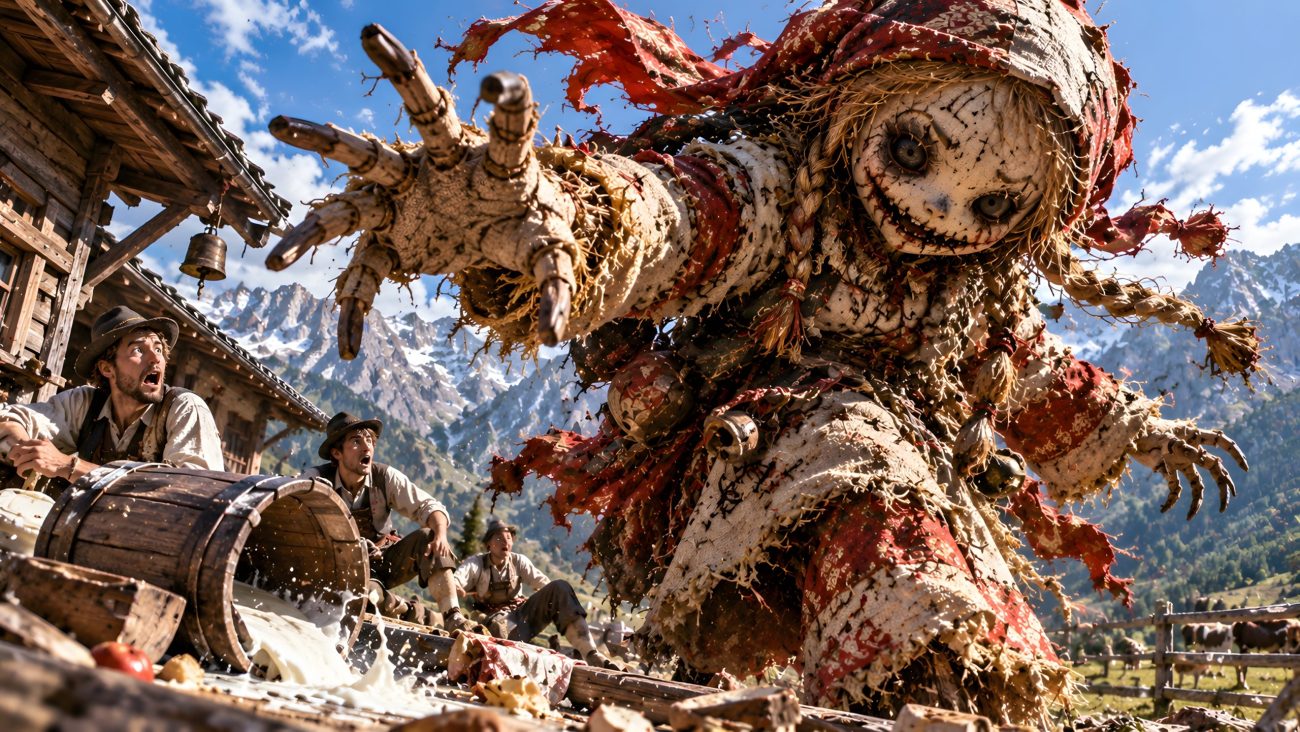
The Guschg Dairyman’s Doll is a supernatural figure from a legend set on Alpe Guschg, near Schönberg in Liechtenstein. The alpine servants working there once had so little to do that they amused themselves by making a large doll out of rags. They treated it like a person, talking to it, cradling it, and feeding it milk and purée. At times, they also beat it and quarrelled with it because it stubbornly refused to speak.

When autumn arrived, the servants prepared to leave the alpine pasture and return to the valley. Before their departure, they gathered for one final meal, bringing the doll along and continuing their usual mischief with it. Before the meal was finished, however, the doll suddenly began to speak. The servants stared at one another in terror as it looked angrily from one person to the next and declared that everyone could return home except the dairyman, who had to remain with it.

The dairyman stayed behind, and the others abandoned the alpine hut. After walking some distance, they grew curious and looked back. To their horror, they saw the dairyman’s skin stretched across the roof of the herdsman’s hut, while the doll sat beside it, laughing scornfully. The legend offers no further explanation of the doll’s origins, but its sudden awakening and terrifying demand transform an innocent game into a deadly encounter with a supernatural being.


Sources

“The Guschger Dairyman’s Doll.” SAGEN.at. https://www.sagen.at/texte/sagen/liechtenstein/seger/sennpuppe.html


Demon hat

Tradition: Chinese Mythology
Alternative Names: 帽妖, The Hat Yokai, The Hat Demon Incident of 1018
Category: Object


The Myth

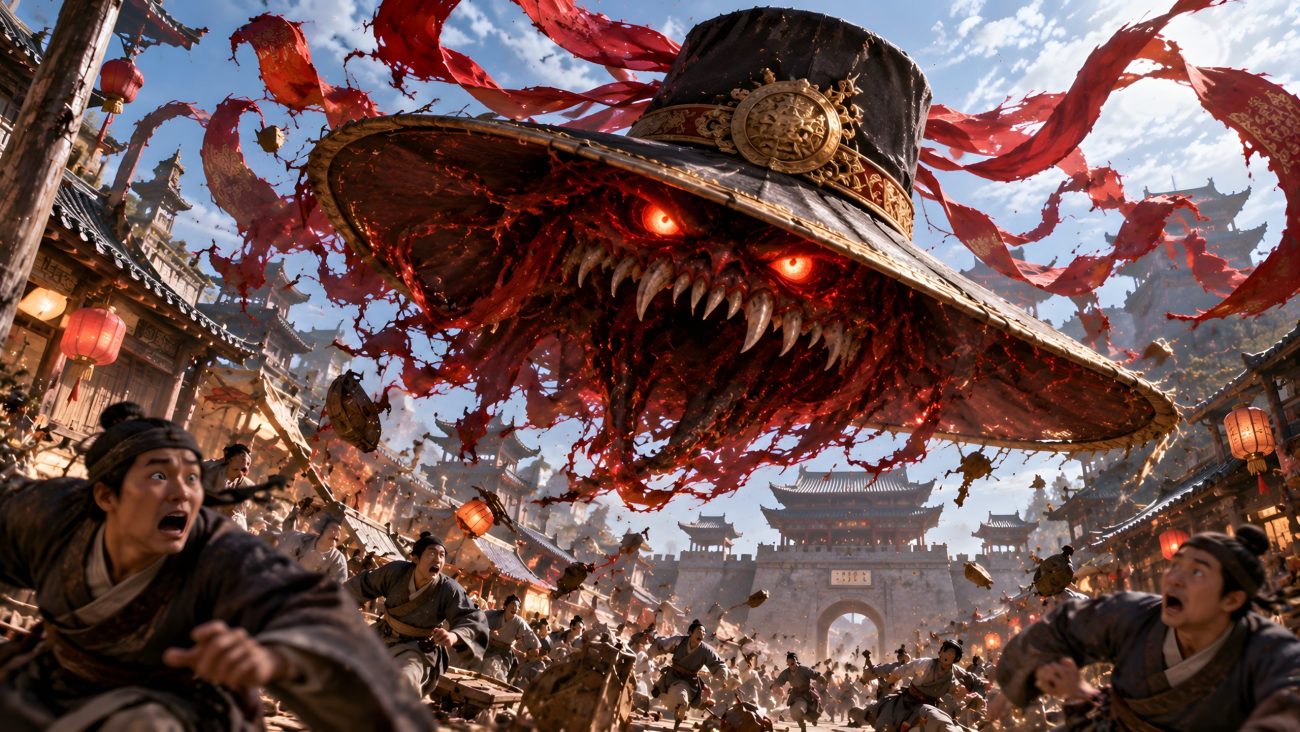
The Hat Demon Panic was a widespread supernatural scare during the Northern Song dynasty, beginning in 1018 during the reign of Emperor Zhenzong. Reports circulated of a strange creature resembling a hat that could fly through the air and enter homes at night to devour people. The rumours initially spread around Luoyang, one of the dynasty’s major cities, where frightened residents became afraid to sleep. Daily routines, work, and commerce were disrupted as households stayed awake at night to protect themselves.

On the twenty-fifth day of the fifth lunar month, the governor Zhang Min formally reported the situation to the emperor. Emperor Zhenzong ordered an investigation, questioned the local authorities about their failure to contain the rumours, and summoned Daoist masters to perform rituals. The panic continued to spread over the following months, reaching Kaifeng, the capital, and other major population centres. People stayed awake with weapons at hand, and even some soldiers were reportedly affected. When someone mistook an ordinary object for the creature and shouted in alarm, neighbours joined in, sometimes triggering waves of screaming that spread through entire streets.

The emperor eventually offered rewards to anyone who identified the people spreading the rumours. Several individuals were arrested, including a monk known as Tianshang and two fortune-tellers, Zhang Gang and Geng Gai. The three principal rumour-mongers were executed, while some of their followers and other participants received imprisonment or exile. In Nanjing, however, the prefect Wang Zeng took a different approach: he publicly declared the creature a fabrication, ordered the city gates left open at night, and challenged the supposed monster to enter. He also sent soldiers to arrest those spreading panic, and the rumours soon subsided there.

The incident illustrates how reports of a mysterious creature could develop into a major social and political crisis. The original sightings remain unclear, and later interpretations have suggested that the initial report may have arisen from an unusual sighting before the rumours were amplified and exploited by political actors. The surviving account does not establish whether any actual supernatural creature existed; the Hat Demon is remembered primarily through the widespread fear and disorder associated with the incident.


Sources

“Mào Yāo” (北宋帽妖案). Chinese Wikipedia. Wikimedia Foundation. Accessed October 24, 2026. https://zh.wikipedia.org/wiki/%E5%8C%97%E5%AE%8B%E5%B8%BD%E5%A6%96%E6%A1%88


Agrippa

Tradition: Breton Mythology, French Mythology
Alternative Names: Égremont, Vif, Living Grimoire
Category: Object


The Myth

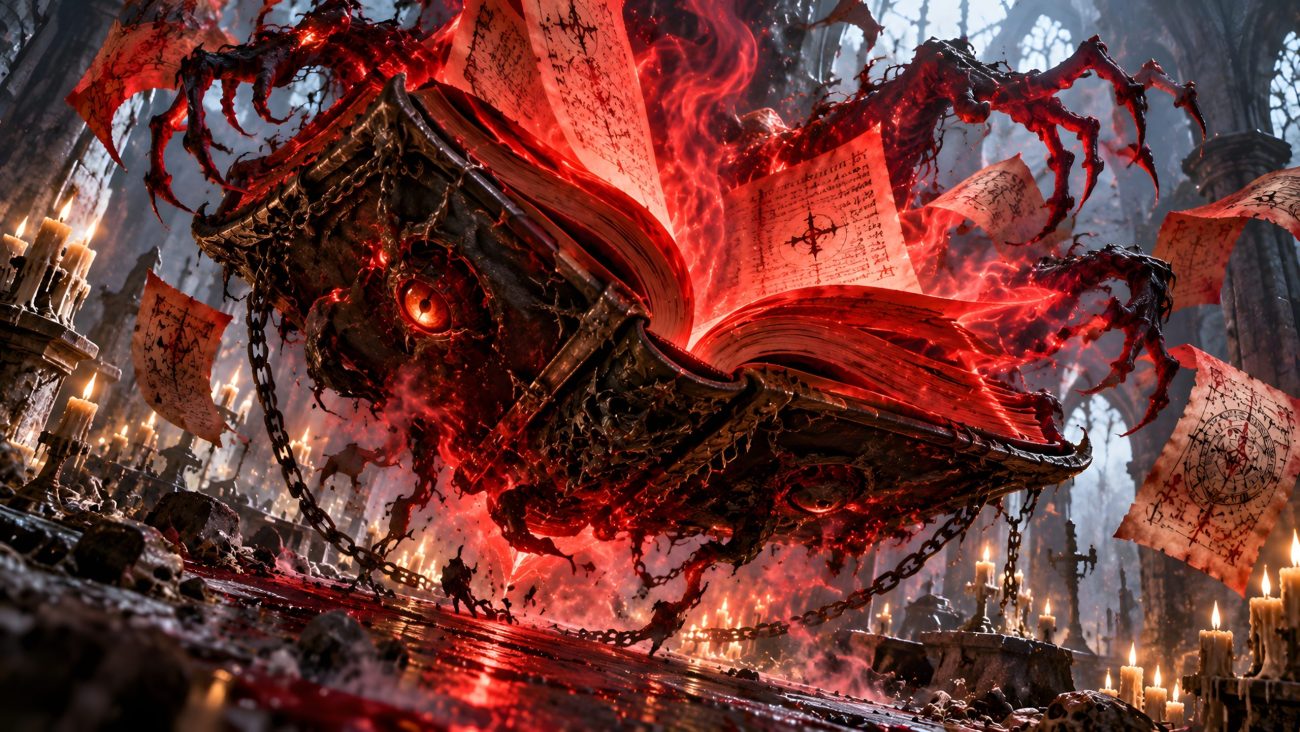
The Agrippa is a feared and malevolent magical book in Breton tradition, named after Heinrich Cornelius Agrippa. It is also known as Égremont in Châteaulin and Vif, meaning “Alive,” around Quimper. Enormous in size, it stands as tall as a man and possesses a mind and will of its own. Its pages are usually red with black lettering, although some versions have black pages covered in red text. The book contains the names of all the devils and instructions for summoning them, but an untamed Agrippa reveals only blank pages to anyone attempting to read it.

To force the writing to appear, the reader must fight the book, beating and thrashing it like a stubborn mule. Such battles can last for hours, leaving the victor exhausted and drenched in sweat. When not being used, the Agrippa must be chained to a strong, bent beam to prevent it from escaping. Traditionally, only priests were considered capable of mastering these dangerous books. They could summon demons in sequence to determine the fate of the dead: if none of the summoned devils admitted to possessing a deceased person’s soul, the soul was believed to have been saved. In earlier times, newly ordained priests were said to find an Agrippa mysteriously waiting on their tables. However, the books eventually passed into the hands of laypeople, whose temptation to use them could bring terrible consequences.

Anyone who reads an Agrippa without proper initiation is said to smell of sulphur and brimstone and to walk awkwardly, taking care not to tread on wandering souls. Worse still, possessing one prevents entry into Paradise, yet destroying it is almost impossible. A man from Penvénan named Loizo-goz tried to rid himself of his book by dragging it to Plouguiel on a chain, but it returned to its usual place. When he attempted to burn it, the flames recoiled. He then threw it into the sea with rocks tied to it, only for the Agrippa to climb out, shake off its shackles, and return to its perch with every page perfectly dry. Eventually, a priest must intervene to save the owner. When the unfortunate man lies dying, the priest unchains the book, exorcises it, and burns it. He gathers the ashes in a small pouch and hangs it around the dying man’s neck, saying, “May this weigh lightly upon you!” The ritual is intended to ease the burden the book has placed upon his soul.

The Agrippa can also endanger those who attempt to summon demons without knowing how to dismiss them. In one account, a priest in Finistère discovered that his sacristan had disappeared, leaving an Agrippa lying open on a table. Realising that the sacristan had summoned devils he could not send away, the priest called upon them one by one until they released the missing man. The sacristan returned blackened with soot and with his hair scorched. He never revealed what had happened to him, leaving the terrifying consequences of tampering with the living grimoire a lasting mystery.


Sources

“Agrippa.” A Book of Creatures, April 11, 2016. https://abookofcreatures.com/2016/04/11/agrippa/

Tsé’nagahi

Tradition: Navajo Mythology, American Myhtology
Alternative Names: Tsé’nagahi, Traveling Stone, Tieholtsodi
Category: Object


The Myth

Tsé’nagahi, the Traveling Stone, was one of the Anaye, or Alien Gods, primordial monsters that arose from unnatural sexual practices and grew to ravage and persecute the Navajo people. It dwelled at Betchil gai, the Shining Rock, or near a lake where Tsé’espai pointed upward. Tsé’nagahi was an enormous living stone that hunted people by hurling itself at them. When it spotted someone in the distance, it would roll after them, overtaking those who stood still and crushing them beneath its immense body.

The hero Nayenezgani prepared carefully before confronting the monster. As he approached its lair, he planted black knives in the ground, followed by blue knives, yellow knives, and serrated blades at progressively closer intervals. When Tsé’nagahi saw him, it immediately launched itself at the hero as though hurled by a giant hand. The knives sliced fragments from its rocky body, creating deposits of coloured mineral pigments. Its bones became white rock, its flesh blue pigment, its hair black pigment, and its mouth and blood red pigment. Its intestines became yellow ocher, while the moisture from its sweat, mucus, tears, and urine gave rise to the wet patches that seep from rocks.

Nayenezgani struck the monster with a lightning arrow, forcing it to flee. The hero pursued it across Navajo territory, repeatedly cutting pieces from its body and leaving deposits of coloured stone behind. The chase eventually reached the San Juan River, where Tsé’nagahi plunged underwater. Nayenezgani attacked it three times more, and by the fourth encounter the creature shone like fire beneath the water. No longer resembling the monstrous stone it had once been, it begged the hero for mercy, promising never again to harm the Navajo people. Instead, it vowed to remain in the rivers, keep mountain springs open, and provide fresh water. Nayenezgani agreed to spare it, warning that he would return to kill it if it ever broke its promise. Tsé’nagahi kept its word and became Tieholtsodi, the Water Monster, described as a soft-furred otter with horns like a buffalo. Once a terrifying enemy, it became a benevolent being and a friend to all.


Sources

“Tsé’nagahi.” A Book of Creatures, October 23, 2020. https://abookofcreatures.com/2020/10/23/tsenagahi/