Tradition: Breton Mythology, French Mythology
Alternative Names: Égremont, Vif, Living Grimoire
Category: Object
The Myth
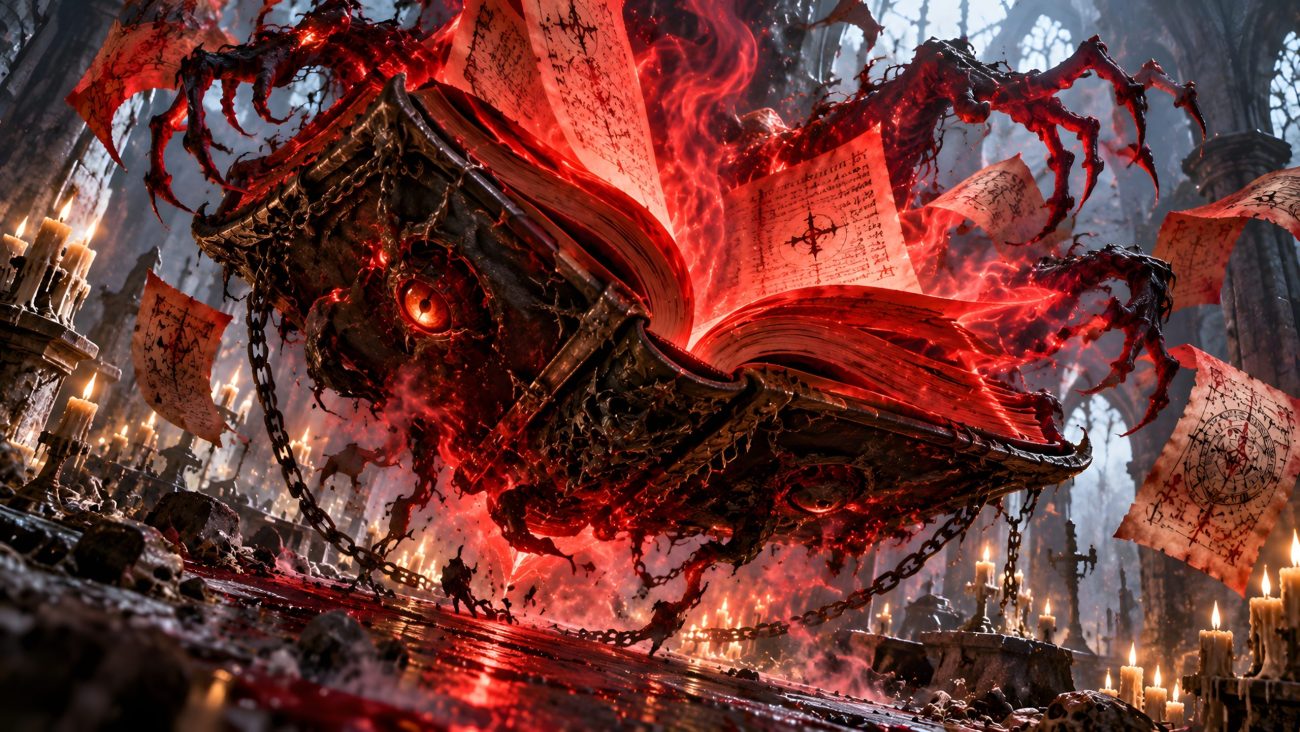
The Agrippa is a feared and malevolent magical book in Breton tradition, named after Heinrich Cornelius Agrippa. It is also known as Égremont in Châteaulin and Vif, meaning “Alive,” around Quimper. Enormous in size, it stands as tall as a man and possesses a mind and will of its own. Its pages are usually red with black lettering, although some versions have black pages covered in red text. The book contains the names of all the devils and instructions for summoning them, but an untamed Agrippa reveals only blank pages to anyone attempting to read it.
To force the writing to appear, the reader must fight the book, beating and thrashing it like a stubborn mule. Such battles can last for hours, leaving the victor exhausted and drenched in sweat. When not being used, the Agrippa must be chained to a strong, bent beam to prevent it from escaping. Traditionally, only priests were considered capable of mastering these dangerous books. They could summon demons in sequence to determine the fate of the dead: if none of the summoned devils admitted to possessing a deceased person’s soul, the soul was believed to have been saved. In earlier times, newly ordained priests were said to find an Agrippa mysteriously waiting on their tables. However, the books eventually passed into the hands of laypeople, whose temptation to use them could bring terrible consequences.
Anyone who reads an Agrippa without proper initiation is said to smell of sulphur and brimstone and to walk awkwardly, taking care not to tread on wandering souls. Worse still, possessing one prevents entry into Paradise, yet destroying it is almost impossible. A man from Penvénan named Loizo-goz tried to rid himself of his book by dragging it to Plouguiel on a chain, but it returned to its usual place. When he attempted to burn it, the flames recoiled. He then threw it into the sea with rocks tied to it, only for the Agrippa to climb out, shake off its shackles, and return to its perch with every page perfectly dry. Eventually, a priest must intervene to save the owner. When the unfortunate man lies dying, the priest unchains the book, exorcises it, and burns it. He gathers the ashes in a small pouch and hangs it around the dying man’s neck, saying, “May this weigh lightly upon you!” The ritual is intended to ease the burden the book has placed upon his soul.
The Agrippa can also endanger those who attempt to summon demons without knowing how to dismiss them. In one account, a priest in Finistère discovered that his sacristan had disappeared, leaving an Agrippa lying open on a table. Realising that the sacristan had summoned devils he could not send away, the priest called upon them one by one until they released the missing man. The sacristan returned blackened with soot and with his hair scorched. He never revealed what had happened to him, leaving the terrifying consequences of tampering with the living grimoire a lasting mystery.
Sources
“Agrippa.” A Book of Creatures, April 11, 2016. https://abookofcreatures.com/2016/04/11/agrippa/