Moss Lights

Tradition / Region: Czech Mythology
Alternate Names: —
Category: Flame


The Myth

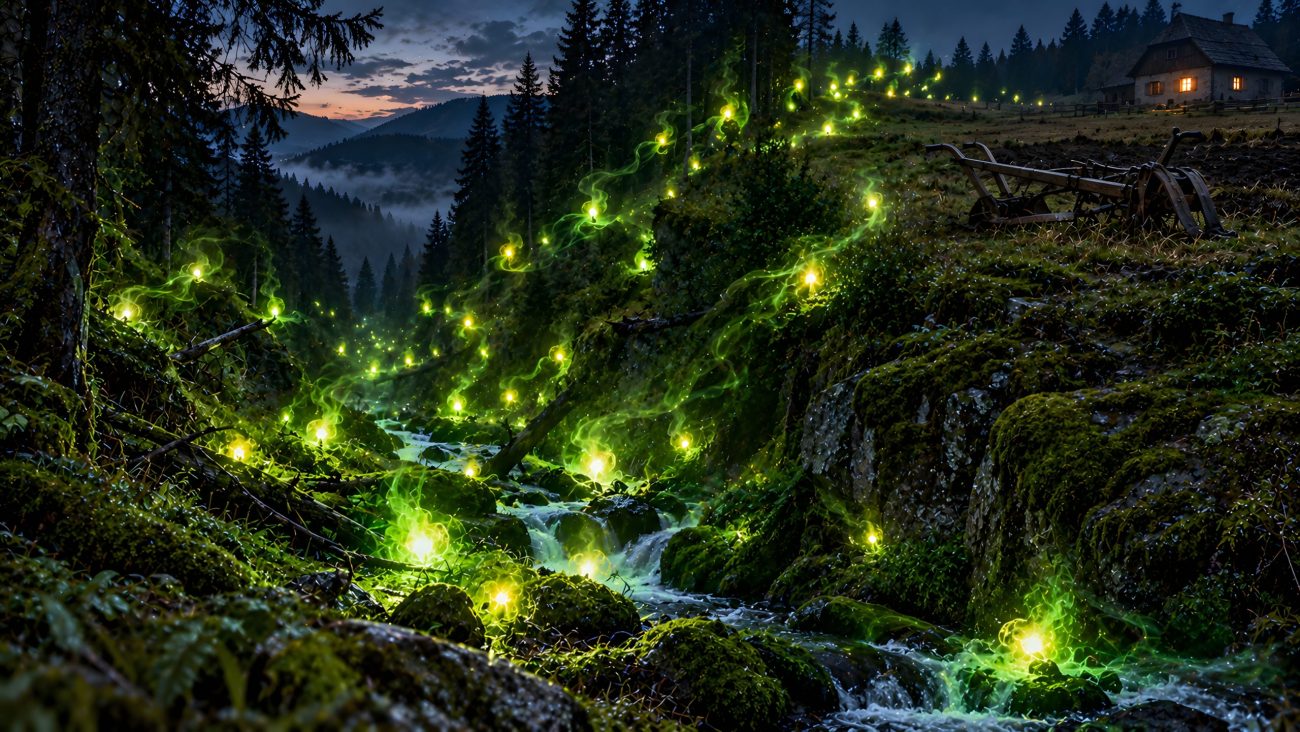
Moss lights are mysterious lights found in the Bohemian Forest.

A farmer from Waid was plowing his fields between light and darkness. Looking down into the ravine toward the Kieslingbach stream, he saw a multitude of moss lights standing below. Interested, he shouted to them, “Sanctus! Sanctus! Sanctus!”

Immediately, the lights danced wildly about like disturbed bees and suddenly scurried up the mountain. The farmer abandoned his plow and cattle, ran home, bolted the door, and closed the shutters.

Outside, the lights scratched furiously at the door and shutters, determined to get inside. It was a long time before they finally left.

When the farmer returned to the field, he could already hear the oxen bellowing in pain from afar. They lay clawed and bloody before the plow.


Sources

Hans Watzlik. “Mooslichter.” In Böhmerwald-Sagen. Budweis: Böhmerwalder Dorfbücher, 1921, Heft 5. Reproduced by SAGEN.at. https://www.sagen.at/texte/sagen/tschechien/watzlik/mooslichter.html
Culari

Tradition / Region: Italian Mythology
Alternate Names: —
Category: Flame, Bird


The Myth

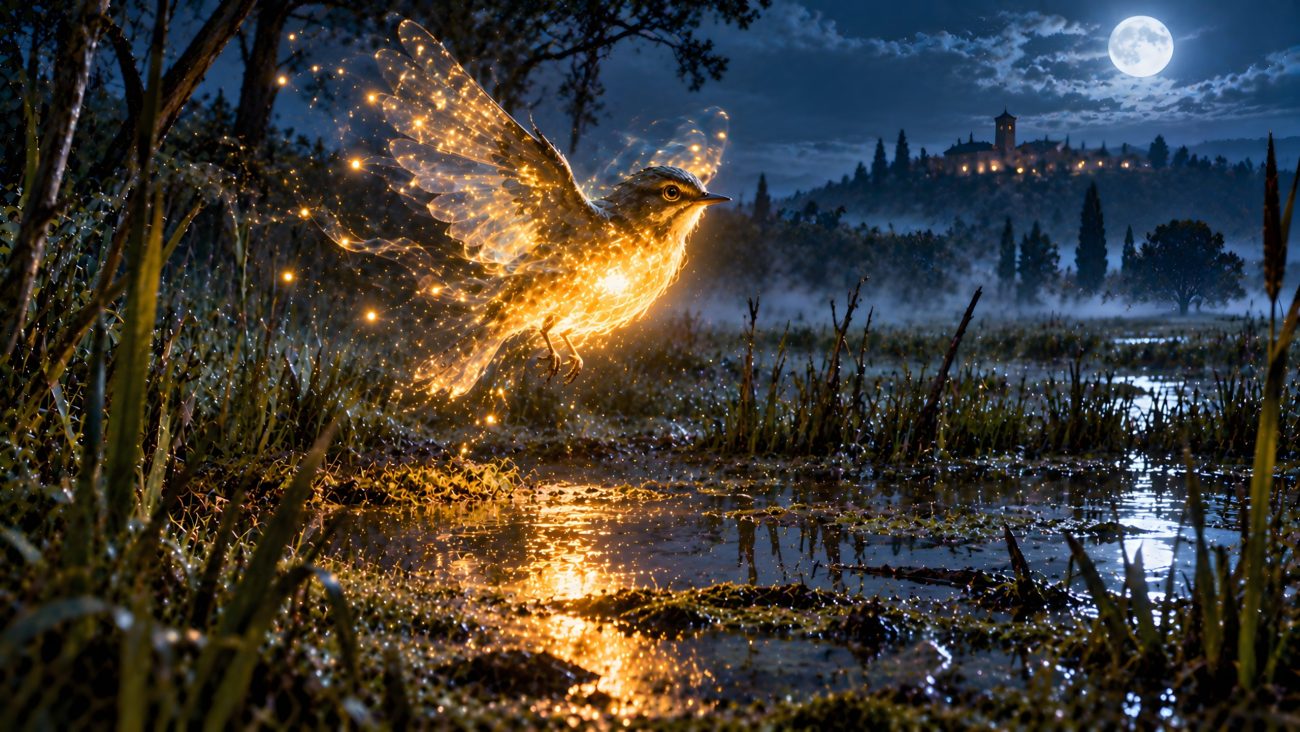
Culari are mysterious lights associated with the Ignis fatuus. In Italy, two varieties are said to exist, one on the mountains and one on the plains. They are regarded by the common people as birds whose bellies and other parts shine like fireflies.

The Culari have been reported to remain still as well as move, and sometimes appear fixed on the surface of the water. They may lure people toward marshy places, where they can perish.

Lights or flames appearing on the manes of horses and on people’s hair are also described. These were called HAGGS. They were said to appear when vapours or sweat from the heads of horses or people gathered around the hair and became ignited.

Such lights were also said to appear in moist and clammy places, marshes, churchyards, cloisters, kitchens, valleys, and places where dead bodies were laid. The earth was believed to give off thick, fatty, and clammy fumes from dead bodies, which could become kindled.

Some fires seen at night were believed not to be true fires at all, but lights without substance or heat, described as delusions of the Devil.


Sources

Brand, John. “Observations on Popular Antiquities: Will-o’-the-Wisp.” In Observations on Popular Antiquities: Including the Whole of Mr. Bourne’s Antiquitates Vulgares, edited and enlarged by W. Carew Hazlitt. 1888 edition. Transcription by Inamidst. http://inamidst.com/lights/wisp/brand1777


Malmlogi

Tradition / Region: Icelandic Mythology
Alternate Names: Vaflogi, Hauga-eldrinn
Category: Flame


The Myth

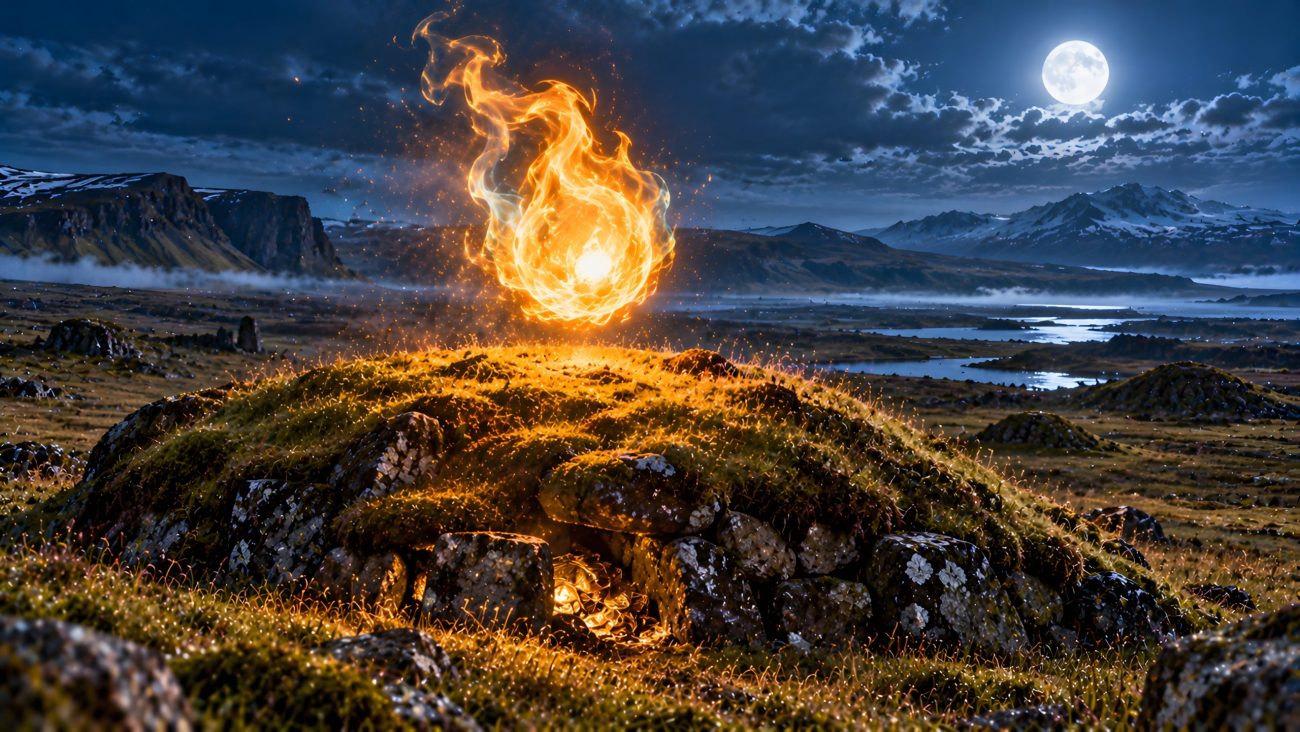
Malmlogi is a fire that burns over treasure hidden in burial mounds. It is also called vaflogi, meaning “hovering fire,” and is associated with “metal-fire.”

It is a widespread belief that fires appear over treasure hidden in burial mounds.


Sources

Reifegerste, E. Matthias. Die Hervarar Saga: Eine kommentierte Übersetzung und Untersuchungen zur Herkunft und Integration ihrer Überlieferungsschichten. Leverkusen, 1989.


Glowing Men

Tradition: Czech Mythology
Alternative Names: Fiery Men, Weihizer
Category: Flame


The Myth

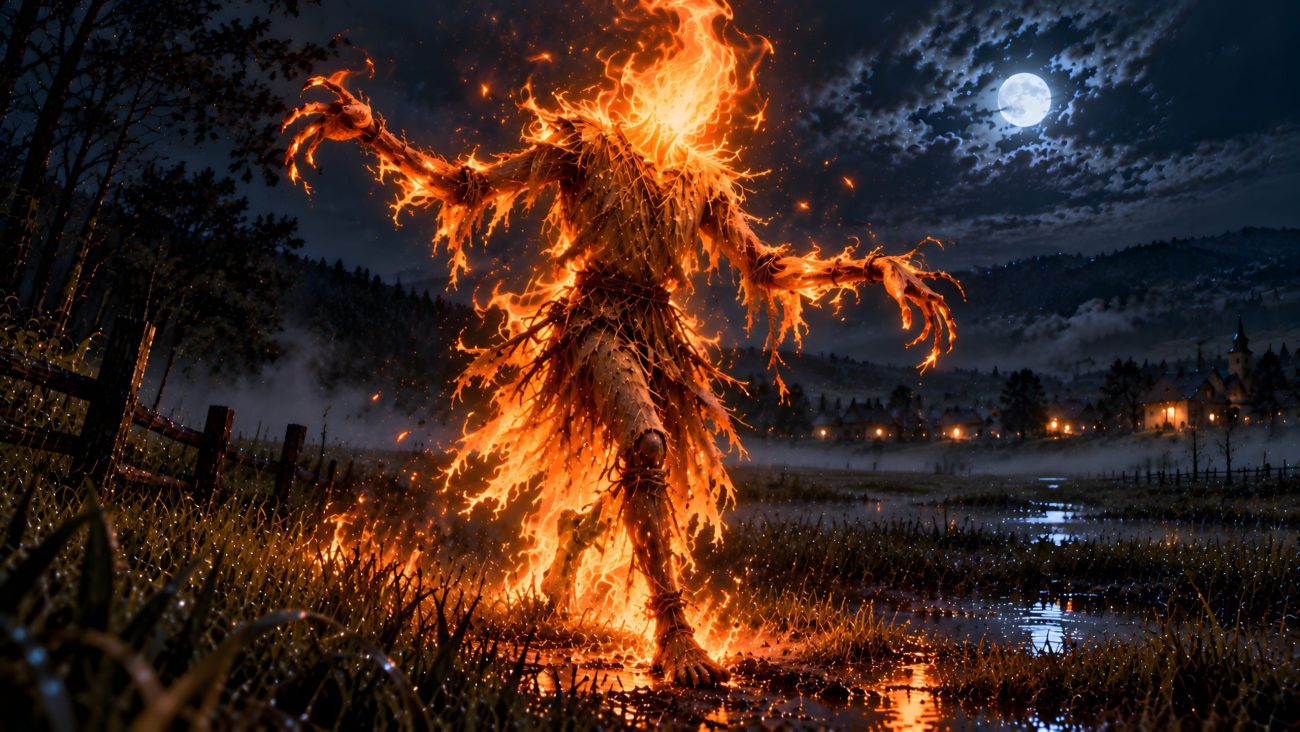
The Glowing Men were mysterious supernatural beings said to emerge at night from the desolate swamps beneath Bannholz, a wooded hill in the Bohemian Forest. They often appeared in groups of three or four, standing about as tall as a bundle of straw. Their burning bodies illuminated the darkness as they danced and wandered across the waterlogged meadows known as the Tratein. Herdsmen returning their cattle in the evening sometimes encountered these strange figures, which they called the Weihizer. The boys would quickly utter holy names to drive them away, while the Glowing Men could also leap into the baskets carried on women’s backs.

One night, a carter’s wagon broke down on a pitch-black road. Without a lantern, he called to a Glowing Man and asked it to shine its light so he could repair the damage. The fiery figure approached and illuminated the road with its burning body. Once the carter had finished his work, he thanked the being, saying, “God reward you!” The Glowing Man returned the blessing and declared that it had now been redeemed. Its light went out, and it vanished forever.

Another tale tells of a farmer from Kurzen who encountered a Glowing Man on an Advent night while walking to his barn. The figure stood in his path with its arms outstretched, terrifying him so greatly that he fled home and woke his household. When they returned to investigate, the being had disappeared, leaving only glowing footprints that led toward a moor.

According to the legend, such encounters would never happen again because Pope Gregory had banished all ghosts from the world for ninety years. The story presents the Glowing Men as more than frightening wandering fires: at least some were restless spirits who could find redemption through an act of kindness, while others remained mysterious and unsettling presences in the marshlands.


Sources


Hans Watzlik. “Glühende Männer.” In Böhmerwald-Sagen. Budweis: Böhmerwalder Dorfbücher, 1921, Heft 5. Reproduced by SAGEN.at. https://www.sagen.at/texte/sagen/tschechien/watzlik/gluehendemaenner.html


Luz Mala

Tradition: Argentine Mythology, Uruguayan Mythology
Alternative Names: Evil Light, Luz Mala
Category: Flame


The Myth

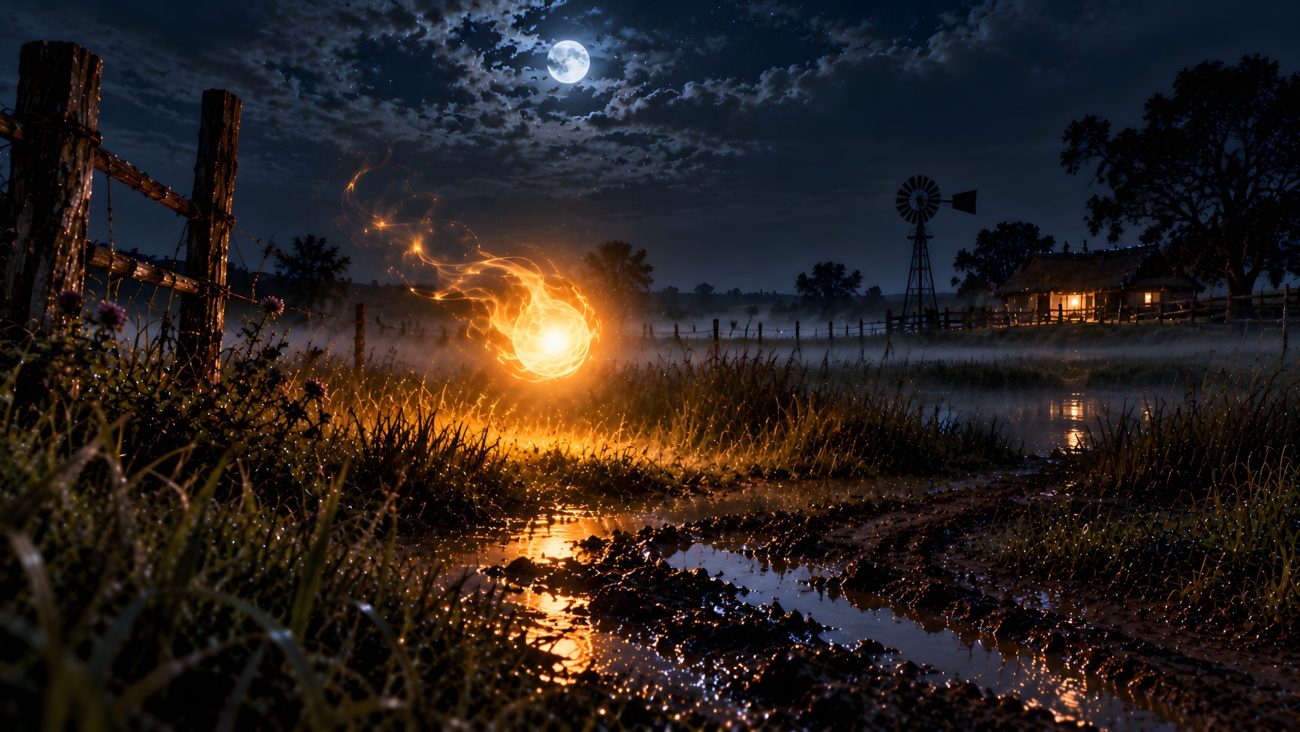
The Luz Mala, meaning “Evil Light,” is one of the best-known supernatural phenomena in the folklore of Argentina and Uruguay. It is especially feared in rural areas, where mysterious lights are said to appear far from towns and settlements. The phenomenon takes the form of an intensely bright ball of light that floats just a few inches above the ground, illuminating the surrounding darkness with an eerie glow.

The appearance of the Luz Mala is traditionally regarded with fear and suspicion. Its strange, low-floating light is associated with the mysterious and potentially dangerous forces believed to inhabit the countryside. For generations, stories of these glowing spheres have contributed to the legend of the Evil Light, making it an important part of the rural folklore of both Argentina and Uruguay.


Sources

“Will-o’-the-wisp.” Wikipedia: The Free Encyclopedia. Wikimedia Foundation. Accessed October 10, 2026. Section: “Americas.” https://en.wikipedia.org/wiki/Will-o%27-the-wisp#Americas


Osabi

Tradition: Japanese Mythology
Alternative Names: –
Category: Flame


The Myth

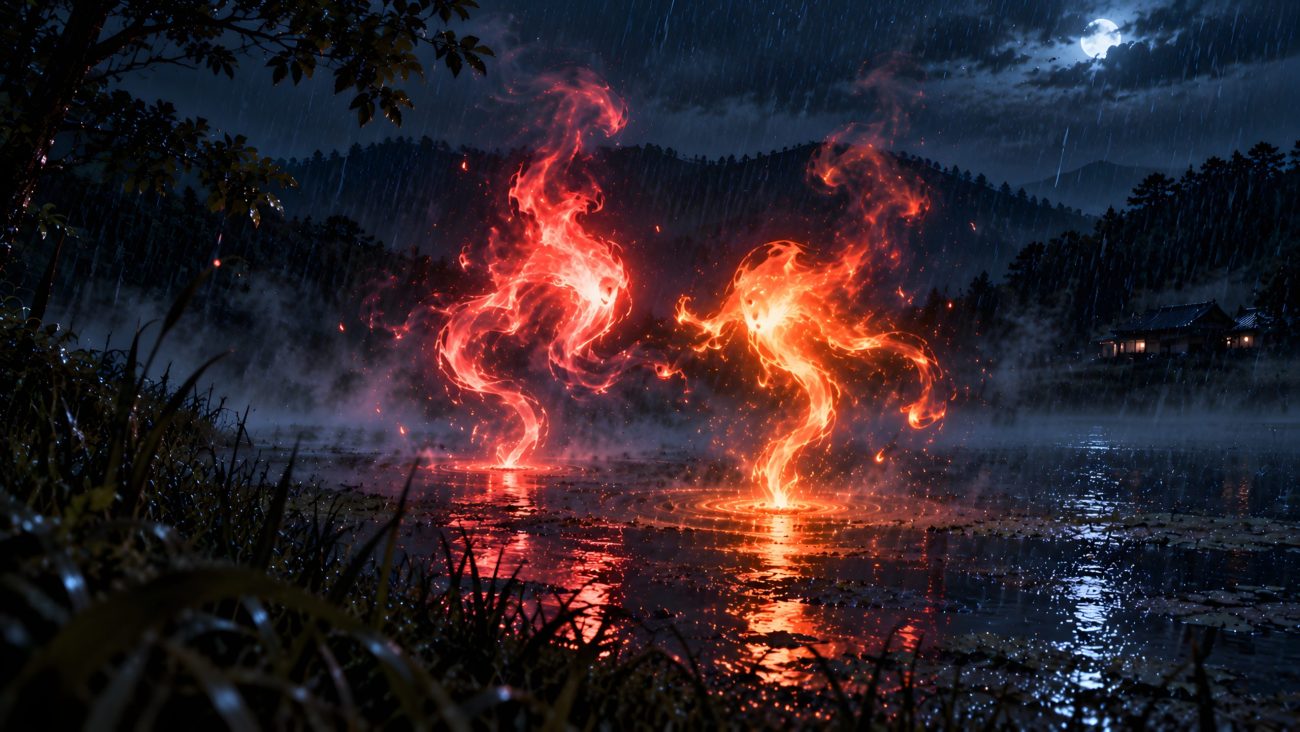
Osabi is a mysterious supernatural fire said to appear on rainy nights at Sankakuike Pond in the Nobeoka region of Miyazaki Prefecture, Japan. The phenomenon is described as two separate flames that emerge near the water and appear to struggle or fight with one another. Sightings were reportedly known in the area until around the middle of the Meiji era.

According to local legend, the strange lights originated from a quarrel between two women over the lending and borrowing of an osa, a comb-like tool used to straighten the folds of woven cloth. During their argument, one of the women fell into the pond and drowned. The two fires are believed to represent the women, continuing their conflict even after death.

The name Osabi was recorded by folklorist Kunio Yanagita in Yokai Meii, included in Yokai Dangi, drawing on the account Nobeoka Zatsudan. Yanagita also mentioned a similar mysterious fire from Nagoya known as Kantarōbi.


Sources

“Osabi.” 新版TYZ 妖怪図鑑 (New TYZ Yokai Encyclopedia). https://tyz-yokai.blog.jp/archives/1077434909.html


Kusakaribi

Tradition: Japanese Mythology
Alternative Names: –
Category: Flame


The Myth

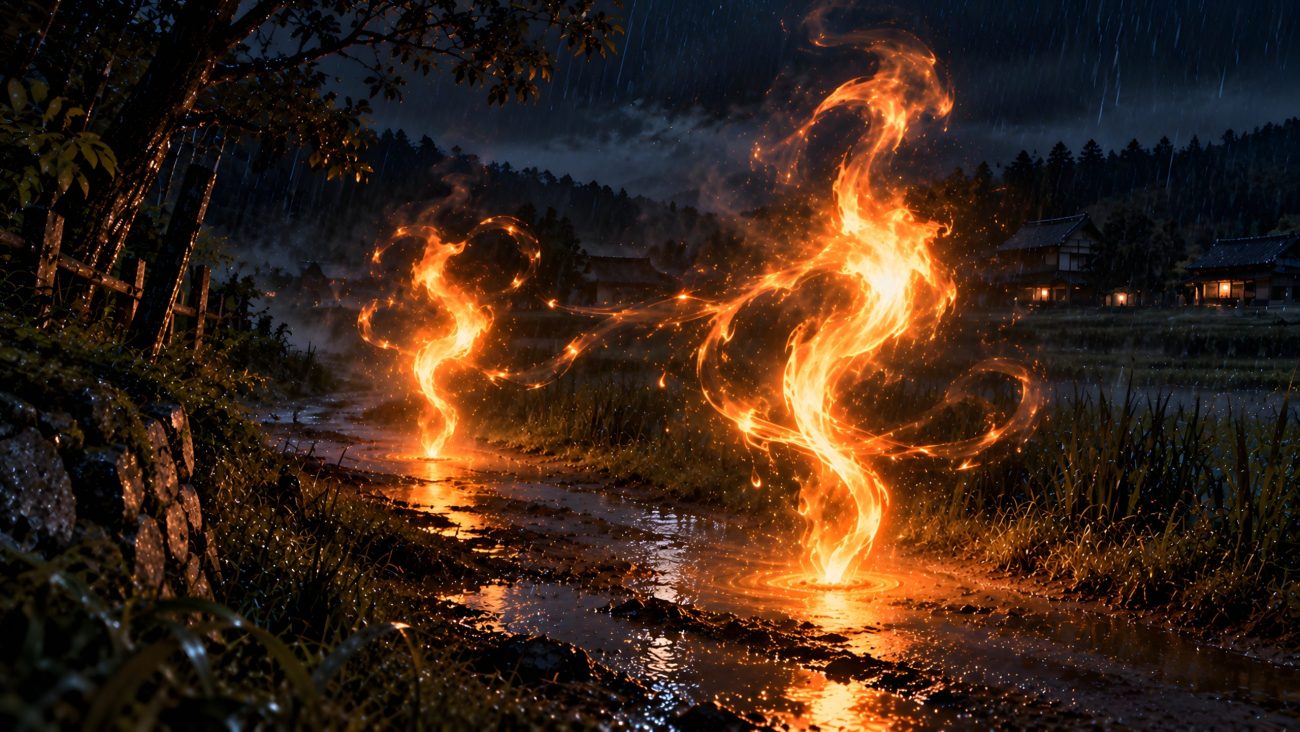
Kusakaribi, meaning Grass-Cutting Fire, is a mysterious supernatural flame from the Himeji region of Japan. It appears unexpectedly along roads at night, sometimes emerging as a single flame before multiplying into several fires that twist and intertwine with one another. These strange lights vanish as suddenly as they appear, leaving travellers unsettled by the unexplained spectacle.

At the beginning of the Genbun era (1736–1741), during the rainy season in May, a man named Hanshichi from Sayo Village was staying in Himeji. When his business failed to progress as he had hoped, he decided one evening to visit an acquaintance in Kamata Village. As he travelled through intermittent rain, darkness fell before he reached his destination. Suddenly, a flame burst forth from the middle of the road. As Hanshichi stopped to watch, another appeared, and the two fires twisted and tangled together before abruptly disappearing. After a short while, another flame appeared and vanished in the same mysterious fashion.

Uneasy after witnessing the strange lights, Hanshichi continued his journey and eventually reached his acquaintance’s home. When he described what he had seen, his host explained that the fire had been witnessed on other occasions and was known as the Kusakaribi. According to local legend, two boys who worked cutting grass had once quarrelled and killed each other with their sickles. Their violent deaths supposedly left behind a supernatural presence that continued to appear as a demonic fire along the road. The account was reportedly based on a story that the author, Haruna Tadanari, heard directly from Hanshichi himself.


Sources

“Kusakaribi.” 新版TYZ 妖怪図鑑 (New TYZ Yokai Encyclopedia). https://tyz-yokai.blog.jp/archives/1077434946.html


Aburakae

Tradition: Japanese Mythology
Alternative Names: Morubi, Moribi
Category: Flame


The Myth

Aburakae, meaning Oil Return, is a mysterious supernatural fire associated with Konyo in Itami City, Hyogo Prefecture, Japan. It appears on dark nights in early summer and on cold winter nights, particularly around Konyo Pond. The strange flame is known for its peculiar sounds and its unusual journey through the surrounding landscape.

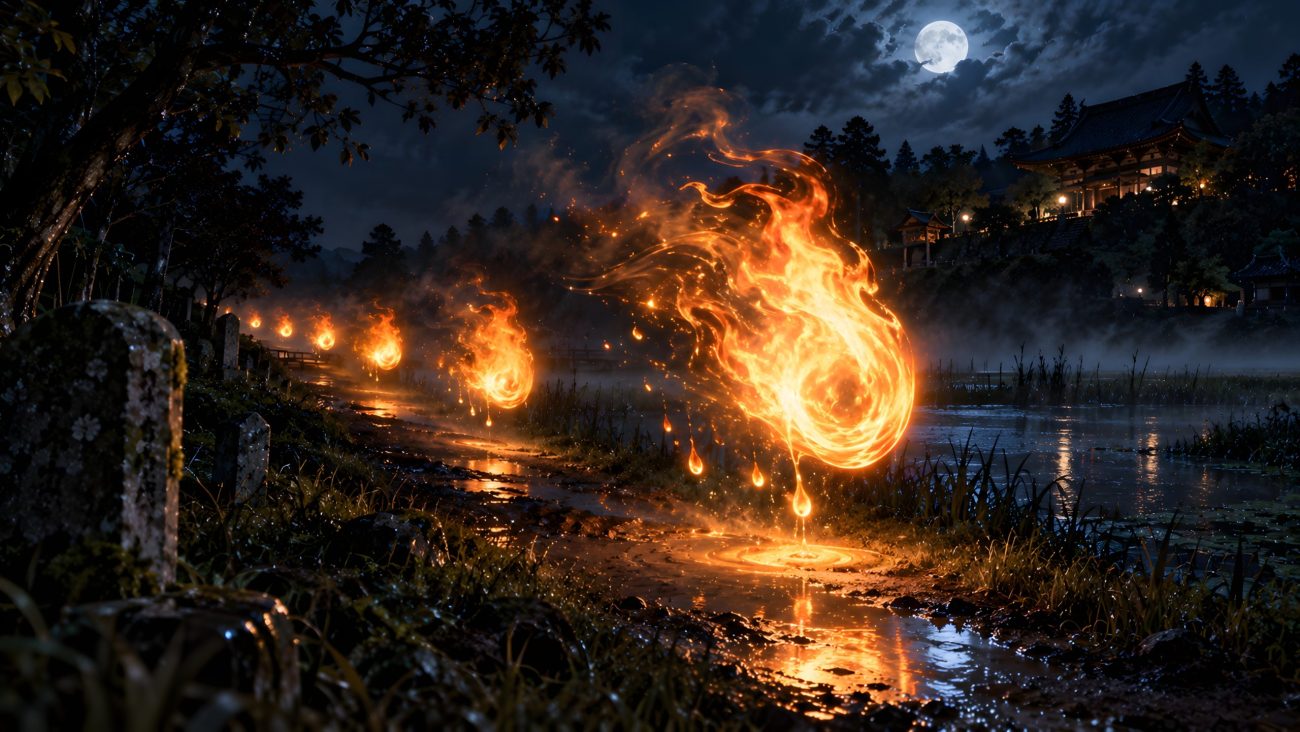
The Aburakae is said to emerge from the grave of Senso, located south of Konyo Pond, before travelling along the banks of Konyo Pond and Mizugaike Pond. It then follows the Tenjin River toward Nakayama-dera Temple. As it moves, the fire flashes with a repeated “pa-pa-pa-pa” sound, accompanied by a voice calling “ocha-ocha-ocha-ocha.” It advances rapidly without turning back, producing a further sound described as “tobo-tobo-tobo-tobo.”

The true nature of the Aburakae remains uncertain, and several explanations have been offered for its appearance. One tradition claims that it is the restless soul of someone who stole oil from Nakayama-dera Temple and now returns as a supernatural flame. Other accounts identify it as a fox wedding taking place on the northern bank of Konyo Pond, or as a fire kindled by a wolf near Senso’s grave. These different explanations surround the Aburakae with mystery, linking its strange journey to stolen oil, supernatural gatherings, and animals associated with the uncanny.


Sources

“Aburakae.” 新版TYZ 妖怪図鑑 (New TYZ Yokai Encyclopedia). https://tyz-yokai.blog.jp/archives/1010654248.html


Morubi

Tradition: Japanese Mythology
Alternative Names: Morubi, Moribi
Category: Flame


The Myth

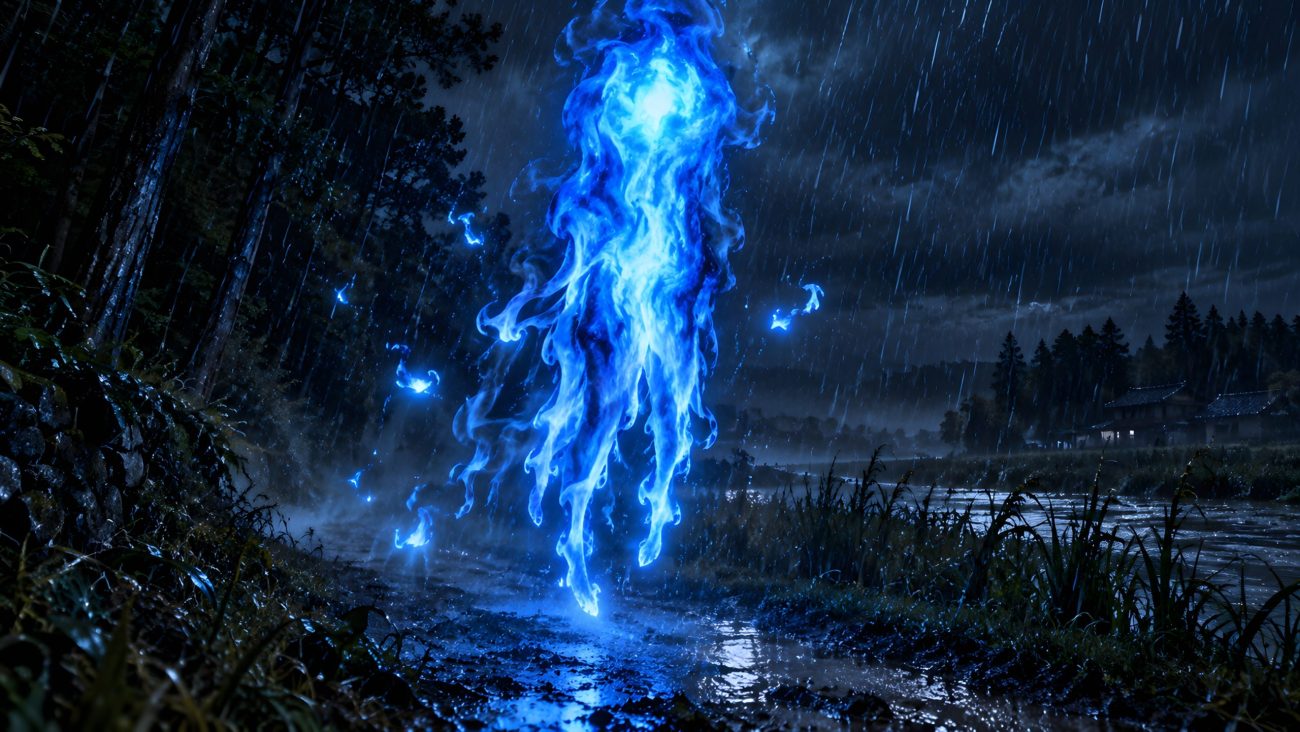
The Morubi is a terrifying supernatural fire from Goshogawara City in Aomori Prefecture, Japan. It appears as a bright blue flame, particularly on rainy nights in places where people have drowned or hanged themselves. Its body is strangely shaped: the section from its head to its torso is thicker than a human finger, while the parts resembling legs hang loosely beneath it. Floating in the air, this eerie fire is regarded as one of the most frightening supernatural beings.

The Morubi is known to follow people who speak ill of it. Even when struck and shattered into pieces, it does not necessarily stop pursuing its victim, making it difficult to escape once it has taken an interest in someone. Its persistence and association with places of tragic death have earned it a fearsome reputation among local supernatural legends.

Those who encounter a Morubi are advised to chant Buddhist prayers or seek refuge inside a room illuminated by a light. These precautions are believed to offer protection from the relentless blue flame, which may otherwise continue following its chosen victim.


Sources

“モルビ (Morubi).” 新版TYZ 妖怪図鑑 (New TYZ Yokai Encyclopedia). https://tyz-yokai.blog.jp/archives/1010653520.html


Min Min Light

Tradition / Region: Australian Mythology
Alternate Names: —
Category: Flame


The Myth

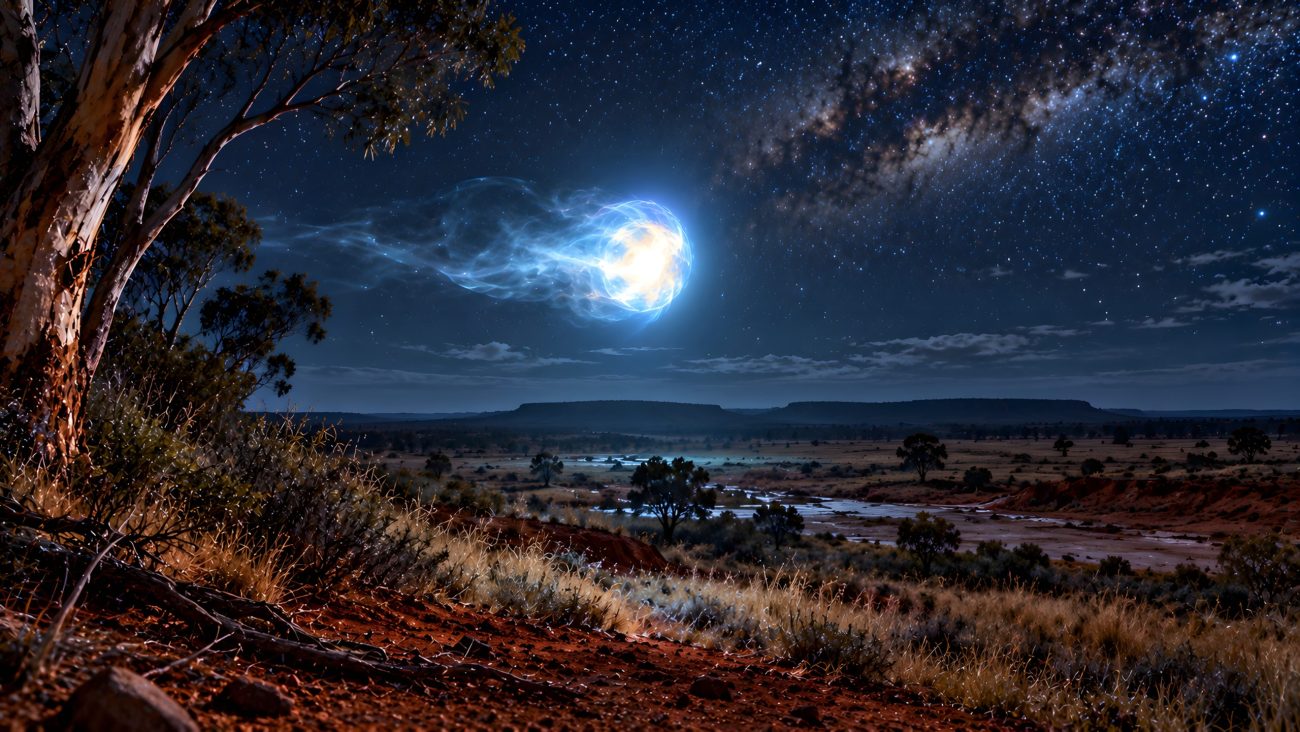
The Min Min Light is a mysterious light reportedly seen in parts of the Australian outback after dark, with the majority of sightings occurring in the Channel Country.

Stories about the lights are found in Aboriginal myth predating Western settlement of the region and later became part of wider Australian folklore. The lights sometimes followed or approached people and disappeared when fired upon, only to reappear later. Indigenous Australians hold that sightings increased alongside the increasing arrival of Europeans in the region.


Sources

“Will-o’-the-wisp.” Wikipedia: The Free Encyclopedia. Wikimedia Foundation. Accessed October 10, 2026. Section: “Americas.” https://en.wikipedia.org/wiki/Will-o%27-the-wisp#Americas