Faeu boulanger

Tradition / Region: Guernsey Mythology, English Mythology
Alternate Names: Rolling fire
Category: Flame


The Myth

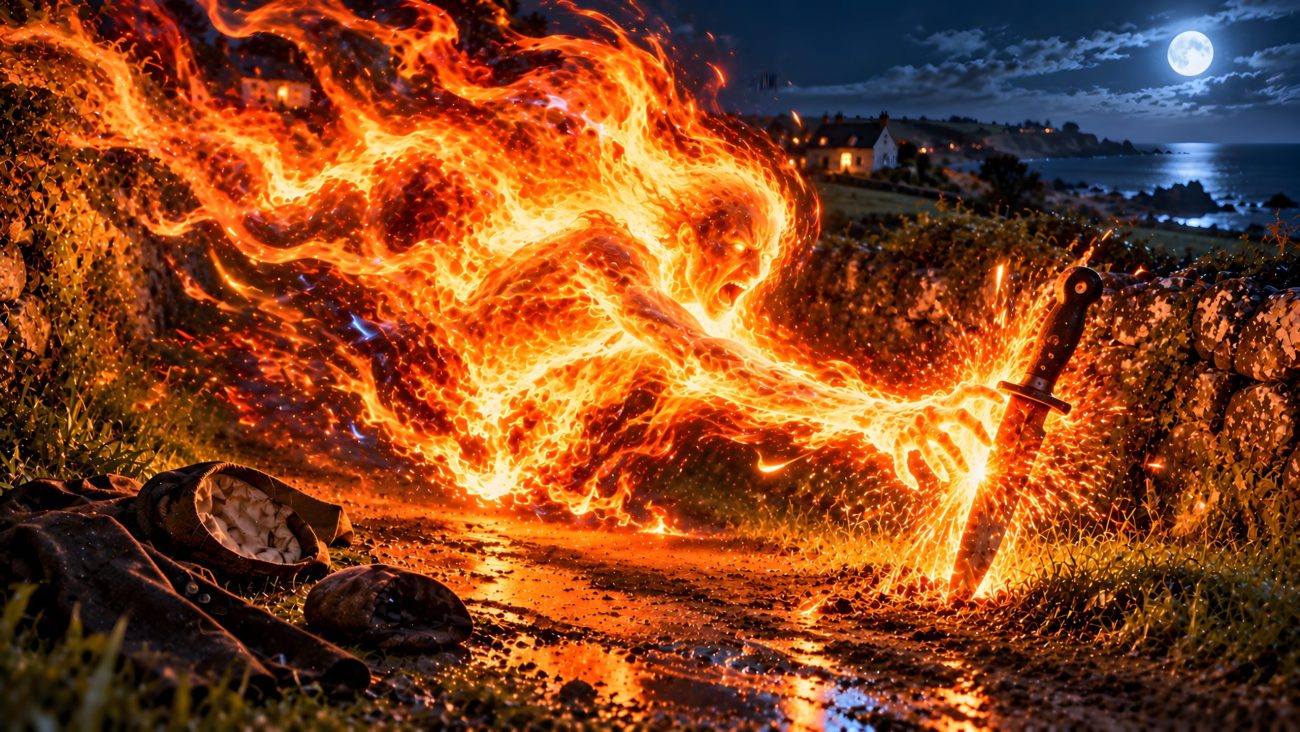
Faeu boulanger, meaning “rolling fire,” is believed to be a lost soul.

When confronted with the spectre, one remedy is to turn one’s cap or coat inside out. This stops the Faeu boulanger in its tracks. Another remedy is to stick a knife into the ground, blade upward. The Faeu boulanger will attack the blade in an attempt to kill itself.


Sources

“Will-o’-the-wisp.” Wikipedia: The Free Encyclopedia. Wikimedia Foundation. Accessed October 10, 2026. Section: “Americas.” https://en.wikipedia.org/wiki/Will-o%27-the-wisp#Americas


Luces del dinero

Tradition / Region: Mexican Mythology
Alternate Names: Luces del tesoro
Category: Flame


The Myth

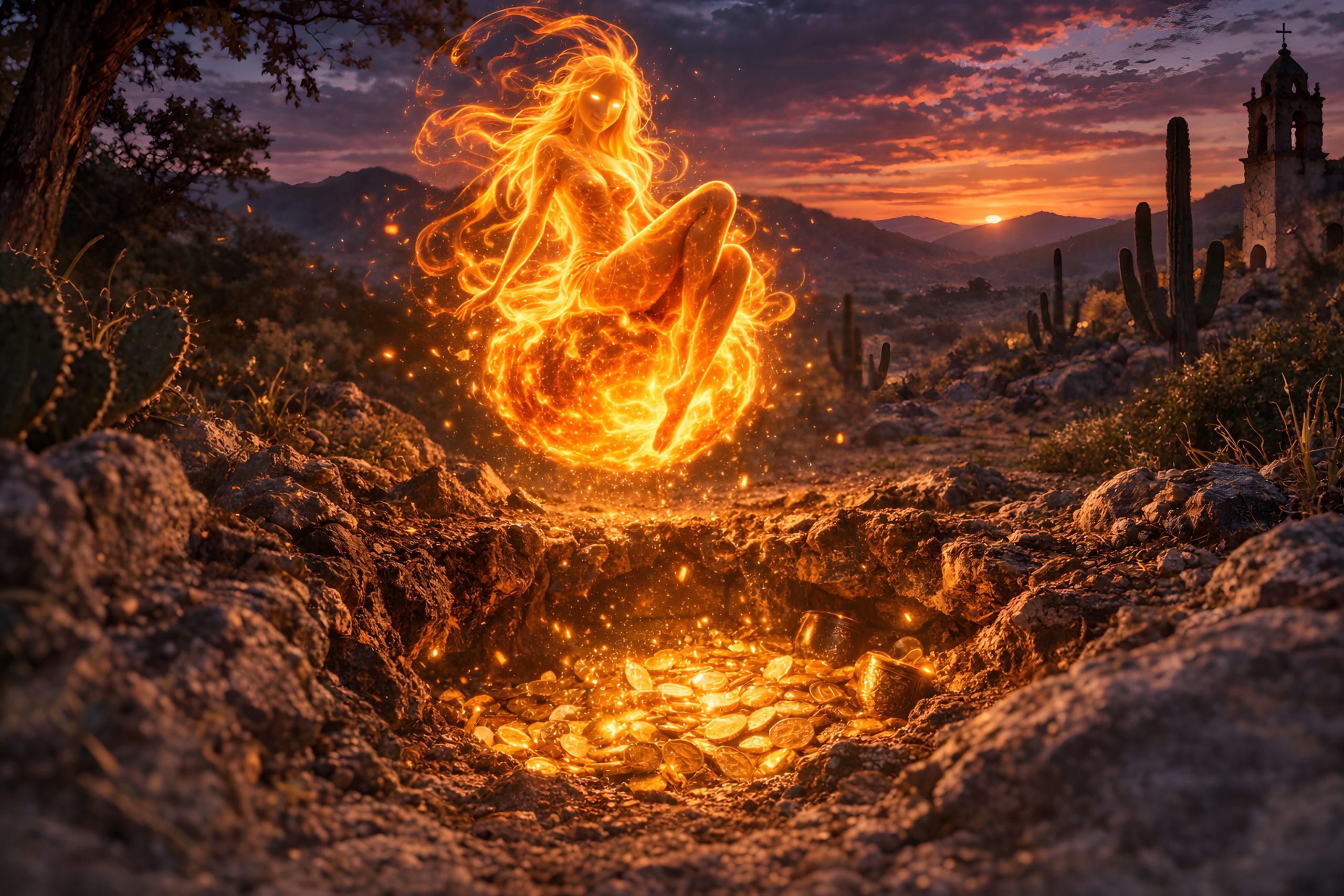
Luces del dinero are mysterious lights associated with witches and hidden treasure.

In Mexican folklore, one explanation says that witches transformed into these lights. Another says that the lights indicate places where gold or hidden treasures are buried, which can only be found with the help of children.


Sources

“Will-o’-the-wisp.” Wikipedia: The Free Encyclopedia. Wikimedia Foundation. Accessed October 10, 2026. Section: “Americas.” https://en.wikipedia.org/wiki/Will-o%27-the-wisp#Americas


Fifollet

Tradition: American Mythology
Alternative Names: Feu-follet, Fifollet
Category: Flame


The Myth

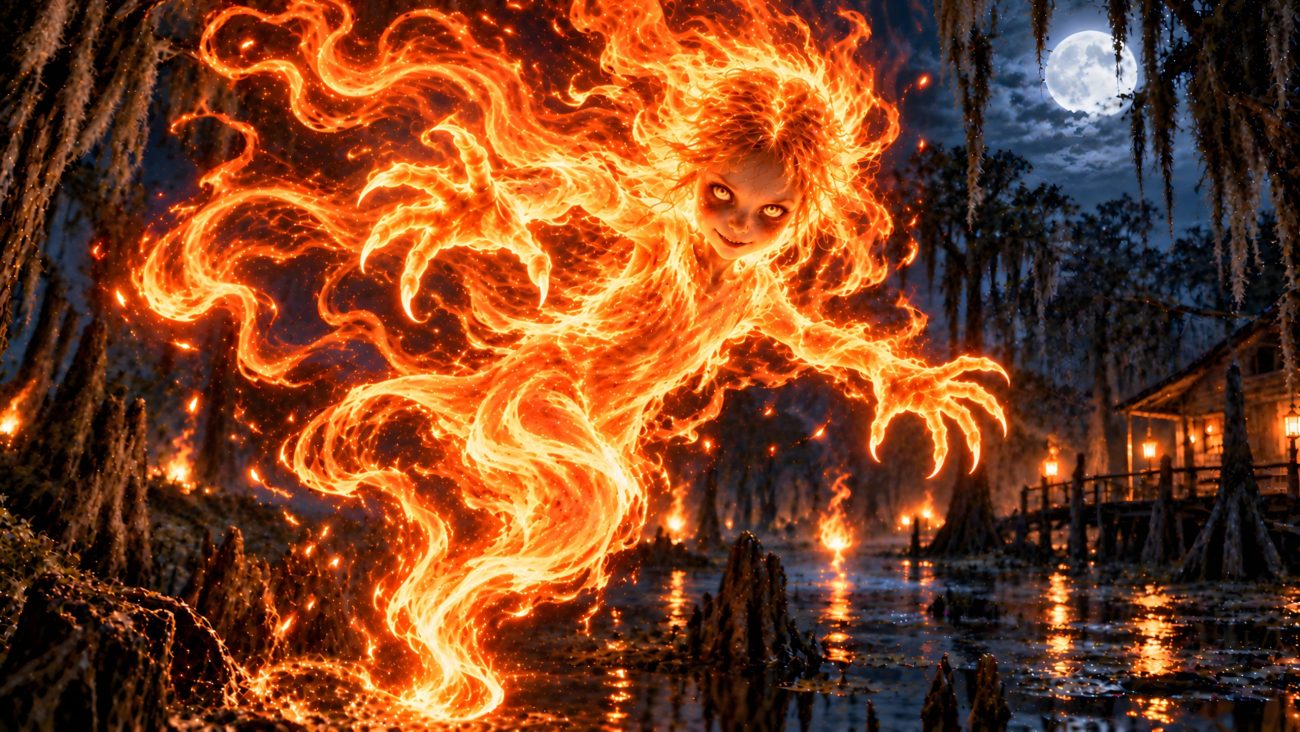
The Fifollet is a mysterious wandering fire from Louisiana, whose legend derives from French tradition. It is believed to be the restless soul of a dead person, sent back from the afterlife to perform penance for their sins. Rather than fulfilling this punishment peacefully, however, the spirit may turn against the living, attacking people out of vengeance.

The Fifollet is usually associated with harmless mischief, but some legends claim that it sucks the blood of children. According to other accounts, it is the soul of a child who died before being baptized, returning to the world of the living as a wandering flame.


Sources

“Will-o’-the-wisp.” Wikipedia: The Free Encyclopedia. Wikimedia Foundation. Accessed October 10, 2026. Section: “Americas.” https://en.wikipedia.org/wiki/Will-o%27-the-wisp#Americas


Ouwe Beer

Tradition: Dutch Mythology
Alternative Names: –
Category: Flame


The Myth

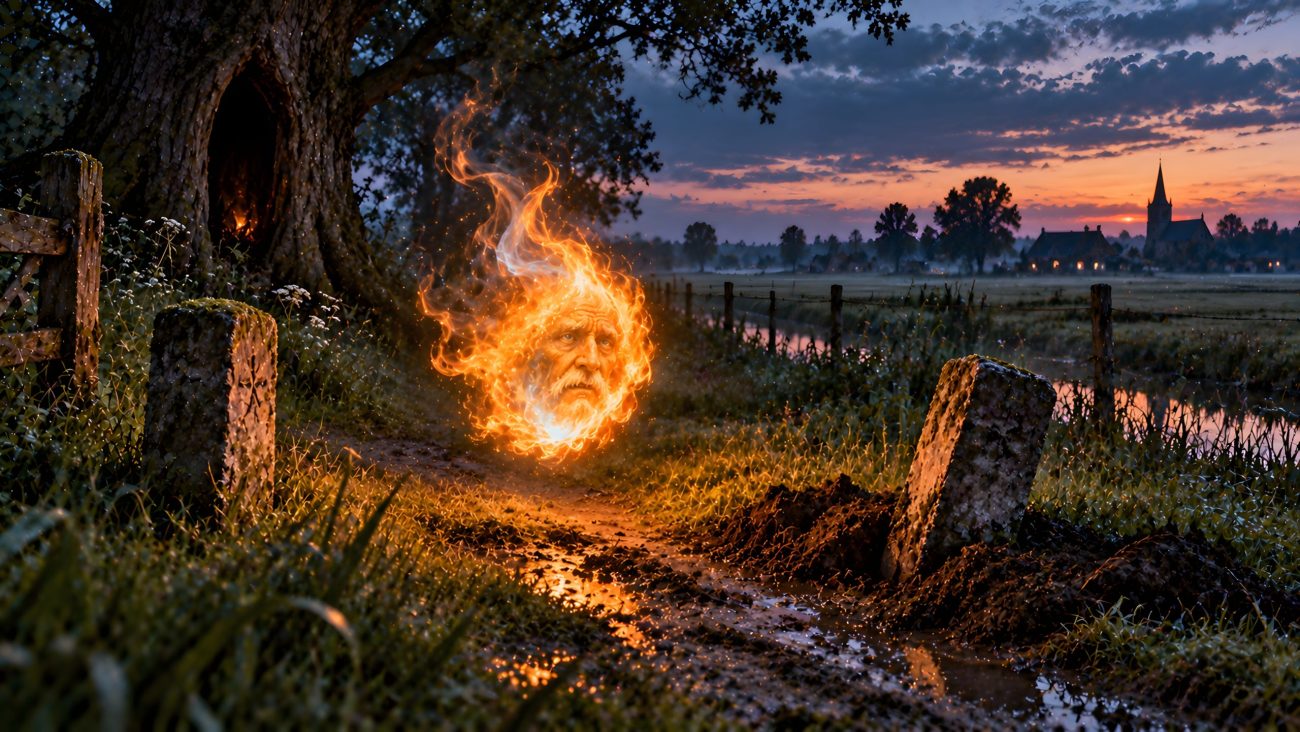
Ouwe Beer is the name for a Dwaallichtje.

During his life, he was a farmer who moved the boundary stones and thereby stole land from his neighbors. He was also said to have made a pact with the devil.

When he died, his coffin was too light, but when it was placed on the hearse, it was suddenly too heavy. He must wander eternally as a ball of fire or a weak, flickering light. During the day, he hides in a hollow tree.


Sources

Abe de Verteller. (2014). Van aardmannetje tot zwarte juffer: Een lijst van Nederlandse en Vlaamse elfen en geesten. In AbeDeVerteller.nl, from https://abedeverteller.nl/van-aardmannetje-tot-zwarte-juffer-een-lijst-van-nederlandse-en-vlaamse-elfen-en-geesten/


Haka no hi

Tradition / Region: Japanese Mythology
Alternate Names: 墓の火 (Haka no hi)
Category: Flame


The Myth

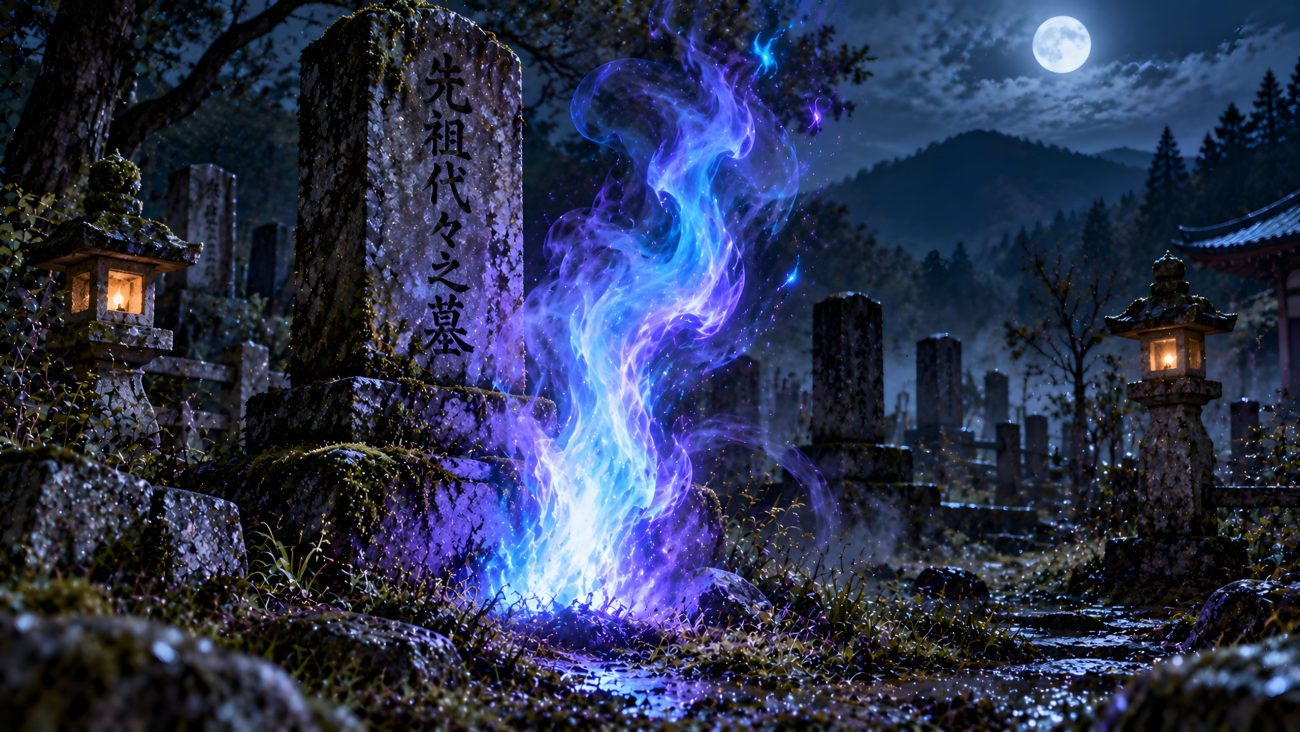
Haka no hi are mysterious supernatural fires, or kaika, that spout forth from the base of graves.

The cause of Haka no hi is unknown. It is commonly believed to result from the failure of the grave’s owner to reach enlightenment and pass on to Nirvana. The flames are thought to be residual energy from worldly attachments, or feelings of grudge or resentment, coming from the remains interred in the grave.


Sources

“Hakanohi.” Yokai.com: The Database of Japanese Folklore. https://yokai.com/hakanohi/


Kangoro-bi

Tradition / Region: Japanese Mythology
Alternate Names: Kantarō Fire, Kangoro
Category: Flame


The Myth

Kangoro-bi is a mysterious fire from Inuyama City, Aichi Prefecture, and other areas.

In Hashizume, Inuyama City, a farmer named Kangoro once lived with his elderly mother. Kangoro was eighteen years old, dutiful, honest, and known for his hard work.

One summer, a long drought caused the water in Kangoro’s rice paddy to dry up, while a neighboring rice paddy still had some water. Before dawn, Kangoro secretly cut down the embankment and diverted the water into his own rice paddy.

When the villagers discovered what he had done, they surrounded him with murderous intent. Kangoro was unable to escape and was beaten to death.

His elderly mother searched for her missing son, but the villagers refused to tell her what had happened. Understanding the situation, she stopped eating and died while continuously calling out Kangoro’s name.

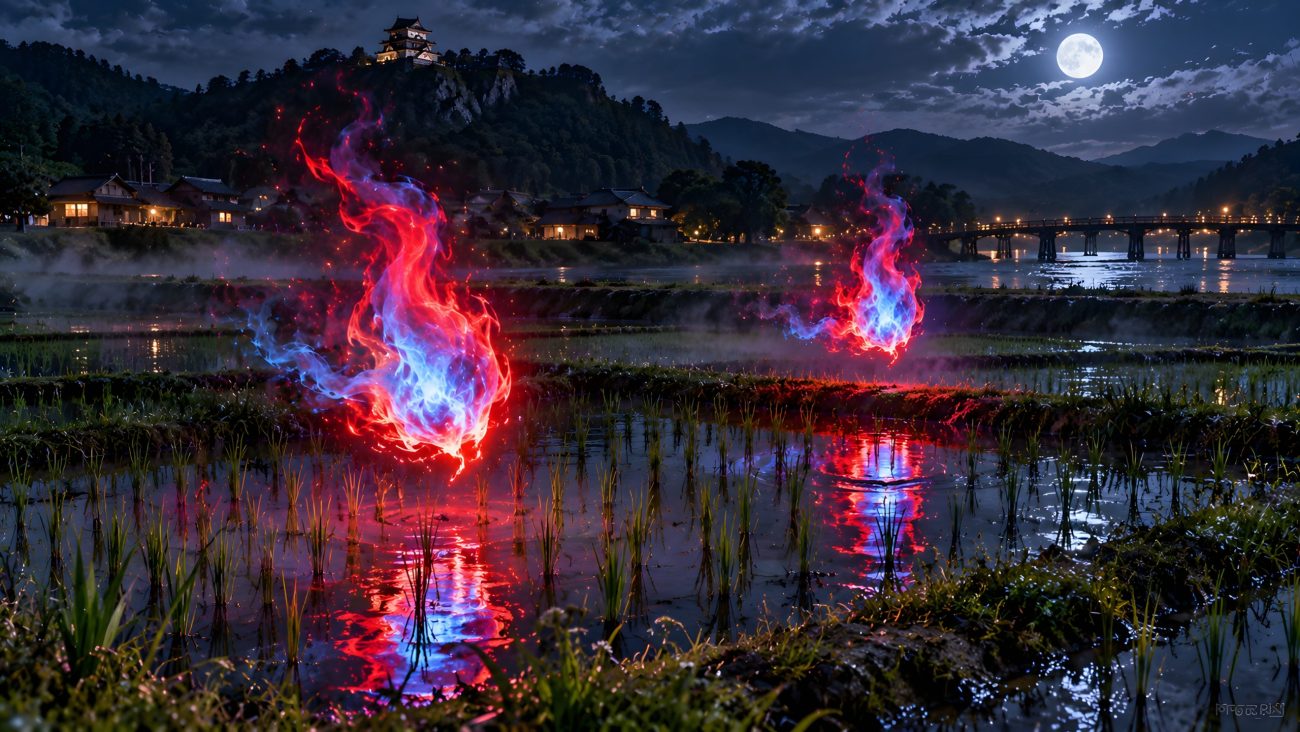
From then on, every summer night, two shadowy flames wandered over the rice fields of Hashizume. For the next 400 years, the Aoki River also flooded many times, causing suffering to the villagers. The river finally calmed when Abbot Taiyo of Inuyama Tokuju Temple prayed for the spirits of Kangoro and his mother.

In Yatsurugi-cho, Iwakura City, the Kangoro fire is said to be the hand lamp of a mother searching for her son Kangoro, who went missing while catching fireflies. It is a bluish-red bare flame that can be seen at any time of year, but was said to be particularly common during the rice-planting season.


Sources

“Kangorobi.” 新版TYZ 妖怪図鑑 (New TYZ Yokai Encyclopedia). https://tyz-yokai.blog.jp/archives/1077434933.html
Dwaallicht

Tradition: Dutch Mythology
Alternative Names: –
Category: Flame


The Myth

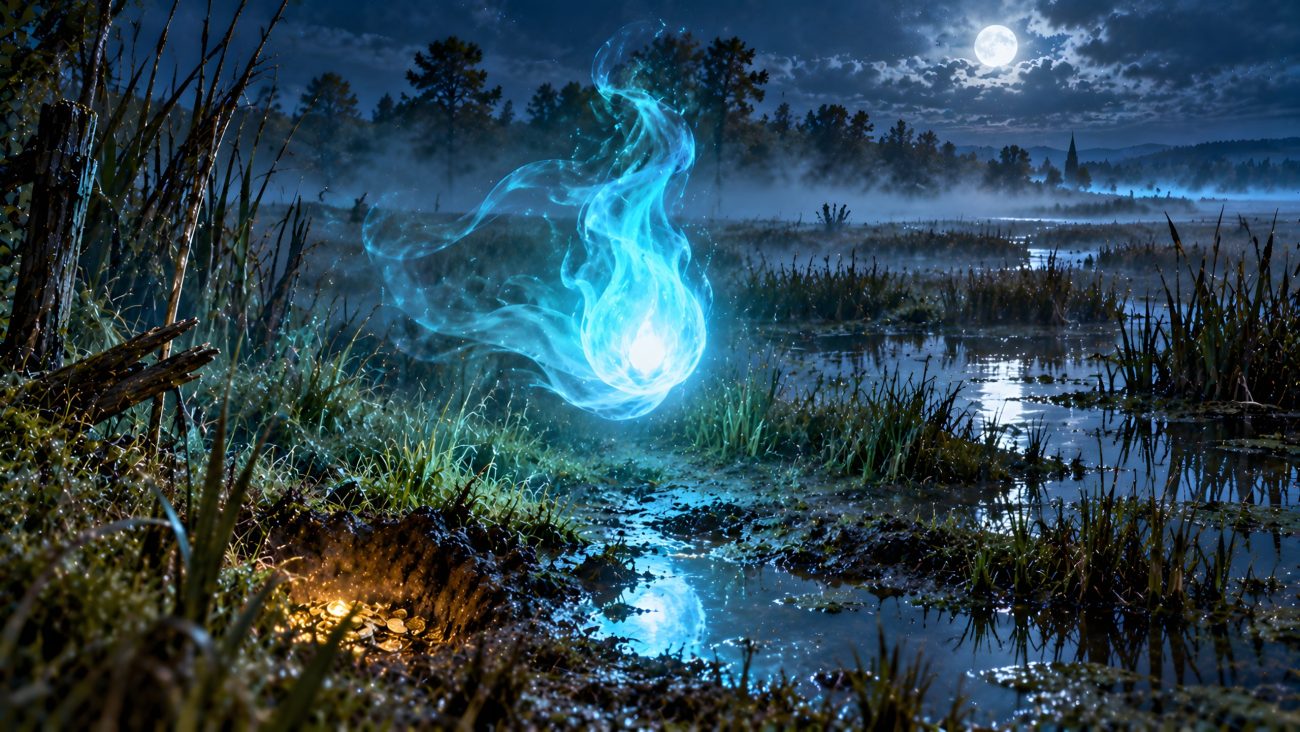
The Dwaallicht is a mysterious wandering light that appears at night, floating above the ground or over water. It may appear as a single flame or as several lights, glowing white, yellow, green, or blue. Blue Dwaallichten are said to reveal the locations of hidden treasures, tempting those who encounter them to follow their flickering glow into the darkness.

These wandering flames are commonly believed to be the souls of criminals or unbaptized children, doomed to roam the places where they committed their crimes or where they perished. They often appear above marshes, pools, and other bodies of water, where they hop and dance toward unsuspecting travellers, leading them astray until they become lost or drown. A wanderer may release a trapped soul by baptizing it, allowing it to find peace. However, they may suddenly be surrounded by a thousand more lights seeking baptism, forcing them to continue until dawn.

The Dwaallicht possesses other strange powers and meanings. It is said that a person can become invisible by rubbing themselves with the fat of these little flames. The lights may also appear as omens of future construction, heralding the place where a house will later be built or where a canal or railway will eventually run.


Sources

Abe de Verteller. (2014). Van aardmannetje tot zwarte juffer: Een lijst van Nederlandse en Vlaamse elfen en geesten. In AbeDeVerteller.nl, from https://abedeverteller.nl/van-aardmannetje-tot-zwarte-juffer-een-lijst-van-nederlandse-en-vlaamse-elfen-en-geesten/


Barlemanje

Tradition: Dutch Mythology
Alternative Names: Barele Man, Brandend Manje, Brandend Zeigertje
Category: Flame


The Myth

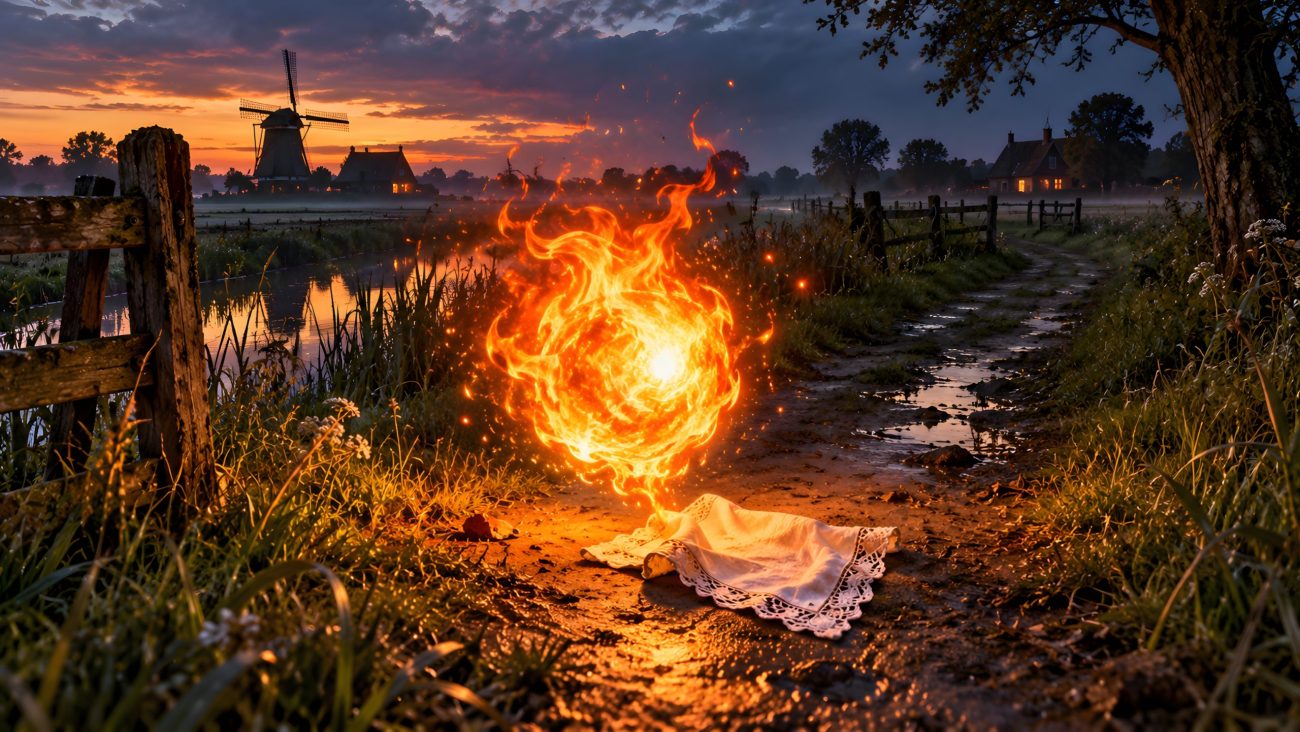
The Barlemanje is a mysterious fire spirit from Holland, appearing as a small ball of fire or a wandering light. It travels from place to place as a glowing flame, an eerie sight in the darkness.

The Barlemanje is known for pursuing people who encounter it. According to tradition, someone being chased by this fiery apparition could escape by throwing a handkerchief onto the ground. The Barlemanje would then settle upon the handkerchief, allowing the pursued person to get away.


Sources

Abe de Verteller. (2014). Van aardmannetje tot zwarte juffer: Een lijst van Nederlandse en Vlaamse elfen en geesten. In AbeDeVerteller.nl, from https://abedeverteller.nl/van-aardmannetje-tot-zwarte-juffer-een-lijst-van-nederlandse-en-vlaamse-elfen-en-geesten/


Onibi

Tradition: Japanese Mythology
Alternative Names: Ghost Fire, Onibi
Category: Flame


The Myth

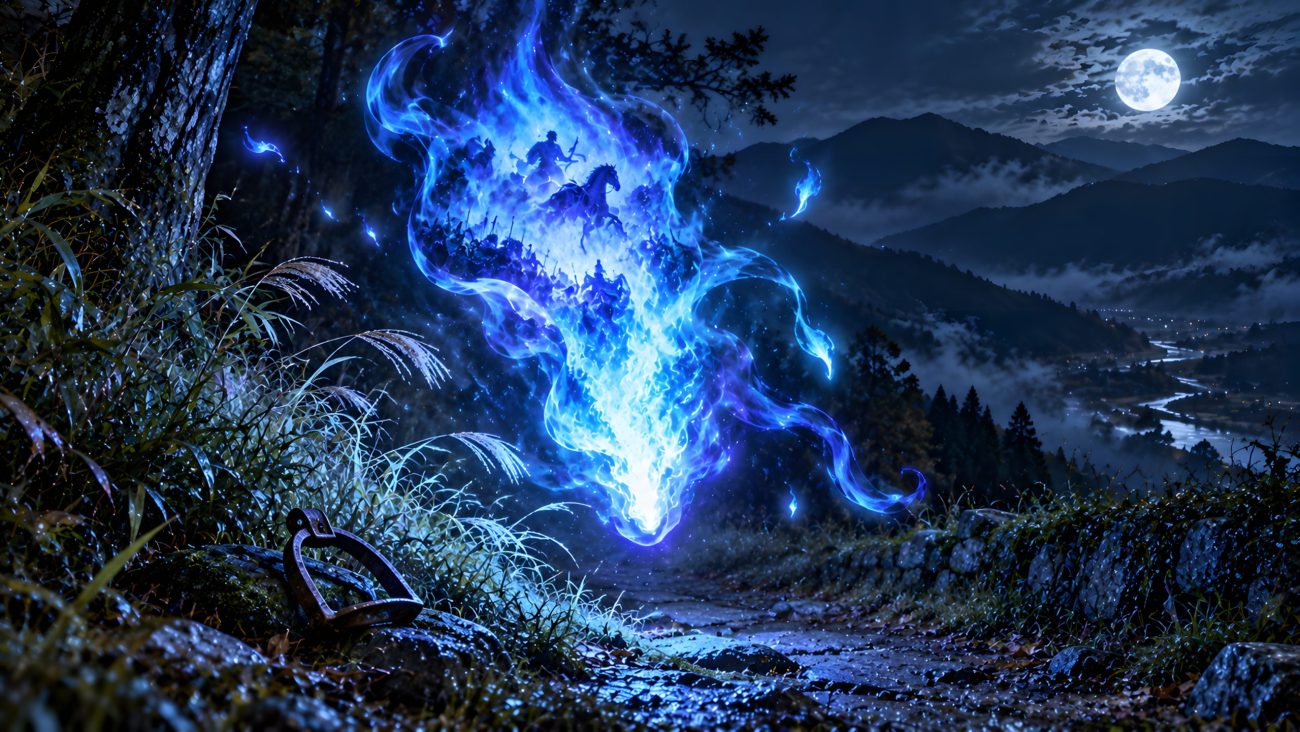
Onibi, meaning ghost fire, is a mysterious supernatural flame said to appear in various regions of Japan. It is most often described as a blue fire, sometimes resembling a burning torch, although accounts also describe flames of other colours. These strange lights appear without an ordinary source and are associated with spirits and the lingering presence of the dead.

According to the Wakan Sansai Zue, which cites the Chinese Bencao Gangmu, onibi are formed from the blood of fallen soldiers or cattle and horses that seeps into the earth and transforms over time. This account distinguishes them from will-o’-the-wisps and shadow fires, which are also described as transformations of spirits. Onibi are said to gather together and separate as they approach people, absorbing their life force. However, they can reportedly be made to disappear by producing a sound, such as striking them with a horse’s stirrups.

The name onibi is also used more broadly for mysterious flames of uncertain origin. Depending on the account, it may refer to foxfire, fires born from the resentment of the dead, or other unexplained supernatural lights. These varying descriptions make onibi a broad category of eerie flames associated with spirits, death, and mysterious occurrences.


Sources

“鬼火 [おにび] (Onibi).” 新版TYZ 妖怪図鑑 (New TYZ Yokai Encyclopedia). https://tyz-yokai.blog.jp/archives/1010652578.html


Nojukubi

Tradition: Japanese Mythology
Alternative Names: –
Category: Flame


The Myth

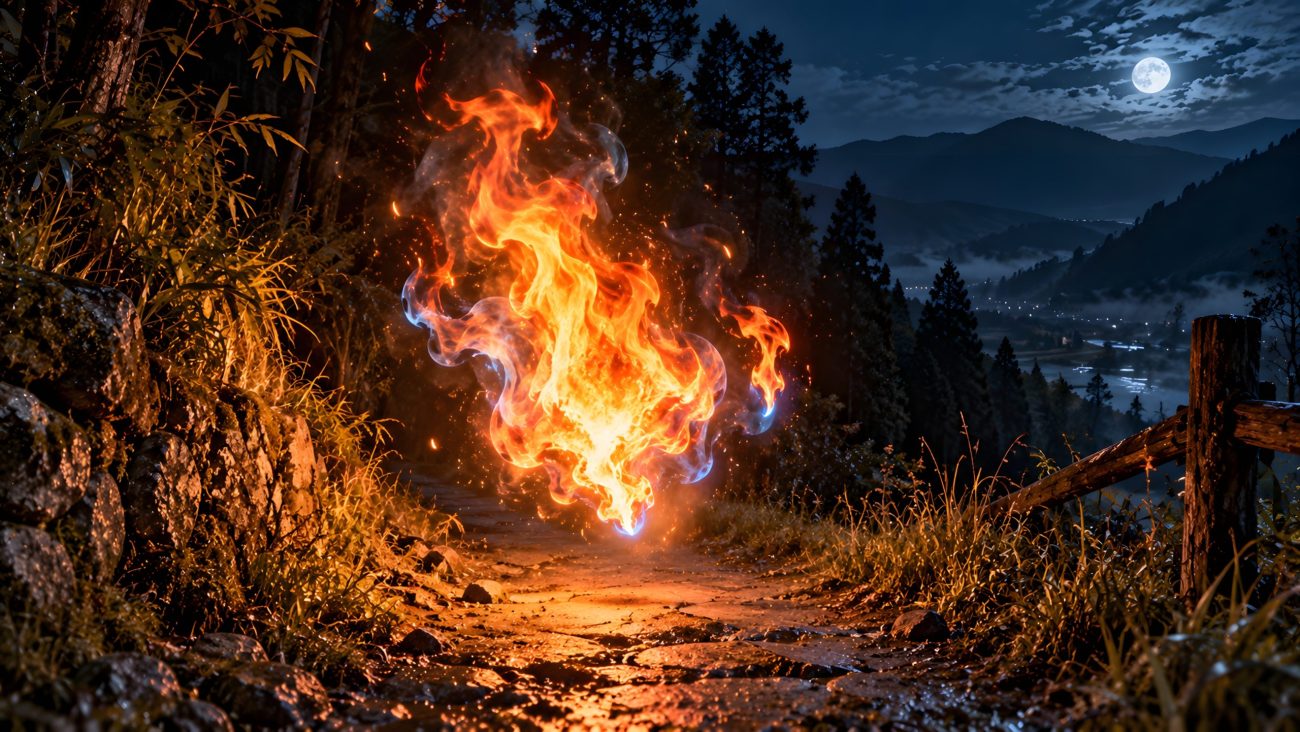
Nojukubi is a mysterious supernatural fire that appears along country roads, highways, and in the mountains of Japan. It manifests in places where no people are present, burning briefly before suddenly going out, only to appear again somewhere nearby. Unlike ordinary fires, it seems to arise without any visible cause, illuminating lonely and deserted places before vanishing into the darkness.

The Nojukubi is distinguished from foxfire and other natural-looking mysterious flames. Its appearances are unpredictable, and it is sometimes accompanied by strange sounds, including the noise of people talking excitedly or singing. These unexplained voices, heard alongside the flickering flames, give the phenomenon an eerie quality, as though an unseen gathering were taking place in the wilderness.


Sources

“Nojukubi.” 新版TYZ 妖怪図鑑 (New TYZ Yokai Encyclopedia). https://tyz-yokai.blog.jp/archives/1010653472.html