Uridimmu

Tradition / Region: Mesopotamian Mythology
Alternate Names: Mad Dog, Gruesome Hound
Category: Dog, Demon


The Myth

Uridimmu was a strange and powerful being known in the myths and rituals of ancient Mesopotamia.

He was depicted as a creature with the body of a dog standing upright like a man, but with a human head. He often wore a horned crown and carried a staff tipped with a crescent, marking him as a being connected to divine power. His name was associated with the idea of a raging or rabid dog, suggesting both ferocity and danger.

In the stories of the gods, Uridimmu was counted among the monstrous beings born from Tiamat during the great battle between chaos and order. When Marduk defeated these creatures, their forms were later used as protective symbols. Images of Uridimmu were set on doorways and buildings so that his frightening presence would drive away evil.

Over time he was no longer remembered only as a defeated monster but also as a guardian spirit. Figures of him were placed in temples and homes as protection. In ritual tradition he appeared among the attendants of the sun god Shamash and was called upon in ceremonies connected with healing and divine aid.

Thus Uridimmu was remembered both as a creature of chaos and as a protector — a human-headed dog spirit whose image guarded doorways and whose presence was meant to keep harm away.


Gallery


Sources

Wikipedia contributors. (n.d.). Uridimmu. In Wikipedia, from https://en.wikipedia.org/wiki/Uridimmu


Interpretive Lenses

Religious Readings
  • Christian Ascetic Deep Dive
Philosophical Readings
  • Nietzschean Deep Dive
Psychological Readings
  • Jungian Deep Dive
Esoteric Deep Dive
  • Hermetic Deep Dive
Political / Social Readings
  • Marxist Deep Dive

Lahama

Tradition / Region: Sumerian Mythology, Mesopotamian mythology
Alternate Names: Associated with Lahmu, Lahamu; linked with Oannes and Kululu
Category: Mermaid


The Myth

In the earliest age of the world, when only the deep fresh waters of the Abzu existed beneath the earth, the god Enki, lord of wisdom and the waters, created beings to dwell within his domain. These beings were called the Lahama, and they belonged to the sacred depths from which life and order would rise.

They were many—fifty in number—and they moved through the watery abyss as servants of Enki. They were shaped like beings of the deep, often imagined with forms that joined man and fish, creatures suited to the hidden waters below the world.

Later tales spoke of ancient ancestors of these beings. From the first primordial waters came the twins Lahmu and Lahamu, monstrous children of the earliest oceanic forces. From them came further generations of gods, and through them the world took form. Thus the spirits of the waters stood close to the beginning of creation itself.

Among the companions of Enki were powerful beings who sometimes rose from the sea to meet humankind. One of these was Kululu, a fish-formed servant of the god who moved between the divine world and the human one.

But the most famous of the sea-beings was Oannes.

In ancient days, near the shores of Babylonia, a strange creature rose from the Persian Gulf. His body was that of a fish, yet beneath the fish’s head was the face of a man, and beside the tail were human legs. Though his form was uncanny, his voice was gentle and human.

By day he walked among people. He taught them writing, numbers, and the arts. He showed them how to build cities and temples, how to establish laws, how to measure the land, and how to plant grain and gather food. Everything needed for civilized life he revealed to them.

He took no food while he stayed among humans. At sunset he returned to the sea and vanished beneath the waves, for he belonged both to water and to land.

Thus the beings of the deep waters—the Lahama and those who rose from them—were remembered as ancient spirits of the abyss, close to the birth of the world, and as teachers who once emerged from the sea to guide humankind.


Gallery


Sources

Bestiary.us contributors. (n.d.). Lahama. In Bestiary.us, from https://www.bestiary.us/lahama/


Interpretive Lenses

Religious Readings
  • Christian Ascetic Deep Dive
Philosophical Readings
  • Nietzschean Deep Dive
Psychological Readings
  • Jungian Deep Dive
Esoteric Deep Dive
  • Hermetic Deep Dive
Political / Social Readings
  • Marxist Deep Dive
Other
  • How to Invite The Lahama

Bull of Heaven

Tradition / Region: Mesopotamian mythology
Alternate Names:
Category: Cow


The Myth

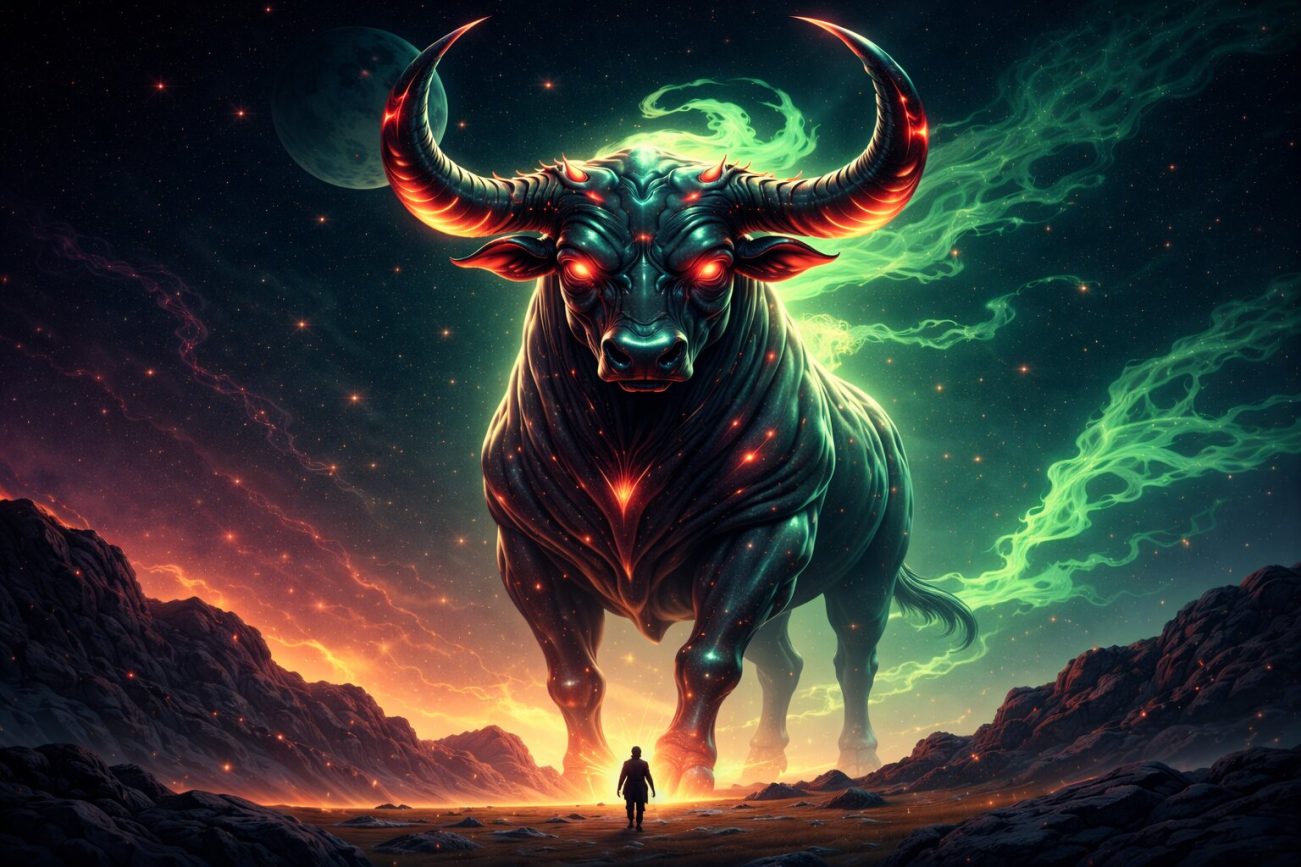
The Bull of Heaven was a creature of immense and terrifying power, kept under restraint by the gods because its release meant ruin for the world. When it was allowed to roam the earth, famine and destruction were sure to follow.

After the hero Gilgamesh returned to Uruk in triumph, the goddess Ishtar desired him and offered herself as his consort. Gilgamesh rejected her, reminding her of the many lovers she had ruined and cast aside. Humiliated and enraged, Ishtar ascended to the heavens and demanded that her father, the sky-god Anu, release the Bull of Heaven so she might punish Gilgamesh.

Anu warned her that unleashing the Bull would bring years of famine and suffering. Ishtar answered that she had prepared stores of grain enough for gods, humans, and beasts alike. At last, Anu relented and handed the Bull of Heaven over to her.

Ishtar released the Bull upon the land. With its first breath, the earth split open and swallowed a hundred men. With its second breath, another chasm opened, claiming two hundred more. Fields were ruined, the ground cracked beneath its hooves, and terror spread through Uruk as the monstrous bull ravaged the land.

Gilgamesh went out to face the Bull, joined by his companion Enkidu. As the creature charged, Enkidu seized it from behind, gripping its tail and holding it fast. In that moment, Gilgamesh struck, plunging his sword into the Bull’s neck and killing it. They cut out its heart and offered it to the sun-god Shamash in thanks.

When Ishtar saw the Bull of Heaven slain, she climbed the walls of Uruk and cursed Gilgamesh. In defiance, Enkidu tore the Bull’s thigh from its body and hurled it at her. Ishtar gathered her followers and mourned the fallen beast.

But the killing of a divine creature could not go unpunished. The gods met in council and decreed that one of the two heroes must die. Their judgment fell upon Enkidu. Soon after, he was struck by illness and died, having visions of the Underworld before his end.

The death of Enkidu shattered Gilgamesh’s heart and marked the turning point of his life. From the slaying of the Bull of Heaven came not triumph, but grief—and the beginning of Gilgamesh’s search for meaning beyond strength and glory.


Gallery


Sources

Jacobsen, T. (1976). The Treasures of Darkness: A History of Mesopotamian Religion. Yale University Press, pp. 195–215.

Wikipedia contributors. (n.d.). Bull of Heaven. In Wikipedia, The Free Encyclopedia, from https://en.wikipedia.org/wiki/Bull_of_Heaven


Interpretive Lenses

Religious Readings
  • Christian Ascetic Deep Dive
Philosophical Readings
  • Nietzschean Deep Dive
Psychological Readings
  • Jungian Deep Dive
Esoteric Deep Dive
  • Hermetic Deep Dive
Political / Social Readings
  • Marxist Deep Dive
Other
  • How to Invite The Bull of Heaven

Abyzou

Tradition / Region: Mesopotamian, Jewish, Greek, Byzantine, Coptic Mythology
Alternate Names: Abizou, Obizuth, Obyzouth, Byzou, Gylou, Gello, Alabasandria, Anabardalea, and countless others
Category: Demon, Snake, Hybrid


The Myth

From the deepest darkness before the world was formed, Abyzou came forth. She rose from the primeval waters, from the abyss that existed before heaven and earth were divided. In that endless sea she was born barren, and from her barrenness grew envy without limit.

Abyzou wandered the world without rest or sleep. She moved silently through night and shadow, drawn to the cries of women in labor and the breath of newborn children. She was said to feel no mercy, for what she desired most had been denied her forever. Because she could not give life, she sought to take it.

When a woman lay ready to give birth, Abyzou would draw near. If she was not driven away, she strangled infants in their cradles, stole them in the night, or brought sickness upon them so that they wasted away. She whispered illness into bodies, closing throats, blinding eyes, twisting minds, and filling flesh with pain. Wherever she passed, suffering followed.

Abyzou did not walk openly among mortals. Her form was half-seen: a greenish, gleaming face framed by writhing, serpent-like hair, while the rest of her body dissolved into darkness. Sometimes she appeared with the scales or tail of a fish or serpent, for she belonged to the ancient waters. She claimed to possess countless names and shapes, changing them constantly so that none might easily command her.

In ancient times, King Solomon encountered her while binding demons to build the Temple. When she was brought before him in chains, she confessed her deeds freely, boasting that she never slept and that each night she sought children to destroy. Solomon ordered her bound by her own hair and displayed before the Temple, so that all might see the demon who preyed upon mothers and infants.

Yet Abyzou could never be destroyed. She could only be driven away.

Thus people learned to defend themselves through sacred names, seals, and charms. Her name was written on amulets, spoken aloud in childbirth, carved into metal and stone. When she was named correctly, she was forced to flee. When the names of her enemies—angels, saints, or divine protectors—were invoked, she recoiled in fury and envy.

In Egypt she was known as Alabasandria. In Byzantium she was Gylou or Gello. In each land she took a new name, but her hunger remained the same. Riders trampled her beneath their horses in sacred images. She was whipped, bound, cursed, and cast out in spells, yet always returned when vigilance failed.

Only one thing could stop her: knowledge of her names. When a woman about to give birth wore an amulet bearing those names, Abyzou was powerless. Forced by oath, she would turn away and retreat to the dark waters from which she had come.

And so Abyzou still wanders the edges of night, driven by envy, searching for life she can never possess—an ancient shadow born from the abyss, feared wherever children are born.


Gallery


Sources

Wikipedia contributors. (n.d.). Abyzou. In Wikipedia, The Free Encyclopedia, from https://en.wikipedia.org/wiki/Abyzou


Interpretive Lenses

Religious Readings
  • Christian Ascetic Deep Dive
Philosophical Readings
  • Nietzschean Deep Dive
Psychological Readings
  • Jungian Deep Dive
Esoteric Deep Dive
  • Hermetic Deep Dive
Political / Social Readings
  • Marxist Deep Dive
Other
  • How to Invite The Abyzou