Tradition / Region: Latvian Mythology, Lithuanian Mythology
Alternate Names: Lauma, Laumė, Łauma
Category: Fairy, Spirit
The Myth
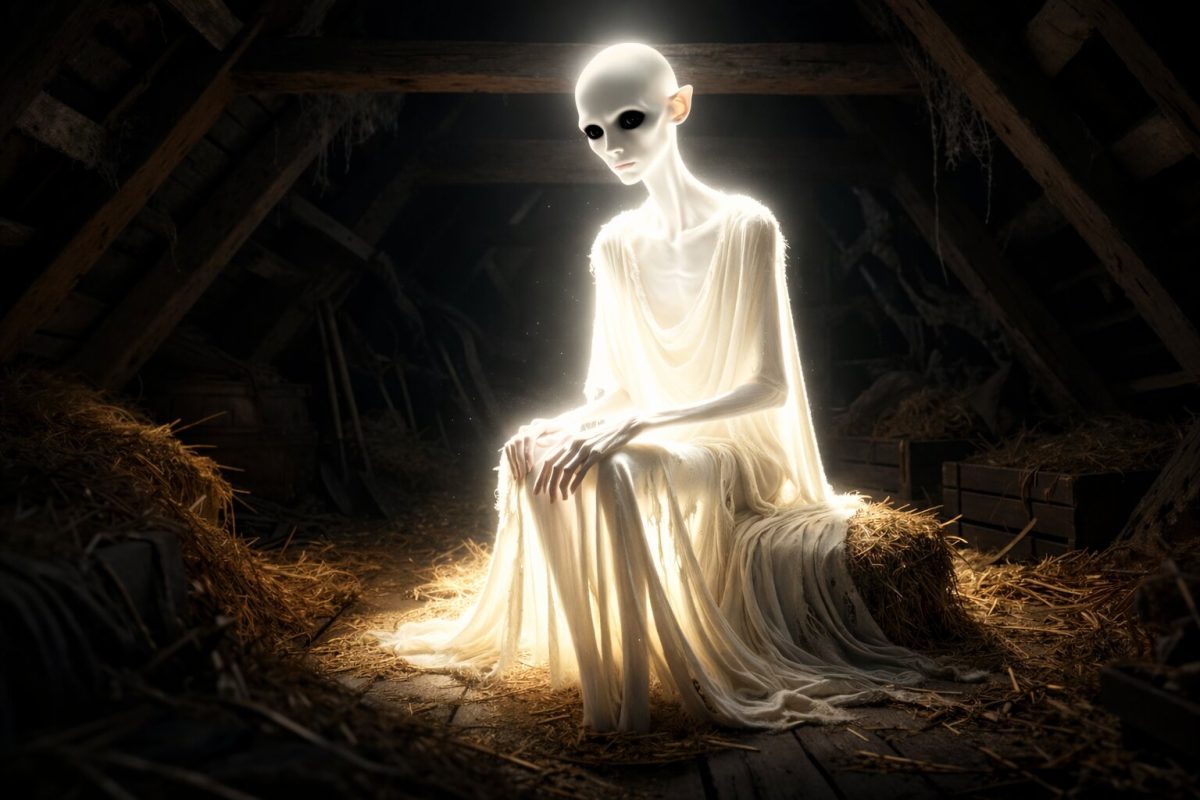
Laumė is a fairy-like woodland and sky spirit in Eastern Baltic mythology. She was originally a sky being but came to earth and is associated with clouds, rain, and natural places such as forests, lakes, and swamps. Laumės can shapeshift and appear as animals or as women with animal features. They are linked to weaving, spinning, weather, and fate. They may be dangerous, harming men and women, but they also help the needy, care for children, and act as guardians of orphans. In Latvian belief, Lauma assists at birth, protects children, and spins the cloth of life.
In Lithuanian belief, Laumės were considered among the oldest goddesses, possibly formed in very early times. They could appear as mares, goats, bears, or dogs, or in human-like form with bird claws, a goat’s head or lower body, or a single eye. They were said to have large breasts with stone nipples, which were associated with belemnite fossils found on the ground.
Laumės were feared by both men and women. If a Laumė lost her yarn, she could use women’s hair, veins, or entrails instead, killing them and grinding their bones. Toward men, Laumės felt desire, luring them, exhausting them, and then consuming their bodies. They were also believed to keep great cows whose remains were likewise linked to fossil stones, and they were said to fear iron tools.
Some traditions described Laumė as a cloud-dwelling goddess seated on a diamond throne. In some stories she was the wife of the thunder god Perkūnas; in others, the bride of Perkūnas was a Laumė named Vaiva, whose ribbon was the rainbow. Another tale tells of a Laumė who loved a mortal man and bore a son named Meilius. The highest god discovered the child, placed him among the stars, and cut off Laumė’s breasts, whose stone pieces were said to fall to earth.
Laumės were believed to descend from the sky and live near lakes, bath-houses, islands, forests, rivers, swamps, and meadows. They gathered especially during the new or full moon, danced, sang, and left rings in the grass. They were thought able to cause rain, hail, and storms through song, dance, or curses. Songs attributed to them were performed at weddings, sometimes in dances meant to bring rain. They were also connected with weaving and often appeared in groups of three.
They were said to love children, help the hardworking, and punish the lazy or those who mocked them.
One tale tells of a woman who forgot her sleeping child in a field. When she returned, a Laumė called out gently and returned the unharmed child, giving gifts to the mother because she worked hard. Another woman, jealous, abandoned her own child deliberately. When she returned, the Laumės said she had left the child in greed, and the child had been tortured and died.
Another belief held that Laumės foretold the fate of newborns by calling from outside the window, speaking of the child’s future depending on the hour of birth.
In Latvian tradition, Lauma was believed to assist during childbirth and ensure the well-being of mother and child. If the mother died or abandoned the child, Lauma became a spiritual foster mother. She spun the child’s life-cloth but mourned the fate woven into it. Over time, stories said her image declined, and she came to be seen as an old hag accused of stealing babies, though she longed to return to her former form.
Sources
Wikipedia contributors. (n.d.). Lauma. In Wikipedia, from https://en.wikipedia.org/wiki/Lauma
Mythus Wiki contributors. (n.d.). Lauma. In Mythus Wiki, from https://mythus.fandom.com/wiki/Lauma
Encyclopaedia Britannica. (n.d.). Lauma. From https://www.britannica.com/topic/lauma