Nogama

Tradition: Japanese Mythology
Alternative Names: 野鎌, Wild Sickle
Category: Object


The Myth

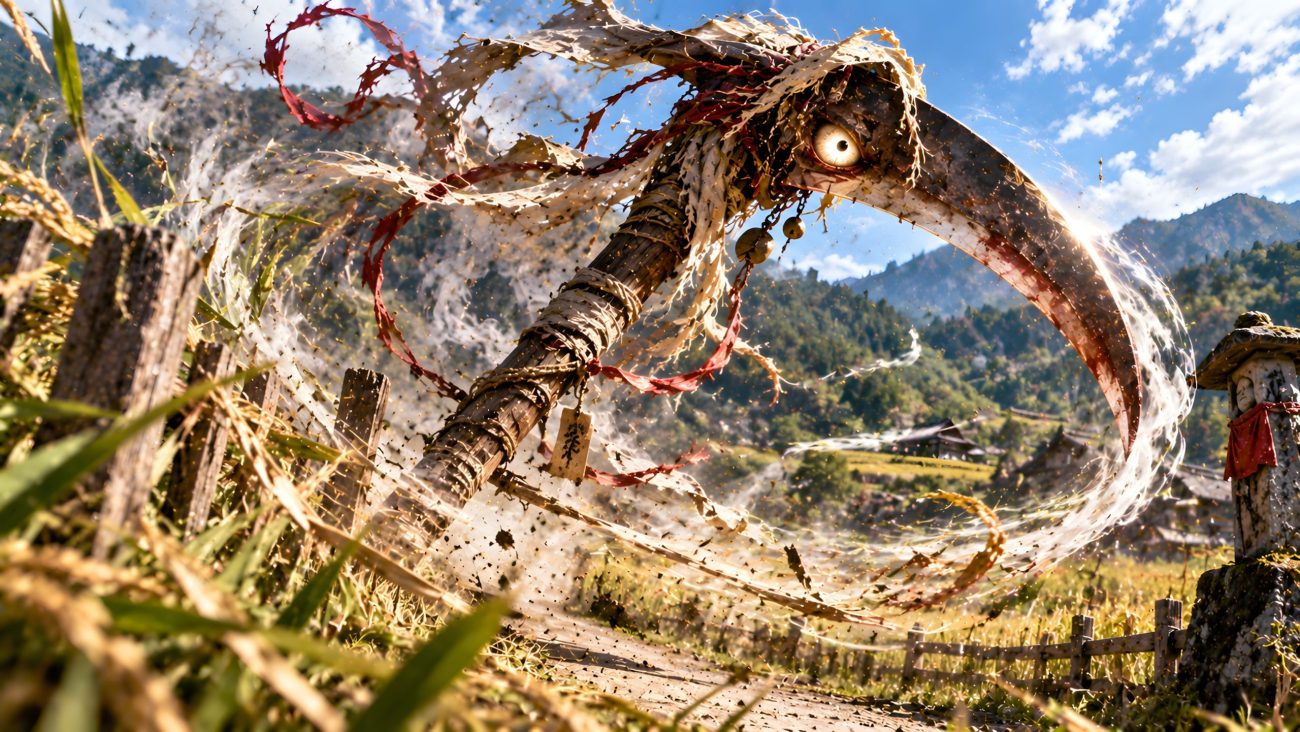
Nogama is a supernatural sickle associated with Kōchi and Tokushima prefectures in Japan. It belongs to the same general category of creatures as the Kama-itachi, supernatural beings associated with sudden cutting injuries. According to regional traditions, an ordinary sickle can become a dangerous yokai under certain circumstances, transforming a familiar agricultural tool into a source of unexplained harm.

In Tokushima Prefecture, it is said that throwing a sickle into a field can cause it to transform into a wild sickle that begins cutting people. On Mount Iya, people were warned that sickles and hoes used for digging graves or performing similar burial-related work could become Nogama unless they were left in the graveyard for seven days before being taken home. A traditional chant was recited after someone had been cut by the creature: “Under the foot of the Buddha’s left temple, this is a stump of black bamboo shoots. Do not feel pain, and the black stalk will grow quickly.” The words were intended to address the injury and encourage the wound to heal.

In Kōchi Prefecture, Nogama was likewise understood as a supernatural being formed from a sickle. When someone suffered a sudden, unexplained cut while travelling through the mountains, the injury could be attributed to a wild sickle. People described such incidents with expressions meaning that a wild sickle had eaten them or cut them. The tradition reflects the fear of invisible dangers in the landscape and offers a supernatural explanation for mysterious wounds encountered in the countryside.


Sources

“Nogama.” 新版TYZ 妖怪図鑑 (New TYZ Yokai Encyclopedia). https://tyz-yokai.blog.jp/archives/1010653527.html
Tendō-san’s Gold Chain

Tradition: Japanese Mythology
Alternative Names: Tendō-san no Kin Kusari, Tendō-san’s Golden Rope, Tendō-san’s Chains of Gold
Category: Object


The Myth

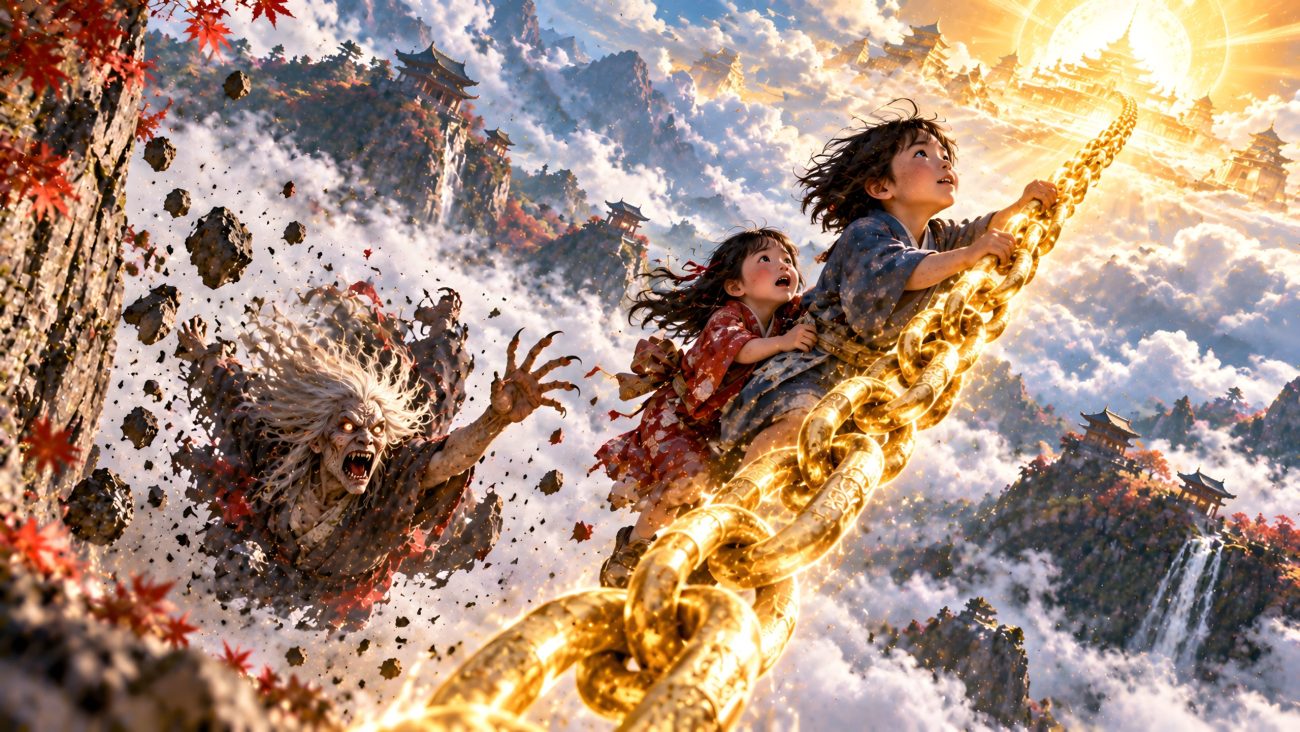
Tendō-san’s Gold Chain is a Japanese folktale found in versions across the country, from the Tōhoku region in the north to Kyūshū and the southwestern islands. The story begins with a mother and her three children. One day, a fearsome Yamauba, a mountain witch, devours the mother and disguises herself as her victim to approach the children. Suspicious of the visitor, the children refuse to open the door, making excuses such as claiming that their visitor’s hands are too hairy. The Yamauba shaves the hair from her arms and returns, only to be rejected again because her voice sounds different. She then drinks dew from bamboo groves or sugar water to alter her voice, eventually deceiving the children into letting her inside. The youngest child is eaten, but the two surviving siblings discover the truth and flee.

The Yamauba pursues the escaping children, who attempt to outwit her and separate themselves from their pursuer. When they are finally in danger of being caught, a golden chain or rope descends from heaven, sent by Tendō-san, a heavenly power associated with the sun. The siblings seize the chain and climb into the sky, where they become stars. The Yamauba asks heaven for a rope as well, but the one sent to her is made of ash or rotten material. It breaks while she is climbing, causing her to fall to her death. In some versions, her blood stains the stems of buckwheat red, explaining their colour.

The tale varies considerably between regions and storytellers. In some versions, one or both siblings become the moon rather than stars, and the story has sometimes been connected to the children’s song asking how many moons there are. Other versions omit the golden chain entirely, ending instead with the Yamauba falling from a tree. Some Kagoshima variants even allow the mother to be revived. Although the story contains frightening elements, it often portrays the Yamauba as a figure repeatedly outwitted by clever children, giving the tale a humorous dimension alongside its themes of danger, escape, and heavenly rescue.


Sources

“Tendo-kin-kusari.” 新版TYZ 妖怪図鑑 (New TYZ Yokai Encyclopedia). https://tyz-yokai.blog.jp/archives/1079718379.html


Kiriko Lantern Monster

Tradition: Japanese Mythology
Alternative Names: Kiriko Lantern Yokai, 切子灯籠の怪
Category: Object


The Myth

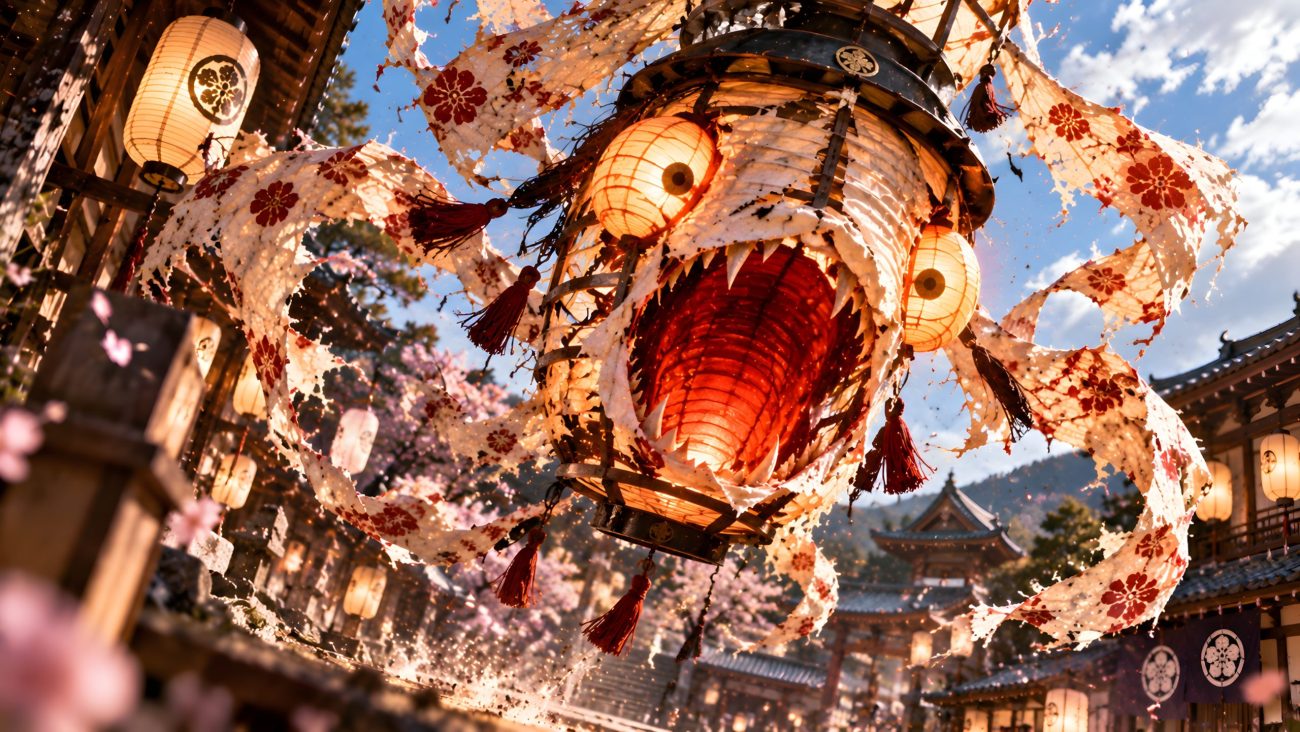
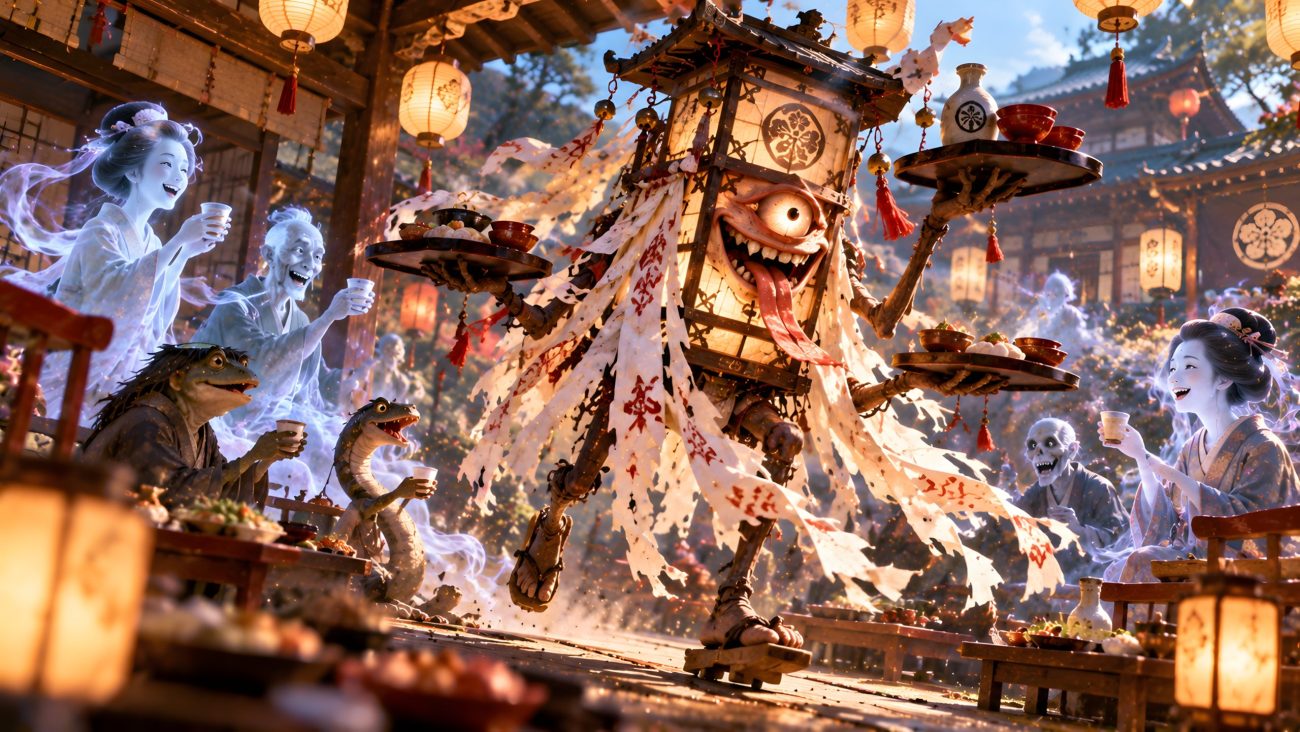
The Kiriko Lantern Monster is a supernatural figure associated with the kiriko lantern, a type of lantern hung beneath the eaves of temples and houses during the Japanese Obon festival. Also known as a bon lantern, it typically has a flame chamber with cut or angled corners and four bundles of long, thin white paper hanging from it. The creature appears in Jūbunsha Iku’s Monster One-Year Grass (1808), an illustrated work depicting annual events in the world of yokai.

During Obon, the spirits of deceased ancestors return to visit the living. In the world depicted by Iku, this tradition also affects supernatural creatures: ancestral ghosts arrive to eat, drink, and spend time with their relatives before departing again. The Kiriko Lantern Monster serves as a waiter during these gatherings, busily carrying food and drink for the returning spirits. The illustration shows it alongside other household monsters, including snakes and frogs, as they welcome their ancestors.

Although the gathering is generally a joyful occasion, the returning dead can bring family tensions with them. Ghosts of former wives and mothers-in-law sometimes appear, leading to quarrels with the living relatives, including current wives. The Kiriko Lantern Monster therefore belongs to a humorous depiction of yokai domestic life, in which the customs and complications of human families continue even among supernatural beings. Its identity is closely tied to the Obon festival and the lanterns used to welcome the dead.


Sources

“Kiriko doro-bakemono.” 新版TYZ 妖怪図鑑 (New TYZ Yokai Encyclopedia). https://tyz-yokai.blog.jp/archives/1075303197.html


Boroboro-dan

Tradition: Japanese Mythology
Alternative Names: Boroboro-ton, 暮露団
Category: Object


The Myth

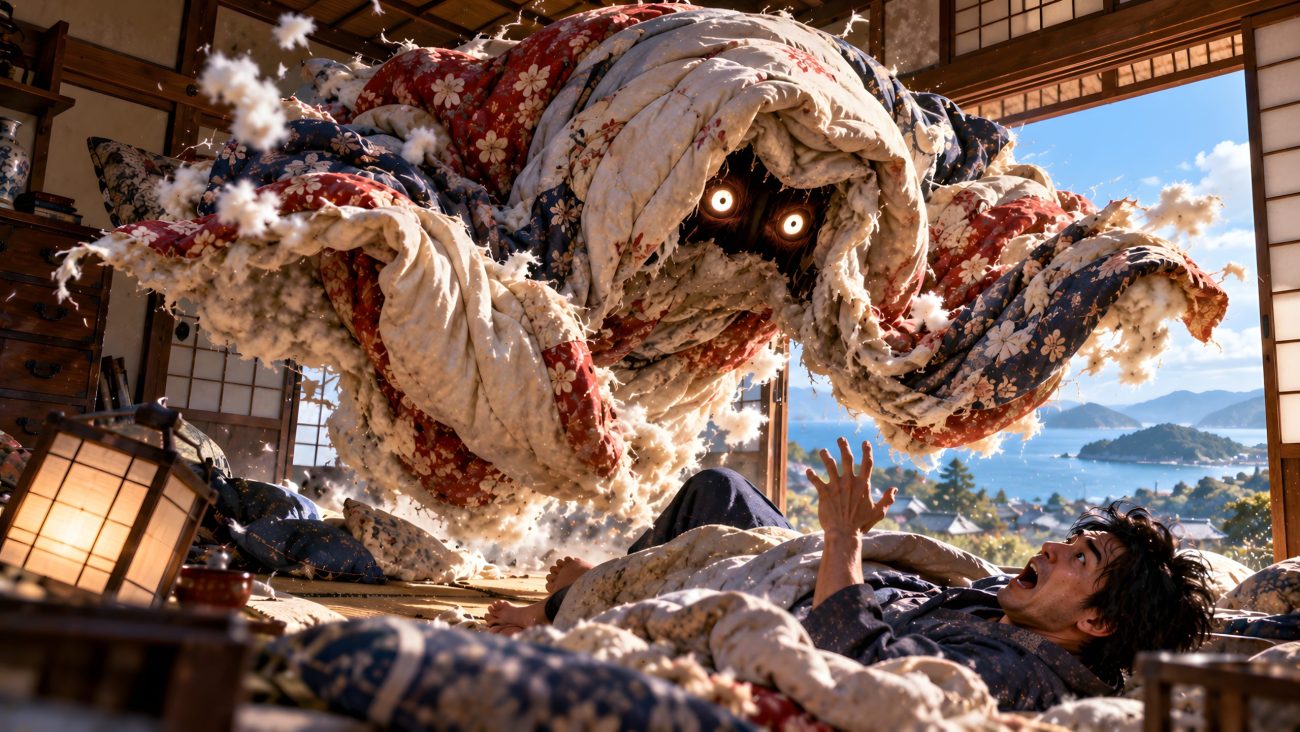
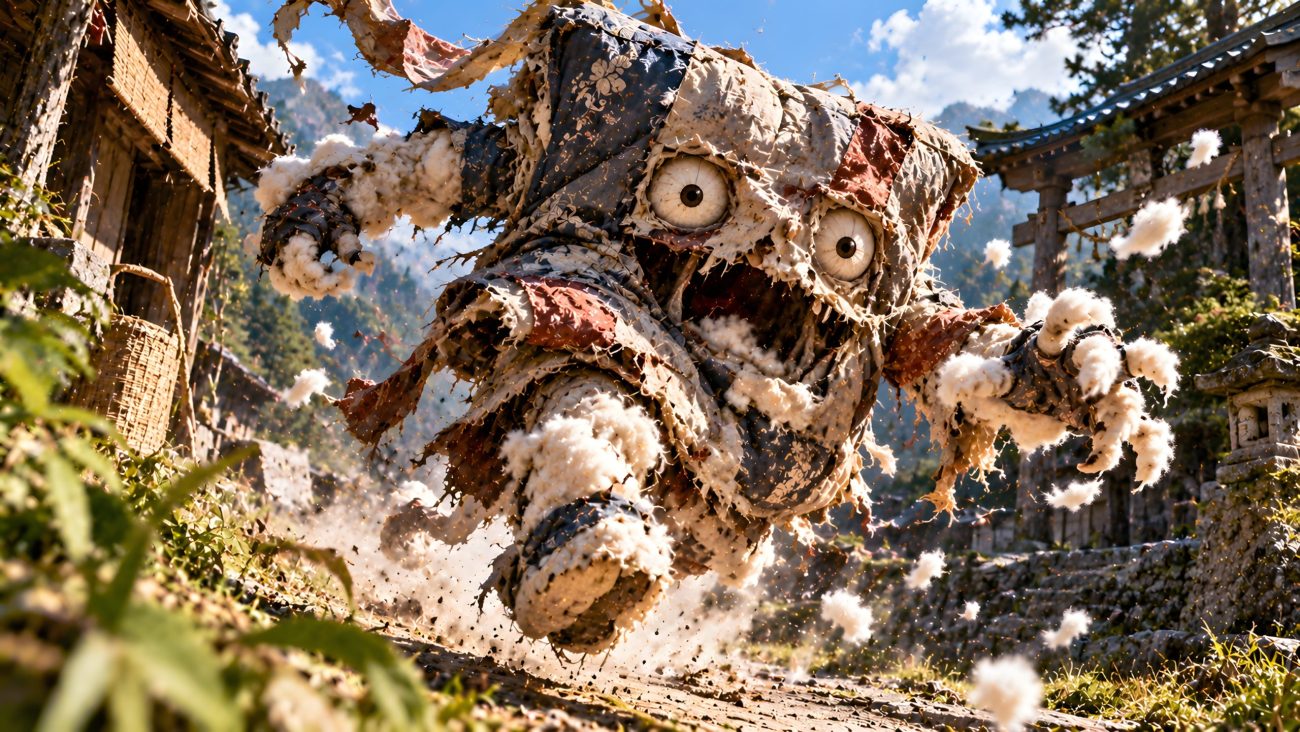
Boroboro-dan is a yokai depicted in Toriyama Sekien’s Hyakki Tsurezure Bukuro. It appears as a worn-out, tattered futon, with ragged fabric forming its eyes and loose cotton or cloth resembling hands and feet. Its image evokes the appearance of a dilapidated bedding object that has taken on a supernatural form.

Sekien’s accompanying text refers to the boro, a type of wandering or mendicant monk associated with the late Kamakura period. During the early modern period, these figures became associated with the Fuke school of Zen Buddhism and the komusō, itinerant monks who travelled wearing distinctive baskets over their heads and playing the shakuhachi. Sekien describes a worn-out mat associated with such a solitary religious wanderer, connecting the yokai’s shabby appearance with the life of a recluse.

The entry may also draw inspiration from section 115 of Yoshida Kenkō’s Tsurezuregusa. This passage describes ragged religious wanderers who gathered at Shukugawara to chant the nembutsu, including two men who fought and fatally wounded each other. Although they professed to have abandoned worldly concerns, their stubbornness and self-centred behaviour contradicted their religious aspirations. Sekien’s reference to medieval poetry contests and wandering figures further connects Boroboro-dan with the imagery of itinerant monks and the humble objects associated with their lives.

Modern interpretations sometimes describe Boroboro-dan as an old kimono or futon that has absorbed the spirit of its former owner. However, this interpretation goes beyond the limited description in Sekien’s original entry, which primarily connects the tattered bedding with the image of a wandering, ascetic monk.


Sources

“Boroboroton.” 新版TYZ 妖怪図鑑 (New TYZ Yokai Encyclopedia). https://tyz-yokai.blog.jp/archives/1073015831.html


Lantern Oiwa

Tradition: Japanese Mythology
Alternative Names: Oiwa-san, Lantern Ghost
Category: Object


The Myth

Lantern Oiwa is a supernatural figure inspired by the ghost of Oiwa, a tragic character from the kabuki play Tōkaidō Yotsuya Kaidan. Oiwa suffers a terrible death as a result of her husband Iemon’s schemes and returns as a vengeful spirit. In the play’s final scenes at the Jōyama Hermitage, her ghost appears in various forms, tormenting Iemon and his companions and eventually driving them towards their deaths.

One of the best-known scenes is the lantern run. As Iemon lights a fire, the mourning lantern hanging nearby suddenly flares up, and Oiwa’s ghost emerges from within it. This striking scene became one of the play’s defining images and inspired numerous theatrical illustrations. Similar imagery also appeared in yokai-themed playing cards and sugoroku board games, where related figures were sometimes identified as Lantern Oiwa or Lantern Rock.

In Katsushika Hokusai’s One Hundred Tales, the print titled Oiwa-san depicts more than the ghost simply emerging from a lantern: the torn lantern itself transforms into Oiwa’s terrifying face. Later yokai encyclopedias began treating Lantern Oiwa as a distinct supernatural creature based on this image. In Shigeru Mizuki’s Complete Guide to Japanese Yokai, the explanation rejects the idea that Oiwa’s spirit literally rides a lantern to seek revenge. Instead, it describes a frightening phenomenon in which a lantern hanging beneath the eaves during a summer festival gradually seems to lose its shape and take on Oiwa’s dreadful face, particularly when someone is already expecting to see something frightening.

Descriptions of Lantern Oiwa are not uniform. Some accounts draw directly on Hokusai’s illustration, while others classify similar images as lantern ghosts or related supernatural lights. The figure therefore stands at the intersection of theatrical ghost stories, ukiyo-e imagery, and later yokai classification, illustrating how a famous scene from a play could develop into a separate creature in Japanese supernatural literature.


Sources

“Chouchin-iwa.” 新版TYZ 妖怪図鑑 (New TYZ Yokai Encyclopedia). https://tyz-yokai.blog.jp/archives/1067054718.html


Futon Kabuse

Tradition: Japanese Mythology
Alternative Names: 布団被せ, ふとんかぶせ, Futon Covering
Category: Object


The Myth

Futon Kabuse is a little-known yokai from Sakushima, an island in Mikawa Bay, Japan. Its name refers to the act of covering someone with a futon or bedding. According to the brief account recorded in Kunio Yanagita’s edited collection Studies of Coastal Village Life (1949), the creature suddenly approaches its victim, covers them, and causes them to suffocate.

Very little else is known about Futon Kabuse. The surviving description was collected by folklorist Kiyoko Segawa, and no further detailed accounts of the creature have been identified in the cited material. Its appearance, origins, and the circumstances in which it attacks remain unknown.

In Japanese Ghost Stories: Yokai (1981), Enosuke Konno quoted the account under a section about supernatural beings that attack the head. He associated Futon Kabuse with Nobusuma, a creature known for covering people’s faces and suffocating them. This suggests that Futon Kabuse may belong to the same general category of suffocating yokai, although the available evidence is too limited to establish a more precise relationship.


Sources

“Futonkabu.” 新版TYZ 妖怪図鑑 (New TYZ Yokai Encyclopedia). https://tyz-yokai.blog.jp/archives/1072816670.html


Narigama

Tradition: Japanese Mythology
Alternative Names: 鳴釜, なりがま, Narikama, Kamanari, Ringing Kettle, Crying Kettle
Category: Object


The Myth

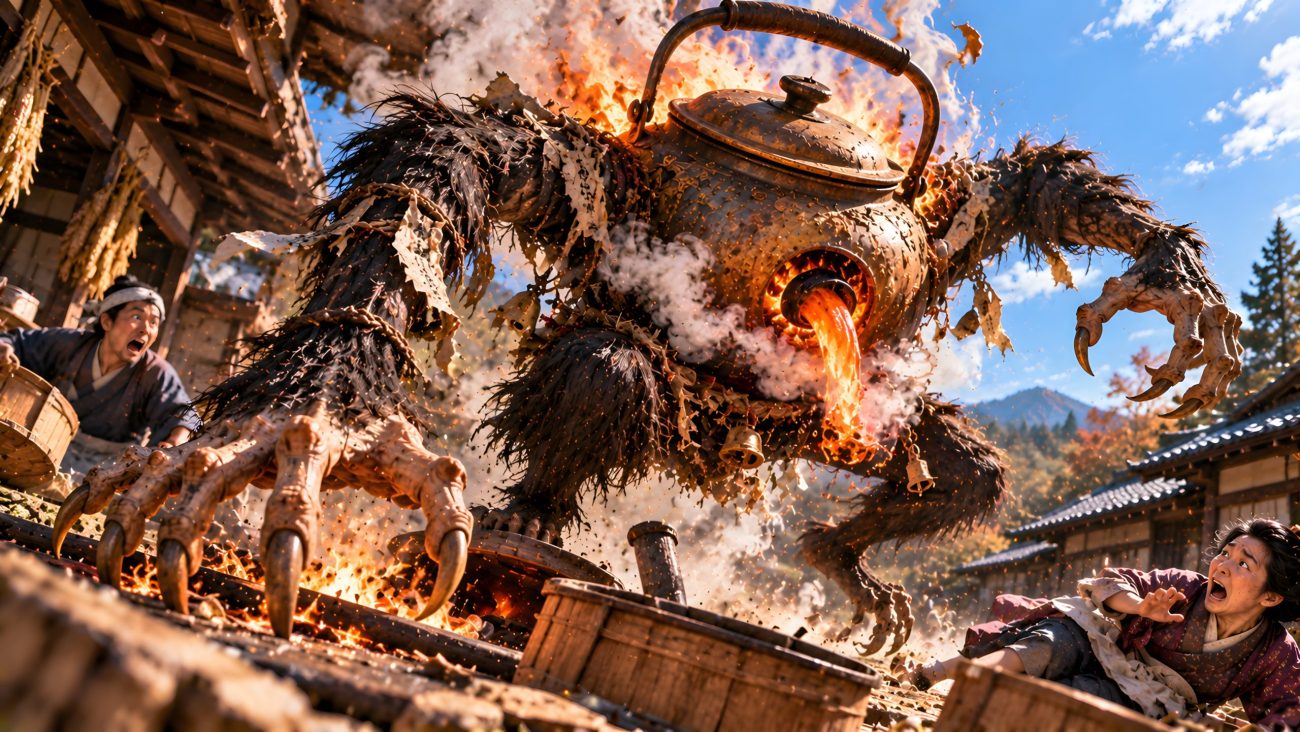
Narigama are tsukumogami associated with kama, the iron kettles and cauldrons traditionally used to cook rice in Japanese kitchens. They are depicted as hairy, animal-like beings with long arms and legs, their bodies covered in dark fur. Flames may lick around the kettle that serves as their head, or they may wear it like a helmet. Narigama frequently appear alongside other tsukumogami in illustrations of the Night Parade of One Hundred Demons, although little is known about their independent behaviour.

The narigama’s most remarkable ability is its power to predict the future. When heated over a fire, it begins to produce unusual sounds as the water inside approaches boiling point. These may resemble ringing, crying, or the calls of an animal. According to tradition, the sounds can reveal whether the weather will be fair or rainy, while an onmyōji or Buddhist priest may interpret them to divine good and bad fortune. Toriyama Sekien included the creature in his Hyakki Tsurezure Bukuro, linking its supernatural ringing to an ancient oni named Renjo. The Edo-period work Kansō Kidan also describes Renjo as a spirit that haunts kettles. According to this account, someone could end the haunting by standing approximately ninety centimetres away and loudly calling the name Renjo. The fire would then descend beneath the house, the disturbance would cease, and the household would enjoy good fortune.

A related tradition survives at Kibitsu Shrine in Okayama Prefecture through the ritual known as narukama, in which priests boil a kettle and interpret the sounds it produces to predict fortune. In this account, the sounds originate from the spirit of an oni named Ura, who once terrorised the region before being slain. Even after death, his severed head continued to cry out, and neither the loss of its flesh nor its burial beneath the shrine’s kitchen silenced it. Eventually, a priestess named Aso hime offered food to the restless spirit, calming it and changing its nature. From then on, Ura’s spirit communicated through the kettle, providing predictions to the shrine’s priests. Sekien may have drawn inspiration from this ritual when creating his own account of the narigama, adapting the story by connecting the creature to ancient Chinese traditions.


Sources

“Narigama.” Yokai.com. https://yokai.com/narigama/


Seto Taishō

Tradition: Japanese Mythology
Alternative Names: 瀬戸大将, せとたいしょう, General Seto, Crockery General
Category: Object


The Myth

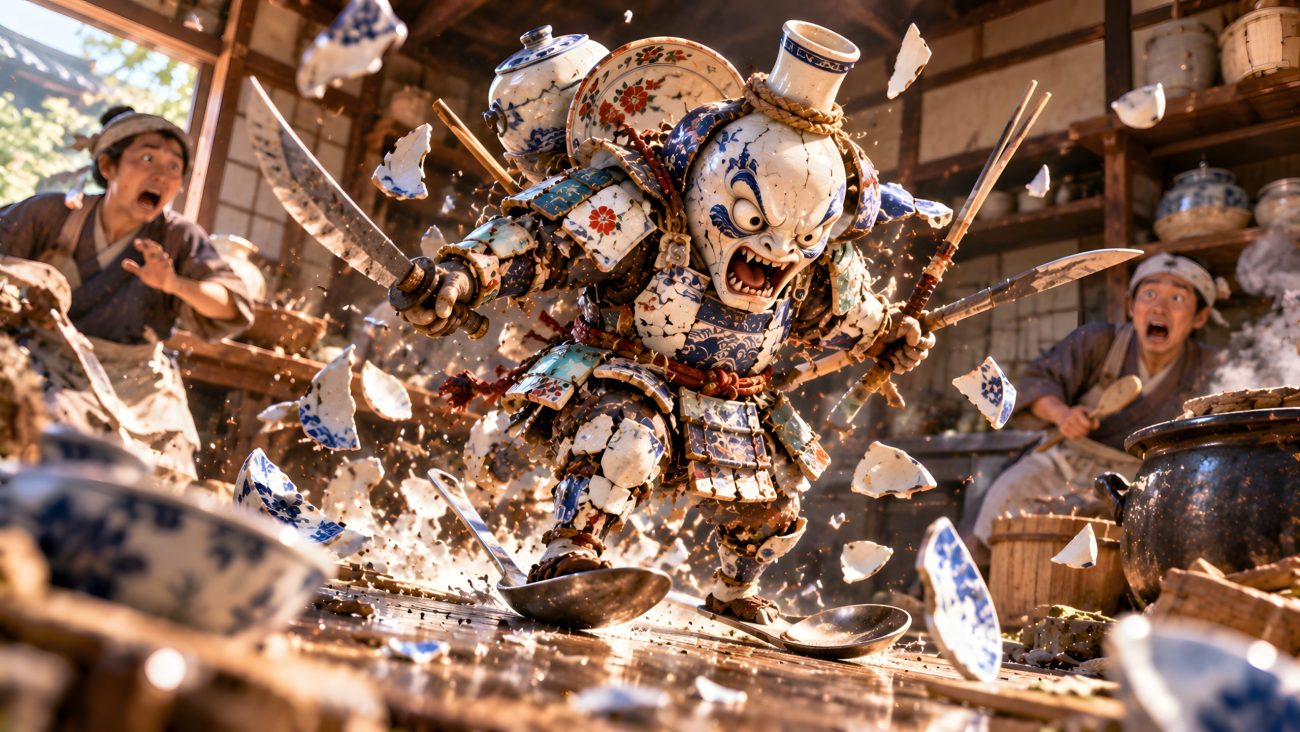
Seto Taishō is a tiny supernatural soldier assembled from discarded household crockery. Its body consists of chipped teacups, cracked dishes, and other broken utensils that have fallen out of use. A sake bottle forms its face, while pieces of porcelain serve as its armour. It scurries around kitchens on tiny spoons, wielding knives and chopsticks as swords and spears.

Despite its small size, Seto Taishō is an aggressive warrior that delights in chasing kitchen workers and causing chaos. It charges through the kitchen, attacking its surroundings in miniature battles. Sometimes, it crashes into walls or cabinets and shatters into hundreds of pieces. However, the crockery soldier gradually reassembles itself and resumes its relentless campaign.

The name Seto Taishō combines the Japanese word for a general with Seto, a city in Aichi Prefecture renowned for its pottery. The term seto-mono is commonly used in Japanese to refer to ceramic tableware, much as the English word “china” refers to porcelain crockery. Seto Taishō embodies this association by transforming discarded ceramic objects into a fierce, miniature military commander.


Sources

“Seto taishō.” Yokai.com. https://yokai.com/setotaishou/


Yama Oroshi

Tradition: Japanese Mythology
Alternative Names: 山颪, やまおろし, Mountain Wind
Category: Object


The Myth

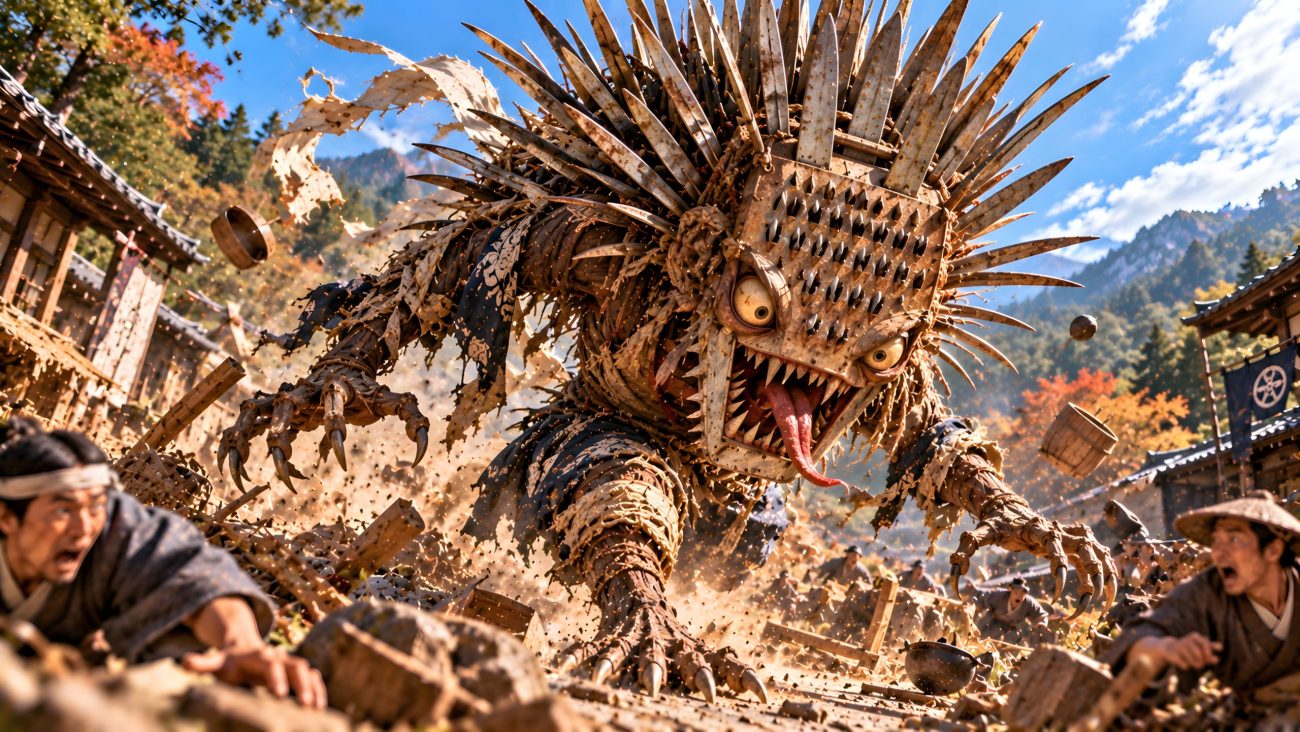
Yama Oroshi is a tsukumogami, a supernatural being formed from an ordinary object that has become old or neglected. It originates from a metal grater that has been improperly cared for and grown too dull to grate food. The discarded utensil develops a body, while the grater’s blunt teeth protrude from its head like the wild spines of a porcupine.

The creature’s name contains a double pun. In Japanese, oroshi refers to a grater, forming part of the name Yama Oroshi. The name also resembles yamaarashi, the Japanese word for a porcupine. This wordplay reflects the creature’s appearance, transforming a familiar kitchen implement into a spiny, animal-like yokai.


Sources

“Yamaoroshi.” Yokai.com. https://yokai.com/yamaoroshi/


Omo Tsuzura no Bakemono

Tradition: Japanese Mythology
Alternative Names: 重い葛籠の化物, 重い葛籠の大入道, Omo Tsuzura no Bakemono, Monster of the Heavy Trunk, Giant of the Heavy Trunk
Category: Object


The Myth

The Monster of the Heavy Wicker Trunk appears in the Japanese folktale Shita-kiri Suzume, or The Tongue-Cut Sparrow. In the story, a kind old man befriends a sparrow, but the bird eats paste prepared by his wife. Enraged, the old woman cuts out the sparrow’s tongue, forcing it to flee. When the old man discovers what happened, he searches the mountains for the bird and eventually reaches the sparrows’ home, where he receives a warm welcome.

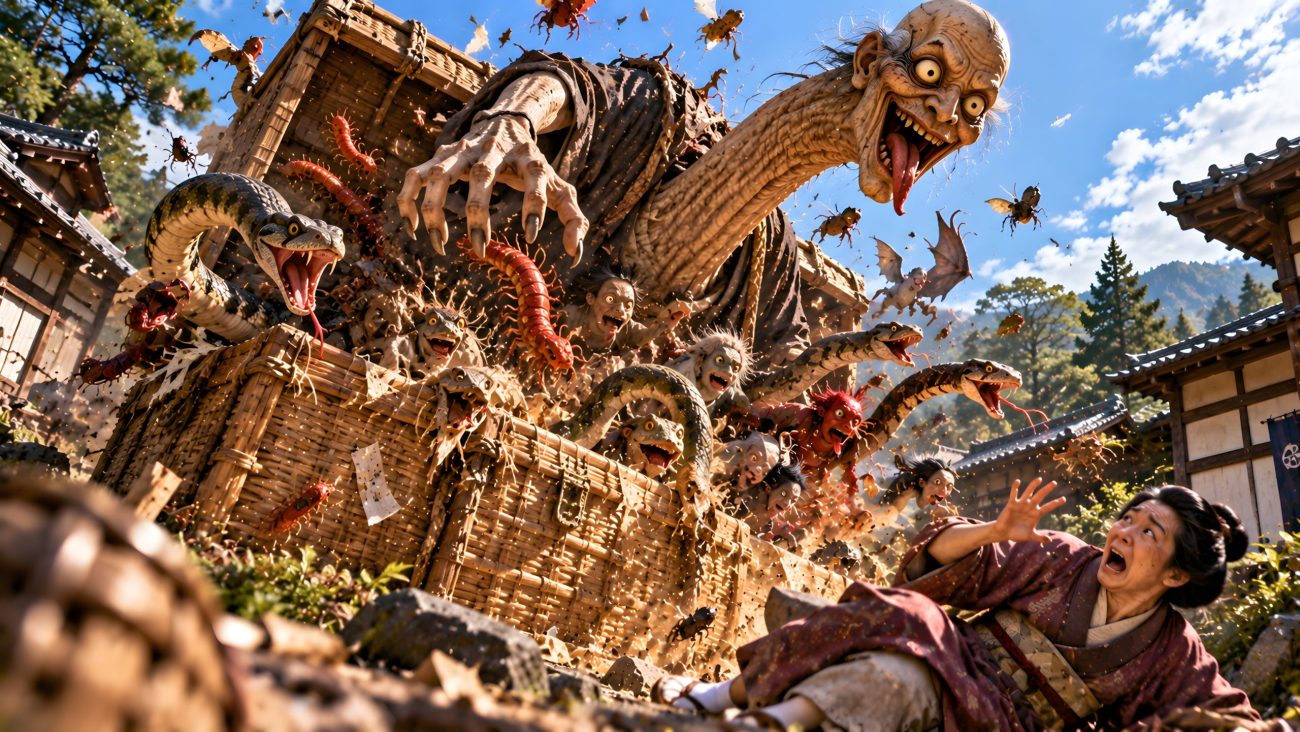
Before he leaves, the sparrows offer him a choice between two wicker trunks as a gift: a small, light trunk and a large, heavy one. The old man chooses the smaller trunk and returns home to discover that it contains gold, silver, and other treasures. His greedy wife then visits the sparrows, hoping to obtain an even greater reward. She insists on taking the heavy trunk, but when she opens it on the way home, a multitude of monsters, snakes, and poisonous insects burst out. Terrified, she collapses in fright. This is the basic form of the tale, which became widely popular during the Edo period through illustrated children’s books and other printed stories.

The scene of the greedy woman opening the heavy trunk and confronting the monsters became a popular subject in Japanese yokai art. Artists including Tsukioka Yoshitoshi depicted it in supernatural-themed print series such as One Hundred Tales of China and Japan and New Forms of Thirty-Six Ghosts. Yoshitoshi’s teacher, Utagawa Kuniyoshi, also created a painting titled The Tongue-Cut Sparrow. In a satirical illustrated version published by Utagawa Yoshimori in 1864, the monsters emerging from the trunk were used to represent the forces involved in the Kinmon Incident, a battle near Kyoto’s Hamaguri Gate. The creature also appears frequently in yokai-themed playing cards and sugoroku board games, where it is often represented by a giant monk-like figure with an exceptionally long neck.


Sources

“Omo-tsuzura-bakemono.” 新版TYZ 妖怪図鑑 (New TYZ Yokai Encyclopedia). https://tyz-yokai.blog.jp/archives/1010654282.html