Shirōneri

Tradition: Japanese Mythology
Alternative Names: 白容裔, しろうねり, Shiro Uneri, White Cloth Yokai
Category: Object


The Myth

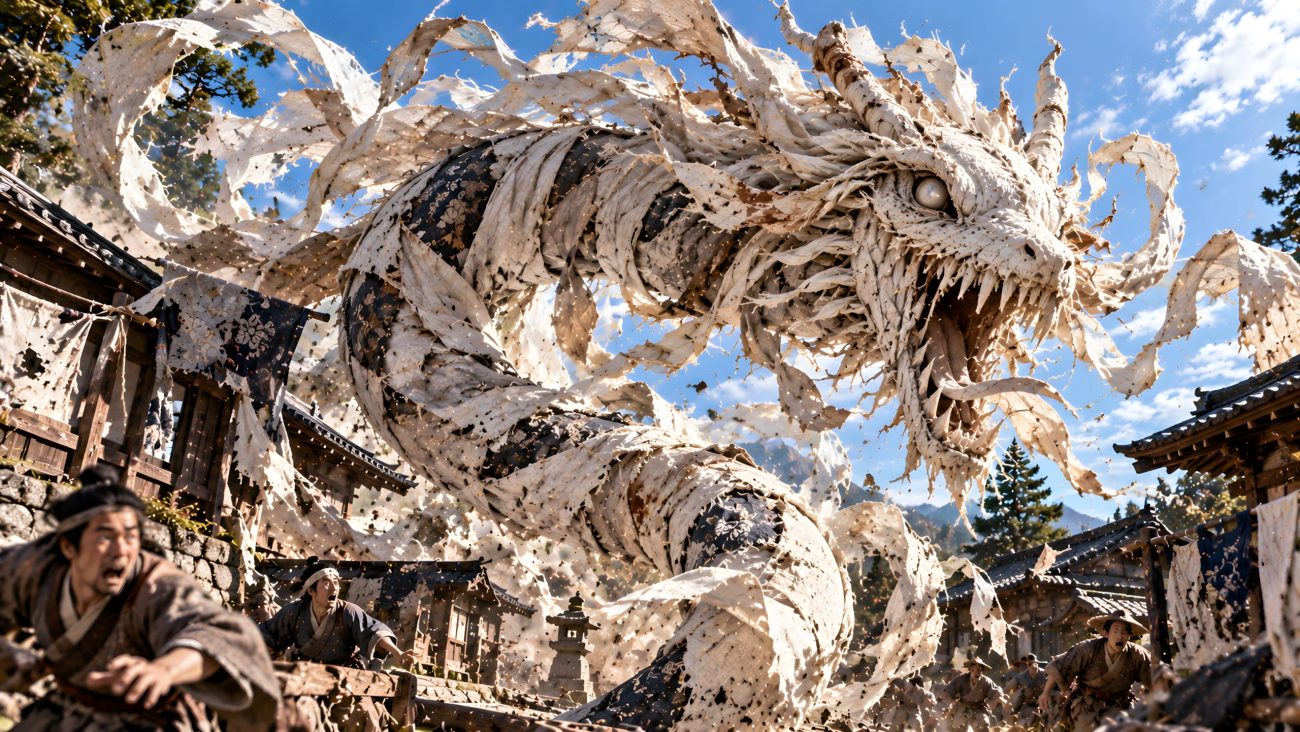
Shirōneri is a yokai depicted in Toriyama Sekien’s Hyakki Tsurezure Bukuro. It appears as an old piece of cloth transformed into a dragon-like creature. Sekien describes it as an aged cleaning cloth that has become supernatural, although he also remarks that he wondered in a dream whether it might have another origin.

Sekien’s description draws on the mysterious term shiroururi, mentioned in the sixty-first section of Tsurezuregusa. The passage tells of Morichika, a priest at Shinnyō-in of Ninnaji, who gave another monk this nickname. When asked what a shiroururi was, Morichika admitted that he did not know, suggesting only that if such a thing existed, it might resemble the monk’s face. The word’s precise meaning remains unclear.

Shirōneri appears to be Sekien’s own creation, inspired in part by this enigmatic anecdote. Later children’s books and yokai references developed the idea into a more threatening creature, sometimes describing an old, foul-smelling cleaning cloth that attacks people. Some modern books also identify anonymous cloth-covered figures in Night Parade of One Hundred Demons picture scrolls as Shirōneri, although those figures were not originally given this name.


Sources

“Shirouneri.” 新版TYZ 妖怪図鑑 (New TYZ Yokai Encyclopedia). https://tyz-yokai.blog.jp/archives/1010654403.html
Awakuidori

Tradition: Japanese Mythology
Alternative Names: 泡喰鳥, あわくいどり, Bubble-Eating Bird
Category: Object


The Myth

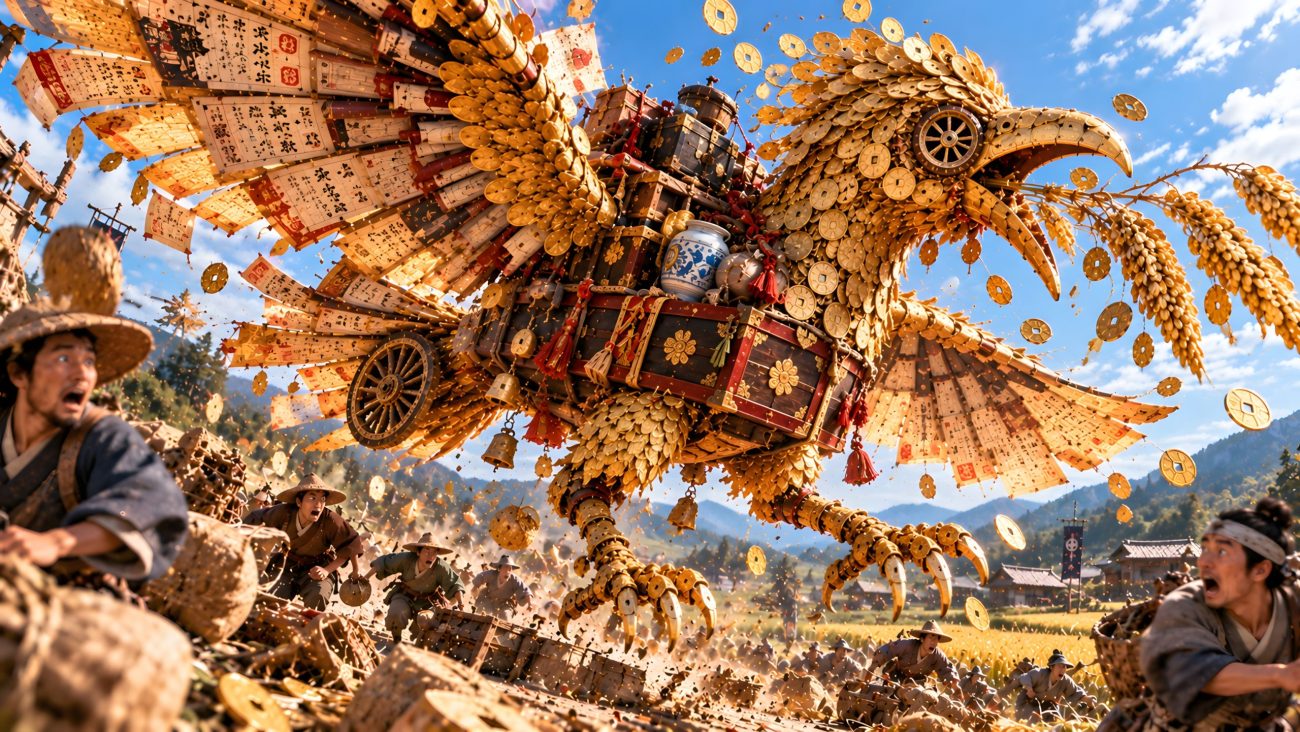
Awakuidori is a satirical bird depicted in the late Edo-period caricature Amakara Watari: Awakuidori. Its body is assembled from objects representing wealth and possessions. Its beak and legs are made of coins, while its head and wings consist of gold coins. Its feathers are formed from various account books, and its body carries household belongings, including chests and trunks arranged aboard a boat. Wheels form its eyes and the base of its tail.

The bird’s name refers to the expression awa o kuu, meaning to be startled, panic, or become flustered. In the illustration, however, Awakuidori is trying to eat ears of millet represented by hole-punched coins, creating a visual pun. The bird is said to live in prosperous, bustling places when the world is peaceful, but to fly towards remote districts and the countryside during times of turmoil. It is highly perceptive of people’s intentions and travels in all directions, preying upon farmers and townspeople and causing them considerable trouble.

Awakuidori’s composition from coins, gold pieces, account books, and household possessions makes it a satire of wealthy people who panic during periods of social upheaval, rushing about while attempting to protect their fortunes. Rather than representing a conventional supernatural predator, the bird embodies the anxiety of the wealthy when disorder threatens their property and financial security.


Sources

“Awakui-dori.” 新版TYZ 妖怪図鑑 (New TYZ Yokai Encyclopedia). https://tyz-yokai.blog.jp/archives/1062371865.html


Terracottal

Tradition: Japanese Mythology
Alternative Names: Terracottal, Terracotta Yokai
Category: Object


The Myth

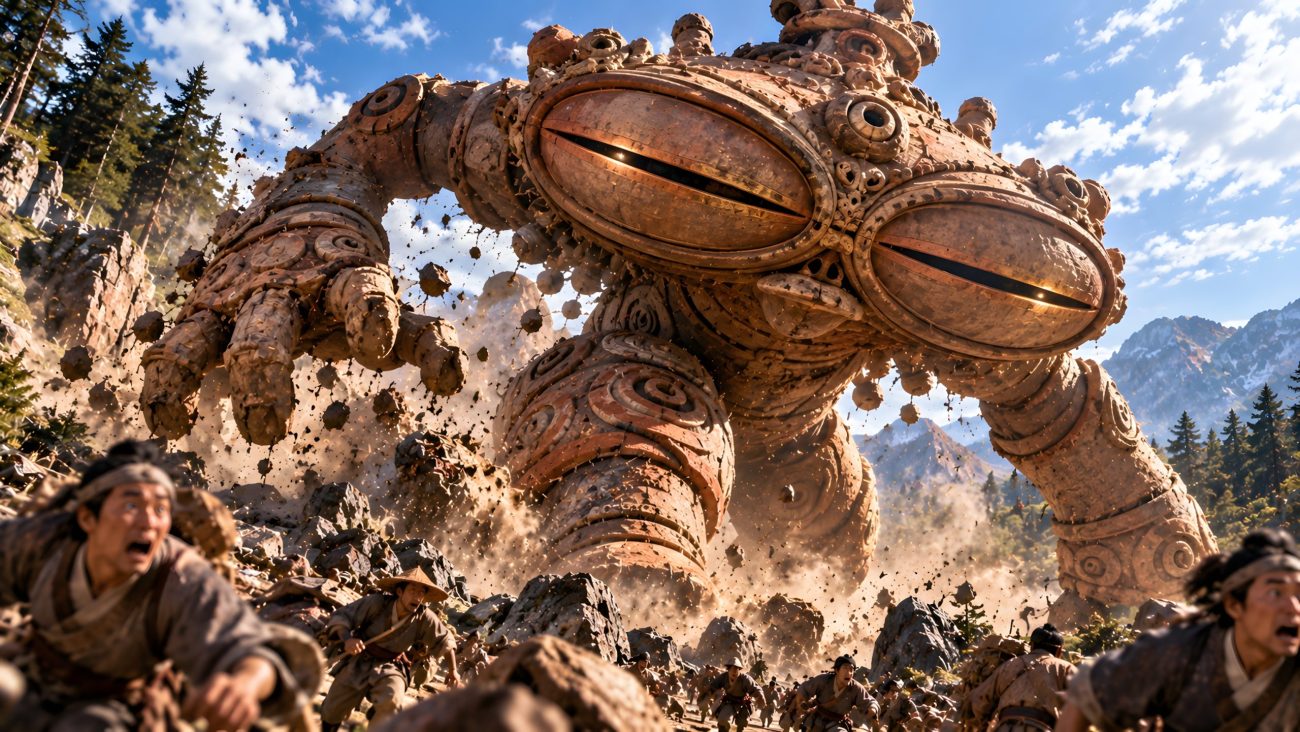
Terracottal is a mysterious being described in Shigeaki Yamauchi’s 1968 book World Horror Thriller Collection (2): Monsters of the World. The story appears in a chapter titled “God or Yokai?” and describes an encounter with a strange creature whose true nature remains uncertain. In ancient times, a pale fireball reportedly fell into the forest at Kamegaoka, in Aomori Prefecture, with a tremendous roar. Wondering whether it was a star or a fragment of the sun, a villager ventured into the forest and encountered a yokai with an enormous eyeball and narrow eyes extending horizontally across its face.

The villagers fled in terror, while their chief offered sacrifices and prayed to the gods. Perhaps in response to these prayers, the creature remained in the forest, and the pale fireball returned to the heavens that same night. According to the story, someone in the village made clay figurines based on the strange being. Thousands of years later, these figures were supposedly unearthed at Kamegaoka. The author leaves the creature’s identity unresolved, suggesting that it might have been a god, a human, a yokai, or even a visitor from outer space. He named it Terracottal, drawing on the word terracotta, which refers to fired or unglazed clay.

The story was inspired by distinctive dogū clay figurines discovered at Kamegaoka in 1886. Known as shakōki dogū, or “light-shielding dogū,” these figures have large, unusual eyes resembling goggles used to protect against snow glare. From around the 1960s, some writers began speculating that such prehistoric figurines represented ancient astronauts or extraterrestrial visitors. These ideas gained international attention through works such as Erich von Däniken’s Chariots of the Gods?, published in 1968. Terracottal emerged from this wave of speculation, illustrating how the term yokai was sometimes used in children’s literature to describe mysterious beings inspired by archaeological discoveries and theories about extraterrestrial life.


Sources

“Terracotta.” 新版TYZ 妖怪図鑑 (New TYZ Yokai Encyclopedia). https://tyz-yokai.blog.jp/archives/1074701727.html


Zenitori

Tradition: Japanese Mythology
Alternative Names: 銭取り, Korekadori, Konjichō, Golden-Winged Bird
Category: Object


The Myth

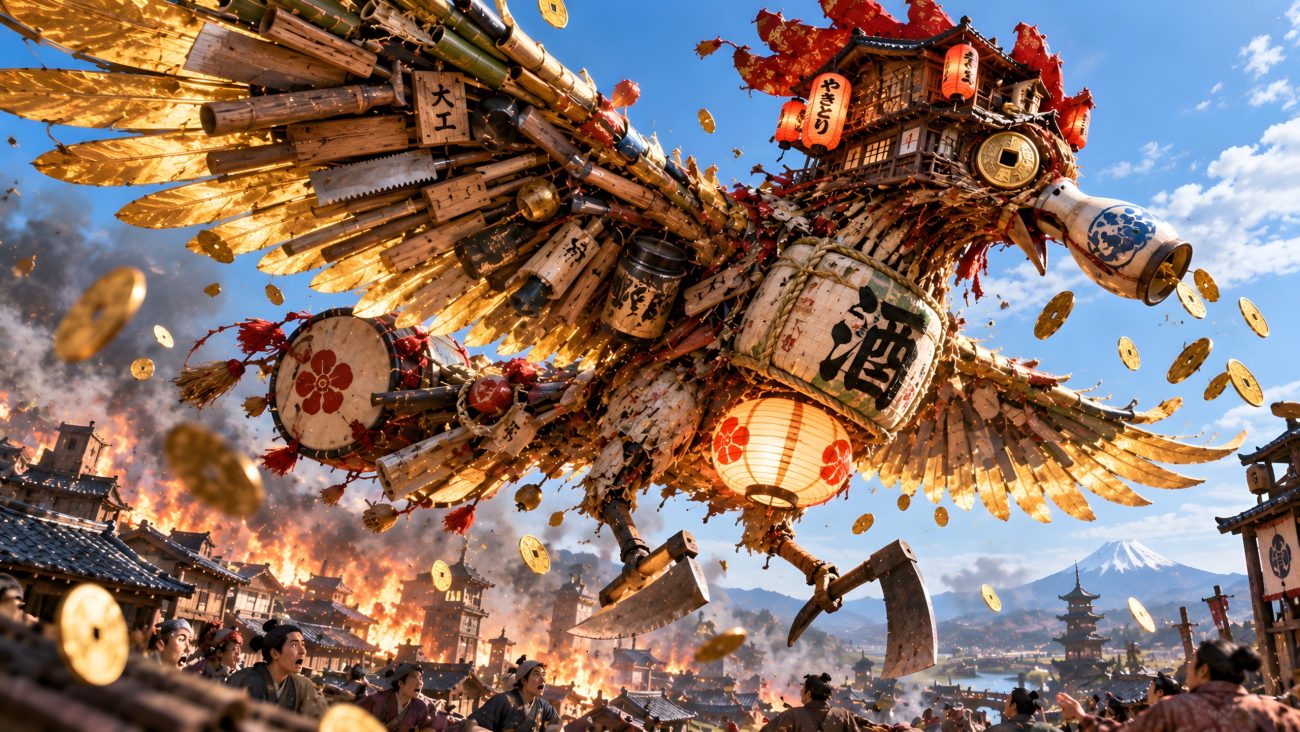
Zenitori is a strange bird depicted alongside Hirin in a kawaraban-style printed work from the late Edo period. The illustration satirises social conditions following a great fire, portraying the bird as a composite of objects associated with trades and businesses that profited from disasters. Its comb resembles a cheap tavern in a lower-class neighbourhood, while its eyes are shaped like coins. Its wings resemble bamboo and wooden boards, its chest is a sake barrel, its beak a sake flask, and its feet are hoes. A lantern forms its belly, and its tail resembles a tambourine.

Normally, Zenitori calls out “Himad, Himad,” but when a creature called Kawa, also known as Yake, appears, it clings to its rear and begins shouting “Zenitori, Zenitori.” As it flies, the bird grows golden and silver wings, earning it the alternative name Konjichō, or Golden-Winged Bird. The name Korekadori means “money collector,” reflecting its association with the accumulation of wealth. Its body also incorporates tools used by carpenters and plasterers, including saws, chisels, planes, ink pots, and trowels.

The bird represents the people who profit from the aftermath of disasters. When a fire destroys a town, firefighters become active, displaced residents gather in taverns, and carpenters and plasterers earn money rebuilding houses and streets. Zenitori’s body combines the tools and possessions of these occupations, suggesting that their prosperity depends on destruction and reconstruction. Its golden wings symbolise the great wealth such people can accumulate through calamity. Similar satirical creatures appeared in illustrations responding to other disasters, including Kasachi and Nangichō after the Ansei earthquake, and Tsūshinchōri during cholera outbreaks.


Sources

“Zenitori.” 新版TYZ 妖怪図鑑 (New TYZ Yokai Encyclopedia). https://tyz-yokai.blog.jp/archives/1078433255.html


Furuutsubo

Tradition: Japanese Mythology
Alternative Names: 古空穂, ふるうつぼ, Old Quiver
Category: Object


The Myth

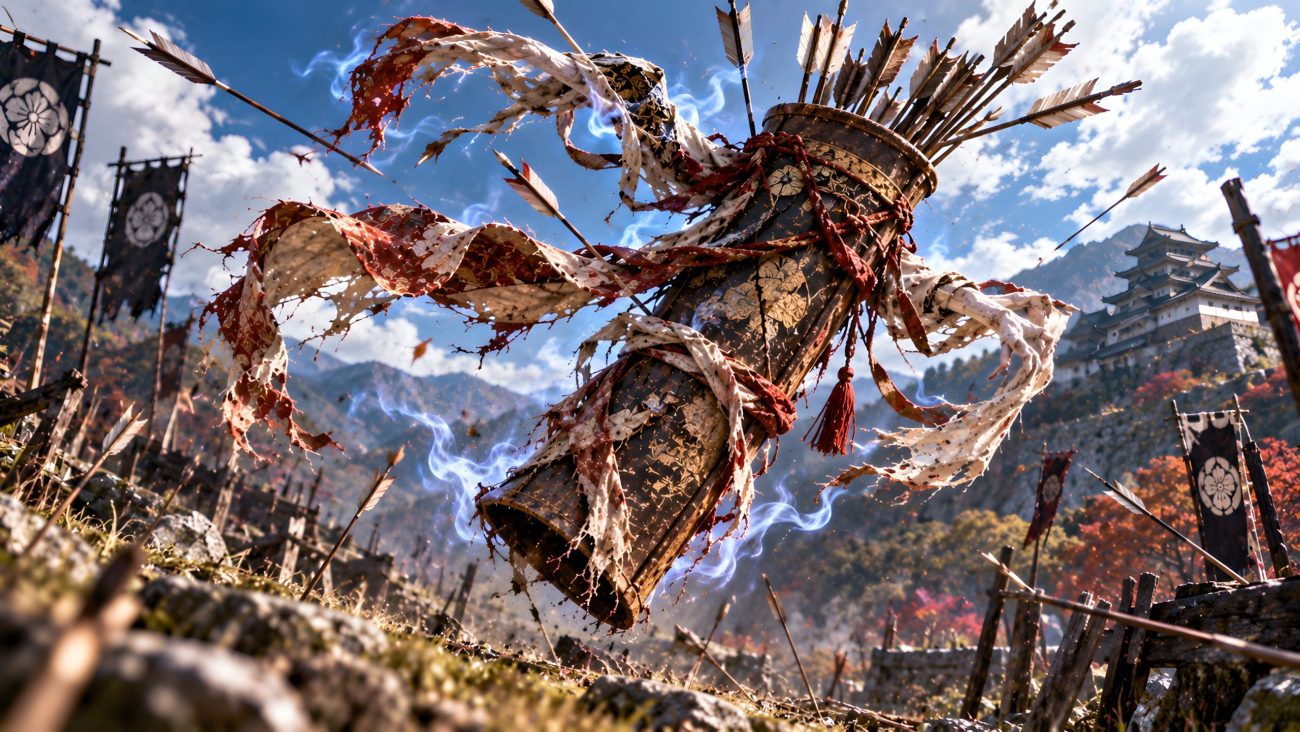
Furuutsubo, meaning “old quiver,” is a Japanese object yokai formed from the beloved quivers of archers who suffered particularly tragic deaths. Like other weapons and pieces of armour belonging to fallen warriors, these quivers can develop a life force from the lingering energy of their former owners. They eventually begin moving by themselves, transforming objects associated with warfare into supernatural beings.

The most famous Furuutsubo belonged to Miura Yoshiaki, a military commander who lived at the end of the Heian period. A brave warrior skilled with both sword and bow, Yoshiaki fought for the Minamoto clan during the Genpei War. When an enemy army besieged his castle, he arranged for his household to escape safely. After the last survivors had fled, he remained behind alone to defend the stronghold against the invading forces, sacrificing his life in the process.

Following Yoshiaki’s heroic death, his favourite quiver was overcome with grief at the loss of its master. The lingering attachment between warrior and weapon gave the quiver a life of its own, transforming it into a Furuutsubo. The yokai embodies the emotional bond between a warrior and his treasured equipment, suggesting that even an inanimate object may retain something of its owner’s spirit and memories after death.


Sources

“Furuutsubo.” Yokai.com. https://yokai.com/furuutsubo/


Kosode no Te

Tradition: Japanese Mythology
Alternative Names: 小袖の手, こそでのて, Hands of the Kosode
Category: Object


The Myth

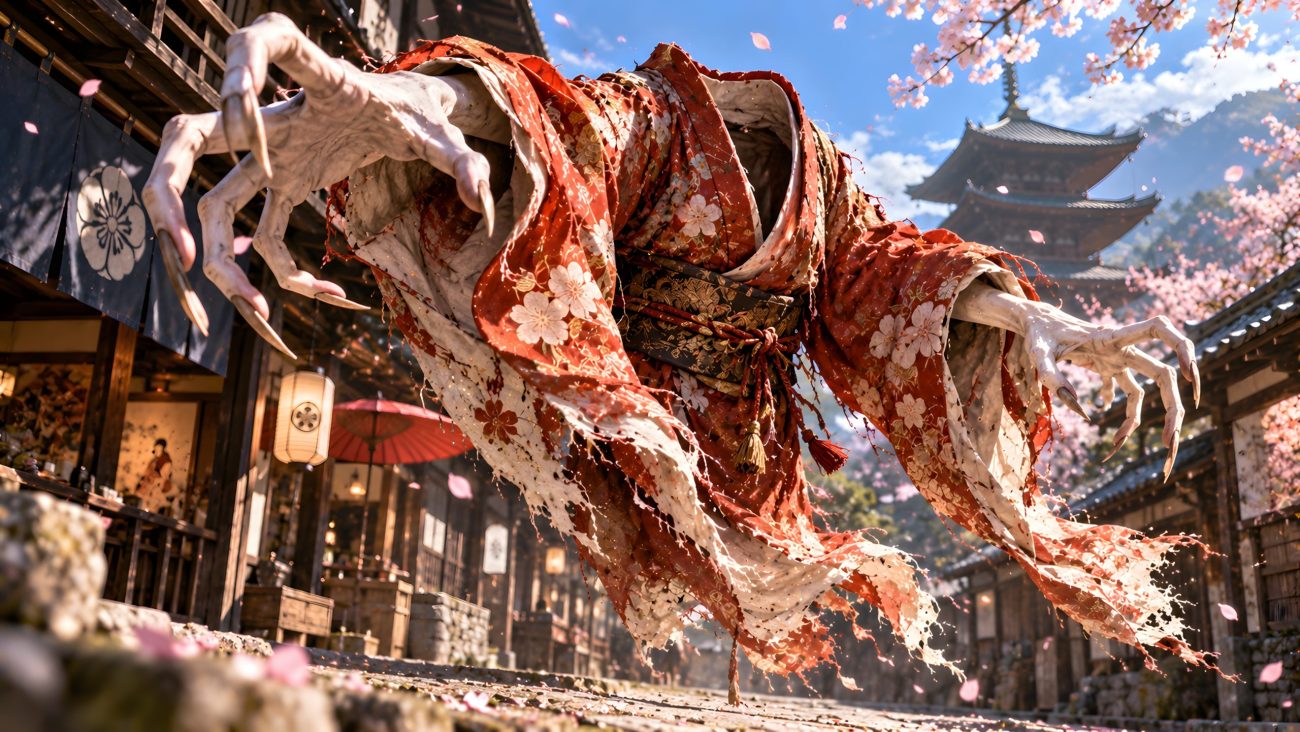
Kosode no Te, meaning “hands of the kosode,” is a Japanese yokai associated with short-sleeved kimonos formerly owned by prostitutes. It manifests as a pair of ghostly hands emerging from the garment’s sleeves. These supernatural hands attack clients who refuse to pay what they owe, although they may also assault anyone unfortunate enough to be nearby.

One account of its origin concerns prostitutes who spent many years saving money to purchase their freedom but died before achieving their goal. Traditionally, their clothing might be donated to a Buddhist temple in exchange for funeral rites and prayers. However, if a woman died still indebted to the brothel keeper, her kimono might instead be sold to recover the money owed. In such cases, the woman’s spirit could become attached to the garment rather than passing peacefully into the afterlife.

The Kosode no Te thus embodies the lingering resentment of a dead woman whose life and death were shaped by debt and exploitation. Unable to move on, her spirit inhabits the clothing she once cherished, turning it into a vessel for supernatural vengeance. Although this is one explanation for the yokai’s origin, the phenomenon may arise under other circumstances as well.


Sources

“Kosode no Te.” Yokai.com. https://yokai.com/kosodenote/


Ittan Momen

Tradition: Japanese Mythology
Alternative Names: 一反木綿, Ittan-momen
Category: Object


The Myth

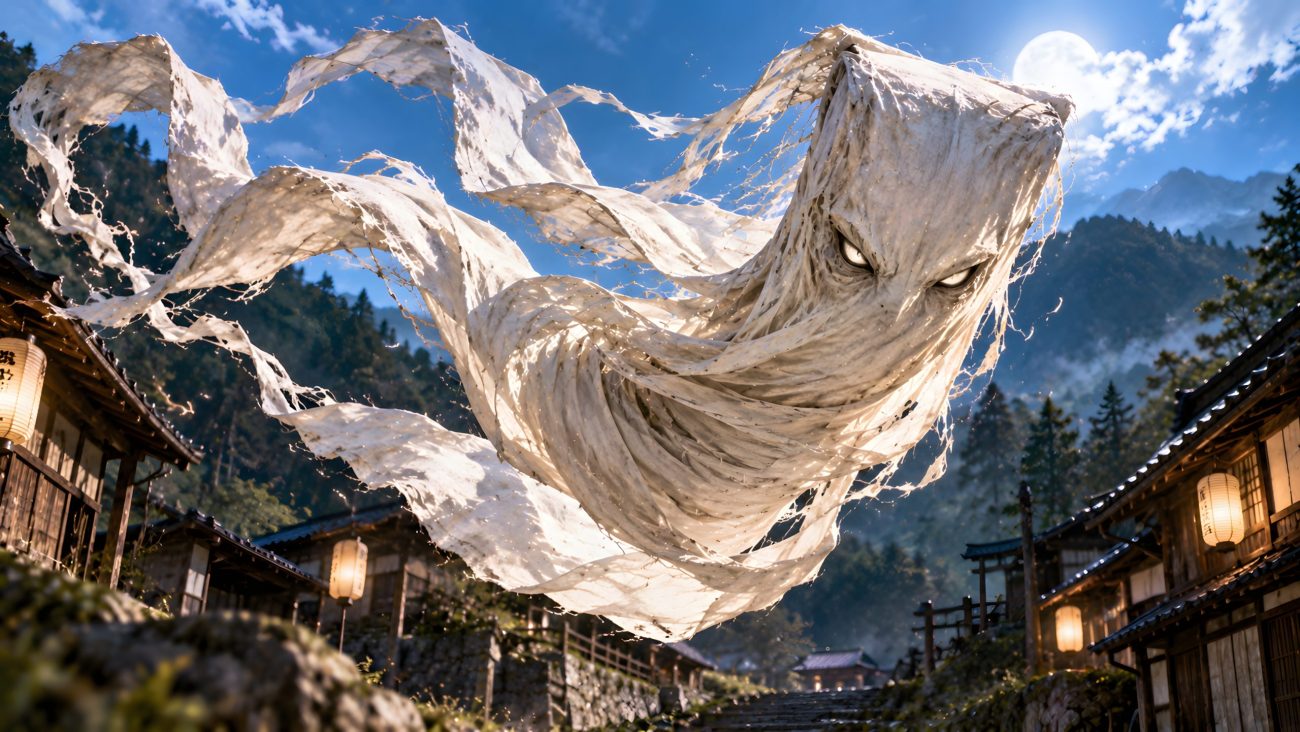
Ittan Momen is a flying cloth yokai from Takayama in Kimotsuki District, Kagoshima Prefecture, Japan. It appears at night as a long strip of white fabric, approximately one tan in length, a traditional Japanese measurement of cloth.

The yokai flies towards unsuspecting people and wraps itself around their faces, covering their mouths and noses and suffocating them. Its seemingly ordinary appearance as a piece of cloth conceals a deadly threat, turning a familiar household material into a dangerous supernatural creature.


Sources

“Ittan Momen.” 新版TYZ 妖怪図鑑 (New TYZ Yokai Encyclopedia). https://tyz-yokai.blog.jp/archives/1010652579.html


Kege

Tradition: Japanese Mythology
Alternative Names: Kemogen, Kemo Ken, 毛毛現
Category: Object


The Myth

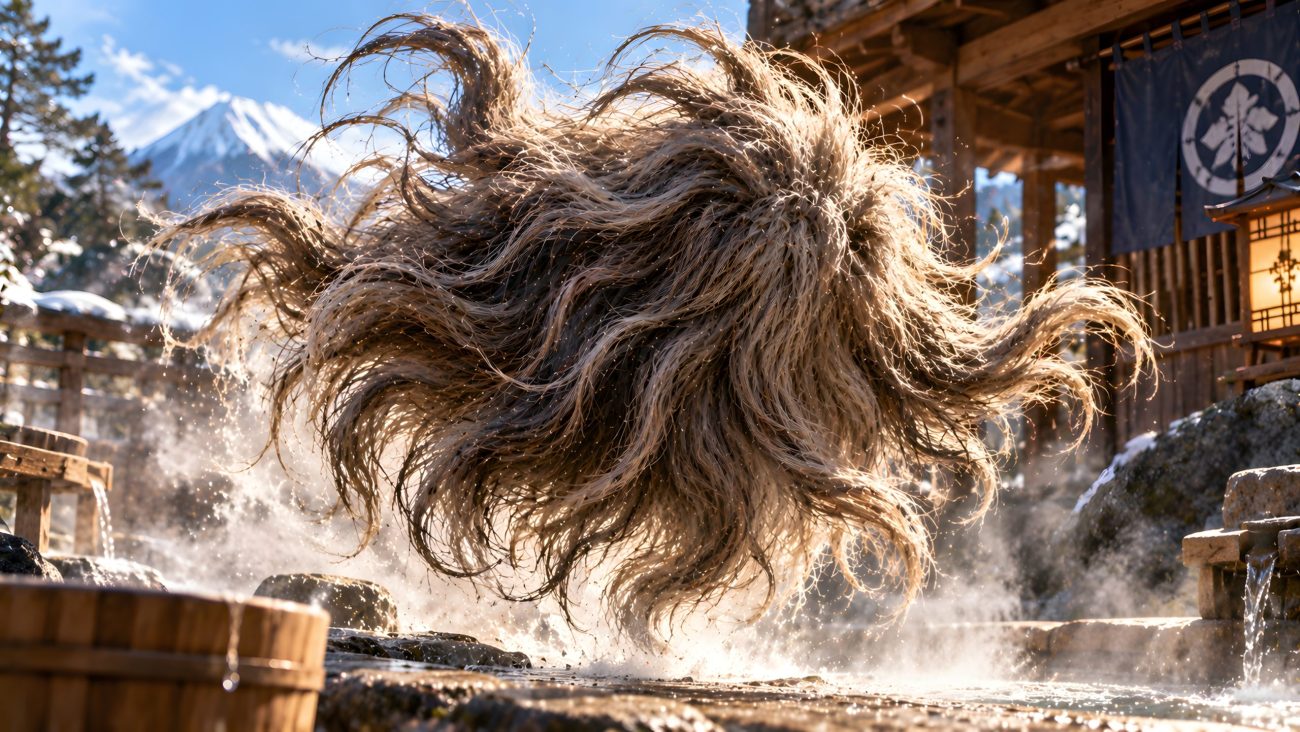
Kege is a strange, hair-covered yokai associated with an encounter described by the Japanese manga artist and yokai researcher Shigeru Mizuki. It appears as nothing more than a lump of fur, with no visible head, legs, or tail. When Mizuki and his family visited a mountain hut on Mount Fuji, they discovered a mysterious mass of hair curled up in the bathhouse. Unable to identify it, the family became frightened and caused a commotion.

Mizuki eventually approached the strange creature and lifted it with a pair of fire tongs. To his surprise, the mass of fur was extremely light and seemed to have no body or stomach beneath its hair. The account suggests that it might have been the remains of an animal that had been eaten, leaving only its fur behind. Its true nature remains uncertain, and it is unclear whether the encounter involved an actual supernatural creature.

Kege has also been listed as a yokai associated with Shizuoka Prefecture in a modern children’s encyclopedia of Japanese supernatural beings. However, the connection appears to derive from Mizuki’s unusual encounter rather than from an established regional tradition. Beyond its peculiar appearance as a creature consisting almost entirely of hair, little is known about Kege’s origins or supernatural abilities.


Sources

“Ke-fu-ke-gen.” 新版TYZ 妖怪図鑑 (New TYZ Yokai Encyclopedia). https://tyz-yokai.blog.jp/archives/1079864645.html


Talking Futon

Tradition: Japanese Mythology
Alternative Names: Tottori Futon, The Futon That Talks, The Futon of God
Category: Object


The Myth

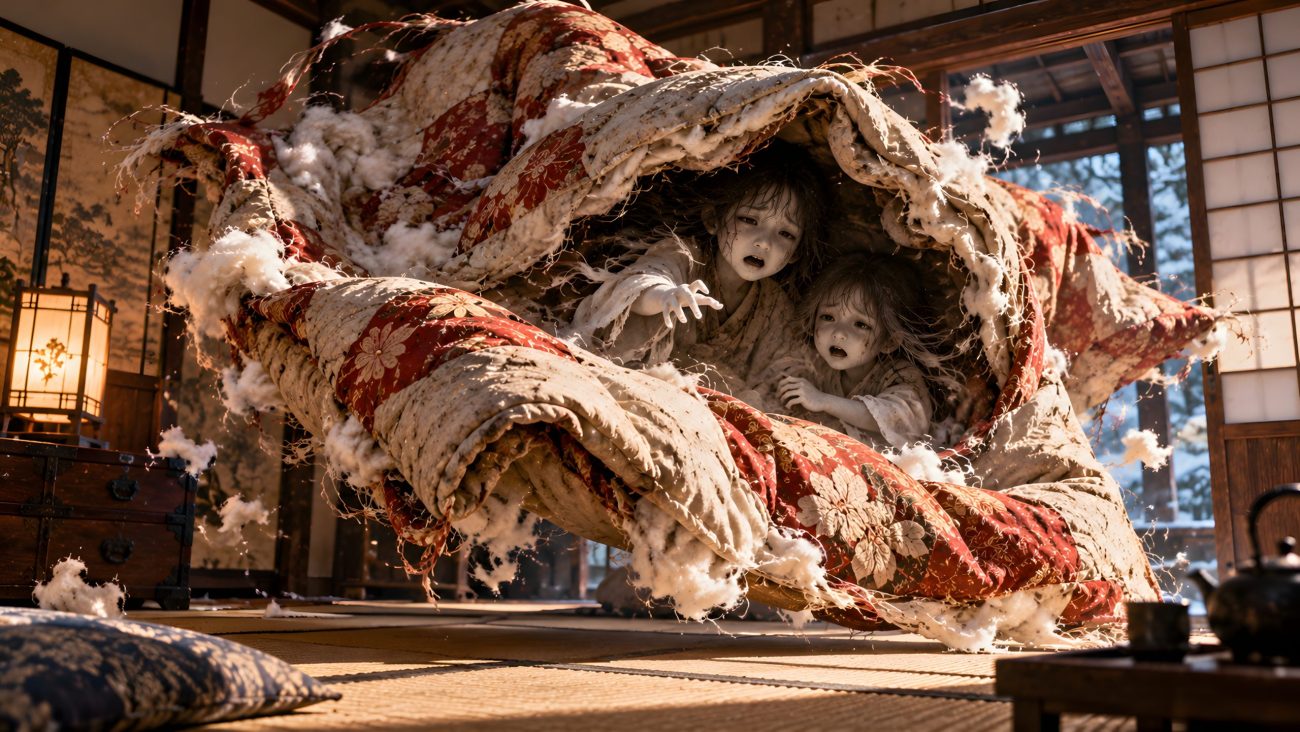
The Talking Futon is a haunted Japanese futon associated with a tragic story from Tottori. The tale tells of a travelling merchant who spends the night at a newly opened inn. As he begins to fall asleep, he hears two children speaking to each other in the darkness. They repeatedly exchange the words, “Brother, it’s cold,” and “You’re cold, aren’t you?” Believing that children from another room have entered by mistake, the merchant calls out to them. The voices briefly stop but soon return. When he lights a lantern and searches the room, he finds nobody. Eventually, he realizes that the voices are coming from the futon itself. Terrified, he gathers his belongings and flees the inn.

When another guest experiences the same phenomenon the following night, the innkeeper investigates and hears the mysterious voices himself. He traces the futon’s history through several antique shops and discovers that it once belonged to a desperately poor family. The father earned very little, while his bedridden wife and their six children struggled to pay the rent. After the father died, the mother also succumbed to illness, leaving the children to survive alone. They gradually sold their possessions until only their futon remained. During a bitter winter, the brothers huddled together beneath it, repeatedly comforting one another with the words, “Brother, it’s cold,” and “You’re cold, aren’t you?”

Their landlord eventually seized the futon because the family could no longer pay the rent and drove the children out into the freezing cold. Wearing only thin clothing, the brothers huddled together outside, but the snow and cold overcame them. Their bodies were discovered several days later, and people built a resting place for them in a nearby Kannon hall, where prayers could be offered for their souls.

Upon learning the truth, the innkeeper took the haunted futon to the temple and arranged for Buddhist sutras to be recited so that the brothers’ spirits might find peace. Afterward, the voices ceased. The story presents the Talking Futon as an object that preserves the suffering and final words of two children, transforming an ordinary household possession into a haunting reminder of poverty, cruelty, and the need to honor the dead.


Sources

“Speaking Futon.” 新版TYZ 妖怪図鑑 (New TYZ Yokai Encyclopedia). https://tyz-yokai.blog.jp/archives/1072878051.html


Dobukara-ja

Tradition: Japanese Mythology
Alternative Names: Dobukara Hebi, 溝から蛇, Straw Snake
Category: Object


The Myth

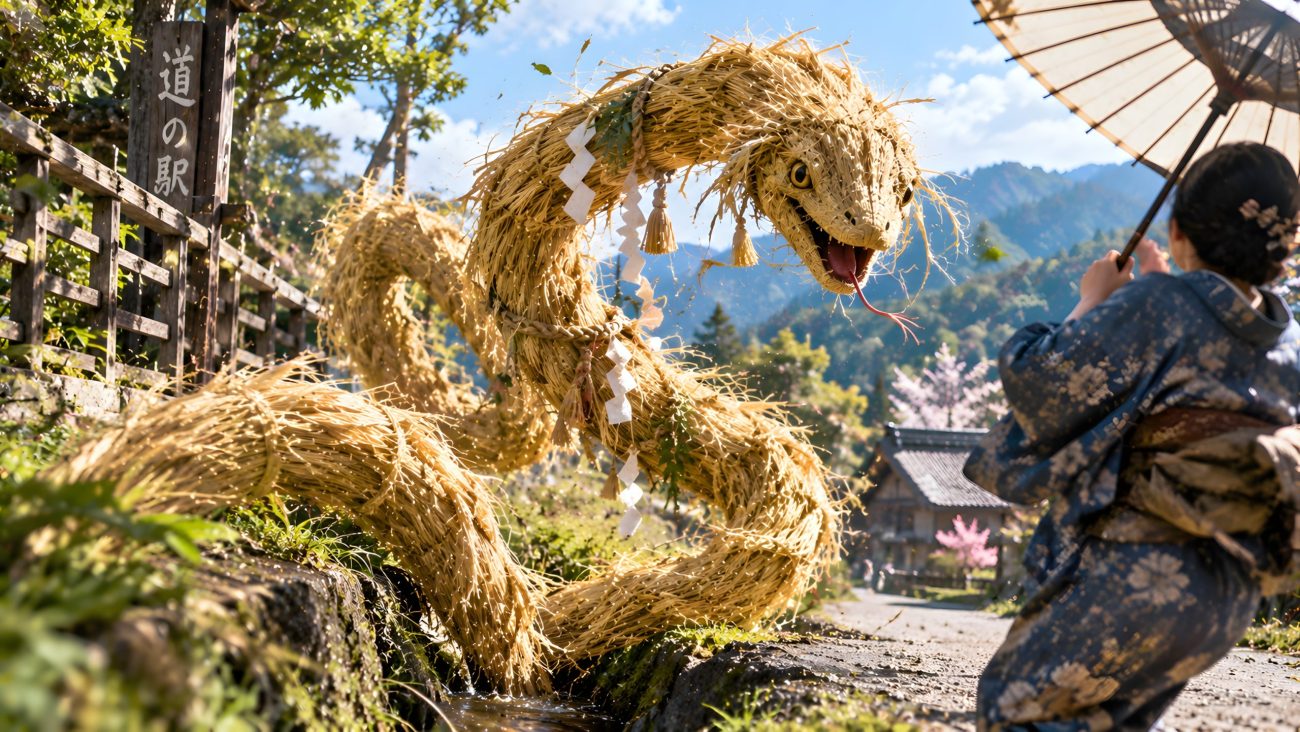
Dobukara-ja is a strange supernatural creature depicted in the Japanese illustrated work Bakemono Wahonso. It appears as a snake made of golden-yellow straw, resembling wheat straw in color. The creatures come in various sizes, make plenty of noise, and wrap themselves around people, but they are described as entirely harmless and not frightening.

According to the account, these straw snakes emerge from the sides of roads every year after the festival held on the first day of the sixth month. One depiction shows them appearing behind people walking with umbrellas in the rain, calling out, “Young lady, come along with me! It’s me, it’s me!” Their appearance closely resembles the straw snakes used in traditional Japanese insect-repelling processions, in which straw figures are carried as part of rituals intended to drive pests away from crops.

The creature’s name comes from the expression dobu kara hebi, meaning “a snake from a ditch.” The saying describes something unexpected appearing from an unlikely place. The Dobukara-ja embodies this idea through its sudden appearance beside the road, turning an ordinary straw object into a peculiar but harmless supernatural being.


Sources

“Dust-Covered Snake.” 新版TYZ 妖怪図鑑 (New TYZ Yokai Encyclopedia). https://tyz-yokai.blog.jp/archives/1010654364.html