Wata Hōshi

Tradition: Japanese Mythology
Alternative Names: Watahoshi, 綿ほうし, Cotton Spirit
Category: Object


The Myth

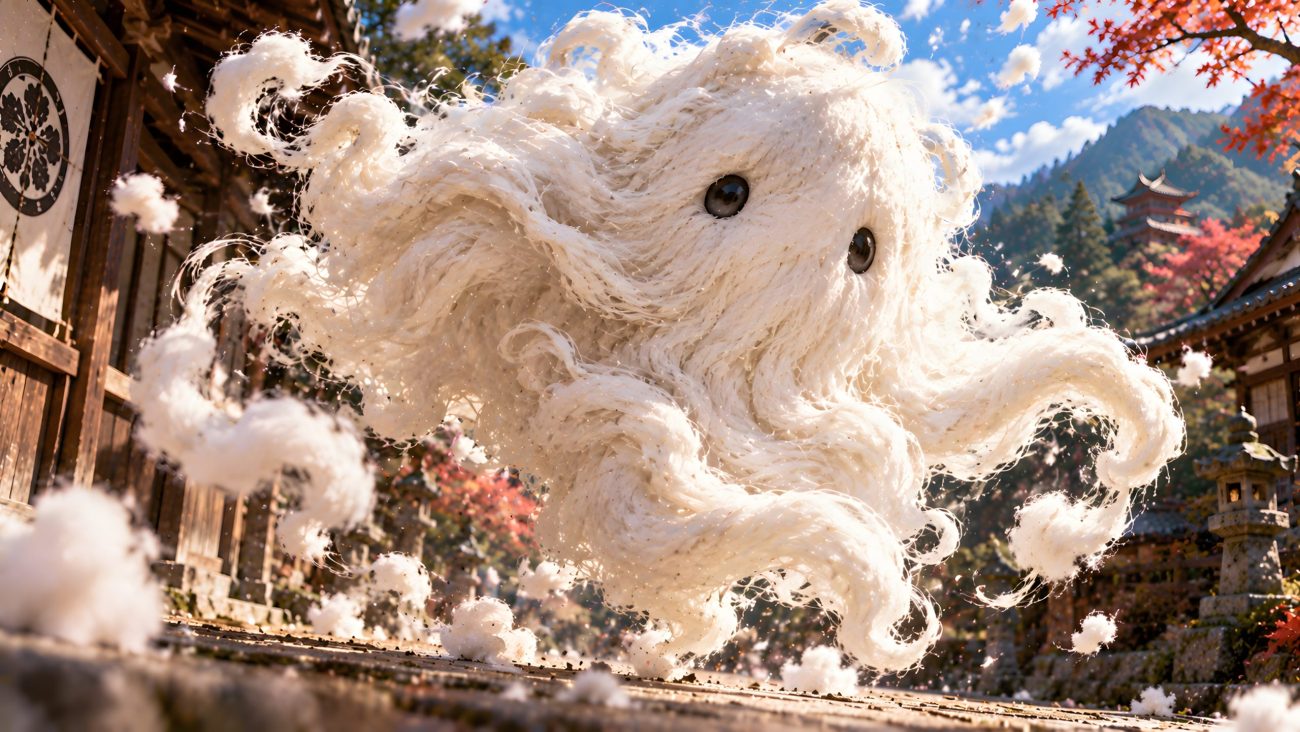
Wata Hōshi is a mysterious yokai depicted in an illustrated collection of supernatural creatures whose author and date of creation are unknown. As its name suggests, it appears as a white, cotton-like being, resembling a soft mass of cotton rather than a clearly defined animal or humanoid figure.

Little is known about the Wata Hōshi beyond its unusual appearance. It has been suggested that it might be related to the Nuppeppō, another strange Japanese yokai, but no comparable depictions or established traditions have been identified. Its origins, behaviour, and supernatural abilities therefore remain unknown.


Sources

“Wataboushi.” 新版TYZ 妖怪図鑑 (New TYZ Yokai Encyclopedia). https://tyz-yokai.blog.jp/archives/1025560341.html


Jatai

Tradition: Japanese Mythology
Alternative Names: Ja-tai, Snake Sash, 蛇帯
Category: Object


The Myth

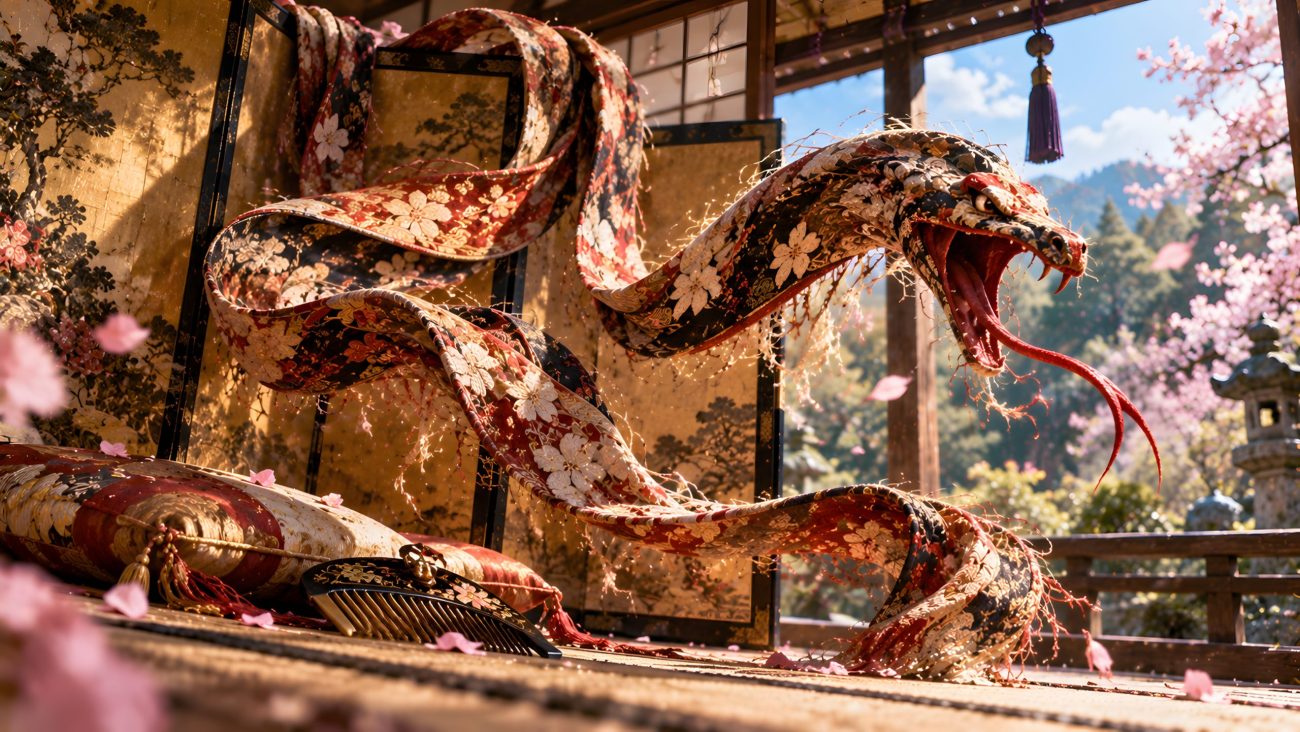
Jatai is a supernatural apparition depicted in Toriyama Sekien’s 今昔百鬼拾遺 (Konjaku Hyakki Shūi). It appears as a sash draped over a folding screen, its shape resembling a snake extending its tongue. A pillow and a comb lie beneath the screen, completing the eerie scene. Rather than describing a creature with a clearly established body or behaviour, the image presents an ordinary clothing accessory taking on the threatening form of a serpent.

The accompanying text connects the Jatai with jealousy and a traditional belief that sleeping with a sash across the body causes dreams of snakes. It suggests that the three-layered sash of a jealous woman may become a venomous serpent winding around her seven times. The image plays on the similarity between the Japanese words for a snake’s body and a sash, linking the ideas of jealousy, serpentine transformation, and poisonous resentment.

The Jatai is generally understood as an artistic creation inspired by this wordplay and by older imagery of snakes emerging from clothing or accessories. Similar motifs appear in depictions of the Night Parade of One Hundred Demons, including a snake-like sash hanging from a clothing rack. The Jatai therefore transforms an everyday object into a symbol of jealousy and the dangerous emotions associated with it.


Sources

“Jatai.” 新版TYZ 妖怪図鑑 (New TYZ Yokai Encyclopedia). https://tyz-yokai.blog.jp/archives/1010654355.html


Suzuri no Tamashii

Tradition: Japanese Mythology
Alternative Names: Suzuri no Tamashii, Inkstone Spirit, 硯の魂
Category: Object


The Myth

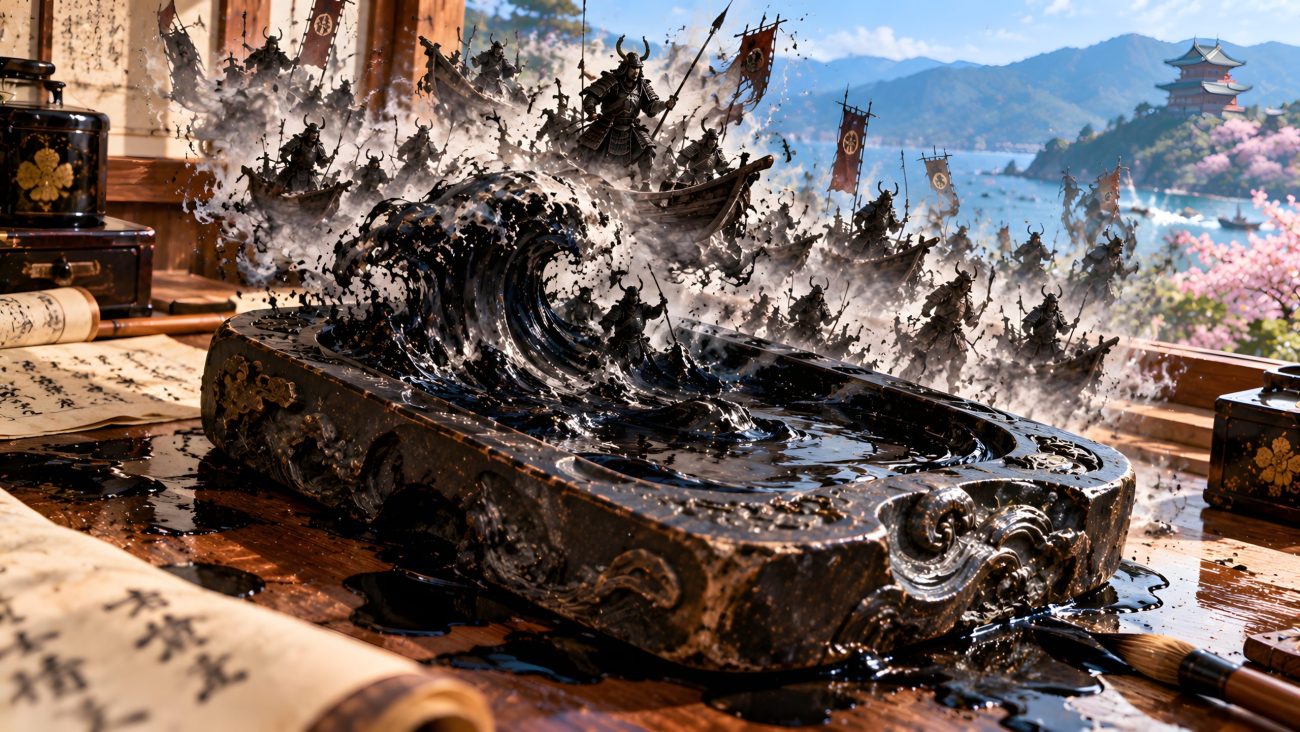
The Suzuri no Tamashii is a supernatural spirit associated with an inkstone that has been used for generations to copy the same manuscript repeatedly. Over time, the inkstone begins to absorb aspects of the story it has helped preserve. It can then produce phantom sounds and illusory figures drawn from the manuscript, causing supernatural disturbances across the writing desk.

The spirit is particularly associated with the brutal destruction of the Taira clan during the final naval battle of the Genpei War. When the inkstone is used, it produces eerie sounds resembling the roar of the sea, the clash of armies, and the screams of dying warriors. The ink inside begins to ripple and swell like ocean waves, from which tiny boats and soldiers emerge as though the battle were being reenacted within the ink itself.

The Suzuri no Tamashii is connected to the vengeful spirits of the Taira warriors who perished in the conflict between the Taira and Minamoto clans. According to the legend, many of the slain warriors became onryō, spirits driven by resentment and vengeance. Their lingering curse infects inkstones repeatedly used to reproduce the story of their downfall, allowing the tragedy to manifest whenever the ink is disturbed.


Sources

“Suzuri no tamashii.” Yokai.com. https://yokai.com/suzurinotamashii/


Koto Furunushi

Tradition: Japanese Mythology
Alternative Names: Koto Furunushi, Old Koto Master, 琴古主
Category: Object


The Myth

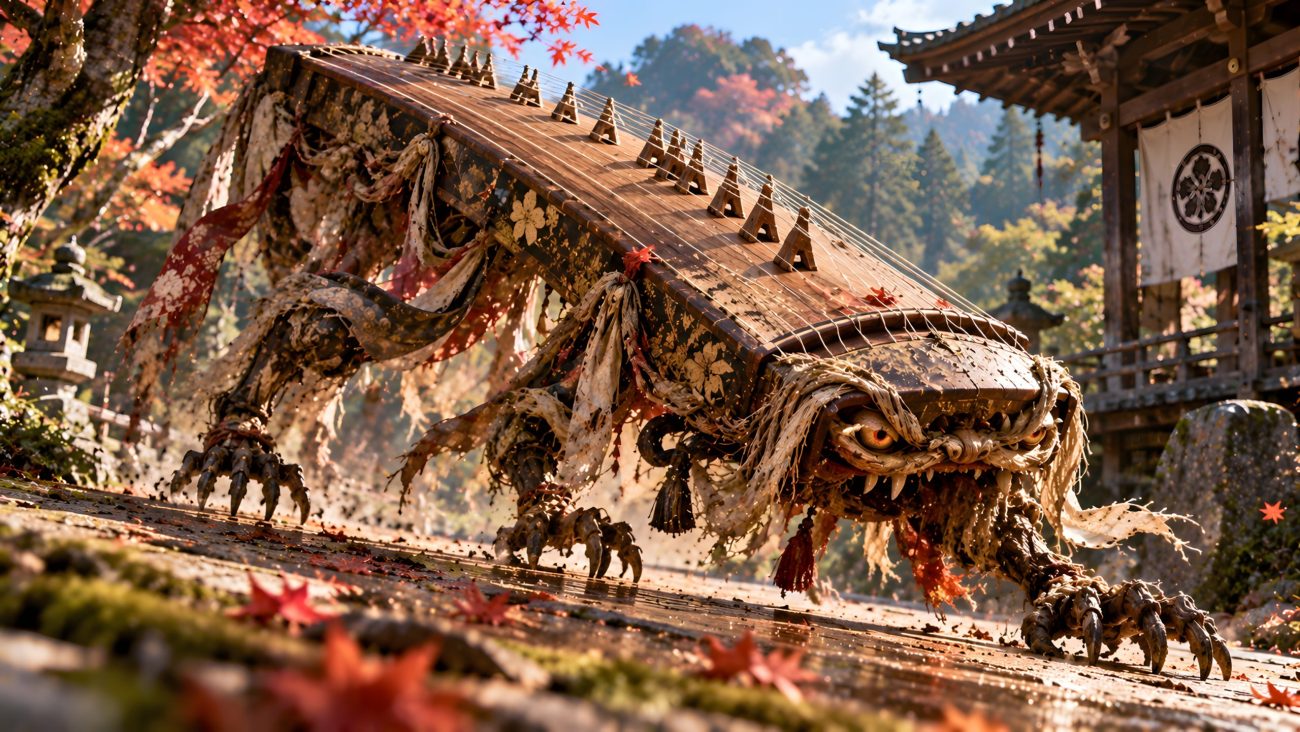
The Koto Furunushi is a supernatural yōkai resembling a koto, a long, harp-like Japanese musical instrument, transformed into a wild beast. It originates from the belief that objects neglected by their owners can develop supernatural life after being used for many years.

A koto that was once played frequently but later forgotten and stored away may transform into a Koto Furunushi. Despite its beast-like appearance, the creature retains the memory of every song ever played on its strings. When nobody is around, it plays music on its own, leaving people puzzled by the mysterious sounds coming from empty rooms.

The Koto Furunushi prefers old melodies that have fallen out of fashion and disappeared from human memory. Through its solitary performances, it preserves forgotten songs long after people have ceased to remember them.


Sources

“Koto furunushi.” Yokai.com. https://yokai.com/kotofurunushi/


Bakezōri

Tradition: Japanese Mythology
Alternative Names: Bake Zōri, 化け草履, Ghost Zōri, Haunted Straw Sandals
Category: Object


The Myth

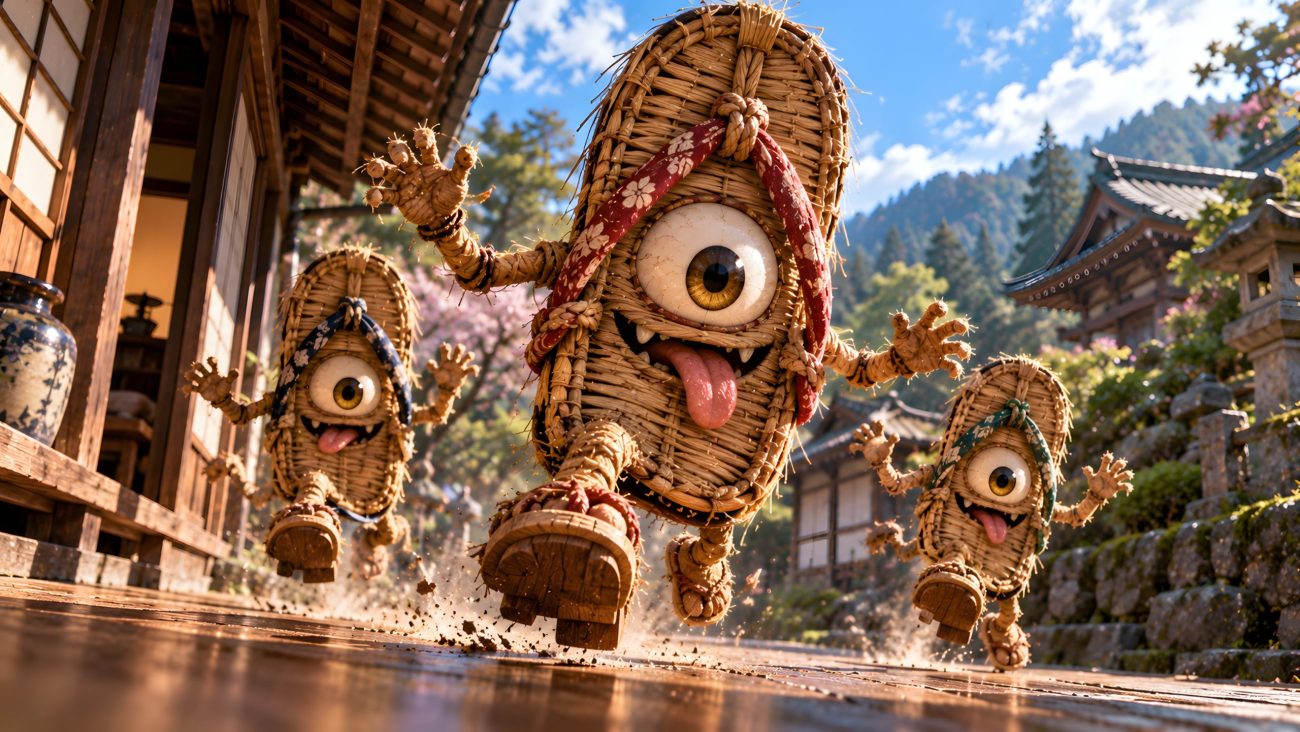
Bakezōri are supernatural sandal yōkai said to emerge when traditional Japanese straw sandals, known as zōri, are mistreated and abandoned by their owners. They take the form of animated sandals with arms and legs growing from their bodies and a single large eye in the center. Once transformed, they become mischievous household spirits that run around the house at night, making noise as their little feet clatter across hard floors.

Bakezōri are known for singing a peculiar chant as they race through the house: “Kararin! Kororin! Kankororin! Managu mittsu ni ha ninmai!” The chant refers to the sandal’s physical features, with “three eyes” representing the three holes where its straps are attached and “two teeth” referring to the two wooden clogs on the underside of Japanese sandals. The remaining words imitate the clattering sound of sandals moving across a hard surface. Through their strange appearance and noisy nighttime antics, Bakezōri embody the idea that neglected everyday objects can acquire a supernatural life of their own.


Sources

“Bakezōri.” Yokai.com. https://yokai.com/bakezouri/


Nunobai

Tradition: Japanese Mythology
Alternative Names: Nuno-bai, 布這い
Category: Object


The Myth

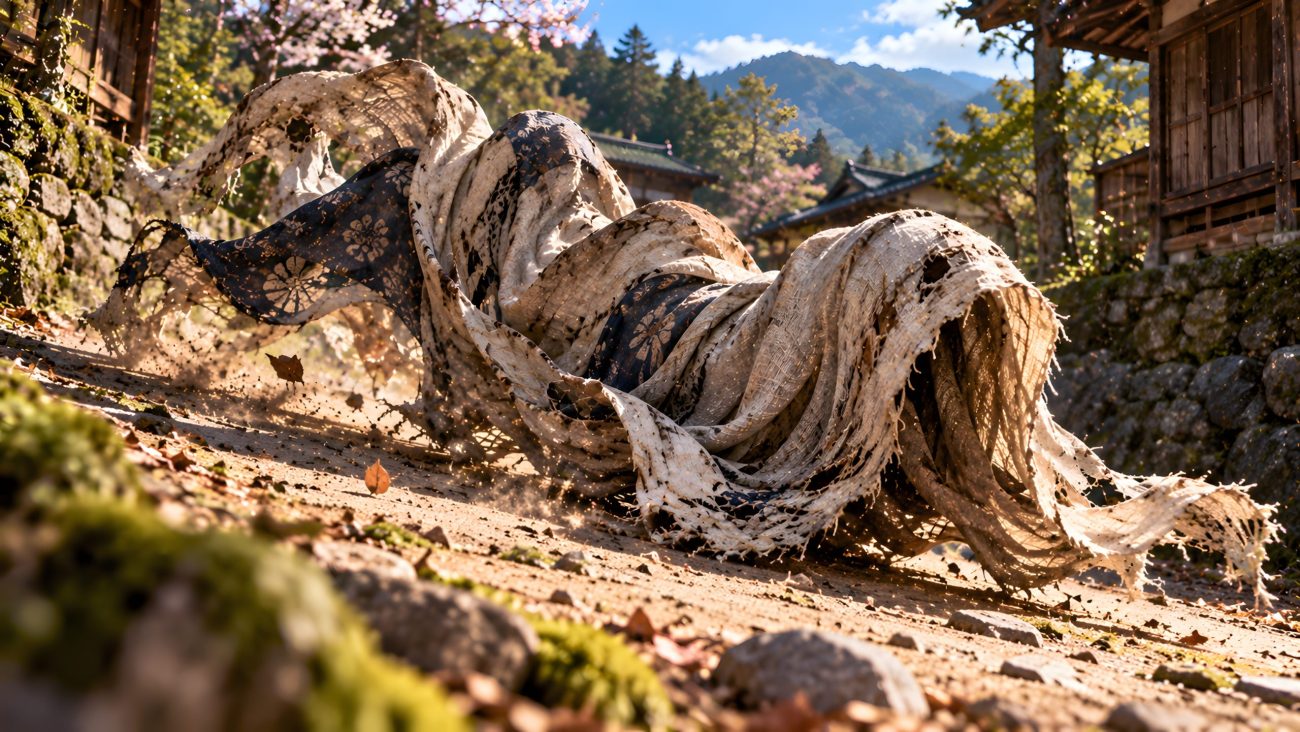
Nunobai is a mysterious yokai from the Aomori region of Japan. It is described as a strange being that moves along the ground in a writhing motion, as though a piece of cloth were being dragged across the earth.

Little else is known about Nunobai, and its appearance, origins, and supernatural abilities are not described in detail. Its defining characteristic is its unusual, cloth-like movement across the ground.


Sources

“Nunoba.” 新版TYZ 妖怪図鑑 (New TYZ Yokai Encyclopedia). https://tyz-yokai.blog.jp/archives/1010652669.html


Kasabake

Tradition: Japanese Mythology
Alternative Names: Kasa Obake, Karakasa Kozō, Umbrella Ghost, 傘化け, 傘お化け, 唐傘小僧
Category: Object


The Myth

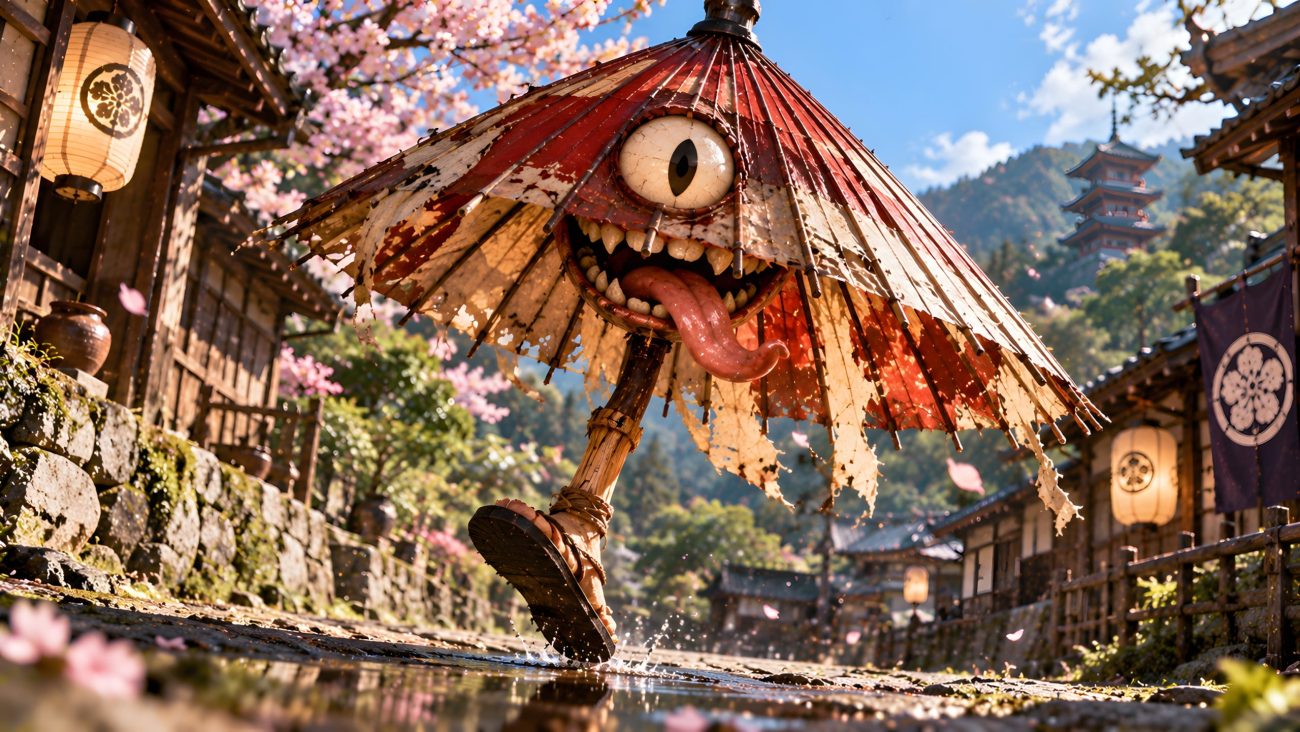
The Kasabake is a classic Japanese yokai depicting a supernatural umbrella. It is typically portrayed with a single eye, a mouth, and a handle transformed into a leg, giving the umbrella a strange, animated appearance. This distinctive design has become one of the most recognizable visual representations of yokai and continues to appear in various forms of Japanese imagery.

The Kasabake is also known as Kasa Obake or Karakasa Kozō. Unlike many other yokai, however, it is not based on a specific legend or established traditional narrative. Rather, it is a depiction of an umbrella brought to life as a supernatural creature. Consequently, it has no clearly established behaviour, powers, or personality beyond its characteristic appearance as a monstrous umbrella.


Sources

“Kasa-obake.” 新版TYZ 妖怪図鑑 (New TYZ Yokai Encyclopedia). https://tyz-yokai.blog.jp/archives/1010652592.html


Yakantsuru

Tradition: Japanese Mythology
Alternative Names: Yakan Tsuru, 薬缶吊る
Category: Object


The Myth

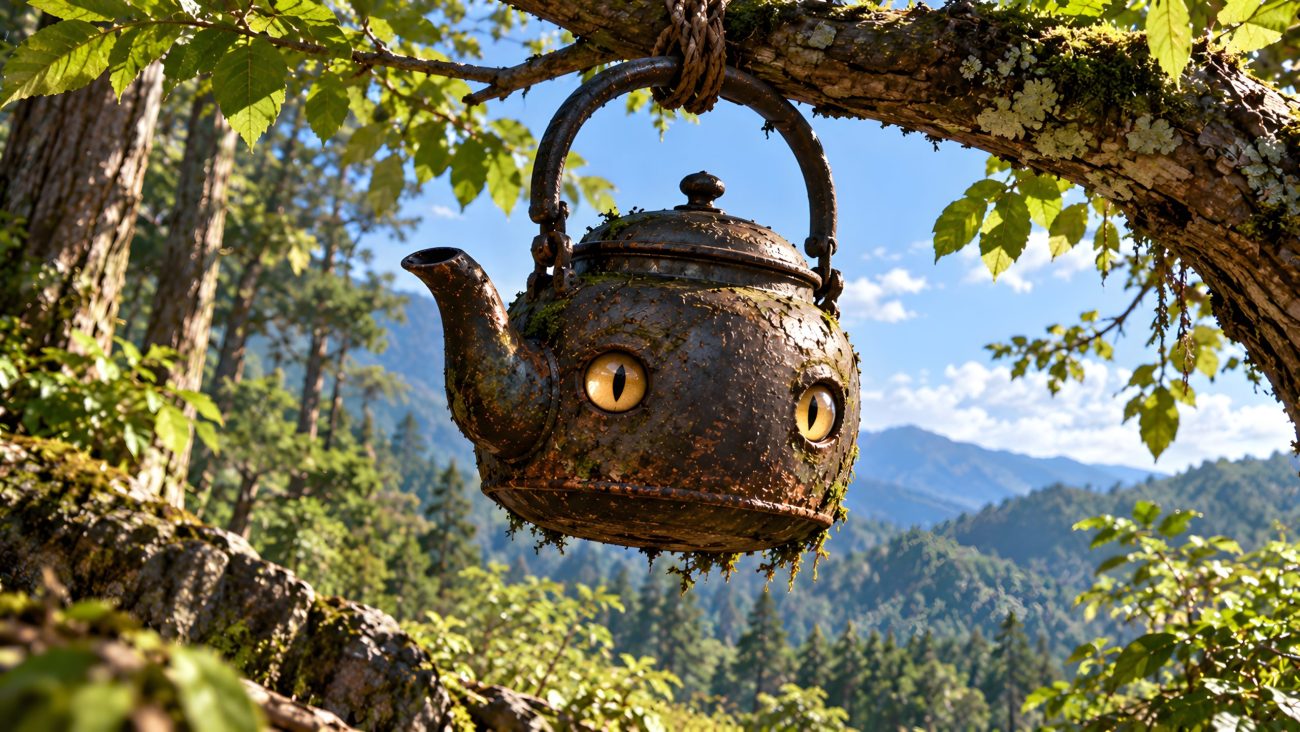
Yakantsuru is a mysterious yokai from Nagano Prefecture, Japan. Its name refers to a hanging kettle, reflecting the strange phenomenon associated with this supernatural being.

Those walking through a forest at night may encounter a kettle suddenly dangling down from the trees above. The sight appears unexpectedly in the darkness, making the Yakantsuru an eerie presence in the nighttime woods. Beyond this unusual occurrence, little is known about its appearance, behavior, or origins.


Sources

“Yakanzu.” 新版TYZ 妖怪図鑑 (New TYZ Yokai Encyclopedia). https://tyz-yokai.blog.jp/archives/1010652582.html


Yarikechō

Tradition: Japanese Mythology
Alternative Names: Yarimocho, Yarikenaga
Category: Object


The Myth

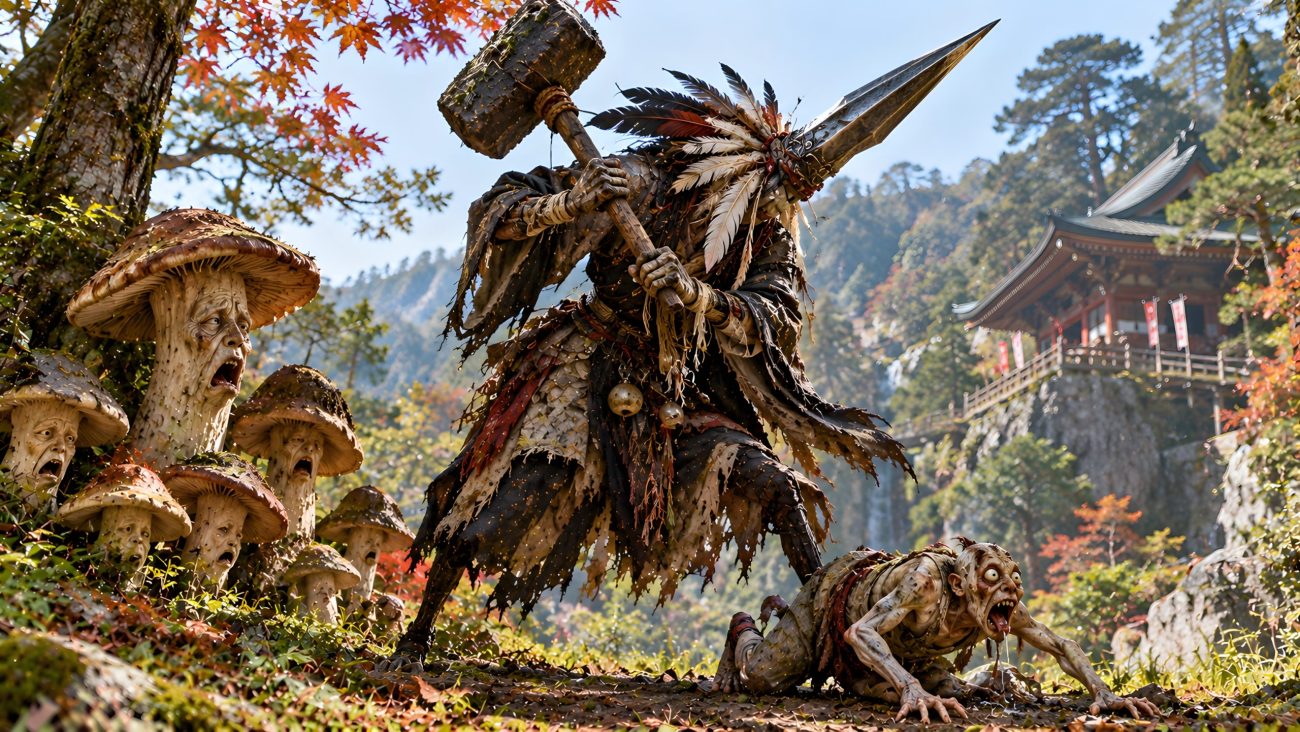
Yarikechō is a strange yokai associated with the keyari, a ceremonial spear decorated with feathers near its tip. Such spears were carried at the front of daimyō processions and festivals, where spear-bearers displayed their skill and helped lead the procession. Yarikechō takes the form of a supernatural being whose head is the pointed tip of a spear. It holds a hammer in both hands, raising it as though preparing to strike.

The yokai is depicted standing beside a cluster of peculiar mushrooms with human faces. In its illustration, Yarikechō appears to be raising its hammer toward a smaller, crawling yokai at its feet, as if preparing to attack it. Its unusual combination of a spear-shaped head and raised hammer gives it the appearance of a weapon transformed into a supernatural warrior.

Yarikechō is associated with the strange powers of weapons that have passed through the hands of great warriors. Its accompanying inscription wonders whether the spear might once have been touched by Japan’s greatest warrior, suggesting that its supernatural strangeness is a sign of exceptional martial skill. The yokai embodies the transformation of a ceremonial weapon into a mysterious being, revealing the uncanny potential hidden within objects associated with warriors and their processions.


Sources

“牛打坊 (Ushiuchibō).” 新版TYZ 妖怪図鑑 (New TYZ Yokai Encyclopedia). https://tyz-yokai.blog.jp/archives/1079440823.html


Abumi-guchi

Tradition / Region: Japanese Mythology
Alternate Names: Abumiguchi
Category: Object, Yokai


The Myth

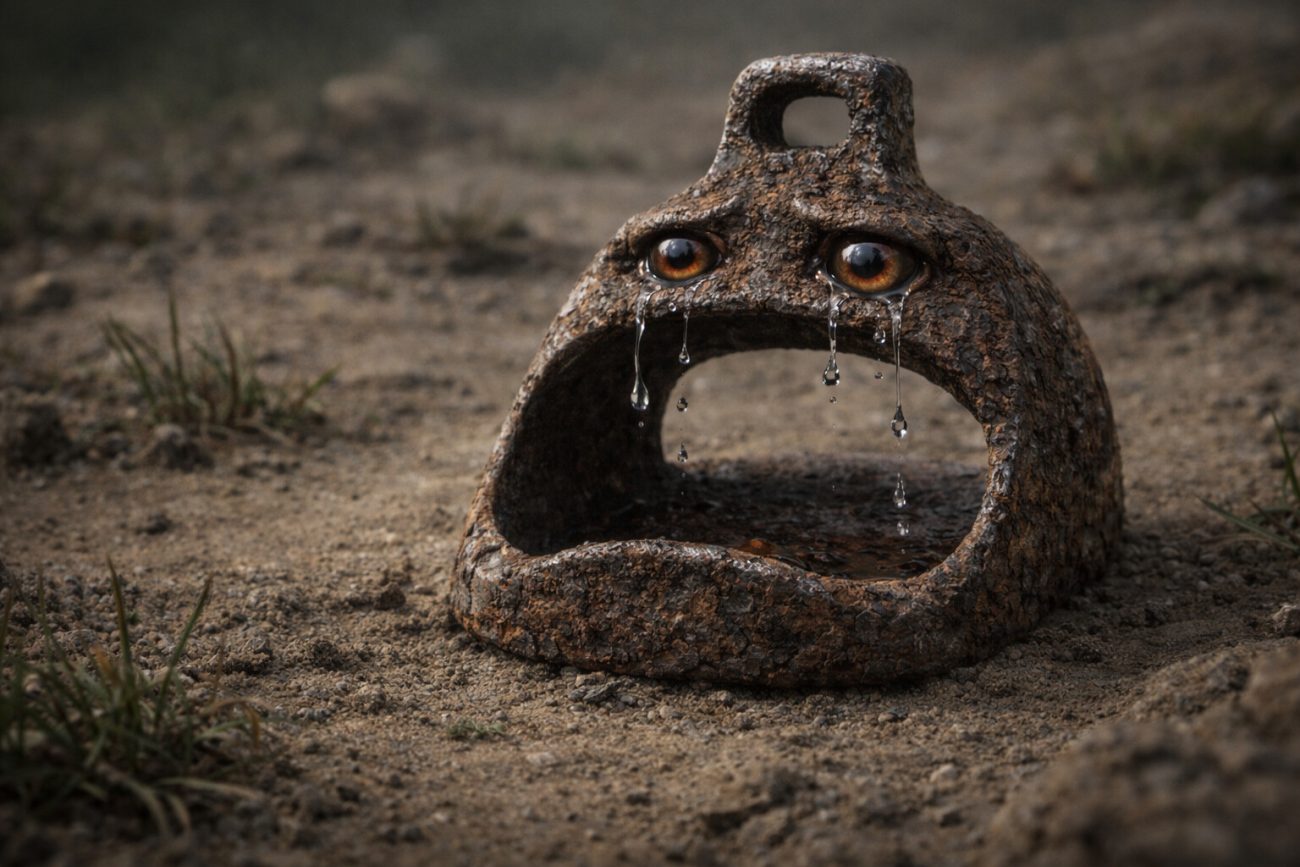
On old battlefields where grass grows over rusted iron and forgotten bones, an Abumi-guchi is said to wait.

Long ago, it was nothing more than a stirrup—one of a matched pair belonging to a warrior who rode into battle and never returned. When the fighting ended, the dead were buried or burned, the living went home, and the stirrup was left behind in the dirt, still shaped to bear a foot that would never again step into it.

As years passed, the abandoned object awakened.

The iron frame sprouted coarse fur, and where the foot once rested, a mouth formed—wide, soft, and wordless. Thus the Abumi-guchi was born, a tsukumogami shaped not by malice, but by longing.

Unlike many yōkai, the Abumi-guchi does not roam. It does not hunt, trick, or frighten travelers. It remains where it fell, half-buried in grass or mud, facing the direction from which its master once rode. It waits patiently, endlessly, believing that the warrior will return to claim it.

Those who encounter an Abumi-guchi describe it as gentle and sorrowful. It does not attack. It does not speak. If approached, it merely watches with its hollow mouth, as though expecting a familiar presence. Some say it shifts slightly when footsteps approach, mistaking strangers for its long-dead owner.

The Abumi-guchi is said to endure until it finally decays completely, or until time itself erases the memory of the battle. Until then, it remains a symbol of loyalty without reward—an object bound to a purpose that can never again be fulfilled.

In Japanese folklore, the Abumi-guchi stands as a quiet reminder that even tools can grieve, and that devotion, when left behind, may linger far longer than the lives that once gave it meaning.


Sources

Yokai.com contributors. (n.d.). Abumi-guchi. In Yokai.com — The Japanese Mythology Database, from https://yokai.com/abumiguchi/

Wikipedia contributors. (n.d.). Abumi-guchi. In Wikipedia, The Free Encyclopedia, from https://en.wikipedia.org/wiki/Abumi-guchi