Inugami Myojin

Tradition / Region: Japanese Mythology
Alternate Names: Inugami, Inuzuka, Loyal Dog
Category: Dog


The Myth

Inugami Myojin refers to dogs worshipped after sacrificing themselves to save their masters from giant snakes. Stories of such loyal dogs exist throughout Japan, and shrines or mounds are often built to honor them.

Long ago, a hunter lived by the Shirajiya River in Goshu and kept a prized dog named Koshiromaru. One day, while hunting deep in the mountains, he took shelter under a rotten tree for the night. Late at night, Koshiromaru began barking repeatedly at him and would not stop. Enraged, the hunter drew his sword and cut off the dog’s head. The severed head leaped onto the rotten tree and bit into the throat of a giant snake that had been hiding there, ready to swallow the hunter. The dog’s head bit the snake to death and saved his master. Realizing the dog’s intention, the hunter mourned and built a shrine on the spot, worshipping the dog as a god. This shrine became known as Inugami no Myojin, and the area’s name was said to come from this event.

Another story tells of a hunter in Mutsu who kept many hunting dogs and spent a night in the mountains inside a hollow tree. Late at night, one dog suddenly woke and barked furiously, leaping toward him. Believing the dog meant to harm him, the man tried to kill it, but when he moved away from the hollow tree, the dog jumped inside and bit a giant snake hiding there. The man then killed the snake with his sword and returned home with the dog, realizing it had saved his life.

Stories of loyal dogs saving their masters from snakes are found in many places, and the dogs are worshipped under names such as Inugami or Inugami Myojin.


Gallery


Sources

TYZ Yokai Blog. (2018). 犬神明神 (Inugami Myōjin). From https://tyz-yokai.blog.jp/archives/1069534939.html


Interpretive Lenses

Religious Readings
  • Christian Ascetic Deep Dive
Philosophical Readings
  • Nietzschean Deep Dive
Psychological Readings
  • Jungian Deep Dive
Esoteric Deep Dive
  • Hermetic Deep Dive
Political / Social Readings
  • Marxist Deep Dive

Kasha

Tradition / Region: Japanese Mythology
Alternate Names:
Category: Cat


The Myth

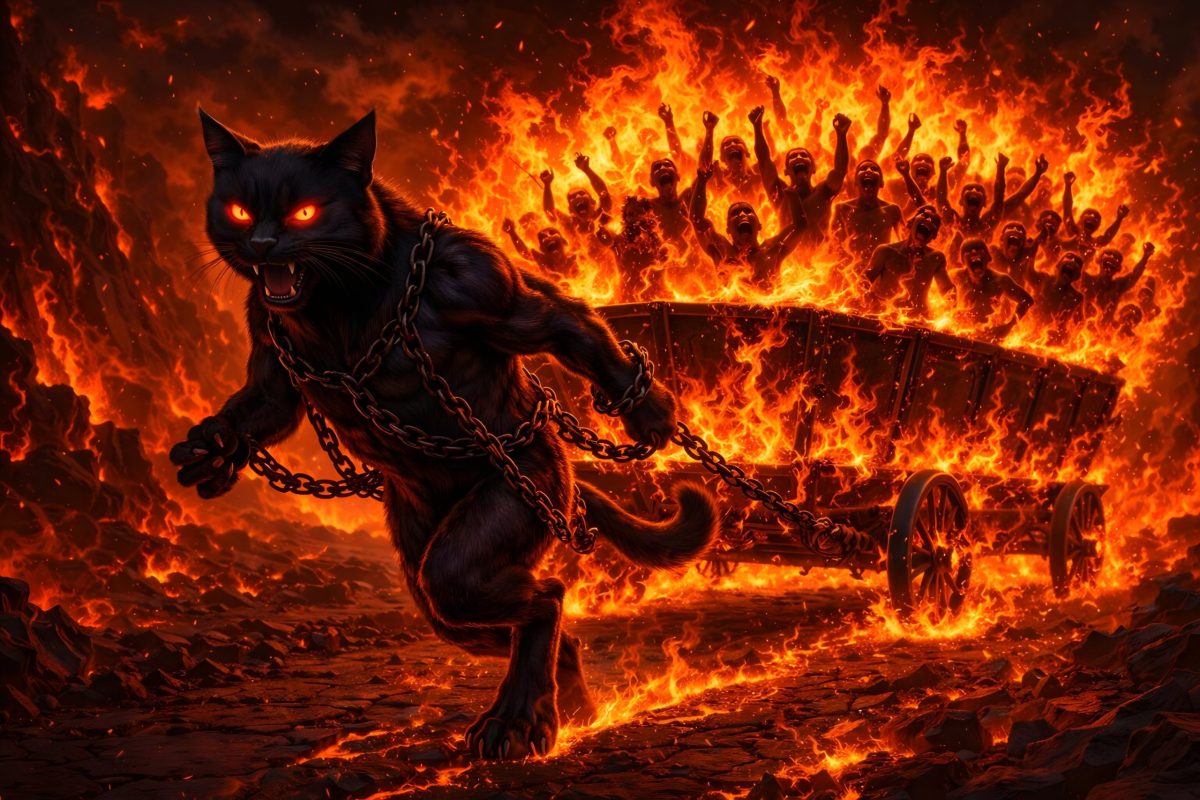
The Kasha is a cat-like yokai associated with death and the punishment of wrongdoers. It is said to carry away the corpses of those who committed crimes, and is often depicted grasping a body while connected to a flaming chariot or fire.

The Kasha appears when a person who has committed wrongdoing dies. It takes the corpse and carries it away, acting as an agent of karmic consequence rather than human judgment. It is portrayed as a cat-like being that may stand upright and seize the body, sometimes shown with a chariot of fire. Images of the Kasha appear in works such as death scrolls and mandalas, where it is shown taking the dead away. Its form varies by region, sometimes more monstrous and sometimes more cat-like, but it is consistently associated with the removal of sinful corpses and the inevitability of moral consequence.


Gallery


Sources

TYZ Yokai Blog. (2014). 火車 (Kasha). From https://tyz-yokai.blog.jp/archives/1010655129.html


Interpretive Lenses

Religious Readings
  • Christian Ascetic Deep Dive
Philosophical Readings
  • Nietzschean Deep Dive
Psychological Readings
  • Jungian Deep Dive
Esoteric Deep Dive
  • Hermetic Deep Dive
Political / Social Readings
  • Marxist Deep Dive

Yama-Otoroshi

Tradition / Region: Japanse Mythology
Alternate Names: Otoroshi
Category: Mountain dweller, Ogre


The Myth

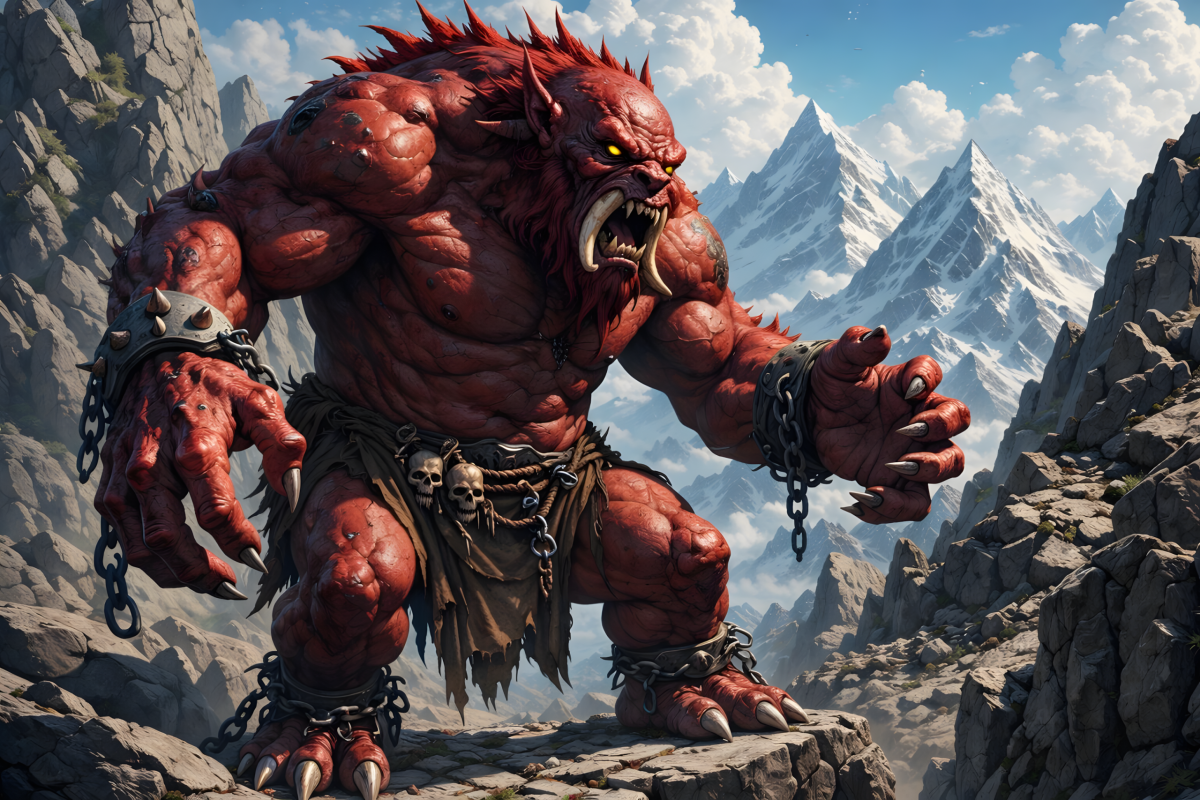
Yama-Otoroshi is a yokai said to inhabit Mount Tsurugi in the Tateyama mountain range. It is described as resembling an ogre with a red face and body and lacking iron bars. It was believed to wait on rocky outcrops and attack climbers.

It was said that before 1907, climbers failed to reach the summit of Mount Tsurugi because the Yama-Otoroshi waited on the rocks, seized them by the collar, and threw them to their deaths. After the Meiji period, the being was said to descend from the mountain and take up residence at temple gates such as Zenkoji Temple. There it grabbed non-believers by the collar and stopped them from passing through. In this form, it was also called simply Otoroshi. An illustration shows the red-faced, two-horned ogre throwing away a climber.


Gallery


Sources

TYZ Yokai Blog. (2016). 山おとろし (Yama-Otoroshi). From https://tyz-yokai.blog.jp/archives/1058924391.html


Interpretive Lenses

Religious Readings
  • Christian Ascetic Deep Dive
Philosophical Readings
  • Nietzschean Deep Dive
Psychological Readings
  • Jungian Deep Dive
Esoteric Deep Dive
  • Hermetic Deep Dive
Political / Social Readings
  • Marxist Deep Dive

Torakoishi

Tradition / Region: Japanse Mythology
Alternate Names: Toramishi, Tiger Stone
Category: Tiger, Stone


The Myth

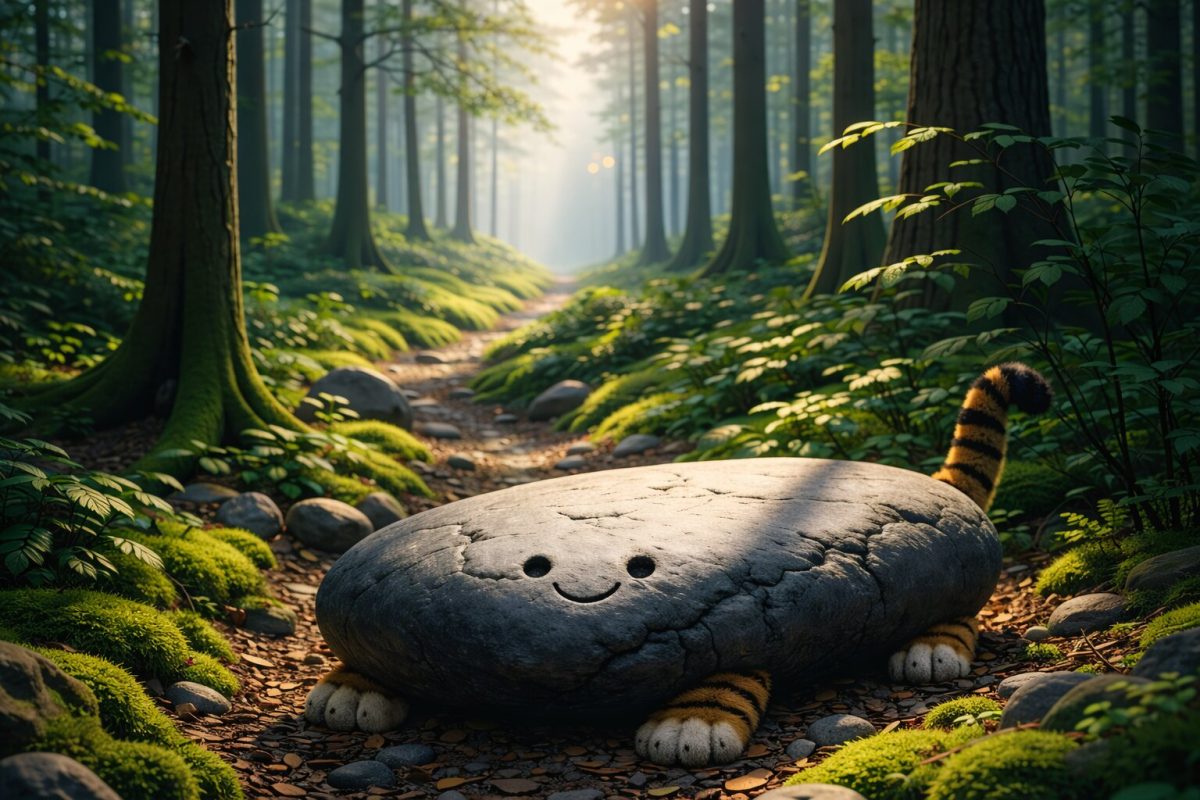
Torakoishi is a legendary stone associated with Tiger Gozen, a courtesan of Oiso-juku known from Soga Monogatari as the lover of Soga Juro Sukenari. A stone kept at Entaiji Temple in Oiso is said to have been given through the power of Benzaiten, and is believed to possess protective and miraculous qualities. It became known as a local curiosity and was publicly shown at certain times.

According to tradition, the stone was connected to a girl born on the Day of the Tiger who grew as she aged through Benzaiten’s power. When assassins sent by Kudo Suketsune attacked, the stone took the form of Soga Juro, blocking the arrows and saving them. The stone at Entaiji Temple is said to ward off evil, grant children, and fulfill wishes when touched, and it was displayed to the public each May. During the Edo period it was known as a roadside attraction and was said that only handsome men could lift it. An 1859 print by Utagawa Yoshikazu depicts the stone with tiger legs and a tail startling passersby, in the style of local monster caricatures.


Gallery


Sources

TYZ Yokai Blog. (2022). 虎子石 (Torakoishi). From https://tyz-yokai.blog.jp/archives/1080024030.html


Interpretive Lenses

Religious Readings
  • Christian Ascetic Deep Dive
Philosophical Readings
  • Nietzschean Deep Dive
Psychological Readings
  • Jungian Deep Dive
Esoteric Deep Dive
  • Hermetic Deep Dive
Political / Social Readings
  • Marxist Deep Dive

Kubiore Neushi

Tradition / Region: Japanese Mythology
Alternate Names: Sleeping Cow with a Broken Neck
Category: Cow, Statue


The Myth

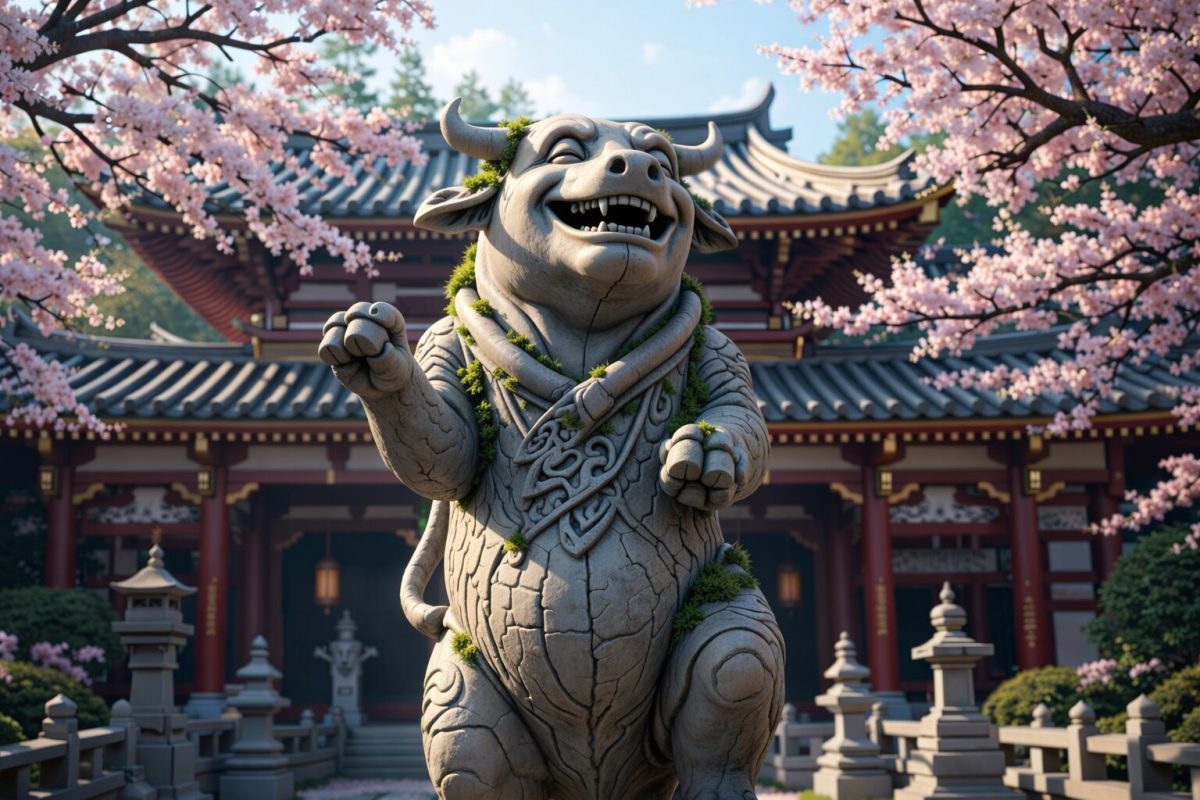
Kubiore Neushi is remembered as a stone cow statue connected to Takimiya Hachiman Shrine in Sanuki.

In the year 888, the land of Sanuki suffered a terrible drought. Rivers dried up, rice fields withered, and the villagers feared famine. Sugawara no Michizane, then governor of the province, fasted, purified himself, and climbed Mount Shiroyama to pray for rain.

At first, the heavens sent firestones and then pebbles, which frightened the people, but Michizane continued his devotions. On the final night of his ritual, the god of Mount Shiroyama appeared to him in a dream and told him that if he offered even a single drop of water to the heavens, a heavy rain would come.

Michizane threw his ink-soaked brush into the sky. At once, black clouds gathered, thunder rolled, and rain poured over the land. The dying crops revived and the villagers rejoiced. They gathered at Takimiya Hachiman Shrine and danced in celebration.

It is said that the joy of that day was so great that the stone cow statue before the shrine joined the dance. In its enthusiasm, the cow broke its neck and became known as the Sleeping Cow with a Broken Neck. The villagers preserved their celebration as the Takimiya Nembutsu Dance in memory of the rain and the event.


Gallery


Sources

TYZ Yokai Blog. (2021). 首折れ寝牛 (Kubiore Neushi). From https://tyz-yokai.blog.jp/archives/1078437894.html


Interpretive Lenses

Religious Readings
  • Christian Ascetic Deep Dive
Philosophical Readings
  • Nietzschean Deep Dive
Psychological Readings
  • Jungian Deep Dive
Esoteric Deep Dive
  • Hermetic Deep Dive
Political / Social Readings
  • Marxist Deep Dive

Inugami

Tradition / Region: Japanese Mythology
Alternate Names: In’gami, Irigami
Category: Dog


The Myth

Inugami are powerful dog spirits said to serve human masters. They are known throughout western Japan, especially in Kyūshū and Shikoku, and are most often connected with wealthy or influential families.

To ordinary eyes, an inugami may appear as nothing more than a common dog. Its true form, however, is far more unsettling. It is said to exist as the mummified head of a dog, preserved and hidden within a secret shrine in the house of its owner. From this hidden vessel, the spirit carries out the will of the family it serves.

Inugami are loyal and obedient, performing tasks much like a living dog. They may bring prosperity, protect the household, or carry out secret commands. Families said to possess such spirits, known as inugami-mochi, treated them almost as members of the household. The spirits were believed to pass down through generations, so that each family member would have their own inugami.

Yet these spirits were not without danger. If mistreated or angered, an inugami could turn on its master with violent fury. They were also known for their power of possession. An inugami might enter a person’s body, settling inside and bringing suffering. Those possessed were said to feel strange pains, intense jealousy, or uncontrollable hunger, and some would bark like a dog. Removing such a spirit required another sorcerer and could take great effort and expense.

The creation of an inugami was believed to involve a dark and terrible ritual. A dog would be driven into extreme desperation through hunger and suffering, and at the height of that torment its head would be severed. The spirit born from that fury would become a powerful and vengeful entity. The head was then preserved and enshrined so that the spirit could be bound and commanded.

Because of the fear surrounding these practices, families suspected of keeping inugami were often shunned by others. Even the accusation of using such spirits could force a household into isolation.

Thus the inugami were remembered as loyal yet dangerous dog spirits — protectors, servants, and sources of both fortune and ruin, bound to families by dark rites and hidden shrines.


Gallery


Sources

Foster, M. D. (n.d.). Inugami. In yokai.com, from https://yokai.com/inugami/


Interpretive Lenses

Religious Readings
  • Christian Ascetic Deep Dive
Philosophical Readings
  • Nietzschean Deep Dive
Psychological Readings
  • Jungian Deep Dive
Esoteric Deep Dive
  • Hermetic Deep Dive
Political / Social Readings
  • Marxist Deep Dive

Hainu

Tradition / Region: Japanese Mythology
Alternate Names:
Category: Dog, Yokai, Winged beast


The Myth

The Hainu is a legendary winged dog spoken of in the traditions of Chikugo in Kyūshū.

It is described as a powerful and fearsome creature, shaped like a dog but with wings that allow it to move swiftly through the air. Strong and fast, it could be as dangerous to humans as a wolf. Yet some tales say that, when tamed, a hainu could also be loyal and affectionate toward its master.

Stories of the creature are tied to events in the late sixteenth century, when the warlord Toyotomi Hideyoshi led his armies into Kyūshū.

One version of the legend tells of a terrifying winged dog that appeared in the region long before Hideyoshi’s arrival. The beast attacked travelers, slaughtered livestock, and spread fear throughout the countryside. When Hideyoshi’s forces passed through the area, the creature blocked their way. After a fierce struggle, the army finally killed it. Hideyoshi, impressed by the animal’s strength and cunning, ordered that it be buried with honor, and a mound was raised where it fell.

Another version tells a very different story. In this telling, the winged dog was not an enemy but Hideyoshi’s own companion. The animal followed him faithfully, flying above his troops as they marched. When they passed through Chikugo, however, the hainu fell ill and died. Hideyoshi was deeply grieved by the loss, and his retainers built a burial mound for the creature so that it would be remembered.

In later years, the place where the dog was said to be buried became known as Hainuzuka, the mound of the winged dog. A temple nearby preserved the memory of the legend, and monuments were raised in honor of the strange creature.

Thus the Hainu was remembered in two ways — as a terrifying beast and as a beloved companion — a winged dog whose story remained tied to the land where it was said to rest.


Gallery


Sources

Foster, M. D. (n.d.). Hainu. In yokai.com, from https://yokai.com/hainu/


Interpretive Lenses

Religious Readings
  • Christian Ascetic Deep Dive
Philosophical Readings
  • Nietzschean Deep Dive
Psychological Readings
  • Jungian Deep Dive
Esoteric Deep Dive
  • Hermetic Deep Dive
Political / Social Readings
  • Marxist Deep Dive

Okuri Inu

Tradition / Region: Japanese Mythology
Alternate Names: Okuri Ōkami (“sending-off wolf”)
Category: Dog, Yokai


The Myth

The Okuri Inu is a dangerous spirit said to haunt mountain paths, forest roads, and lonely passes. It appears as a dog or wolf and is most often encountered at night, when travelers must cross the wild places between villages.

Those who walk alone in the dark may suddenly sense that something is following them. If they look back, they might see a dog-shaped figure pacing behind them, keeping exactly to their footsteps. The creature does not attack at once. Instead, it follows silently, waiting.

As long as the traveler keeps walking, nothing happens. But if they stumble, fall, or show weakness, the Okuri Inu leaps forward with supernatural speed and tears them apart.

Because of this, the spirit is both feared and strangely respected. While it stalks a person, no other beasts or spirits will come near. In this way it protects the traveler from all other dangers, even as it waits for the chance to become their doom.

Some say there are ways to escape it. If a traveler stumbles, they must quickly pretend it was intentional. Sitting down at once and speaking aloud as if resting — saying something like “Heave-ho” or “I’m tired” — may trick the spirit into thinking the fall was not a sign of weakness. Then it will wait patiently rather than attack.

If the traveler survives the journey and leaves the mountains safely, they should turn and thank the unseen follower for escorting them. It is also said that once home, a person should wash their feet and leave out food in gratitude. If this is done, that Okuri Inu will never follow them again.

The spirit’s name, meaning “sending-off dog,” comes from the way it follows travelers as if accompanying them on their way. Since ancient times, stories of this creature have been told across Japan, born from the dangers of mountain travel where a single misstep could mean death.

Thus the Okuri Inu is remembered as a watcher of lonely roads — a shadow that walks behind the traveler, guarding them from danger while waiting for the moment they falter.


Gallery


Sources

Foster, M. D. (n.d.). Okuri-inu. In yokai.com, from https://yokai.com/okuriinu/


Interpretive Lenses

Religious Readings
  • Christian Ascetic Deep Dive
Philosophical Readings
  • Nietzschean Deep Dive
Psychological Readings
  • Jungian Deep Dive
Esoteric Deep Dive
  • Hermetic Deep Dive
Political / Social Readings
  • Marxist Deep Dive

Keukegen

Tradition / Region: Japanese Mythology
Alternate Names: 毛羽毛現, Keugegen (variant reading)
Category: Dog, Yokai


The Myth

Keukegen are strange little creatures said to dwell in neglected homes and damp places where dirt gathers and sickness lingers.

They are described as being about the size of a small dog, but their true form is hard to see clearly. From a distance they appear as nothing more than a lump of long, filthy hair. Up close, the mass shifts and moves, revealing a living creature hidden beneath the tangled fur.

These beings prefer cool, dark, and moist places. They settle beneath floorboards, inside moldy closets, or in abandoned corners of houses where dust, rot, and still air collect. Gardens choked with weeds and damp refuse are also said to attract them.

Though they may seem harmless, Keukegen are not welcome visitors. Wherever they settle, sickness soon follows. People in the house begin to fall ill, fevers spread, and misfortune seems to cling to the place. Because the creatures are shy and rarely show themselves, many only realize they are present when illness has already taken hold.

They do not attack openly and usually avoid being seen. Some who claim to have glimpsed one are dismissed as imagining things, yet the signs of its presence — sickness, weakness, and bad luck — are said to be unmistakable.

The only sure way to drive a Keukegen away is simple: clean the house. Fresh air, sunlight, and order force the creature to leave, for it cannot live where a home is well kept.

Thus Keukegen are remembered as small, filthy spirits that creep into neglected places, bringing disease in their wake, and fleeing wherever cleanliness and care take root.


Gallery


Sources

Foster, M. D. (n.d.). Keukegen. In yokai.com, from https://yokai.com/keukegen/


Interpretive Lenses

Religious Readings
  • Christian Ascetic Deep Dive
Philosophical Readings
  • Nietzschean Deep Dive
Psychological Readings
  • Jungian Deep Dive
Esoteric Deep Dive
  • Hermetic Deep Dive
Political / Social Readings
  • Marxist Deep Dive

Eshō

Tradition / Region: Japanese Mythology
Alternate Names:
Category: Cow


The Myth

At Enkō-ji Temple there once lived a monk named Shaku Eshō. During his lifetime, he took a bundle of firewood belonging to the temple—wood meant for boiling water—and gave it away to another person. Not long after this act, Eshō died.

Some time later, a cow at the temple gave birth to a calf. As it grew, the animal was put to work pulling carts and hauling heavy loads of firewood each day without rest.

One day, while the ox strained beneath its burden, a monk unknown to the temple appeared at the gate. Watching the animal struggle, he said quietly:

“Monk Eshō may have been skilled in reciting the Nirvana Sutra, but it seems he is not very good at pulling a cart.”

At these words, the ox burst into tears, gave a deep sigh, and fell down dead.

The driver accused the visiting monk of causing the animal’s death and had him seized and reported. Yet the monk’s appearance was noble and radiant, unlike that of an ordinary person. Artists were summoned to paint him, and each portrait they made resembled Kannon Bodhisattva. Soon afterward, the monk vanished, and it was said that Kannon had appeared in human form and then departed.

From that time on, people told that the ox had been none other than Monk Eshō reborn, condemned to labor for his wrongdoing. Similar stories were also told of other monks who misused temple goods and were reborn as cattle, forced to pull carts and bear burdens as punishment.

Thus the tale endured as a warning that even small acts of theft could bind a soul to a life of toil, and that the lowing of a weary ox might carry the regret of a human past.


Gallery


Sources

Keikai. (822). Nihon-koku genpō zen’aku ryōiki [日本国現報善悪霊異記, Miraculous Stories of Reward and Punishment in This World]. Nara: Yakushiji Temple.

TYZ Yokai Encyclopedia. 恵勝, from https://tyz-yokai.blog.jp/archives/1078437911.html


Interpretive Lenses

Religious Readings
  • Christian Ascetic Deep Dive
Philosophical Readings
  • Nietzschean Deep Dive
Psychological Readings
  • Jungian Deep Dive
Esoteric Deep Dive
  • Hermetic Deep Dive
Political / Social Readings
  • Marxist Deep Dive