Ubume

Tradition / Region: Japanese Mythology
Alternative names: Ubume, Ubugame, Guhuo Bird (姑獲鳥)
Category: Ghost, Bird


The Myth

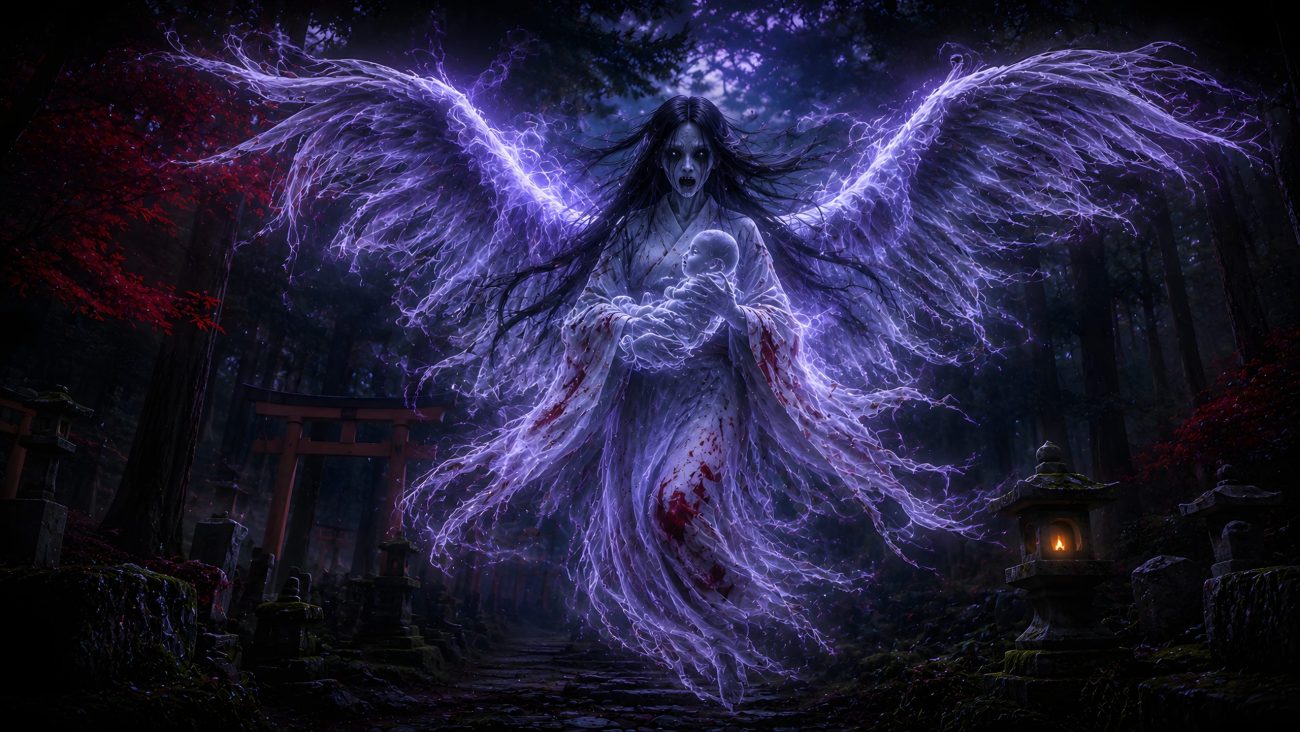
The Ubume is the restless spirit of a woman who died during childbirth. She appears at night along lonely roads, bridges, and riverbanks, carrying an infant in her arms. Dressed in blood-stained clothing, she weeps and asks passersby to hold her child for a moment while she fixes her hair or prays for salvation.

Anyone who accepts the baby soon discovers that it grows heavier and heavier. In some tales, the child eventually transforms into a stone or a bundle wrapped around a straw hammer. Other stories say that a person who fulfills the Ubume’s request and faithfully carries the child receives extraordinary physical strength as a reward. In Akita Prefecture, this supernatural power was known as Obōjikara.

The Ubume is one of Japan’s oldest ghostly beings and was already known during the time when the Konjaku Monogatari-shū was compiled. During the Edo period, it became closely associated with the Chinese Gu Huo Bird, since both were believed to originate from women who had died while pregnant or giving birth. Because of this connection, the two creatures gradually became confused with one another.

Most depictions portray the Ubume as a sorrowful woman holding a baby while wearing blood-soaked garments. Some illustrations, however, give her bird-like features, with wing-shaped arms wrapped protectively around the child.

Though feared, the Ubume is not considered a malicious spirit. She is remembered as a tragic mother unable to abandon her child, forever wandering the night and seeking someone willing to carry the burden she herself could no longer bear.


Sources

TYZ. (n.d.). Ubume [産女]. In 新版TYZ 妖怪図鑑. Retrieved June 20, 2026, from https://tyz-yokai.blog.jp/archives/1010652594.html
Ying Miao

Tradition / Region: Japanese Mythology
Alternate Names: Inmao, Inmaho
Category: Mountain dweller


The Myth

In the villages of the Amami Islands, where moonlight turns the paths silver and the forests seem to breathe, people once spoke of a quiet apparition known as Ying Miao. It was not counted among the dangerous spirits, nor was it invoked to frighten children. Instead, it was remembered as something strange and fleeting, a presence that appeared and vanished without leaving harm behind.

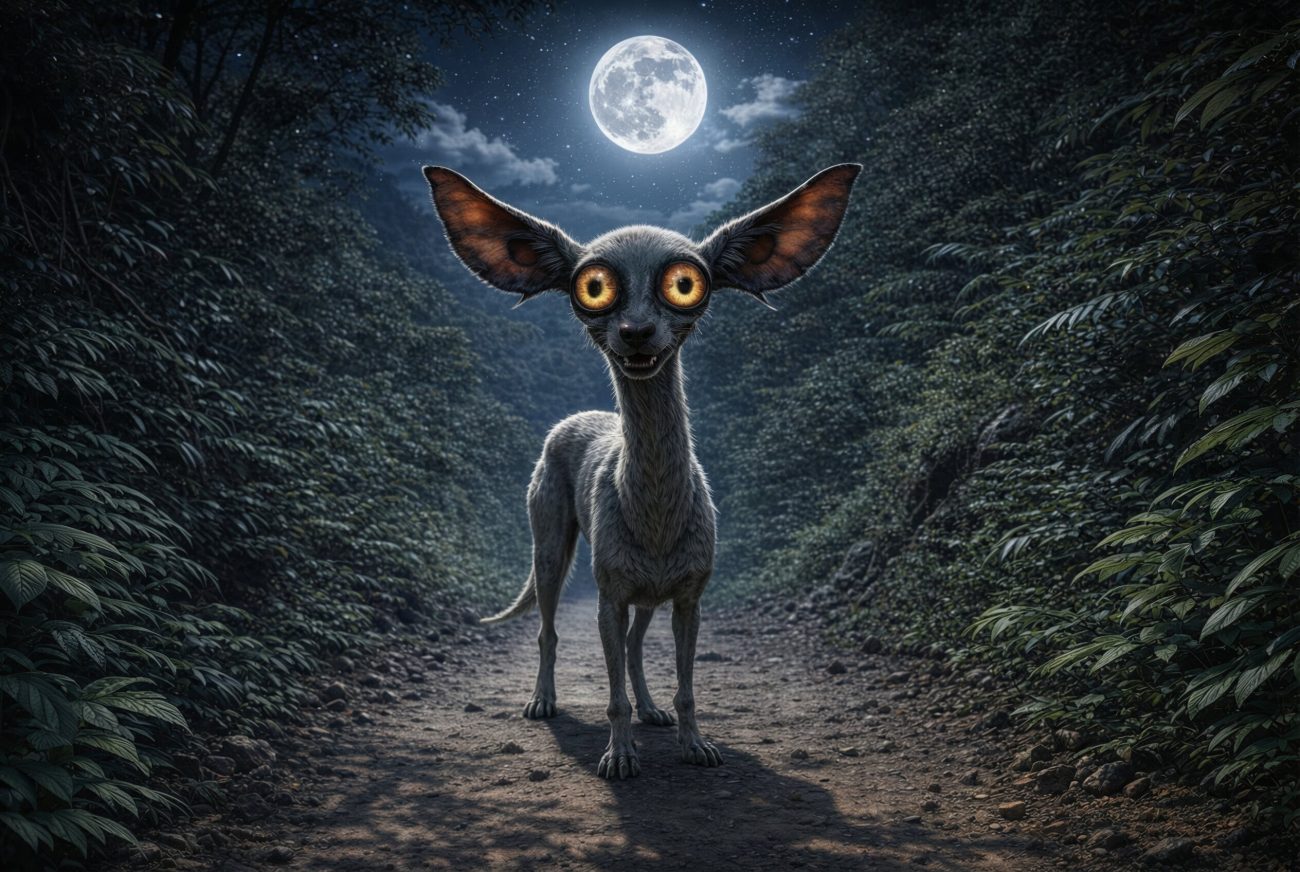
One night, under a bright moon, a traveler was returning to Hanatomi from Iyomo along a lonely road. As he walked, he heard a peculiar sound ahead of him—soft yet heavy, like large ears clapping together. From the opposite direction came a creature unlike any animal he knew. It looked neither like a goat nor like a dog, yet carried something of both in its form.

Ying Miao stopped directly in front of the man. Its ears continued to clap slowly as it raised its head and stared at his face in silence. The two stood there for a moment that felt longer than it was, the road empty and the night utterly still. Then, without a sound or gesture, the creature turned and walked on past him, disappearing down the path.

The man continued home, uneasy but unharmed. When he looked back after a few steps, Ying Miao was gone, as if it had never been there at all. No illness followed, no misfortune, no lingering curse. Nothing happened—except the memory.

Unlike many spirits of the Amami Islands, which were feared for stealing souls or killing those they touched or licked, Ying Miao was said to do nothing at all. It appeared, looked, and vanished. Because of this, people came to believe it was not a bringer of death, but a wandering ghost—one that crossed paths with the living without malice, leaving behind only a quiet question in the moonlit road.


Sources

TYZ-Yokai Blog contributors. (n.d.). Ying Miao. In TYZ-Yokai Blog, from https://tyz-yokai.blog.jp/archives/1018147293.html


Ba-kujira-tata

Tradition / Region: Japanese Mythology
Alternate Names: Monster Whale Curse
Category: Whale, Ghost


The Myth

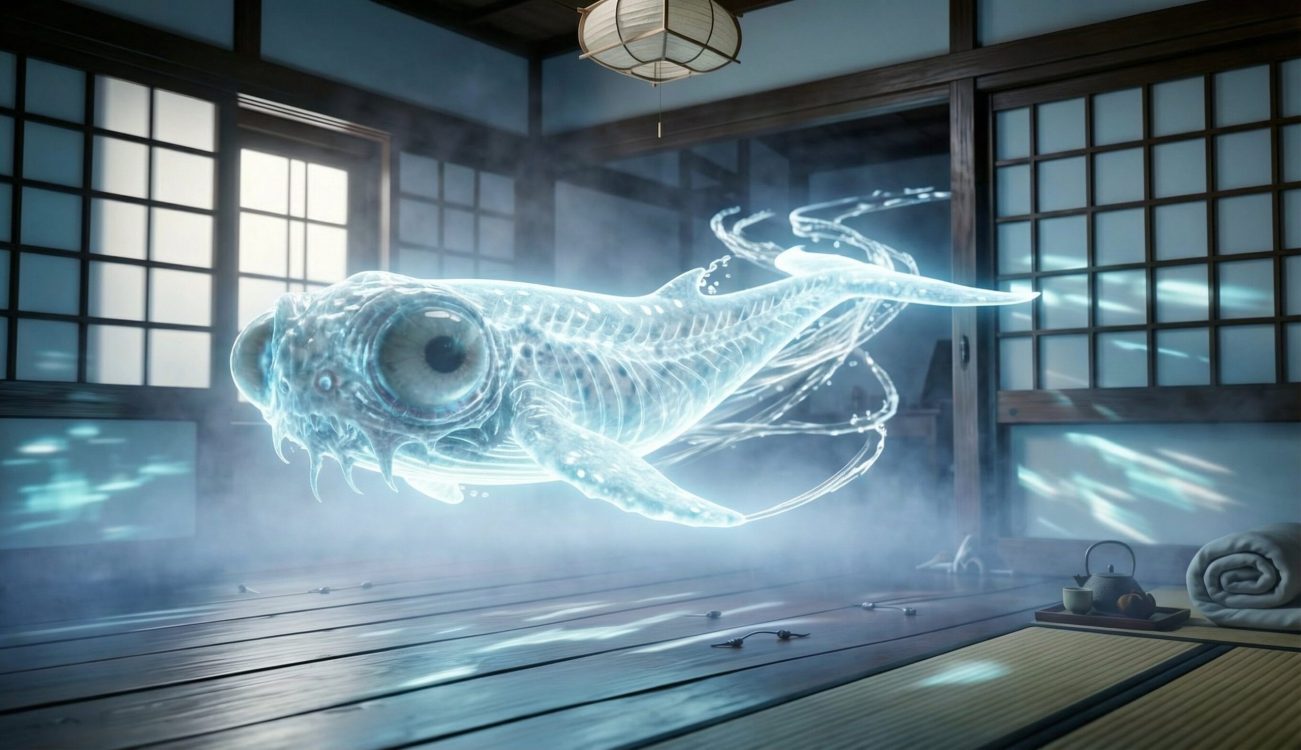
During his years working as a kamishibai artist, Mizuki Shigeru once created a paper-theater story called Monster Whale. The tale told of a man who ate nothing but whale meat. Over time, his body began to change, and he slowly came to resemble a whale himself. As the story neared its end, the man was struck by a severe fever. Even after consulting a doctor, no cause for the illness could be found.

While performing this story repeatedly, Mizuki himself fell ill with an unexplained fever. Medical treatment brought no answers, and the sickness lingered. Eventually, he decided to stop performing Monster Whale. Soon after, his fever disappeared as suddenly as it had come.

Mizuki laughed it off at the time, calling it the curse of the monster whale. Yet as years passed, he reconsidered the experience. He came to feel that the story may have touched on something unseen, something that did not reveal itself openly. As the tale of the monster whale concludes in his later writings, collected in works such as Nihon Yokai Taizen, it leaves a quiet warning: though nothing may seem to be happening, there is always something mysterious moving just beyond human sight.


Sources

TYZ Yokai Blog contributors. (n.d.). Bake-kujira (鯨骨霊 / バクジラ). In TYZ Yokai Blog, from https://tyz-yokai.blog.jp/archives/1077754091.html