Kakushin Gaki

Tradition: Japanese Mythology
Alternative Names: 鑊身餓鬼, Cauldron-Bodied Hungry Ghost
Category: Ghost


The Myth

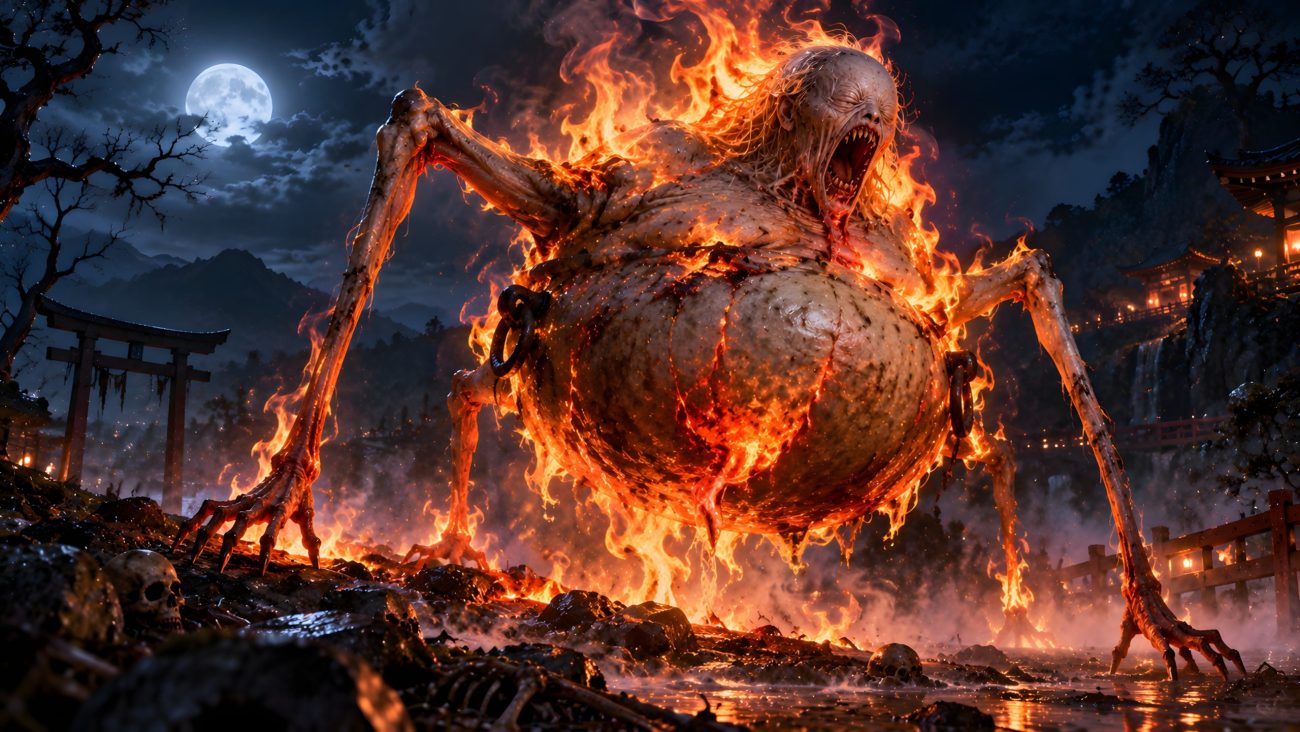
Kakushin Gaki is one of the thirty-six types of hungry ghosts described in Buddhist teachings. It is a tormented spirit reborn into the realm of hungry ghosts because of greed and jealousy during its former life. Those who hoarded wealth out of insatiable avarice and slaughtered living creatures were said to be reborn as Kakushin Gaki, condemned to endure terrible suffering after death.

The creature has an enormous body, but its arms and legs are long and slender like the legs of a metal cooking cauldron. Its face has no eyes, leaving it without the ability to see. Its body is perpetually engulfed in flames, and it twists and writhes in agony as the fire burns it without respite.

Kakushin Gaki appears among the tormented spirits depicted in the Gaki-dō Katsu-gaku no Zu, an illustration of the suffering of hungry ghosts preserved at Shōjū Raigōji Temple in Ōtsu, Shiga Prefecture. In the painting, the creature writhes in flames on an island, its distorted body displaying the relentless punishment endured by those condemned to the hungry ghost realm.


Sources

“隠身餓鬼 (Kakushin Gaki).” 新版TYZ 妖怪図鑑 (New TYZ Yokai Encyclopedia). https://tyz-yokai.blog.jp/archives/1010655140.html
Chūu

Tradition: Japanese Mythology
Alternative Names: 中有, Chūin, Intermediate Existence
Category: Ghost


The Myth

Chūu refers to the intermediate state between death in the present world and rebirth into the next life. In Japanese Buddhist belief, this period lasts forty-nine days, during which the deceased’s spirit is believed to travel between the world of the living and the world of the dead. This wandering period is sometimes called the journey of Chūu.

During these forty-nine days, the deceased undergoes a series of judgments by the Ten Kings of the underworld. From King Shinkō through King Taizan, these judges pass judgment on the dead, with King Enma confronting the deceased on the thirty-fifth day. Buddhist memorial services are traditionally held every seven days, from the seventh day after death until the forty-ninth day, when the intermediate period ends.

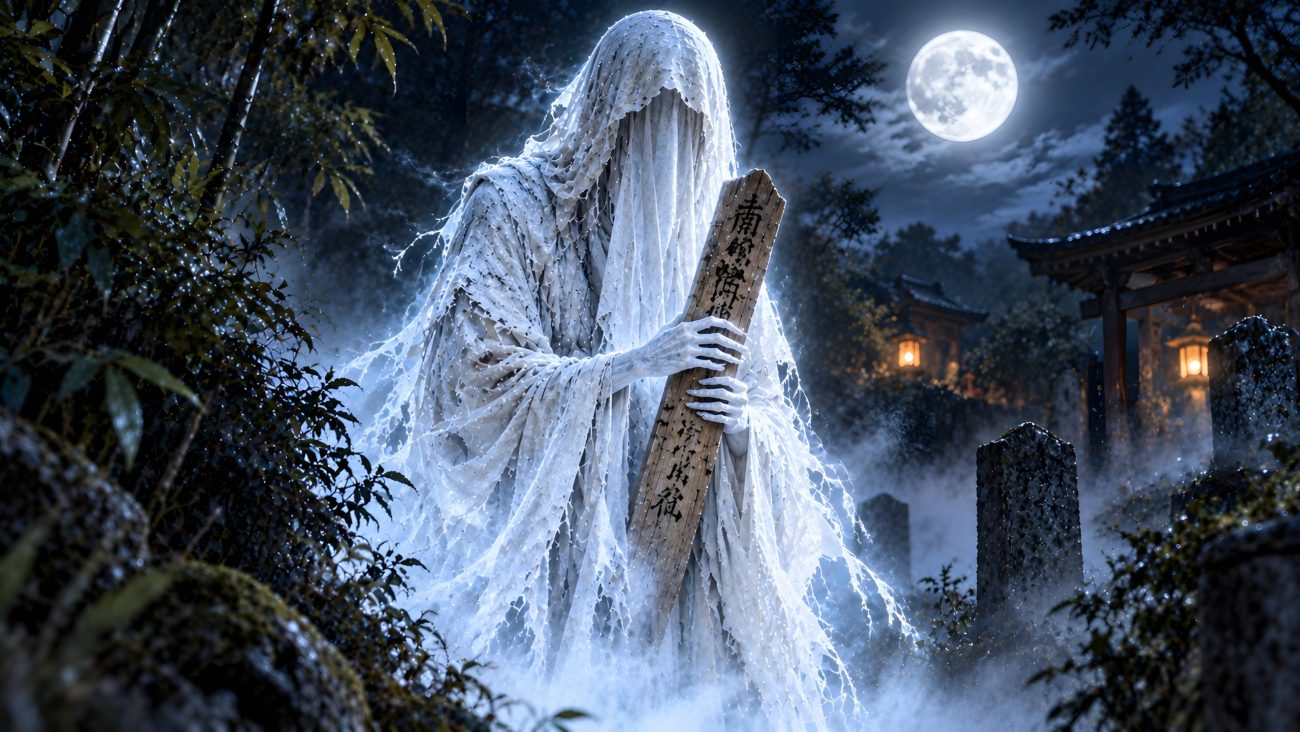
In the Japanese illustrated scroll Hyakuyōzu, a strange ghostlike creature is named Chūu. It stands among bushes with its face concealed and clutches a sotoba, a wooden memorial tablet used in Buddhist funerary rites. Its hidden face and funerary object evoke the image of a spirit lingering between the world of the living and the afterlife, unable to complete its journey.


Sources

. “中有 (Chūu).” 新版TYZ 妖怪図鑑 (New TYZ Yokai Encyclopedia). https://tyz-yokai.blog.jp/archives/1010655125.html


Mamaokka

Tradition: Japanese Mythology
Alternative Names: ママオッカ
Category: Ghost


The Myth

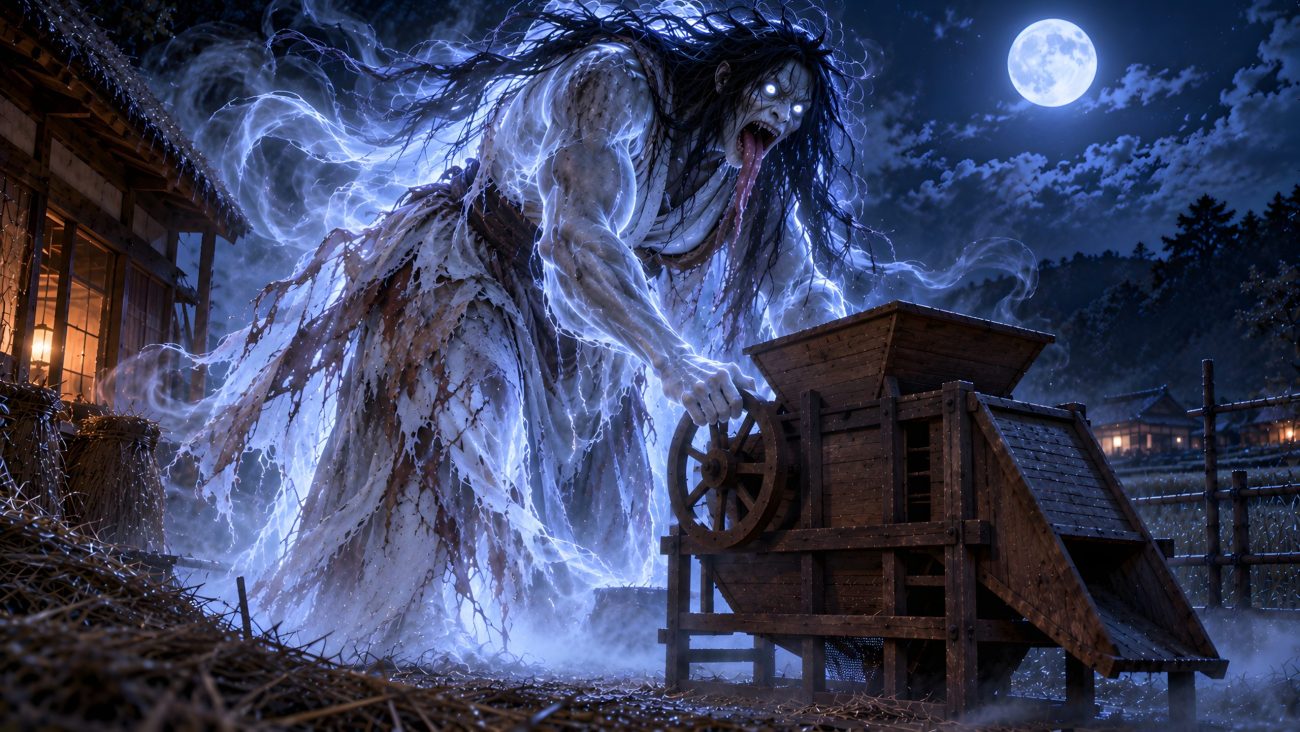
Mamaokka is a terrifying supernatural being said to appear in Sakura, Chiba Prefecture, Japan. According to local belief, an empty winnowing machine could summon this frightening creature when someone turned its mechanism without any grain inside. Mamaokka was described as a terrifying presence or an ogre that emerged in response to this unusual act.

The winnowing machine, known as a tōmi, was a box-shaped agricultural tool used to separate grain from husks and pieces of straw. Turning its internal wheel created a current of air that blew away the lighter waste while the heavier grains fell through a funnel. The belief that operating an empty machine could summon Mamaokka transformed an ordinary farming tool into a source of supernatural fear.


Sources

“ママオッカ (Mamaokka).” 新版TYZ 妖怪図鑑 (New TYZ Yokai Encyclopedia). https://tyz-yokai.blog.jp/archives/1010654452.html


Kasane

Tradition: Japanese Mythology
Alternative Names: Rui, Myōrin Shinnyo
Category: Ghost


The Myth

Kasane is a vengeful female ghost associated with the village of Hanyu in Shimōsa Province, in present-day Ibaraki Prefecture. Her story begins with Rui, a woman who was murdered by her husband, Yoemon. Although Rui was deeply disliked for her appearance and temperament, she had inherited valuable farmland, which led the impoverished Yoemon to marry her. Eventually, he decided to kill her so that he could take another wife and keep her property. He pushed Rui into the Kinugawa River, trampled on her chest, forced sand into her mouth, injured her eyes, and strangled her. A man named Seiemon witnessed the murder but remained silent. Yoemon then concealed the crime by claiming that Rui had died suddenly and arranged for her burial under the Buddhist name Myōrin Shinnyo.

Yoemon remarried, but his successive wives died, and his sixth wife eventually gave birth to a daughter named Kiku. When Kiku was fourteen and newly married to Kingorō, Rui’s spirit began possessing her. Kiku collapsed, foaming at the mouth and crying out in pain, before speaking in Rui’s voice and revealing the truth about the murder. Rui explained that she had returned to take revenge on Yoemon and that her resentment had damaged his crops by turning into insects. She also described the suffering of the dead and the torments of hell. Although Yoemon eventually confessed and entered the Buddhist order, his lack of genuine repentance did not end the possession. Kiku continued to suffer until a Buddhist ceremony was performed at Hōzōji Temple, causing Rui’s spirit to disappear temporarily.

During the possession, Kiku described Rui as a terrifying old woman with dark skin, one rotten eye, a wrinkled nose, a wide mouth, and a face marked by smallpox. Her hands were twisted, and one leg was shorter than the other. Yet Rui’s departure did not bring lasting peace. She returned repeatedly, demanding that a stone Buddha be erected and that further prayers be performed. She also revealed the alleged sins of villagers and described the fates of their ancestors, frightening everyone who heard her.

Eventually, the monk Yūten arrived with other monks to free Kiku from the spirit. Their prayers initially failed, and Rui refused to leave Kiku’s body. Yūten finally ordered Kiku to chant the Buddhist invocation herself, despite her fear that Rui would prevent her from doing so. As Kiku chanted, Rui gradually retreated from her chest toward her hand before vanishing. However, the haunting was not truly over: Rui’s spirit later possessed Kiku again, continuing the cycle of suffering and revenge.


Sources

“累 (Kasane).” 新版TYZ 妖怪図鑑 (New TYZ Yokai Encyclopedia). https://tyz-yokai.blog.jp/archives/1010654426.html


Shiroukari

Tradition: Japanese Mythology
Alternative Names: 白うかり, Shiro-ukari
Category: Ghost


The Myth

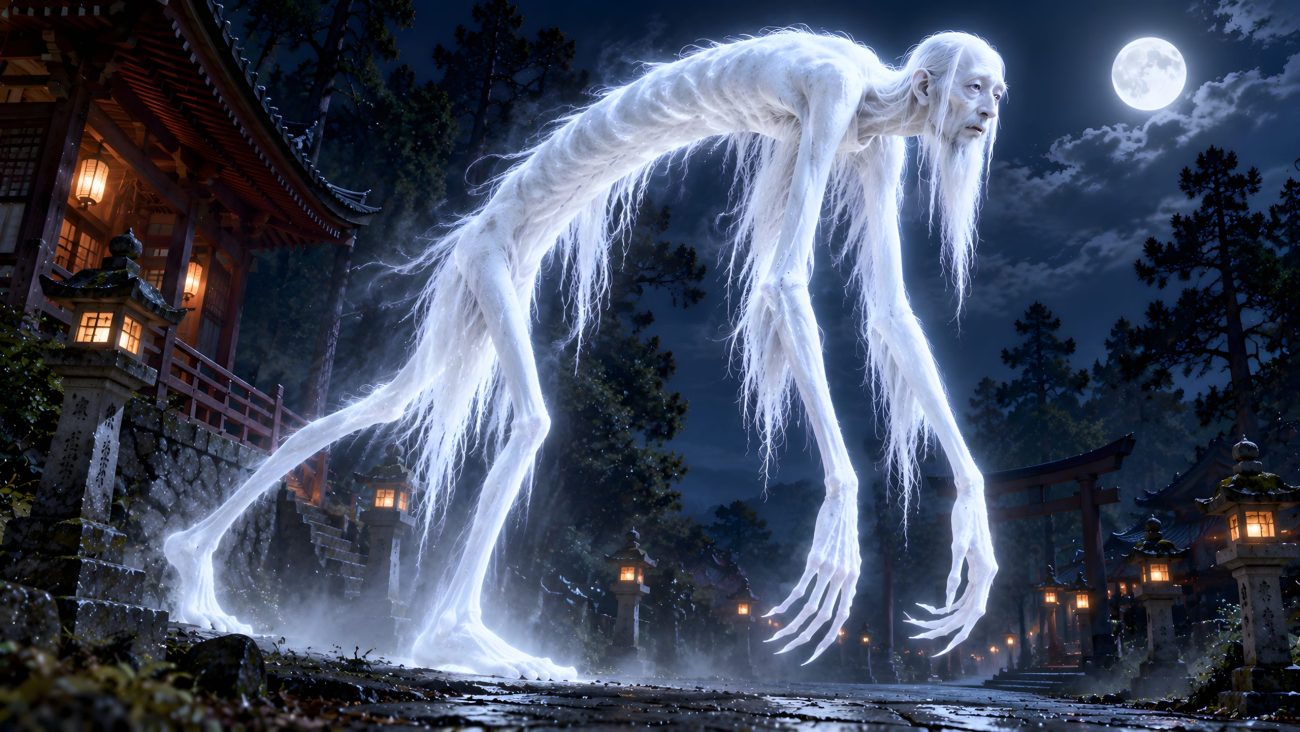
Shiroukari is a strange yokai depicted in certain Japanese illustrated scrolls of supernatural creatures. As its name suggests, it has a completely white body. Its torso is long and slender, giving it an unusual, elongated appearance. It also possesses a beard and hair growing beneath its arms, distinguishing its body from that of an ordinary human.

Shiroukari appears in the Hyakki Yagyō Emaki, an illustrated scroll of supernatural beings created by Oda Yoshikiyo in 1832 and preserved in the Matsui Collection in Kumamoto Prefecture. The scroll depicts 58 different yokai, including several that are unnamed. Shiroukari is one of the unusual creatures whose appearance survives through these illustrated depictions, but no further details about its origins, behavior, or supernatural abilities are recorded.


Sources

“白浮 (Shiro-Ukari).” 新版TYZ 妖怪図鑑 (New TYZ Yokai Encyclopedia). https://tyz-yokai.blog.jp/archives/1010654406.html


Omoshiroshi

Tradition: Japanese Mythology
Alternative Names: 面白, Omoshiroshi
Category: Ghost


The Myth

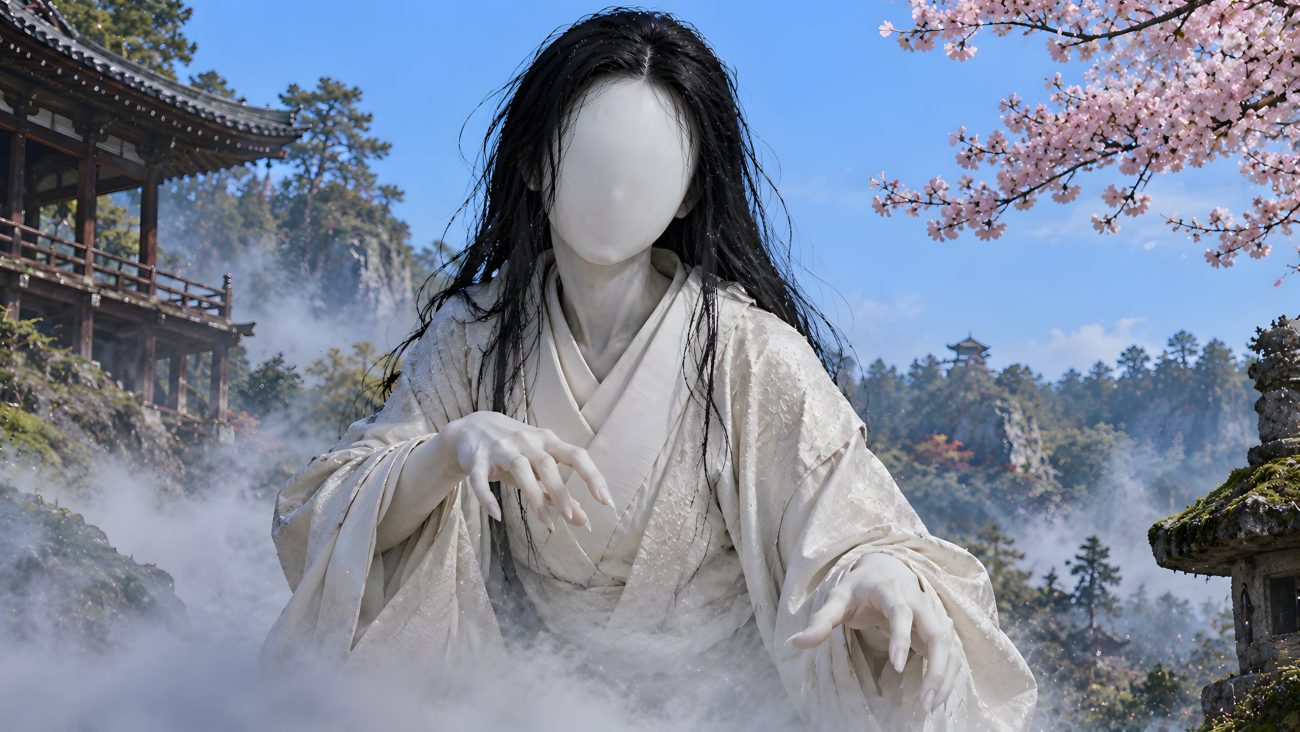
Omoshiroshi is a strange supernatural being depicted as a ghostly figure with only its upper body visible. It wears a white burial kimono, known as a shiro-muku, and has a completely white face without eyes, a nose, or any other facial features. Its blank, featureless head gives it an eerie and unsettling appearance.

Omoshiroshi appears in the Kaidō Zukan, an illustrated scroll of supernatural creatures painted by Miyagawa Shunsui during the middle of Japan’s Edo period. The surviving depiction shows only the creature’s upper body, dressed entirely in white, with its smooth face lacking any recognizable human features. No further details about its behavior, origins, or supernatural abilities are recorded.


Sources

. “おもしろし (Omoshiroshi).” 新版TYZ 妖怪図鑑 (New TYZ Yokai Encyclopedia). https://tyz-yokai.blog.jp/archives/1010654296.html


Kakehashi

Tradition / Region: Japanese Mythology
Alternative names: Kakehashi (掛橋)
Category: Ghost


The Myth

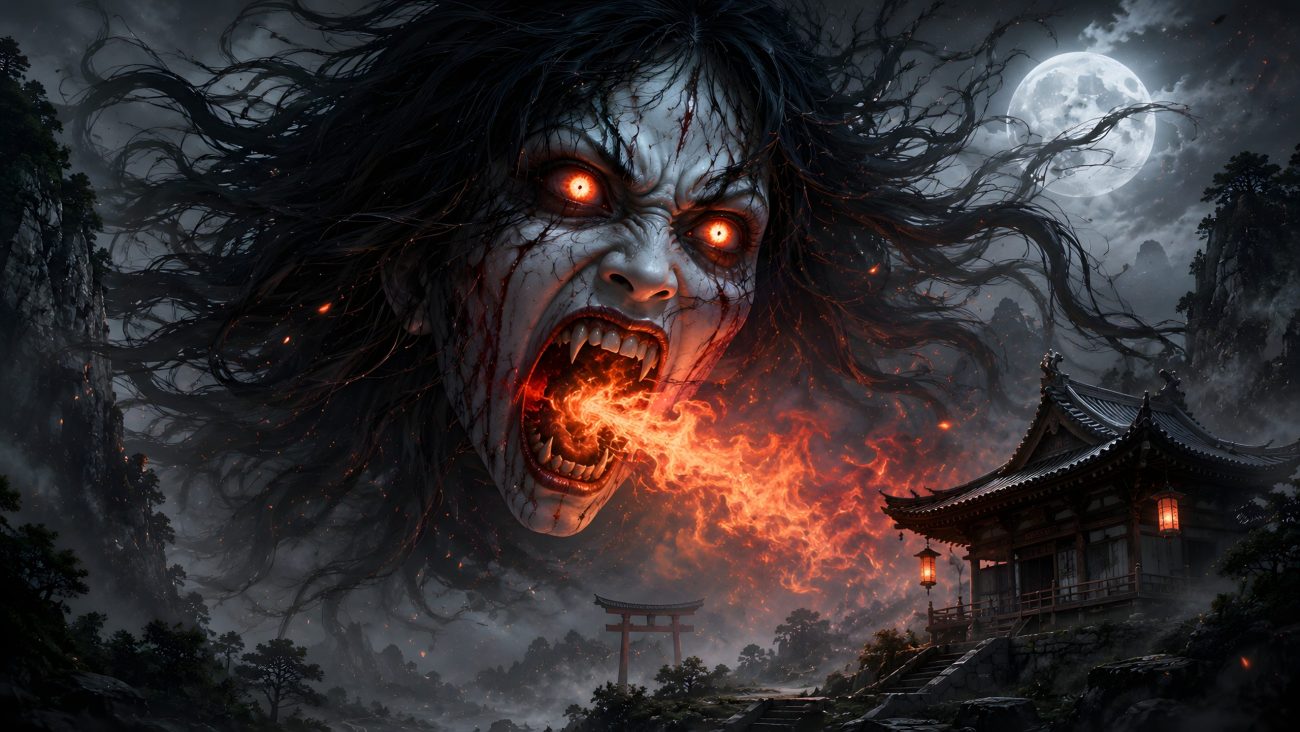
Kakehashi is a tragic woman whose jealousy, betrayal, and violent death transformed her into a fearsome onryō, a vengeful spirit. After being beheaded, her severed head became a supernatural apparition with blazing eyes and flames pouring from its mouth, relentlessly haunting the man who had deceived and murdered her.

According to the Edo-period illustrated novel Baika Hyōretsu (“Plum Blossom Ice Split”), Kakehashi was the wife of the samurai Karakoto Uraemon. While he was away, the villain Mino Bunta manipulated her into believing her husband had betrayed her. Falling under his influence, she abandoned Uraemon and cruelly murdered his pregnant concubine, Mo no Hana, along with her unborn child.

After fleeing with Mino Bunta, the pair lost everything and survived by robbing travelers, with Kakehashi disguised as a terrifying Snow Woman. Soon afterward she was struck by a horrific supernatural curse. Haunted by nightmares of goldfish devouring her body, she developed grotesque sores, rotting flesh, unbearable thirst, and an unknown disease. During her delirium she unknowingly confessed her crimes while speaking with the voice of Mo no Hana’s vengeful spirit.

Eventually Kakehashi found Mino Bunta living in luxury with other women. When she confronted him, he admitted that he had never loved her—his entire relationship had been a scheme to steal the wealth of her family. Realizing she had betrayed her husband and murdered an innocent woman for nothing, she was overwhelmed with rage and regret.

Mino Bunta mocked her, tortured her, and finally beheaded her. At the moment of her death, darkness engulfed the mountain as her severed head flew into the sky, its eyes burning and flames erupting from its mouth. From that day onward, her ghost relentlessly pursued Mino Bunta, driving him toward madness and misfortune until he was finally killed.

The story ultimately portrays Kakehashi as both victim and villain. Although responsible for terrible crimes, she herself became the victim of deception, and after death joined forces with the spirit of Mo no Hana to ensure that Mino Bunta ultimately suffered the consequences of his own evil.


Sources

TYZ. (n.d.). Kakehashi [掛橋]. In 新版TYZ 妖怪図鑑. Retrieved June 27, 2026, from https://tyz-yokai.blog.jp/archives/1037179730.html


Noderabō

Tradition / Region: Japanese Mythology
Alternative names: Noderabo
Category: Ghost


The Myth

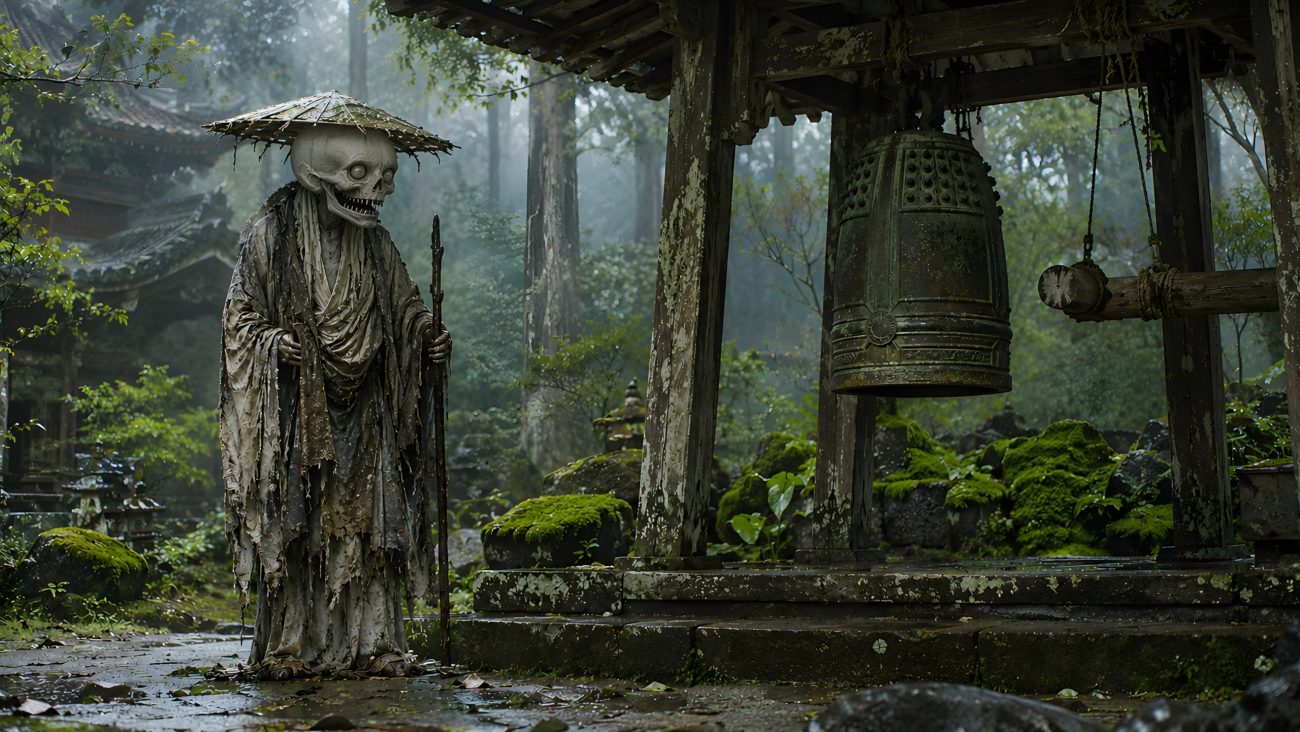
The Noderabō appears as a silent monk dressed in worn, tattered robes and a weathered kasa hat. It is most often depicted standing alone beside an old temple bell in an abandoned, crumbling temple. Though outwardly resembling an ordinary Buddhist monk, it is an eerie and unnatural figure whose true face and intentions remain unknown.

The Noderabō is one of the more mysterious yōkai depicted by Toriyama Sekien in the Gazu Hyakki Yagyō. Sekien provided no explanation for the creature, leaving later generations to speculate about its nature.

According to later folklore, the Noderabō haunts deserted temples that have fallen into ruin. As evening falls, the lonely sound of a temple bell echoes through the mountains despite no living monk remaining to ring it. The ghostly monk is said to wander the abandoned grounds in silence, appearing only briefly before disappearing once more into the darkness.

Some traditions claim the Noderabō is the restless spirit of a head priest whose temple fell into decay after the villagers ceased making offerings. Unable to abandon the place he once served, he continues to watch over the empty temple and ring its bell forever.

Other interpretations suggest the Noderabō represents corrupt monks who abandoned Buddhist discipline through greed and worldly desires, eventually becoming yōkai after death. In this reading, the silent monk serves as a warning against spiritual corruption and attachment.

Another tradition connects the Noderabō with mysterious bells heard echoing from mountains where no temple exists. Children who heard these unexplained chimes were told that the Noderabō was ringing its lonely bell deep within the wilderness, although others believed the sounds were merely echoes carried by the mountains.

Because Sekien never explained the creature, its true origin remains uncertain. Whether it is the ghost of a forgotten priest, the embodiment of an abandoned temple, or simply an eerie guardian of sacred ruins, the Noderabō remains one of Japan’s most enigmatic yōkai—a solitary monk forever standing beside the bell of a temple that time has long since forgotten.


Sources

Wikipedia contributors. (n.d.). Noderabō. In Wikipedia. Retrieved June 21, 2026, from https://en.wikipedia.org/wiki/Noderab%C5%8D


Hone-onna

Tradition / Region: Japanese Mythology
Alternative names: Boneless Woman, Jellyfish Woman
Category: Ghost


The Myth

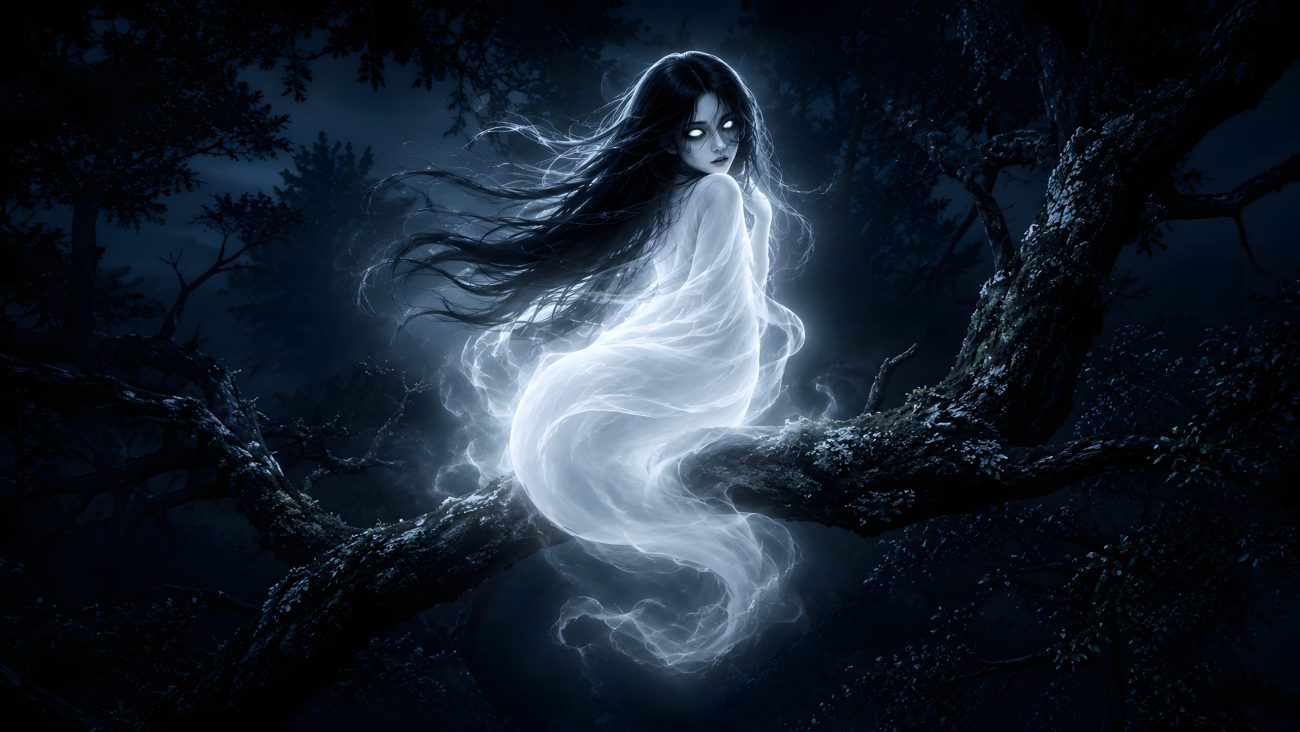
The Hone-onna, or Boneless Woman, is a strange ghost said to originate from Habayama Mountain in Shioe. According to tradition, she was once a jellyfish that lived for so long that it transformed into a woman, though one without any bones.

The creature is associated with death and mourning. Whenever someone dies, the Hone-onna is said to visit the house of the deceased. Night after night, she appears in the garden, clinging to the branches of trees.

There she plays by herself and laughs, seemingly unaware of the living around her. Her eerie laughter echoes through the darkness while she sways among the trees, returning again and again to places touched by death.

Unlike many violent spirits, the Hone-onna is not known for attacking people. Instead, she is remembered as a strange and unsettling apparition—a boneless woman who arrives whenever death enters a household and spends the night laughing alone among the garden trees.


Sources

TYZ. (n.d.). Hone-Onna [骨女]. In 新版TYZ 妖怪図鑑. Retrieved June 20, 2026, from https://tyz-yokai.blog.jp/archives/1010654275.html


Goninzowai

Tradition / Region: Japanese Mythology
Alternative names: Five-Men Shoal, Goninzowai
Category: Ghost


The Myth

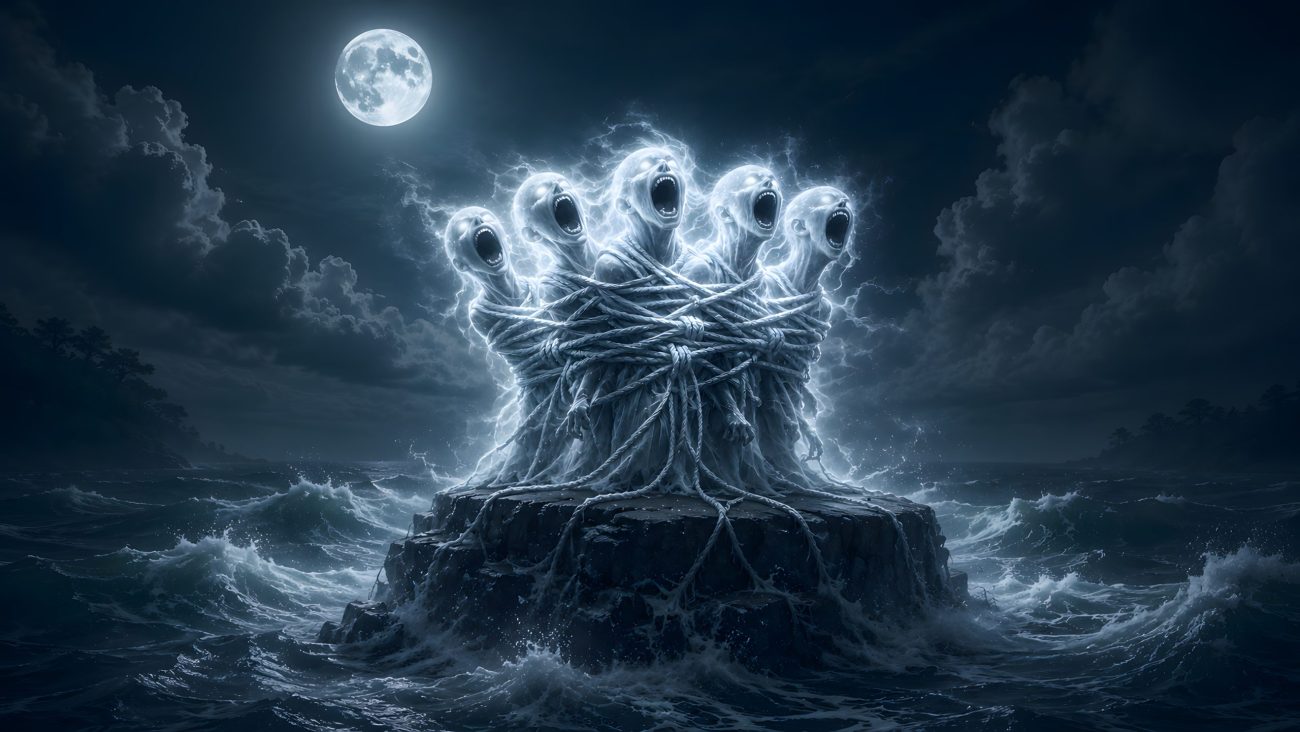
Goninzowai is the name given to the restless spirits of five blind men who perished on a lonely shoal near Uno Port. Their ghosts are said to haunt the sea and can still be heard on dark and rainy nights.

According to tradition, five wealthy blind men arrived in Bingo Province while traveling to the capital to receive the rank of Kengyō, the highest title granted to blind people. A boatman offered to take them to Osaka and they gladly boarded his vessel.

As evening approached, the boatman told them that he needed to empty water from the ship and asked them to wait on a small rocky island. Trusting him, the five men disembarked and sat peacefully listening to the sound of the waves.

But the boat never returned.

When they realized they had been abandoned, they called desperately for the boatman. No answer came. The tide slowly rose around them. Clinging to one another so that they would not be separated, the five men cried for help, but no vessel passed by. Eventually the sea swallowed them, and they drowned together.

From that time onward, fishermen avoided the area. On rainy nights voices, sobbing, and cries are said to rise from beneath the water. Strange balls of fire sometimes appear above the rocks, circling through the darkness.

The place became known as Goninzowai, meaning “Five-Men Shoal.” The name refers to the small reef that disappears beneath the sea at high tide. One story claims that a diver once descended there and found countless human bones piled among the submerged rocks.

Another version says that one of the blind men managed to wash ashore and was rescued by villagers. In gratitude and sorrow, he later traveled to Mount Kōya and erected a tomb for his four companions, praying for the peace of their souls.

Yet even today, the voices of the dead are said to remain beneath the waves, and the haunted shoal of Goninzowai is remembered as the resting place of the five blind men betrayed by the sea.


Sources

TYZ. (n.d.). Goninzowai [五人増悪]. In 新版TYZ 妖怪図鑑. Retrieved June 20, 2026, from https://tyz-yokai.blog.jp/archives/1010654266.html