Yūrei

Tradition: Japanese Mythology
Alternative Names: 幽霊, ゆうれい, Obake, Shiryō, Bōrei
Category: Ghost


The Myth

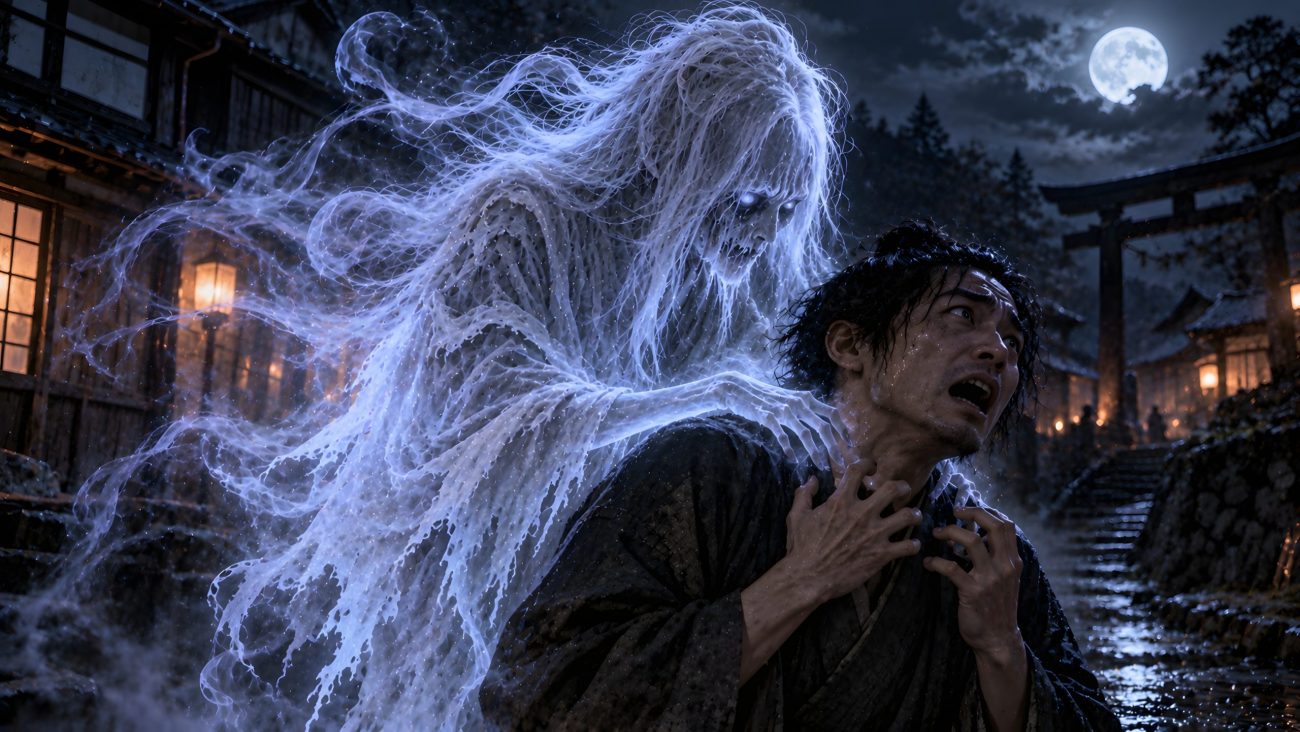
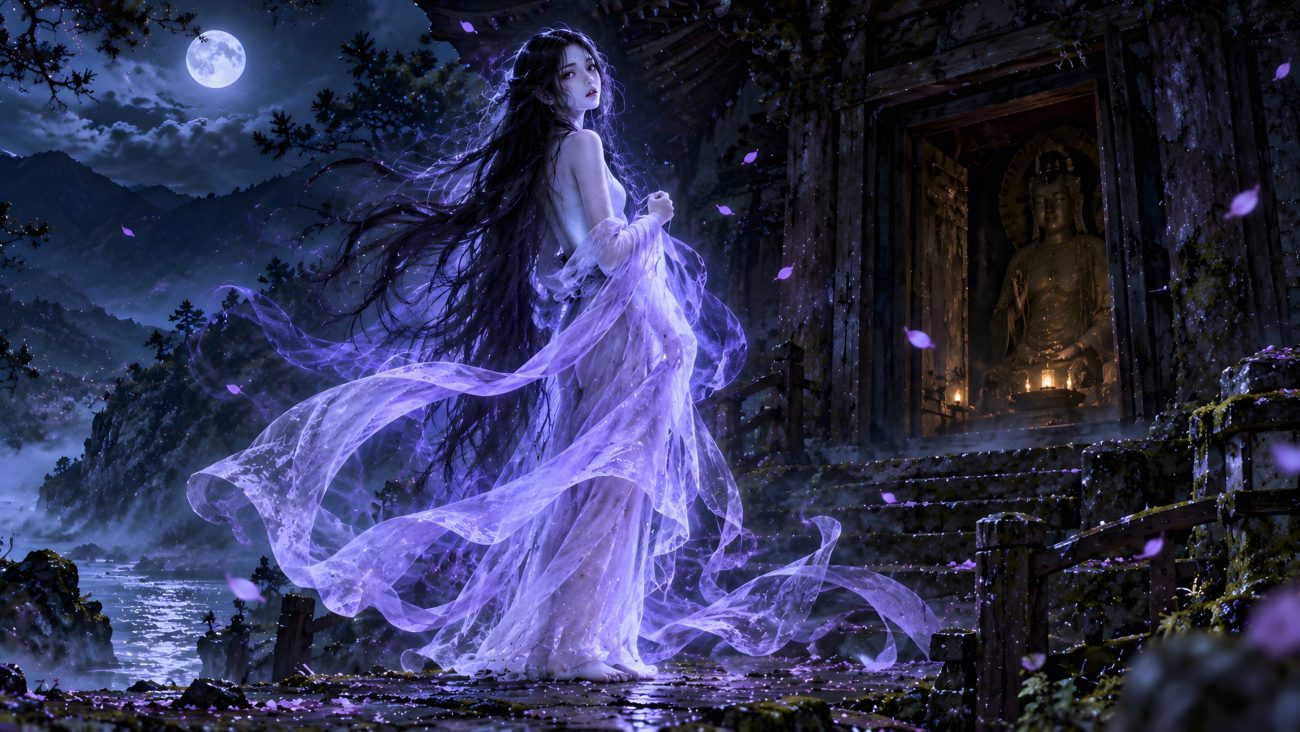
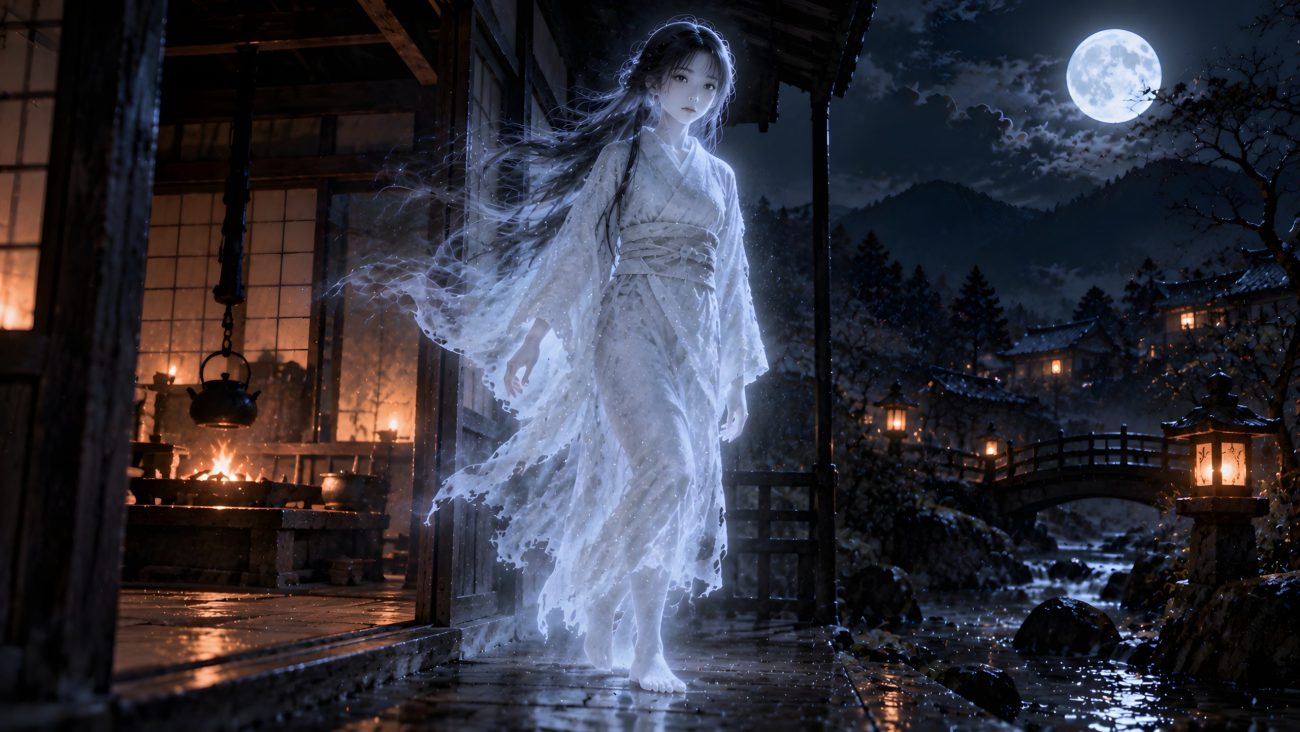
Yūrei are the spirits of the dead who remain trapped between the world of the living and the afterlife. Their appearance often reflects the circumstances of their deaths. They are commonly depicted as translucent, faintly visible figures dressed in white burial kimonos or the uniforms of fallen warriors. Some bear bloody wounds that reveal how they died, while their long, disheveled hair often hangs across their faces. Their hands dangle limply from their wrists, and their lower bodies frequently fade away, leaving them seemingly without feet.

Unlike spirits that wander freely, Yūrei usually haunt a particular place or person. They may linger where they died or were buried, or pursue someone connected to their deaths, such as a murderer. Others remain close to their living families, unable to accept their own deaths and bringing misfortune and unhappiness to those they once loved. Some can invoke powerful curses, making their presence dangerous to anyone who encounters them.

Yūrei remain in the world of the living because something prevents them from moving on. Some died suddenly or violently, while others carried deep resentment or hatred into death. Spirits who do not receive proper funeral rites and prayers may also become trapped between the physical world and the afterlife. Their unfinished business varies: some need their killers brought to justice, others require their bodies to be found, and some simply wish to deliver a final message to a loved one.

A Yūrei can finally rest when the purpose that binds it to the world has been fulfilled, or when a priest successfully exorcises it. In Japanese tradition, the dead are normally honored through funeral ceremonies, prayers, and rituals that help reunite their souls with their ancestors. During the summer festival of Obon, ancestral spirits are believed to return to visit their families. Yūrei, however, are restless souls who have not completed this journey, remaining behind until they can find peace.


Sources

“Yūrei.” Wikipedia: The Free Encyclopedia. Wikimedia Foundation. Accessed October 15, 2026. https://en.wikipedia.org/wiki/Y%C5%ABrei
Onryō

Tradition: Japanese Mythology
Alternative Names: 怨霊, おんりょう, Grudge Spirit, Vengeful Ghost
Category: Ghost


The Myth

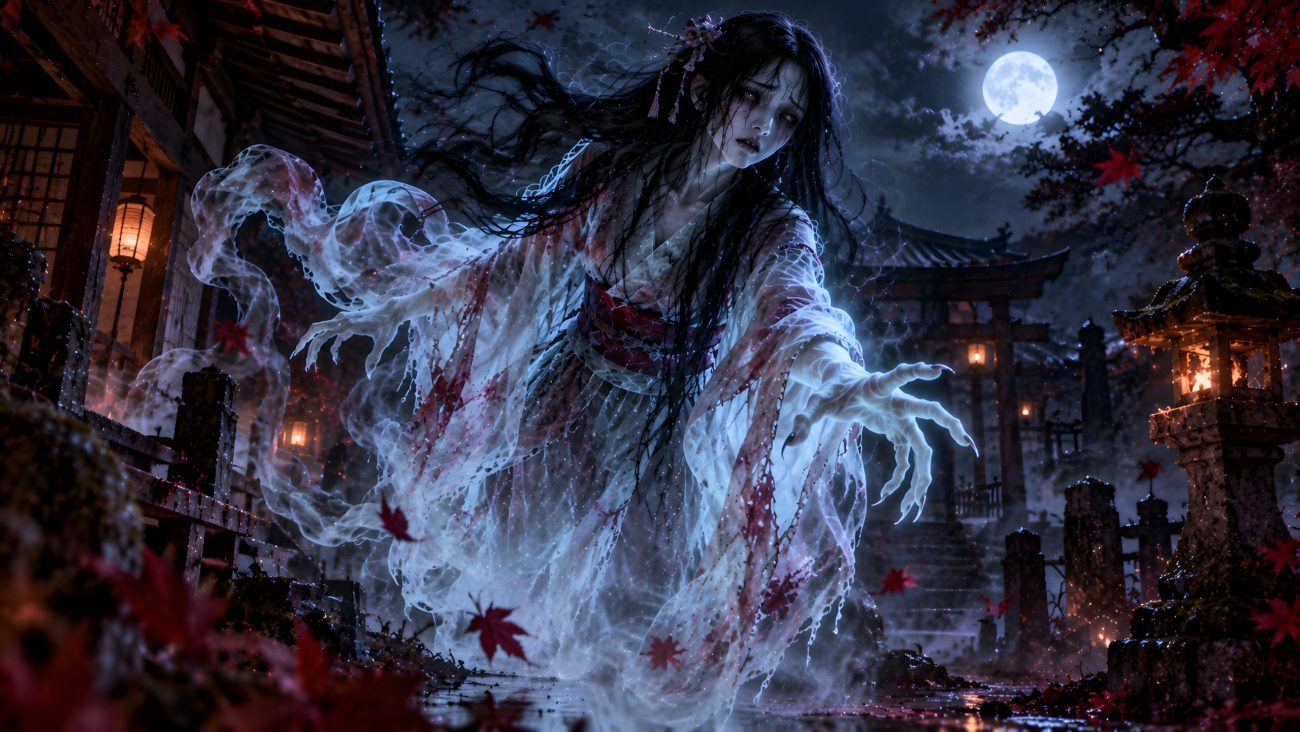
Onryō are among the most feared spirits in Japanese mythology. They are the ghosts of people who died consumed by powerful emotions such as jealousy, rage, hatred, or grief. Unable to pass on because of their overwhelming passions, they transform into wrathful spirits that seek vengeance upon the living. Many were victims of war, betrayal, murder, catastrophe, or suicide, and their ghostly forms may bear the wounds and injuries they suffered before death.

An Onryō seeks to punish those it blames for its suffering, but its vengeance often extends far beyond the original offender. Rather than simply killing its targets, it may subject them to prolonged torment, destroy their relationships, and cause their loved ones to die. Its curse can spread from person to person and affect entire places, creating a cycle of death and destruction. Unlike other ghosts, which may disappear after being appeased or exorcised, an Onryō’s curse can continue to haunt a location long after its spirit has been laid to rest. Its wrath is relentless and does not distinguish between the guilty and the innocent.

Not every Onryō is driven by hatred alone. Sometimes an intense love becomes corrupted by jealousy, causing a spirit to torment a former lover and destroy their new relationships, marriages, and families. The ghost of Oiwa, the central figure of Yotsuya Kaidan, is one of the most famous examples. Brutally disfigured and murdered through her husband’s treachery, she returns as a vengeful ghost whose curse is said to threaten those who retell her story. Actors, producers, and other performers have traditionally visited her grave in Tokyo before adapting the tale, praying for her soul and asking for her blessing. Through such legends, the Onryō embodies the terrifying idea that powerful resentment can survive death and continue to bring suffering to the living.


Sources

“Onryō.” Wikipedia: The Free Encyclopedia. Wikimedia Foundation. Accessed October 15, 2026. https://en.wikipedia.org/wiki/Onry%C5%8D


Okiku

Tradition: Japanese Mythology
Alternative Names: お菊, おきく, Banchō Sarayashiki, The Dish Manor at Banchō
Category: Ghost


The Myth

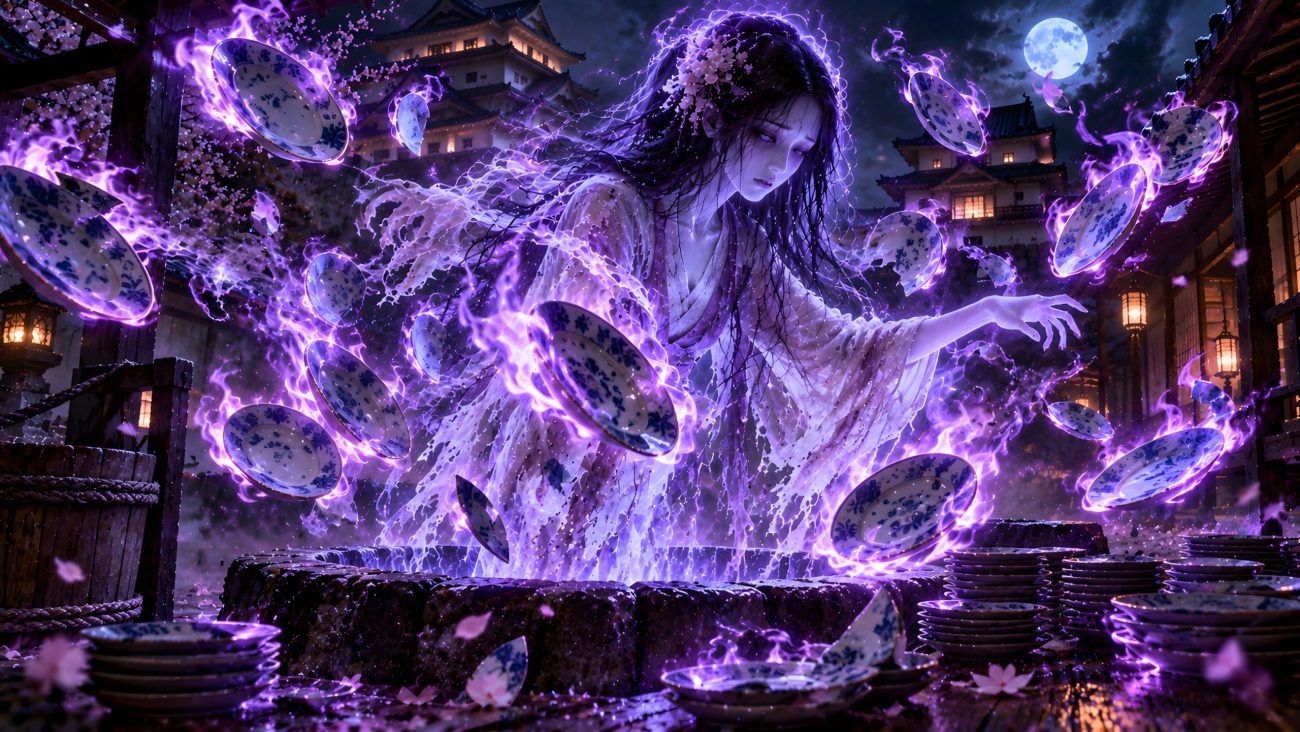
Okiku was a beautiful servant girl who worked as a dishwashing maid at Himeji Castle. She became the object of desire of Aoyama, one of her master’s samurai retainers, who repeatedly tried to seduce her. Okiku continually rejected him, angering the samurai. Determined to force her into becoming his lover, Aoyama devised a cruel trick involving a set of ten precious dishes belonging to the castle.

Aoyama secretly hid one of the dishes and accused Okiku of losing it. Terrified because the loss of such a valuable object could be punished by death, she counted the dishes again and again, but could find only nine. Aoyama offered to protect her from punishment if she agreed to become his mistress. When she refused once more, he ordered her beaten, tied her up, and suspended her over the castle well. He repeatedly plunged her into the water and tortured her, demanding that she submit to him. When she continued to refuse, he struck her with his sword and threw her body into the well.

After her death, Okiku returned as a vengeful ghost. Night after night, she rose from the well and entered the castle grounds, searching for the missing dish. She counted the plates aloud: “One, two, three, four, five, six, seven, eight, nine.” After reaching nine, she let out a bloodcurdling scream that echoed throughout the castle. Her haunting tormented Aoyama and robbed him of sleep. Those who heard her counting became gravely ill, while those who heard her count all the way to nine were said to die soon afterward.

Eventually, the lord of the castle summoned a priest to put an end to the haunting. The priest waited in the garden, chanting prayers until Okiku emerged from the well and began counting once more. When she reached nine, the priest shouted, “Ten!” Before she could scream, Okiku appeared relieved, believing that the missing dish had finally been found. From that night onward, her ghost no longer haunted the castle.


Sources

“Okiku.” Yokai.com: The Database of Japanese Folklore. https://yokai.com/okiku/


Oitekebori

Tradition: Japanese Mythology
Alternative Names: 置行堀, おいてけぼり
Category: Ghost


The Myth

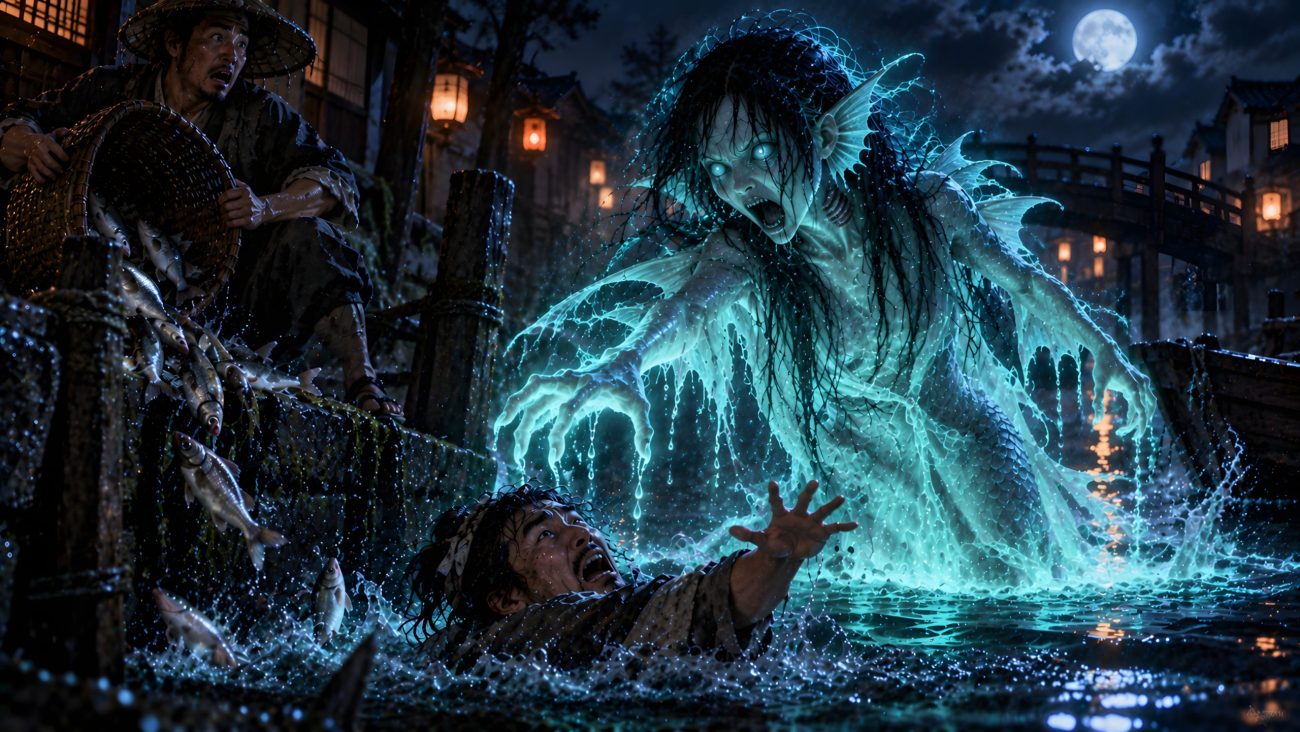
Oitekebori is a mysterious apparition said to haunt the canals of Honjo, in present-day Sumida, Tokyo. It is described as a human-like ghost that lurks near waterways and terrorizes fishermen who venture too close to its home. Its name comes from the eerie command “Oiteke,” meaning “Leave it behind!” or “Drop it and get out of here!”

Long ago, the canals of Honjo were filled with fish, and fishermen made their living catching them. One evening, two fishermen were fishing in a canal and found themselves catching far more fish than usual. Delighted by their enormous haul, they continued until their baskets were full. As they prepared to leave and carry their catch home, a terrible, disembodied voice rose from the water and shouted, “Oiteke!”

Terrified, the fishermen fled. In some versions, they abandoned their baskets and later discovered that the fish had vanished. In another telling, one fisherman escaped with his basket while the other was seized by a ghostly hand that rose from the canal and dragged him underwater, never to be seen again. The identity of Oitekebori remains uncertain in the legends: some stories blame a hungry kappa stealing fish, while others attribute the haunting to a mischievous tanuki, a yūrei, a kawauso, a mujina, or a supernatural soft-shelled turtle.


Sources

“Oitekebori.” Yokai.com: The Database of Japanese Folklore. https://yokai.com/oitekebori/


Buruburu

Tradition: Japanese Mythology
Alternative Names: 震々, ぶるぶる, Zozogami
Category: Ghost


The Myth

Buruburu is a mysterious yokai known as the spirit of cowardice. It follows people through inhabited areas, causing them to shudder with fear. Although it may not appear as a clearly visible creature, its presence is felt through sudden chills, trembling bodies, and the sensation of fear running down the spine.

Buruburu is born when a person commits an act of cowardice, such as fleeing from battle. The spirit then attaches itself to other people, possessing them by clinging to the collars of their shirts and touching the backs of their necks. Its supernatural touch makes their hair stand on end and sends shivers throughout their bodies.

The name Buruburu imitates the sound of trembling, while its alternate name, Zozogami, is also associated with the sensation of shivering with fear. The spirit embodies the physical feeling of terror itself, haunting people through the sudden, uncontrollable shudders that reveal its presence.


Sources

“Buruburu.” Yokai.com: The Database of Japanese Folklore. https://yokai.com/buruburu/


Yuki-Onna

Tradition: Japanese Mythology
Alternative Names: Snow Woman, Yuki-onna
Category: Ghost


The Myth

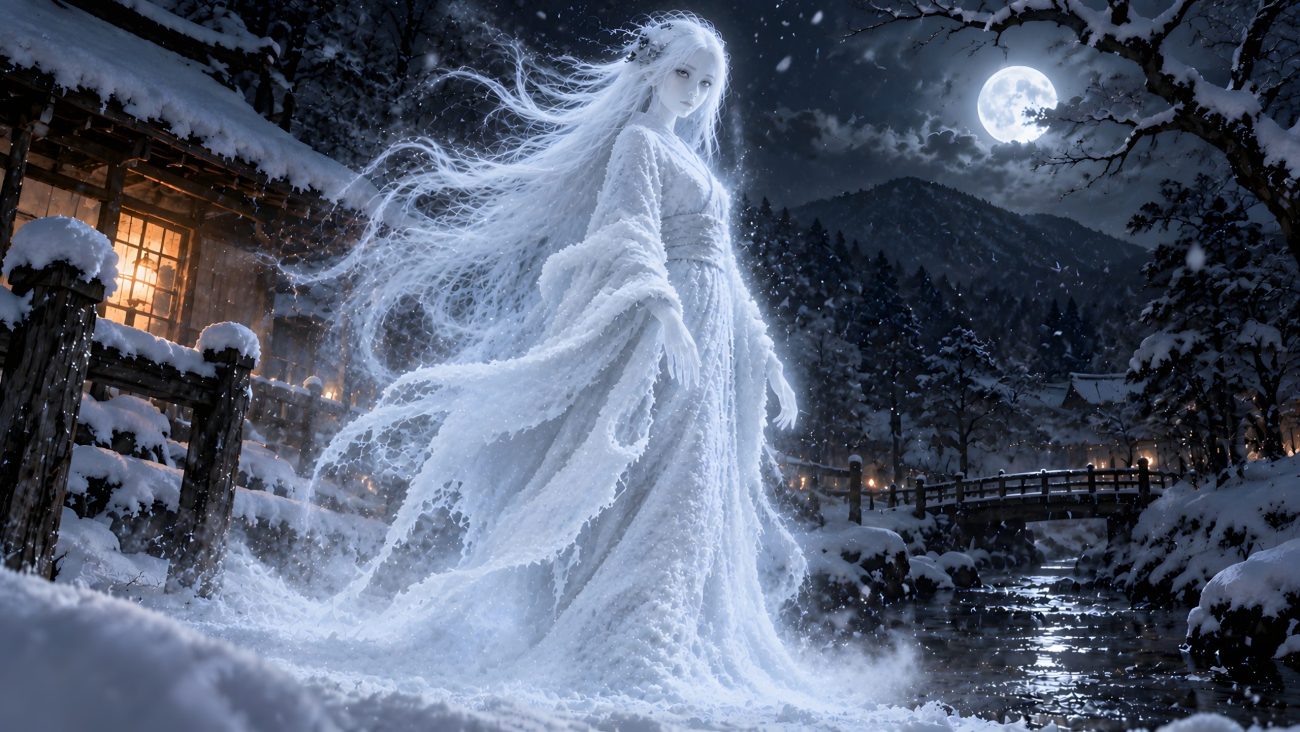
Yuki-Onna, the Snow Woman, is a supernatural female being who appears on snowy nights, particularly in regions where heavy snowfall blankets the mountains and countryside. She is believed to be either a spirit of the snow itself or the ghost of a woman who lost her life in a blizzard. In traditional depictions, she appears as a woman dressed in a white kimono, with a ghostly lower body and sometimes hairy hands visible beneath her sleeves.

The Snow Woman appears in many regional legends, and her visits are sometimes associated with particular nights of the year. In parts of Iwate Prefecture, she is said to appear on the night of the Little New Year or during a full moon, sometimes accompanied by numerous children. In parts of Aomori Prefecture, she appears on New Year’s Day and returns on a particular day later in the year. Encounters with her are dangerous: in Iwate and Miyagi, she is believed to drain the life force from those who meet her, while in Niigata she freezes people to death or abducts children and takes their livers.

Other traditions describe stranger encounters. In Tottori Prefecture, the Snow Woman carries a white paper streamer and cries, “Give it ice, give it hot water.” When water is poured over her, she swells in size, but when hot water is poured on her, she disappears. In some regions, she is associated with the Ubume, a spirit connected with childbirth and children. The Snow Women of Tsugaru and Akita are said to approach people while pleading, “Please hold my baby.”

Across these legends, Yuki-Onna is a mysterious and dangerous presence of the winter landscape. Sometimes she appears as a beautiful woman in white, while in other tales she is a frightening spirit capable of draining vitality, killing travelers, or stealing children. Her appearance and behavior vary from region to region, making her one of Japan’s most recognizable supernatural beings.


Sources

“雪女 (Yuki-Onna).” 新版TYZ 妖怪図鑑 (New TYZ Yokai Encyclopedia). https://tyz-yokai.blog.jp/archives/1010653475.html


Hungry Ghost

Tradition: Chinese Mythology, Japanese Mythology
Alternative Names: Egui, Gaki, Preta
Category: Ghost


The Myth

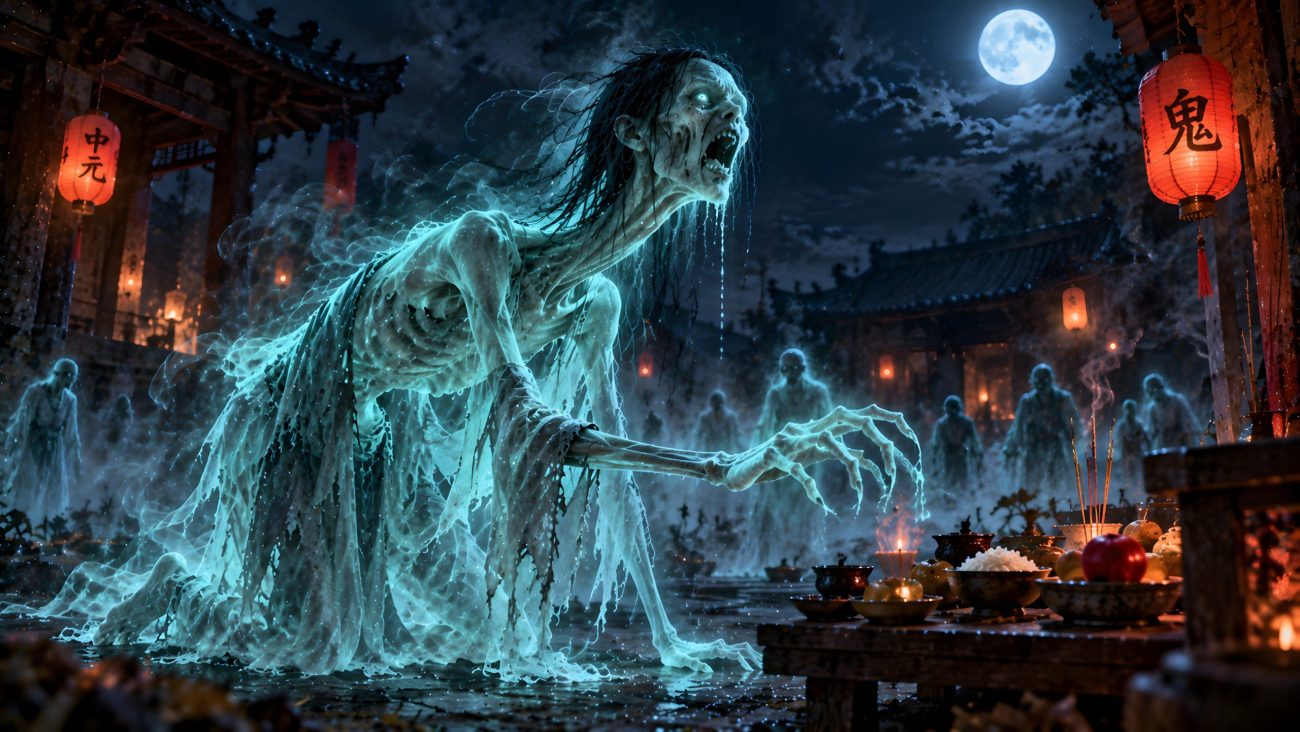
Hungry ghosts are restless supernatural beings in Chinese and Japanese mythology, associated with insatiable hunger, greed, and suffering. They are spirits of the dead who cannot satisfy their desires, remaining perpetually tormented by their cravings. They are often imagined as gaunt, miserable beings who wander in search of food and drink, unable to find lasting relief. Some are said to possess long, thin necks that make feeding difficult, leaving them endlessly hungry. Others appear in the form of animals or take on the appearance of beautiful men and women to lure the living.

A person may become a hungry ghost after death because of greed, cruelty, or selfishness during their lifetime. Those who refuse to share food, deceive others for personal gain, or deny offerings to religious mendicants may be condemned to this existence for countless lifetimes. In one tale, a wealthy man’s wife secretly urinated into a monk’s bowl before adding sugarcane juice and offering it to him. After her death, she was reborn as a hungry ghost. Another story tells of a woman who locked a begging monk inside an empty room without food, despite her husband’s instructions to feed him. Her selfishness condemned her to become a hungry ghost for innumerable lifetimes.

Hungry ghosts are also associated with neglected ancestors and the restless spirits of those who have been forgotten by their living relatives. In Chinese tradition, they are believed to roam the world during the seventh month of the lunar calendar, when the gates of the underworld open and the spirits are permitted to visit the living. Families prepare offerings of food, drink, incense, and spirit money to satisfy their deceased relatives and prevent misfortune. Unknown and homeless spirits are also given offerings so they will not trouble the living. During the Ghost Festival, performances are held for the spirits, with the first row of seats left empty for their use.

Despite these offerings, hungry ghosts remain dangerous and unpredictable. They may cause sickness, possess the living, or appear in frightening forms to lure people into danger. During the Ghost Month, people traditionally avoid wandering outside after dark, swimming, disturbing food offerings, or sitting in seats reserved for spirits. At the end of the festival, lanterns shaped like lotus flowers are floated on water to guide the ghosts back to the underworld. The hungry ghost represents a being trapped by desire, forever seeking satisfaction but unable to escape its own suffering.


Sources

“Hungry ghost.” Wikipedia: The Free Encyclopedia. Wikimedia Foundation. Accessed October 15, 2026. https://en.wikipedia.org/wiki/Hungry_ghost


Juchūjū Gaki

Tradition: Japanese Mythology
Alternative Names: 樹中住餓鬼, Tree-Dwelling Hungry Ghost
Category: Ghost


The Myth

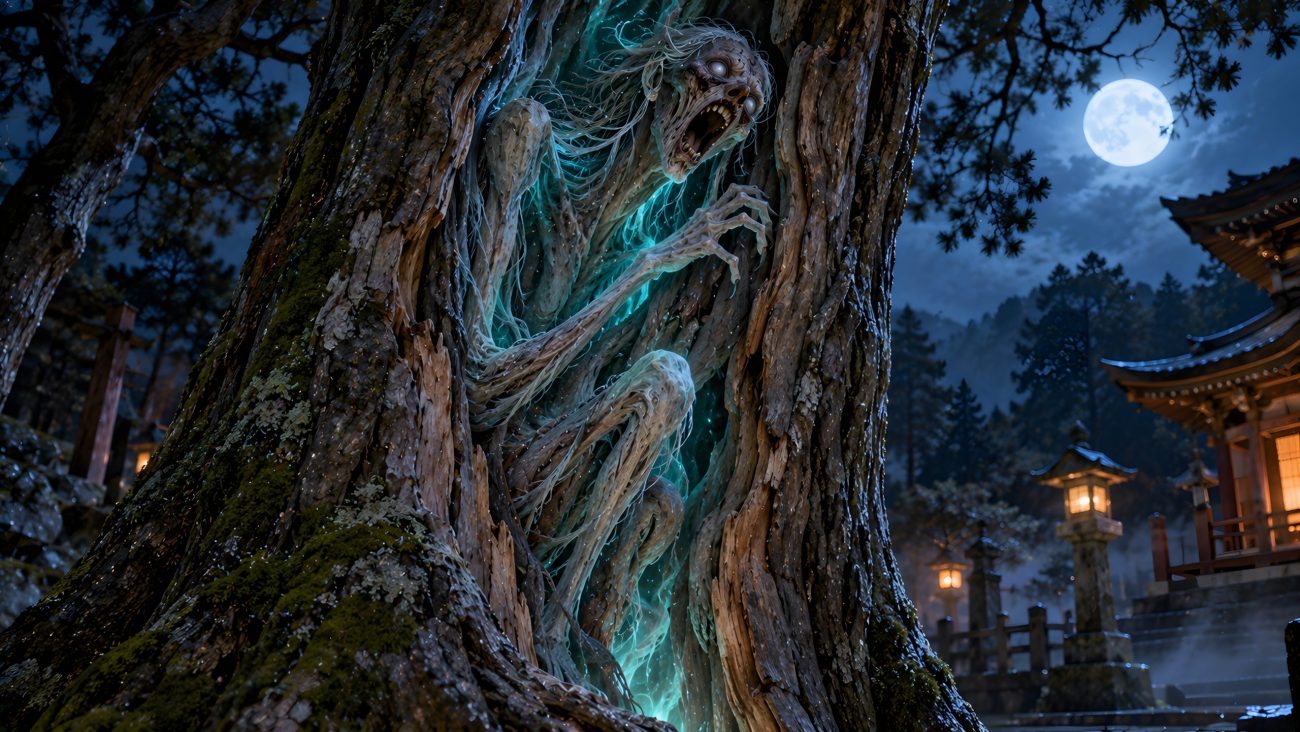
Juchūjū Gaki is one of the thirty-six types of hungry ghosts described in Buddhist teachings. It is a tormented spirit condemned to exist trapped inside the trunk of a tree. Like a tiny insect burrowing within wood, it is confined in an extremely narrow space, unable to move freely and suffering continual agony.

Those who cut down trees that provide cool shade or destroy the groves surrounding Buddhist temples are said to risk being reborn as Juchūjū Gaki. Their punishment reflects the harm they inflicted upon trees that offered shelter and upon sacred temple forests. In the afterlife, they experience the same helpless confinement that their actions brought upon the natural world.

Depictions of these suffering spirits appear in the Kitano Tenjin Engi and the Rokudō-e paintings preserved at Shōjūraigōji Temple. In these images, hungry ghosts are shown trapped within hollow tree trunks, twisting and suffering inside their wooden prisons. Their fate serves as a warning against destroying trees that provide shade and protection.


Sources

. “受注受餓鬼 (Juchūju Gaki).” 新版TYZ 妖怪図鑑 (New TYZ Yokai Encyclopedia). https://tyz-yokai.blog.jp/archives/1010655143.html


Sakura Sōgo

Tradition: Japanese Mythology
Alternative Names: Kiuchi Sōgorō, Sōgo, Sakura Gimin
Category: Ghost


The Myth

Sakura Sōgo was a village headman in the Sakura Domain of Shimōsa Province during the early Edo period. He became famous for defending farmers who suffered under the heavy taxes imposed by the ruling Hotta clan. After his attempts to secure tax relief failed, Sōgo decided to appeal directly to Shogun Tokugawa Ietsuna. Although such a petition offered the desperate farmers a chance of relief, it meant defying the domain lord and risking severe punishment.

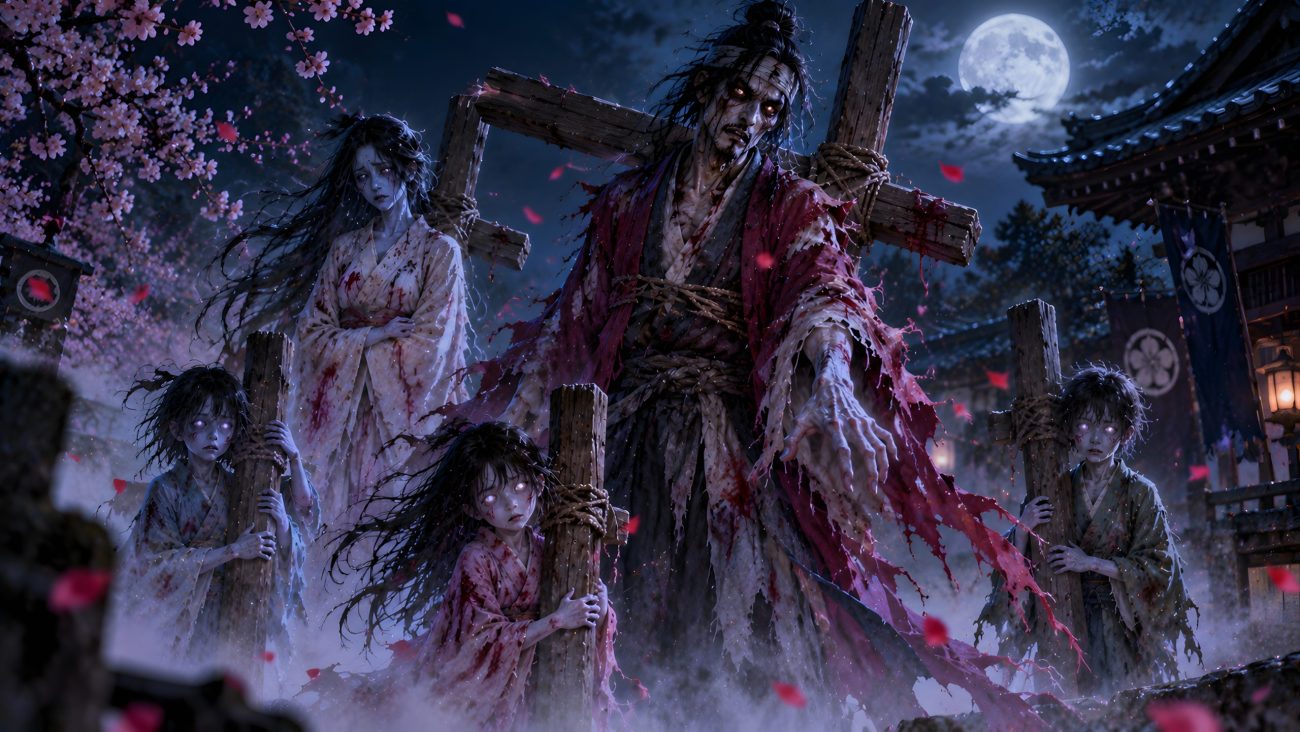
Sōgo eventually presented his appeal to the shogun at Kan’ei-ji Temple in Ueno, Edo. He was arrested and handed over to the Hotta family, who condemned him to death. According to the legend, Sōgo was crucified alongside his wife, Osan, and their three children. Their deaths transformed the family’s suffering into a powerful tale of injustice and vengeance, with Sōgo remembered as a righteous man who sacrificed everything to protect the villagers.

After their execution, the ghosts of Sōgo and his family began haunting the Hotta household. They appeared in terrifying forms, sometimes carrying the wooden posts used in their execution, and tormented the domain lord and his attendants. Their supernatural attacks were said to bring illness, fear, and misfortune upon the ruling family, eventually contributing to the downfall of the Hotta clan. In theatrical depictions, Sōgo’s ghost emerged from different parts of a room while the faces of those present twisted into grotesque shapes. Other illustrations showed his bloodied spirit confronting the domain lord, with skeletal features visible through his body.

The story became famous through ghost tales, storytelling performances, and kabuki plays, particularly Higashiyama Sakura Sōshi. Later versions expanded the haunting to include Kōzen, a monk and relative of Sōgo who took his own life after learning that the children had also been executed. He became a vengeful spirit and joined the curse against the ruling family. Although the historical details of Sōgo’s life remain uncertain, his legend endures as a story of a wronged man whose spirit returns to punish those responsible for his family’s suffering.


Sources

“桜宗護 (Sakura Sogo).” 新版TYZ 妖怪図鑑 (New TYZ Yokai Encyclopedia). https://tyz-yokai.blog.jp/archives/1066979229.html


Ayako

Tradition: Japanese Mythology
Alternative Names: Ayako, The Monk of Arashiyama Madly in Love
Category: Ghost


The Myth

Ayako is a mysterious apparition from a Japanese ghost story set in the early sixteenth century. She was a beautiful seventeen-year-old woman, the daughter of a silk merchant in Kyoto, who fell in love with Sentarō, a young apprentice working in her father’s shop. Although Sentarō returned her affection, he initially suppressed his feelings out of gratitude to his master and fear that their difference in status would bring misfortune upon her. When he finally confessed his love, the merchant secretly arranged for Ayako to marry another man. On the night before the wedding, Ayako disappeared, leaving Sentarō a heartfelt letter promising that they might meet again.

Devastated by her disappearance, Sentarō abandoned his position, shaved his head, and became a Buddhist monk named Jōun. He withdrew to a ruined temple called Rengein, hidden in the mountains near the Hozu River. Although he devoted himself to religious practice, his obsession with Ayako never faded. One night, while calling out for her to visit him even if she were a ghost, a beautiful woman appeared before him. She wore only a purple cloth around her waist, with her long black hair falling loosely over her shoulders and chest. Her pale skin, bright eyes, and red lips made her appear more beautiful than ever. She claimed to be Ayako and told Jōun that she wished to become a nun, but when she entered the temple’s sealed hall, the doors closed behind her and she vanished.

Desperate to find her, Jōun battered his way through the temple’s many doors until he reached the innermost hall. There he found no Ayako, only an old mirror. In a fit of rage, he smashed it and discovered a statue of Kannon, the Buddhist bodhisattva of compassion, hidden beneath it. The statue wore a cloth around its waist and resembled the apparition he had seen. Convinced that the statue was Ayako herself, Jōun tore it from its pedestal and embraced it, keeping it beside him for two days before realizing that it was only wood. Overcome by despair, he decided to end his life.

Jōun climbed to a cliff above the Hozu River, confessed that he had defiled the sacred hall and its Buddhist statue, and declared that he would find Ayako in death. Clutching the statue of Kannon, he threw himself into the raging current. The following morning, a fisherman named Senzo cast his net into the river and discovered the bodies of the dead monk and the wooden statue. From a distance, the statue had appeared to be a naked woman, making the scene resemble the tragic reunion of two lovers in death.


Sources

“綾子 (Ayako).” 新版TYZ 妖怪図鑑 (New TYZ Yokai Encyclopedia). https://tyz-yokai.blog.jp/archives/1074589144.html