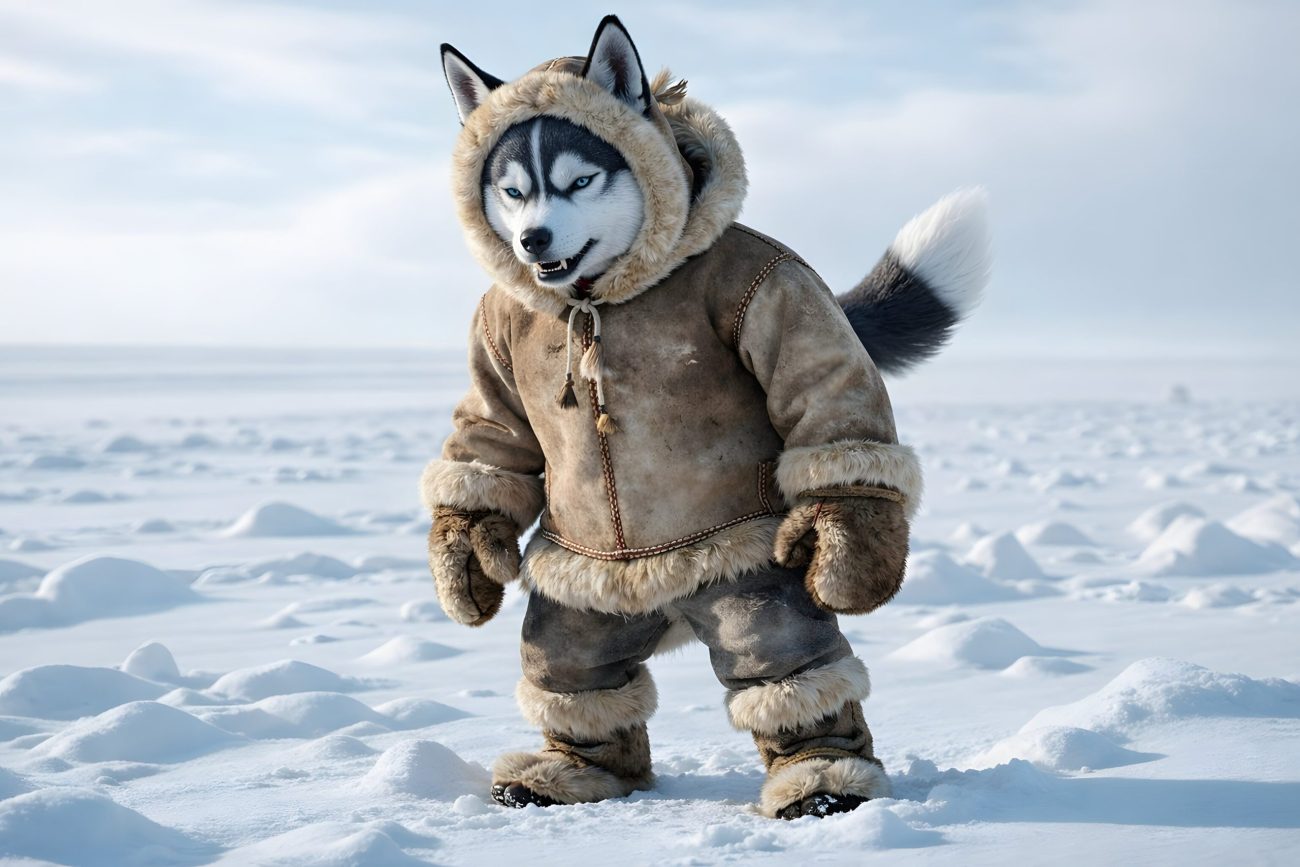
Adlet

Tradition / Region: Inuit mythology, Canadian Mythology, Greenlandic Mythology
Alternate Names: Erqigdlet, Adlit
Category: Dog, Hybrid


The Myth

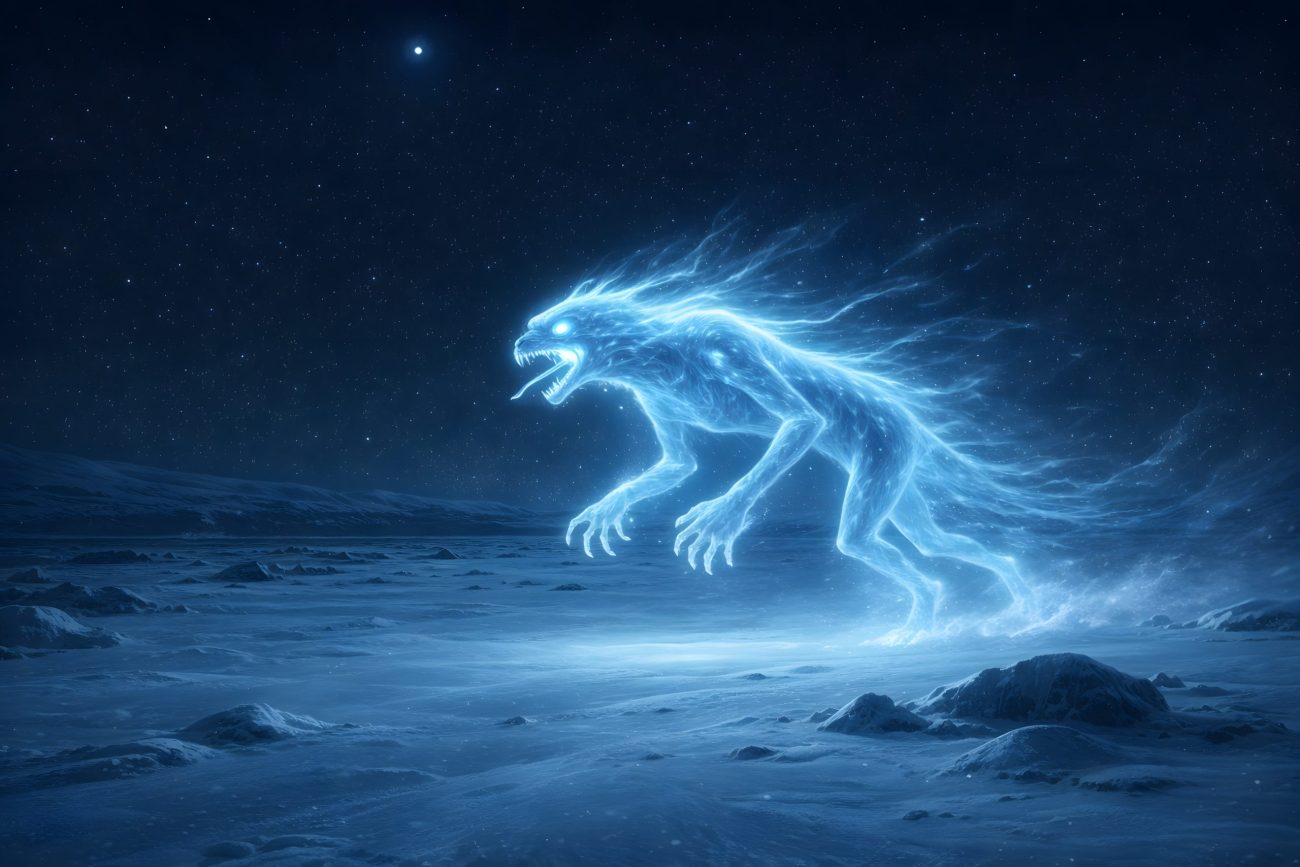
The Adlet are a race of beings spoken of in Inuit tradition. They are said to be taller than ordinary people and to live inland, away from the coast. Their form is half human and half dog: from the waist up they resemble a man, but their lower bodies are those of dogs. They run swiftly across the land and are often remembered as fierce enemies of humankind. In some stories they are cannibals, and encounters with them are dangerous and violent.

Their origin is told in an old story about a young woman named Niviarsiang, who lived with her father, Savirqong. Though many men wished to marry her, she refused every suitor. Because she would not take a husband, people came to call her “she who would not marry.”

At last, instead of choosing a man, she took a dog as her husband. The dog, named Ijirqang, had white and red spots on his coat. From this strange union ten children were born. Five of them were fully dogs, but the other five were unlike any people before them: their upper bodies were human, while their lower halves were those of dogs. These children were the first Adlet.

Ijirqang did not hunt, and the household was soon starving. The hungry children cried constantly, and Savirqong, their grandfather, was forced to bring them food. At last he grew weary of this burden. He carried his daughter, her husband, and their children out to a small island and left them there, saying that he would provide meat if the dog swam to shore each day to fetch it.

To help her husband, Niviarsiang hung a pair of boots around Ijirqang’s neck so he could carry the meat back across the water. The dog swam to shore as instructed. But when he arrived, Savirqong did not fill the boots with food. Instead, he filled them with stones. Weighted down, Ijirqang drowned in the sea.

When Niviarsiang learned what had happened, she sought revenge. She sent her young dogs across the water to attack her father. They gnawed off his hands and feet as punishment for killing their father.

Later, when Niviarsiang herself came near Savirqong in his boat, he seized his chance. He pushed her overboard. She clung to the side, trying to pull herself back in, but he cut off her fingers one by one. As they fell into the ocean, each finger changed form and became a sea creature. From them came the seals and the whales that fill the waters.

Fearing that her father might next destroy her strange children, Niviarsiang sent the Adlet away from the coast and into the interior lands. There they multiplied and became a great inland people.

Her dog children she placed in a makeshift boat and sent them across the sea. It is said that when they reached the far shore, they became the ancestors of distant northern peoples.

From that time on, the Adlet lived inland, remembered as swift, powerful, and dangerous beings whose blood was both human and animal.


Gallery


Sources

Wikipedia contributors. (n.d.). Adlet. In Wikipedia, from https://en.wikipedia.org/wiki/Adlet


Interpretive Lenses

Religious Readings
  • Christian Ascetic Deep Dive
Philosophical Readings
  • Nietzschean Deep Dive
Psychological Readings
  • Jungian Deep Dive
Esoteric Deep Dive
  • Hermetic Deep Dive
Political / Social Readings
  • Marxist Deep Dive

Sedna

Tradition / Region: Inuit Mythology, Greenlandic Mythology, Canadian Mythology
Alternate Names: Nuliajuk, Sassuma Arnaa, Nerrivik, Arnakuagsak, Arnapkapfaaluk
Category: Mermaid, Goddess


The Myth

Long ago, there lived a young woman named Sedna, daughter of a man who could not find a husband worthy of her—or, in some tellings, a maiden who refused every suitor who came.

At last a stranger arrived, promising riches and plenty of food. Sedna’s father agreed to the marriage, and she went away with the man. But once she reached his home, she discovered the truth: he was not a man at all, but a great bird spirit. She lived in misery among the cliffs and the screaming birds until her father returned to rescue her.

They fled together in his kayak across the sea. But the bird-spirit raised a terrible storm. Waves rose high, and the sea roared around them. Terrified that the boat would sink, Sedna’s father pushed her overboard.

She clung to the side of the kayak, begging for help. In fear for his life, her father took a knife or axe and cut off her fingers one by one. As they fell into the water, her fingers became the creatures of the sea—seals, walruses, whales, and all the animals hunted by humans.

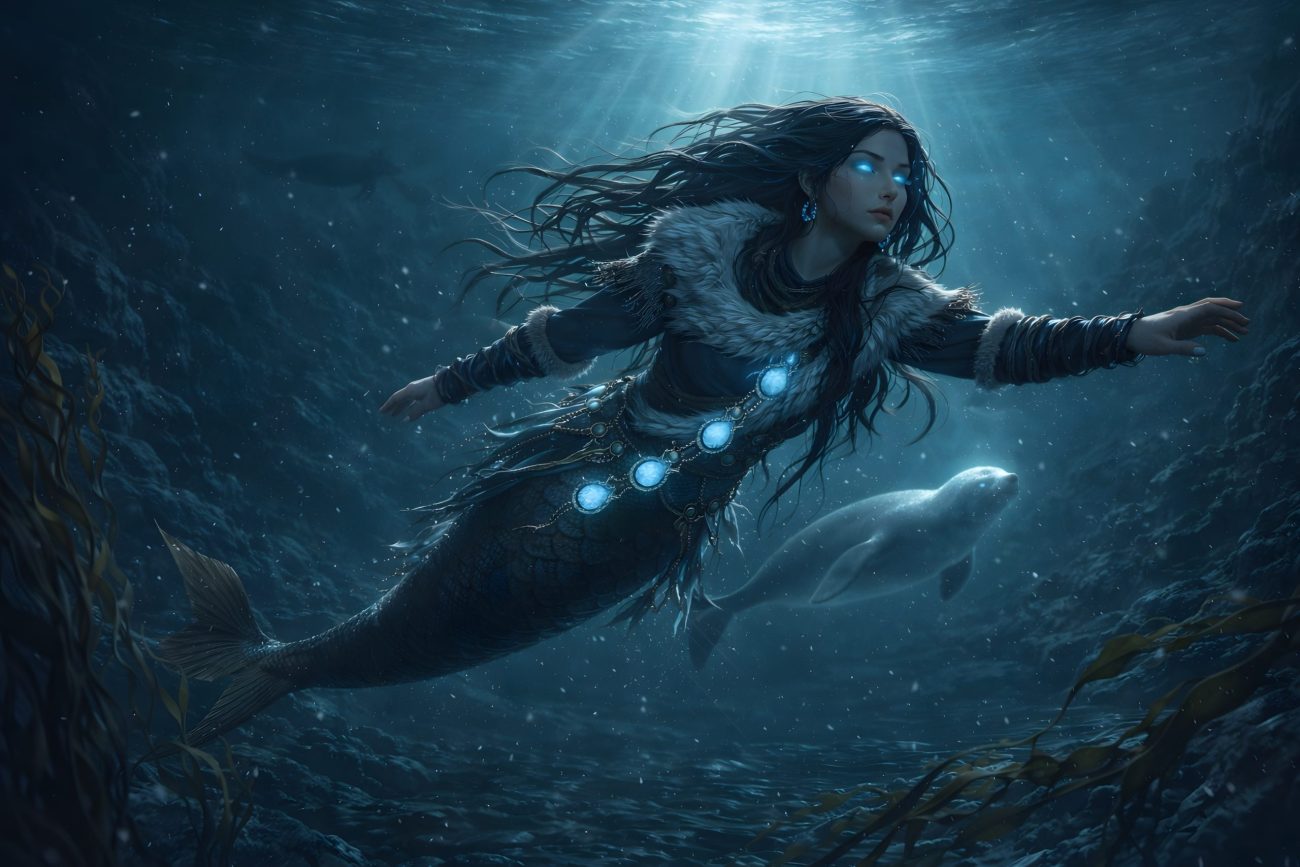
Sedna sank beneath the waves and fell to the bottom of the ocean. There she did not die. Instead she became the great mistress of the deep, ruler of the undersea world and guardian of all marine animals.

From that time on, the people believed that the success of every hunt depended on her will. When she was angered by human wrongdoing, she kept the animals hidden, and famine followed. Shamans would then journey in spirit to her underwater dwelling, where Sedna sat with tangled hair she could not comb because she had no fingers. The shaman would soothe her, wash and braid her hair, and calm her anger so she would release the animals again.

And so Sedna remains beneath the sea, watching over the creatures of the deep and deciding whether the hunters above will live or starve.


Gallery


Sources

Wikipedia contributors. (n.d.). Sedna (mythology). In Wikipedia, The Free Encyclopedia. Retrieved February 14, 2026, from https://en.wikipedia.org/wiki/Sedna_(mythology)


Interpretive Lenses

Religious Readings
  • Christian Ascetic Deep Dive
Philosophical Readings
  • Nietzschean Deep Dive
Psychological Readings
  • Jungian Deep Dive
Esoteric Deep Dive
  • Hermetic Deep Dive
Political / Social Readings
  • Marxist Deep Dive
Other
  • How to Invite The Sedna

Margyg

Tradition / Region: Norse mythology, Greenlandic Mythology
Alternate Names:
Category: Mermaid


The Myth

Sailors in the northern seas told of a strange being that appeared only when storms were near.

It was called the margyg.

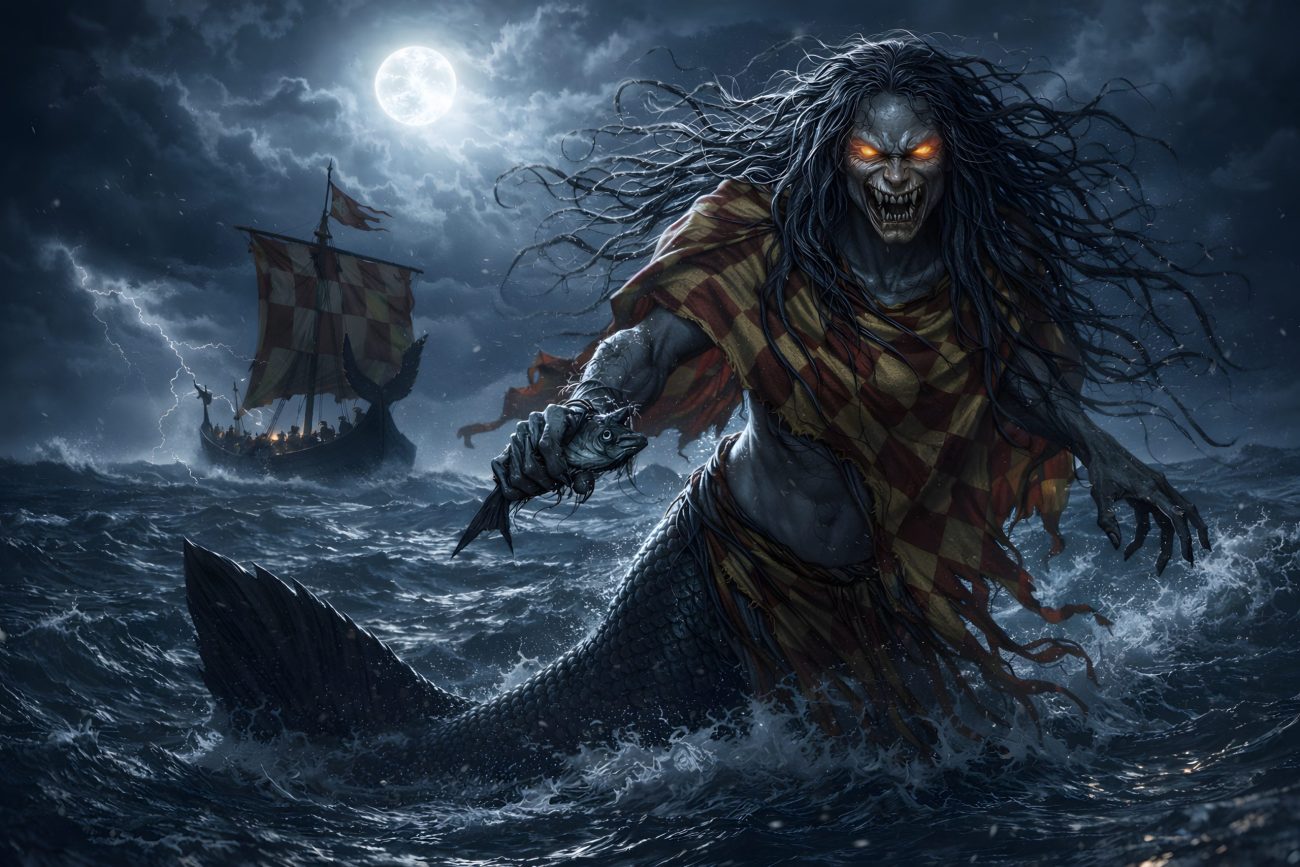
Those who saw it said it rose from the sea like a woman from the waist up, but vast and unsettling in form. Its chest was heavy, its arms long, and its hair streamed down wet over its shoulders. Its head and neck resembled those of a human, yet its face was coarse and fearsome, with a wide mouth, heavy cheeks, and a low brow. Its hands were large, and the fingers were joined together by webbing like the feet of seabirds.

Below the waist, it was wholly a fish, covered in scales with fins and a powerful tail.

The margyg was said to appear rarely, and almost always before a great storm. Sailors would spot it rising above the waves, holding a fish in its hands.

If it swam toward a ship, tossing the fish toward the vessel or playing with them as it approached, the crew believed disaster was coming and feared they would not survive the storm.

But if the margyg ate the fish, or threw them away from the ship and turned aside, the sailors took heart. Though the storm might still strike, they believed they would live through it.

For this reason, the margyg was not merely a monster of the sea, but a sign — a creature whose brief appearance foretold the fate of those who sailed beneath the darkening sky.


Gallery


Sources

Bestiary.us contributors. (n.d.). Margjug. In Bestiary.us, from https://www.bestiary.us/margjug/


Interpretive Lenses

Religious Readings
  • Christian Ascetic Deep Dive
Philosophical Readings
  • Nietzschean Deep Dive
Psychological Readings
  • Jungian Deep Dive
Esoteric Deep Dive
  • Hermetic Deep Dive
Political / Social Readings
  • Marxist Deep Dive
Other
  • How to Invite The Margyg

Nålaqnaq

Tradition / Region: Inuit mythology
Category: Spirit


The Myth

Nålaqnaq, known as the Listener, is a strange and unsettling spirit distinguished by its exaggerated sensory features. It is described as having a large, gaping mouth, two prominent teeth, and a tongue that protrudes outward, emphasizing its nature as a being that listens, hears, and perceives beyond ordinary limits. Its hands are shapeless, each bearing six fingers, marking it unmistakably as non-human.

Nålaqnaq is said to move at a run, suggesting constant alertness and restless awareness, as though it is forever attuned to sounds, words, or cries that escape human notice. Rather than embodying physical strength, it represents heightened perception—a spirit whose power lies in attention and awareness of the unseen.

As the Listener, Nålaqnaq reflects an Inuit understanding that nothing spoken—or unspoken—passes unheard. Its presence reinforces the importance of caution, respect, and mindfulness in speech and behavior, reminding people that words, intentions, and hidden actions may always be perceived by forces beyond the human world.


Interpretive Lenses

Religious Readings
Philosophical Readings
Psychological Readings
Esoteric Deep Dive
  • Hermetic Deep Dive
Political / Social Readings
Other

Kamingmålik

Tradition / Region: Inuit mythology (Tuneq people)
Alternate Names:
Category: Spirit of the dead


The Myth

Kamingmålik is the spirit of a woman belonging to the Tuneq people. She is remembered as a human spirit that persists after death, retaining her identity as a woman of the Tuneq. Her presence places her among the spirits that originate from human lives rather than purely natural or animal forces.


Interpretive Lenses

Religious Readings
Philosophical Readings
Psychological Readings
Esoteric Deep Dive
  • Hermetic Deep Dive
Political / Social Readings
Other

Norssutilik

Tradition / Region: Inuit mythology
Alternate Names:
Category: Spirit


The Myth

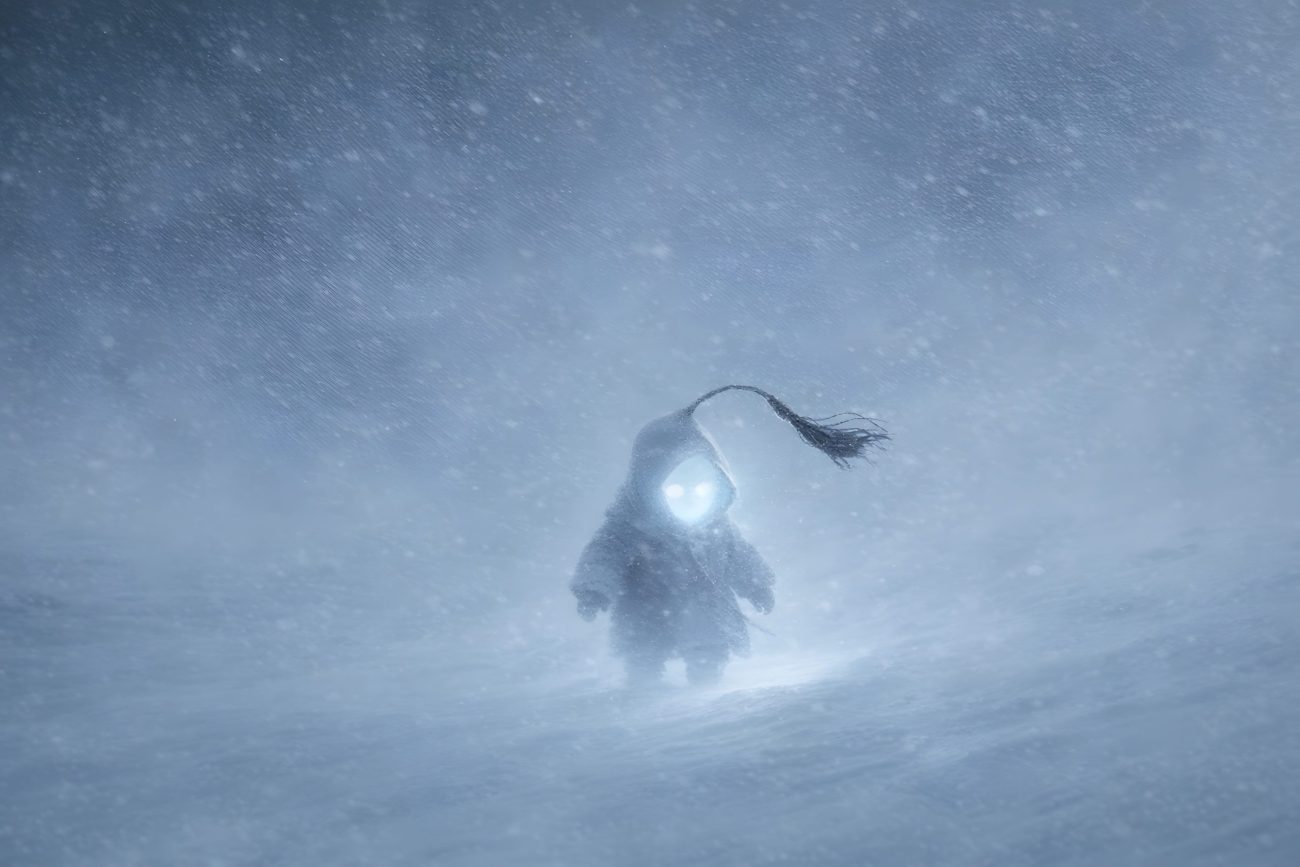
Norssutilik is the name given to two spirits in Inuit belief who share the same defining feature: a norjut, a tassel attached to a flexible stick worn or placed over the hood of a frock.

Because both spirits possess this distinctive tassel, they are known by the same name. The norjut serves as their identifying mark, distinguishing them from other spirits encountered in Inuit tradition.


Interpretive Lenses

Religious Readings
Philosophical Readings
Psychological Readings
Esoteric Deep Dive
  • Hermetic Deep Dive
Political / Social Readings
Other