Burning Treasures

Tradition / Region: Czech Mythology
Alternate Names: —
Category: Flame


The Myth

Burning Treasures are mysterious flames associated with hidden money and tormented souls.

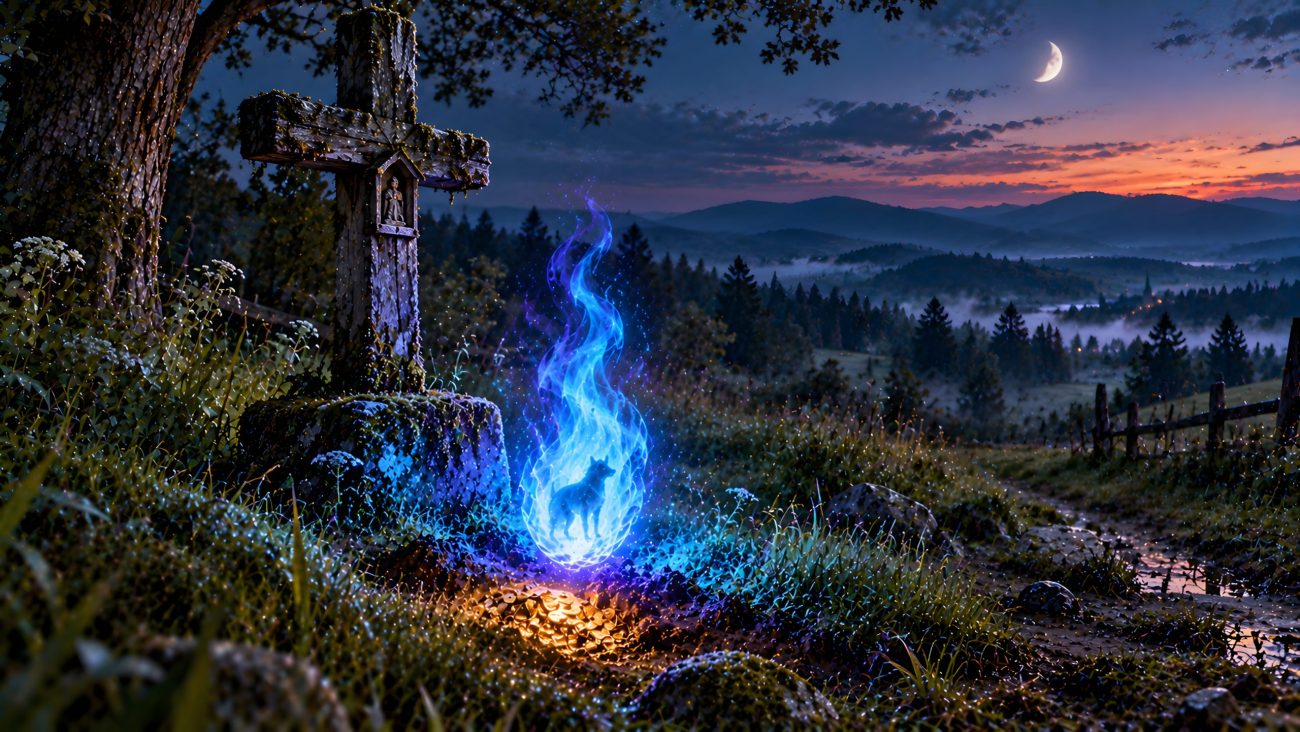
The shepherd of Rindlau was driving his cows out to pasture on Palm Sunday when he saw a tiny flame blooming near a wayside cross. He ran over and found a pot of ancient money there. As he lifted the pot from the ground, a little black dog lay beneath it.

The dog leaped out of the hole with joy, sniffed at him, and gazed at him affectionately. But the shepherd only wanted the heavy money, so he pushed the dog away and cursed it. The dog vanished as if swallowed by the earth, and the pot rattled and sank.

Had the shepherd kissed the dog, he would have helped a tormented soul and become rich himself. But with his kick, he pushed the poor soul even deeper into hell.

A man from Duschowitz was walking through the countryside when he noticed a blue fire beside the path. Since his pipe had just gone out, he relit it from the small blue flame. Later, when he tapped out the pipe at home, an old thaler fell out.


Sources

Hans Watzlik. “Brennende Schätze.” In Böhmerwald-Sagen. Budweis: Böhmerwalder Dorfbücher, 1921, Heft 5. Reproduced by SAGEN.at. https://www.sagen.at/texte/sagen/tschechien/watzlik/brennendeschaetze.html

Moss Lights

Tradition / Region: Czech Mythology
Alternate Names: —
Category: Flame


The Myth

Moss lights are mysterious lights found in the Bohemian Forest.

A farmer from Waid was plowing his fields between light and darkness. Looking down into the ravine toward the Kieslingbach stream, he saw a multitude of moss lights standing below. Interested, he shouted to them, “Sanctus! Sanctus! Sanctus!”

Immediately, the lights danced wildly about like disturbed bees and suddenly scurried up the mountain. The farmer abandoned his plow and cattle, ran home, bolted the door, and closed the shutters.

Outside, the lights scratched furiously at the door and shutters, determined to get inside. It was a long time before they finally left.

When the farmer returned to the field, he could already hear the oxen bellowing in pain from afar. They lay clawed and bloody before the plow.


Sources

Hans Watzlik. “Mooslichter.” In Böhmerwald-Sagen. Budweis: Böhmerwalder Dorfbücher, 1921, Heft 5. Reproduced by SAGEN.at. https://www.sagen.at/texte/sagen/tschechien/watzlik/mooslichter.html


Glowing Men

Tradition: Czech Mythology
Alternative Names: Fiery Men, Weihizer
Category: Flame


The Myth

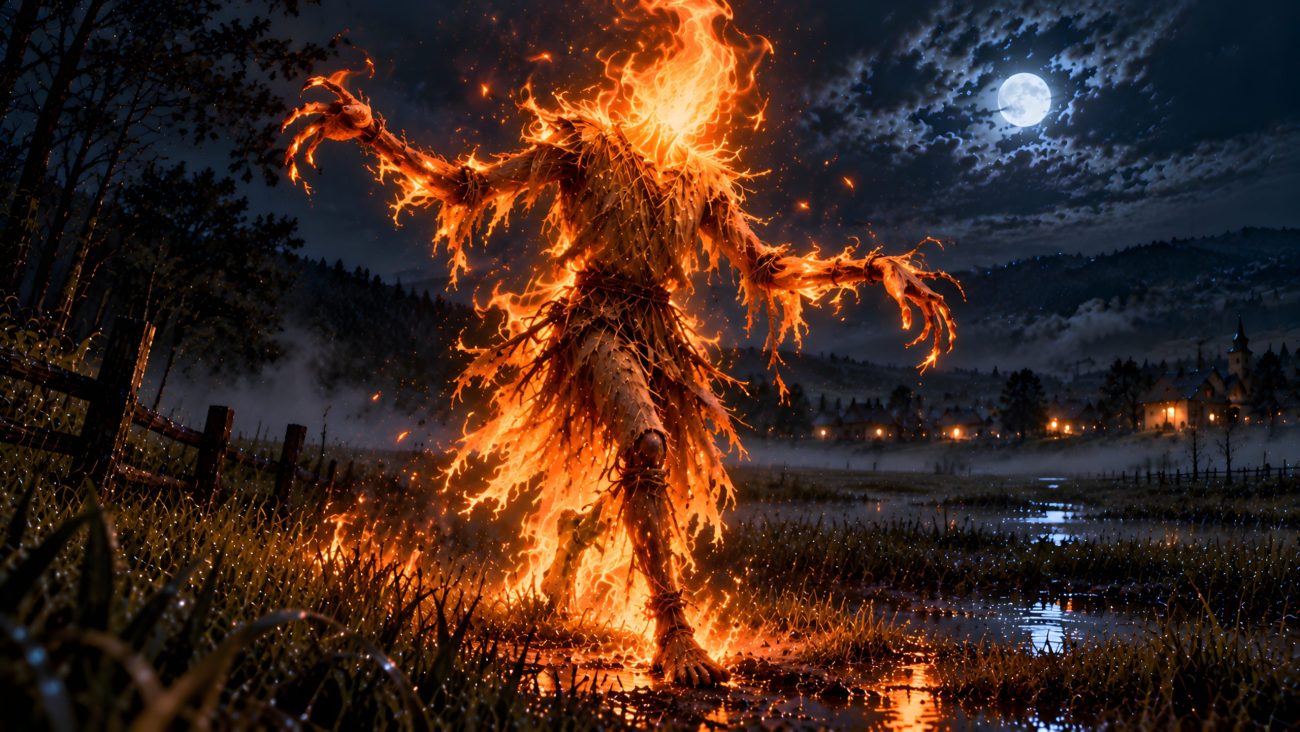
The Glowing Men were mysterious supernatural beings said to emerge at night from the desolate swamps beneath Bannholz, a wooded hill in the Bohemian Forest. They often appeared in groups of three or four, standing about as tall as a bundle of straw. Their burning bodies illuminated the darkness as they danced and wandered across the waterlogged meadows known as the Tratein. Herdsmen returning their cattle in the evening sometimes encountered these strange figures, which they called the Weihizer. The boys would quickly utter holy names to drive them away, while the Glowing Men could also leap into the baskets carried on women’s backs.

One night, a carter’s wagon broke down on a pitch-black road. Without a lantern, he called to a Glowing Man and asked it to shine its light so he could repair the damage. The fiery figure approached and illuminated the road with its burning body. Once the carter had finished his work, he thanked the being, saying, “God reward you!” The Glowing Man returned the blessing and declared that it had now been redeemed. Its light went out, and it vanished forever.

Another tale tells of a farmer from Kurzen who encountered a Glowing Man on an Advent night while walking to his barn. The figure stood in his path with its arms outstretched, terrifying him so greatly that he fled home and woke his household. When they returned to investigate, the being had disappeared, leaving only glowing footprints that led toward a moor.

According to the legend, such encounters would never happen again because Pope Gregory had banished all ghosts from the world for ninety years. The story presents the Glowing Men as more than frightening wandering fires: at least some were restless spirits who could find redemption through an act of kindness, while others remained mysterious and unsettling presences in the marshlands.


Sources


Hans Watzlik. “Glühende Männer.” In Böhmerwald-Sagen. Budweis: Böhmerwalder Dorfbücher, 1921, Heft 5. Reproduced by SAGEN.at. https://www.sagen.at/texte/sagen/tschechien/watzlik/gluehendemaenner.html


Dwarf of the Earth’s Mirror

Tradition: Czech Mythology
Alternative Names: The Earth’s Mirror
Category: Dwarf


The Myth

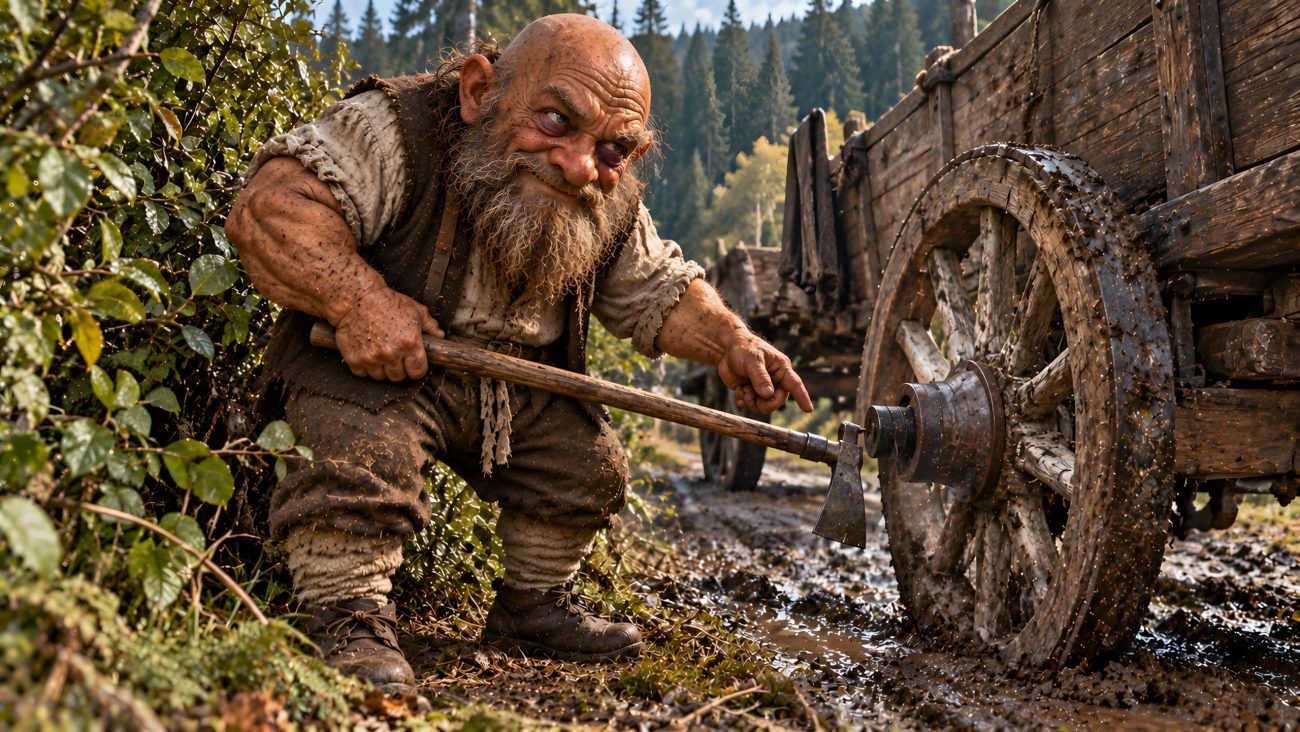
A farmer was returning home between Lichten and Siehstmichnit with an empty wagon when his oxen suddenly stopped. No matter how fiercely he struck them with his whip, the animals could not move the wagon. They strained against it, panting and bellowing, but the wagon seemed to have become completely frozen in place.

Then a little man emerged from the bushes. He told the farmer to strike the rear wheel with his hoe. The farmer followed the strange little man’s instructions, and as soon as the hoe struck the wheel, the wagon was able to move again.

When the farmer reached his village, he discovered something terrible. His neighbor was lying in his room with one of his feet severed.

The neighbor was a wicked sorcerer who possessed a mysterious mirror through which he could see what was happening elsewhere. While watching the farmer and his wagon in the mirror, the sorcerer had placed his own foot against the rear wheel as it appeared in the reflection. When the farmer struck the wheel with his hoe in the real world, the blow was transferred through the enchanted mirror and cut off the sorcerer’s foot in his room.

The strange little man had therefore given the farmer the means to break the sorcerer’s spell, turning the sorcerer’s own magical mirror against him.


Sources

Hans Watzlik. “Erdspiegel.” In Böhmerwald-Sagen. Budweis: Böhmerwalder Dorfbücher, 1921, Heft 5. Reproduced by SAGEN.at.
https://www.sagen.at/texte/sagen/tschechien/watzlik/erdspiegel.html


Changeling

Tradition: Czech Mythology
Alternative Names: Changeling
Category: Dwarf


The Myth

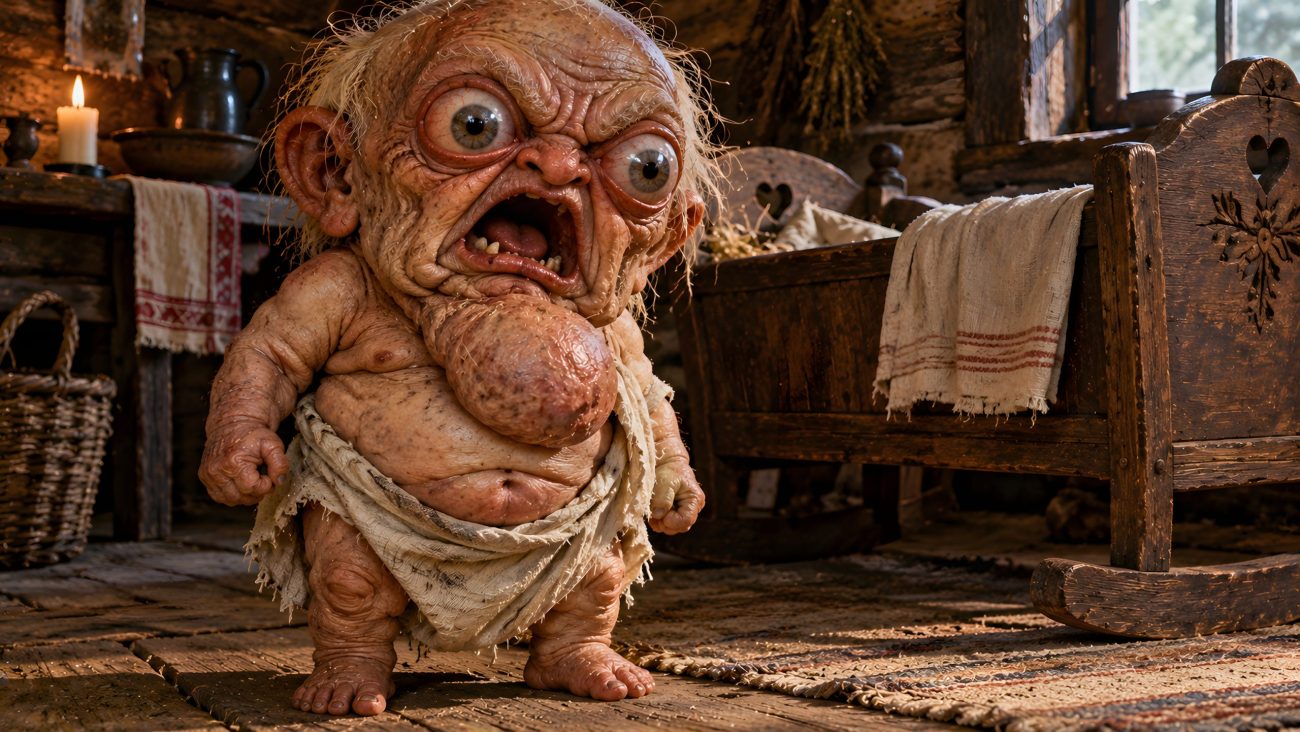
The changeling was a hideous creature placed in the cradle of a human child after a dwarf woman secretly stole the mother’s beautiful baby. Its head was unnaturally large, its eyes were like those of a frog, and a great goiter hung from its body. It also possessed an enormous appetite, eating so much that the mother could scarcely provide enough food for it.

When the mother discovered that the child in her cradle was not her own, she was overcome with grief. She begged and pleaded with the dwarf woman to return her beloved child, but the dwarf refused. The ugly creature remained in the cradle, crying out maliciously while the mother desperately tried to get her real child back.

Eventually, the mother prepared a strange drink and poured beer into an empty hen’s egg. She brought this to the screaming changeling. The bizarre sight caused the creature to suddenly stop crying. Then, to the mother’s astonishment, it spoke.

It declared that it was as old as the Bohemian Forest and had never witnessed such a strange custom in all its long life. By speaking like this, the creature revealed that it was no human child at all. The changeling immediately disappeared, and the dwarf woman was forced to return the stolen child to its mother.


Sources

Hans Watzlik. “Wechselbalg.” In Böhmerwald-Sagen. Budweis: Böhmerwalder Dorfbücher, 1921, Heft 5. Reproduced by SAGEN.at. https://www.sagen.at/texte/sagen/tschechien/watzlik/wechselbalg.html


Lomie

Tradition: Czech Mythology
Alternative Names: Lomie, Los, Lossie
Category: Deer


The Myth

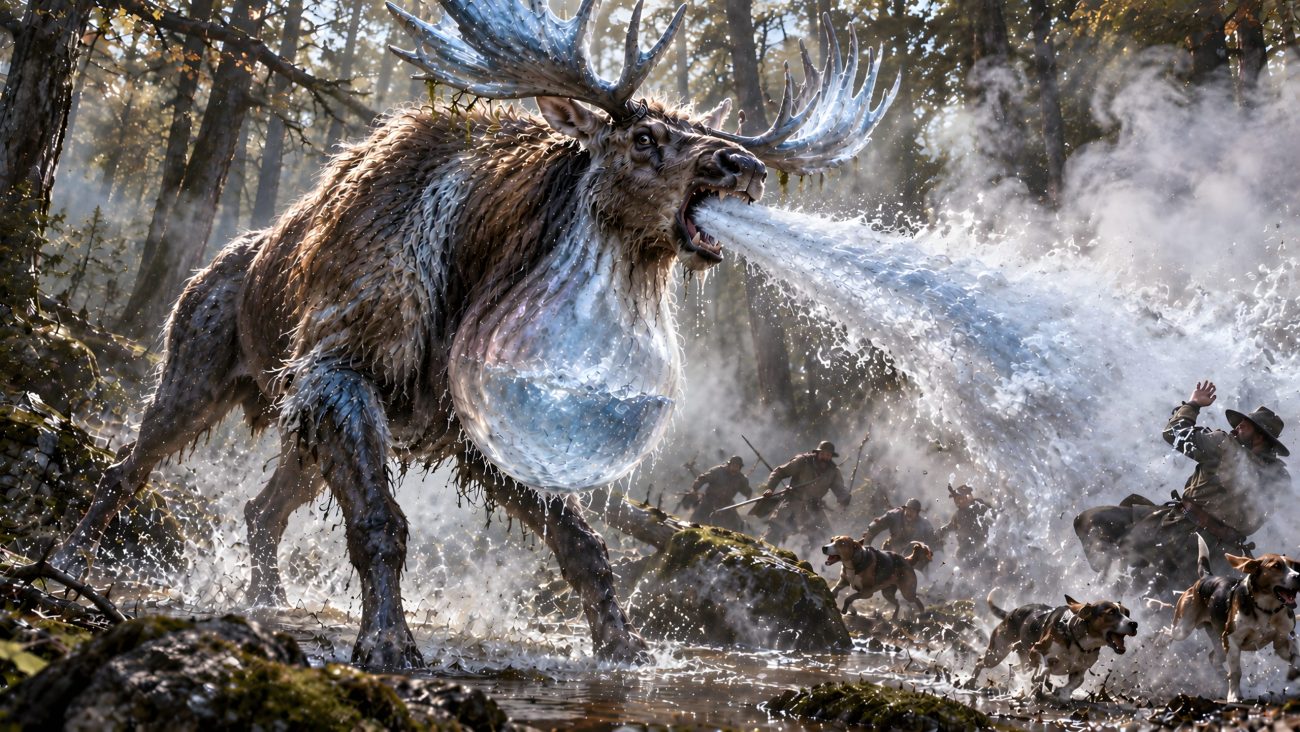
The Lomie is a strange beast said to inhabit the forests of Bohemia. It possesses a large, sac-like bladder beneath its neck, which it uses as a weapon against hunters.

When pursued by hunters, the Lomie runs to a nearby body of water and stops to drink. It fills the bladder beneath its neck with water before continuing its escape.

As it runs, the water inside the bladder becomes heated until it is boiling hot. When the hunters and their dogs eventually corner the creature, the Lomie vomits the boiling water over them. The scalding water burns the hunters and dogs, allowing the beast to escape.

Heylyn merely describes the water as boiling hot, but the Book of Marvels gives a more horrific account. According to this version, the water is extremely poisonous as well as boiling, producing incurable wounds and causing the skin and flesh of its victims to slough away.

The name Lomie appears to derive from the Polish łossie, the plural form of łoś, meaning moose or elk. The name was probably the result of a typographical error by Heylyn. Topsell lists Los and Lossie as names for the elk or moose and likewise attributes the strange ability to regurgitate scalding water to the animal.


Sources

Countess Sica. “Lomie.” A Book of Creatures. October 30, 2020. https://abookofcreatures.com/2020/10/30/lomie/


Zubro

Tradition: Czech Mythology, Polish Mythology
Alternative Names: Zubro
Category: Cow


The Myth

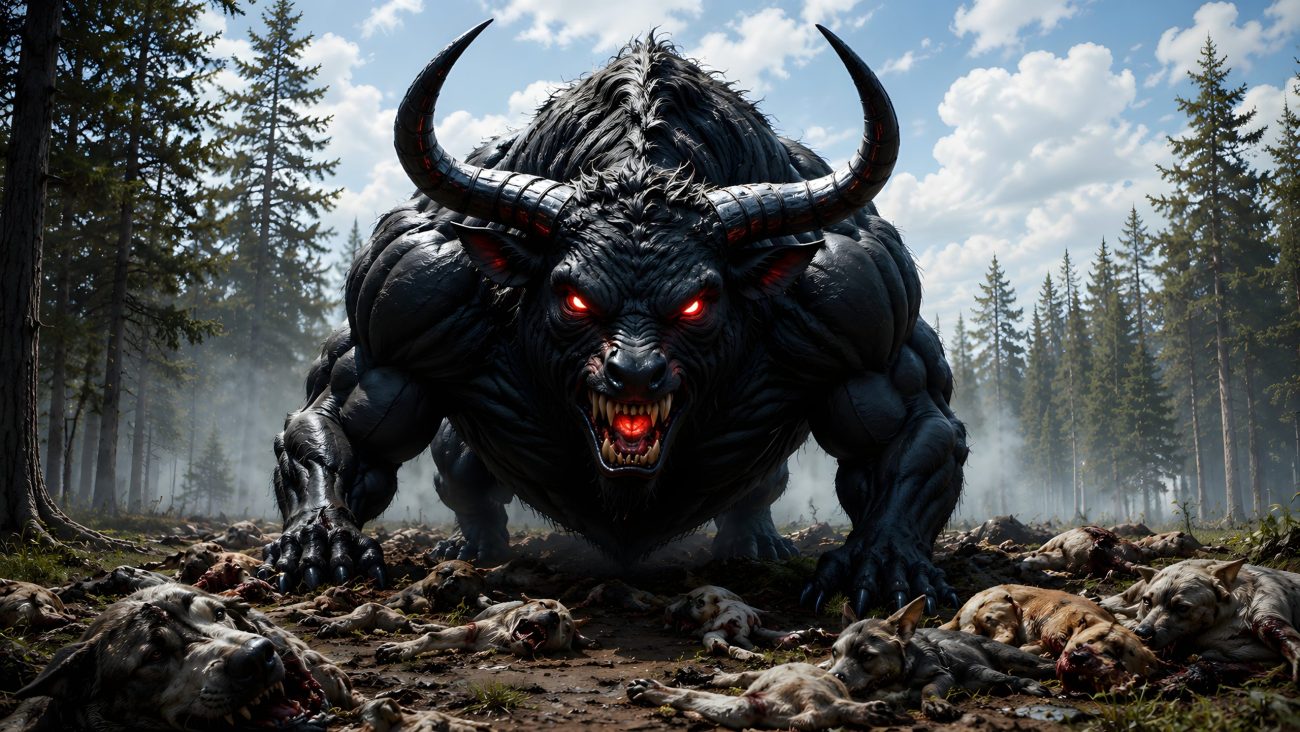
Most Zubros are said to live in Bohemia, though they are also found in Poland, where they are believed to be smaller and less powerful. Wherever it appears, the Zubro is known as a terrifying kind of wild bull.

The Zubro is described as an enormous beast, reaching up to fifteen meters in length. Its hide is marked with dark brown and black coloring, and its horns can grow to a length of one and a half meters. The animal is swift and aggressive, and it can easily be driven into a state of uncontrollable fury.

When people attempt to hunt the Zubro, it does not flee helplessly. Instead, it defends itself with frightening intelligence. It blinds pursuing dogs by throwing its own dung at them. If it manages to seize a dog or a human, it hurls the victim into the air with its horns and catches them again as they fall, repeating this until the victim is dead.

Yet even such a creature can be defeated by cunning rather than strength. A skilled hunter first wears the Zubro down by driving it relentlessly with dogs. Once the animal is exhausted, the hunter positions himself beneath a tree with his spear. The enraged Zubro charges straight toward him, but the hunter hides behind the trunk. The beast thrusts its horns past the tree on both sides, and in that moment the hunter steps forward and kills it with a single thrust.


Sources

Van Maerlant, J. (2024). Der Naturen Bloeme (I. Biesheuvel, Trans.), p.74.


Mill Devil

Tradition: Czech Mythology
Alternative names: Mill Devil
Category: Demon


The Myth

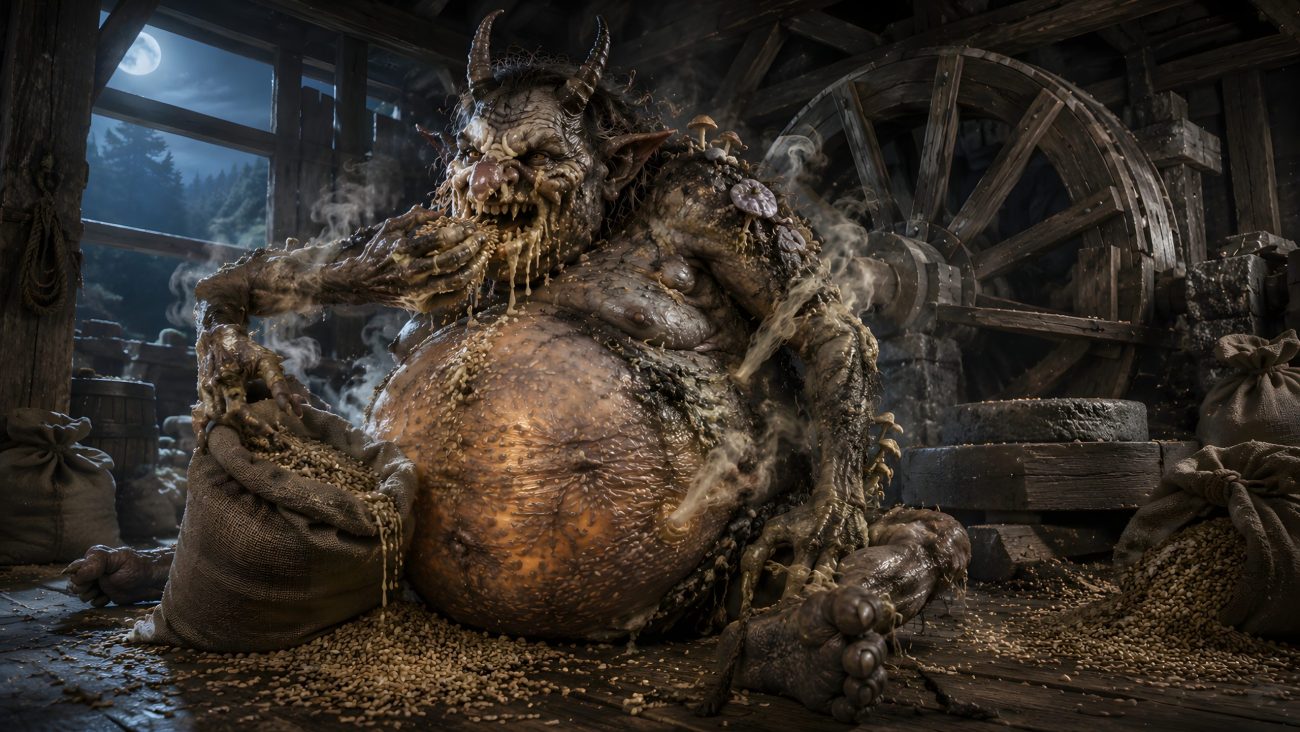
The Mill Devil is a group of hellish spirits summoned through a magical book and associated with an old mill near Langendorf. They appear as numerous devils with glowing eyes and licking tongues, capable of moving with great speed and performing impossible tasks.

The devils have a terrifying appearance, with glowing eyes and tongues that lick from their mouths. They appear in large numbers and are violent and threatening, seeking to strangle those who summon them.

Behind Langendorf stood an old mill whose miller possessed a grey book that allowed him to summon the forces of Hell. One Holy Day, the miller’s children were left alone at home. While rummaging through old things, they discovered the mysterious book. They opened it and began reading the words inside.

Suddenly, the entire mill filled with devils. They raged through the building with glowing eyes and licking tongues, threatening to strangle the children.

At that moment, the miller was sitting in church. During High Mass, he suddenly became restless and felt that something was wrong. He rose from his place and hurried home.

The devils were already waiting for him. They demanded that he quickly tell them what he wanted them to do. The miller tore the fur from his body and threw it before them, ordering them to count every hair in it.

The devils immediately fell upon the fur and began counting. While they were occupied, the miller ran into the mill and poured a sack of grain into the stream.

The devils soon finished counting and announced that the fur contained seven hairs. They demanded another task, threatening to tear the miller apart if he did not give them one quickly.

The miller ordered them to retrieve every grain he had thrown into the stream. The devils fished the grains from the water and returned, again demanding another task.

The miller then gave them an impossible command: they were to remove all the ice from the pond, carry it to the yeast stone, set it alight, and bring him the ashes.

Enraged by the miller’s mockery and impossible demands, the devils finally abandoned him and returned to Hell. Before leaving, however, they took the mill wheel with them as revenge.


Sources

Watzlik, Hans. “Schnelle Knechte.” In Böhmerwald-Sagen. Budweis: Böhmerwalder Dorfbücher, 1921, Heft 5. Reproduced by SAGEN.at. https://www.sagen.at/texte/sagen/tschechien/watzlik/schnelleknechte.html


Gesindel

Tradition: Czech Mythology
Alternative names: Gesindel
Category: Demon


The Myth

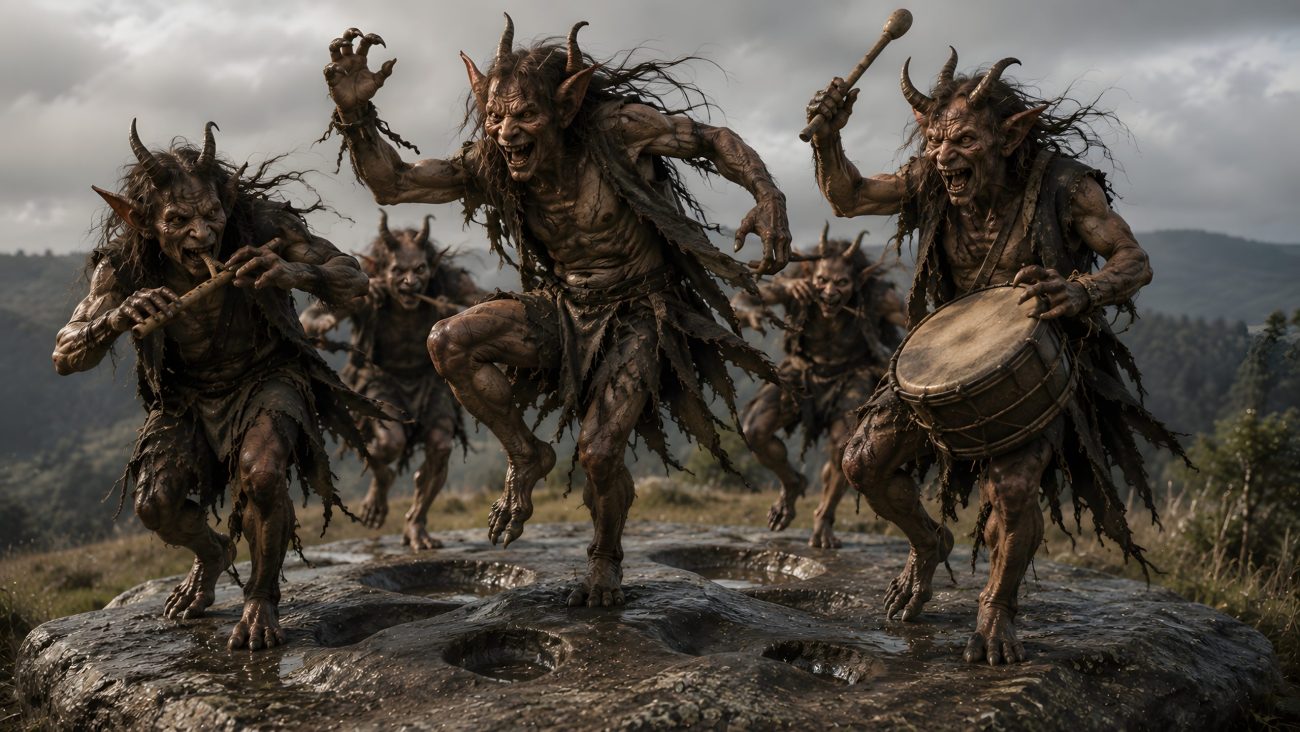
The Gesindel is a hellish rabble of supernatural beings from the folklore of the Bohemian Forest. They appear as groups of devil-like figures associated with strange gatherings, card playing, and supernatural music.

The Gesindel has no single fixed appearance. They are described as groups of devils, sometimes appearing as several figures gathered together in isolated places.

Near Rederhof in Eisenstraß lies a wide, flat stone with hoof-shaped impressions in it. According to local tradition, Satan was said to dance upon this stone. Because of this, the farmers avoided the stone and would not rest upon it.

Once, Martin passed by the stone and saw four figures sitting upon it. They appeared to be nodding devils and were playing cards. Martin would have liked to know which card was the trump, but he did not dare ask.

The hellish rabble also haunted the Huisriegel. In broad daylight, they would drum upon the ground, blow their instruments like a whole band of musicians, and play so loudly that the cattle in the pasture became agitated. The shepherd himself was frightened so badly that he fled over all nine mountains.


Sources

Watzlik, Hans. “Gesindel.” In Böhmerwald-Sagen. Budweis: Böhmerwalder Dorfbücher, 1921, Heft 5. Reproduced by SAGEN.at. https://www.sagen.at/texte/sagen/tschechien/watzlik/gesindel.html


Trud

Tradition: Czech Mythology
Alternative names: –
Category: Demon


The Myth

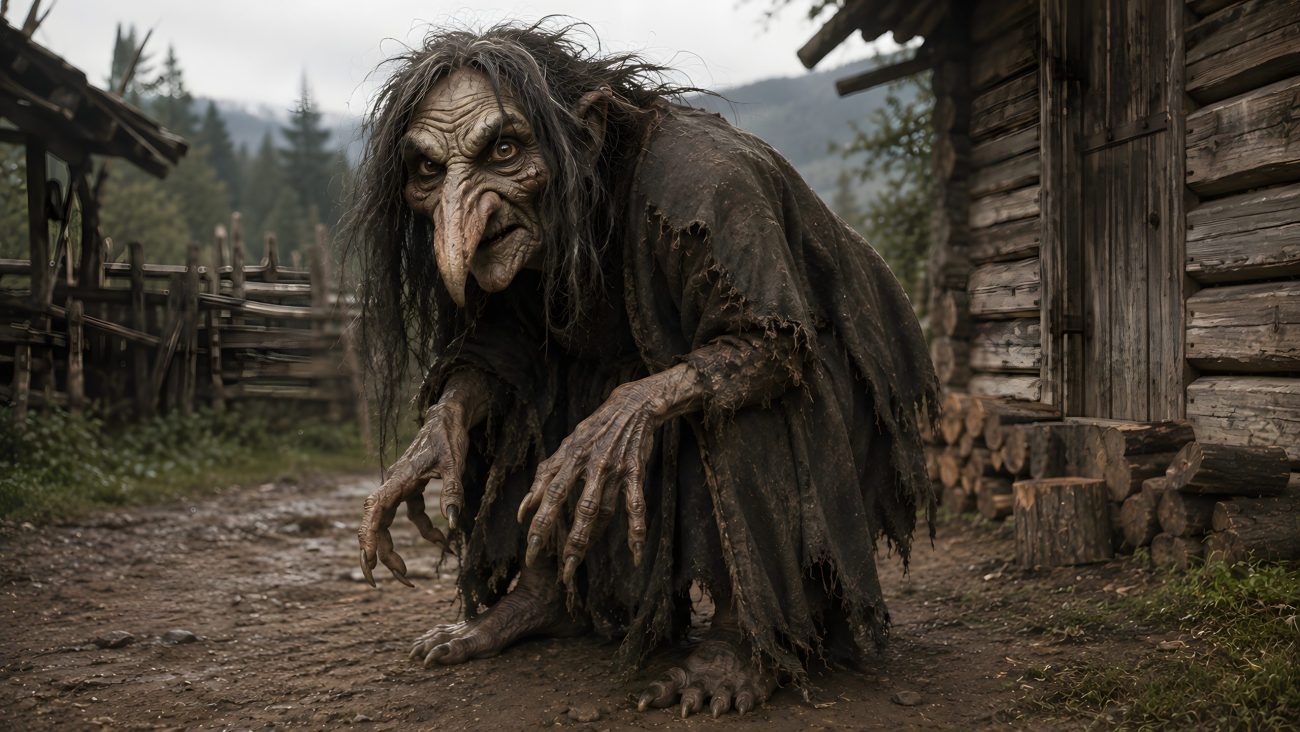
The Trud is a frightening supernatural being from the folklore of the Bohemian Forest. It is associated with nighttime attacks, borrowing objects, and a strange form of possession. The Trud can appear as a woman or an old, wrinkled female figure, and it is capable of becoming extremely heavy when it sits upon a sleeping person.

A musician from St. Catherine’s Church was once visited by a Trud during the night. After dealing with it, he apparently drove it away and warned it to return the following day for matches. Another story explains why people were afraid to lend household objects: a musician’s wife was about to borrow a hoe from a neighbor when her cousin warned her not to go. The neighbor had supposedly trapped the Trud the previous night and was waiting for someone to come to the house and borrow something. The woman immediately returned home.

The Trud could also attack sleeping people. A blacksmith’s apprentice once felt the Trud settle upon his chest while he slept. It was enormously heavy, making it difficult for him to breathe. He eventually grabbed a handful of threshed straw, and the weight immediately became lighter. He jumped from his bed and trapped the straw in a vise.

When morning came, the blacksmith discovered an old, wrinkled woman in his workshop, with her hair caught in the vise. She begged him to release her. He opened the gate and drove her away by beating her.

A miller from High Art described another encounter with the Trud. He heard it approaching while making a constant whirring sound and crying out. It then jumped onto him, sat on his chest, and seemed to draw something from his body. He described the creature as having a round, pig-like beak and claimed that the Trud consumed the vitality or substance of its victims.


Sources

Watzlik, Hans. “Die Trud.” In Böhmerwald-Sagen. Budweis: Böhmerwalder Dorfbücher, 1921, Heft 5. Reproduced by SAGEN.at. https://www.sagen.at/texte/sagen/tschechien/watzlik/dietrud.html