Shiro (Shirodawashi)

Tradition / Region: Japanese Mythology
Alternate Names: Shirodashi, Shirodawashi (White Scrubber)
Category: Yōkai / Mountain Dweller / Cave Dweller


The Myth

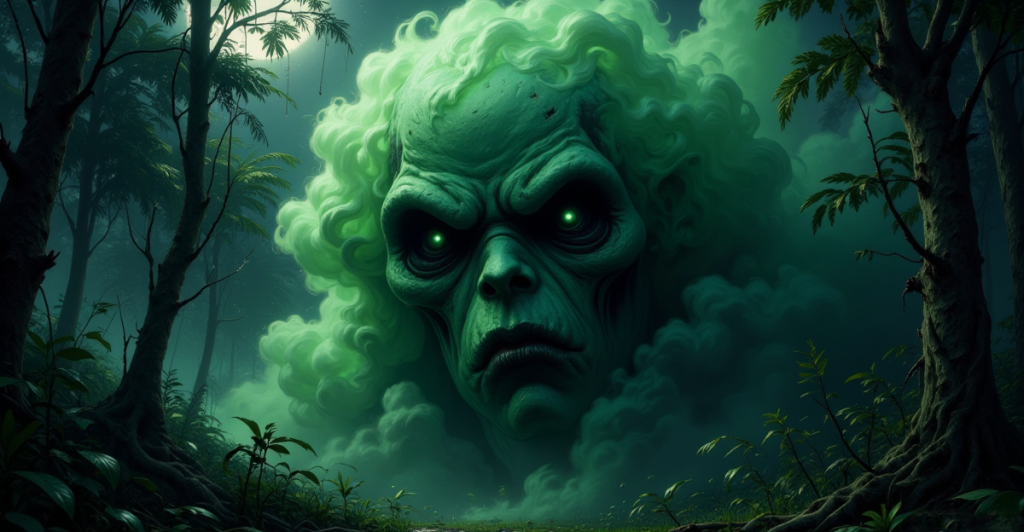
Shiro, also called Shirodawashi, was a yōkai known for his beast-like face, hooves, and a kimono patterned with scrubbing brushes. He lived in a cave near a remote mountain settlement and first appeared as a friendly and helpful figure.

A pair of monsters, Mōryō and his wife Ochiyobon, fled from Ushū to the mountains beyond Hakone and settled in a ruined house. Shiro assisted them in establishing their new home, but his friendliness soon revealed another nature. He was a heavy drinker and a troublemaker who repeatedly visited their house, demanding food, drink, and money.

Shiro became infatuated with Ochiyobon and schemed to take her for himself. One day, he borrowed a padded robe from Mōryō and never returned it. When Ochiyobon came to demand its return, Shiro claimed he had pawned it and left to retrieve it. Instead, he went to Mōryō’s shack armed with a blade and declared that Ochiyobon was now his wife. Intimidated and afraid, Mōryō surrendered, giving Shiro all his possessions, including clothing, bedding, and cosmetics.

When Ochiyobon learned what had happened, she was devastated. Shiro responded brutally, declaring that since she was now his wife, she must submit. Other monsters gathered, and even Momojii, the master of the cave dwellings, appeared. Momojii attempted to restore Ochiyobon to her husband, but Mōryō, fearing public shame, refused reconciliation and announced plans to remarry.

Abandoned, Ochiyobon grew close to Momojii, who treated her with kindness. Enraged, Shiro attacked Momojii with an oak log, but Momojii overpowered him with a massive axe and drove him away. To settle the conflict, Momojii arranged for Shiro to marry a beautiful female ghost.

Despite her beauty, the ghost suffered under Shiro’s relentless desire. Unable to endure him, she abandoned her lingering grudge against the living and wished to return to the underworld. When demons arrived to claim her, Shiro fought them fiercely. During the chaos, the ghost passed on peacefully, leaving the demons with no soul to seize. They attempted to drag Shiro to hell instead, but along the way a mysterious boy appeared and gave Shiro demon-slaying sake. The boy revealed himself to be the tanuki Kakubei, who slew the demons.

Grateful, Kakubei asked Shiro to help abduct the daughter of a fox whose marriage proposal had been rejected. Shiro eagerly agreed and joined the tanuki in attacking the wedding procession, successfully capturing the bride’s palanquin. However, he soon encountered Mikoshi Nyūdō, who defeated him and took him prisoner. Impressed by Shiro’s boldness, Mikoshi Nyūdō eventually released him, predicting he might serve a greater purpose someday.

Later, tanuki thieves stole the White Fox Jewel and entrusted it to Shiro. When monsters and foxes came to retrieve it, they heard a woman’s voice from within Shiro’s cave. Ochiyobon emerged, holding a bloodstained knife and the jewel. Having been disgraced and betrayed, she took revenge by killing Shiro and returning the treasure to its rightful owners.

Thus ended Shirodawashi, remembered as a violent, cunning, and lust-driven yōkai whose ambition and cruelty ultimately led to his downfall.


Interpretive Lenses

Religious Readings
Philosophical Readings
  • Nietzschean Deep Dive
Psychological Readings
  • Jungian Deep Dive
Esoteric Deep Dive
  • Hermetic Deep Dive
Political / Social Readings
  • Marxist Deep Dive
Other
  • How to Invite The Spirit

Zarazarazattara

Tradition / Region: Japanese Folklore (Haibara County, Shizuoka Prefecture)
Alternate Names:
Category: Yōkai / Mountain Dweller


The Myth

In Haibara County, it is told that a man once spent the night alone in a mountain hut, sitting by the hearth to keep warm. As the fire burned low, the hut lay silent except for the crackle of embers.

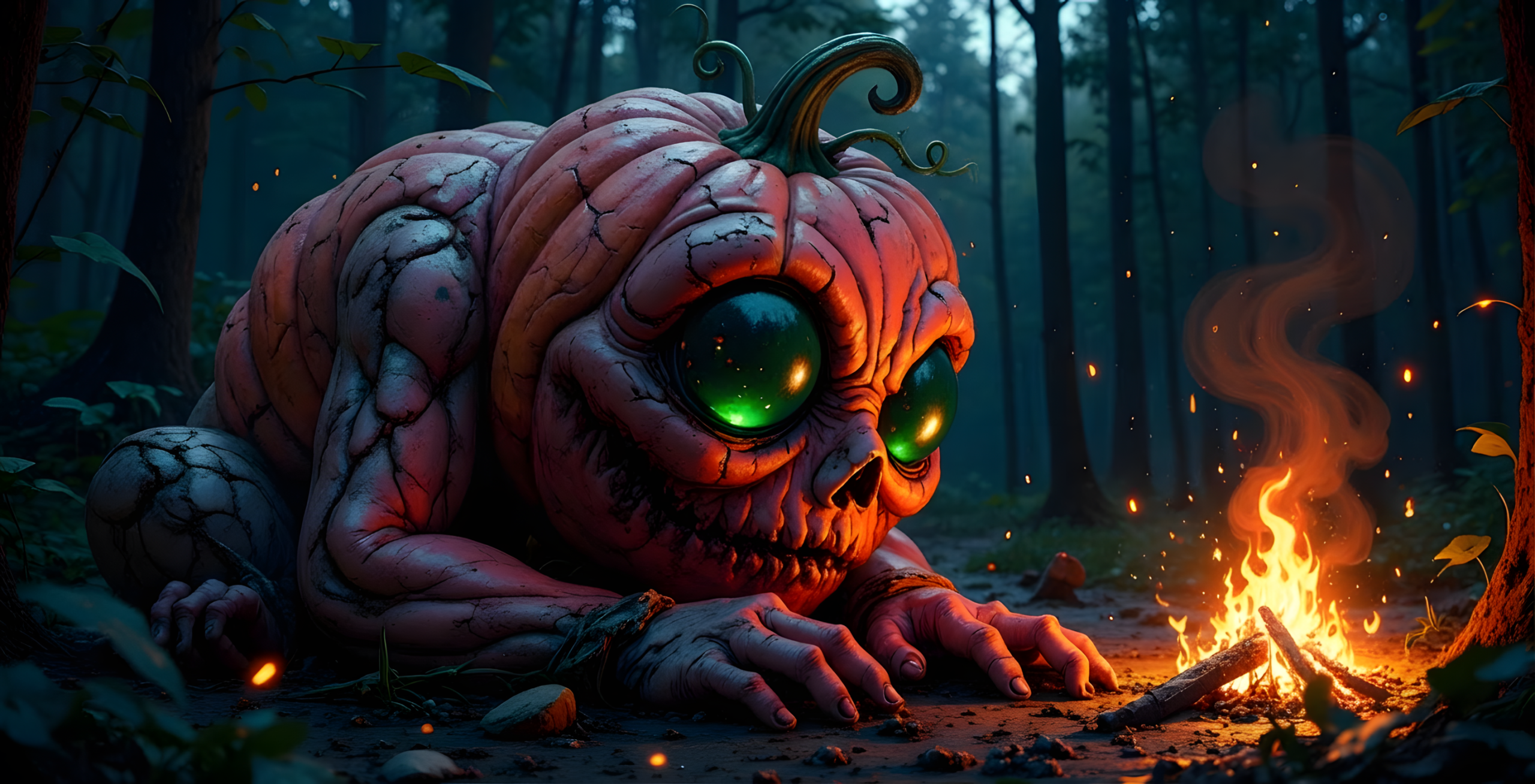
At one point, the man lifted the straw mat that covered the entrance. Suddenly, a round object—shaped much like a pumpkin—rolled inside the hut and came to rest beside the hearth. Startled, the man stared at it, thinking how unsettling the thing looked.

Before he could act, the round object spoke, saying, “It’s nothing. I am Zarazarazattara.”

The man felt an even deeper unease and thought to himself that he wished he had left the hut earlier. Immediately, the creature replied, “Never mind. I’ll be right there.” Realizing that the being responded to his very thoughts, the man became terrified, knowing that even thinking in silence was no protection.

Trying to act without revealing his thoughts, the man decided to tend the fire. He picked up a piece of firewood and snapped it to add fuel to the hearth. By chance, a fragment of the broken wood flew off and struck the creature where its face seemed to be.

At this, Zarazarazattara cried out, “I never thought of that,” and fled the hut at once, disappearing back into the night.

Afterward, the man was left alone by the fire, shaken but unharmed, and the strange yōkai was never seen there again.


Interpretive Lenses

Religious Readings
Philosophical Readings
  • Nietzschean Deep Dive
Psychological Readings
  • Jungian Deep Dive
Esoteric Deep Dive
  • Hermetic Deep Dive
Political / Social Readings
  • Marxist Deep Dive
Other

Oshoné

Tradition / Region: Japanese Folklore (Yatsuka-chō, Matsue City, Shimane Prefecture)
Alternate Names: Osshine (variant pronunciation)
Category: Yōkai / Water Spirit


The Myth

On a bitterly cold day in Yatsuka-chō, a fisherman waited alone in his boat at sea, watching his nets and enduring the freezing wind. As the cold deepened, he began striking a bell-like instrument to keep himself awake. Suddenly, he noticed what appeared to be a large mountain directly in front of him, looming where open water should have been.

Believing the mountain to be some illusion or object washed into the sea, the fisherman rowed toward his shore shack and pulled on the anchor rope to steady himself. Finding nothing amiss, he returned to his work. Though uneasy, he closed his eyes and continued fishing.

After some time, he opened his eyes and saw three children gathered around a bonfire burning on bamboo. The children had no hands and no feet, yet they moved about the fire as if untroubled. Realizing what he was seeing, the fisherman thought of an old tale he had heard and understood that these beings were Oshoné, a strange yōkai known from local stories.

Acting quickly, the fisherman threw shushumi leaves into the fire. As the leaves crackled and snapped loudly, Oshoné was startled. In confusion and fear, the creature scattered, fleeing with a lantern and vanishing into the pine trees of the nearby mountain.

After that night, the fisherman never saw Oshoné again, but the story remained along the waters of Yatsuka-chō, told as a strange encounter with a yōkai that appeared by the sea, took the form of limbless children, and vanished when frightened by sudden noise and flame.


Interpretive Lenses

Religious Readings
Philosophical Readings
  • Nietzschean Deep Dive
Psychological Readings
  • Jungian Deep Dive
Esoteric Deep Dive
  • Hermetic Deep Dive
Political / Social Readings
  • Marxist Deep Dive
Other

Shanjing

Tradition / Region: Chinese Folklore (Hebei Province; Anguo / Ankoku region)
Alternate Names: Mountain Spirit; One-Legged Mountain Spirit; Xiao
Category: Mountain Dweller / Demon / Spirit


The Myth

In the mountains of what is now Anguo City in Hebei Province, there was said to exist a being known as the Shanjing, the Mountain Spirit. Ancient Chinese texts describe it as a small humanoid creature, usually between one and four feet tall depending on the source, with only a single leg. Its most striking feature was its foot: the heel faced backward, an unmistakable sign that it was not a natural being.

The Mountain Spirit was said to dwell in mountainous regions and remain hidden during the day, emerging only at night. It was known to steal salt from humans, slipping into storage huts or mountain shelters under cover of darkness. Its diet consisted primarily of crabs and frogs gathered from the mountains and streams. Some accounts describe it carrying crabs in its hands as it approached human dwellings.

When encountered at night, the Mountain Spirit could attack people. However, it was believed that if a person called out the word “Ba,” the creature would lose its ability to harm them. At the same time, the Mountain Spirit was dangerous to provoke. Those who struck or injured it were said to suffer illness afterward, or find their houses consumed by fire.

Classical texts give varying descriptions of its appearance. Some portray it as human-shaped, others as resembling a small child. Several sources note that its body was hairy, its face dark or blackened, and that it laughed when it saw humans. In Daoist writings such as the Baopuzi, it is described as a nocturnal attacker and listed among spirits that could invade human homes.

The Mountain Spirit appears frequently in Chinese poetry and literature, where it is mentioned alongside other supernatural beings such as fox spirits and animal demons. These references describe it as a presence bound to mountains, night, and wild places, a being that moved between the human world and the unseen realm.

Through later transmission into Japan, the Mountain Spirit was depicted in illustrated demon compendiums, notably in Toriyama Sekien’s Konjaku Gazu Zoku Hyakki. There it appears gazing at mountain huts while holding crabs, preserving the older Chinese description of a salt-stealing, crab-eating, one-legged mountain being that emerges after dark and vanishes again before dawn.


Interpretive Lenses

Religious Readings
Philosophical Readings
  • Nietzschean Deep Dive
Psychological Readings
  • Jungian Deep Dive
Esoteric Deep Dive
  • Hermetic Deep Dive
Political / Social Readings
  • Marxist Deep Dive
Other

Moku Musume

Tradition / Region: Japanese Mythology (Gunma–Nagano, Usui Pass)
Alternate Names: Shumoku Musume
Category: Yōkai / Mountain Dweller / Shark


The Myth

Moku Musume, also known as Shumoku Musume, is a yōkai known from monster paintings and traditional karuta cards. Her appearance is immediately recognizable and unlike that of any ordinary being. Her head is shaped like a shumoku, a T-shaped Buddhist mallet used to strike bells in temples. On each end of this T-shaped head are eyes, giving her vision to both sides, and her face resembles that of a hammerhead shark.

She is depicted as a female figure whose body is otherwise human, with the strange hammer-shaped head defining her supernatural nature. Because of this form, she is sometimes associated visually with Buddhist ritual objects, though her exact behavior is not described in surviving sources.

One karuta card explicitly names her as the “Shumoku Musume of Usui Pass,” suggesting that she was believed to appear at Usui Pass, the mountainous route connecting present-day Gunma and Nagano Prefectures. Travelers passing through the pass would have regarded the area as dangerous and uncanny, and the presence of Moku Musume was tied to this liminal mountain road.

Beyond her appearance and place-name association, little is recorded of her actions. She endures primarily as a visual yōkai, preserved through paintings and cards, her strange hammer-shaped head marking her as a being that belongs neither fully to the human world nor to the ordinary realm of spirits.


Interpretive Lenses

Religious Readings
  • Christian Ascetic Deep Dive
Philosophical Readings
  • Nietzschean Deep Dive
Psychological Readings
  • Jungian Deep Dive
Esoteric Deep Dive
  • Hermetic Deep Dive
Political / Social Readings
  • Marxist Deep Dive
Other
  • How to Invite The Spirit

Unicorn — An Advaita Vedānta Deep Dive

Under an Advaita Vedānta lens, the unicorn is not approached as a zoological curiosity or moral allegory, but as a symbol of non-dual reality (Brahman) appearing within nāma-rūpa—form and name—yet remaining fundamentally ungraspable to the divided mind. The myth is read as an instruction in adhyāropa–apavāda: first superimposition, then negation. What seems like a creature to be captured is in truth that which cannot be seized by action (karma), only dissolved into by jñāna.

Advaita does not ask what is the unicorn?
It asks: what in the seeker makes the unicorn unreachable?

Guiding question:
Why does Reality flee effort but yield to purity of being?


Lens Effect

Under this lens, the subject appears as:
Brahman perceived as a singular form that resists objectification.

Primary effect on humans:
It exposes the futility of effort-based seeking and redirects attention toward inner purification (antaḥkaraṇa-śuddhi).


1. The Single Horn — Ekam Eva Advitīyam

The defining feature of the unicorn—its single horn—corresponds directly to the Advaitic axiom: ekam eva advitīyam (“One without a second”). The horn is not merely anatomical; it is metaphysical singularity rendered visible.

The unicorn’s unity contrasts with the hunter’s divided consciousness. The hunters operate under bheda-buddhi (the intellect of separation), seeing subject and object, seeker and sought. Thus, the unicorn—like Brahman—cannot be grasped, because it is not other than the Self.

The unicorn does not flee because it is afraid; it is asparśa—untouchable by dualistic cognition.


2. Untamability — The Failure of Karma-Mārga

All attempts to capture the unicorn by force, net, or strategy correspond to karma-mārga—the path of action. Advaita is explicit: karma cannot produce mokṣa, because action operates within saṃsāra and presupposes an actor.

The unicorn’s speed, its leaps, its disappearance into inaccessible terrain symbolize māyā’s elusiveness. Brahman cannot be attained by effort because effort reinforces the false doer (kartṛtva). The more the hunters act, the more the unicorn recedes.

Here the myth teaches a central Vedāntic law:
yatnābhimāna eva bandhaḥ — the ego of effort itself is bondage.


3. The Maiden — Antaḥkaraṇa-Śuddhi and Sattva

The maiden of “pure character” is not a moral figure but a psychological condition: śuddha-sattva (purified clarity of mind). She represents an antaḥkaraṇa free from rāga (attachment), dveṣa (aversion), and ahaṅkāra (egoity).

Only in her presence does the unicorn approach and rest its head. This is not surrender but recognition. In Advaita, Brahman does not come to the seeker; the seeker dissolves, and what remains is Brahman.

The unicorn resting its horn in her lap mirrors the Upaniṣadic teaching:
ātmanā vindate vīryam — through the Self, the Self is known.

Yet the moment hunters seize the unicorn, violence re-enters. This indicates that knowledge without renunciation collapses back into ignorance.


4. The Horn’s Power — Jñāna as Purifier

The unicorn’s horn purifies poison, neutralizes corruption, and restores balance. In Advaita, jñāna alone is pāvana—the purifier. But detached knowledge (symbolized by the horn taken without the living unicorn) becomes śuṣka-jñāna (dry, dead knowledge).

Kings and physicians seek the horn for power and control, not liberation. This is upādhi-jñāna—knowledge instrumentalized by ego. Hence the warning: the horn is never obtained without consequence.

Truth extracted from life becomes dead doctrine.
Brahman dissected becomes superstition.


5. The Wildness — Brahman Beyond Domestication

The unicorn is not gentle or benevolent. It is nirguṇa appearing as saguṇa—Reality wearing form without being bound by it. Its danger is not malice but absolute independence.

Advaita insists that Brahman cannot be moralized, harnessed, or softened. It is śānta yet ugra—peaceful yet overwhelming. To meet it is not comfort but ego-death (ahaṅkāra-nāśa).

The unicorn tests vairāgya (dispassion). Without relinquishment, encounter becomes destruction.


Final Reading

The unicorn is Brahman mistaken for an object: it flees the hunter, approaches the purified mind, and is destroyed when knowledge is seized without renunciation.


Lesson for the Reader

Stop chasing what you are. Effort will exhaust you; purity will empty you. Reality does not reward pursuit—it reveals itself when the pursuer dissolves.


What cannot be captured is not distant; it is too close to be grasped.

Angako-di-Ngato — How To Invite This Spirit

Tradition / Region: Philippines (Kalinga)
Alternate Names: Angako-De-Ngato
Category: Disease Spirit / Illness-Causing Spirit


The Kind of Person This Spirit Draws Near To

A person whose boundaries are thin, ignored, or exhausted.

Not someone evil, cursed, or impure — but someone worn down, overexposed, or spiritually unattended. This is a person who allows too much inside: obligations, emotions, expectations, environments, people. They endure rather than protect themselves.

They are present everywhere except with themselves.


How This Person Thinks

Mental habits

  • Diffuse attention
  • Difficulty saying no internally or externally
  • Constant background concern for others

How they approach ideas

  • Absorptive rather than selective
  • Ideas are taken in without filtration
  • Little skepticism toward demands placed upon them

How they relate to uncertainty

  • Uncertainty creates anxiety rather than curiosity
  • They try to accommodate ambiguity instead of clarifying it

What they obsess over / ignore

  • Obsess over harmony, avoidance of offense
  • Ignore early signs of depletion

How This Person Deals With Problems

  • They internalize problems rather than externalize them
  • Blame themselves before questioning the situation
  • Avoid confrontation even when necessary

Response to obstacles

  • Endurance
  • Compliance
  • Quiet self-sacrifice

Problems are absorbed into the body, not processed outwardly.


How This Person Responds to Stress

Stress behavior

  • Withdrawal without rest
  • Fatigue that does not resolve with sleep
  • Somatic symptoms before conscious recognition

Collapse or sharpening

  • Stress accumulates silently
  • Collapse comes as weakness, not explosion

What they cling to

  • Duty
  • Fear of offending
  • The belief that endurance equals goodness

Emotional Landscape

When Calm

  • Gentle
  • Attentive
  • Slightly drained even at baseline

When Angry

  • Anger turns inward
  • Expressed as self-criticism or guilt

When Afraid

  • Fear of disrupting balance
  • Fear of being seen as difficult or ungrateful

When Joyful

  • Joy is brief
  • Quickly followed by vigilance or fatigue

Relationship to Time

  • Erosive
  • Time feels draining rather than structuring
  • Little sense of recovery cycles
  • Past exhaustion bleeds into the present

Time is something that wears them down, not something they inhabit.


Relationship to Pleasure and Comfort

  • Comfort is postponed
  • Rest is rationed or earned
  • Pleasure often carries guilt

The body is treated as a tool, not a dwelling.


Living Space

  • Overused
  • Shared beyond capacity
  • Poor separation between work, rest, and obligation

The space mirrors over-access.


Relationship Patterns

  • Highly giving
  • Difficulty setting limits
  • Attracts those who take without noticing

Care flows outward, rarely back.


How This Person Works

  • Reliable
  • Enduring
  • Often indispensable

Work continues past depletion.
Stopping feels like failure.


What Makes the Spirit Stay

  • Chronic boundary violation
  • Prolonged exhaustion without repair
  • Fear of refusal
  • Absorbing what should be deflected

Angako-di-Ngato remain where the body is left undefended.


What Makes the Spirit Leave

  • Clear boundaries
  • Rest taken without justification
  • Ritual separation between self and others
  • Reclaiming the body as a protected space

When containment returns, the spirit loses access.


The Cost of Keeping This Spirit Close

  • Persistent illness or weakness
  • Loss of vitality
  • Identity collapses into endurance

What is lost is strength.
What remains is being needed at the cost of being well.


Final Human–Spirit Portrait

“A life lived open on all sides, where care flows outward until the body itself begins to say what the voice never could.”

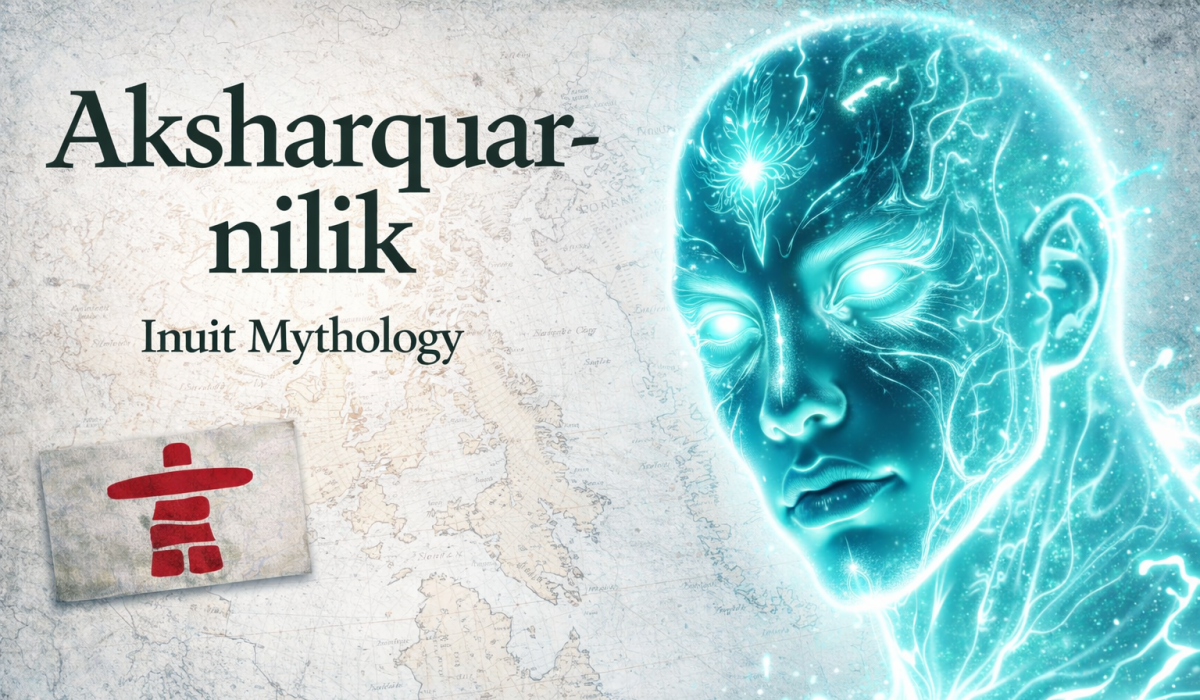
Aksharquarnilik

Tradition / Region: Inuit Mythology
Alternate Names:
Category: Spirit


The Myth

Aksharquarnilik is a spirit encountered during shamanic healing rituals, acting as a helping spirit who reveals the hidden causes of illness.

In one account, a woman named Nanoraq, the wife of Måkik, lay gravely ill, suffering pain throughout her body and barely able to stand. She was placed on a bench, and all the people of the village were summoned. The shaman Angutingmarik began a ritual to discover the source of her sickness.

Walking slowly back and forth across the floor, Angutingmarik swung his arms while wearing mittens, breathing heavily and speaking in groans and sighs, his voice shifting in tone. He called upon his helping spirits and addressed Aksharquarnilik directly, asking whether the illness had come from a broken taboo—something eaten improperly, wrongdoing by himself, by his wife, or by the sick woman herself.

The patient answered that the sickness was her own fault. She confessed that she had failed in her duties and that her thoughts and actions had been bad. The shaman continued, describing what he perceived spiritually: something resembling peat, though not peat; something behind the ear like cartilage; something white and gleaming, possibly the edge of a pipe.

At this, the listeners cried out together that the woman had smoked a pipe she was forbidden to smoke. They agreed to forgive the offense and urged that it be ignored. But the shaman declared that this was not the only cause. There were further transgressions responsible for the illness.

Asked again whether the cause lay with him or with the patient, the woman replied that it was entirely her own doing. She said there had been wrongdoing connected to her abdomen, something internal that had brought about the sickness.

Through Aksharquarnilik, the hidden violations and their physical manifestations were revealed, allowing the community to acknowledge the causes of the illness and begin the process of purification and healing.


Source

Rasmussen, K. (1930). Intellectual Culture of the Hudson Bay Eskimos. p. 133.


Interpretive Lenses

Religious Readings
Philosophical Readings
Psychological Readings
Esoteric Deep Dive
  • Hermetic Deep Dive
Political / Social Readings
Other

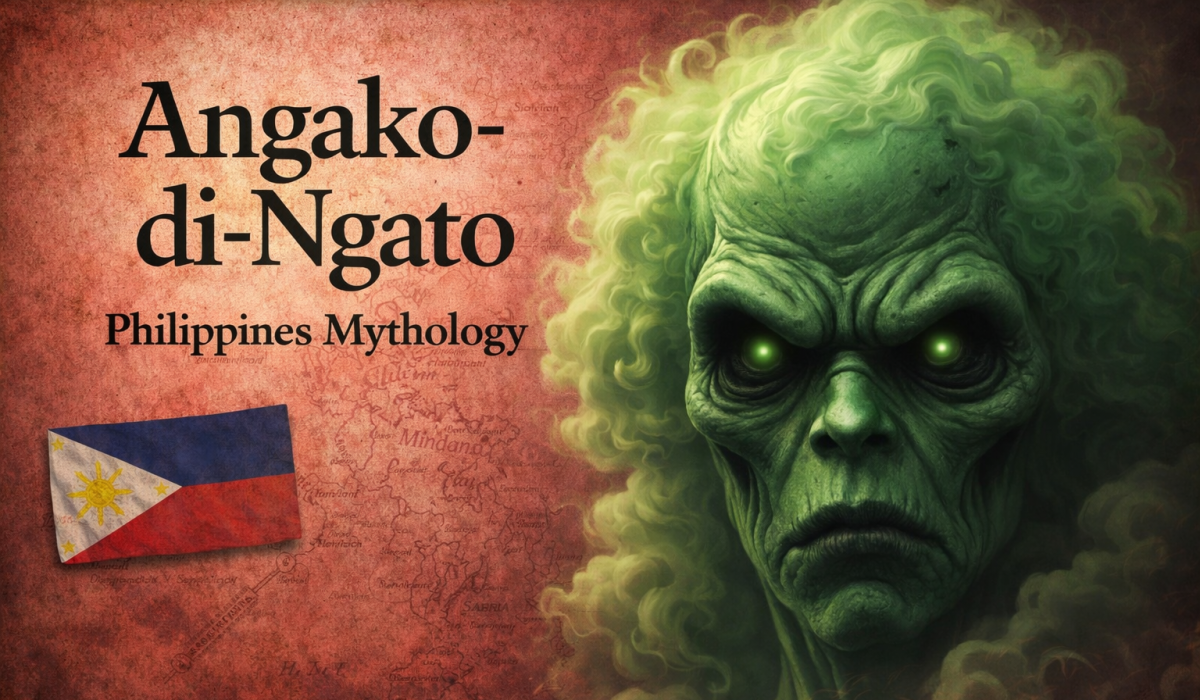
Angako-di-Ngato

Tradition / Region: Philippines Mythology
Alternate Names: Angako-De-Ngato
Category: Spirit


The Myth

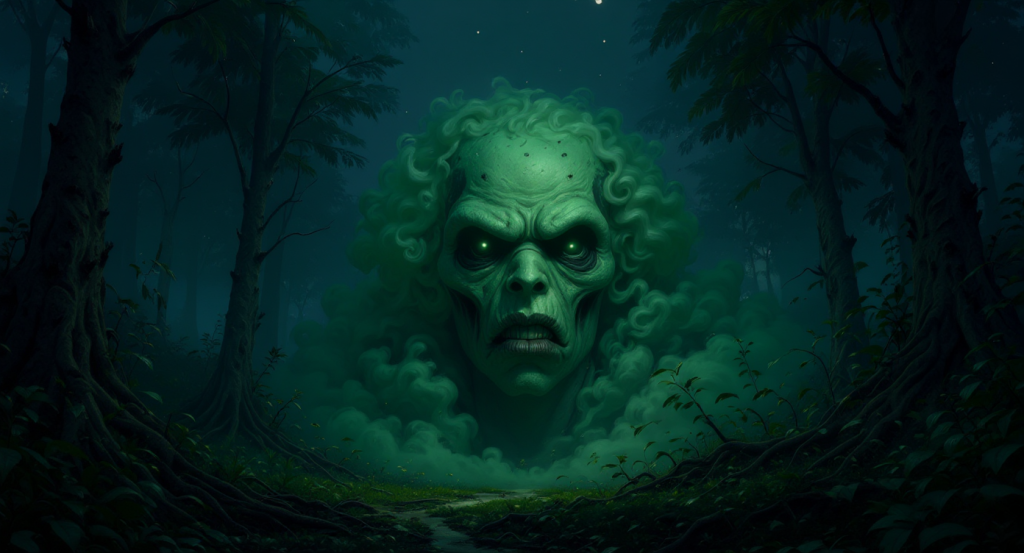
Angako-di-Ngato are spirits feared in the folklore of the Kalinga people of northern Luzon. They are believed to be the cause of illness, afflicting humans with sickness when they draw near or are offended.

When disease strikes without an obvious cause, it is said that Angako-di-Ngato are responsible. These spirits act invisibly, entering the human body or lingering around people, weakening them and bringing suffering.

In Kalinga belief, illness is not merely physical but the result of contact with these malevolent spirits, whose presence disrupts the balance between humans and the unseen world.


Source

Bestiary.us contributors. (n.d.). Angako di Ngato. In Bestiary.us — Mythical Creatures of the World, from https://www.bestiary.us/angako-di-ngato/en


Interpretive Lenses

Religious Readings
Philosophical Readings
Psychological Readings
Esoteric Deep Dive
Political / Social Readings
Other

Alvina

Tradition / Region: Belgian Mythology
Alternate Names:
Category: Spirit


The Myth

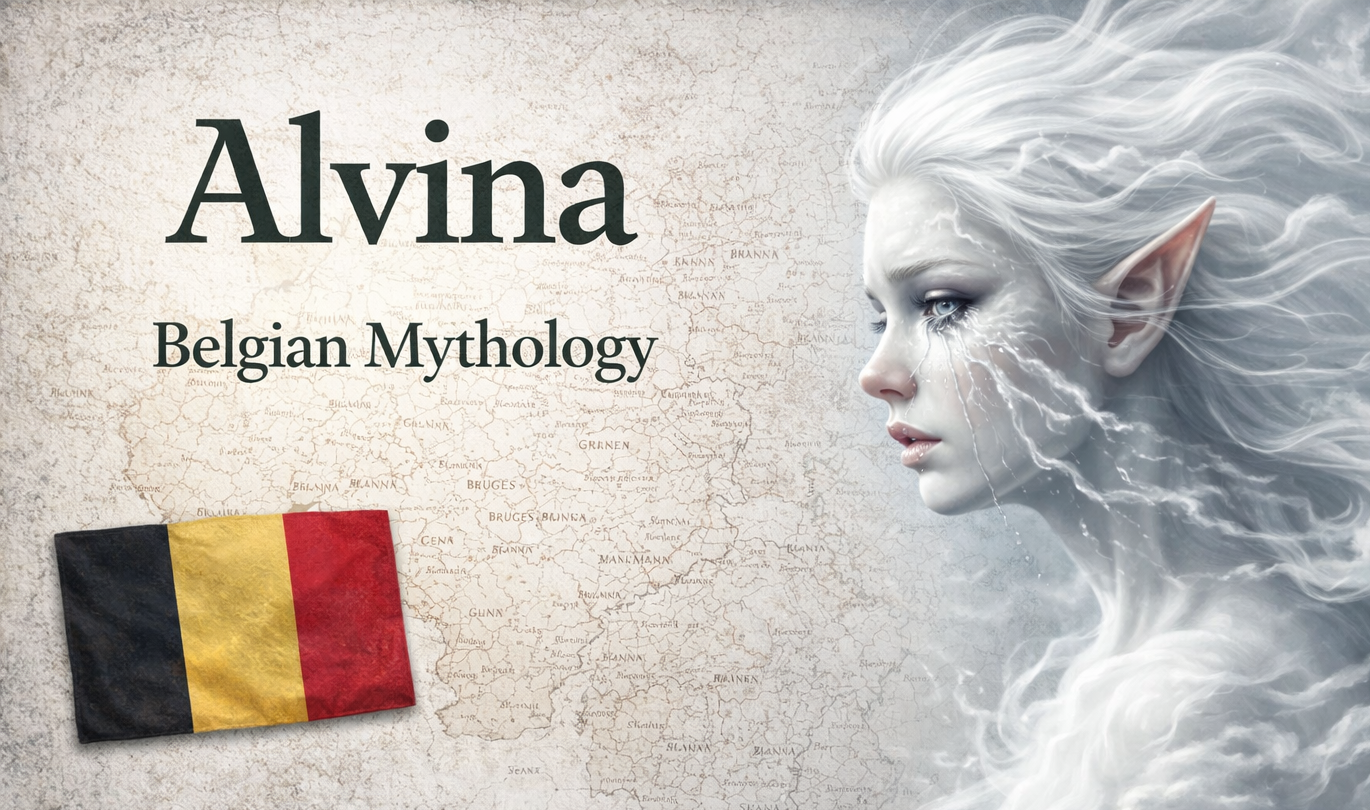
Alvina is a spirit of the air, known to wander endlessly through the sky. When the wind howls and roars, people say, “Listen! Alvina is crying.” Her presence is heard rather than seen, carried on storms and restless gusts that sweep across the land.

According to the legend, Alvina was once a king’s daughter. Against her parents’ wishes, she married the wrong man. For this act, her parents cursed her to wander forever, stripped of rest or peace. From that moment on, she was bound to the winds, condemned to eternal roaming.

Her name has led some to believe that she was the daughter of an elven king, linking her to an otherworldly royal lineage rather than a purely human one. Whether princess or elf-child, Alvina’s fate remained the same: to drift endlessly through the air, her sorrow echoing whenever the wind rises.

Thus, Alvina is remembered as a mournful air spirit, her lament still heard whenever the wind cries across West Flanders.


Source

Abe de Verteller. (2014). Van aardmannetje tot zwarte juffer: Een lijst van Nederlandse en Vlaamse elfen en geesten. In AbeDeVerteller.nl, from https://abedeverteller.nl/van-aardmannetje-tot-zwarte-juffer-een-lijst-van-nederlandse-en-vlaamse-elfen-en-geesten/


Interpretive Lenses

Religious Readings
Philosophical Readings
Psychological Readings
Esoteric Deep Dive
  • Hermetic Deep Dive
Political / Social Readings
Other