Dema

Tradition / Region: Australian Mythology, Aborigine Mythology
Alternate Names: Dema, Demes
Category: Shapeshifter, Spirit


The Myth

In the age before the present world had settled into its familiar shape, the Dema walked the land. They were beings of mixed form, combining human features with those of animals and birds. Their bodies did not obey a single shape, and their nature was never fixed. To encounter a Dema was to face something both familiar and strange, human and non-human at once.

The Dema belonged to the time of first creations, when the world was still forming. This era is spoken of only vaguely as “long ago,” yet it does not feel distant. Stories of the Dema move freely between past and present, as if the boundary between then and now were thin. What happened in the age of the Dema can seem as near as yesterday.

The Dema were creators. They brought species, natural forces, and essential objects into existence. Often they did not merely create these things but were them. A Dema might be a man, a bird, a serpent, a tree, or all of these in turn. Transformation was natural to them, and stories tell of sudden and unexpected changes of form.

A Dema could appear as a youth and then slip back into an animal shape without warning. One might live as a serpent, be killed in that form, and yet continue to exist as a human, still bearing traces of the serpent, before eventually becoming a snake once more. Death did not always end a Dema’s story; it often marked another change.

Many Dema were the ancestors of clans and tribes. As totemic founders, they gave rise to the first people, animals, or plants of a lineage. Their mixed appearance reflected the bond between a clan and its totem. Through them, humans and animals were revealed to share a common origin.

Some Dema became the very species they had embodied. A Dema-dog, for example, transformed fully into a dog and produced many intelligent, speaking offspring. From these came the ordinary dogs of the world. In this way, myth explains how the extraordinary became ordinary, and how the living world took its present form.

Though powerful, the Dema were not always benevolent. They often quarreled with humans, bringing danger, rivalry, and conflict. Like heroes and monsters at once, they shaped the world through both creation and destruction.

The Dema are remembered not as distant gods, but as unstable, shifting beings whose actions still echo in the land, in animals, and in human descent. They embody the idea that the world is born from transformation, and that nothing was ever meant to remain fixed forever.


Gallery


Sources

Bestiary.us contributors. (n.d.). Dema. In Bestiary.us, from https://www.bestiary.us/dema/


Interpretive Lenses

Religious Readings
  • Christian Ascetic Deep Dive
Philosophical Readings
  • Nietzschean Deep Dive
Psychological Readings
  • Jungian Deep Dive
Esoteric Deep Dive
  • Hermetic Deep Dive
Political / Social Readings
  • Marxist Deep Dive
Other
  • How to Invite The Dema

Aromo-rubi

Tradition / Region: Papua New Guinea Mythology
Alternate Names: —
Category: Spirit


The Myth

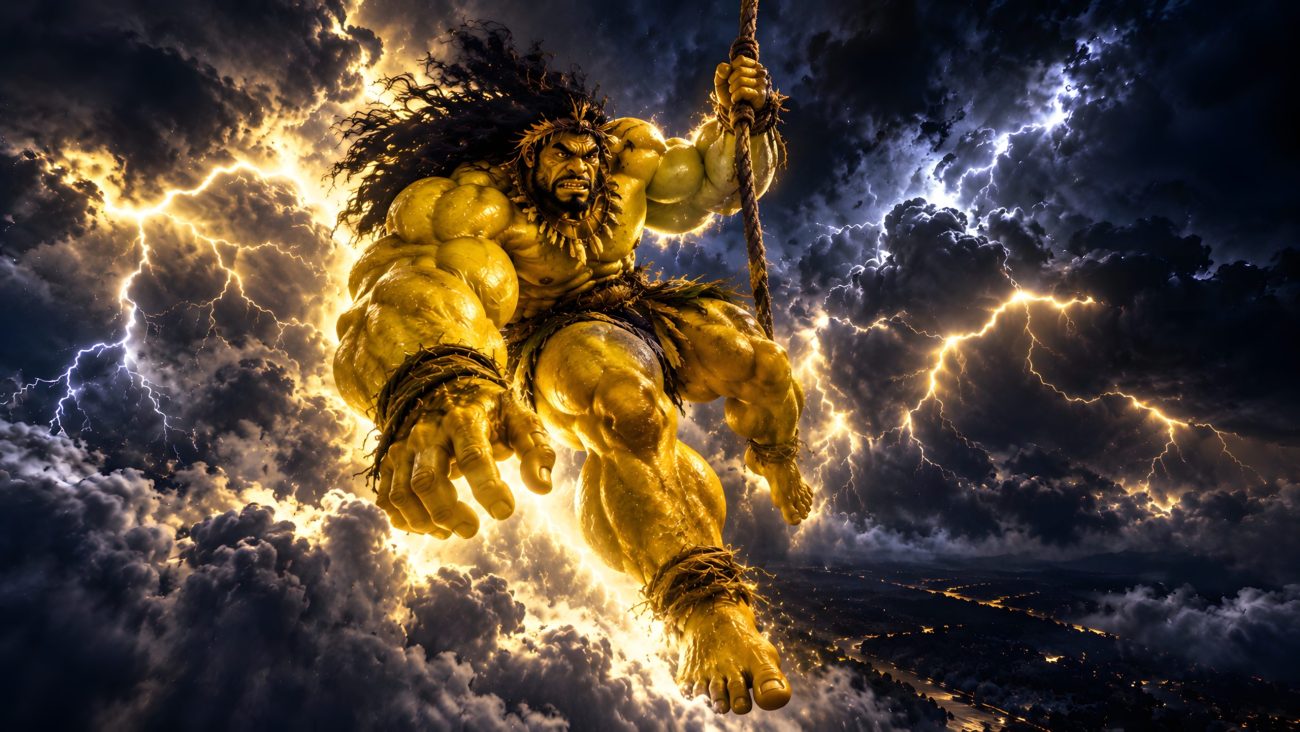
In the beliefs of the Kiwai Papuans, the sky is not empty. High above the earth live the Aromo-rubi, strange anthropomorphic beings with small bodies and great, powerful limbs. No other spirits dwell in the sky with them; the heights belong to the Aromo-rubi alone.

From their place above the world, they throw down long ropes. When they descend along these ropes and climb back up again, flashes of lightning tear across the sky. Their movement between sky and earth splits the darkness with sudden fire.

Thunder is made in another way. The Aromo-rubi roll massive tree trunks across the heavens. As the wood grinds and crashes through the sky, the sound echoes across the land as thunder, shaking forests and villages below.

Through these acts, the Aromo-rubi command the storm. Lightning and thunder are not signs of distant forces, but the visible and audible traces of their work in the sky.


Sources

Bestiary.us contributors. (n.d.). Aromo-rubi. In Bestiary.us, from https://www.bestiary.us/aromo-rubi/


Abaia

Tradition / Region: Papua New Guinea Mythology
Alternate Names: —
Category: Fish


The Myth

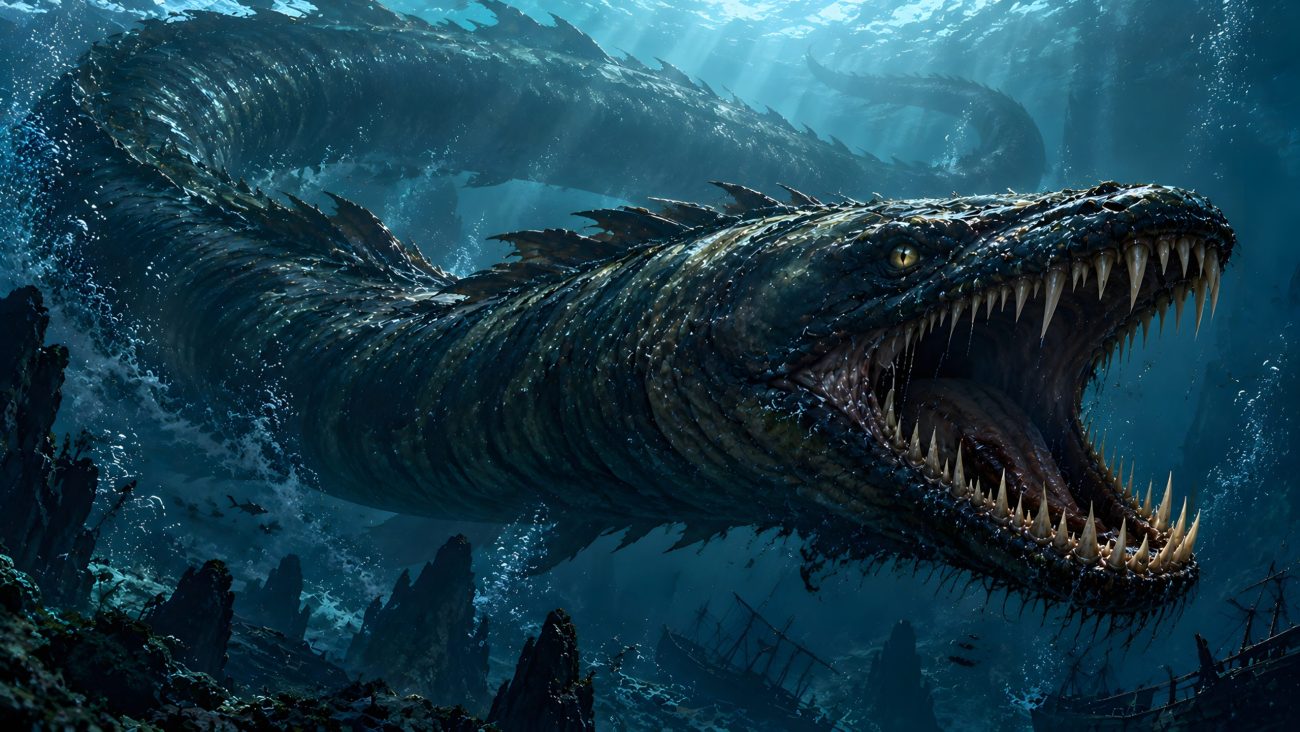
There is a deep lake in British New Guinea, rich with fish, and at its bottom dwells Abaia, a powerful and magical eel. Abaia is ancient and territorial, and like many great serpents and eels of Melanesian belief, it is bound to the forces of weather, storms, and floods. It does not tolerate disturbance.

One day, a man discovered Abaia’s lake and found that the fish within it were plentiful beyond measure. He caught many and returned to his village, telling the others of the endless bounty. Soon the people came together to the lake, casting their nets and hauling out fish in great numbers. In their greed, they took without restraint.

Among them, one woman caught Abaia himself in her net. The great eel struggled and escaped, slipping back into the depths of the lake.

That night, Abaia took revenge. Rain fell without pause. The lake swelled and overflowed its banks, and the floodwaters rose until the entire village was drowned. Men, women, and children were swept away by the storm.

Only one old woman survived. She had refused to eat the fish taken from the lake and climbed into a tree as the waters rose. When the flood receded, she alone remained, spared because she had not partaken in what belonged to Abaia.

Thus the people learned that the gifts of the water are not without guardians, and that greed awakens the wrath of those who dwell beneath the surface.


Sources

Dixon, R. B. (1916) The Mythology of All Races v. IX: Oceanic. Marshall Jones Company, Boston.

A Book of Creatures contributors. (n.d.). Abaia. In A Book of Creatures, from https://abookofcreatures.com/2019/01/04/abaia/


Coconut Ghost of Wutumara

Tradition / Region: Papua New Guinea Mythology
Alternate Names: Wutumara
Category: Ghost, Coconut, Plant


The Myth

Wutumara was a woman of great force and determination, a culture heroine whose life became entwined with the world of spirits. She was married to a man who also took a second wife—a ghost from the underworld. This ghost-wife often visited, and each time she came, she drew the husband away from the human world for long stretches of time. Wutumara grew resentful and jealous, angered that her rival’s presence disrupted her household and marriage.

Seeking to resolve this, Wutumara persuaded her husband to bring the ghost-wife permanently into the world of the living, believing that if they all lived together, harmony might be restored. Secretly, however, Wutumara intended to murder the ghost, unaware that spirits cannot be killed in the way humans can.

She attacked her rival and left her body in the jungle. But the ghost was not destroyed. Instead, she returned in vengeance, using powerful magic. She exchanged the genitals of Wutumara and her husband, a transformation meant to humiliate and confuse, and then killed Wutumara. After this, the ghost transformed herself into a pubic hair growing on the husband’s groin, hiding in plain sight.

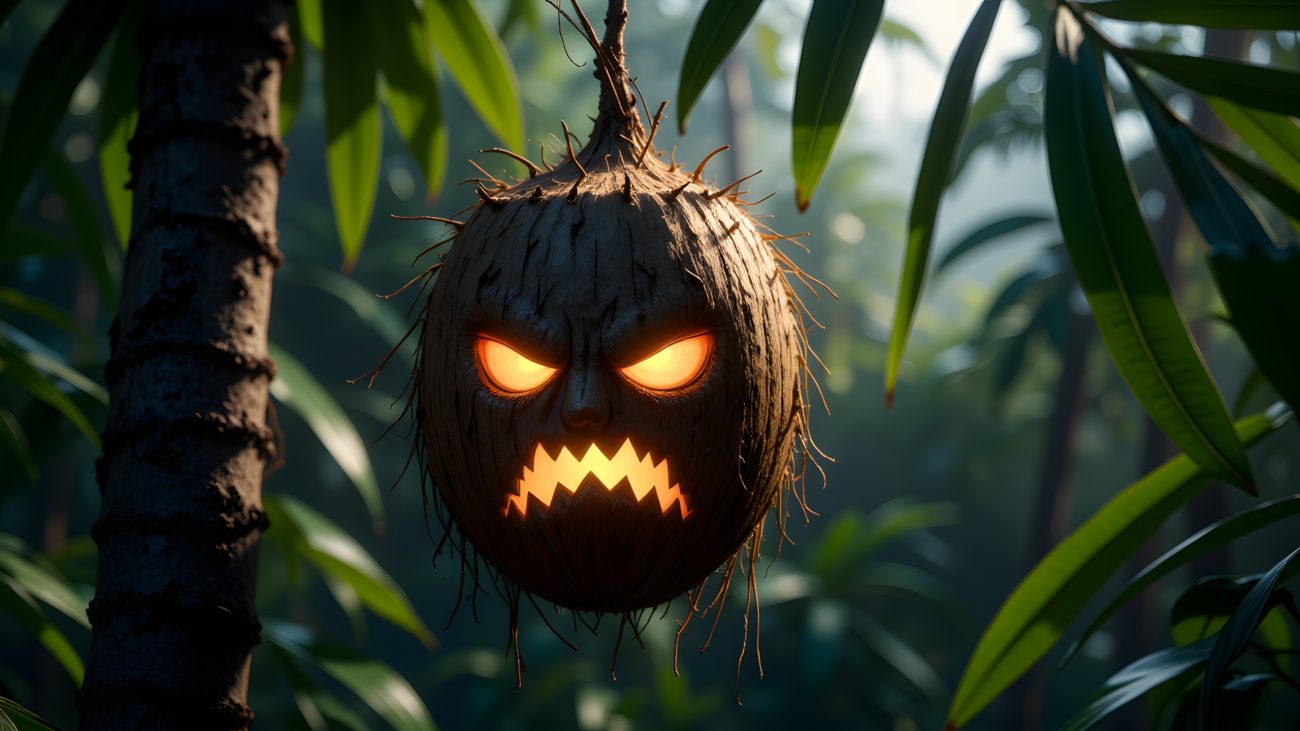
Eventually, the husband tricked the ghost into revealing herself and managed to destroy her. Yet even this was not the end. Shortly afterward, the ghost reappeared once more, transformed into a coconut palm. To this day, it is said that the face of the angry ghost can still be seen in the coconut, watching from within its shell.

Thus the coconut palm became a lasting reminder of jealousy, rivalry, and the persistence of spirits beyond death—a living monument to Wutumara’s tragic conflict with the unseen world.


Gallery


Sources

Landtman, G. (1970). The Kiwai Papuans of British New Guinea: A nature-born instance of Rousseau’s ideal community.


Interpretive Lenses

Religious Readings
  • Christian Ascetic Deep Dive
Philosophical Readings
  • Nietzschean Deep Dive
Psychological Readings
  • Jungian Deep Dive
Esoteric Deep Dive
  • Hermetic Deep Dive
Political / Social Readings
  • Marxist Deep Dive
Other
  • How to Invite The Coconut Ghost of Wutumara

Begeredubu

Tradition / Region: Papua New Guinea Mythology
Alternate Names: —
Category: Spirit


The Myth

Begeredubu is the mythical being of Waboda, a figure who is both man and spirit. He first appears in stories set in another place, but during a great flood he was carried away by a powerful torrent and brought to Waboda, where he remained.

At first, Begeredubu lived inside a large tree called gagoro. The tree was closely bound to his existence, and in time Begeredubu himself came to be identified with it. When the gagoro tree eventually fell, he built a house for himself and continued to dwell there, maintaining his presence in the area.

Begeredubu is remembered as a powerful and unusual being, marked by physical traits that set him apart from ordinary men. Through his arrival by flood, his dwelling in the gagoro tree, and his continued presence after its fall, he became firmly rooted in the land and memory of Waboda, existing at the boundary between the human world and the realm of spirits.


Sources

Landtman, G. (1970). The Kiwai Papuans of British New Guinea: A nature-born instance of Rousseau’s ideal community.


Erumia

Tradition / Region: Papua New Guinea Mythology
Alternate Names: —
Category: Sea Dweller, Jellyfish


The Myth

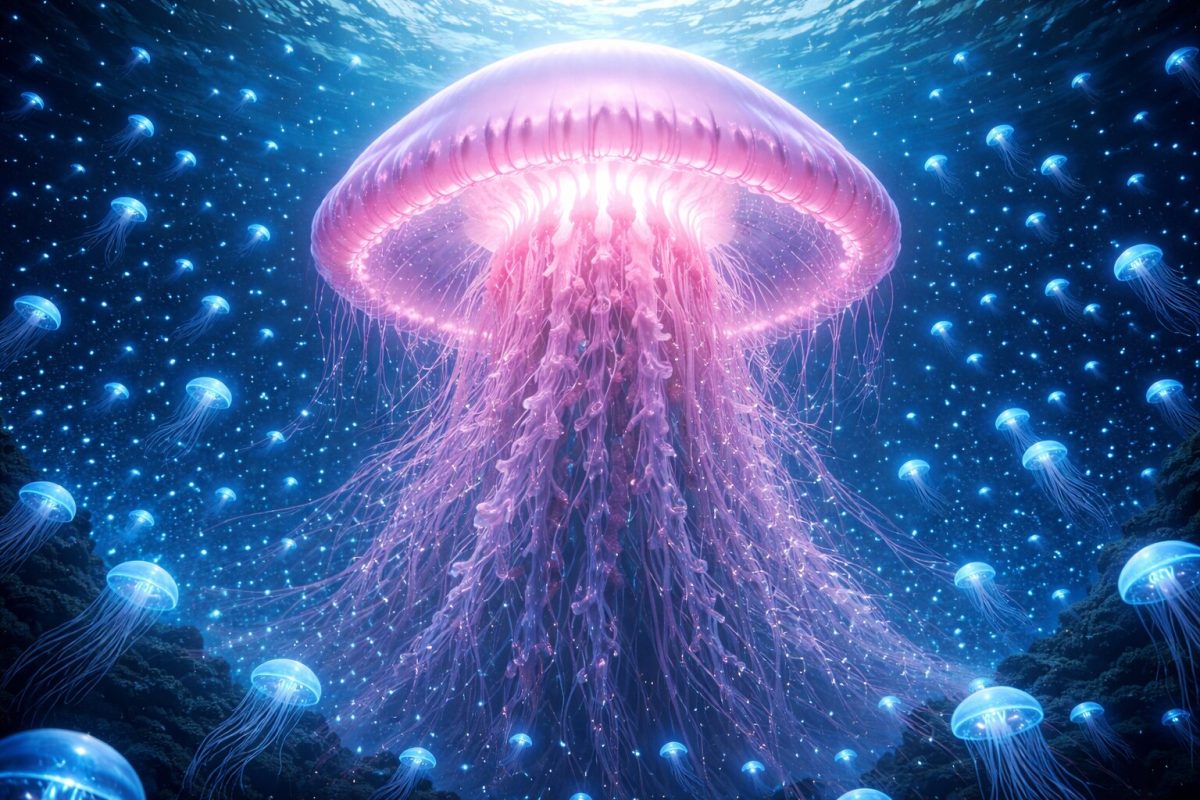
On a reef near the village of Mawata lives Erumia, an enormous jellyfish feared and respected by the people. All ordinary jellyfish are said to be her children, spreading through the sea as extensions of her presence. Many men claim to have seen her with their own eyes.

Erumia is deadly. Her sting can kill a person, and when swimmers see long, slimy strings drifting toward them in the water, they know these are her trailing tendrils. At such a sight, there is no thought of bravery—only flight. To remain is to risk death.

Yet Erumia is not merely a threat. She is the patron of all fish and holds power over the sea’s abundance. To certain men she appears in dreams, granting them “lucky things” for fishing—signs, charms, or knowledge that ensure a successful catch. Through these gifts, she sustains life even as she threatens it.

The Mawata people themselves are closely linked with Erumia. Neighboring groups regard her as their ororodrora, a powerful mysterious being bound to their identity. When Mawata visitors arrive elsewhere, they may be greeted with the words, “The Erumia people have come,” acknowledging this spiritual association.

Erumia’s presence is also remembered in song. In a serial chant describing a journey eastward from Adiri, her domain is marked by the hanging jellyfish strings near the mouth of the Bina River—a sign that one has entered her waters.

Thus Erumia remains both guardian and danger: mother of jellyfish, ruler of fish, giver of fortune, and bringer of death, dwelling silently on her reef while her influence drifts far beyond it.


Gallery


Sources

Landtman, G. (1970). The Kiwai Papuans of British New Guinea: A nature-born instance of Rousseau’s ideal community.


Interpretive Lenses

Religious Readings
  • Christian Ascetic Deep Dive
Philosophical Readings
  • Nietzschean Deep Dive
Psychological Readings
  • Jungian Deep Dive
Esoteric Deep Dive
  • Hermetic Deep Dive
Political / Social Readings
  • Marxist Deep Dive
Other
  • How to Invite The Erumia

The Gebaro Crab

Tradition / Region: Papua New Guinea Mythology
Alternate Names: —
Category: Crab, Sea Dweller


The Myth

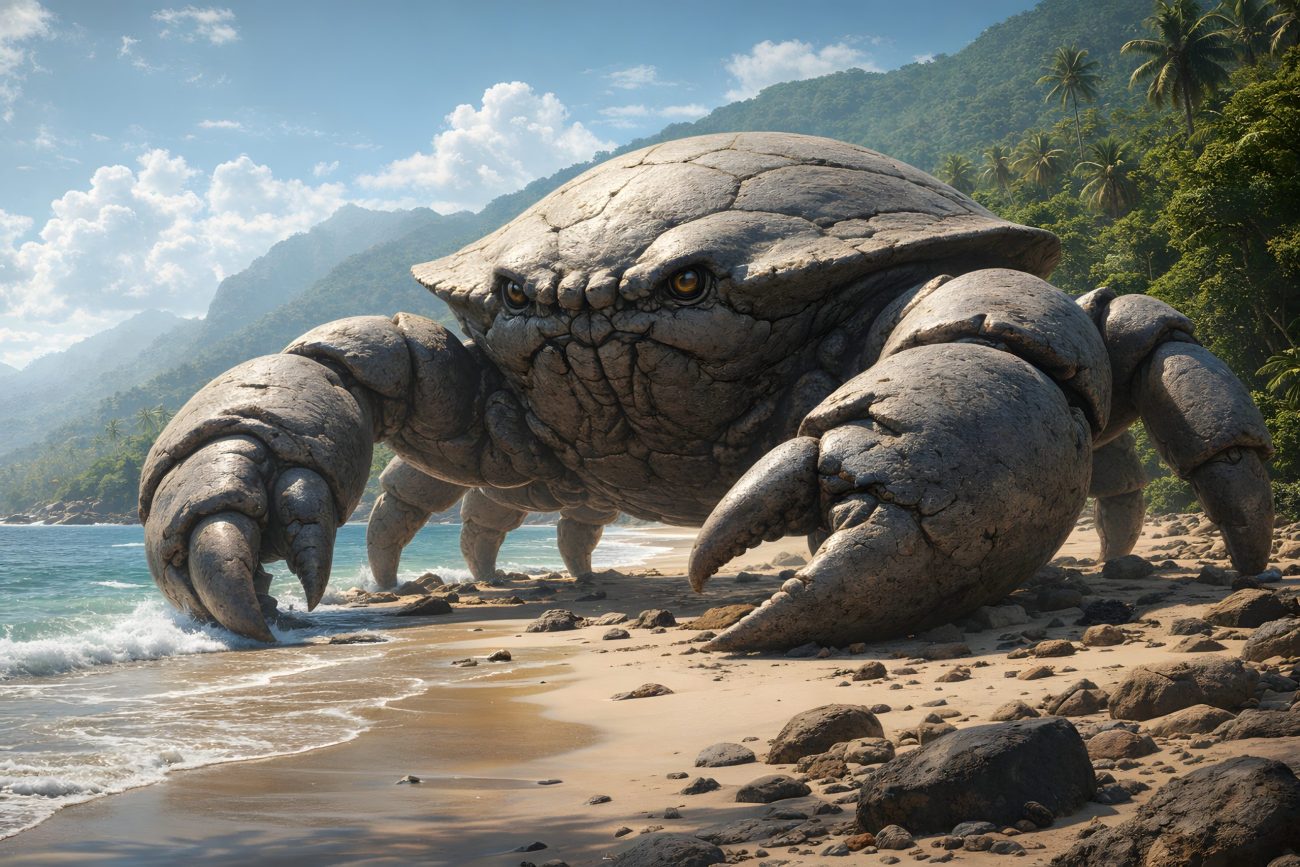
Near the village of Gebaro there once lived a monstrous crab, feared by all who knew of it. Its body was enormous, and its shell was as hard as solid stone.

The people tried many times to destroy the creature. They shot arrows at it and struck it with clubs, but every weapon failed. Arrow points shattered, and blows rang out uselessly against its armored shell. No wound could be made, and no crack appeared.

Because the crab could not be harmed, the people learned to avoid the place where it lived. It remained there, undefeated and unchallenged, a living proof that some beings cannot be overcome by human strength.

The Gebaro crab became a symbol of invulnerability—an enemy not meant to be slain, but endured and respected from a distance.


Gallery


Sources

Landtman, G. (1970). The Kiwai Papuans of British New Guinea: A nature-born instance of Rousseau’s ideal community.


Interpretive Lenses

Religious Readings
  • Christian Ascetic Deep Dive
Philosophical Readings
  • Nietzschean Deep Dive
Psychological Readings
  • Jungian Deep Dive
Esoteric Deep Dive
  • Hermetic Deep Dive
Political / Social Readings
  • Marxist Deep Dive
Other
  • How to Invite The Gebaro Crab

The Gigantic Crab of Aibinio

Tradition / Region: Papua New Guinea Mythology
Alternate Names: —
Category: Crab, Sea Dweller


The Myth

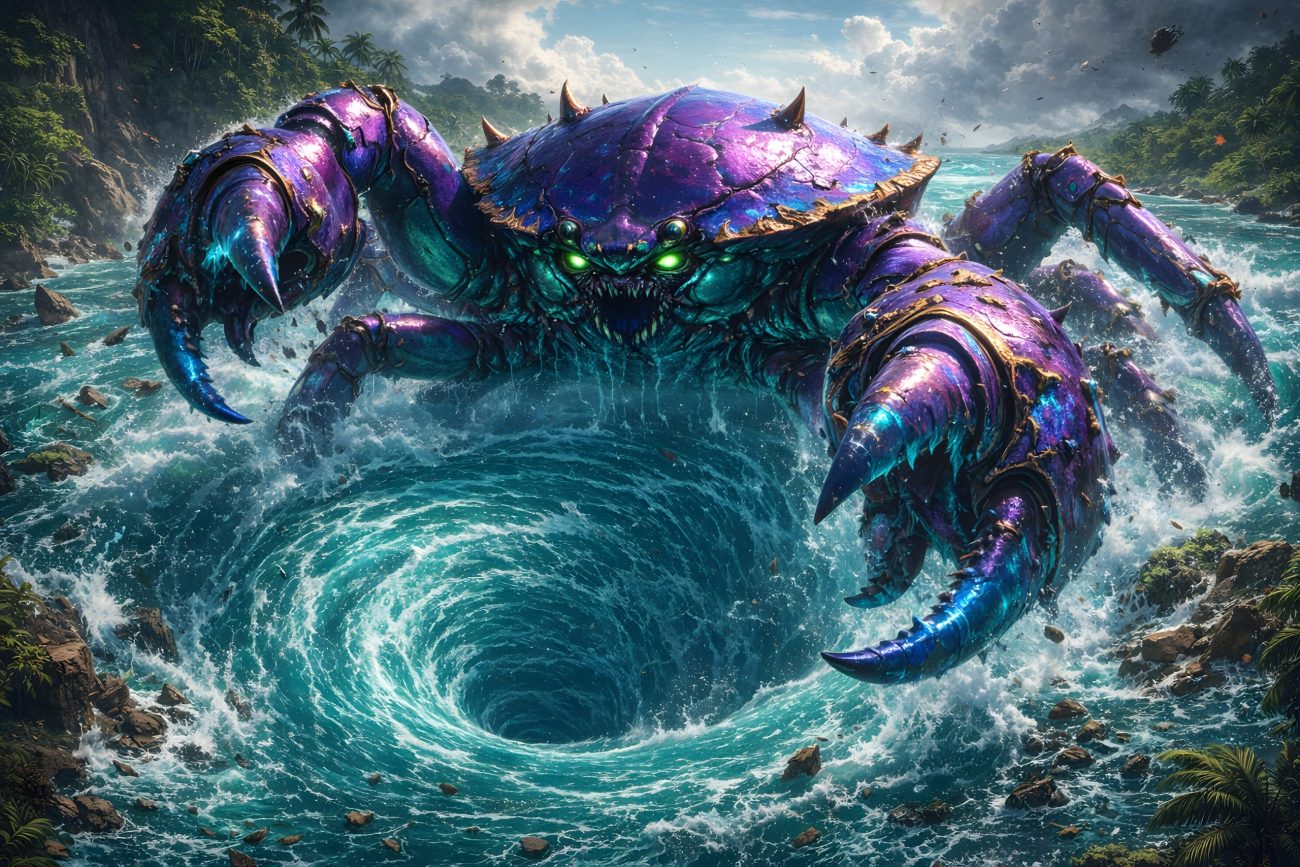
Near Aibinio there was once a small island where the Wiorubi people found an enormous crab, far larger than any ever seen before. Its shell was vast, its claws powerful, and it stood unmoving as men and women gathered around it.

Believing it could be captured, several people approached together. At that moment, the crab suddenly opened one of its great nippers. With terrifying speed, it seized the hands of those closest to it and dragged them into the lagoon. None could break free.

As the people were pulled under, the creature stirred the water with immense force. The lagoon began to spin, churning faster and faster until the water rose and roared. The island itself was torn apart and washed away, swallowed by the whirling waters. When the storm of water finally ceased, nothing remained of the island. Only a deep whirlpool marked the place where it had once stood.

The gigantic crab still dwells there beneath the surface. At every high tide, the water twists and surges in a powerful eddy, just as it did on the day the island vanished. The people say the creature is not a true crab, but an or or dr or a—a mysterious and dangerous being whose form only resembles an animal.

To this day, the waters near Aibinio are treated with fear and caution, for the crab waits below, and the sea still remembers its strength.


Gallery


Sources

Landtman, G. (1970). The Kiwai Papuans of British New Guinea: A nature-born instance of Rousseau’s ideal community.


Interpretive Lenses

Religious Readings
  • Christian Ascetic Deep Dive
Philosophical Readings
  • Nietzschean Deep Dive
Psychological Readings
  • Jungian Deep Dive
Esoteric Deep Dive
  • Hermetic Deep Dive
Political / Social Readings
  • Marxist Deep Dive
Other
  • How to Invite The Gigantic Crab of Aibinio

Basai and Kaibani

Tradition / Region: Papua New Guinea Mythology
Alternate Names: Basai, Kaibani
Category: Spirit


The Myth

On Paho Island there is a hollow place beneath the ground that answers when people stamp upon it. The earth itself gives back a deep echo, and for this reason the place is known as Basai’s drum. Nearby lies a stone called Basai’s stone, linked to the beeswax once fixed to drum skins to strengthen and purify their sound.

Some say that Basai is the name of the being who inhabits this place beneath the earth. Others tell that the spirit there is a woman named Kaibani, who lives beneath the stone. In earlier times, Kaibani was said to appear at the stone, seated and patiently working on a belt, her hands moving steadily as she wove.

The place is not only hers. The spirits of the dead pass by it on their journey to Adiri, and as they do, they dance around the stone. They beat Basai’s drum by leaping upon the hollow ground, causing it to resound beneath their feet.

In the past, whenever the Mawata people traveled to Paho Island to gather crabs and fish, they performed ritual dances at this sacred spot. The sound of the drum was taken as an omen. If the echo rang out clear and strong, the people believed their journey would be free of trouble. If the sound was dull or broken, hardship and difficulty were expected.

A verse from an old song preserves the memory of Kaibani and her work:

“Mother of Paho made the belt;
Kaibani’s belt was no good.”

Thus the drum, the stone, and the woman beneath the earth remain bound together—listening, answering, and foretelling the fate of those who pass through the island.


Sources

Landtman, G. (1970). The Kiwai Papuans of British New Guinea: A nature-born instance of Rousseau’s ideal community.


Sorea

Tradition / Region: Papua New Guinea Mythology
Alternate Names: Sorea, snake of Davare
Category: Snake


The Myth

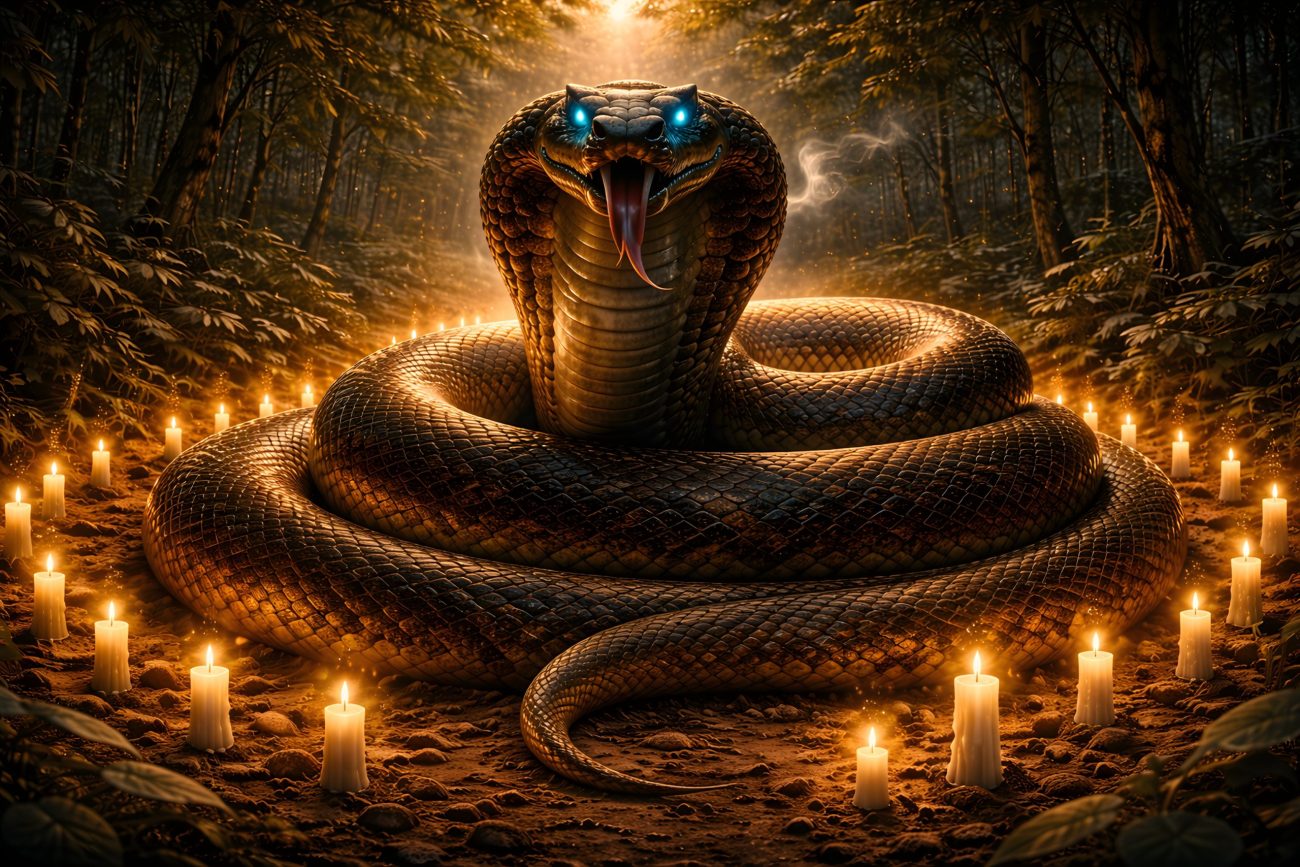
The Tabio people once encountered an enormous snake in the bush at Davare. When they attempted to kill it, the creature did not flee or strike. Instead, it coiled itself into a great ring, placing its head at the center. From there, it beckoned to them, moving its head and flickering its tongue.

This, the people understood, was the way of snakes when they wished to make friends. To show this intent more clearly, the snake also beat the ground with its tail, signaling peace rather than threat.

The people named the snake Sorea. Rather than destroying it, they chose to settle at Davare, living alongside the great serpent. Sorea became their ororora—a protective and ancestral being bound to the land and the people.

One night, Sorea moved through the land with great force, cleaving a path as it crawled. This track became the Sorea-creek, known as Soreaturi, a lasting mark of the serpent’s passage through the earth.

Thus Sorea remained not as a monster, but as a guardian and origin-being, shaping the land and establishing a bond between the Tabio people and the place they came to call home.


Gallery


Sources

Landtman, G. (1970). The Kiwai Papuans of British New Guinea: A nature-born instance of Rousseau’s ideal community.


Interpretive Lenses

Religious Readings
  • Christian Ascetic Deep Dive
Philosophical Readings
  • Nietzschean Deep Dive
Psychological Readings
  • Jungian Deep Dive
Esoteric Deep Dive
  • Hermetic Deep Dive
Political / Social Readings
  • Marxist Deep Dive
Other
  • How to Invite The Sorea