Erumia

Tradition / Region: Papua New Guinea Mythology
Alternate Names:
Category: Sea Dweller, Jellyfish


The Myth

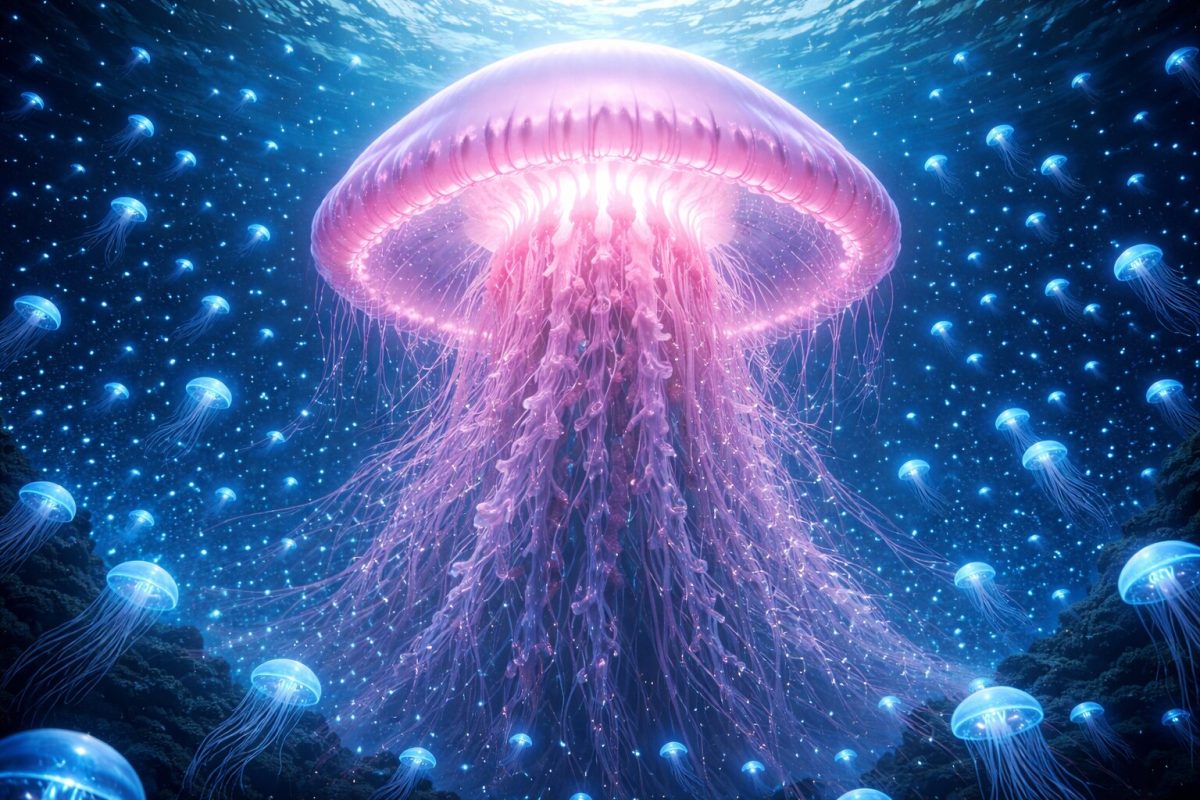
On a reef near the village of Mawata lives Erumia, an enormous jellyfish feared and respected by the people. All ordinary jellyfish are said to be her children, spreading through the sea as extensions of her presence. Many men claim to have seen her with their own eyes.

Erumia is deadly. Her sting can kill a person, and when swimmers see long, slimy strings drifting toward them in the water, they know these are her trailing tendrils. At such a sight, there is no thought of bravery—only flight. To remain is to risk death.

Yet Erumia is not merely a threat. She is the patron of all fish and holds power over the sea’s abundance. To certain men she appears in dreams, granting them “lucky things” for fishing—signs, charms, or knowledge that ensure a successful catch. Through these gifts, she sustains life even as she threatens it.

The Mawata people themselves are closely linked with Erumia. Neighboring groups regard her as their ororodrora, a powerful mysterious being bound to their identity. When Mawata visitors arrive elsewhere, they may be greeted with the words, “The Erumia people have come,” acknowledging this spiritual association.

Erumia’s presence is also remembered in song. In a serial chant describing a journey eastward from Adiri, her domain is marked by the hanging jellyfish strings near the mouth of the Bina River—a sign that one has entered her waters.

Thus Erumia remains both guardian and danger: mother of jellyfish, ruler of fish, giver of fortune, and bringer of death, dwelling silently on her reef while her influence drifts far beyond it.


Gallery


Sources

Landtman, G. (1970). The Kiwai Papuans of British New Guinea: A nature-born instance of Rousseau’s ideal community.


Interpretive Lenses

Religious Readings
  • Christian Ascetic Deep Dive
Philosophical Readings
  • Nietzschean Deep Dive
Psychological Readings
  • Jungian Deep Dive
Esoteric Deep Dive
  • Hermetic Deep Dive
Political / Social Readings
  • Marxist Deep Dive
Other
  • How to Invite The Erumia

Tube

Tradition / Region: Papua New Guinea Mythology
Alternate Names:
Category: Lizard, Shapeshifter, Snake


The Myth

At Haemuba lives a being named Tube, one of the etengena—spirits connected to the land and its fertility.

Tube is closely bound to a particular man of the Mawata people. To him, Tube appears in dreams, teaching the knowledge of garden medicines and the proper ways to use them. The man, in turn, shares this knowledge with others, spreading what Tube has revealed.

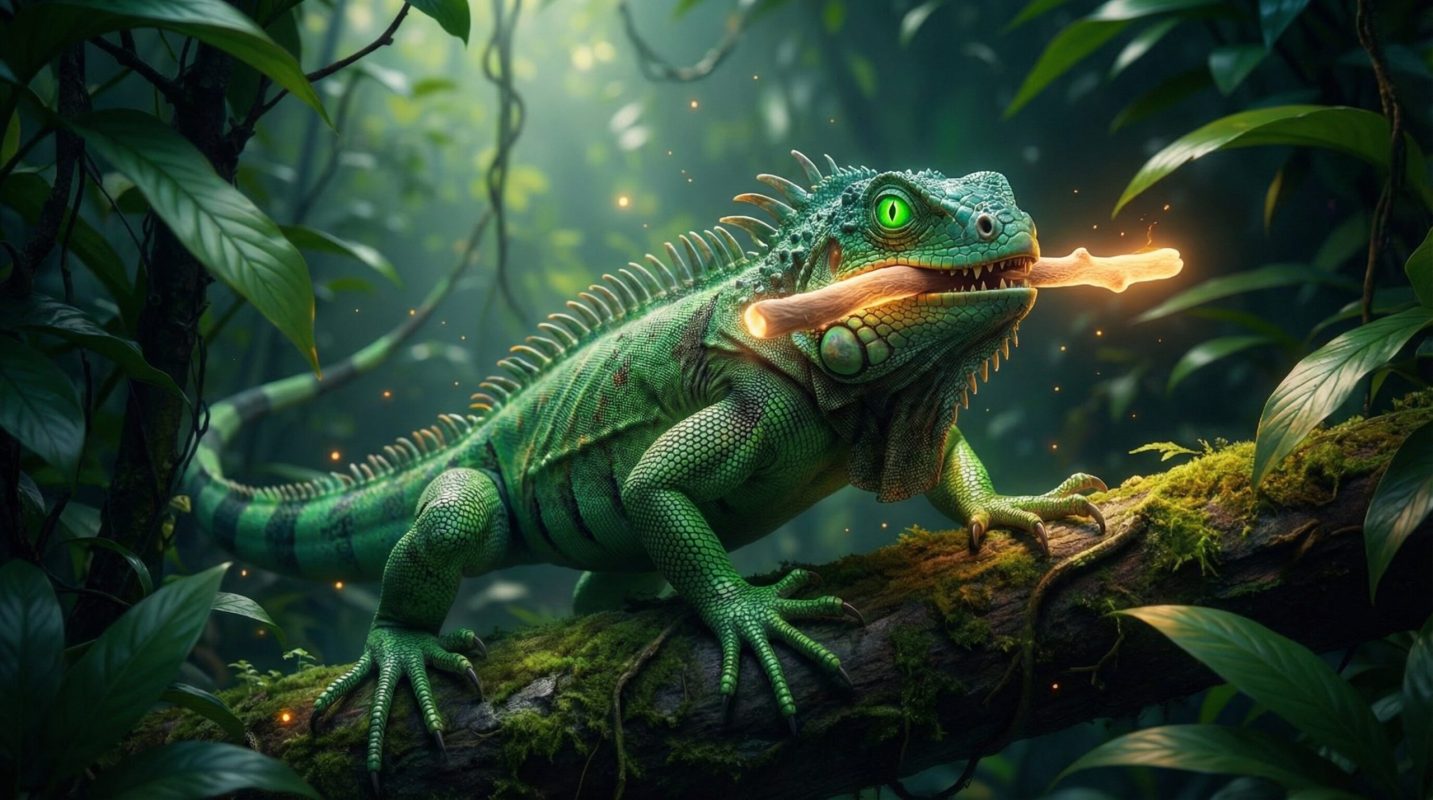
At times, Tube does not remain unseen. He may appear in the garden or the bush in the form of a snake or an iguana. Though his shape is that of an animal, the man recognizes him by signs made with the creature’s head, subtle movements that reveal its true identity.

Once, the man encountered Tube in the bush in the form of an iguana. The animal held a small branch in its mouth—a branch that was itself a medicine. The man gently patted the creature on the head, and by this act received the medicine from Tube.

The bond between them is sealed through sharing. When the first taro is pulled from the ground, it is divided between the man and Tube, acknowledging the spirit’s role in the growth of the garden and honoring the partnership between human and land-being.

Thus Tube remains a quiet teacher and guardian of cultivated ground, passing knowledge through dreams, signs, and shared harvest, and ensuring that the wisdom of the land continues among the people.


Gallery


Sources

Landtman, G. (1970). The Kiwai Papuans of British New Guinea: A nature-born instance of Rousseau’s ideal community.


Interpretive Lenses

Religious Readings
  • Christian Ascetic Deep Dive
Philosophical Readings
  • Nietzschean Deep Dive
Psychological Readings
  • Jungian Deep Dive
Esoteric Deep Dive
  • Hermetic Deep Dive
Political / Social Readings
  • Marxist Deep Dive
Other
  • How to Invite The Tube

Gabora

Tradition / Region: Papua New Guinea Mythology
Alternate Names: The Saw-Fish of Madiri
Category: Fish, Sawfish


The Myth

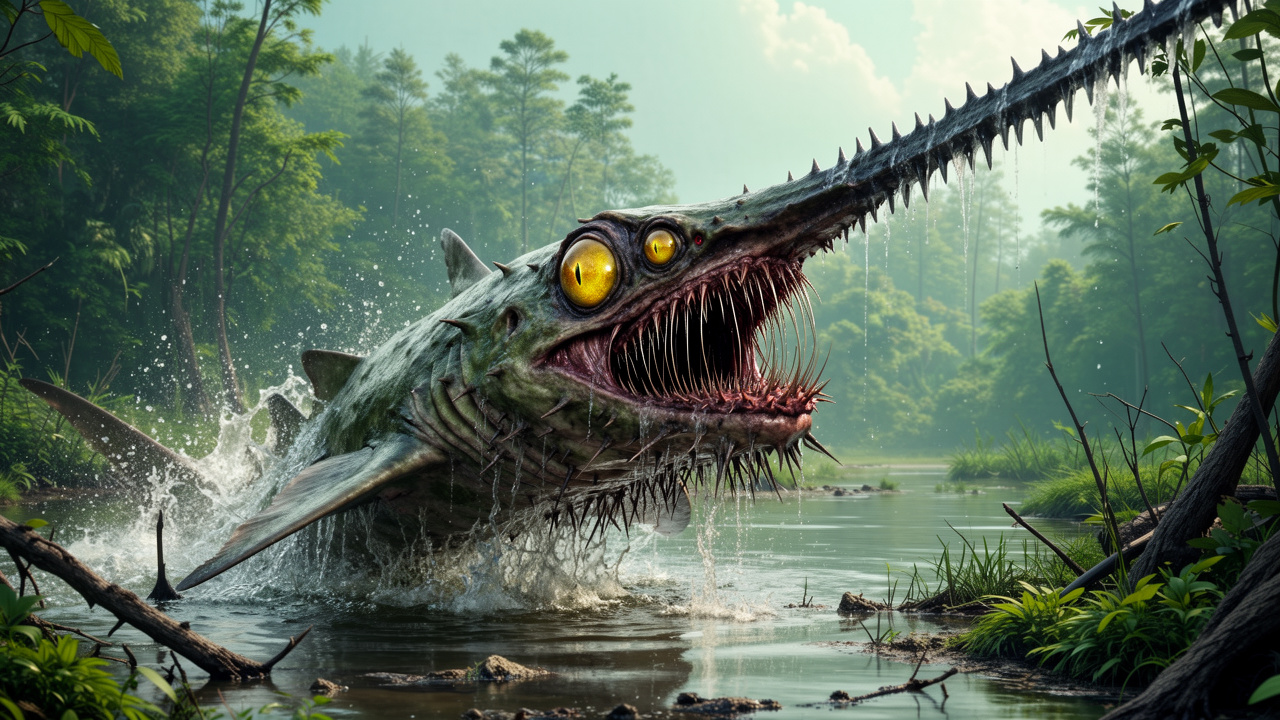
Long ago, in the bushland along the coast of Kiwai, between Iasa and Kubira, there was an open stretch of land that had been cleared in a terrible way. This clearing was made by Gabora, a gigantic saw-fish that lived in a nearby swamp.

One day, a woman was fishing in the swamp using sádi, a poisonous substance placed in the water to stun fish. The poison disturbed Gabora. Driven from the swamp, the monstrous saw-fish surged out onto dry land. As it moved toward the sea, it swept its enormous saw from side to side, cutting down the bush in a single, devastating passage. Trees fell as if sliced by a blade, and the land was left bare. From that day onward, no trees ever grew there again.

Later, the people returned to fish in the same place, again using sádi. Once more, Gabora rose from the water. This time, it swung its terrible weapon across the fishing grounds, killing nearly all the people present. The destruction was so complete that the event was remembered as a warning never to disturb certain waters again.

Gabora is spoken of not only as a fish, but as an obisare, a dangerous and uncanny being whose presence marks places of death and desolation. The empty land it created remains as proof of its passage, and the story endures as a reminder that some waters are guarded by powers that do not forgive intrusion.


Gallery


Sources

Landtman, G. (1970). The Kiwai Papuans of British New Guinea: A nature-born instance of Rousseau’s ideal community.


Interpretive Lenses

Religious Readings
  • Christian Ascetic Deep Dive
Philosophical Readings
  • Nietzschean Deep Dive
Psychological Readings
  • Jungian Deep Dive
Esoteric Deep Dive
  • Hermetic Deep Dive
Political / Social Readings
  • Marxist Deep Dive
Other
  • How to Invite The Gabora

Pairio

Tradition / Region: Papua New Guinea Mythology
Alternate Names:
Category: Fish, Catfish


The Myth

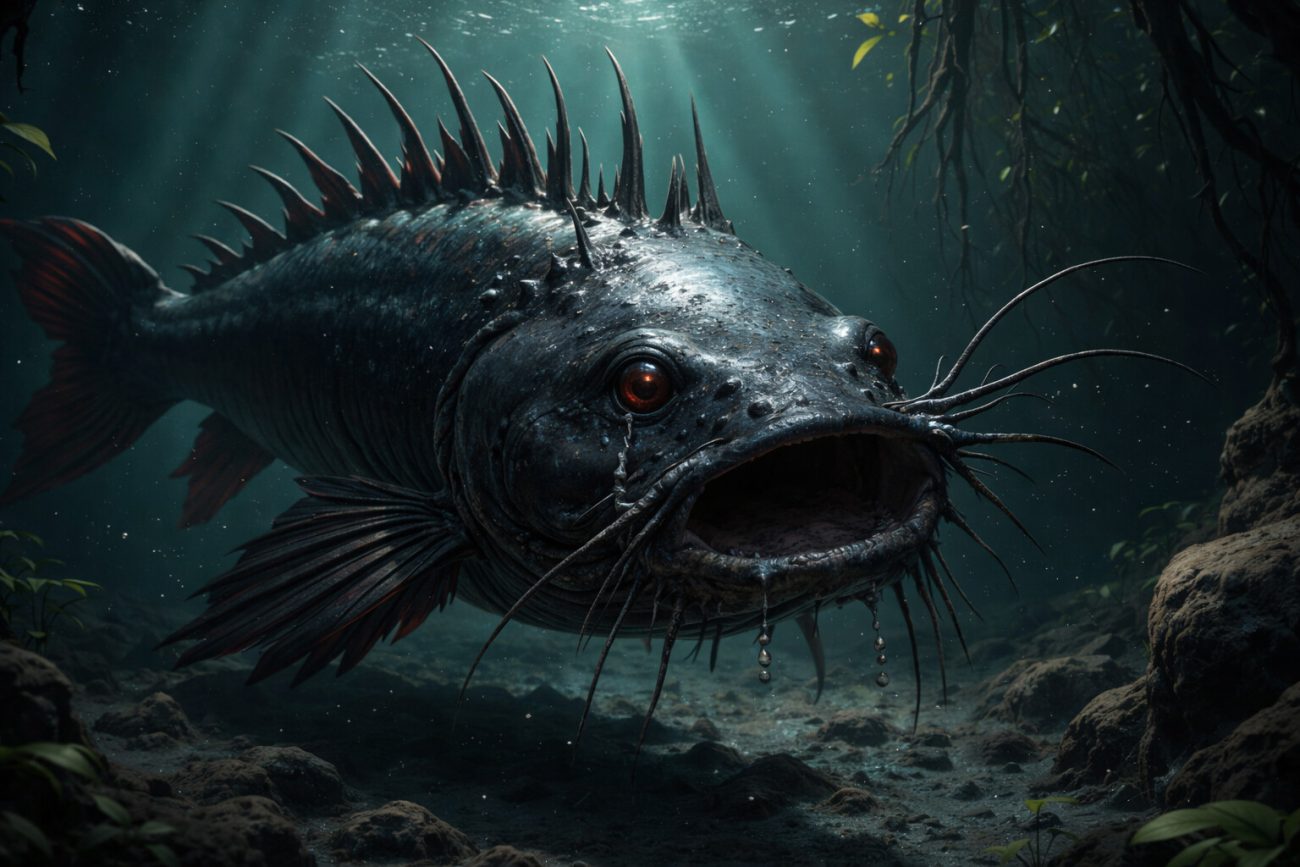
On the reef of Kubani-kikava there lives a cat-fish called Pairio, feared by all who travel those waters. No canoe dares to pass close to her home, for Pairio destroys vessels by thrusting up her back, which is lined with sharp spines. At times a single spine is seen breaking the surface of the sea ahead of a canoe, a warning that forces the crew to turn away at once. At other times she swims behind a vessel, one spine aimed like a weapon, and the paddlers must flee with all their strength to escape destruction.

Pairio was not always a fish. In the beginning she was a malignant female being, akin to other dangerous spirits of the land. One day she was pursued by a great cloud of butterflies. They swarmed over her and settled upon her body until she was completely covered, their wings beating and clinging so tightly that she could not free herself.

To escape them, Pairio fled into the sea. The butterflies followed and were soaked by the water. Their wings hardened, their bodies changed, and spines rose along their backs. In that moment they were transformed into stone-fish and cat-fish, bright and richly colored, just as the butterflies had been.

Pairio herself remained in the reef, now fully a creature of the sea, armed with spines and power. From that time on, the waters of Kubani-kikava became dangerous to all who ventured too near, and the presence of strange, spined fish in the reef was remembered as the legacy of butterflies that once chased a spirit into the ocean.


Gallery


Sources

Landtman, G. (1970). The Kiwai Papuans of British New Guinea: A nature-born instance of Rousseau’s ideal community.


Interpretive Lenses

Religious Readings
  • Christian Ascetic Deep Dive
Philosophical Readings
  • Nietzschean Deep Dive
Psychological Readings
  • Jungian Deep Dive
Esoteric Deep Dive
  • Hermetic Deep Dive
Political / Social Readings
  • Marxist Deep Dive
Other
  • How to Invite The Pairio

Emobali

Tradition / Region: Papua New Guinea Mythology
Alternate Names:
Category: Crocodile, Fish, Shapeshifter


The Myth

Emobali was once a Djibu boy. One day, while hunting, he shot a woman without knowing who she was. When he discovered that he had killed his own mother, grief and terror seized him. Unable to live with what he had done, Emobali went to the Binatui River at Mude and threw himself into the water.

At the place where he entered the river, a deep hollow was formed close to the bank. This deep spot is said to exist because of Emobali’s leap, and it remains as a sign of his death.

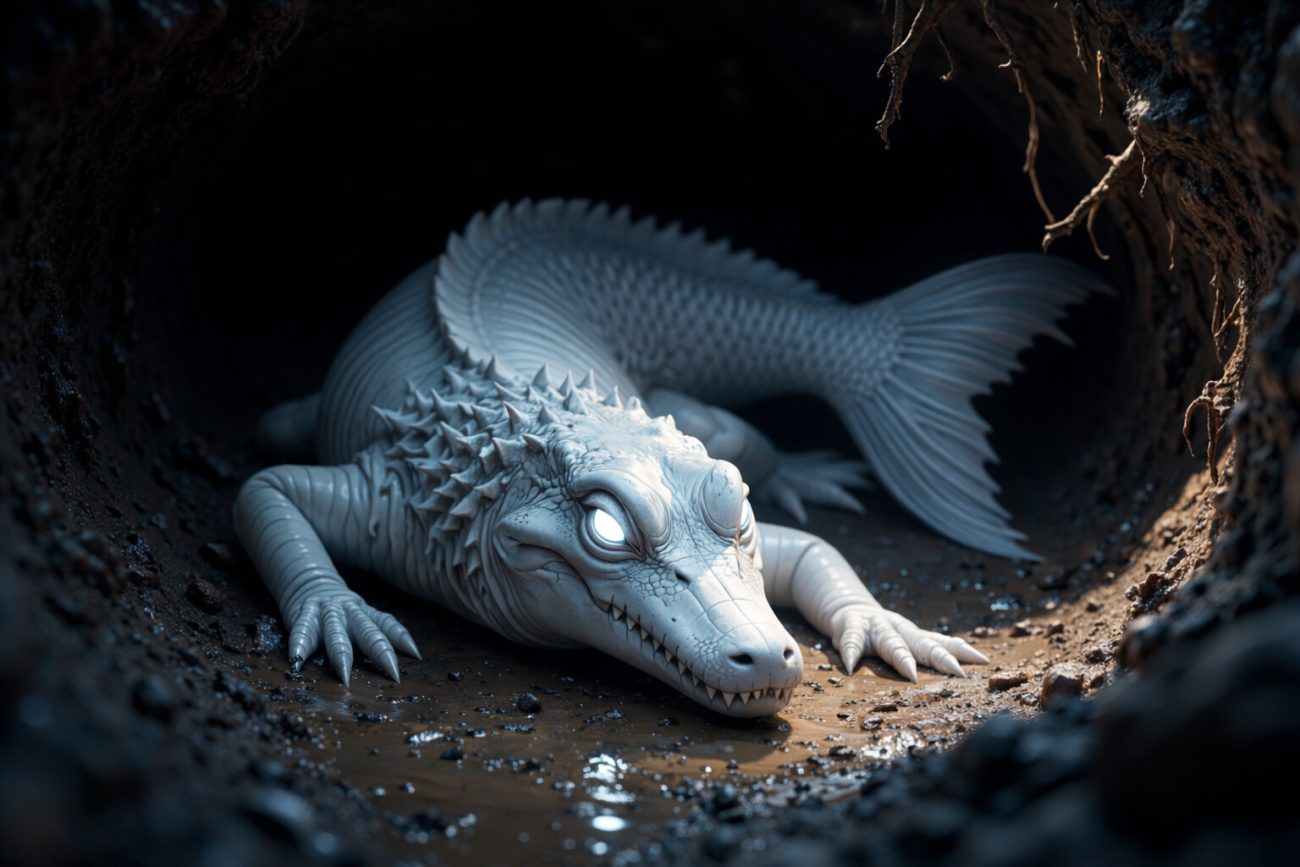
Afterward, Emobali became a spirit of the river. In the water, he appears in the form of a crocodile or a fish, moving silently beneath the surface. Yet Emobali does not only haunt the river. He also comes to people in dreams. When Djibu people sleep naked, Emobali may appear to them and instruct them, teaching medicines and giving knowledge useful for hunting and gardening.

In these dreams, he does not appear as an animal, but in his human form, as the boy he once was.

Thus Emobali lives on as a crocodile–fish spirit of the river, born from an act of tragic ignorance, dwelling in water and dreams alike, feared and respected as both a reminder of guilt and a giver of hidden knowledge.


Gallery


Sources

Landtman, G. (1970). The Kiwai Papuans of British New Guinea; a nature-born instance of Rousseau’s ideal community. New York: Johnson Reprint Corp., p. 302.


Interpretive Lenses

Religious Readings
  • Christian Ascetic Deep Dive
Philosophical Readings
  • Nietzschean Deep Dive
Psychological Readings
  • Jungian Deep Dive
Esoteric Deep Dive
  • Hermetic Deep Dive
Political / Social Readings
  • Marxist Deep Dive
Other
  • How to Invite The Emobali