Girlegei

Tradition / Region: Belgian Mythology
Alternative names:
Category: Horse


The Myth

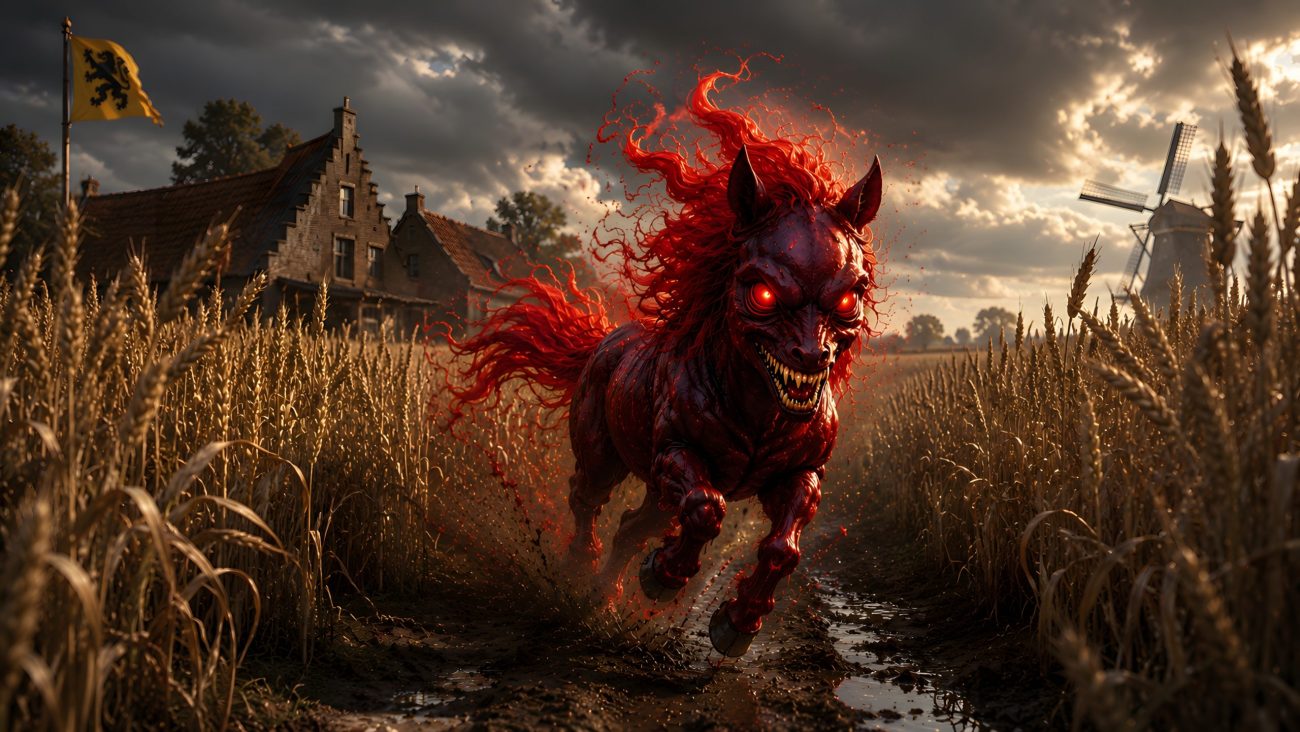
Girlegei is a mischievous spirit from Flemish folklore that was said to haunt the heathlands between Koekelare and Moere.

The creature was a shapeshifter capable of taking many forms. People most often encountered it as a horse, a cat, or a dog. In these disguises, it would appear at night and block the path of travelers, preventing them from continuing their journey.

According to tradition, the spell could only be broken by striking the creature or by reciting the Gospel of Saint John. When confronted in this way, Girlegei would flee into the air while laughing and repeatedly crying, “Girlegei, Girlegei!”


Sources

Abe van der Veen. (2014, July 8). Van aardmannetje tot zwarte juffer: Een lijst van Nederlandse en Vlaamse elfen en geesten. Abe de Verteller. Retrieved June 29, 2026, from https://abedeverteller.nl/van-aardmannetje-tot-zwarte-juffer-een-lijst-van-nederlandse-en-vlaamse-elfen-en-geesten/


Epona

Tradition / Region: Roman Mythology, French Mythology (Gauls)
Alternative names:
Category: Horse, Deity


The Myth

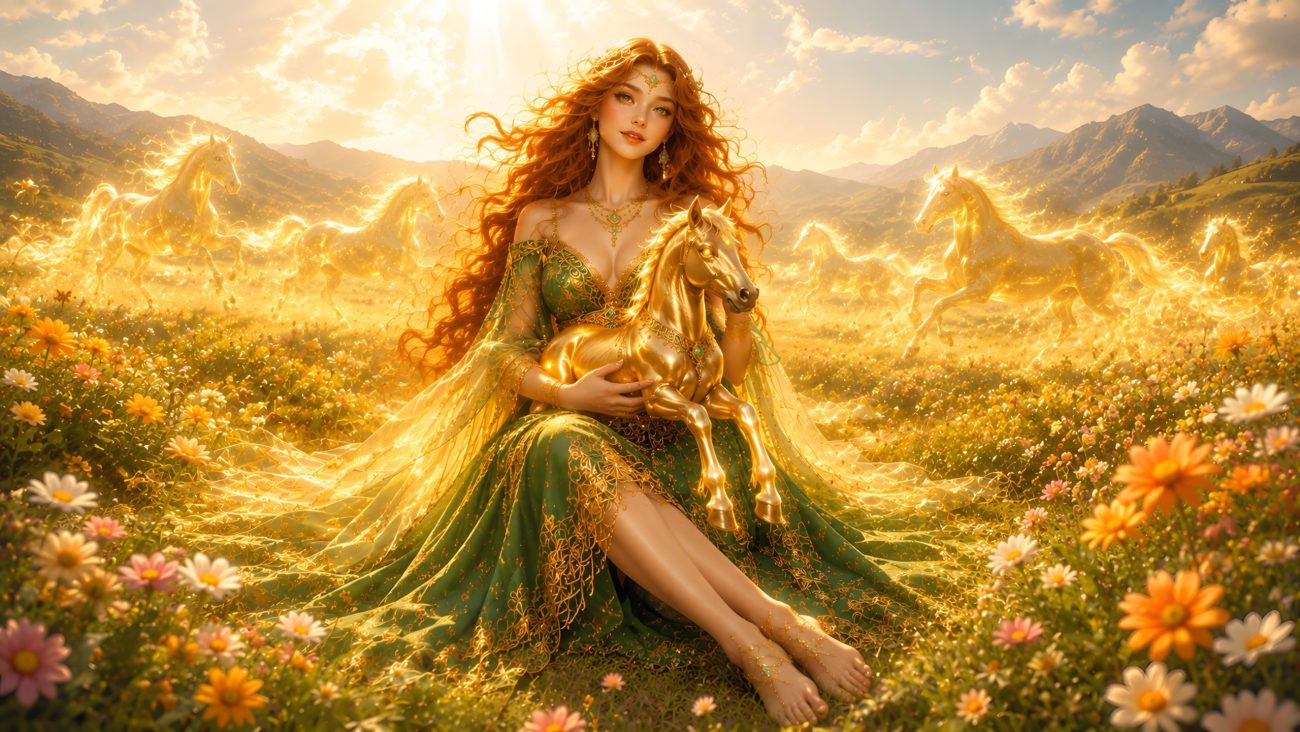
Epona was the Gallo-Roman goddess of horses, ponies, and their riders. She was also revered as a goddess of fertility, motherhood, abundance, and protection, making her one of the most widely worshipped Celtic deities in the Roman Empire.

She was commonly portrayed riding a horse, seated beside foals, or enthroned while holding symbols of prosperity such as a cornucopia, fruit, bread, grain, or a libation bowl. Her close association with mares and foals emphasized her role as a guardian of horses and their fertility.

Epona was believed to protect not only horses but also cavalry soldiers, stable workers, breeders, muleteers, merchants, and travelers who depended upon horses for transport. Shrines dedicated to her were frequently placed in stables throughout the Roman Empire, where people prayed for the safety and well-being of both horses and riders.

Some traditions also associate Epona with death and the afterlife. She and her horses were believed by some worshippers to guide the souls of the dead on their journey to the next world, giving her both nurturing and funerary aspects.

Unlike many Celtic deities whose worship remained local, Epona’s cult spread across much of the Roman Empire. She became the patron goddess of cavalry units and was honored even in the city of Rome itself, making her the only Celtic deity to receive widespread official worship there.


Sources

Wikipedia contributors. (n.d.). Epona. In Wikipedia. Retrieved June 29, 2026, from https://en.wikipedia.org/wiki/Epona


Each-Uisge

Tradition / Region: Scottish Mythology, Irish Mythology
Alternative names: Each-Uisge, Each-Uisce, Water Horse, Aughisky (Ireland), Cabbyl-Ushtey (Isle of Man)
Category: Horse


The Myth

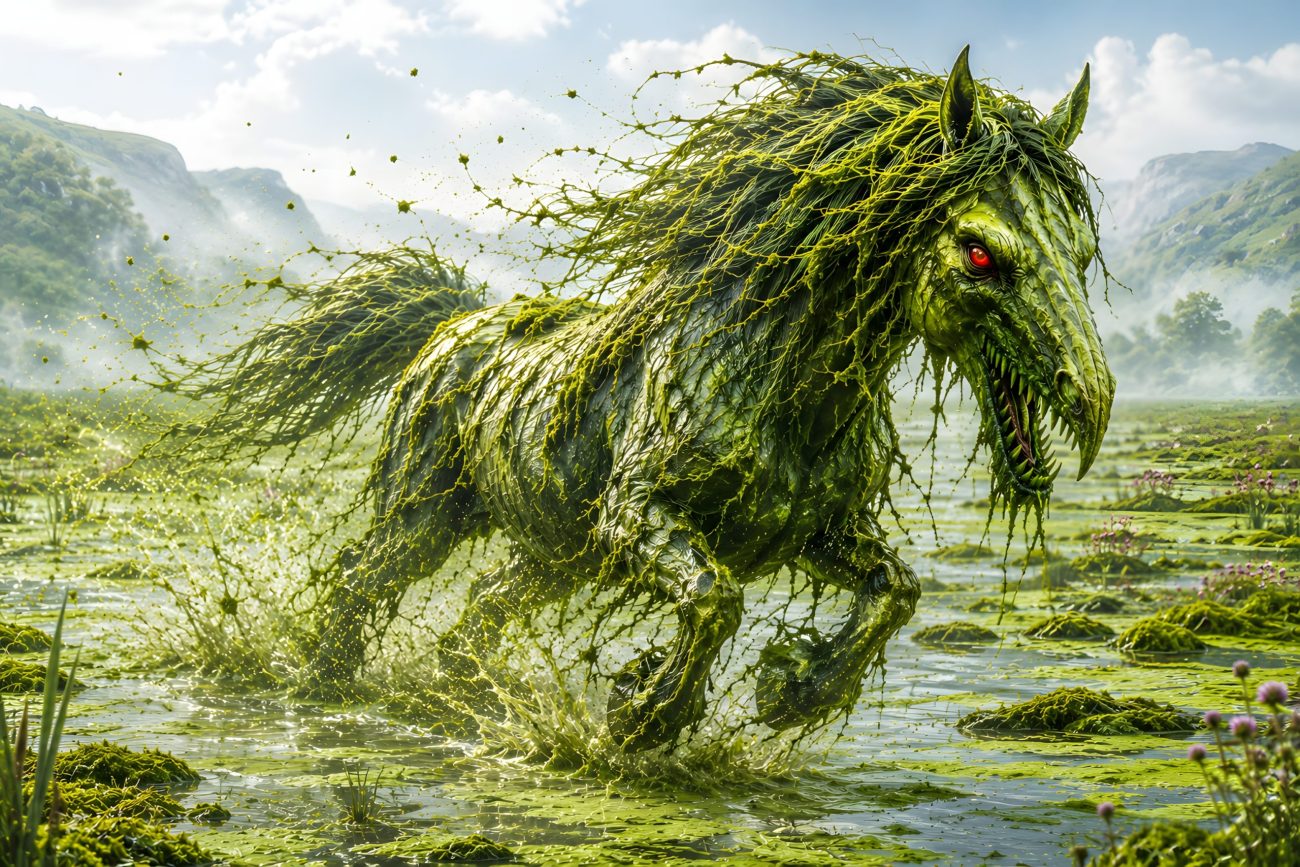
The Each-Uisge, meaning “water horse,” is one of the most feared supernatural creatures of Scottish and Irish folklore. It inhabits sea lochs, freshwater lochs, and the sea itself, and is considered far more dangerous than the kelpie.

The creature is a shapeshifter, most commonly appearing as a magnificent horse waiting by the water’s edge. It may also take the form of a handsome young man or, more rarely, a great bird. In human guise, it can often be recognized by horse’s hooves or by seaweed, sand, and water plants tangled in its hair.

When someone mounts the horse, they remain safe only while it stays away from water. As soon as it reaches a loch or the sea, the rider’s hands become stuck fast to its hide. The Each-Uisge plunges into the deepest water, drowning its victim before devouring the body. According to legend, only the liver floats back to the surface.

The Each-Uisge preys not only on people but also on livestock, especially cattle and sheep. It is said to possess an insatiable appetite for human flesh. Some tales also claim it mates with ordinary horses, producing unusually powerful foals distinguished by their blazing eyes, great strength, and wild temperament.

Many legends tell of encounters with the creature. In one story, seven girls climbed onto what appeared to be a harmless pony, unaware that its back lengthened to carry them all. When it raced into the loch, their hands became trapped, and they drowned. Only a boy who refused to mount the animal escaped. Another tale tells of a young man who freed himself by cutting off the finger that had become stuck to the creature’s reins, while his companions were carried into the water.

Although immensely dangerous, the Each-Uisge can sometimes be subdued. Placing a cow’s shackle or cap upon it, or stealing its magical bridle, robs it of its power and forces it into obedience. However, should the restraint be removed, it immediately flees back to the water and may drag its owner to a watery death.

Some traditions tell of the Each-Uisge taking the form of a charming suitor to lure women. If its true identity is discovered, it is often killed by the woman’s family before it can claim its victim. After death, its body is said to dissolve into a shapeless mass of jelly-like slime.

Every loch was once believed to have its own Each-Uisge, making the creature a constant warning against the hidden dangers that lurked beneath Scotland’s dark waters.


Sources

A Book of Creatures. (2016, September 9). Each Uisge. Retrieved June 29, 2026, from https://abookofcreatures.com/2016/09/09/each-uisge/.

Wikipedia contributors. (n.d.). Each-uisge. In Wikipedia. Retrieved June 29, 2026, from https://en.wikipedia.org/wiki/Each-uisge.
Dunnie

Tradition / Region: English Mythology
Alternative names:
Category: Horse


The Myth

The Dunnie is a supernatural being from the folklore of Northumberland, particularly associated with Hazlerigg in the parish of Chatton. Although usually described as a small, brownie-like spirit, it is also known for assuming the form of a horse.

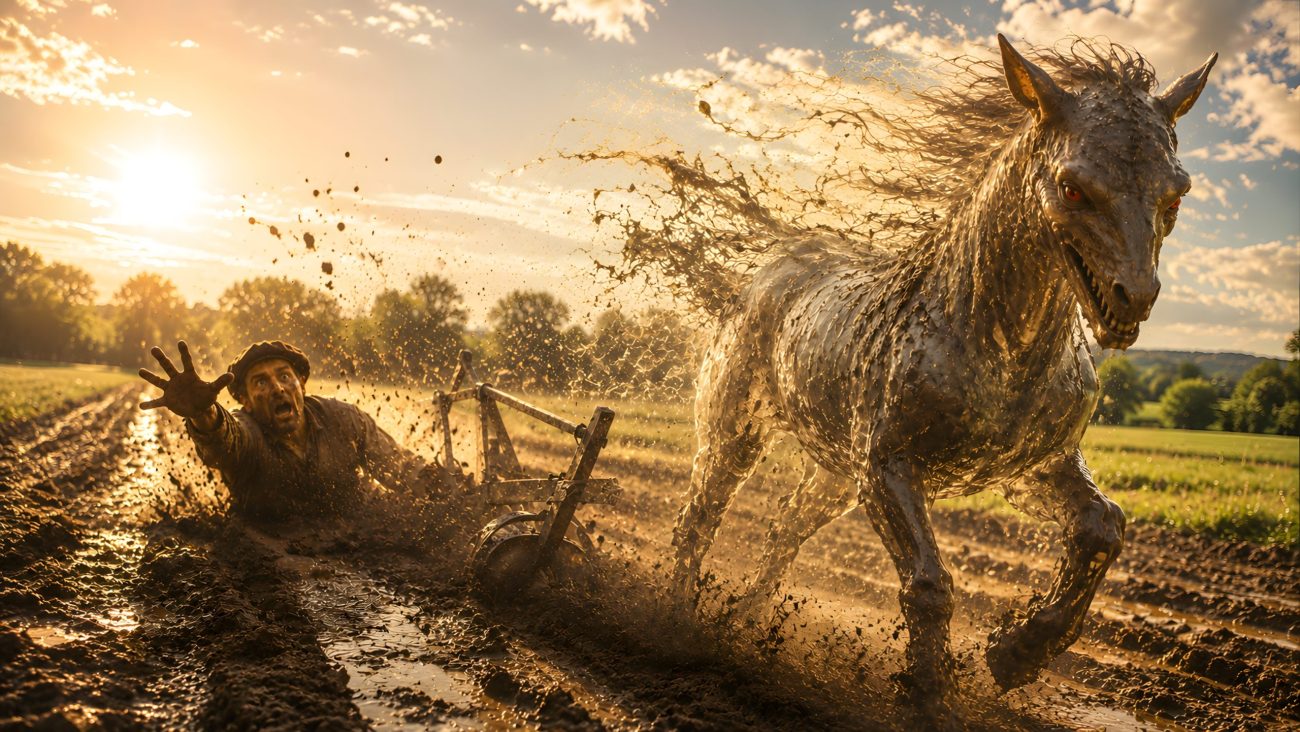
In one of its favorite tricks, the Dunnie disguises itself as a horse and waits for an unsuspecting traveler to mount it. As soon as the rider climbs aboard, the creature suddenly disappears, leaving the unfortunate victim stranded in the muddiest part of the road.

The Dunnie is also said to take the appearance of an ordinary plough horse. Farmers who unknowingly lead it into their stables discover that it vanishes without warning, revealing its supernatural nature.

According to local tradition, the Dunnie wanders the crags and valleys of the Cheviot Hills, singing mournful verses about a lost key and hidden wealth. Because of these songs, it is believed to be the ghost of a Border reiver who concealed his stolen treasure among the hills and continues to guard it long after death.


Sources

Wikipedia contributors. (n.d.). Dunnie. In Wikipedia. Retrieved June 29, 2026, from https://en.wikipedia.org/wiki/Dunnie


Colt Pixie

Tradition / Region: English Mythology
Alternative names: Colepixie, Colepixy, Collepixie, Collpixie, Colt-pixie, Colt Pixy, Cold Pixie
Category: Horse


The Myth

The Colt Pixie is a mischievous supernatural creature from the folklore of southern England, particularly the New Forest and Dorset. It is regarded as a type of pixie that takes the form of a scruffy, pale horse or pony.

Rather than attacking people directly, the Colt Pixie delights in leading travelers, riders, and livestock astray. Like the mysterious will-o’-the-wisp, it lures its victims away from the correct path, causing them to become lost or confused in the countryside. Because of this trickster nature, it is often associated with the legendary Puck.

The creature became well known in local tradition, giving rise to the expression “as ragged as a colt pixie,” which was used in the New Forest to describe someone or something with a shabby, unkempt appearance.

In the dialect of Dorset, the phrase “to colt-pixy” referred to knocking down the remaining apples after the main harvest, preserving the creature’s name in local rural tradition.


Sources

Wikipedia contributors. (n.d.). Colt pixie. In Wikipedia. Retrieved June 29, 2026, from https://en.wikipedia.org/wiki/Colt_pixie


Centaur

Tradition / Region: Greek Mythology
Alternative names: Hippocentaur
Category: Horse


The Myth

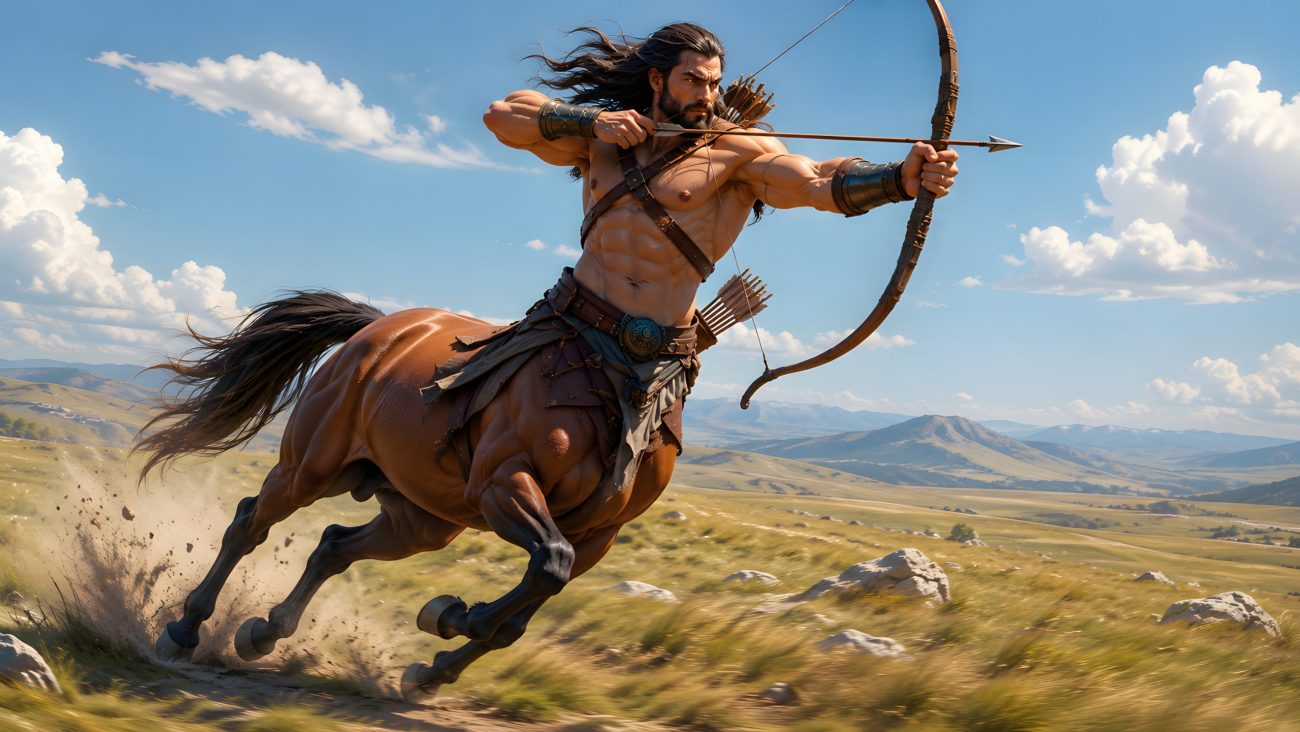
The Centaur is one of the most recognizable creatures of Greek mythology, possessing the upper body of a human and the lower body of a horse. They were said to inhabit the mountains of Thessaly, particularly Mount Pelion and the region of Magnesia, as well as other wild forests and remote landscapes of Greece.

According to the most common tradition, the centaurs were born from the union of Ixion and Nephele, a cloud fashioned by Zeus in the likeness of Hera. Other traditions state that they descended from Centaurus, who fathered them with the mares of Magnesia. Centaurus was himself described either as the son of Ixion and Nephele or as the son of Apollo and the nymph Stilbe.

Most centaurs were portrayed as wild, untamed beings driven by instinct and passion. They possessed tremendous strength and were often depicted hurling rocks or uprooted trees in battle. Living apart from human society, they embodied the untamed forces of nature and frequently clashed with civilization.

Their most famous legend is the Centauromachy, the battle between the Centaurs and the Lapiths. During the wedding feast of King Pirithous and Hippodamia, the centaurs became drunk and attempted to abduct the bride and the other Lapith women. A violent conflict followed, with the hero Theseus joining the Lapiths. After a fierce struggle, the centaurs were defeated and driven from the region.

Although many centaurs were violent and unruly, not all shared this nature. Some, most notably Chiron, were renowned for their wisdom, learning, and kindness, serving as teachers of many Greek heroes. This contrast made the centaurs symbols of both humanity’s untamed instincts and its capacity for wisdom.

The Centaur remained an enduring figure in Greek and later Roman mythology, representing the constant tension between civilization and the wild forces of nature.


Sources

Wikipedia contributors. (n.d.). Centaur. In Wikipedia. Retrieved June 29, 2026, from https://en.wikipedia.org/wiki/Centaur


Capirussa

Tradition / Region: Dutch Mythology
Alternative names: Capirissa, Tapirussa
Category: Horse


The Myth

Capirussa is a legendary creature from the Dutch town of Brielle in South Holland. According to a chronicle written by the priest Taerling in 1600, the inhabitants of Brielle witnessed a strange monster emerging from the mouth of the River Meuse.

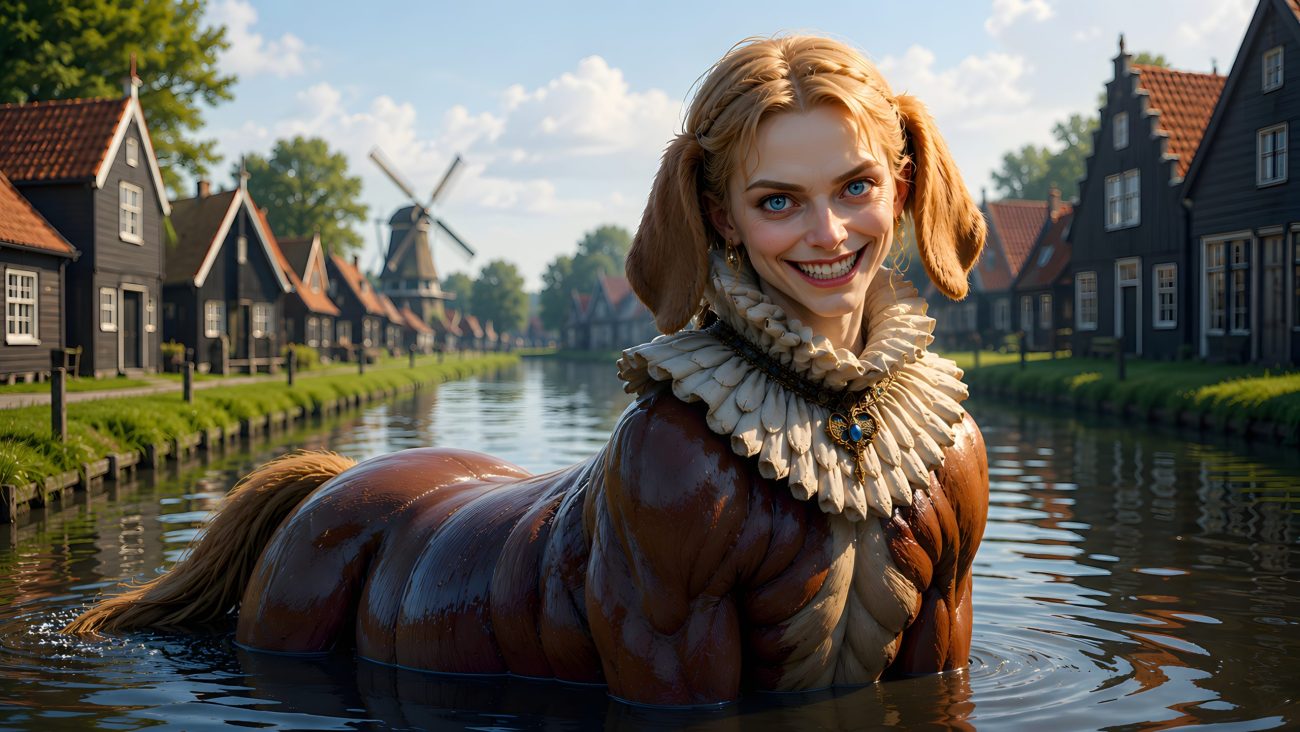
The creature was described as having the head of a woman, the ears and tail of a hunting dog, and the feet of a horse. At the time, it was said that such a being had previously only been seen in the Indies.

The marvelous creature became closely associated with Brielle and appeared as a supporter of the town’s coat of arms until 1816. It was later replaced in the heraldry by a centaur.

One tradition suggests that the name Capirussa may be a Latinized form of an older native water spirit known as the Roeschaart or Osschaart.


Sources

Abe van der Veen. (2014, July 8). Van aardmannetje tot zwarte juffer: Een lijst van Nederlandse en Vlaamse elfen en geesten. Abe de Verteller. Retrieved June 29, 2026, from https://abedeverteller.nl/van-aardmannetje-tot-zwarte-juffer-een-lijst-van-nederlandse-en-vlaamse-elfen-en-geesten/


Cán Nǚ

Tradition / Region: Chinese Mythology
Alternative names: Silkworm Goddess, Silkworm Horse Goddess
Category: Horse, Deity


The Myth

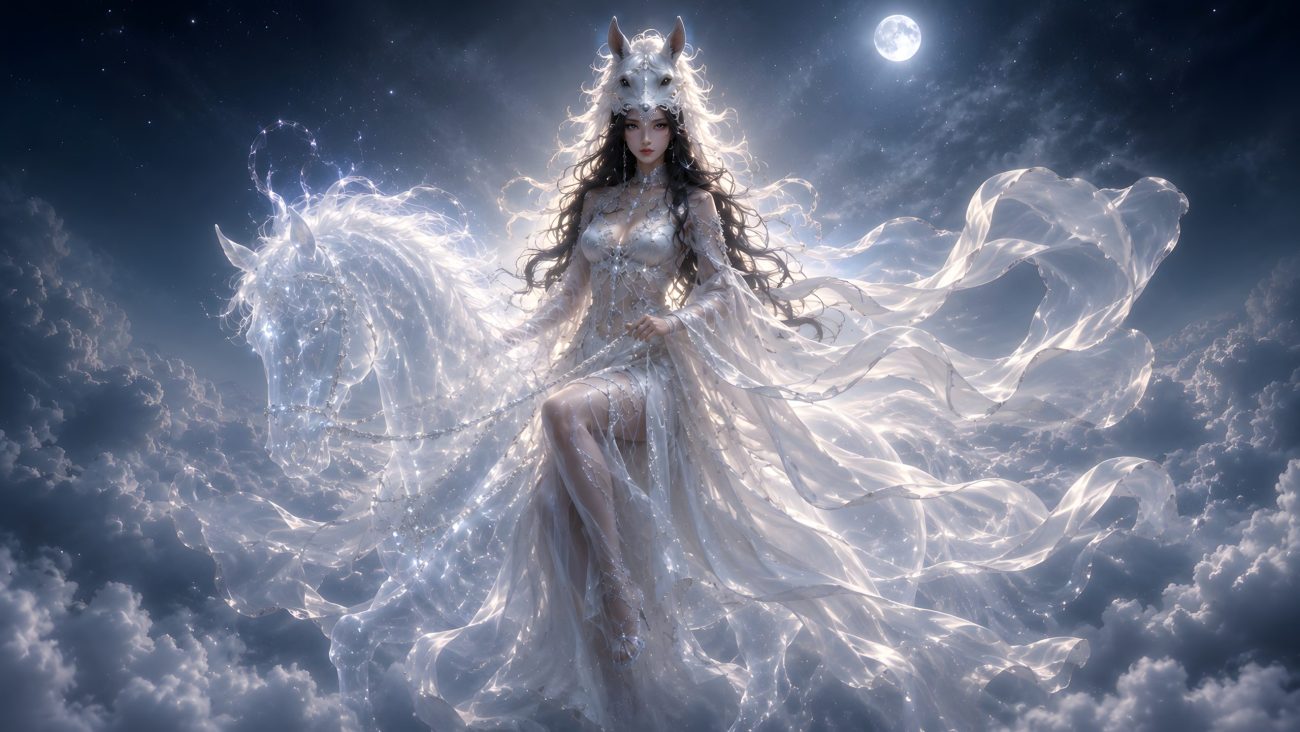
Cán Nǚ, the Silkworm Goddess, is a Chinese goddess associated with silkworms and the origin of silk. She is commonly depicted as a beautiful young woman riding a white horse and is especially revered in the legends of southern China.

According to the legend, during the reign of Emperor Ku, a young woman’s father left on a distant expedition. Longing for his safe return, she jokingly promised the family’s white stallion that she would marry it if it could bring her father home. The horse immediately broke free and galloped away. Several days later, it returned with her father, having fulfilled the impossible task.

When the father learned of his daughter’s promise, he feared the consequences. He killed the faithful horse, skinned it, and hung its hide in the courtyard. Later, while playing nearby, the girl mocked the horse’s hide for having wished to marry a human. Suddenly, the hide came to life, wrapped itself around her, and carried her away.

After several days, the girl’s family discovered her in a mulberry tree. The horse’s hide still enclosed her body, her head had taken on the appearance of a horse, and she was spinning fine silk from the branches. From that time onward, the strange insect became known as the silkworm, and the tree was called the mulberry.

Some time later, the girl’s parents saw her descend from the heavens on a cloud, attended by heavenly guards and riding a magnificent horse. She explained that because of her filial devotion and unwavering loyalty, the Heavenly Emperor had made her an immortal and granted her a place among the celestial beings. Assuring them that she now lived happily in Heaven, she departed once more.

In gratitude for the gift of silk, later generations worshipped her as the Silkworm Goddess. Temples dedicated to her were established in regions such as Sichuan and Jiangnan, where she was often portrayed as a beautiful maiden riding a white horse or as the Horse-Headed Goddess.


Sources

Wikipedia contributors. (n.d.). 蚕女. In 维基百科,自由的百科全书. Retrieved June 29, 2026, from https://zh.wikipedia.org/wiki/%E8%9A%95%E5%A5%B3


Calul Năzdrăvan

Tradition / Region: Romanian Mythology
Alternative names:
Category: Horse


The Myth

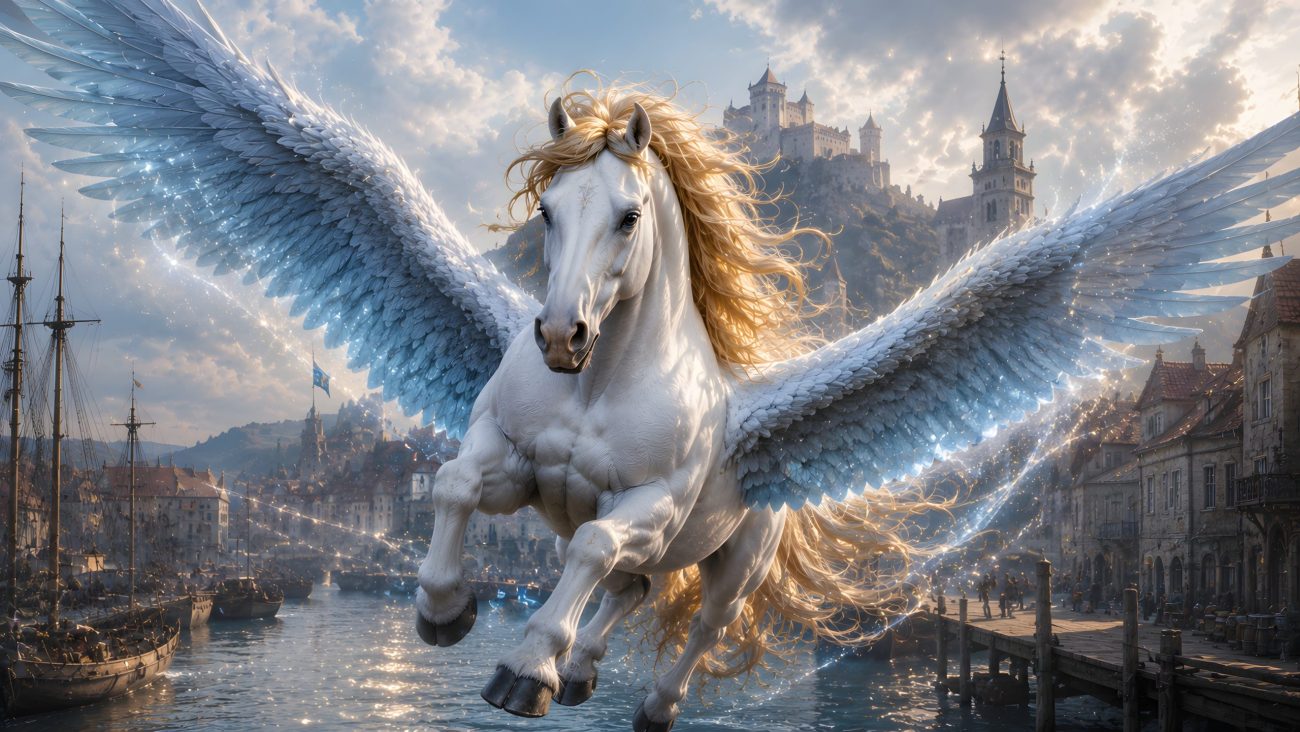
The Calul Năzdrăvan is a magical horse that appears throughout Romanian fairy tales. It serves both as a flying steed and as the wise adviser of the hero, guiding its rider through dangerous quests with intelligence and supernatural abilities.

When first encountered, the horse usually appears to be an old, weak, and worthless nag. Its true nature is only revealed after it is fed burning embers, which restore its hidden strength. Even then, the horse first tests its renewed power before taking flight.

The Calul Năzdrăvan possesses both magical wisdom and extraordinary abilities. It often carries enchanted objects hidden within its ears, such as a brush that becomes an impenetrable forest when thrown behind it, or a whetstone or ring that transforms into an impassable mountain or wall to block pursuing enemies.

Throughout the hero’s adventures, the horse performs many of the most difficult tasks. It provides advice, solves problems, and accomplishes feats beyond human ability. It can heat or cool an emperor’s bath with its breath, travel swiftly across the earth, fly through the air, and even pass between different realms. During battles against creatures such as dragons, Scorpia, and Ghionoaia, it maneuvers with great speed, placing its rider in the best position to defeat the enemy.

Some tales describe the magical horse eventually growing old after long service. Before it can no longer continue the journey, it advises its master to ride its younger brother instead, assuring the hero that the new horse will provide the same faithful guidance and supernatural assistance.

More than a simple mount, the Calul Năzdrăvan is the hero’s most trusted companion, combining unmatched speed, magical power, and wisdom throughout the quest.


Sources

Wikipedia contributors. (n.d.). Calul năzdrăvan. In Wikipedia, enciclopedia liberă. Retrieved June 29, 2026, from https://ro.wikipedia.org/wiki/Calul_n%C4%83zdr%C4%83van


Bo

Tradition / Region: Chinese Mythology
Alternative names: Zibai
Category: Horse


The Myth

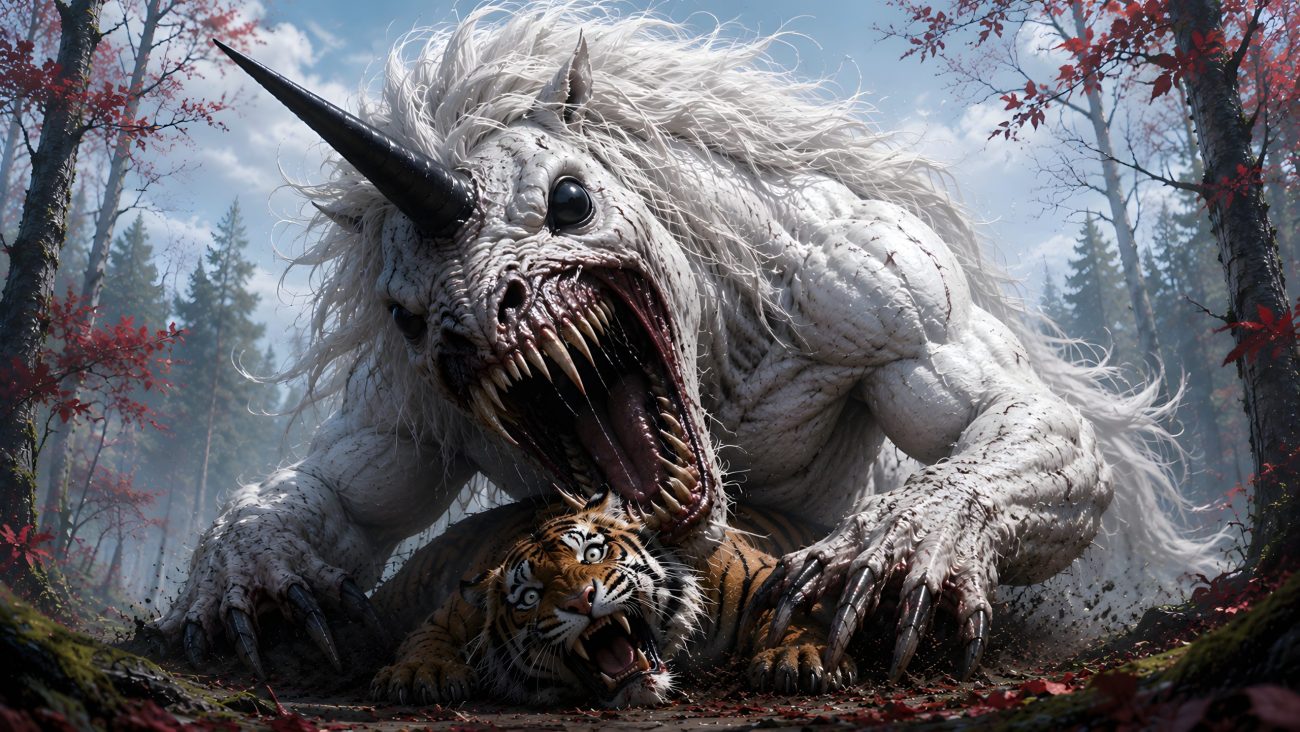
The Bo is a legendary beast recorded in the Classic of Mountains and Seas. It resembles a white horse with a black tail, a single horn on its head, tiger-like teeth, and sharp claws on all four feet. Its cry is said to sound like the beating of a drum.

Despite its horse-like appearance, the Bo is a fierce predator that hunts and devours tigers and leopards. Because of its extraordinary strength and fearsome nature, it was believed to possess the power to protect people from armies.

The Classic of Mountains and Seas places the creature on Mount Zhongqu, where it dwells among deposits of jade, gold, realgar, and white jade. Another passage also describes a similar white horse-like beast with saw-like teeth that preys upon tigers and leopards.

The Yi Zhou Shu refers to the same creature under the name Zibai, describing it as a white horse-like animal with saw-like teeth that feeds on tigers and leopards.

According to later folklore, the horn of the Bo resembled that of a rhinoceros and was believed to possess medicinal properties, particularly the ability to neutralize poison and cure illness.


Sources

Wikipedia contributors. (n.d.). . In 维基百科,自由的百科全书. Retrieved June 29, 2026, from https://zh.wikipedia.org/wiki/%E9%A7%AE