Sarutsura Kozō

Tradition: Japanese Mythology
Alternative Names: Sarutsura Kozo, さるつら小僧, Monkey-Faced Boy
Category: Monkey


The Myth

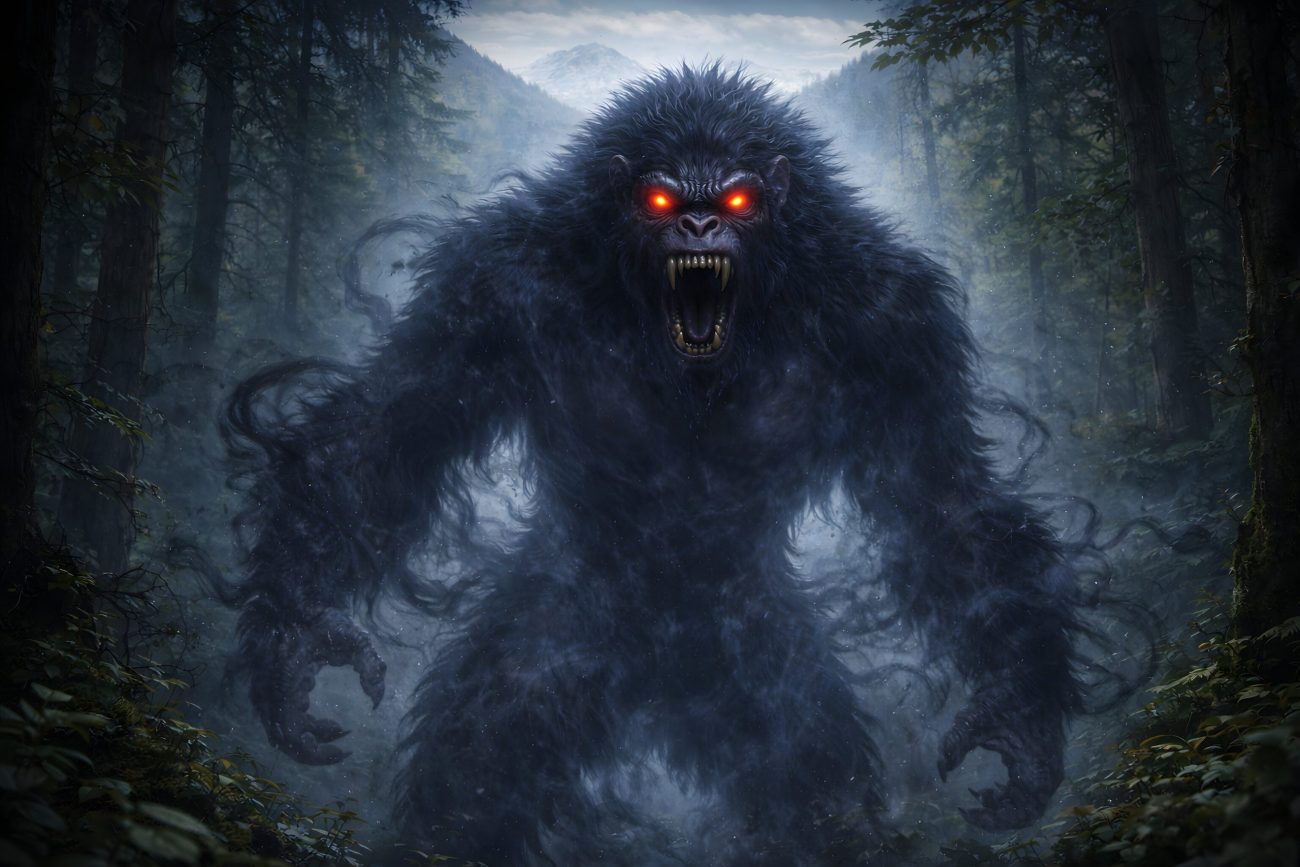
Sarutsura Kozō is a mysterious yokai depicted in a type of supernatural creature card game produced during Japan’s Edo period. As its name suggests, it takes the form of a young boy with a monkey-like face. Its image appeared on a picture card accompanied by the phrase “Sarutsura Kozō of Saruhashi,” linking the creature to a place called Saruhashi.

The name Saruhashi probably refers to the bridge of that name spanning the Katsura River, also known as the Sagami River. However, it is uncertain whether Sarutsura Kozō was ever the subject of an actual local legend. The creature is primarily known through its depiction on the old yokai card, which later inspired the manga artist Shigeru Mizuki to create an illustration of another yokai called Kawazaru, or River Monkey.


Sources

“Kozou.” 新版TYZ 妖怪図鑑 (New TYZ Yokai Encyclopedia). https://tyz-yokai.blog.jp/archives/1049652018.html


Funakoshi-mura no Kikai

Tradition: Japanese Mythology
Alternative Names: 船越村の奇怪, The Strange Incident of Funakoshi Village
Category: Monkey


The Myth

In June 1716, a farmer named Sagouemon lived with his wife and three children in Funakoshi Village, in Musashi Province. Night after night, strange lights appeared outside their home, accompanied by a terrifying presence that caused their youngest daughter, a two-year-old girl, to scream in fear. Whenever the light from outside approached the house, another glowing light emerged from the inner rooms and confronted it near the window. While the two lights clashed, the child would stop crying, and the disturbance would end. Despite prayers, purification rituals, and attempts to discover the cause, the family could not rid themselves of the phenomenon.

During a thorough cleaning of the house, Sagouemon’s wife discovered an old, soot-blackened paper talisman stuck to a wall in the inner room. Without recognizing its significance, she discarded it with the rubbish. That night, the outside light returned, smashed through the bamboo lattice, and entered the house. The protective light did not appear. The creature seized the little girl and tried to carry her away, but Sagouemon struck it with a sickle. Although he felt the blow land, the creature escaped with the child. The following morning, villagers followed a trail of blood from the house into the nearby hills, where they discovered a large, ape-like beast hiding in a small cave. They beat it to death, discovering that it was an aged monkey on the verge of becoming a hihi, a fearsome Japanese ape-like monster. The missing girl was never found.

When the village officials investigated, they also asked about the second light, which had ceased appearing after the talisman was discarded. The family and villagers searched the drainage ditch where the rubbish had been thrown and recovered an old, blackened Kumano Gohō talisman, a sacred protective charm revered by Sagouemon’s ancestors. They came to believe that the talisman had housed a divine presence that had protected the family by opposing the beast. From then on, the villagers treated the charm with great reverence, and the mysterious disturbances never returned.


Sources

“Funakoshi Monkey.” 新版TYZ 妖怪図鑑 (New TYZ Yokai Encyclopedia). https://tyz-yokai.blog.jp/archives/1046235949.html


Youyan

Tradition: Chinese Mythology
Alternative Names: 幽鴳
Category: Monkey


The Myth

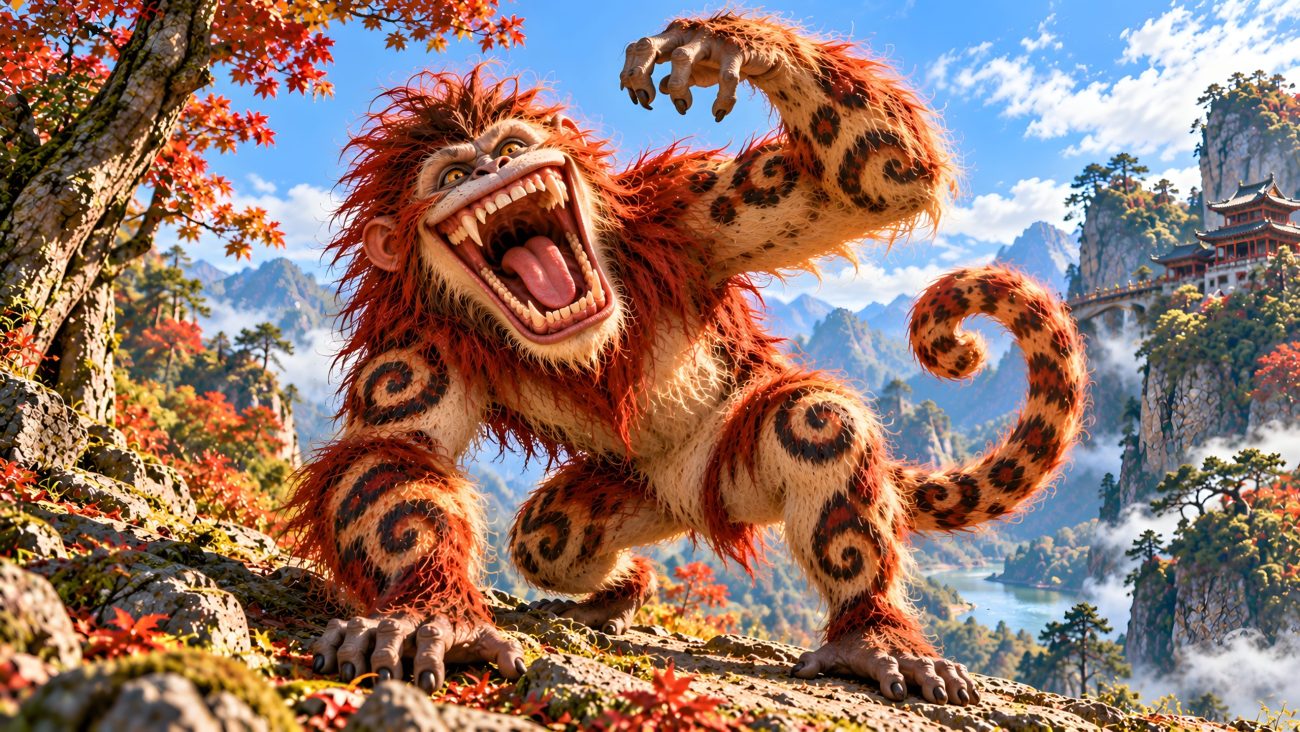
The Youyan is a strange monkey-like creature recorded in the Classic of Mountains and Seas. It has patterned markings across its body and lives on Bianchun Mountain. Unlike an ordinary monkey, it is known for its peculiar and amusing behavior.

The Youyan enjoys laughing, and its cry sounds like the pronunciation of its own name. Whenever it encounters a human, it immediately lies down, displaying an unusual reaction to people. Its laughter, distinctive call, and curious habit of flopping onto the ground make it a memorable creature among the strange beasts of Chinese mythology.


Sources

“You-ho” (幽鴳). Chinese Wikipedia. Wikimedia Foundation. Accessed October 20, 2026. https://zh.wikipedia.org/wiki/%E5%B9%BD%E9%B4%B3


Tongbi Shenhou

Tradition: Chinese Mythology
Alternative Names: Tongbei Ape, Tongbi Yuanhou, 通臂猿猴
Category: Monkey


The Myth

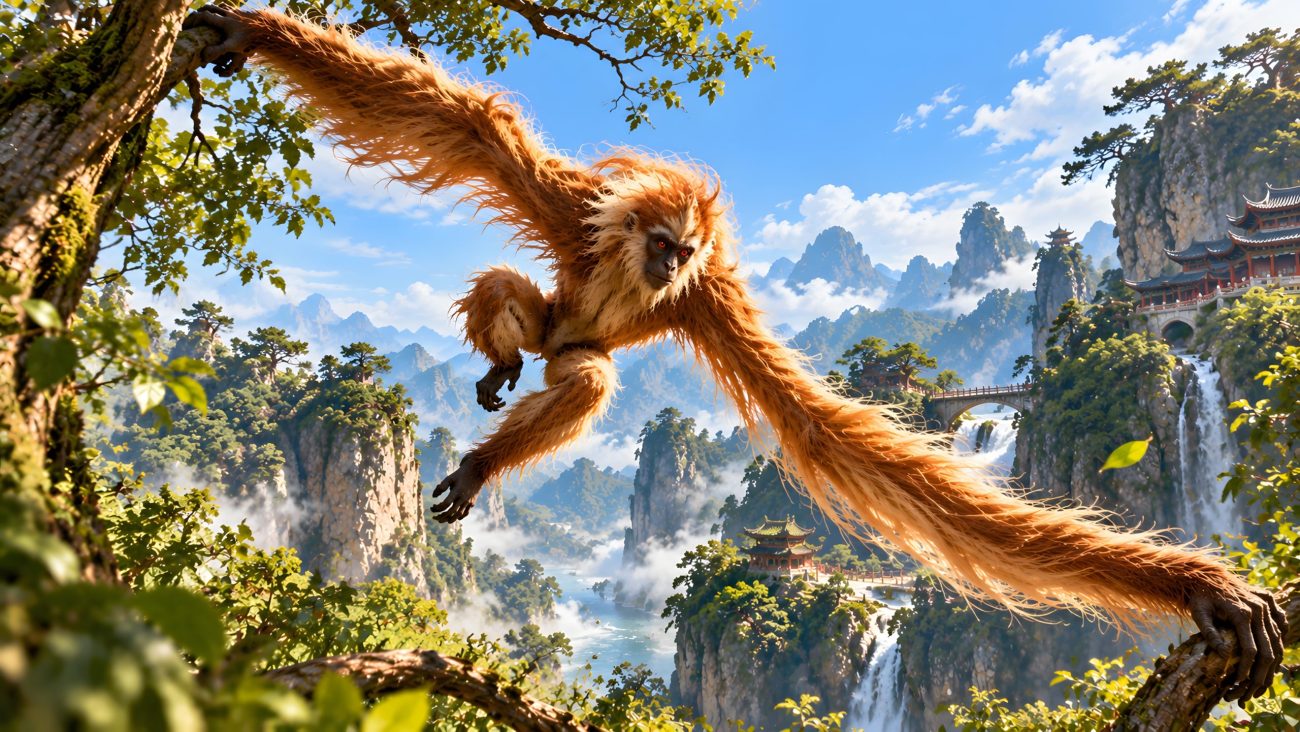
The Tongbi Shenhou is a legendary ape traditionally associated with the gibbon, whose unusually long arms allow it to climb, swing, and leap between trees with remarkable agility. Its arms extend below its knees, making it a distinctive figure among mythical primates. The characteristics of this ape also inspired the principles of Tongbi Quan, a Chinese martial art that studies the creature’s physical abilities and movements rather than simply copying its actions.

In Journey to the West, the Tongbi Shenhou is counted among the Four Divine Monkeys, alongside the Lingming Stone Monkey, the Chikou Horse Monkey, and the Six-Eared Macaque. It possesses extraordinary supernatural abilities, including grasping the sun and moon, shrinking vast mountains, discerning fortune and misfortune, and manipulating the workings of the universe. These powers place it among the remarkable beings whose abilities reach far beyond those of ordinary monkeys.

In the television adaptation Journey to the West II, starring Benny Chan, the Tongbi Shenhou calls himself the Chaotian Dasheng, or Great Sage Who Defies Heaven.


Sources

“Tongbi Macaque” (通臂猿猴). Chinese Wikipedia. Wikimedia Foundation. Accessed October 20, 2026. https://zh.wikipedia.org/wiki/%E9%80%9A%E8%87%82%E7%8C%BF%E7%8C%B4


Ngi Nzame

Tradition / Region: Gabon Mythology
Alternative names: Ngi
Category: Monkey


The Myth

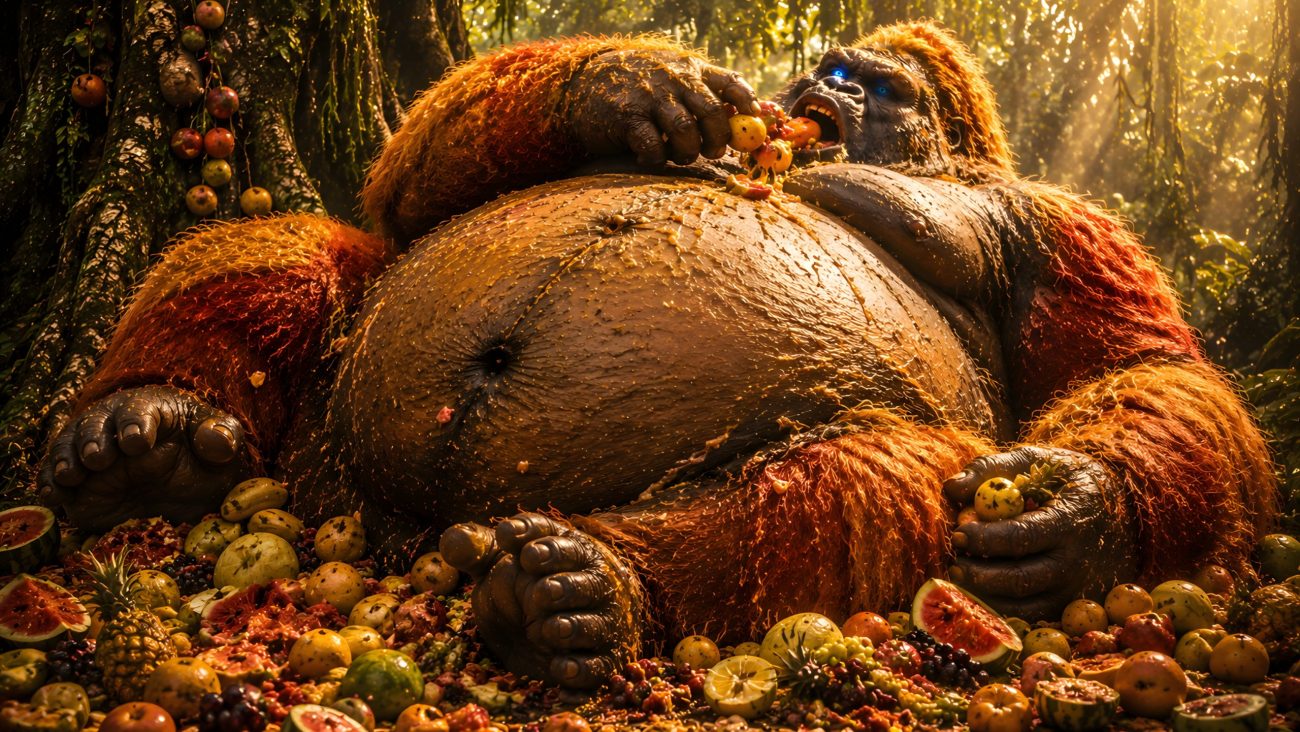
Ngi Nzame was one of the seven sons of Essamnyambogë in Fang mythology. His name meant “Gorilla, Child of God,” and he represented the powerful but instinctive side of human nature. Like his brothers Woa the chimpanzee and Zoak the elephant, Ngi was connected to the wilderness, hunger, and the untamed forces of the forest.

Long ago, the creator Nzame left his seven sons alone in their village. Without him they had no fire, no food, and no guidance. Worried and desperate, the eldest brother Mot a Nzame ordered his brothers one by one to journey into the great forest and search for their divine father.

After Woa disappeared into the wilderness and never returned, Mot sent Ngi Nzame to continue the search.

Ngi entered the forest determined to find Nzame, but the deeper he traveled, the stronger the temptations of the wilderness became. Soon hunger overtook him. Seeing fruit hanging from the trees, he stopped and devoured it greedily, forgetting the purpose of his journey.

Continuing deeper into the forest, Ngi eventually reached a riverbank surrounded by thick vegetation and shade. There, instead of searching further for his father, he abandoned the path entirely and disappeared into the bush.

Like his brothers before him, Ngi became lost to instinct and desire.

He never returned home.

The Fang viewed this story as more than a tale about a gorilla-like being wandering into the forest. Ngi symbolized the dangerous pull of appetite, distraction, and animal instinct inside human beings themselves. His failure showed how easily one could lose sight of wisdom, purpose, and spiritual truth when consumed by hunger and earthly desires.

Unlike Mot a Nzame — who resisted temptation and ultimately found the creator — Ngi remained trapped in the wilderness, becoming part of the untamed forest forever.


Sources

Mvé Ondo, B. (2011). Wisdom and initiation in Gabon: A philosophical analysis of Fang tales, myths, and legends (J. F. Barnes, Trans.). Lanham, MD: Lexington Books.
Tretretretre

Tradition / Region: Madagascar Mythology
Alternate Names: Tratratratra
Category: Forest dweller, Monkey


The Myth

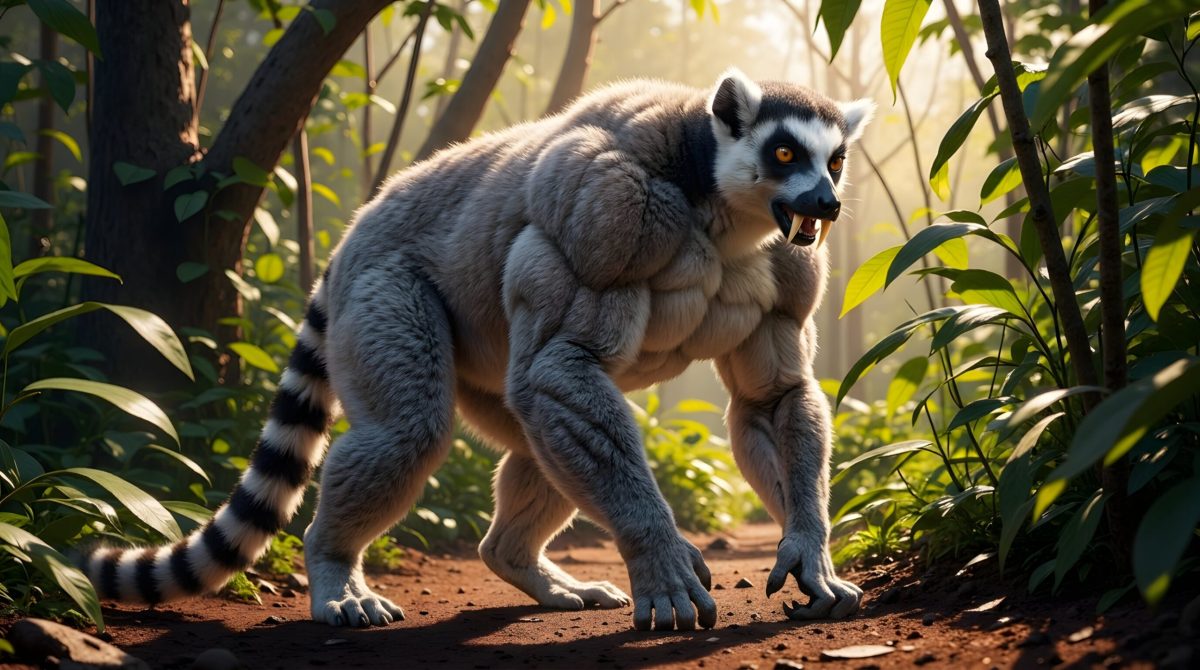
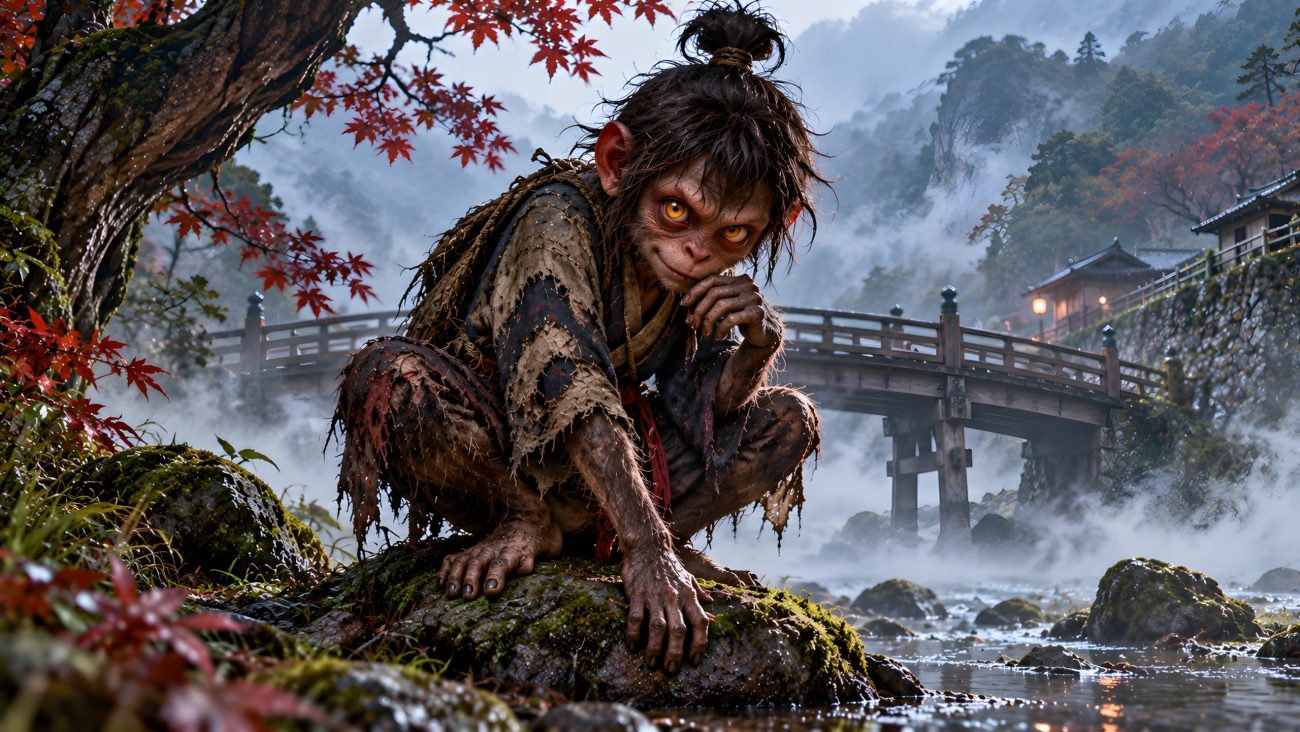
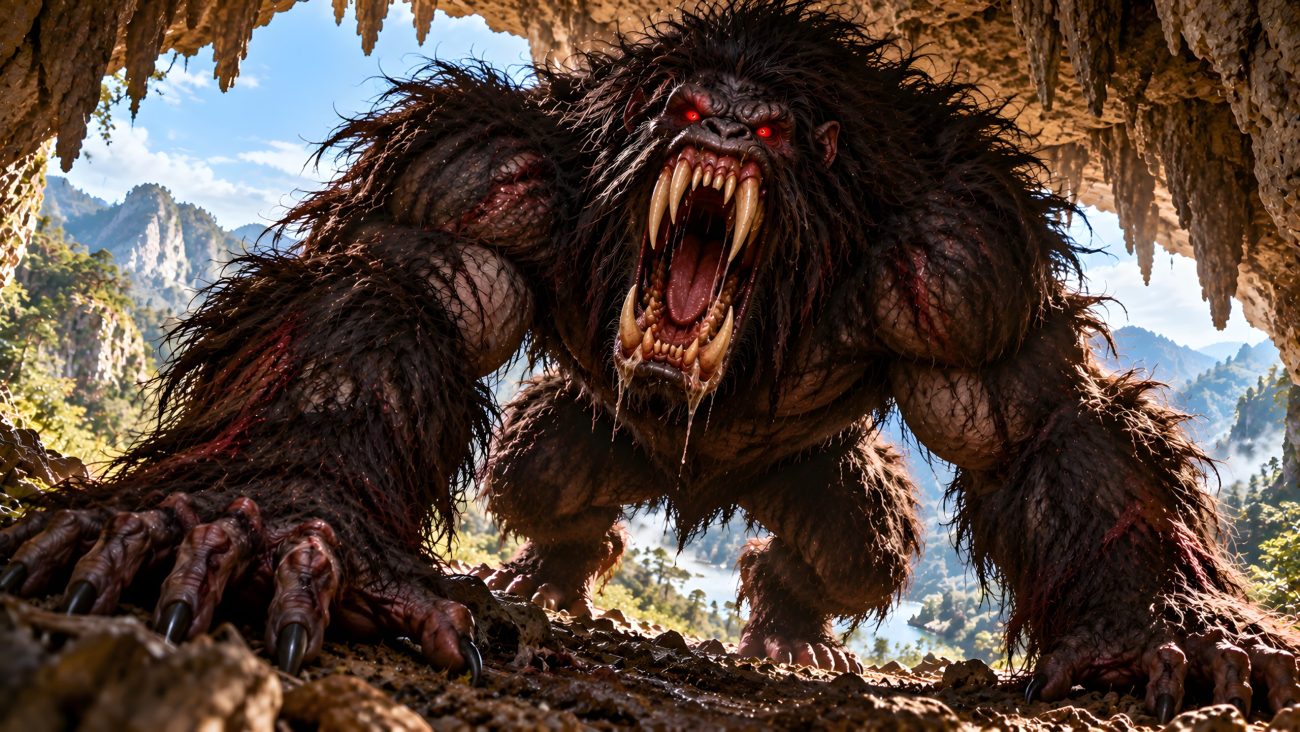
Tretretretre is a shaggy forest creature from Madagascar said to be about the size of a calf. It has monkey-like forelimbs and hind limbs, a short tail, curly hair, and a round, human-like head and face.

It was described as living in forested regions and being agile, able to climb trees easily. Local people were said to fear it, though it was also said to fear humans in return.

Some accounts suggest that stories of Tretretretre may be linked to large extinct lemurs that once inhabited Madagascar. These included massive, slow-moving tree-dwelling animals that lived until several centuries ago. Their extinction has been attributed to environmental change and human activity.


Sources

Bestiary. (n.d.). Tretretretre. From https://www.bestiary.us/tretretretre


Shojo

Tradition / Region: Chinese Mythology, Japanese Mythology
Alternate Names: Kaishojō
Category: Monkey


The Myth

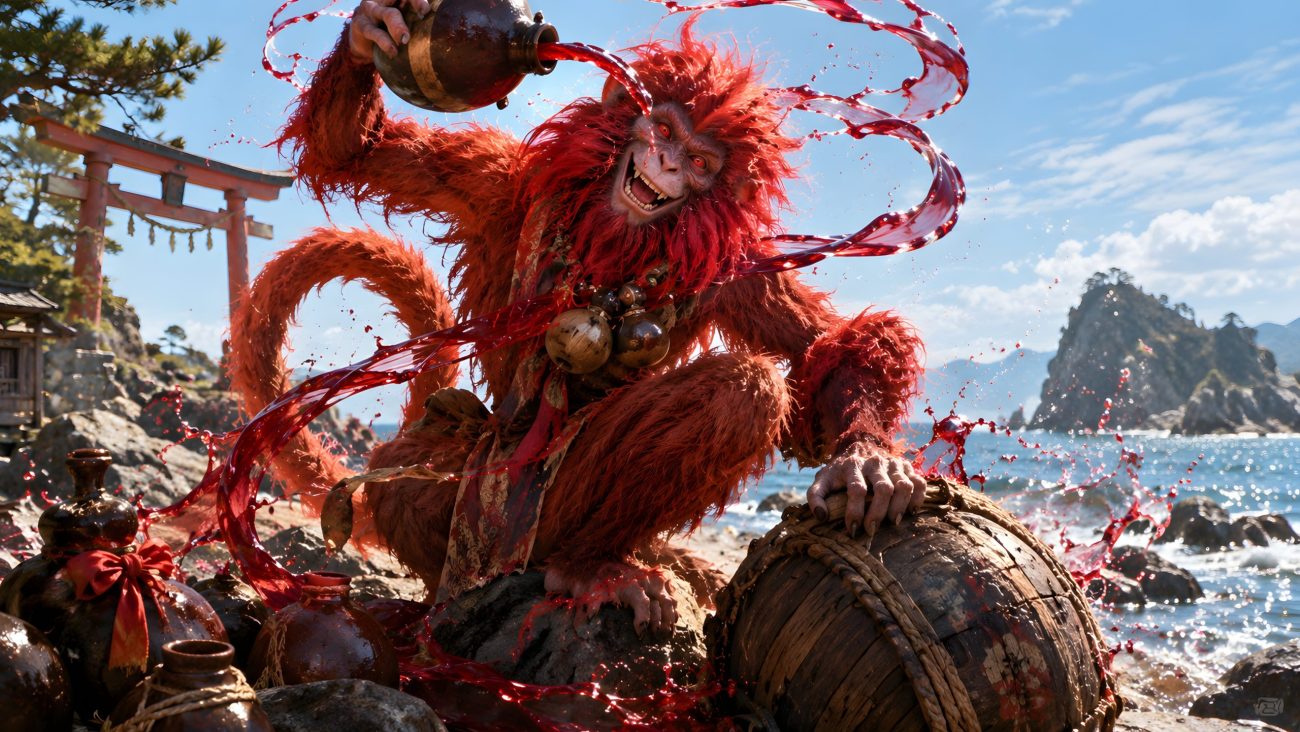
The Shōjō is a red-haired, human-speaking creature originating in Chinese mythology that became well known throughout Japan, appearing in regional legends, folktales, and traditional performances. It is strongly associated with alcohol and is said to possess vividly red blood, which supposedly gives its name to *shōjōhi*, a brilliant scarlet dye used for woollen fabrics. In Japanese legends, the Shōjō is often connected to the sea. In Shiwa District, Iwate Prefecture, a story tells of Shōjō emerging from the water to drink wine from a barrel buried on the beach, becoming so drunk that it falls inside. In Muro District, Wakayama Prefecture, a female Shōjō living in the sea is enchanted by a young man’s flute playing and gives him a hairpin made from her own hair. Used as fishing equipment, it allows him to catch whichever fish he desires without bait. Another tale from Nishitonda Village describes a hut where a sake barrel was placed to capture Shōjō. As expected, a creature emerged from the sea, drank until intoxicated, and was caught. Some regions also tell of the *Umi-Shōjō*, or Sea Shōjō, a supernatural being combining characteristics of the Shōjō and the ghostly ship-haunting spirits known as funayūrei. The Shōjō also appears in traditional *Kirin Shishi* lion dances performed in Tottori and Hyōgo prefectures, where it acts as a guide leading the mythical Kirin. Its vivid red colouring was also associated with smallpox, and papier-mâché Shōjō figures and masks were sometimes used as protective charms to ward off disease and misfortune.


Sources

“Shōjō.” 新版TYZ 妖怪図鑑 (New TYZ Yokai Encyclopedia). https://tyz-yokai.blog.jp/archives/1010654279.html


Aghach Kishi

Tradition / Region: Azerbaijani mythology
Alternate Names: Mesha Adam
Category: Monkey, Forest dweller, Mountain dweller, Ghost


The Myth

In the mountainous forests there lives Aghach Kishi, the Woodman. He is a wild, ghostlike being, his body covered in hair, moving through the trees with a will of his own. Some say he resembles a man, others a beast, but he belongs fully to the forest.

Aghach Kishi wanders near villages and gardens, where he sometimes appears without warning. He has a strong, unpleasant smell, and he is known to take clothing left behind by humans. In older times, people would leave garments for him on purpose, hoping to avoid angering him.

Though he does not always attack, encounters with Aghach Kishi are uneasy and unsettling. He is a reminder that the forests are not empty, and that something older and untamed still walks among the trees.


Sources

JAMnews.net. (2017). The magical creatures of Azerbaijani mythology. Retrieved from https://jam-news.net/azerbaijani-demons/