Ginko

Tradition / Region: Japanese Mythology
Alternate Names: Gingitsune
Category: Fox


The Myth

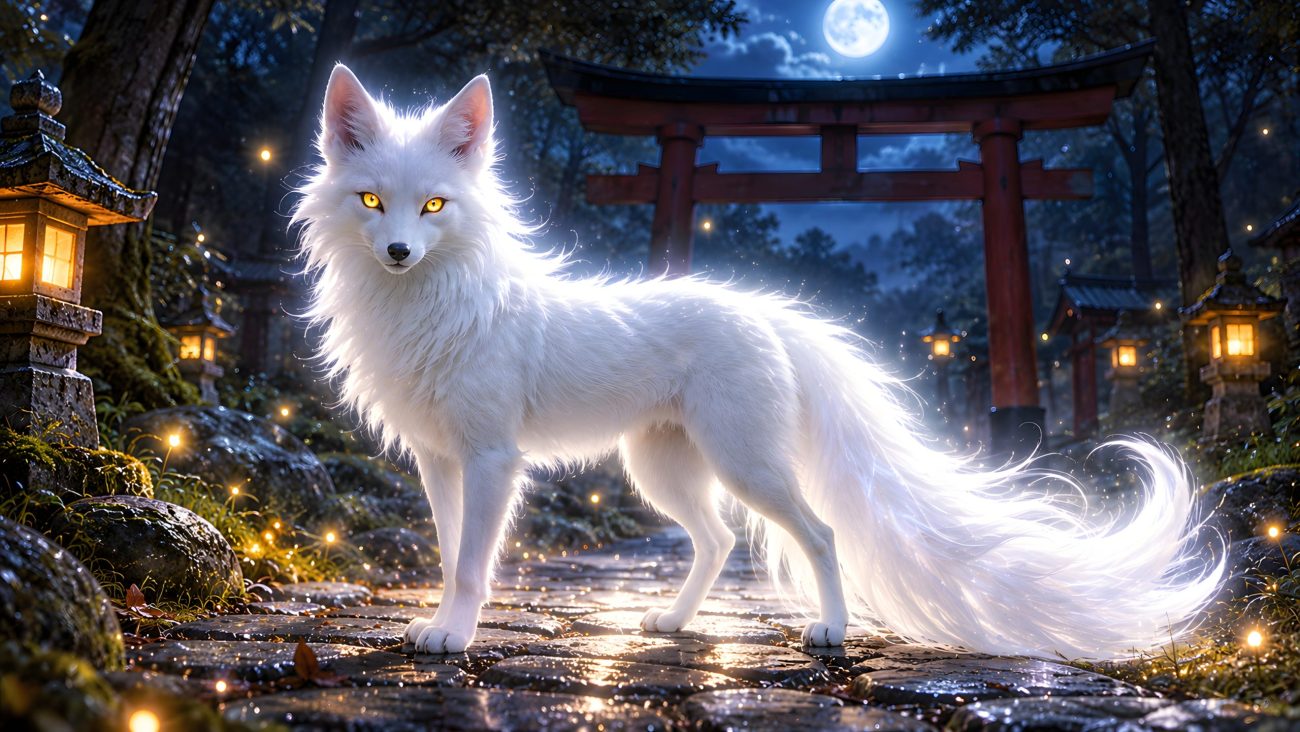
In forests, fields, mountains, and around temples, there are said to dwell rare fox spirits known as Ginko, the Silver Foxes.

Their fur shines pale like moonlight, and they move quietly through the night as messengers of the goddess Dakini. Unlike wandering fox spirits that trick or deceive, the Ginko are counted among the holy foxes. They are pure beings who serve in the unseen world and carry out the will of their divine mistress.

People say the Silver Foxes embody the power of the moon. Just as the moon reflects light in darkness, the Ginko guide the hidden paths of the night and protect sacred places. They are often spoken of together with their counterparts, the Golden Foxes, who represent the sun. Where one brings the light of day, the other carries the calm glow of night.

Among the sacred fox clans, the Ginko belong to the families of benevolent spirits who dwell close to temples and holy grounds. They are not feared but respected, for they move between the human world and the divine.

Thus the Silver Fox is remembered as a fox of moonlight — a quiet, shining presence in the night, walking the boundaries of shrine and forest in service to the gods.


Sources

yokai.com. (n.d.). Ginko. Retrieved March 1, 2026, from https://yokai.com/ginko/?srsltid=AfmBOoq1PBcCaFpbBaPtig5_luguQBQFZxsRhvuLNZmnnO2Xfm_DjteL

Kitsunebi

Tradition / Region: Japanese Mythology
Alternate Names: Fox Lantern, Fox Torch, Kitsunebi
Category: Fox, Flame


The Myth

Across many parts of Japan, people have long spoken of mysterious lights appearing in the night, known as Fox Fire.

These flames are said to be created by foxes. Some believe the fire comes from their breath, glowing as they exhale into the darkness. Others say foxes strike their tails together to spark the light, or that they kindle it from strange materials such as bones. Sometimes the fire appears as floating balls of light that drift across fields and roads.

Because of its steady glow, the light is often called a fox lantern or fox torch. When many of these lights appear at once and move together through the night, people say a fox wedding is taking place somewhere unseen.

One famous tradition tells that at Ōji Inari Shrine in Edo, foxes from across the Kantō region gathered on New Year’s Eve. On that night, countless fox fires were said to dance across the fields as the foxes assembled to receive ranks from their deity. Villagers would watch the number and movement of the lights, believing they foretold whether the coming year would bring a good harvest.

Thus Fox Fire became known as both a sign of the hidden world and a message carried in light — a glow in the night that revealed the unseen presence of foxes and the mysteries that followed them.


Sources

Tyz-Yokai Blog. (n.d.). Kitsunebi. Retrieved March 1, 2026, from https://tyz-yokai.blog.jp/archives/1010653498.html


Hakuzōsu

Tradition / Region: Japanese Mythology
Alternate Names: Hakuzosu, Hakuzōsu the Fox-Priest
Category: Fox


The Myth

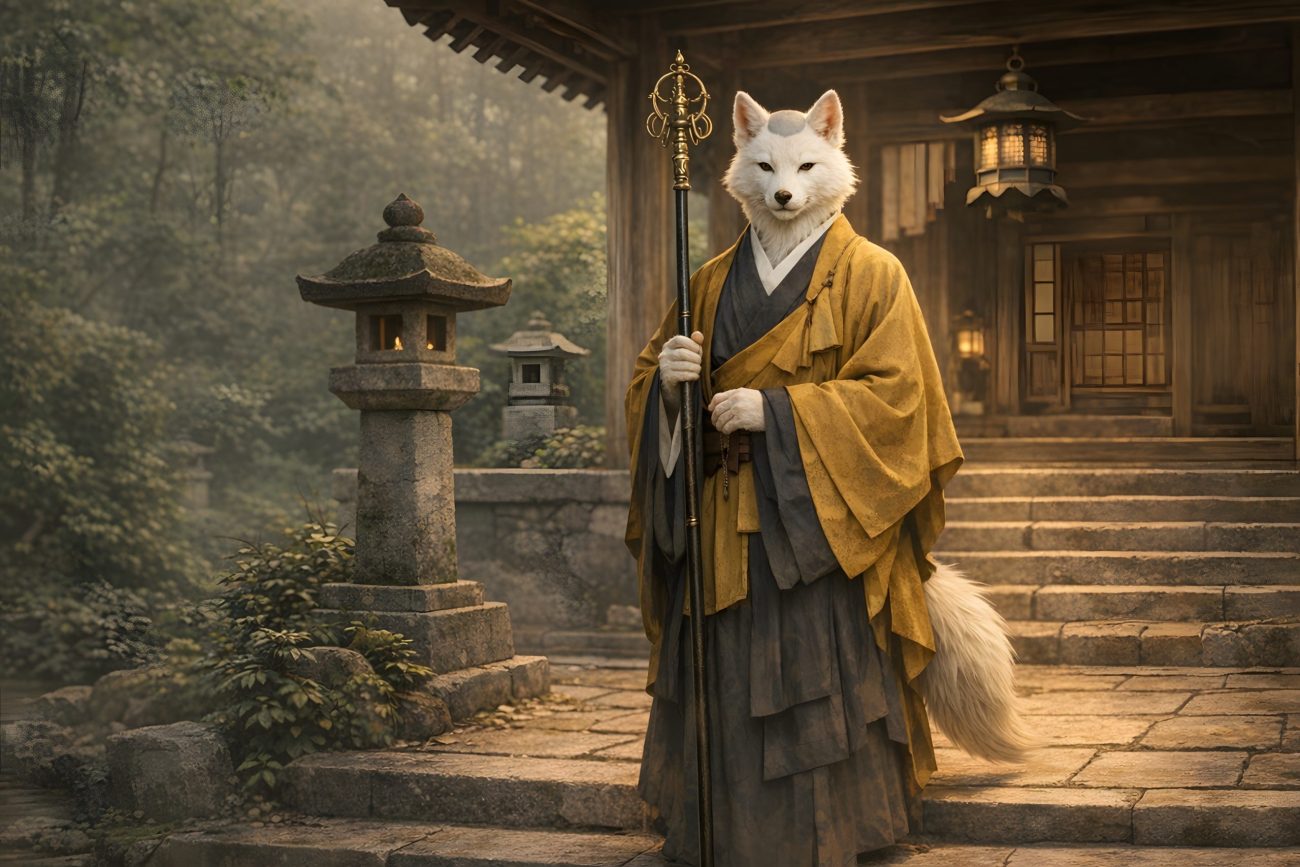
At a temple called Shōrin-ji in Izumi Province there once lived a poor priest named Hakuzōsu. He had little income and few visitors, and his life was one of quiet hardship. Hoping for divine aid, he prayed for seven days and seven nights before the altar of the Inari deity.

At the end of his prayers, a white fox suddenly leapt from the altar and curled up before him. Seeing this as a sign from the god, the priest took the fox in and cared for it. From that time on, fortune changed. Offerings began to arrive at the temple, and people came more often. It seemed that the fox had brought blessing with it.

The fox was no ordinary animal. It could take human shape and sometimes transformed into a warrior, guarding the temple and driving away bandits who threatened the grounds. It stayed close to the priest, as though bound to him by gratitude or divine purpose.

Yet there was danger nearby. Hakuzōsu had a nephew who was a hunter of foxes. Suspicious of the strange events at the temple, the man soon realized that the white fox sometimes took the form of his uncle. Determined to catch it, he used all the tricks of his trade to try to trap the creature.

Still, the fox remained elusive, shifting between forms and slipping away whenever danger came too near.

Stories of the fox-priest spread, and people said that descendants of the white fox lingered around the temple grounds long afterward, some even bearing the mark of three legs like their ancestor.

Thus Hakuzōsu was remembered as a fox who walked among humans in the robes of a priest — a creature of Inari’s favor, whose presence brought both blessing and mystery to the temple where he once dwelled.


Sources

Wikipedia contributors. (n.d.). Hakuzōsu. In Wikipedia. Retrieved March 1, 2026, from https://en.wikipedia.org/wiki/Hakuz%C5%8Dsu

yokai.com. (n.d.). Hakuzōsu. Retrieved March 1, 2026, from https://yokai.com/hakuzousu/?srsltid=AfmBOoqwM964QwrmicqVN43qzmMLevLPyJUwL0_eJzcEtCVma_AP0YLw


Kuzunoha

Tradition / Region: Japanese Mythology
Alternate Names: Kuzu-no-Ha
Category: Fox


The Myth

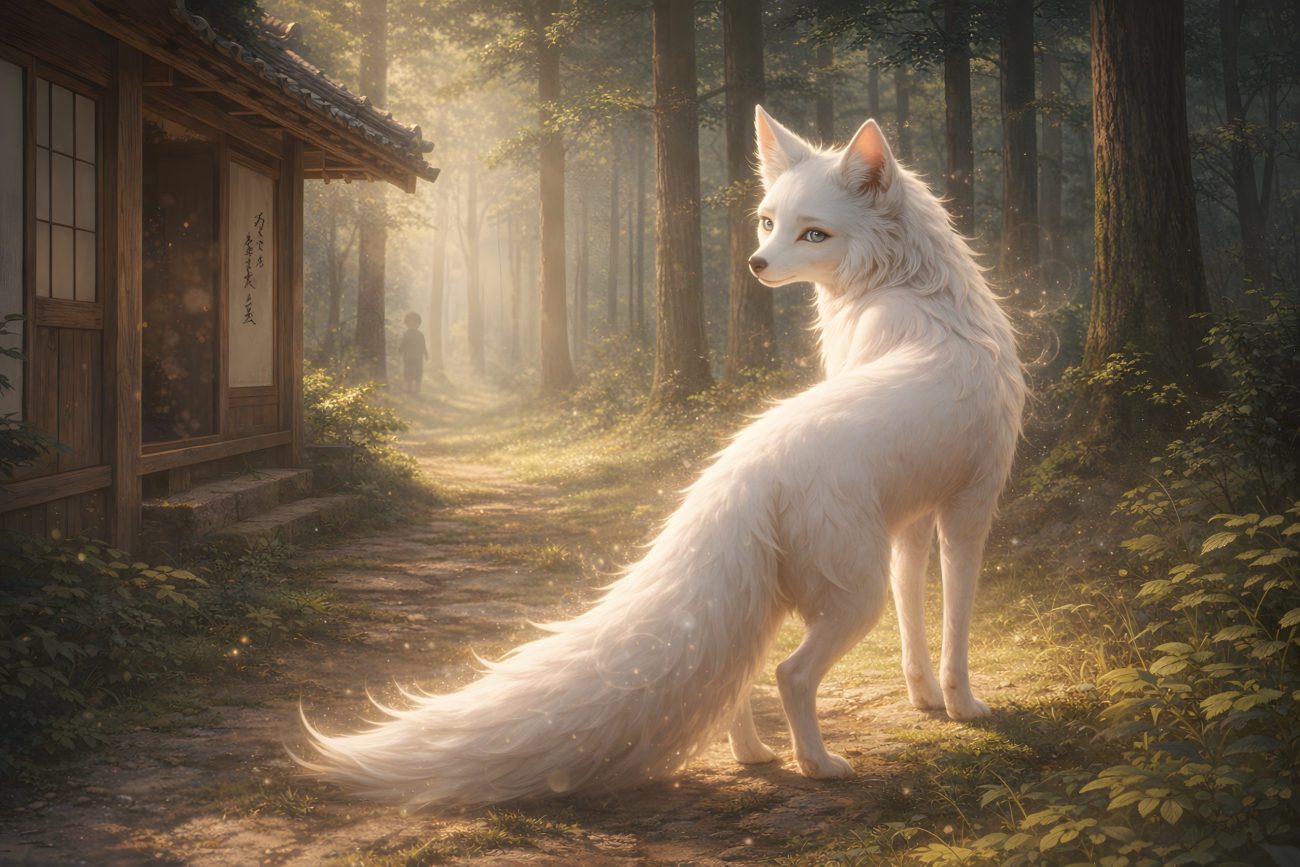
Long ago, in the land of Izumi, there lived a man named Abe no Yasuna. One day he encountered a fox being hunted and chased by men. Moved by pity, Yasuna drove the hunters away and saved the animal’s life.

Not long afterward, Yasuna met a beautiful woman named Kuzunoha. She became his wife, and the two lived happily together. In time, she gave birth to a son, who would grow to be Abe no Seimei, a child of extraordinary intelligence and spiritual power.

For years their household was peaceful. Yet Kuzunoha always seemed to carry a quiet sadness, as though she guarded a secret. One day, while the child was playing, he accidentally glimpsed his mother’s shadow — and saw that it was not fully human. The truth was revealed: Kuzunoha was the fox Yasuna had once saved, who had taken human form out of gratitude and love.

Knowing she could no longer remain among humans once her nature was discovered, Kuzunoha prepared to leave. Before departing, she wrote a farewell poem upon a paper door, telling her husband and child that if they missed her, they should come to the forest of Shinoda.

She then vanished, returning to the wild as a fox.

Yasuna later brought their son to that forest, where the boy is said to have received his first teachings in hidden knowledge. From this beginning, Abe no Seimei grew into one of the greatest masters of onmyōdō, carrying within him the wisdom of both human and fox.

Thus Kuzunoha is remembered not as a trickster, but as a fox spirit of devotion — a mother who crossed the boundary between worlds for love, and whose legacy lived on through her child.


Sources

Wikipedia contributors. (n.d.). Kuzunoha. In Wikipedia. Retrieved March 1, 2026, from https://en.wikipedia.org/wiki/Kuzunoha

yokai.com. (n.d.). Kuzunoha. Retrieved March 1, 2026, from https://yokai.com/kuzunoha/?srsltid=AfmBOooL0A8LfeRbnPjmFs8_N3Z4ETbc8ITLHzMNBQPxAXV54g9FzIkj


Ginseng

Tradition / Region: Japanese Mythology
Alternate Names: Ninjin no Kami, Ginseng Deity
Category: Plant, Deity


The Myth

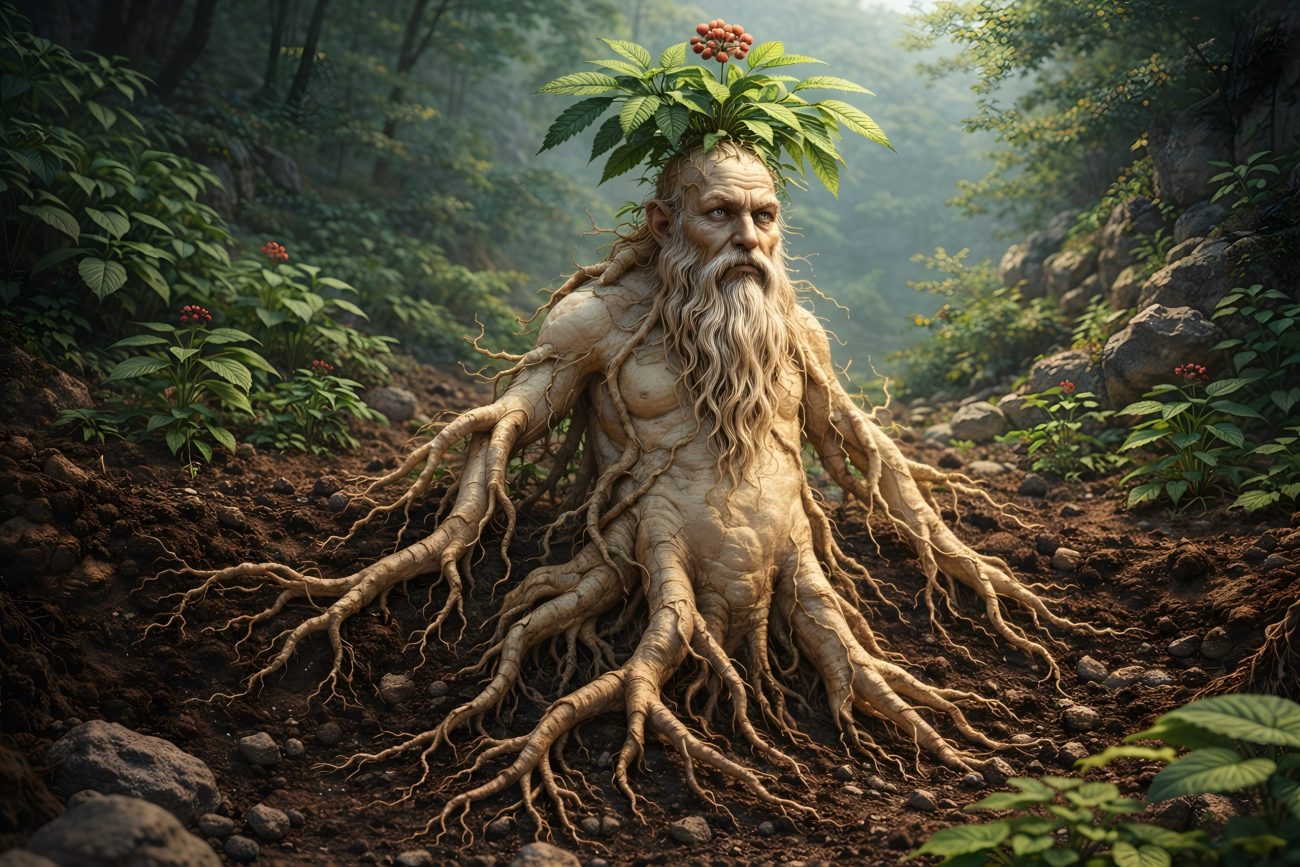
In old illustrated books of curious gods, there is mention of a strange deity known simply as the Carrot.

This being was said to have come from Korea and to dwell in the form of a precious medicinal root. It was believed that the true plant possessed great power, able to cure even illnesses thought impossible to heal. Apothecaries prized it, and those who obtained it treated it almost like a divine object.

The deity was imagined with a human face bearing a foreign beard, while its body was formed from roots. Bundles of carrot-like tendrils served as its arms and legs, giving it the appearance of a spirit grown directly from the soil.

People also spoke of another plant with the same name found at ordinary greengrocers. This one, however, had no power at all. Though it looked similar, it was merely a vegetable and brought no blessings to those who ate it.

Thus the Carrot Deity was remembered as a spirit of the rare medicinal root — a being whose strength lay hidden in the earth, revered when genuine, but easily mistaken for the humble plant that shared its name.


Sources

Tyz-Yokai Blog. (n.d.). Ginseng. Retrieved March 1, 2026, from https://tyz-yokai.blog.jp/archives/1076296170.html


Nobiagari

Tradition / Region: Japanese Mythology
Alternate Names: Nobiagari Nyūdō, Mikoshi Nyūdō, Miage Nyūdō
Category: Plant


The Myth

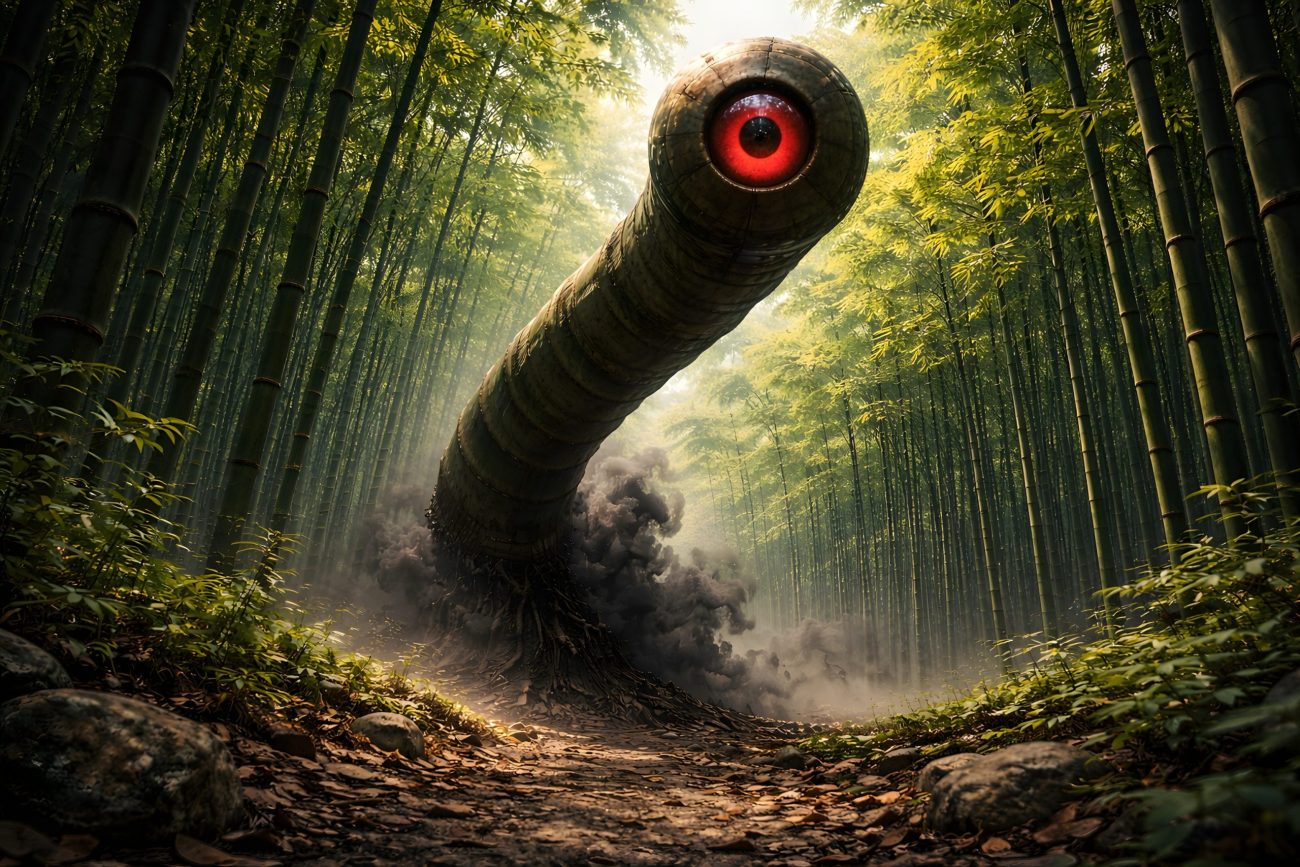
In the bamboo groves of Shikoku, people tell of a strange and dangerous being known as the Nobiagari.

It hides low among the stalks, no larger than a small stone or clump of shadow. At rest it is hardly noticeable — a dark, smoky shape about the height of a hand above the ground, blending perfectly with the fallen leaves and tangled roots of the grove.

But when a traveler comes close and notices it, the creature suddenly rises.

The Nobiagari stretches upward at once, its body lengthening like smoke pulled toward the sky. It grows taller than a person, then taller still. No matter how high the traveler lifts their head, the being continues to rise, forcing them to look higher and higher.

While the victim’s gaze is drawn upward, their throat is exposed. That is when the attack comes.

In some places, people say the creature bites into the throat and tears it open. In others, it coils its long body around the neck and strangles its prey. Elsewhere, it simply collapses forward, crushing the victim beneath its towering form.

Yet there is said to be one way to escape. If a person keeps their eyes lowered and refuses to look up, the creature cannot seize them. Striking at the ground where it first appeared — just above the height of a small stone — may cause it to vanish at once.

Thus the Nobiagari is remembered as a lurking danger of the bamboo forest: a thing that begins small and harmless, but rises without limit the moment one gives it their gaze.


Sources

yokai.com. (n.d.). Nobiagari. Retrieved March 1, 2026, from https://yokai.com/nobiagari/?srsltid=AfmBOopGYBhws1WGqT7ZdR81Jq_G9tMhQFZ1E3612EWys_7dEQsouyO5


Jubokko

Tradition / Region: Japanese Mythology
Alternate Names: Tree Child, Shrub Child
Category: Plant


The Myth

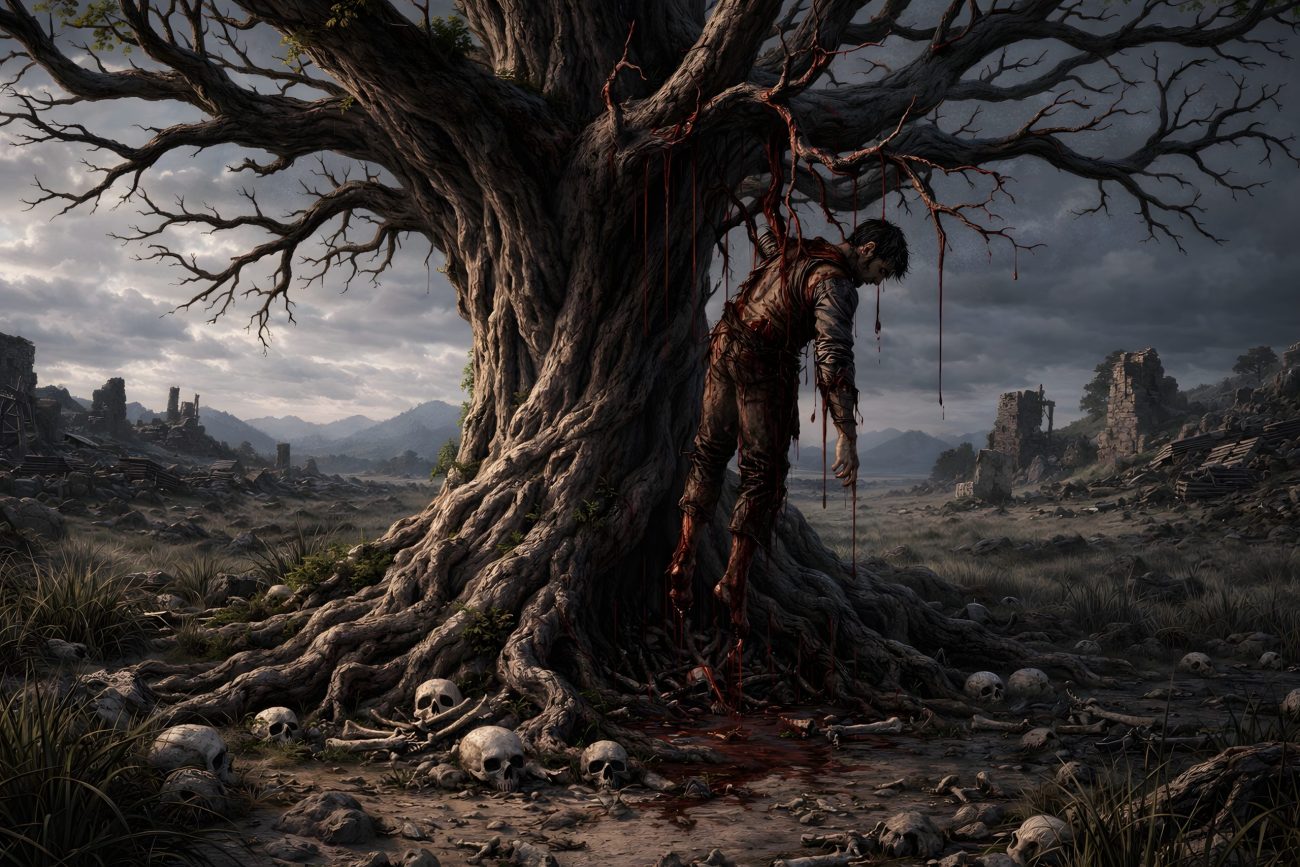
On old battlefields and places where many people died, there are said to grow strange trees known as Jubokko. At first glance they appear no different from any other tree. They stand quietly among the grasses and ruins, their trunks weathered and their branches spreading like any woodland growth.

Yet those who look more closely notice unsettling signs. The branches seem twisted and grasping, like fingers waiting to close. Beneath the tree, half-hidden in the weeds, lie scattered bones bleached pale by sun and time.

These trees were once ordinary. But where the soil became soaked with the blood of countless dead, their roots drank deeply of it. Over the years, this nourishment changed them. They awakened into something else, a living tree that no longer drew strength from water alone but hungered for human blood.

The Jubokko waits in stillness for a traveler to pass beneath its branches. When someone comes too near, the limbs lash down with sudden force, seizing the victim and lifting them high into the canopy. Thin, sharp twigs pierce the skin and draw out the blood until the body is emptied.

What remains is left to the birds, insects, and beasts of the field. In time, only dry bones fall back to the ground, joining the others that lie beneath the tree.

From a distance, the Jubokko stands silent and unchanged, just another tree among many. Only when it is too late does a traveler understand that this is no ordinary plant, but a tree grown from the memory of war, still feeding on the lives of the living.


Sources

Wikipedia contributors. (n.d.). Jubokko. In Wikipedia. Retrieved March 1, 2026, from https://en.wikipedia.org/wiki/Jubokko


O-ude

Tradition / Region: Japanese Mythology
Alternate Names: Big Arm
Category: Plant


The Myth

In Shisō County of Banshū there once lived a man named Yamanaka Zen’emon. He was known as honest and kind, but poverty weighed heavily on him. Hoping to improve his fortunes, he set out on foot toward Kobe to look for work.

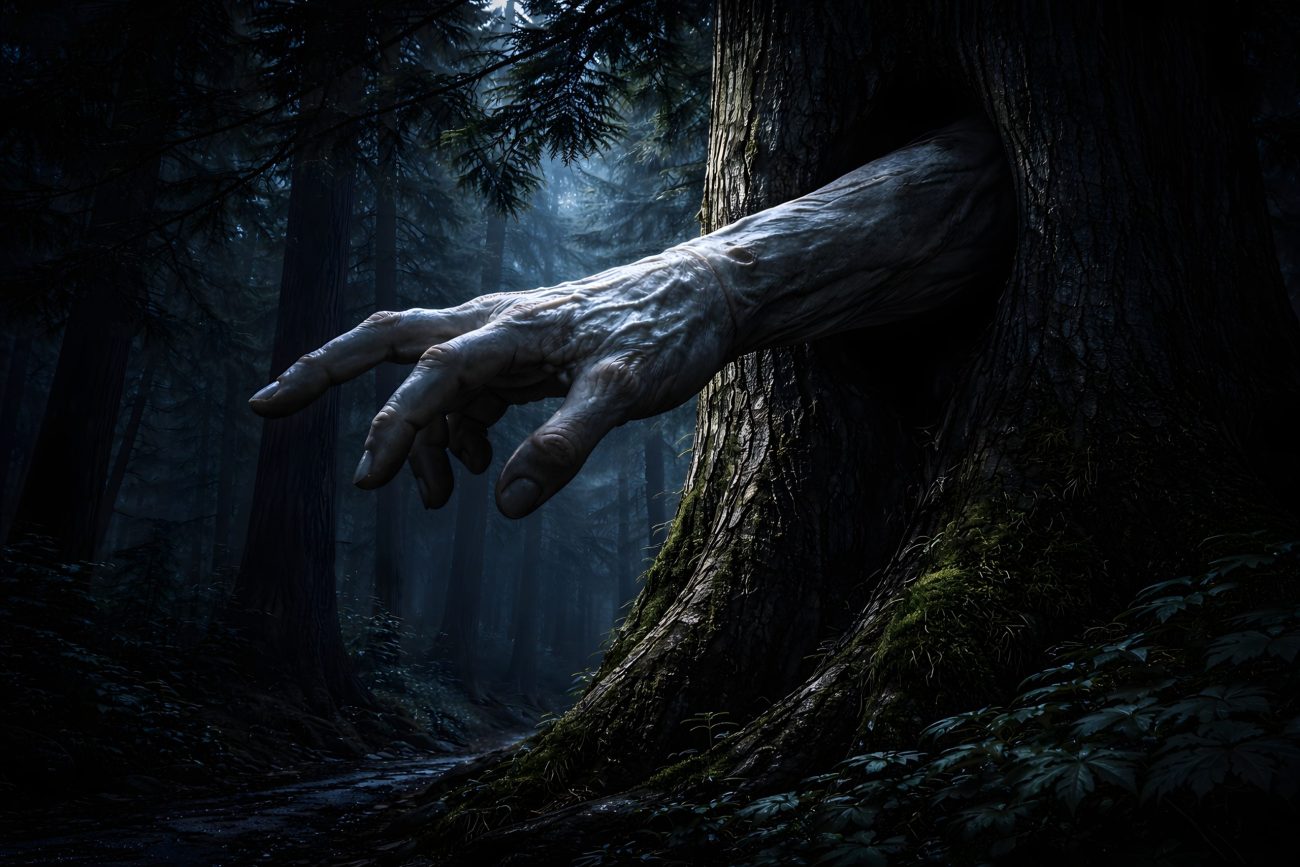
As he crossed into the deep mountain roads, night fell around him. The forest grew dark and still, and only the sound of his own steps followed him. Then, without warning, something emerged from a grove of cedars beside the path — a gigantic arm, stretching out toward him from the trees.

The sight was so sudden and unnatural that Zen’emon collapsed in terror. After a short time he came to, scrambled to his feet, and fled down the road as fast as he could.

Not long afterward, he saw someone sitting in a roadside tree. Drawing closer, he recognized the man as Gen’ya, a childhood friend he had not seen in years. Gen’ya greeted him calmly and said he had been waiting for him. Still shaken, Zen’emon told him about the monstrous arm he had just encountered.

Gen’ya listened, then held out his own arm with a strange smile.
“This one is much bigger than yours,” he said.

Zen’emon stared in horror. Gen’ya’s arm had grown enormous, swelling until it seemed as large as the arm of the Great Buddha of Nara itself. The sight nearly made him faint again. As he watched, his friend suddenly vanished like smoke, leaving nothing behind.

Terrified, Zen’emon ran until he found shelter at a nearby house and stayed there through the night. The next day he continued on to Kobe, but though he searched, no good work came his way.

And so the story remained — a tale told in the region of how, in the mountain forests, even a familiar face may hide something uncanny, and how the deep woods can stretch ordinary things into frightening shapes.


Sources

Tyz-Yokai Blog. (n.d.). O-ude. Retrieved March 1, 2026, from https://tyz-yokai.blog.jp/archives/1010653


Mamejuu

Tradition / Region: Japanese Mythology
Alternate Names: Bean Beast
Category: Plant


The Myth

There is said to be a strange being called the Mamejuu, a small creature soft like a bean and lacking eyes, yet filled with a quiet and watchful presence.

Unlike most spirits, the Mamejuu is not found in forests or rivers, but within the human heart itself. It sleeps there unnoticed, hidden deep inside a person. Only through discipline, study, and careful training can it be drawn out into the world.

When it emerges, the creature grows and becomes a loyal servant to the one who awakened it. People compare it to a shikigami of the onmyōji or to the spirit servants said to have followed mountain ascetics. Once fully formed, the Mamejuu can act on behalf of its master and may even influence others, carrying out quiet tasks that ordinary hands cannot perform.

Some say the creature is ancient and wise, able to whisper knowledge of hidden matters — the secrets of long life, the ways to gain wealth, and the paths by which fortune draws near. Yet its appearance is humble, and it remains close to the one who called it forth, like a spirit born from the soul itself.

Thus the Mamejuu is remembered as a being not found in the outer world, but grown within — a small, unseen creature waiting in the heart until someone learns how to bring it to life.


Sources

Tyz-Yokai Blog. (n.d.). Mamejuu. Retrieved March 1, 2026, from https://tyz-yokai.blog.jp/archives/1076296172.html


Mozousu-sama

Tradition / Region: Japanese Mythology
Alternate Names: Mozosu-sama
Category: Plant, Ghost


The Myth

Long ago in Kitsunezuka of Kami Ongata, there lived a farmer named Yamamoto. He was unmarried, gentle in manner, and admired by many of the village girls. Yet his heart belonged to one woman alone, a beautiful lover with whom he had pledged his life.

Near the Yamamoto home stood a temple where a monk called Mozousu lived. He was known throughout the village as a troublesome man — coarse, selfish, and fond of chasing women. He meddled in the lives of widows and flirted shamelessly with visitors to the temple, earning a poor reputation among the people.

Before long, Mozousu set his sights on Yamamoto’s beloved. When Yamamoto was away, the monk began secretly visiting her, pressing her with unwanted attention and making threatening demands. The woman endured this harassment in silence until Yamamoto finally learned the truth.

Furious but troubled, Yamamoto hesitated. The monk was tied to the temple of his own family, and confronting him openly would not be simple. After much brooding, he resolved on a darker course. One night, as Mozousu made his way toward the woman’s house, Yamamoto lay in wait and killed him.

From that night onward, peace left the house. Each evening, the ghost of Mozousu came to Yamamoto’s bedside, whispering bitterly and tormenting him without rest.

At last Yamamoto prepared to face the spirit. He lay down with a sword at his pillow and waited. When the ghost appeared again and began its complaints, Yamamoto struck in a single motion, cutting it down.

The next morning, he went out to check his fields. There he found one of his onions split cleanly in two, as though struck by a blade. From the cut surface seeped a reddish fluid like blood. Only then did he understand that what he had struck in the night had not been a ghost in human form, but something tied to the earth itself.

Afterward, misfortune followed the Yamamoto family. Ill luck and trouble came one after another, and the household believed the dead monk’s resentment had not faded. To calm his spirit, they built a small shrine and enshrined him as Mozousu-sama, praying for his peace.

Even so, the family kept one rule for generations afterward: no onions were to be grown in their fields, lest the spirit remember and return once more.


Sources

Tyz-Yokai Blog. (n.d.). Mozōsu. Retrieved March 1, 2026, from https://tyz-yokai.blog.jp/archives/1071221874.html