Ushigozen

Tradition: Japanese mythology
Alternative Names: Cow Lady
Category: Cow


The Myth

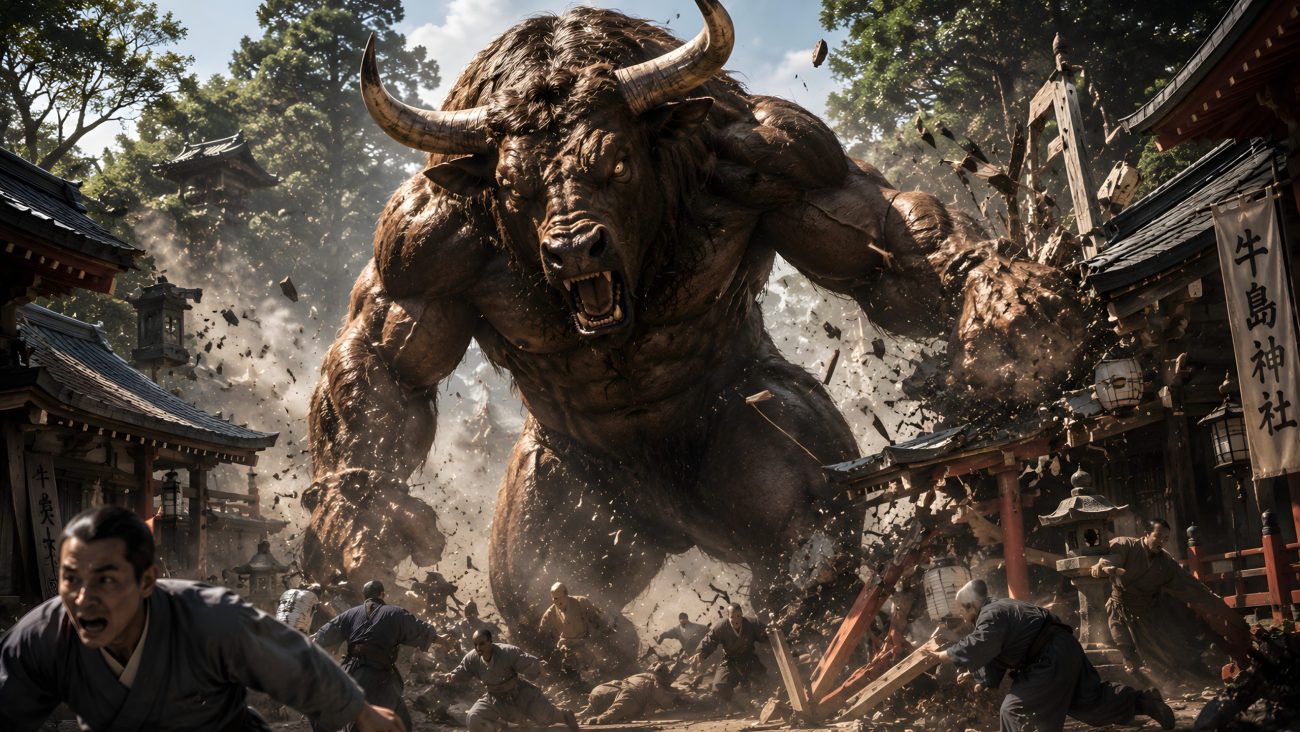
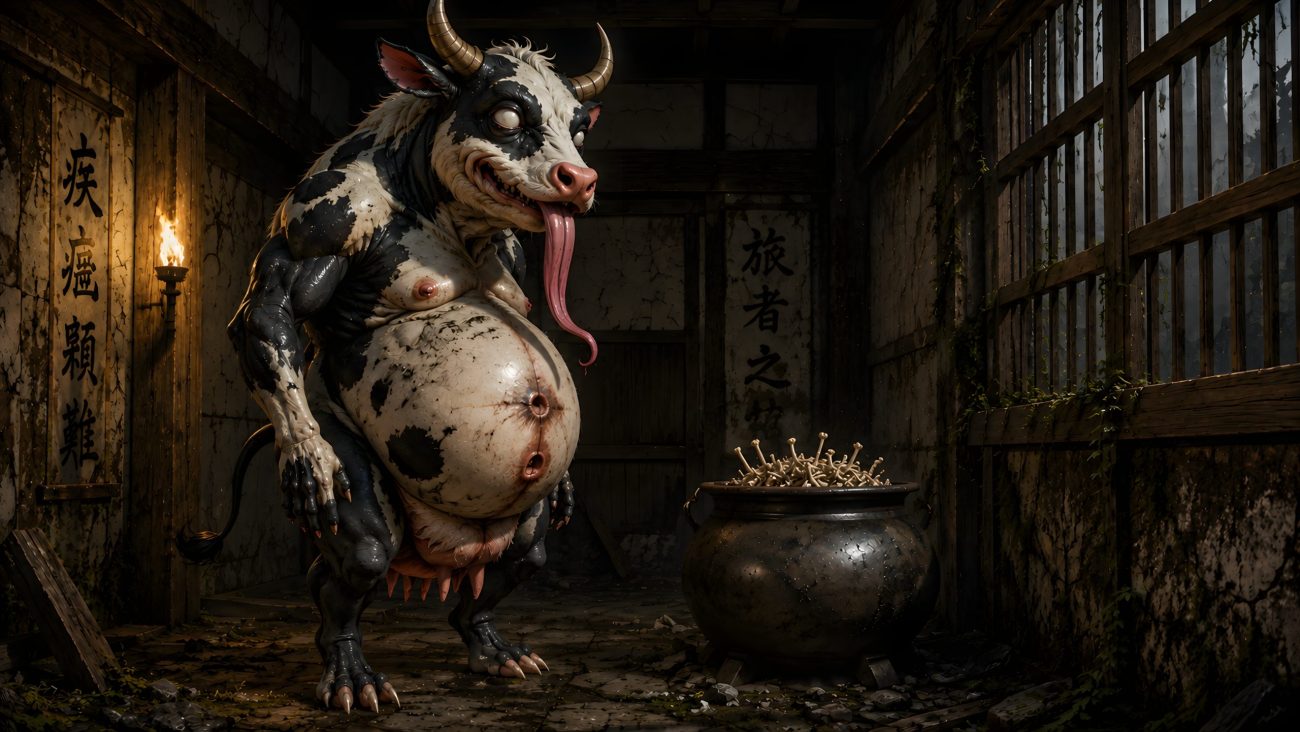
Ushigozen is a cow-like monster associated with an ancient incident at Asakusa. It is described as a monstrous creature resembling a cow-demon.

In 1251, during the third year of the Kenchō era, a strange creature resembling a cow appeared near Asakusa in Musashi Province. It suddenly ran toward Sensō-ji Temple, where approximately fifty monks had gathered in the temple’s refectory.

As the creature appeared, twenty-four of the monks immediately fell ill and became unable to rise from their beds. Seven others died instantly.

Another account tells that, around the same period, a monstrous creature resembling a cow demon emerged from the Asakusa River. It ran about wildly before suddenly disappearing by jumping into a shrine on the opposite bank.

The shrine was Ushigozen Shrine, now known as Ushijima Shrine. According to the tradition, when the creature entered the shrine, it dropped a sacred treasure known as the cow-jewel onto the altar.

Ushigozen Shrine itself was traditionally founded during the Jōgan era, between 859 and 879. The monk Jikaku Daishi Ennin is said to have received an oracle from an old man who was an incarnation of Susanoo-no-Mikoto. The figure commanded him to build a shrine and promised that, whenever unrest threatened the land, he would protect it by appearing in a form capable of subduing demons, wearing the head of a bull around his neck.

Because of this tradition, the creature that attacked Sensō-ji has sometimes been interpreted as the fierce spirit, or aramitama, of Ushigozen. Another interpretation identifies it as an incarnation of Susanoo-no-Mikoto, with the attack possibly reflecting a religious conflict between the traditions associated with Sensō-ji and Ushigozen Shrine.

The creature that appeared at Asakusa is regarded as one of the earliest recorded examples of the Japanese ox-demon, or ushioni. In later retellings, the name Ushigozen itself came to be treated as the name of the supernatural creature.


Sources

Takahashi, Toshihiro. “牛の首 [うし‐くび] (Ushi-kubi).” 新版TYZ 妖怪図鑑 (New TYZ Yokai Encyclopedia). April 19, 2021.
Ushi-Fufu

Tradition: Japanese mythology
Alternative Names: –
Category: Cow


The Myth

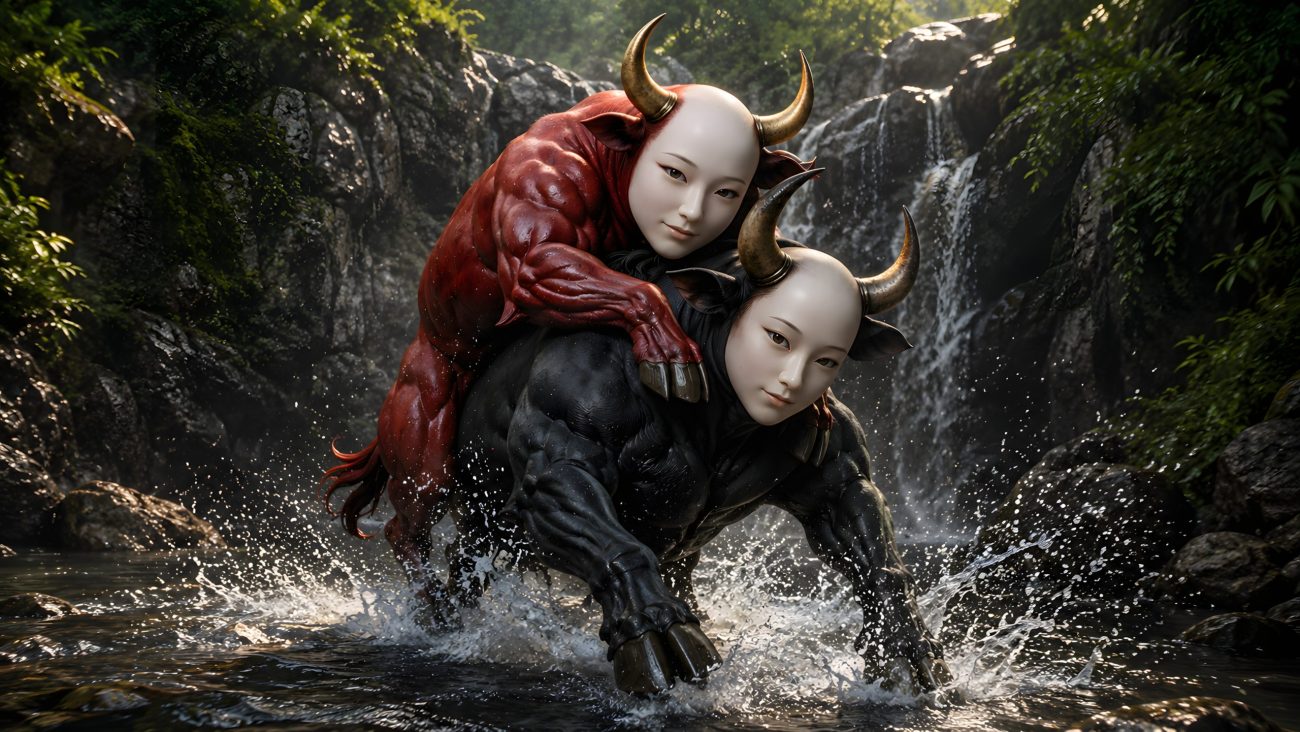
Ushi-Fufu is a pair of supernatural beings with human heads and cow-like bodies. Both figures have two horns growing from their heads and hooves split into two parts.

The male has a black body with a white abdomen, while the female has a red body. The male is also depicted with exposed genitals.

The source provided does not give any further story or legend concerning Ushi-Fufu beyond their depiction as a pair of cow-like beings associated with Hell.


Sources

“獣;ケモノ,夫婦;フウフ,畜生道;チクショウドウ (Kemono; Fūfu; Chikushōdō).” Kaii/Yōkai Image Database, International Research Center for Japanese Studies. 2006. https://www.nichibun.ac.jp/cgi-bin/YoukaiGazou/card.cgi?identifier=U426_nichibunken_0058_0007_0000


Ushi-Bakemono

Tradition: Japanese mythology
Alternative Names: Ushi-Bakemono
Category: Cow


The Myth

Ushi-Bakemono is a yokai with elements of social satire, introduced in Hyakki Hirugyo, from Keigetsu Omachi’s Eiri Kunwa, an illustrated collection of moral tales published in 1916. It is listed as the 35th of the 41 yokai in the work.

Ushi-Bakemono is depicted with a human body and the head of a large black ox. At first glance, its appearance resembles Shennong, the ancient Chinese deity, but unlike Shennong, the creature is an ox monster that provides no benefit to humanity.

The ox monster is said to doubt everything around it, including gods, morality, the state, and life itself. It wanders aimlessly through a fog, questioning these aspects of existence.

The horns on its head represent jealousy and insidious cunning. The creature is said to attempt to push down anyone and everyone in order to advance itself.

Although such a being may call itself a modern person, the tale presents it as something less than human: an ox monster wandering through the world, driven by doubt, jealousy, and cunning.


Sources

Takahashi, Toshihiro. “牛の化物 [うし‐ばけもの] (Ushi-bakemono).” 新版TYZ 妖怪図鑑 (New TYZ Yokai Encyclopedia). July 25, 2021. https://tyz-yokai.blog.jp/archives/1078437905.html


Unmushi

Tradition: Japanese mythology
Alternative Names: Sea Cow
Category: Cow


The Myth

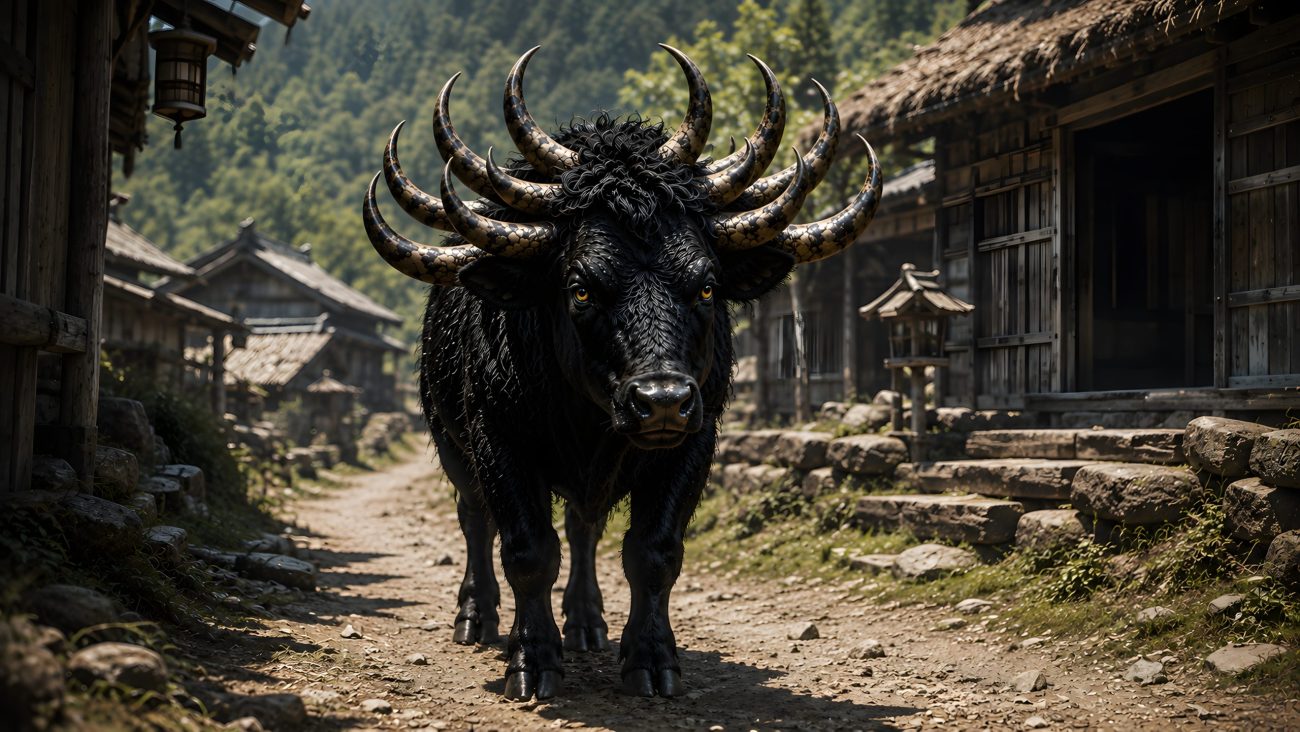
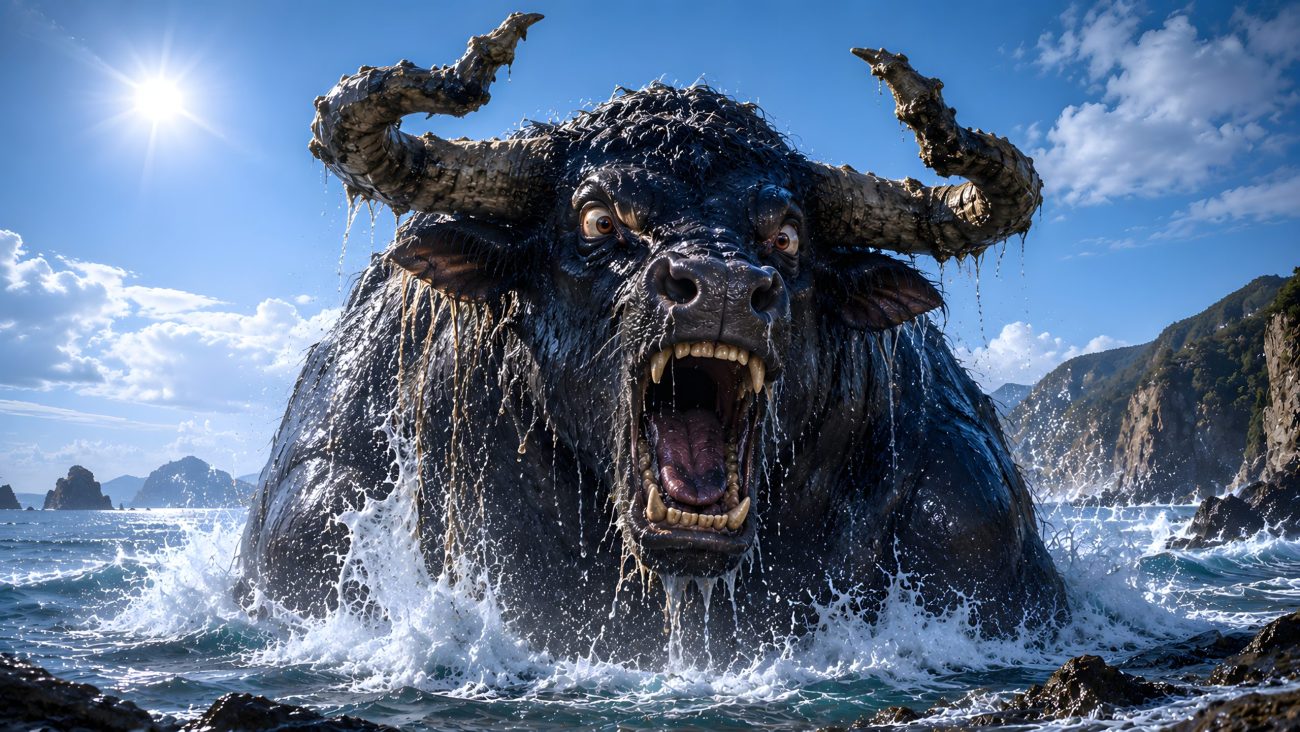
Unmushi is a yokai from the area around Kagoshima Bay in Tarumizu City, Kagoshima Prefecture. It takes the form of a black cow with horns and is said to emerge from the sea with a terrifying roar.

The Unmushi appears only on the 27th day after Obon. Because of the creature’s appearance on that day, people traditionally avoided going out to sea.


Sources

Takahashi, Toshihiro. “海牛 [うんむし] (Unmushi).” 新版TYZ 妖怪図鑑 (New TYZ Yokai Encyclopedia). July 9, 2011. https://tyz-yokai.blog.jp/archives/1010654024.html


Twelve-Horned Calf

Tradition: Japanese mythology
Alternative Names: Twelve-Horned Calf
Category: Cow


The Myth

A calf with twelve horns was said to have been born in Tamba Province, Japan. The calf was black and had six horns growing from each side of its head.


Sources

Akisato, Okina, and Nishimura Chūwa. “牛;ウシ,動物;ドウブツ,角;ツノ (Ushi; Animal; Horns).” Kaii/Yōkai Image Database, International Research Center for Japanese Studies. Accessed August 30, 2026. https://www.nichibun.ac.jp/cgi-bin/YoukaiGazou/card.cgi?identifier=U426_nichibunken_0446_0013_0000


Tonzo

Tradition: Japanese mythology
Alternative names: –
Category: Cow


The Myth

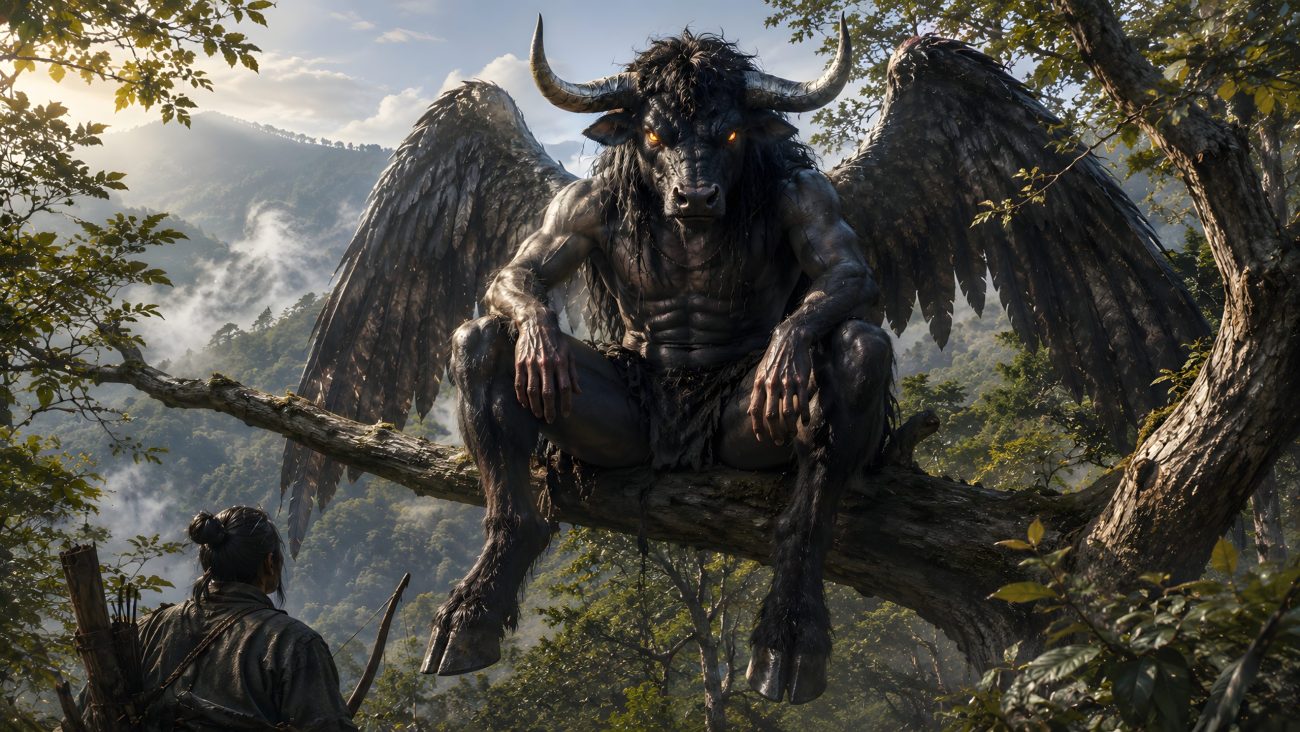
Tonzo is a mysterious yokai from Iwaizumi in Iwate Prefecture. It is described as a pitch-black, bull-like flying monster with enough supernatural strength to shake the ground and destroy trees.

One evening, an experienced hunter named Sahei-dono went hunting in Miyanosawa. For some reason, no deer appeared that night. As dawn approached, he was preparing to leave when a pitch-black creature resembling a bull suddenly jumped out before him.

The creature spoke in a human voice and declared that it was Tonzo, challenging Sahei to strike it and threatening to crush him if he did. Sahei had his hand on the knife at his waist, but he was so frightened that he fled.

Some time later, Sahei went to Yokonaga-mine. Near a chestnut tree, Tonzo appeared again. The ground trembled as the creature leaped onto the tree. It shook the tree violently and snapped its branches.

Tonzo then reminded Sahei of their previous encounter and threatened to seize and kill him if he returned. Terrified, Sahei begged for forgiveness and fled.

About ten days later, Sahei fell ill and died.

The true nature of Tonzo is unknown. The only description preserved in the tradition is that it was a flying monster resembling a bull.


Sources

Takahashi, Toshihiro. “トンゾウ (Tonzo).” 新版TYZ 妖怪図鑑 (New TYZ Yokai Encyclopedia). December 3, 2011. https://tyz-yokai.blog.jp/archives/1010654094.html


Gaibyō-ki

Tradition: Japanese mythology
Alternative names: The Coughing Disease Oni
Category: Demon


The Myth

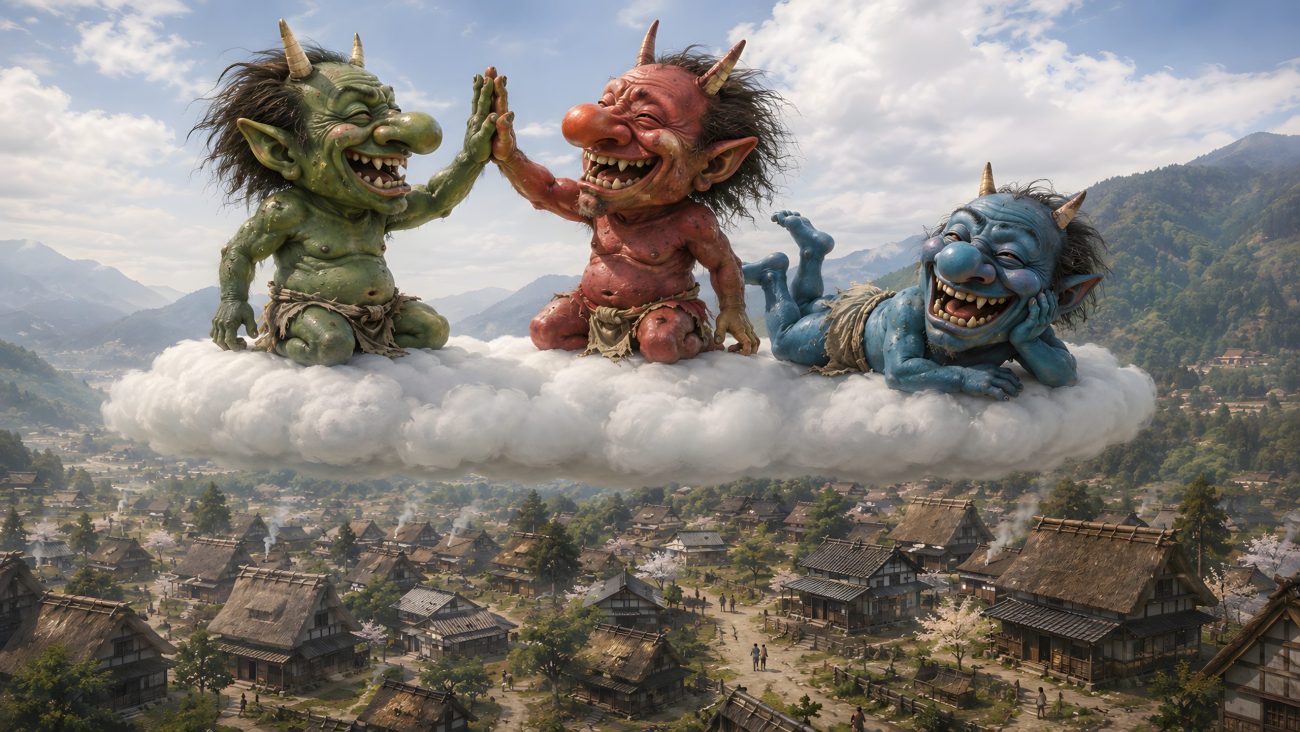
Gaibyō-ki are small oni associated with an outbreak of coughing sickness. They are depicted as three small demons riding on clouds and attempting to enter a household, where they spread the disease.

The story appears in Ehon Sayoshigure under the title Okina Ekijin o Fusegu.

Around the Eishō era (1504–1521), coughing sickness spread through four or five villages in Echizen Province. Many villagers became seriously ill and were confined to their beds.

A rōnin lived in one of the affected villages, but strangely, nobody in his household became sick.

One night, an old man appeared at the rōnin’s house and told him that he lived beneath the southeastern corner of the house. He explained that oni carrying the coughing disease had recently been entering people’s homes and causing them to suffer. Because he recognized the rōnin’s virtuous conduct, the old man had been standing guard outside the house each night to keep the oni away.

After the old man departed, the rōnin dug beneath the southeastern corner of the house. There he discovered a box buried in the ground.

Believing that the box represented the old man who had protected his household, the rōnin built a shrine and worshipped him.

The accompanying illustration shows three small oni riding through the clouds as they attempt to enter the rōnin’s home, while the old man stands before the gate and glares at them, preventing their entry.


Sources

Takahashi, Toshihiro. “咳病の鬼 [がいびょう‐き] (Gaibyō-ki).” 新版TYZ 妖怪図鑑 (New TYZ Yokai Encyclopedia). July 19, 2020. https://tyz-yokai.blog.jp/archives/1077741576.html


Kigyō-yubi

Tradition: Japanese mythology
Alternative names: Oni-shaped Finger
Category: Demon


The Myth

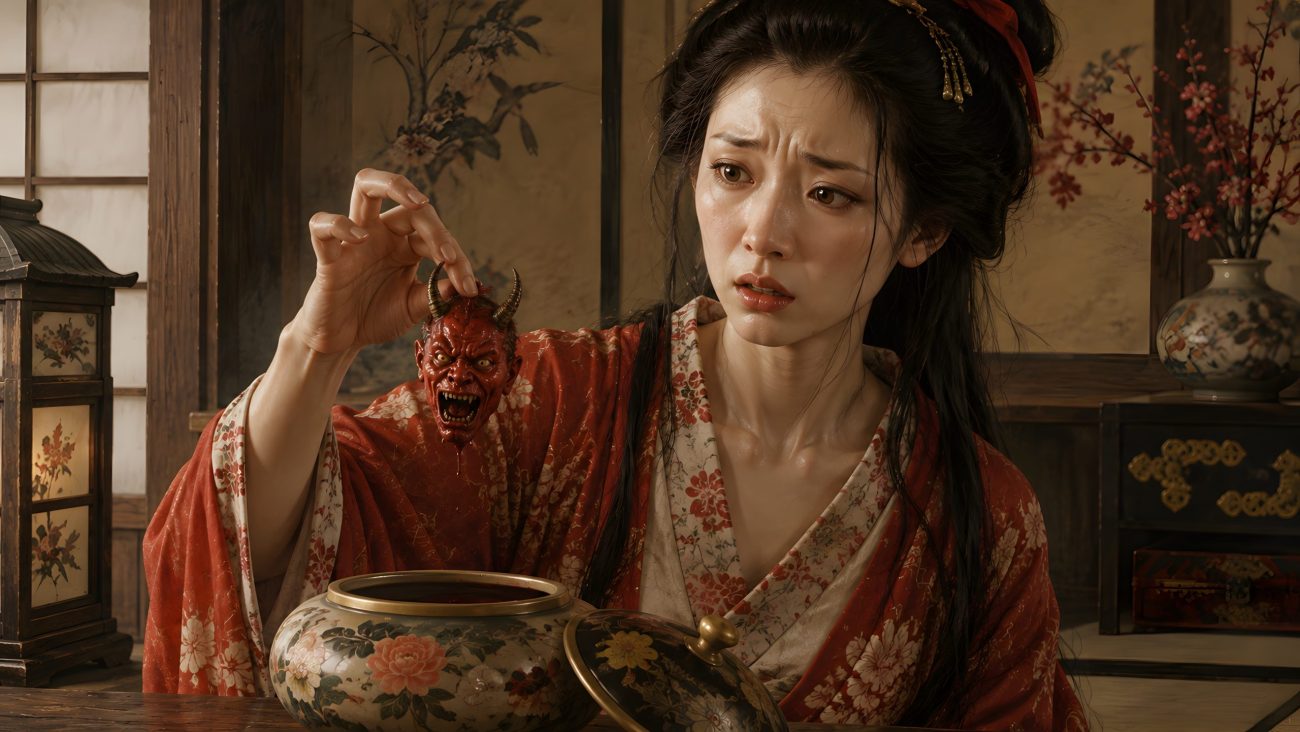
Kigyō-yubi is a severed human finger that appears to transform into the head of a small oni. The transformed finger is described as having a red complexion, two curled horns, and bright, star-like eyes, resembling the traditional Japanese depiction of an oni.

The story appears in the second volume of Kaishū Yakōkon, in a tale concerning a courtesan named Tatsuta.

Tatsuta was born in Kyoto and became a shirabyōshi, a female entertainer who performed songs and dances. After moving to Naniwa, she became highly sought after because of her beauty and skill at singing. She eventually fell deeply in love with a young merchant named Yamamoto Matashuke, and remained devoted to him even while continuing her work as a courtesan.

Matashuke, however, eventually abandoned her and married another woman. Tatsuta was devastated by his change of heart. She repeatedly sent him letters and, as proof of her devotion, even cut off her hair and one of her fingers and sent them to him. Matashuke regarded these gifts as troublesome and returned them.

Consumed by grief, jealousy, and resentment, Tatsuta became increasingly distraught. The severed finger remained in a container in her possession.

One day, when Tatsuta looked at the finger, she saw that it had transformed into the head of a tiny oni. It was red, had two curled horns, and possessed eyes that shone like stars. Terrified, Tatsuta covered the container and believed that her intense jealousy had caused her severed finger to become an oni.

She went to a reclusive monk named Ryōfū and confessed what had happened. When Ryōfū opened the container, however, he saw nothing unusual. The object was simply a human finger.

When he asked Tatsuta whether she still saw an oni, she insisted that she did. Ryōfū concluded that the oni was a manifestation of the demon within her own jealous mind, projected onto the severed finger.

Ryōfū taught her Buddhist teachings and gave her the ten recitations of the Buddha’s name. Three days later, Tatsuta returned and happily explained that she could no longer see the finger as an oni. She wished to shave her head and become Ryōfū’s disciple.

Ryōfū initially refused, explaining that she could not simply abandon her life as a courtesan. Instead, he taught her that she could turn her heart toward Buddhism even while remaining outwardly in her existing circumstances.

Tatsuta continued as a courtesan for some time, but eventually fulfilled her wish and became Ryōfū’s disciple. She shaved her head, took the name Eirin Bikuni, and established a hermitage at Sonezaki.


Sources

Takahashi, Toshihiro. “鬼形の指 [きぎょう‐ゆび] (Kigyo-yubi).” 新版TYZ 妖怪図鑑 (New TYZ Yokai Encyclopedia). September 22, 2018. https://tyz-yokai.blog.jp/archives/1072385607.html


Gagoze

Tradition: Japanese mythology
Alternative names: Gagojin, Gagoji, Gangoji, Gangōji, Gagoze
Category: Demon


The Myth

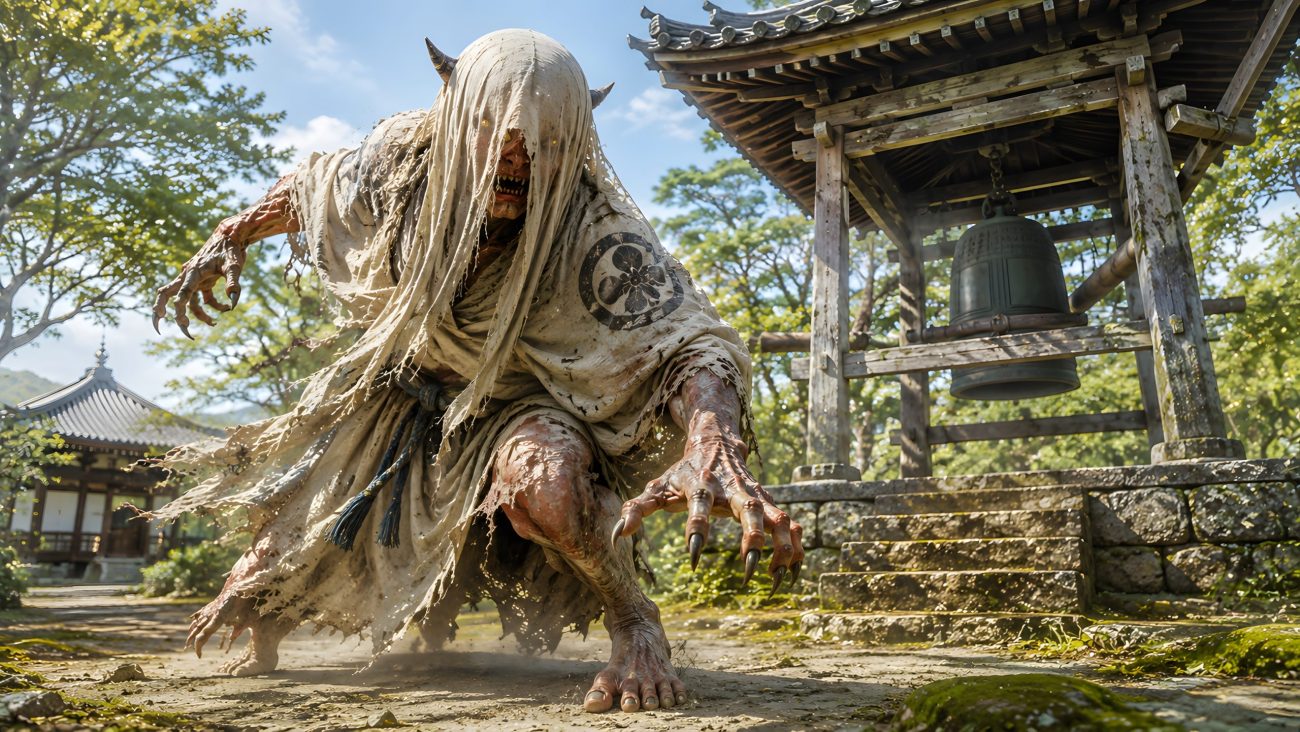
Gagoze is a Japanese yokai associated with the ancient Gangōji temple in Nara. In later yokai picture scrolls, it is depicted as an ogre-like figure with a cloth covering its head. These depictions are thought to have been inspired by the vengeful spirit said to have appeared in the temple’s bell tower.

During the reign of Emperor Bidatsu, a farmer from Katawa in Aichi District, Owari Province, encountered a small thunder deity that had fallen from the sky. After helping the deity return to heaven, the farmer was rewarded with a child.

The child was born with a snake wrapped around his head and grew into a person of extraordinary strength. He eventually became a temple servant at Gangōji.

At that time, a demon appeared every night in the temple’s bell tower and killed people. The exceptionally strong youth volunteered to defeat it. At midnight, he confronted the demon and fought with it. The demon eventually escaped, but the youth succeeded in tearing out some of its hair.

The following day, the monks followed the trail of blood left by the fleeing demon. It led them to a place where people who had committed evil deeds at the temple had been buried. The demon was therefore revealed to be the vengeful spirit of a wicked person who had died.

The demon’s hair was preserved at Gangōji as a temple treasure. The youth later became known as Dōjō Hōshi and became a Buddhist monk.

The names Gagoze, Gagoji, Gagojin, and Gangoji later became associated with words for monsters or bogeymen in children’s speech. During the Edo period, these names were understood as corruptions of Gangōji and were connected with the legend of the temple’s demon.


Sources

Takahashi, Toshihiro. “元興寺 [がごぜ] (Gagoze).” 新版TYZ 妖怪図鑑 (New TYZ Yokai Encyclopedia). December 6, 2010. https://tyz-yokai.blog.jp/archives/1010653554.html


Ō-gyūnikukai

Tradition: Japanese Mythology
Alternative names: Ō-gyūnikukai
Category: Cow


The Myth

During the Meiji era, an inn in Hirakawa-chō, Kojimachi Ward, Tokyo, became notorious for strange occurrences in its eight-mat room on the second floor. According to an 1898 report in the Miyako Shimbun, anyone who stayed there was said to experience terrifying nightmares in a state somewhere between dreaming and waking.

One guest dreamed that a giant was strangling him. Another experienced a beautiful young woman tormenting him. Two explorers who had returned from overseas decided to stay in the room themselves in order to discover the truth behind the phenomenon.

During the night, one of the explorers awoke from a nightmare in which a giant was strangling him. When he asked his companion what was happening, the other revealed that he too had experienced a strange dream.

His nightmare, however, concerned something much stranger: beef.

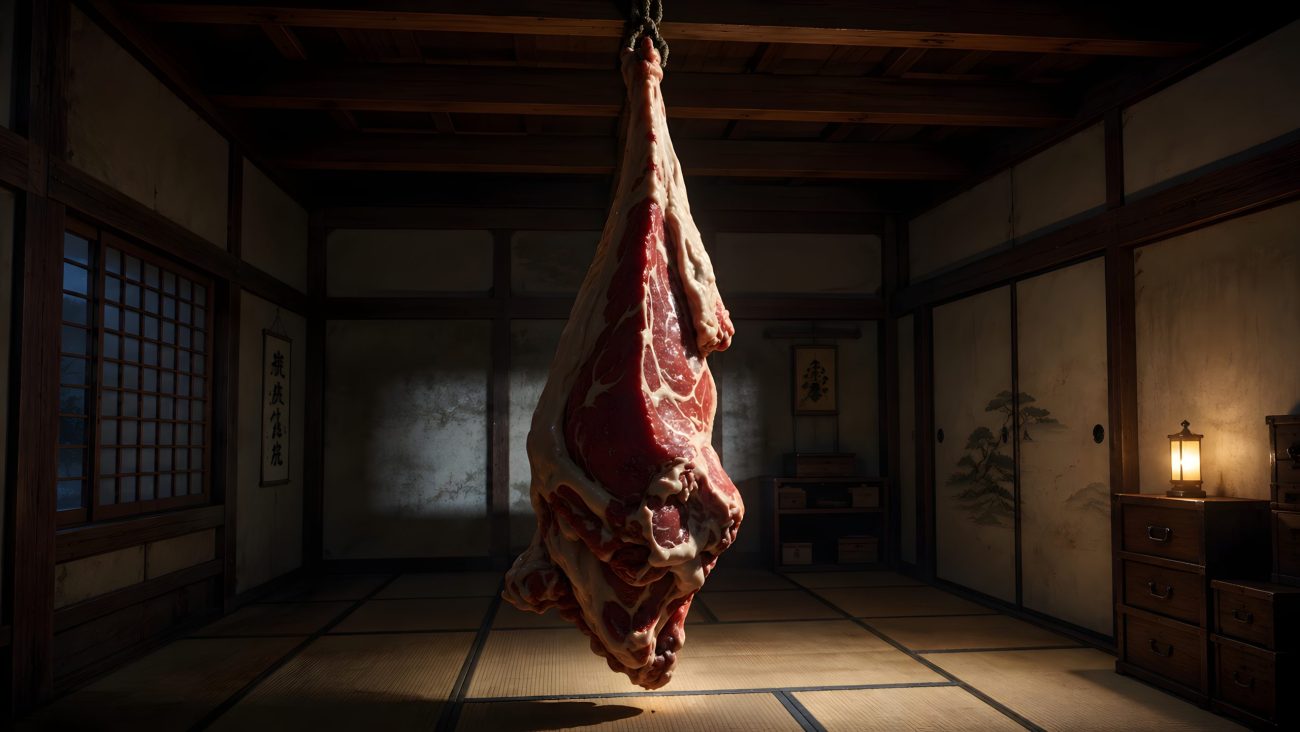
In the dream, an enormous piece of beef suddenly descended from the ceiling beams. As someone who considered himself a great eater of beef and horse meat, he initially believed that disposing of it should have been easy, whether by boiling or roasting it. Yet within the dream he found himself completely unable to get rid of the enormous mass of meat.

He tried various methods, but nothing worked. Eventually he became overwhelmed and helpless, suffering so intensely that he awoke covered in sweat.

At the same time, his companion was also suffering from his own nightmare about the giant monster.

The report offered several possible explanations for the strange experiences. Some suggested that animals such as martens living in the attic might emit a form of “animal electricity” that caused the disturbing dreams. Another explanation was more psychological: the first person to experience a nightmare in the room may have told others about it, causing subsequent guests to enter the room already frightened and consequently experience similar nightmares.

The Ō-gyūnikukai is therefore less a conventional monster than a strange Meiji-era account of a supernatural nightmare, in which an enormous piece of beef itself becomes the source of terror.


Sources

Takahashi, Toshihiro. “大いなる牛肉塊 (Ō-gyūnikukai).” 新版TYZ 妖怪図鑑 (New TYZ Yokai Encyclopedia). April 29, 2021. Accessed August 29, 2026. https://tyz-yokai.blog.jp/archives/1078437884.html