Tonzo

Tradition: Japanese mythology
Alternative names:
Category: Cow


The Myth

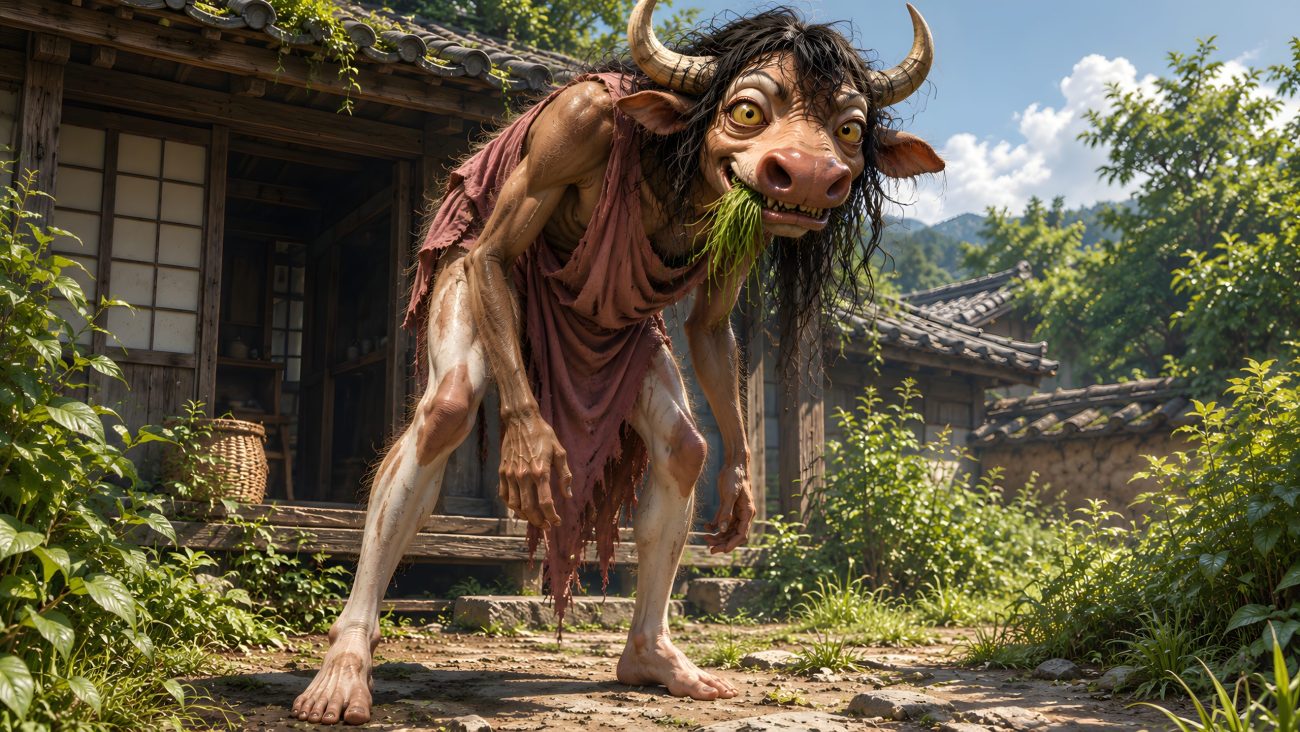
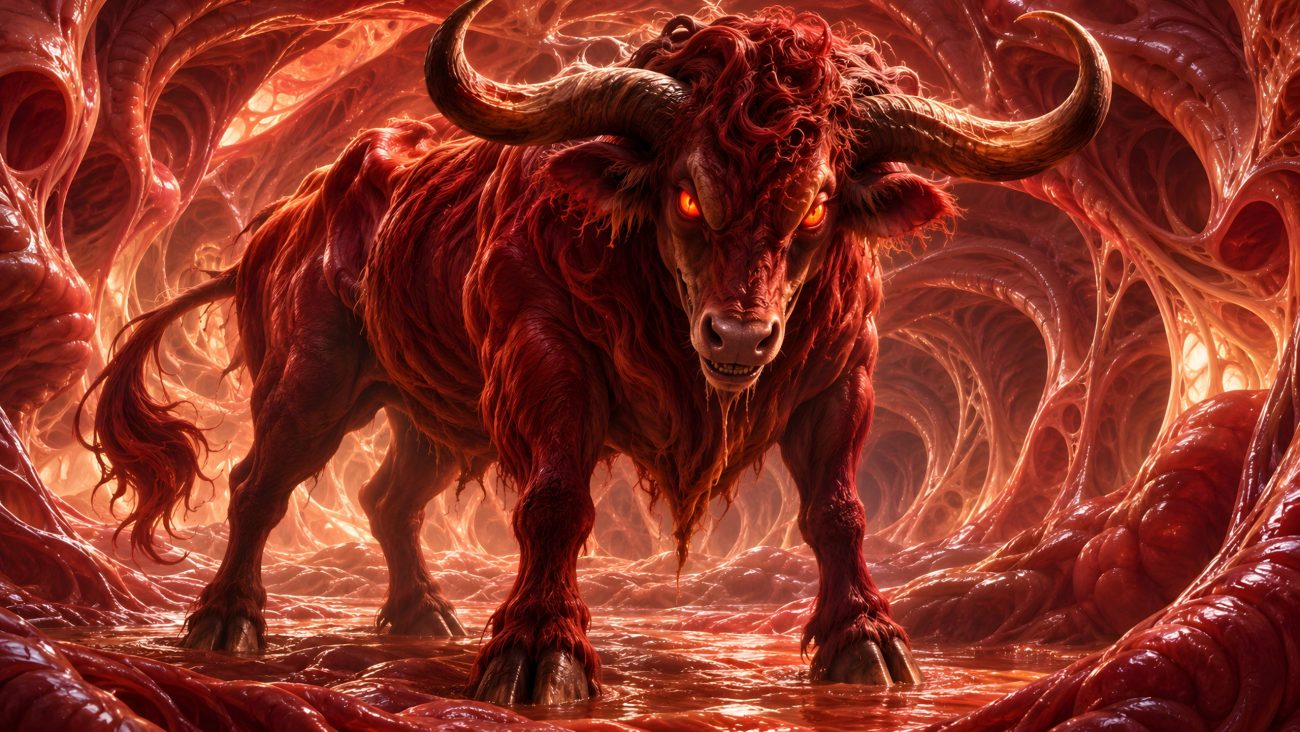
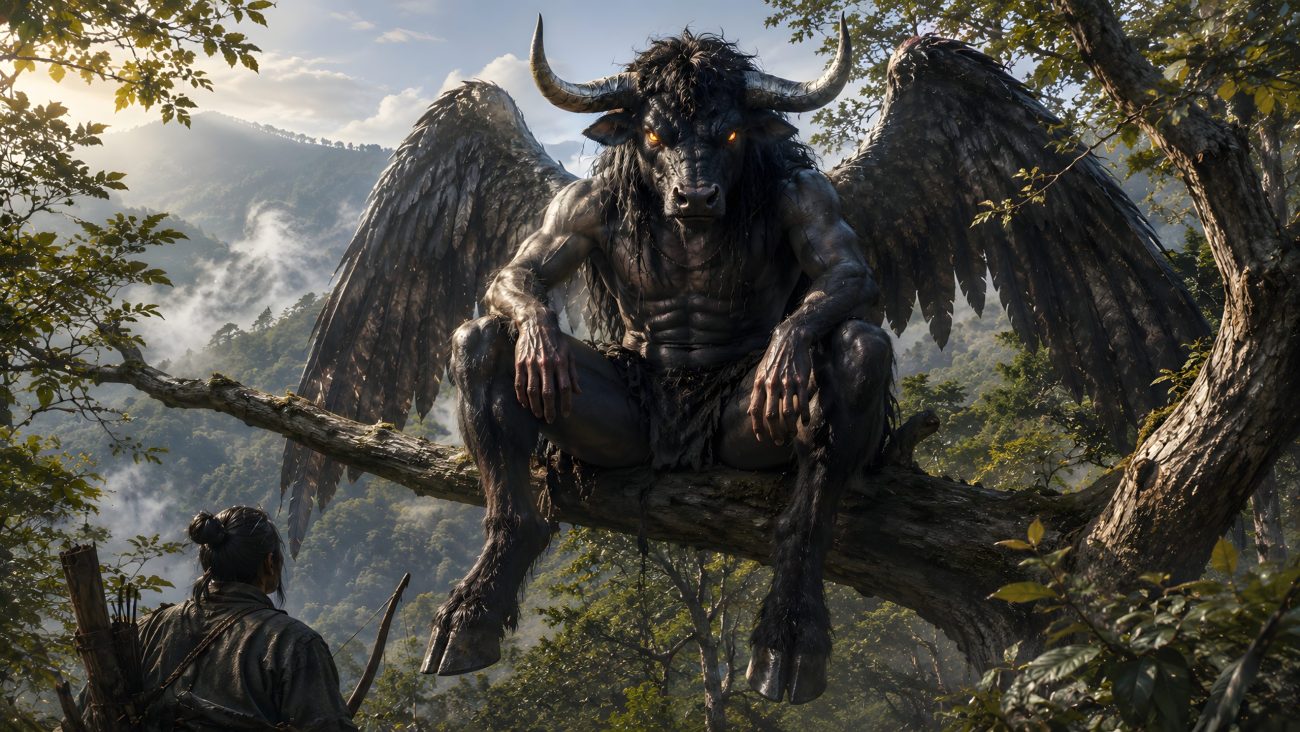
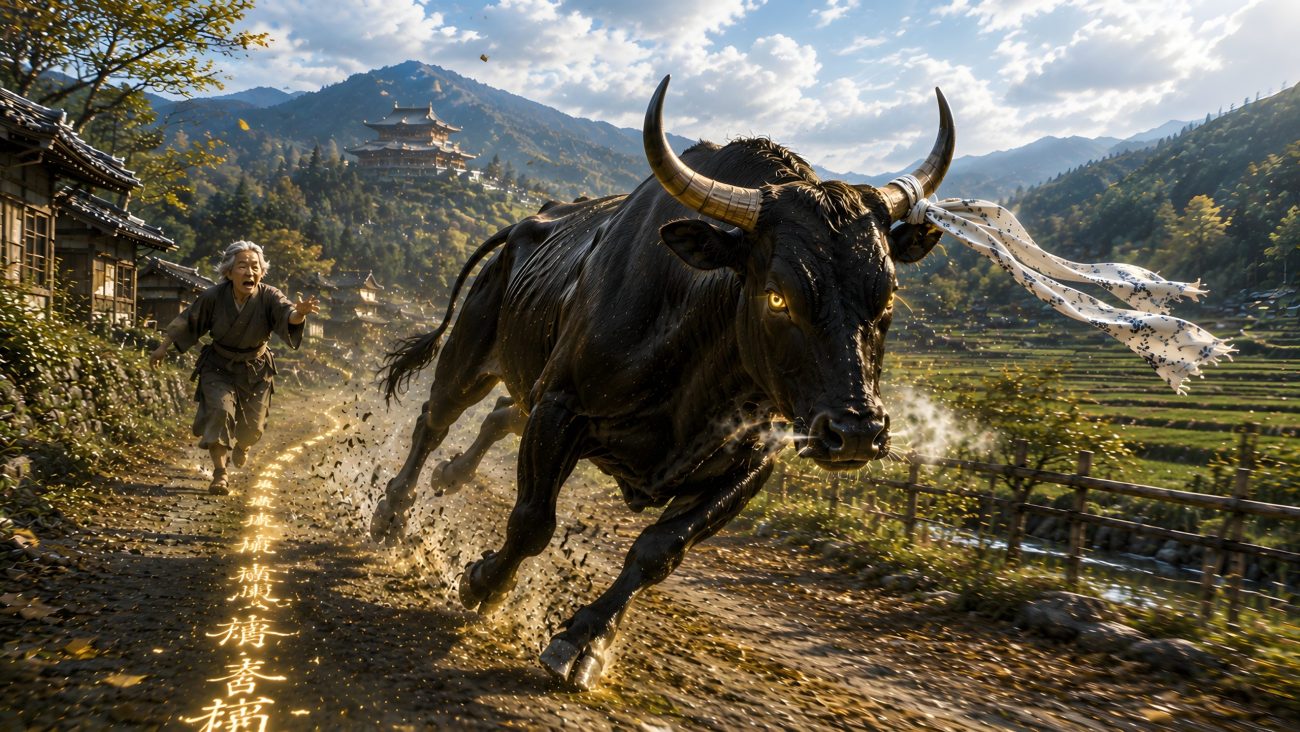
Tonzo is a mysterious yokai from Iwaizumi in Iwate Prefecture. It is described as a pitch-black, bull-like flying monster with enough supernatural strength to shake the ground and destroy trees.

One evening, an experienced hunter named Sahei-dono went hunting in Miyanosawa. For some reason, no deer appeared that night. As dawn approached, he was preparing to leave when a pitch-black creature resembling a bull suddenly jumped out before him.

The creature spoke in a human voice and declared that it was Tonzo, challenging Sahei to strike it and threatening to crush him if he did. Sahei had his hand on the knife at his waist, but he was so frightened that he fled.

Some time later, Sahei went to Yokonaga-mine. Near a chestnut tree, Tonzo appeared again. The ground trembled as the creature leaped onto the tree. It shook the tree violently and snapped its branches.

Tonzo then reminded Sahei of their previous encounter and threatened to seize and kill him if he returned. Terrified, Sahei begged for forgiveness and fled.

About ten days later, Sahei fell ill and died.

The true nature of Tonzo is unknown. The only description preserved in the tradition is that it was a flying monster resembling a bull.


Sources

Takahashi, Toshihiro. “トンゾウ (Tonzo).” 新版TYZ 妖怪図鑑 (New TYZ Yokai Encyclopedia). December 3, 2011. https://tyz-yokai.blog.jp/archives/1010654094.html
Ō-gyūnikukai

Tradition: Japanese Mythology
Alternative names: Ō-gyūnikukai
Category: Cow


The Myth

During the Meiji era, an inn in Hirakawa-chō, Kojimachi Ward, Tokyo, became notorious for strange occurrences in its eight-mat room on the second floor. According to an 1898 report in the Miyako Shimbun, anyone who stayed there was said to experience terrifying nightmares in a state somewhere between dreaming and waking.

One guest dreamed that a giant was strangling him. Another experienced a beautiful young woman tormenting him. Two explorers who had returned from overseas decided to stay in the room themselves in order to discover the truth behind the phenomenon.

During the night, one of the explorers awoke from a nightmare in which a giant was strangling him. When he asked his companion what was happening, the other revealed that he too had experienced a strange dream.

His nightmare, however, concerned something much stranger: beef.

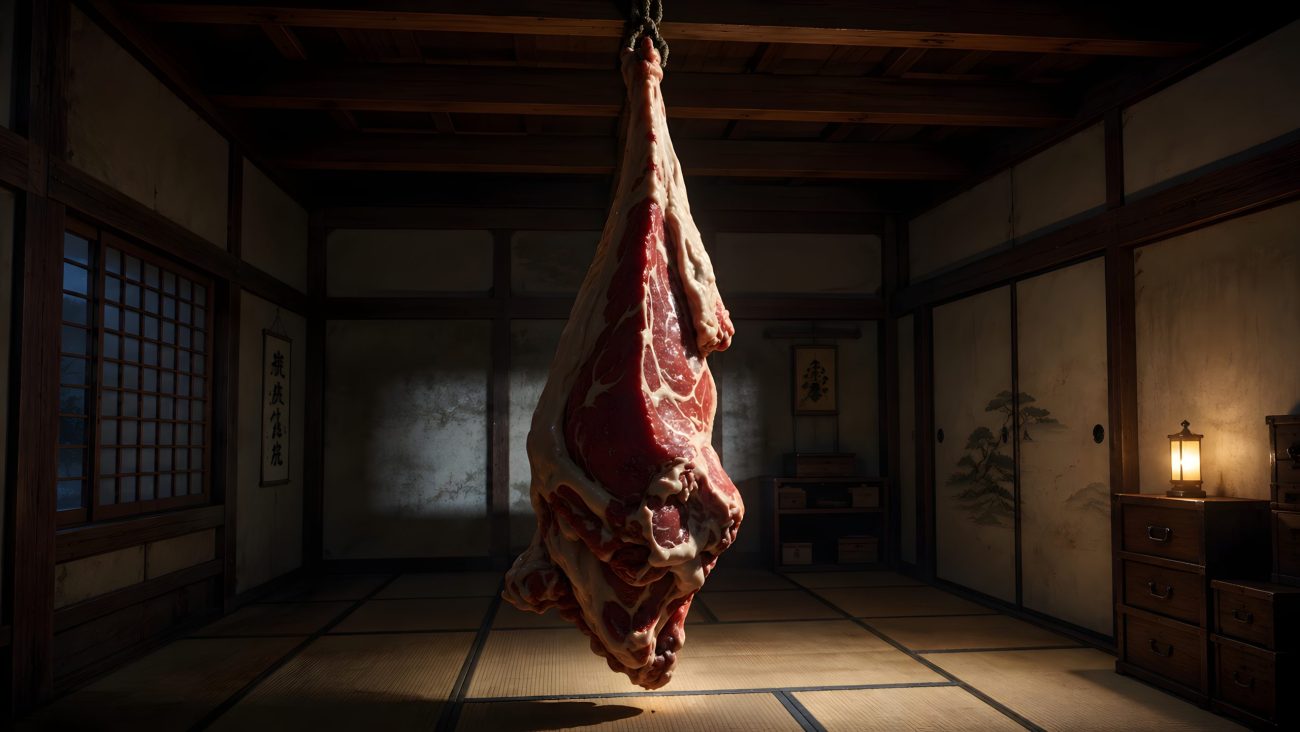
In the dream, an enormous piece of beef suddenly descended from the ceiling beams. As someone who considered himself a great eater of beef and horse meat, he initially believed that disposing of it should have been easy, whether by boiling or roasting it. Yet within the dream he found himself completely unable to get rid of the enormous mass of meat.

He tried various methods, but nothing worked. Eventually he became overwhelmed and helpless, suffering so intensely that he awoke covered in sweat.

At the same time, his companion was also suffering from his own nightmare about the giant monster.

The report offered several possible explanations for the strange experiences. Some suggested that animals such as martens living in the attic might emit a form of “animal electricity” that caused the disturbing dreams. Another explanation was more psychological: the first person to experience a nightmare in the room may have told others about it, causing subsequent guests to enter the room already frightened and consequently experience similar nightmares.

The Ō-gyūnikukai is therefore less a conventional monster than a strange Meiji-era account of a supernatural nightmare, in which an enormous piece of beef itself becomes the source of terror.


Sources

Takahashi, Toshihiro. “大いなる牛肉塊 (Ō-gyūnikukai).” 新版TYZ 妖怪図鑑 (New TYZ Yokai Encyclopedia). April 29, 2021. Accessed August 29, 2026. https://tyz-yokai.blog.jp/archives/1078437884.html


Nunohikiushi

Tradition: Japanese Mythology
Alternative names: Nunohiki-ushi
Category: Cow


The Myth

Long ago, in Shinano Province, there lived a wicked and unfaithful old woman in Chiisagata District.

One day, while she was drying a hand towel beneath the eaves of her house, a mysterious cow suddenly appeared. The animal caught the towel upon its horns and immediately ran away.

The old woman chased after it, determined to retrieve her towel. However, the cow continued running until she eventually found herself at the dining hall of Zenkoji Temple. By the time she arrived, the sun had set and darkness had fallen. The mysterious cow had disappeared.

Then something miraculous happened.

The Buddha of Zenkoji Temple suddenly emitted a radiant light, illuminating the trail of drool that the cow had left behind. When the old woman looked closely, she saw that the shining trail formed words. The message told her not to think of the incident as merely the work of a cow, but to understand that her own heart had guided her toward the path.

The old woman was deeply moved by the revelation. She immediately became devoted to Buddhism and spent the night before the Buddha chanting sutras.

When she returned home the following day, she visited a nearby Kannon hall. There, beside the statue of Kannon, she discovered the hand towel that the mysterious cow had taken.

She realized that the cow had actually been an incarnation of Kannon.

Her faith in the Buddha of Zenkoji consequently became even stronger, and she eventually attained rebirth in paradise.

According to the tradition, the Kannon who appeared in the form of the cow was the Nunobiki Kannon, whose statue is preserved at Nunobikiyama Shakusonji Temple in Komoro.

The story became the origin of the Japanese expression meaning to be “led to Zenkoji Temple by a cow”—being unexpectedly guided toward something good by an event whose purpose was not initially understood.

From the Edo period through the Meiji period, prints depicting the miraculous cow leading the old woman to Zenkoji Temple were repeatedly produced and sold around the temple.


Sources

Takahashi, Toshihiro. “布引牛 (Nunohikiushi).” 新版TYZ 妖怪図鑑 (New TYZ Yokai Encyclopedia). June 27, 2021. Accessed August 29, 2026. https://tyz-yokai.blog.jp/archives/1078437882.html


Namedara-ushi

Tradition: Japanese Mythology
Alternative names: Namedara-ushi, Namedarouun
Category: Cow


The Myth

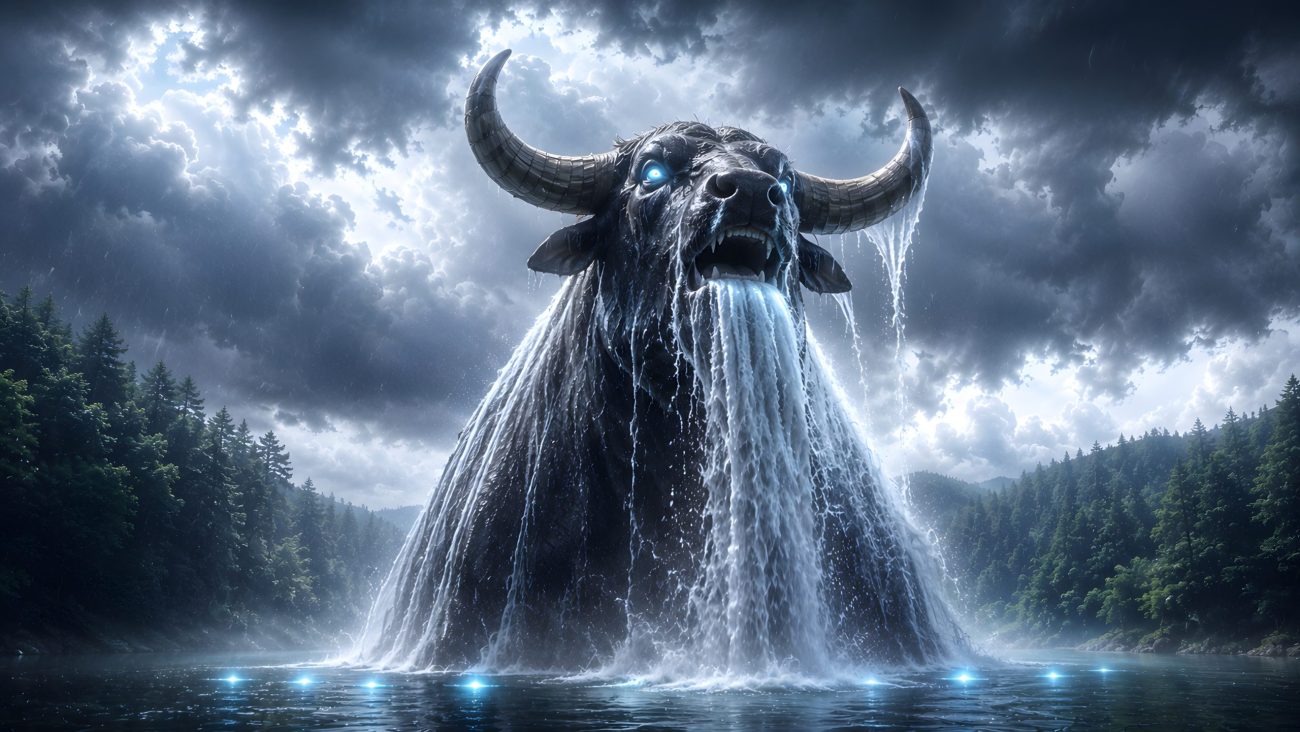
Namedara-ushi is said to be the master of Aoike Pond in Gunmura, Masuzu County, in present-day Fujieda City, Shizuoka Prefecture. The legend is recorded in the Suruga no Kuni Zasshi (Miscellaneous Records of Suruga Province).

It was said that whenever Namedara-ushi howled, rain would soon follow. At the bottom of Aoike Pond were believed to be seven water holes from which clear water continually gushed forth. Even during severe droughts, the water level of the pond was said never to decrease.

During times of drought, local farmers performed a rain-making ritual centered around the creature. They constructed a large cow from straw and placed it into the water holes while beating gongs and drums and dancing. According to the tradition, rain would always arrive within three days of performing the ritual.

The connection between the name and the ritual suggests that the “ushi” in Namedara-ushi means “cow.” The creature itself is therefore closely associated with the sacred waters of Aoike Pond and the ritual practices used to bring rain.


Sources

Takahashi, Toshihiro. “なめだら牛 (Namedara Ushi).” 新版TYZ 妖怪図鑑 (New TYZ Yokai Encyclopedia). March 15, 2021. Accessed August 29, 2026. https://tyz-yokai.blog.jp/archives/1078437873.html


Namatonkanashi

Tradition: Japanese mythology
Alternative names: Namatonukanashi, Namatonganashi, Namatouga Nashi
Category: Cow, Deity


The Myth

Namatonkanashi is an agricultural god from Amami Oshima, recorded in Nagoshi Sagenta’s Nanto Zatsuwa. The name is thought to be a phonetic transcription, while Kanashi or Ganashi is an honorific title used in Amami and the Ryukyu Islands for gods and nobles.

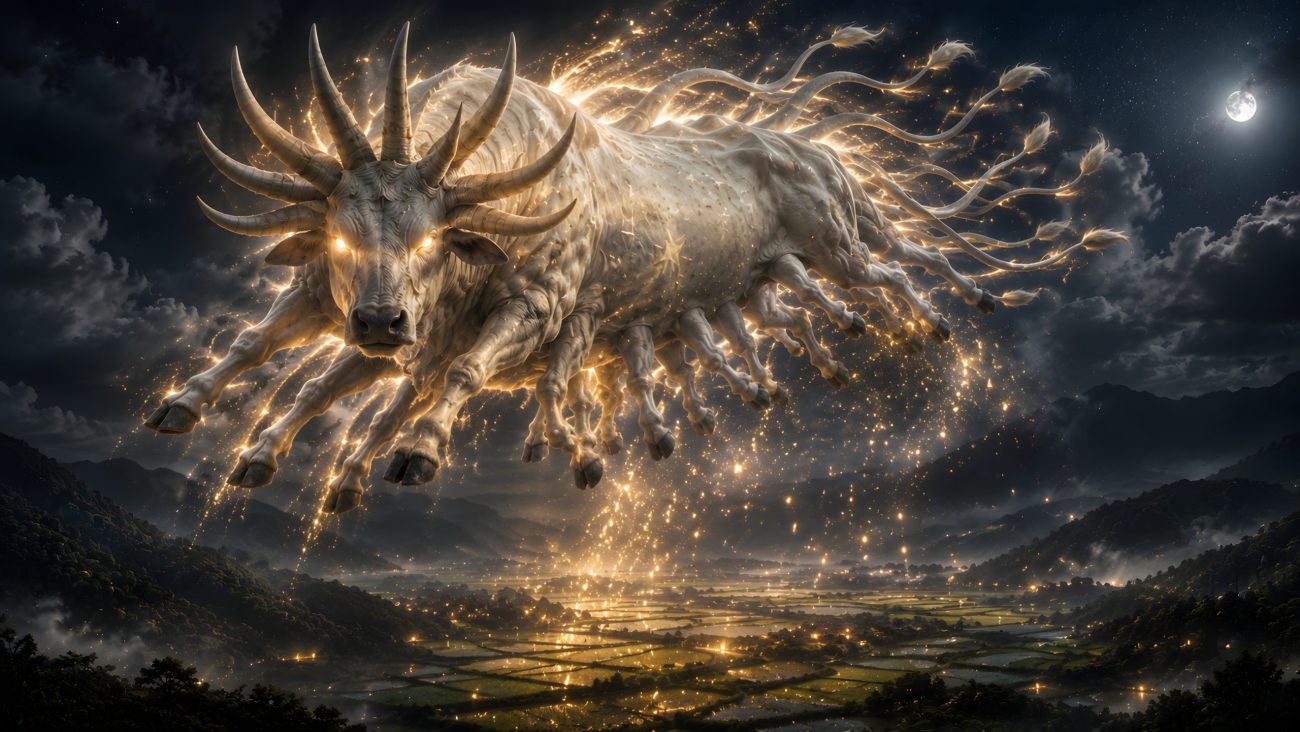
The deity is described as a bizarre and enormous cow, larger than an ordinary cow, with eight horns, eight tails, and sixteen legs—eight at the front and eight at the back. White star-like spots are said to cover its belly and thighs.

Namatonkanashi is a living god worshipped by the islanders. Its cry is compared to the sound of a chaumera, while another account describes its voice as so loud that it could deafen those who heard it.

During festivals, Namatonkanashi is said to wander through areas illuminated by bonfires. In particular, it appears during ceremonies in the Nishi-Magiri and Higashi-Magiri districts. The deity is said to strongly dislike people from mainland Japan approaching it.

When Namatonkanashi appears, the islanders traditionally bow with their heads touching the ground, meaning that they cannot actually see the deity’s complete form. Nagoshi Sagenta, a Satsuma samurai who had been exiled to Amami, did not follow this custom. He observed the supposed visiting deity and concluded that its strange appearance was entirely fabricated.

According to this interpretation, Namatonkanashi was not an actual monstrous cow but part of a ritual performance representing the arrival of a god. The islanders’ hostility toward mainland Japanese observers was therefore connected to their resentment of outsiders reducing their religious ceremonies to their superficial physical details.

A later account in Tonari Nanpo’s Amami Shidan (1933) describes Namatonkanashi as a gigantic ox with eight horns, eight legs, and eight tails. It appears during the welcoming festival on the second day of the second month and the sending-off festival on the fourth day of the fourth month, ceremonies associated with welcoming and sending away the gods of the sea and mountains. Its form can only be seen when illuminated by the festival bonfires.


Sources

Takahashi, Toshihiro. “ナマトンカナシ (Namatonkanashi).” 新版TYZ 妖怪図鑑 (New TYZ Yokai Encyclopedia). July 25, 2021. Accessed August 29, 2026. https://tyz-yokai.blog.jp/archives/1078437910.html


Mōnen

Tradition: Japanese mythology
Alternative names:
Category: Cow


The Myth

Mōnen is a yokai depicted in Kikuya Kinji’s Shinshin Obake Nobanashi (New Ghost Tales), published in 1886.

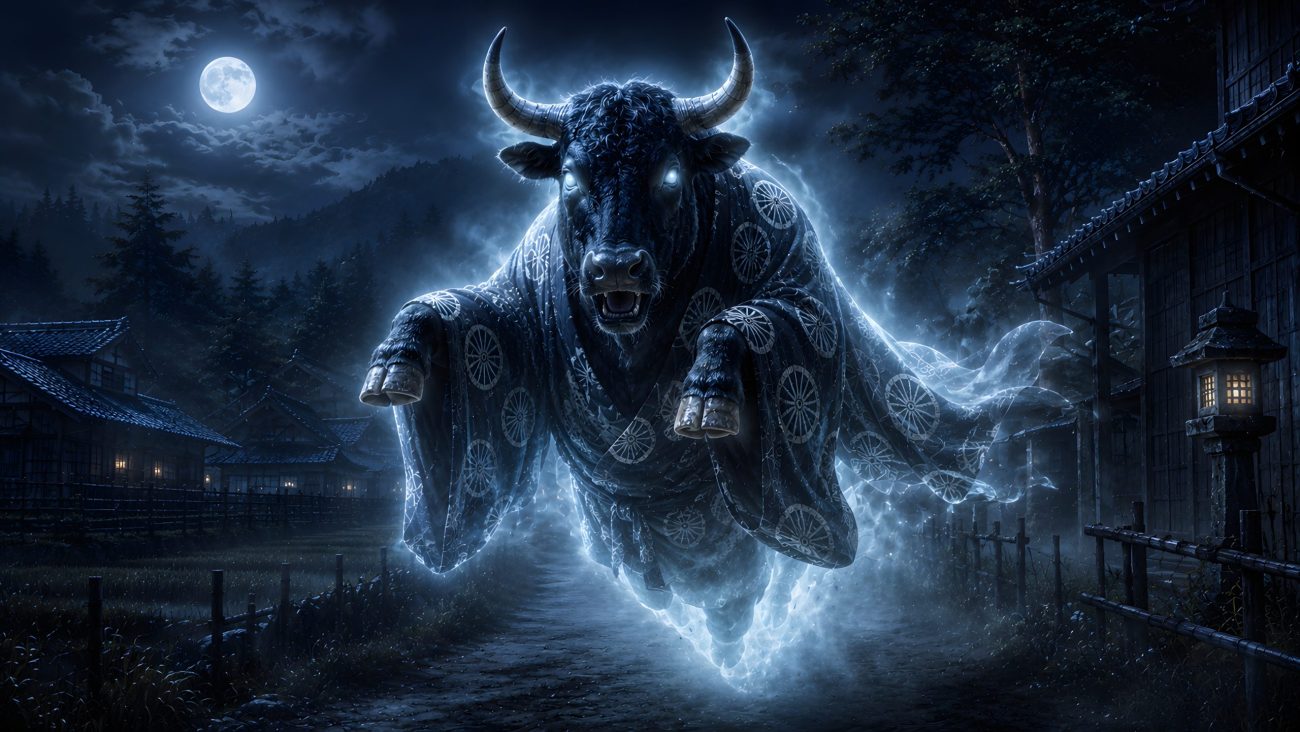
It appears as a cow that has transformed into a ghost. The creature wears a kimono decorated with a wheel pattern and holds its hooves out in front of its body in the manner of a traditional Japanese ghost.

The name Mōnen is a wordplay on mōnen, meaning “delusion,” and , the sound associated with a cow’s moo.


Sources

Takahashi, Toshihiro. “もうねん (Mōnen).” 新版TYZ 妖怪図鑑 (New TYZ Yokai Encyclopedia). April 5, 2021. Accessed August 29, 2026. https://tyz-yokai.blog.jp/archives/1078437875.html


Kudan

Tradition: Japanese Mythology
Alternative names: Kutabe, Kudabe, Kutahe, Gudabe, Gutabe, Dodaku, Dotaku
Category: Cow


The Myth

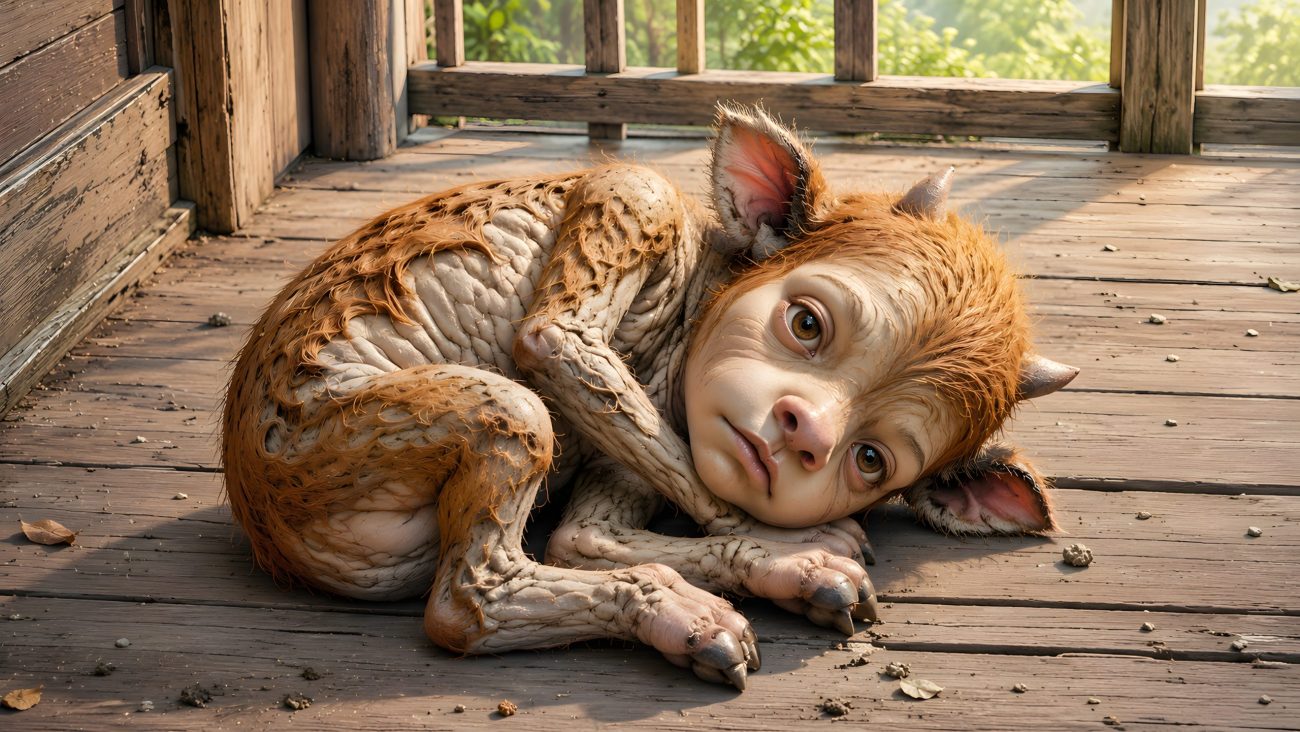
The Kudan is a strange human-faced, bovine-bodied creature said to appear in Japan during times of great uncertainty. It is a prophecy beast, possessing the ability to speak and foretell events that will soon affect humanity.

According to traditions recorded from the Edo period onward, a Kudan could be born from a cow. After its birth, it would speak in human language and reveal a prophecy concerning coming disasters, epidemics, famine, drought, or war. Having delivered its message, the creature would die only a few days later.

One famous account places the Kudan’s appearance at Mount Kurahashi in 1836. This particular Kudan foretold abundant harvests and prosperity rather than disaster. People were instructed to display an image of the creature in their homes, where it would function as a protective charm against misfortune and disease and bring prosperity and a plentiful harvest.

A related creature, the Kutabe, was associated with Mount Tate and was more ominous. It warned of an approaching epidemic and instructed people to look upon an image of itself to escape the coming calamity. Some traditions even prescribed eating mochi made from seven-colored herbs after viewing its image.

The Kudan therefore occupies an unusual place among Japanese monsters: its appearance is terrifying, but its purpose can be protective. It appears briefly, reveals the fate awaiting humanity, gives people a means of surviving it, and then disappears through death.


Sources

“Kudan (yōkai).” Wikipedia: The Free Encyclopedia. Wikimedia Foundation. Accessed August 21, 2026. https://en.wikipedia.org/wiki/Kudan_(y%C5%8Dkai)


Kettetsu

Tradition / Region: Chinese Mythology, Japanese Mythology
Alternative names: Kettetsu, Gnawing Iron
Category: Cow


The Myth

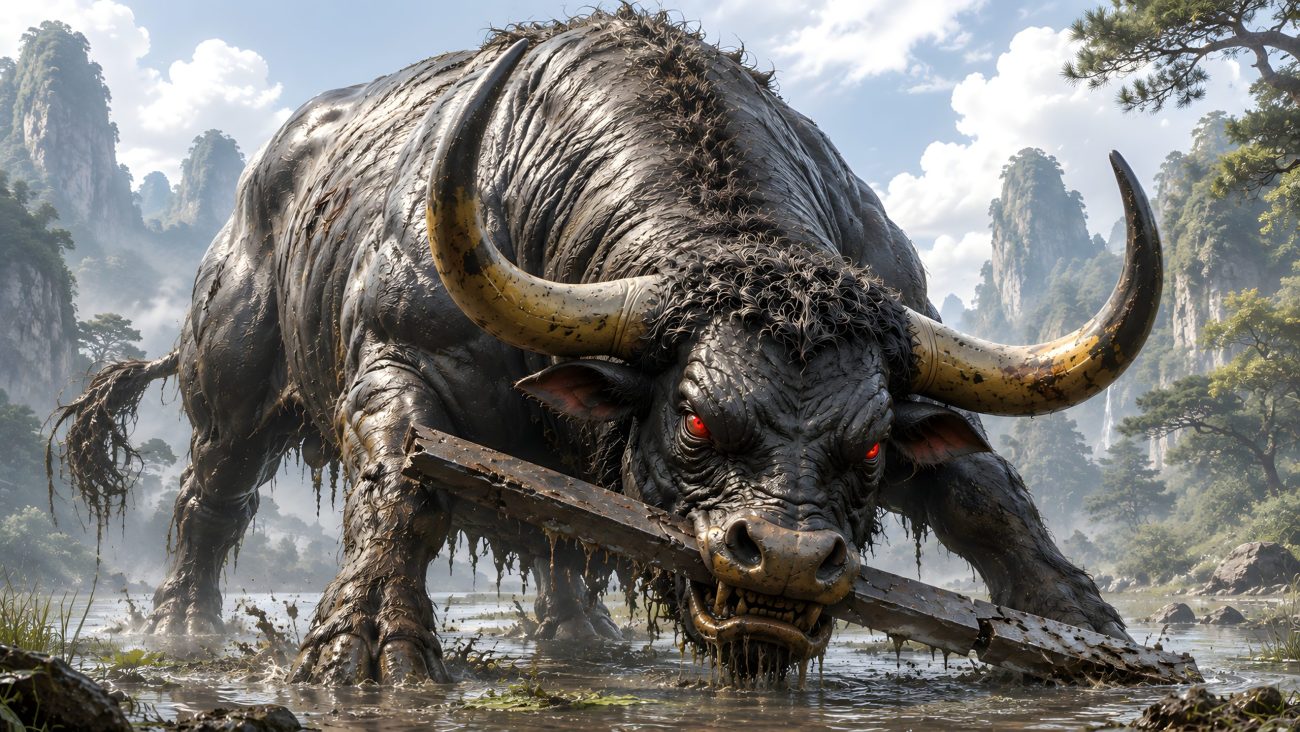
Kettetsu is a strange beast from the southern regions, described with the horns and feet of a water buffalo and a body covered in jet-black fur. Its name means gnawing or eating iron.

The creature feeds on iron and drinks water. According to ancient accounts, its feces were harder than ordinary metal and could be used by people to make sharp weapons.

Descriptions of Kettetsu appear in the Shenyi Jing and later Chinese works such as the Bencao Gangmu. Japanese encyclopedias, including the Wakan Sansai Zue, also recorded the creature from these earlier accounts.

Some traditions placed Kettetsu among a group of iron-eating beasts associated with the baku. The baku itself was sometimes described as a creature capable of eating copper and iron, and in some accounts the two creatures were identified with one another.

In later interpretations, the legend of iron-eating beasts may have developed from ancient descriptions of pandas. An animal originally described as eating bamboo may have been misunderstood as eating the arrows and other objects made from bamboo, copper, and iron, eventually producing the strange tradition of a beast that consumed iron.


Sources

Takahashi, Toshihiro. “囓鉄 (Kettetsu).” 新版TYZ 妖怪図鑑 (New TYZ Yokai Encyclopedia). June 27, 2021. Accessed August 16, 2026. https://tyz-yokai.blog.jp/archives/1078437874.html


Hiromushime

Tradition / Region: Japanese Mythology
Alternative names: Tanaka no Mahito Hiromushime, Hiromushi-onna
Category: Cow


The Myth

Hiromushime was a wealthy woman from Sanuki Province who possessed cattle, horses, slaves, rice, money, and farmland. She was extremely miserly and exploited those around her through dishonest trade and harsh lending practices.

When selling sake, she diluted it with water to increase her profits. When lending rice and other goods, she used small measures and scales, but when collecting repayment she used larger ones. Some of her debtors were forced to abandon their homes and flee to other provinces.

In 776, Hiromushime became seriously ill. Shortly before her death, she told her husband and sons about a dream in which she had been brought before King Yama. She was shown three offenses: taking things belonging to temples and monks without repayment, adulterating sake for profit, and using different measures when lending and collecting debts.

Hiromushime died that same day. Her family decided to pray for her rather than cremate her body, gathering monks and ascetics to perform religious rites for nine days.

On the seventh day, Hiromushime suddenly returned to life and opened her coffin. Her body had been horribly transformed. Her upper body had become that of a cow, a horn had grown from her forehead, and her hands had become hooves. Only the lower half of her body retained its human form.

She no longer wanted ordinary food and instead ate grass, chewing it repeatedly and spitting it out before eating it again. She also lived without clothing and showed no concern for where she slept or defecated.

News of the transformation spread, and crowds gathered from surrounding areas to see her. Her family was filled with shame and grief and began making religious vows to atone for her wrongdoing.

They donated large amounts of property to temples, including seventy cows, thirty horses, rice fields, and thousands of bundles of rice. They also forgave all the debts owed by the people from whom Hiromushime had previously demanded repayment.

Five days later, while the provincial authorities were preparing their report about the strange event, Hiromushime died for a second time.


Sources

Takahashi, Toshihiro. “広虫女 (Hiromushime).” 新版TYZ 妖怪図鑑 (New TYZ Yokai Encyclopedia). April 19, 2014. https://tyz-yokai.blog.jp/archives/1010655084.html?


Gyūkan

Tradition / Region: Japanese Mythology
Alternative names: Kiukan
Category: Cow


The Myth

Gyūkan is a strange disease-causing entity believed to develop inside the human body. It is depicted as a cow with black horns and was understood as a mass that forms within the lungs.

According to the Shinmonsho, when the Gyūkan develops, it causes severe illness. When the afflicted person attempts to eat, the condition can trigger a sudden seizure and loss of consciousness.

The Gyūkan was considered difficult to treat once it had fully developed, although the Shinmonsho describes various acupuncture treatments that could be used against it. The creature is illustrated alongside other disease-causing beings in the sixteenth-century medical manual.


Sources

Takahashi, Toshihiro. “牛癇 (Gyūkan).” 新版TYZ 妖怪図鑑 (New TYZ Yokai Encyclopedia). June 27, 2021. Accessed August 16, 2026. https://tyz-yokai.blog.jp/archives/1078437904.html