Gozu

Tradition / Region: Japanese Mythology
Alternative names: Gozuki, Ox-Head Demon
Category: Cow


The Myth

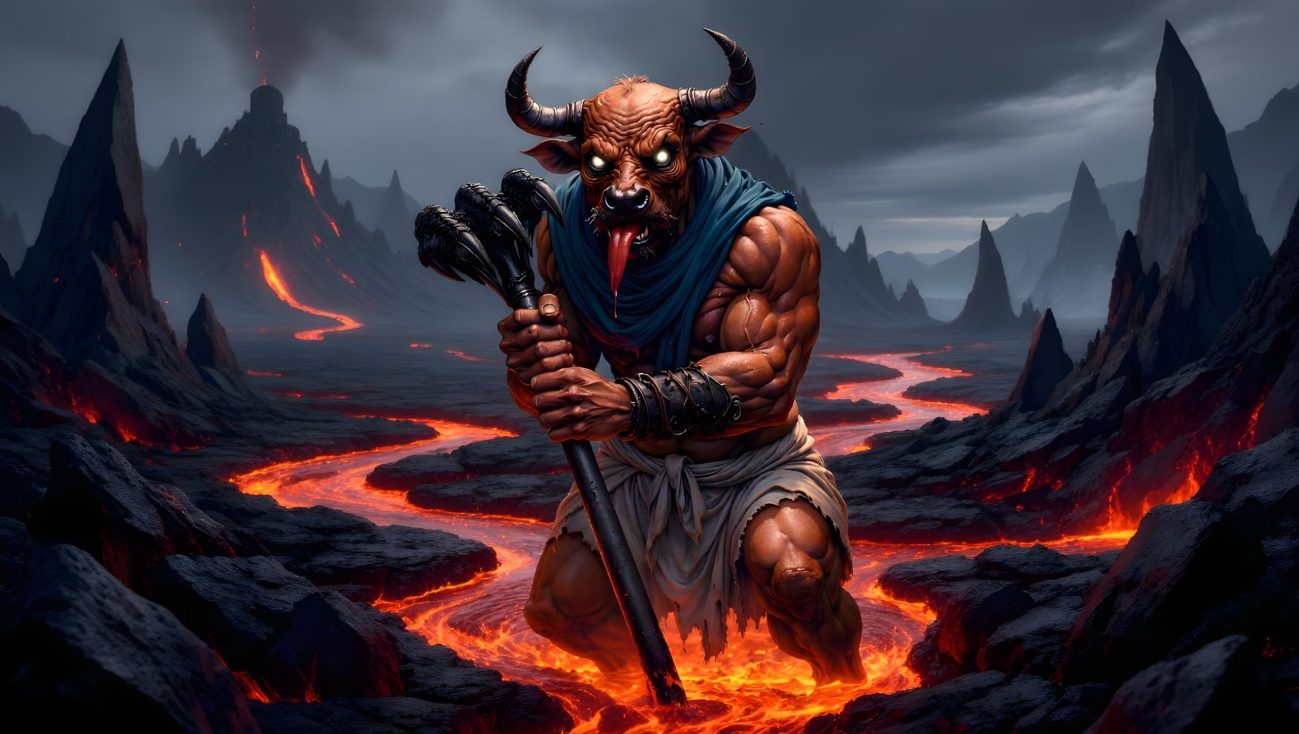
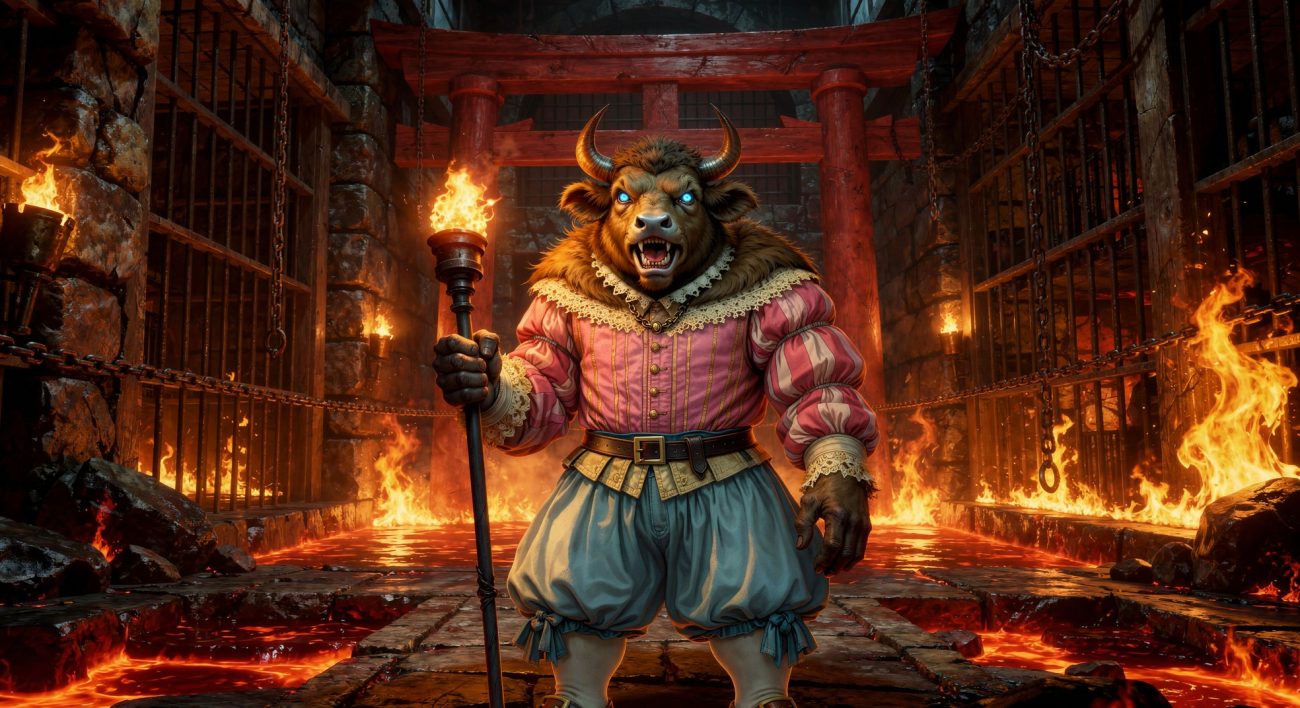
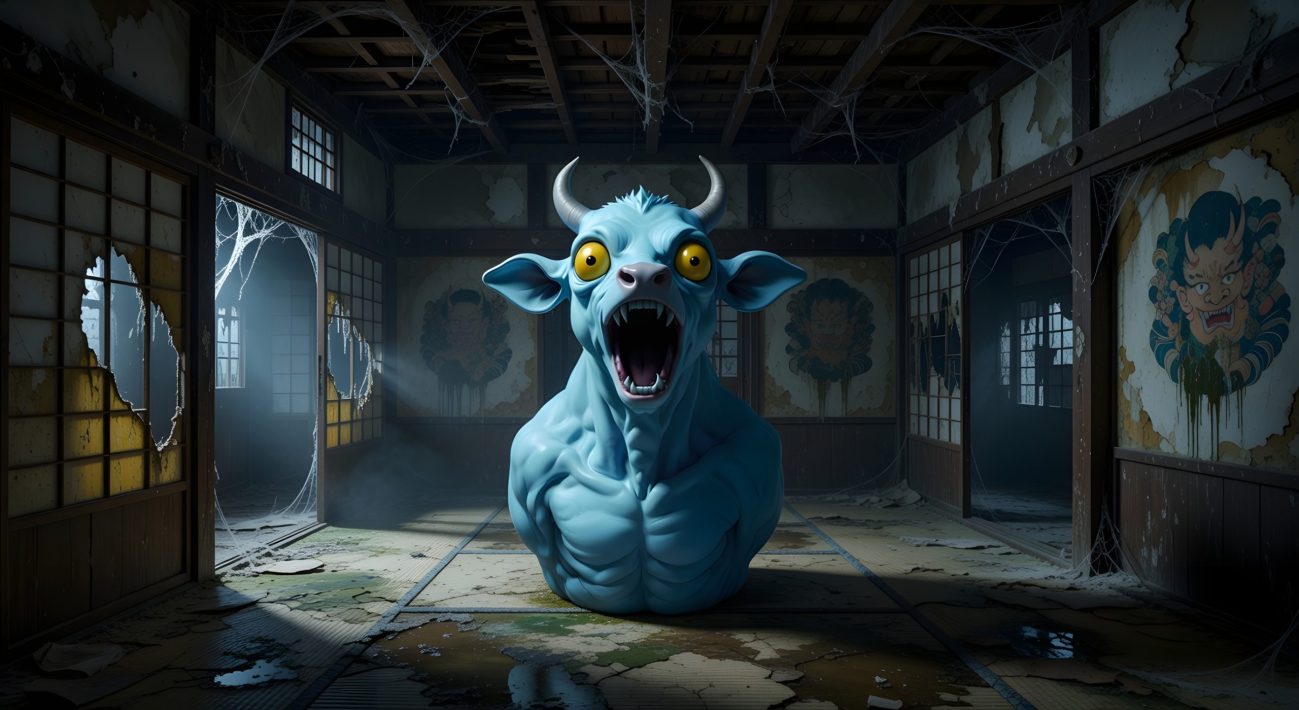
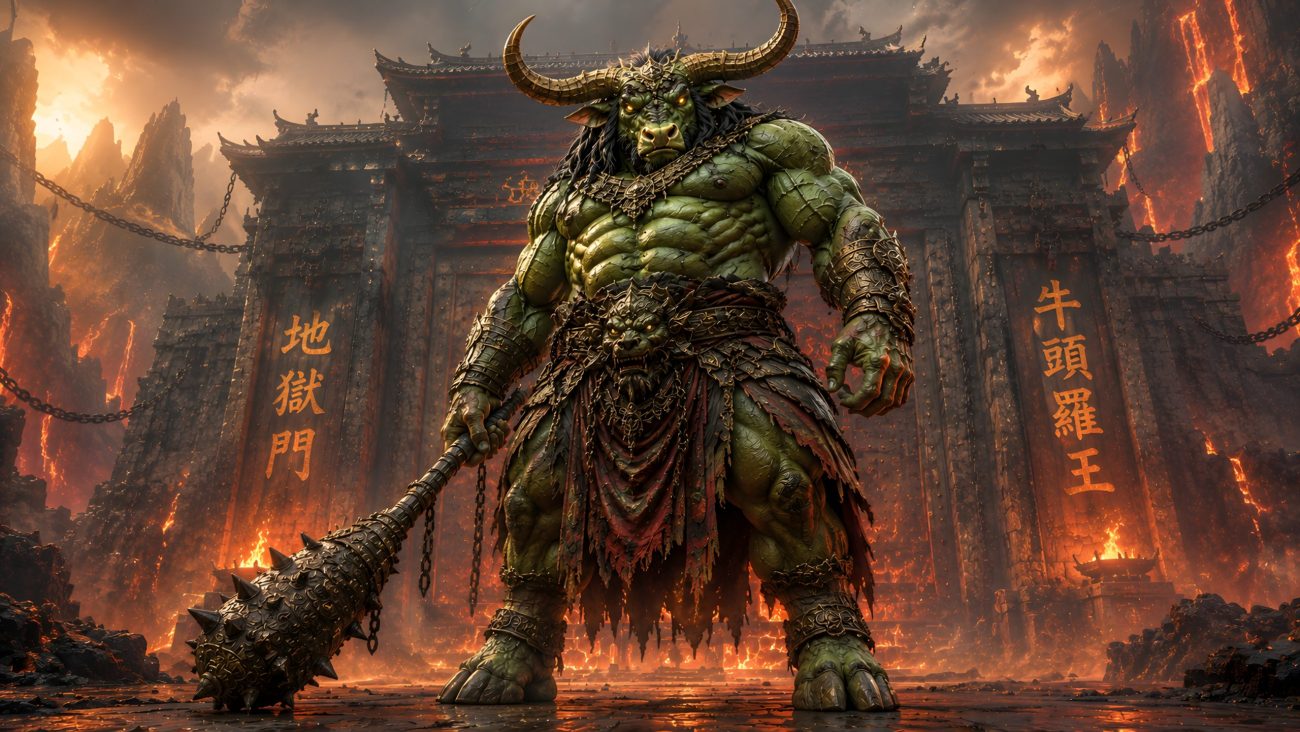
Gozu appears as a terrifying oni with the head of an ox and the body of a powerful demon. He is one of the great guardians of Meido and Jigoku, where he serves Great King Enma, the ruler of the underworld. His companion Mezu has the head of a horse, while Gozu has the head of an ox.

Gozu and Mezu stand at the gates of hell and are among the first demons encountered by the dead when they enter Jigoku. They oversee the punishment of wicked souls and serve among Enma’s chief torturers.

The two demons possess immense strength, said to be powerful enough to move mountains. They operate the torture chambers of Jigoku and supervise the punishment of countless condemned souls.

If a soul manages to escape from hell, Gozu and Mezu are sent out to find the fugitive and drag it back into the underworld.

Gozu and Mezu are not the only animal-headed demons serving Enma. Other powerful guardians are said to possess the heads of deer, tigers, lions, and boars, and they hold high positions among the demons who guard and operate the tortures of Jigoku.

The tradition of Gozu and the other animal-headed guardians ultimately comes from Indian Buddhist mythology and entered Japanese tradition along with Buddhism through China.


Sources

Meyer, Matthew. “Gozu.” Yokai.com: The Illustrated Database of Japanese Folklore. Accessed August 15, 2026. https://yokai.com/gozu/
Kin-ushi

Tradition / Region: Japanese Mythology
Alternative names: The Golden Ox, Bekoko, Kin-ushi
Category: Cow


The Myth

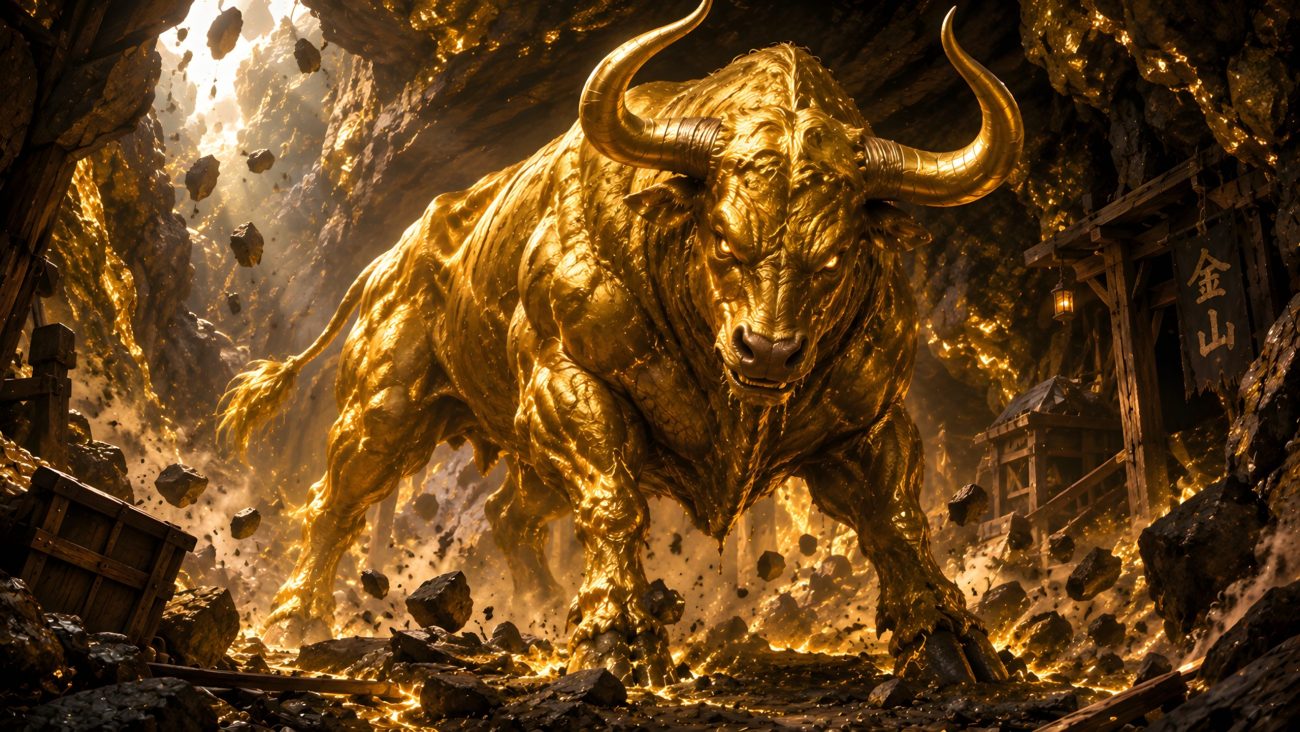
The Kin-ushi is a golden ox associated with the gold-mining regions of Tōhoku. It appears as a golden lump of gold in the shape of an ox and is connected with the discovery and sudden collapse of a gold mine.

Long ago, in the village of Otomo in Tōno, a wealthy man employed an eccentric servant who spent his free time digging the earth with a hoe, claiming that he was searching for potatoes. One New Year’s Eve, the servant discovered gold in a valley called Hiseki.

The discovery made him wealthy, and he became known as Komatsu-dono. He employed many miners and began working the site as a gold mine. For the next one or two years, however, almost no gold was found, and people mocked Komatsu-dono for returning to his old habit of digging for potatoes.

He continued the mining despite the ridicule. On New Year’s Eve of the third year, the miners finally uncovered a piece of gold in the shape of an ox. Komatsu-dono was delighted and held a great banquet that lasted through the night.

On New Year’s Day, he held a ceremony to celebrate the opening of the mine. A brocade rein was fastened to the horns of the golden ox, and the miners attempted to pull it from the mine while singing that they wanted to pull the golden ox themselves.

The ox would not move. When the miners pulled harder, its horns broke away. They then fastened the rope around its neck and tried again. After the golden ox appeared to move several steps, the mine suddenly collapsed with a tremendous crash, killing seventy-five miners.

Among the miners was a cook known as Usotoki. He was an honest and dutiful man who cared for his blind elderly mother. He was also known for sharing grains of spilled rice with crows, although the miners mocked him for his simple and kind nature.

When the golden ox was being brought out of the mine, Usotoki entered the shaft to help pull it. Suddenly he heard someone calling his name near the entrance. He released the rope and ran outside, but found nobody there.

He returned to the mine, only to hear his name called again. Once more he went outside, but there was still nobody there. Puzzled, he entered the mine again.

A third time the voice called out to him, this time more loudly. Usotoki ran toward the entrance as quickly as he could. The moment he stepped outside, the mine shaft collapsed.

Usotoki was the only one among the miners to survive the disaster, saved by the mysterious voice that had repeatedly called his name.


Sources

Takahashi, Toshihiro. “金の牛 (Golden Ox).” 新版TYZ 妖怪図鑑 (New TYZ Yokai Encyclopedia). April 22, 2019. Accessed August 15, 2026. https://tyz-yokai.blog.jp/archives/1074400117.html


Ushioni

Tradition / Region: Japanese Mythology
Alternative names: Gyūki, Goki
Category: Spider, Cow


The Myth

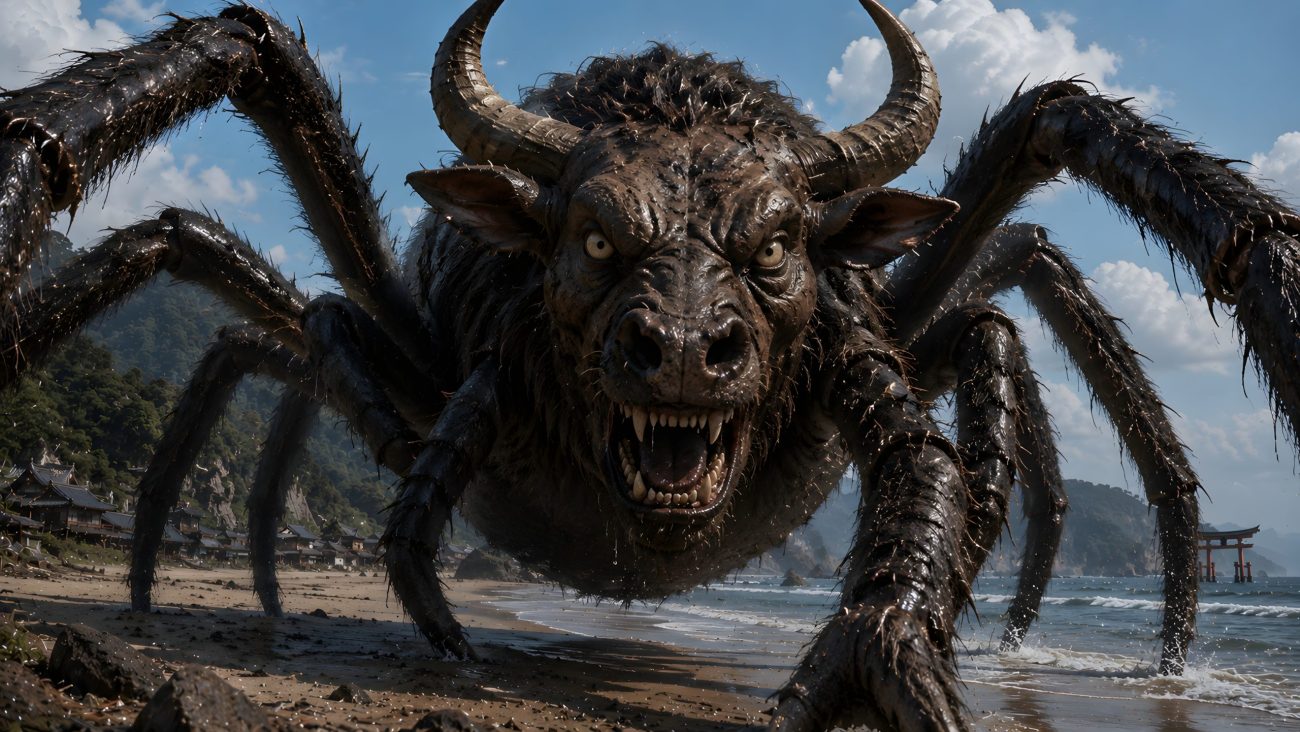
The Ushioni is a terrifying yōkai that usually appears as a monstrous ox-like creature, although its appearance varies greatly between regions. Some traditions describe it as a giant ox, while others portray it with the face of an oni and the body of a huge spider, or as a two-legged beast with wing-like membranes. It is a violent predator feared for attacking both humans and animals.

The Ushioni is most commonly associated with dangerous places near water, including deep pools, rivers, waterfalls, marshes, and the seashore. Numerous locations throughout Japan bear names such as Ushioni Pool or Ushioni Waterfall, reflecting the belief that these monsters once haunted them.

Along the coasts of western Japan, the Ushioni often works together with other sea yōkai such as the Nure-onna and Iso-onna. It may first appear as a beautiful woman carrying a baby and ask a traveler to hold the child. As soon as the victim accepts, the infant becomes impossibly heavy, making escape impossible before the Ushioni reveals itself and attacks.

In the mountains of the Kumano region, the Ushioni was believed to kill without even touching its victims. It simply stared relentlessly at anyone it encountered until they gradually weakened, collapsed, and died. This mysterious affliction was known as having one’s shadow swallowed. People believed the only protection was to recite the strange charm: “Stones flow, leaves sink, cows neigh, and horses roar.”

Another tradition from Izumo says that during long periods of rain, a mysterious white light could cling to a person’s body. This phenomenon was called meeting a Ushioni and was believed to disappear only when exposed to fire.

One famous legend tells of an Ushioni that terrorized the region around Negoro-ji Temple in Kagawa Prefecture, killing people and livestock until it was finally slain by the master archer Yamada Kurōdo Takakiyo. The temple is said to preserve the monster’s horns as proof of its existence.

Across Japan, the Ushioni is remembered as one of the country’s most feared monsters—a savage ox demon that haunts lonely waters, deceives travelers, and brings death to anyone unfortunate enough to meet its gaze.


Sources

TYZ. (n.d.). Ushi Oni [牛鬼]. In 新版TYZ 妖怪図鑑. Retrieved June 28, 2026, from https://tyz-yokai.blog.jp/archives/1010653546.html


Kubiore Neushi

Tradition / Region: Japanese Mythology
Alternate Names: Sleeping Cow with a Broken Neck
Category: Cow, Statue


The Myth

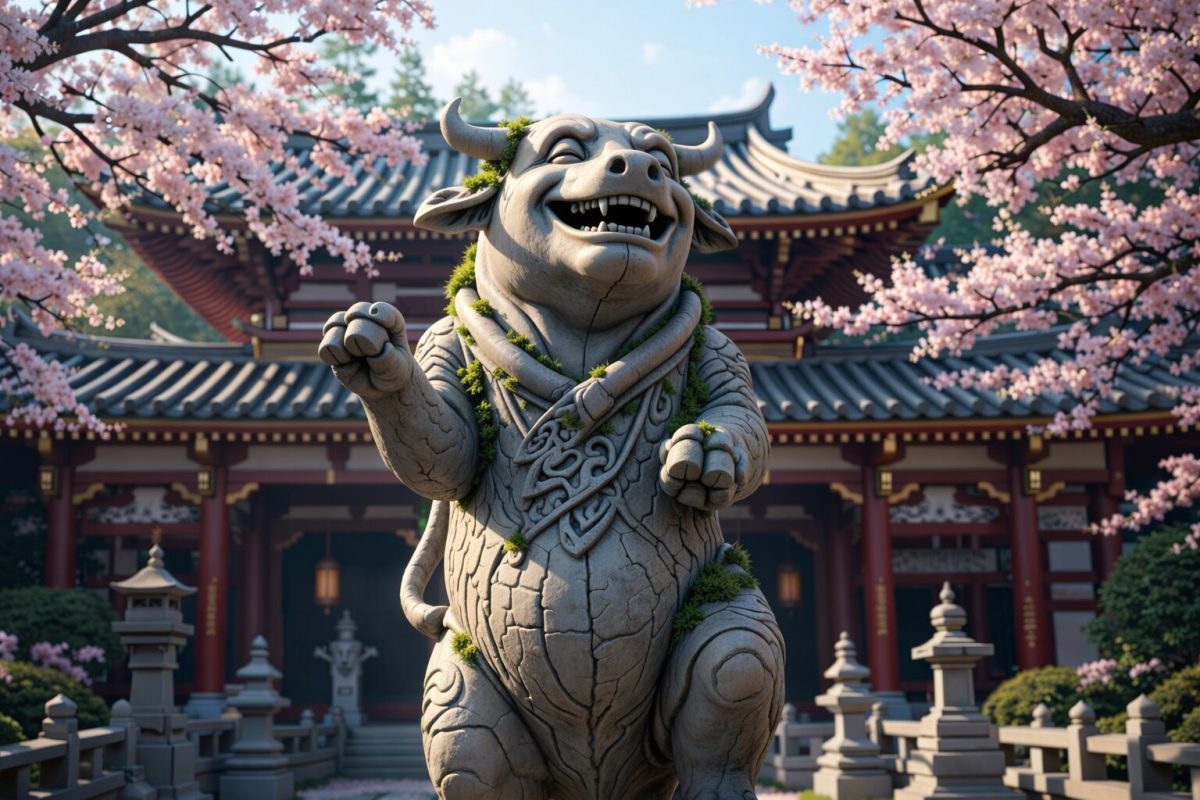
Kubiore Neushi is remembered as a stone cow statue connected to Takimiya Hachiman Shrine in Sanuki.

In the year 888, the land of Sanuki suffered a terrible drought. Rivers dried up, rice fields withered, and the villagers feared famine. Sugawara no Michizane, then governor of the province, fasted, purified himself, and climbed Mount Shiroyama to pray for rain.

At first, the heavens sent firestones and then pebbles, which frightened the people, but Michizane continued his devotions. On the final night of his ritual, the god of Mount Shiroyama appeared to him in a dream and told him that if he offered even a single drop of water to the heavens, a heavy rain would come.

Michizane threw his ink-soaked brush into the sky. At once, black clouds gathered, thunder rolled, and rain poured over the land. The dying crops revived and the villagers rejoiced. They gathered at Takimiya Hachiman Shrine and danced in celebration.

It is said that the joy of that day was so great that the stone cow statue before the shrine joined the dance. In its enthusiasm, the cow broke its neck and became known as the Sleeping Cow with a Broken Neck. The villagers preserved their celebration as the Takimiya Nembutsu Dance in memory of the rain and the event.


Sources

TYZ Yokai Blog. (2021). 首折れ寝牛 (Kubiore Neushi). From https://tyz-yokai.blog.jp/archives/1078437894.html


Eshō

Tradition / Region: Japanese Mythology
Alternate Names:
Category: Cow


The Myth

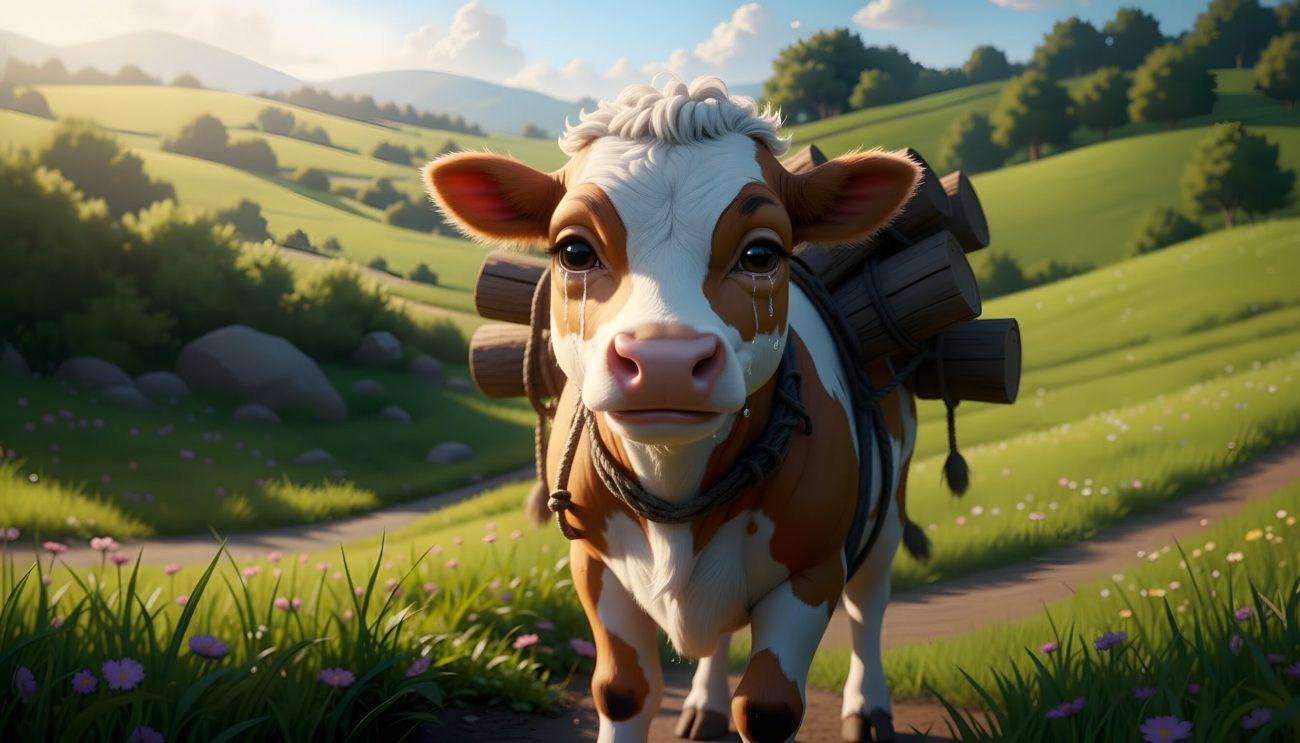
At Enkō-ji Temple there once lived a monk named Shaku Eshō. During his lifetime, he took a bundle of firewood belonging to the temple—wood meant for boiling water—and gave it away to another person. Not long after this act, Eshō died.

Some time later, a cow at the temple gave birth to a calf. As it grew, the animal was put to work pulling carts and hauling heavy loads of firewood each day without rest.

One day, while the ox strained beneath its burden, a monk unknown to the temple appeared at the gate. Watching the animal struggle, he said quietly:

“Monk Eshō may have been skilled in reciting the Nirvana Sutra, but it seems he is not very good at pulling a cart.”

At these words, the ox burst into tears, gave a deep sigh, and fell down dead.

The driver accused the visiting monk of causing the animal’s death and had him seized and reported. Yet the monk’s appearance was noble and radiant, unlike that of an ordinary person. Artists were summoned to paint him, and each portrait they made resembled Kannon Bodhisattva. Soon afterward, the monk vanished, and it was said that Kannon had appeared in human form and then departed.

From that time on, people told that the ox had been none other than Monk Eshō reborn, condemned to labor for his wrongdoing. Similar stories were also told of other monks who misused temple goods and were reborn as cattle, forced to pull carts and bear burdens as punishment.

Thus the tale endured as a warning that even small acts of theft could bind a soul to a life of toil, and that the lowing of a weary ox might carry the regret of a human past.


Sources

Keikai. (822). Nihon-koku genpō zen’aku ryōiki [日本国現報善悪霊異記, Miraculous Stories of Reward and Punishment in This World]. Nara: Yakushiji Temple.

TYZ Yokai Encyclopedia. 恵勝, from https://tyz-yokai.blog.jp/archives/1078437911.html


Cowpox Baby

Tradition / Region: Japanese Mythology
Alternate Names:
Category: Cow


The Myth

In later times in Japan, people spoke of a strange child known as the Cowpox Baby.

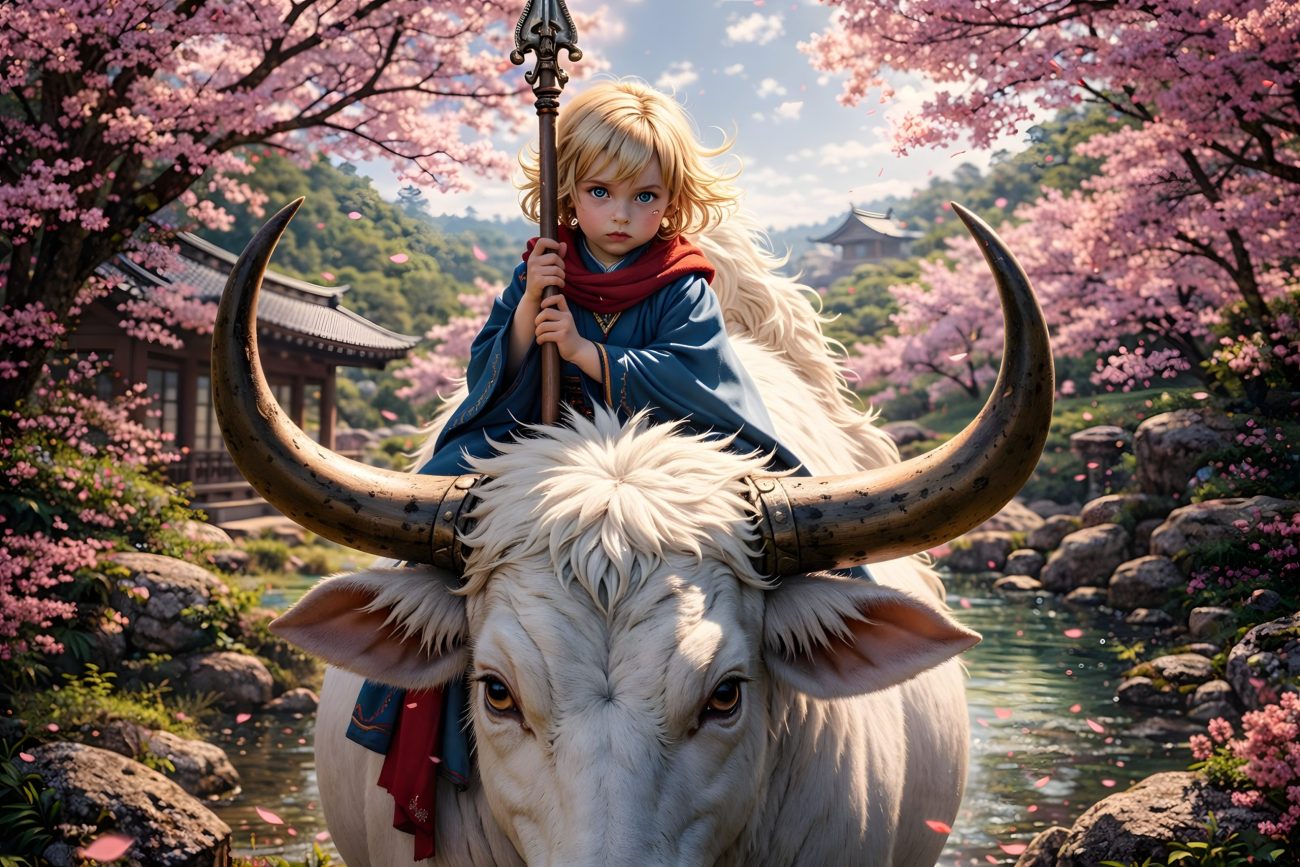
He was shown as a young boy from distant lands, said to be Dutch-born, riding upon the back of a great white cow. On his arm were red marks, signs of a mysterious protection he carried. In his hand he held a sharp needle like a spear.

Before him fled the red smallpox god, a fearful spirit believed to bring sickness to children. The god was shown with a fierce, demon-like face and wore a straw sack decorated with red rice cakes, offerings linked to his worship. The Cowpox Baby chased this spirit, driving it away and shielding the children it pursued.

In some tellings, the child reaches out to save another boy or girl from the smallpox god, placing himself between the spirit and its victim. Songs were sung of him, praising the child who lived without fear of the illness and who brought safety to others.

Images of this strange rider spread far and wide, and the Cowpox Baby came to be seen as a protector who rode the white cow against the spirit of disease, guarding children from harm and driving away the red god wherever he appeared.


Sources

TYZ Yokai Encyclopedia. (2021, December 31). 牛痘児 (Cow pox baby), from https://tyz-yokai.blog.jp/archives/1079978230.html


Cow-Like Pitchfork Monster

Tradition / Region: Japanese Mythology
Alternate Names:
Category: Cow


The Myth

In old Japanese imagery there is shown a strange creature with the form of a cow yet standing upright like a man.

It bears two horns upon its head and holds a pitchfork in its grasp. The fork is unlike any ordinary tool, for its three points end not in iron tips but in the curved claws of a raven. Around its neck it wears a blue scarf, hanging loosely as it stands.

Its legs are not like those of cattle, but end instead in bird-like feet, each with two sharp toes. No wings are shown, and no extra limbs appear beyond those needed to hold the fork.

No tale explains where this being came from or what it seeks. The scroll that preserves its image tells nothing of its deeds, its home, or its purpose. It simply presents the figure alone, a cow-like monster standing with its clawed pitchfork, silent and unexplained.


Sources


Youkai Gazou Database. (2006). 熊手 ;クマデ International Research Center for Japanese Studies (Nichibunken). Retrieved from https://www.nichibun.ac.jp/cgi-bin/YoukaiGazou/card.cgi?identifier=U426_nichibunken_0054_0001_0005


Cow-Headed Torch Demon

Tradition / Region: Japanese Mythology
Alternate Names:
Category: Cow


The Myth

In old Japanese imagery there is shown a strange demon with the head of a cow set upon a human body.

Its skin is dark, and from its bovine head grow two forward-curving horns. Its ears sit low beneath them, and its broad nose and heavy features give it clearly the look of cattle rather than man. Its eyes appear watchful, and its expression is stern and purposeful.

The creature is not shown raging or fighting, but walking. In one hand it carries a burning torch, whose flame lights the darkness before it, as if it travels by night or moves through shadowed places. It is clothed in layered garments — a bright red jacket, blue hakama trousers, brown leggings, and strong footwear — dressed for steady movement rather than for battle.

No story tells where it came from or what task it performs. The image leaves only the sight of a cow-headed demon striding forward with fire in its hand, a silent figure whose path and purpose remain unknown, marked only by the glow of the torch it carries into the dark.


Sources

International Research Center for Japanese Studies. (n.d.). 馬鬼 [Illustration]. Nichibunken Yokai Database. Retrieved June 29, 2026, from https://www.nichibun.ac.jp/cgi-bin/YoukaiGazou/card.cgi?identifier=U426_nichibunken_0123_0002_0001


Cow-Faced Monster

Tradition / Region: Japanese Mythology
Alternate Names:
Category: Cow


The Myth

In old Japanese lore there is mention of a strange being shown only in image, known as the Cow-Faced Monster.

It is depicted with the face of a cow and skin of a deep blue color. Upon its head rests an upside-down trivet like a curious crown. Its eyes are large and round, its nose crooked, and its mouth stretches wide to the ears. The creature has no arms and wears only a simple loincloth.

No tale survives explaining where it came from, what it did, or what became of it. Instead, the record that preserves its image speaks of other things.

It tells of a quiet day at the beginning of the year, when the world seems calm and time passes unnoticed. It reflects that people change while memories remain, that regret arises though the past cannot be returned, and that fortune and misfortune shift without warning. Joy and sorrow, it says, never last, and the heart moves in ways beyond reason, stirred by wind, rain, and memory.

The monster itself stands silent beside these thoughts, neither acting nor speaking. It remains only as an image — strange, unmoving, and unexplained — lingering like a symbol beside reflections on time, impermanence, and the restless human mind.


Sources


Youkai Gazou Database. (n.d.). Ushi; Goto-ku (牛;ウシ,五徳;ゴトク). International Research Center for Japanese Studies (Nichibunken). Retrieved from https://www.nichibun.ac.jp/cgi-bin/YoukaiGazou/card.cgi?identifier=U426_nichibunken_0056_0002_0002


Akabeko

Tradition / Region: Japanese mythology
Alternate Names: Red Cow
Category: Cow


The Myth

Long ago, during the early ninth century, monks were building Enzō-ji temple in the town of Yanaizu. The work was heavy, and the task of carrying stone and timber up to the site was exhausting. One day, a powerful red ox appeared and began helping the monk Tokuitsu Daishi, hauling construction materials tirelessly as if it understood the sacred purpose of the work.

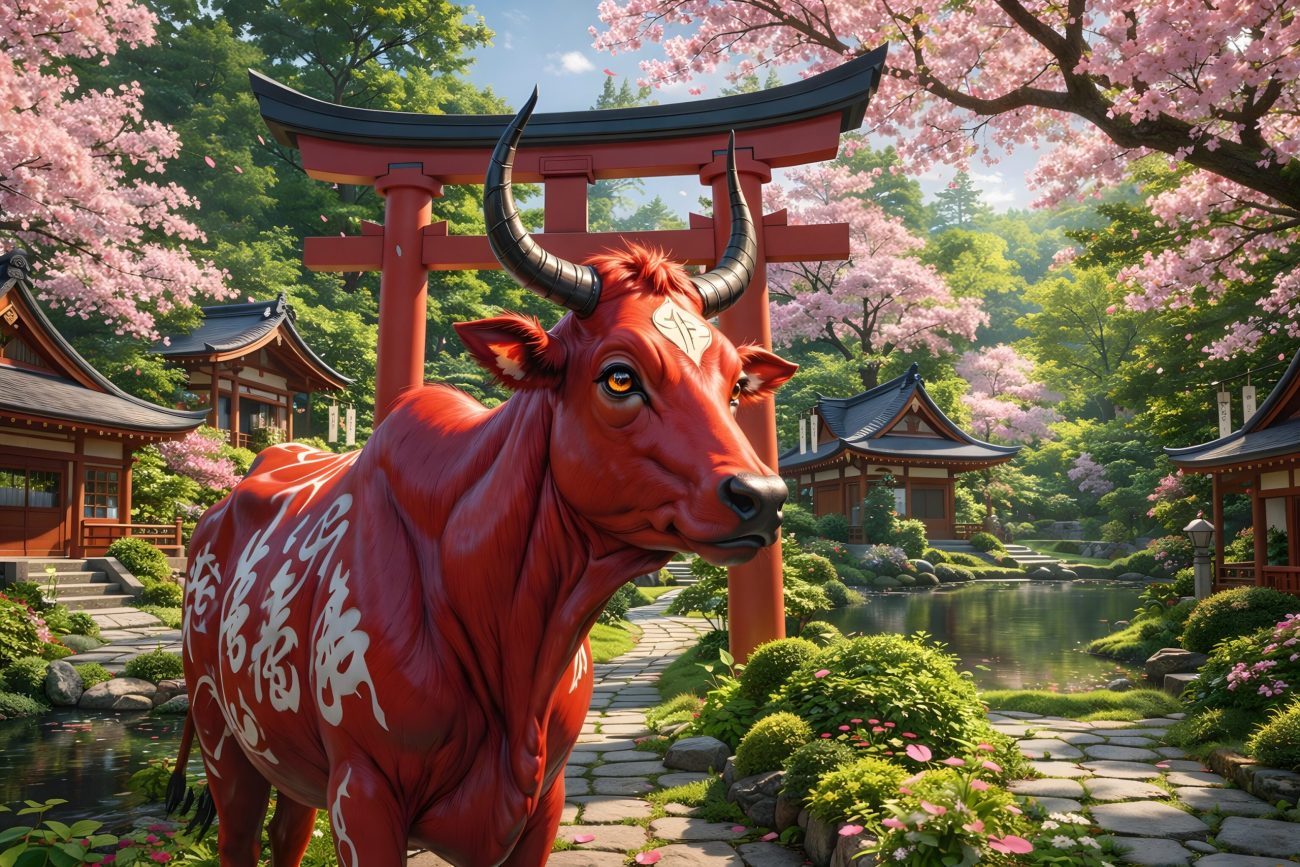
The red ox labored until the temple was complete. When the final stone was set, it did not return to the wild. Some say it turned to stone on the temple grounds; others say it simply chose to remain there forever, watching over the place it had helped create. From then on, it was known as Akabeko—the Red Cow.

Generations later, people remembered Akabeko not only for its strength, but for its devotion. Small figures of the red cow were made in its image, and it was said that Akabeko protected children from sickness and misfortune. Its red color was believed to drive illness away, just as the living cow had once driven fatigue and hardship from the builders of the temple.

To this day, Akabeko endures as a gentle guardian. Those who visit its likeness at Enzō-ji rub it for luck, honoring the red cow that gave its strength freely and chose to remain behind as a silent protector of the faithful.


Sources

TYZ Yokai Encyclopedia. (2021, March 3). 赤べこ (Akabeko), from https://tyz-yokai.blog.jp/archives/1078437861.html

Wikipedia contributors. (n.d.). Akabeko. In Wikipedia, The Free Encyclopedia, from https://en.wikipedia.org/wiki/Akabeko