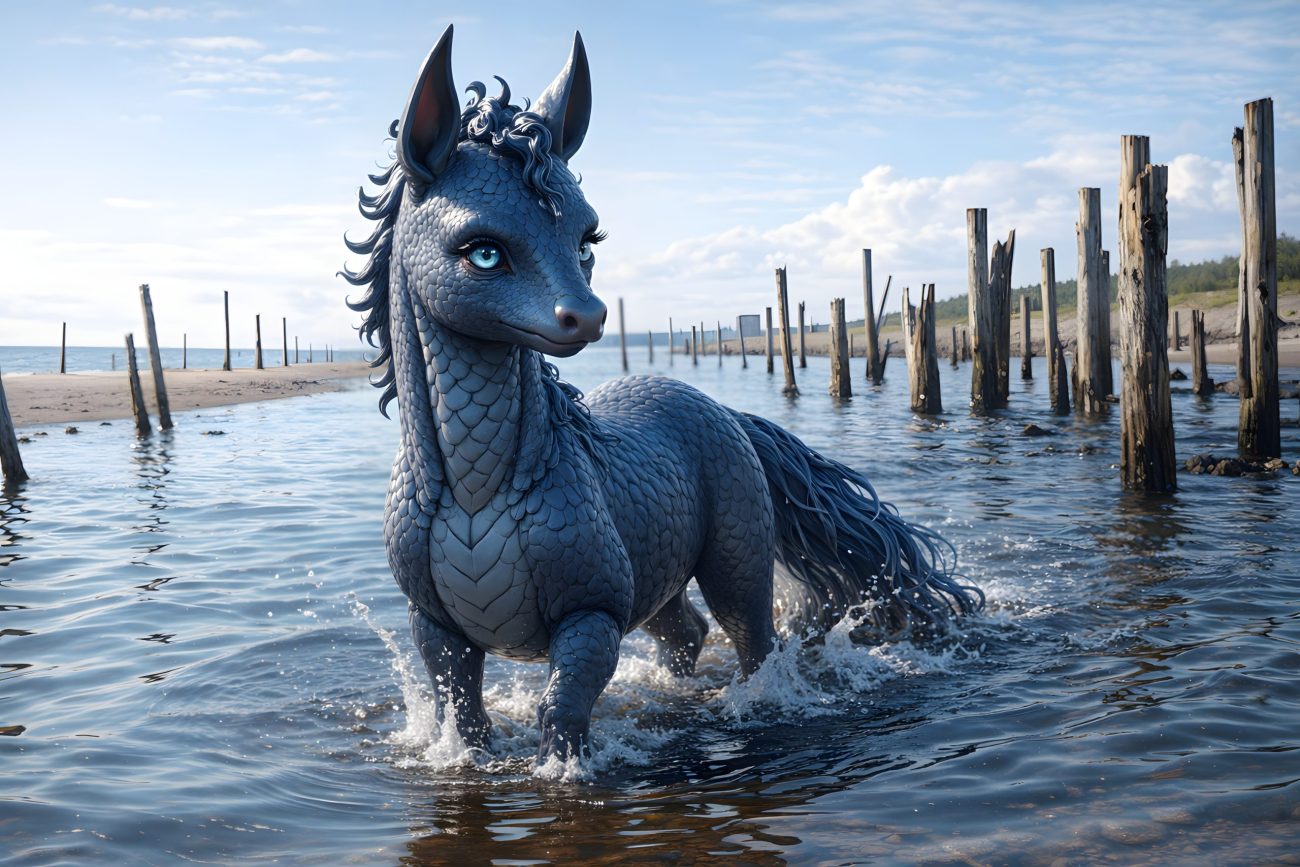
Devouring Wild Mare

Tradition / Region: Albanian Mythology
Alternate Names: —
Category: Horse


The Myth

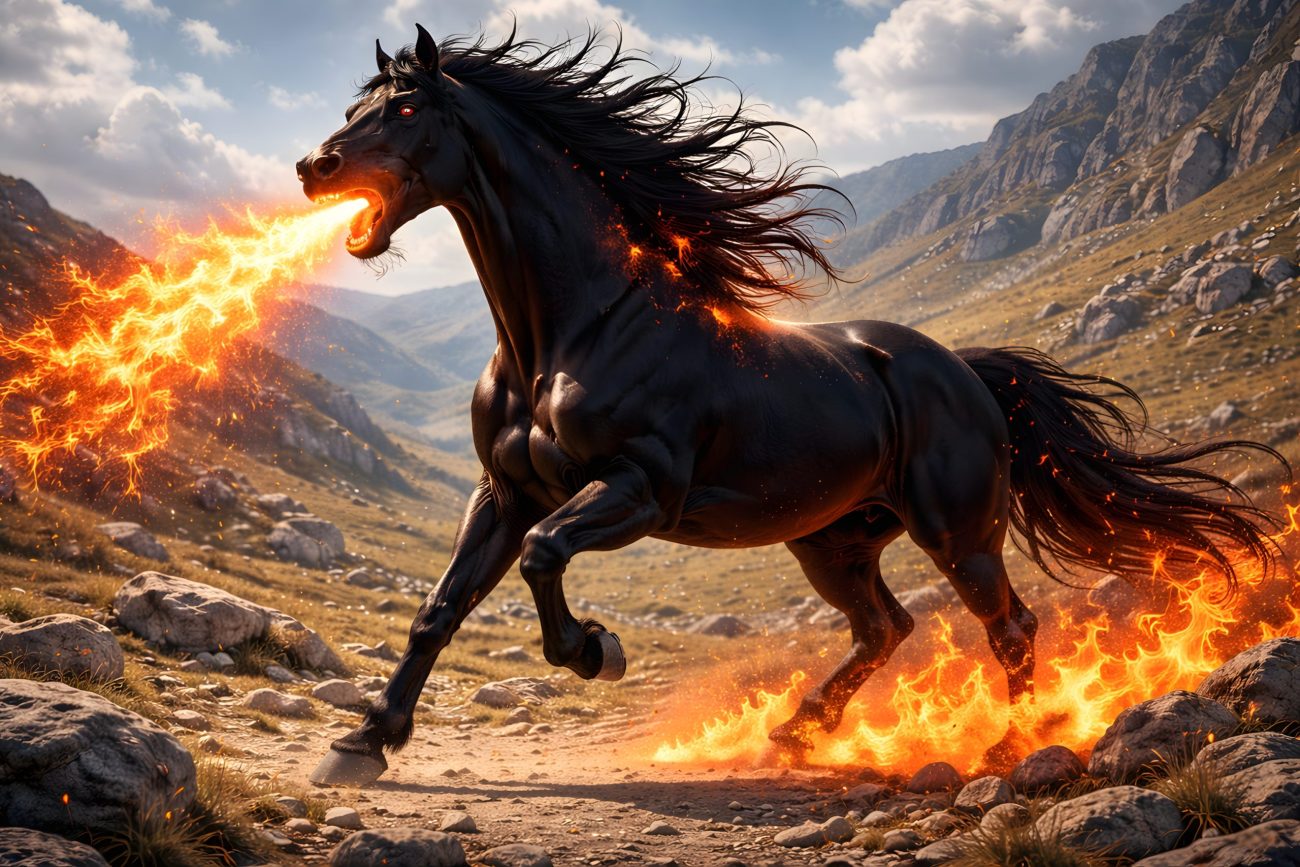
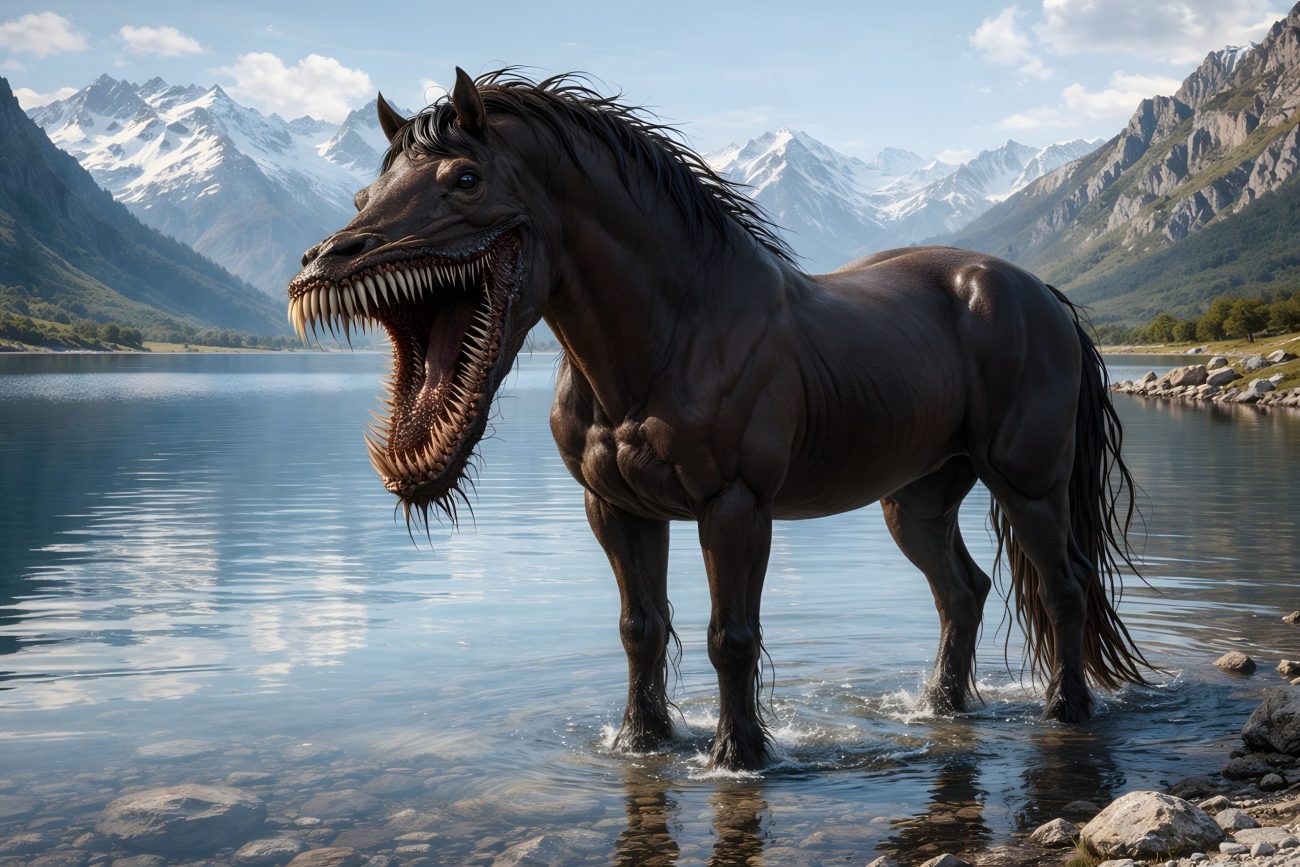
The Devouring Wild Mare is a dangerous supernatural horse said to consume all living beings. Despite its violent nature, it can be subdued through cunning and oath-binding.

A young hero was sent to water a mare known for devouring anyone who approached it. Guided by a magical horse, he prepared a trap by mixing honey into the water and placing a golden saddle nearby. When the mare arrived, it drank the sweetened water and was drawn to the sight of the saddle.

The mare called out for a human to ride it. The hero revealed himself but demanded an oath for safety. The mare swore by the head of Demirçil, the hero’s horse, that it would not harm him. Only after this oath did the hero descend and mount the mare.

Once mounted, the mare did not attack him. Instead, it behaved peacefully and even expressed a desire to be reunited with its offspring, the very horse that had guided the hero. The three then moved together without conflict.

Although known as a devourer of living beings, the mare’s behavior was restrained when bound by oath and approached with strategy.


Sources

Albanian Literature contributors. (n.d.). Folktale 7. In Albanian Literature, from http://www.albanianliterature.net/folktales/tale_07.html

Dozon, A. (1879). Manuel de la langue chkipe ou albanaise: Grammaire, vocabulaire, chrestomathie. In Paris: Ernest Leroux (reprinted in Folklor shqiptar 1, Proza popullore, 1963). Translated by Elsie, R.


Black Horse of the Sauer

Tradition / Region: Luxembourg Mythology
Alternate Names: Ghost Horses of Rosport
Category: Horse


The Myth

Near the Rosport ferry on the Sauer River, people told of ghostly black horses that sometimes appeared at night.

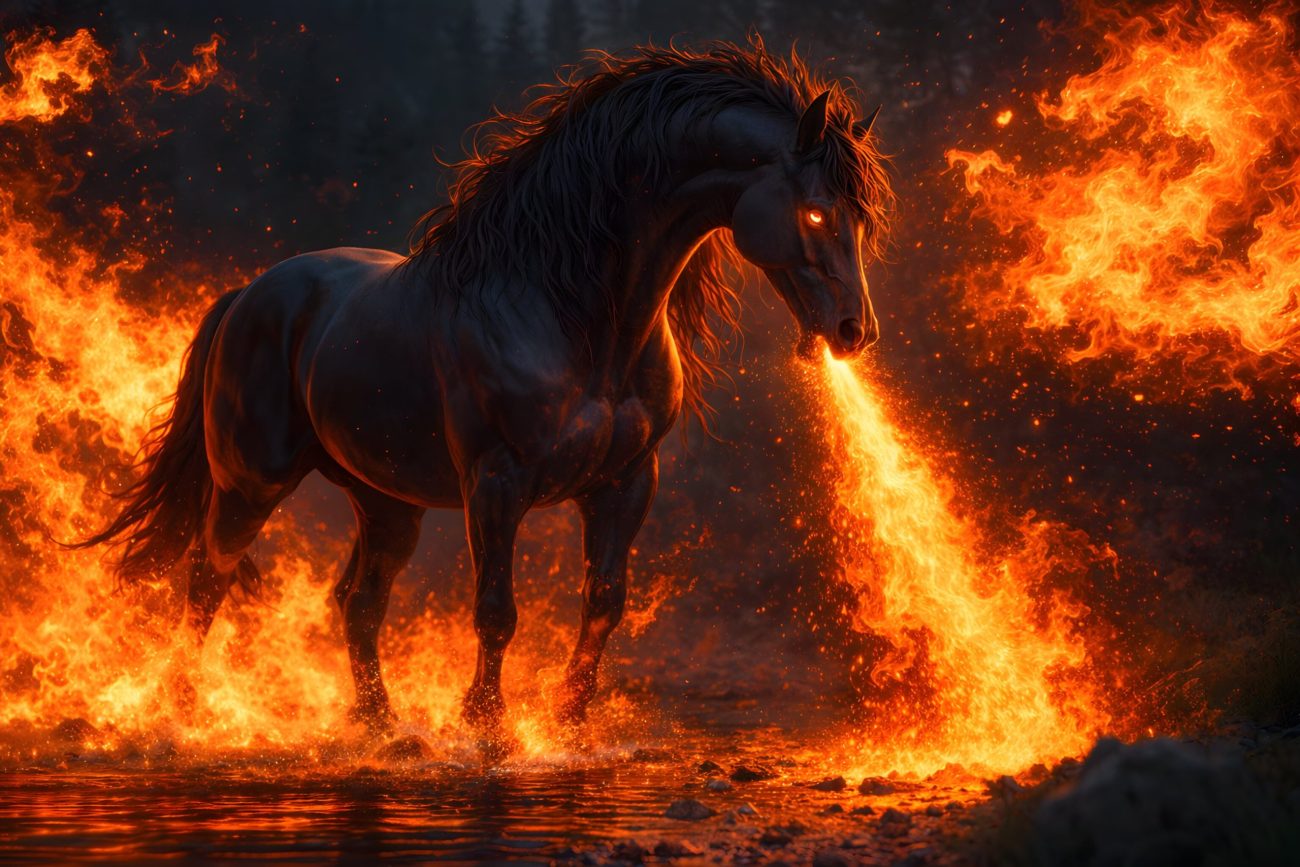
A young shoemaker returning late from Ralingen once came to the ferry and waited for the boatman. As he stood there, he saw two magnificent black horses trotting along the towpath. Thinking they had escaped from a nearby farm, he tried to seize them. But when he reached for their bridles, the horses opened their mouths, blazing with fire. Terrified, he released them, and the creatures plunged into the Sauer River, spewing flames as the water hissed and roared around them. The shock of the encounter was said to have turned the young man’s hair white by morning.

Another time, two smugglers lying in wait near Eselsborne close to the river heard a terrible roaring from the water as midnight approached. One of them looked down and saw the same black horses leaping and swimming in the weir, their fiery mouths open amid the splashing, foaming waves. Yet his companion saw and heard nothing at all.

Thus the people believed that fiery phantom horses sometimes rose from the Sauer at night, appearing only to certain witnesses before vanishing again into the water.


Gallery


Sources

sagen.at contributors. (n.d.). Die gespensterhaften Rappen bei Rosport. In sagen.at, from https://www.sagen.at/texte/sagen/luxemburg/Rappen_Rosport.html


Interpretive Lenses

Religious Readings
  • Christian Ascetic Deep Dive
Philosophical Readings
  • Nietzschean Deep Dive
Psychological Readings
  • Jungian Deep Dive
Esoteric Deep Dive
  • Hermetic Deep Dive
Political / Social Readings
  • Marxist Deep Dive

Unicorn

Tradition / Region: Greek Mythology
Alternate Names: Monokeros
Category: Horse


The Myth

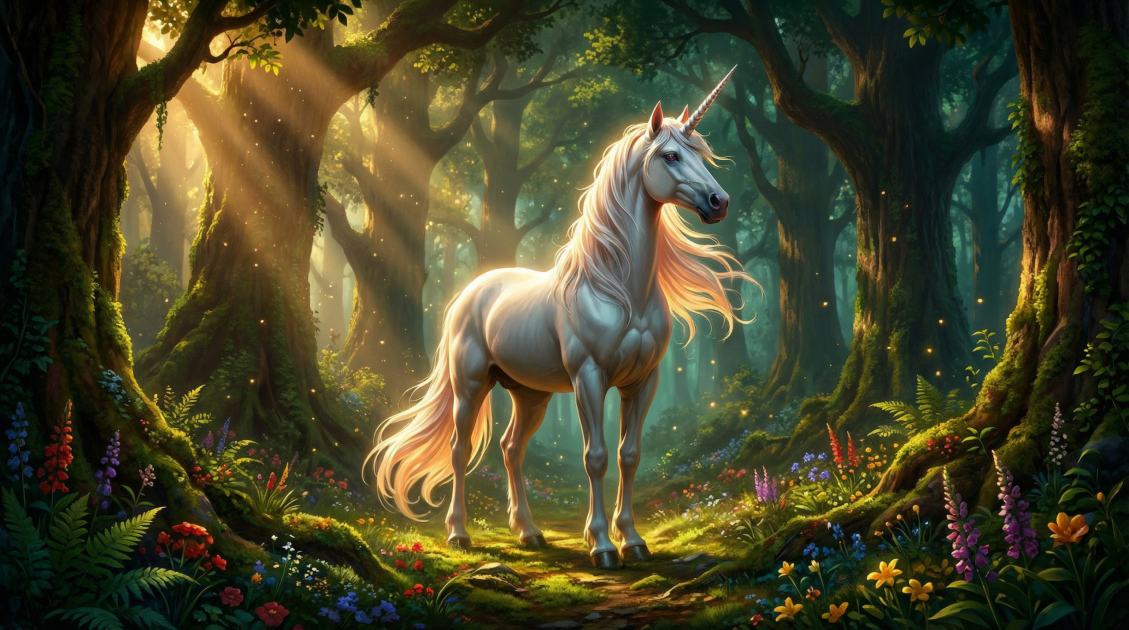
In ancient Greek accounts, the unicorn was spoken of as a rare and formidable creature dwelling in distant forests and mountains beyond the familiar world. It resembled a powerful horse or goat-like beast, marked by a single long horn rising from the center of its forehead. Swift, strong, and fiercely independent, it could not be overtaken by hunters nor subdued by force.

The unicorn was said to possess extraordinary strength. When pursued, it could leap from great heights, landing upon its horn without injury, and vanish into rough terrain where no human could follow. Its body was lean and fast, its senses sharp, and its temperament untamable. No net or trap could hold it, and weapons were useless against its speed.

Only one method was said to succeed in capturing a unicorn. If a maiden of pure character was left alone in the forest, the creature would approach her without fear. Trusting her presence, it would rest its head in her lap, allowing hunters to seize it. Without such purity, the unicorn would never come near, fleeing at the first hint of deceit or threat.

The unicorn’s horn was believed to hold powerful properties. It could cleanse poisoned water, neutralize venom, and protect against corruption. Because of this, kings and physicians prized the horn above all treasures, though few ever possessed one. Its power was tied to the creature itself, and the horn was never obtained without consequence.

Though later traditions layered the unicorn with symbolism, in the older Greek imagination it remained a wild and dangerous being. It was neither gentle nor benevolent, but bound to strict conditions of approach. To encounter the unicorn was to face a creature that tested restraint, intention, and respect, existing beyond human command and beyond the reach of ordinary ambition.


Waterveulen

Tradition / Region: Dutch Mythology
Alternate Names:
Category: Horse


The Myth

Along the shores of the Zuiderzee near Volendam, it was said that a creature called the Waterveulen would sometimes rise from the sea. It appeared as a young horse, its body slick with seawater, its hooves shining as if made of wet stone. At dusk or in the quiet of evening, it would walk along the shoreline, watching the land from the edge of the waves.

The Waterveulen was said to take an interest in a young maiden known for her beauty. From the sea, it brought her gifts: small fish and offerings gathered from the water. The girl accepted these gifts, and over time she grew accustomed to the creature’s presence, meeting it again and again at the shore.

One day, the maiden mounted the Waterveulen. At once, it turned and ran into the sea, carrying her with it beneath the waves. The people watching from the shore saw the two disappear into the water and were never seen again.

From that time on, the Waterveulen was remembered as a being that emerged from the sea to lure humans away, leaving only the sound of the waves behind.


Abe de Verteller contributors. (n.d.). Van aardmannetje tot zwarte juffer: Een lijst van Nederlandse en Vlaamse elfen en geesten. In Abe de Verteller, from https://abedeverteller.nl/van-aardmannetje-tot-zwarte-juffer-een-lijst-van-nederlandse-en-vlaamse-elfen-en-geesten/