Yatsufusa

Tradition / Region: Japanese Mythology
Alternate Names:
Category: Dog


The Myth

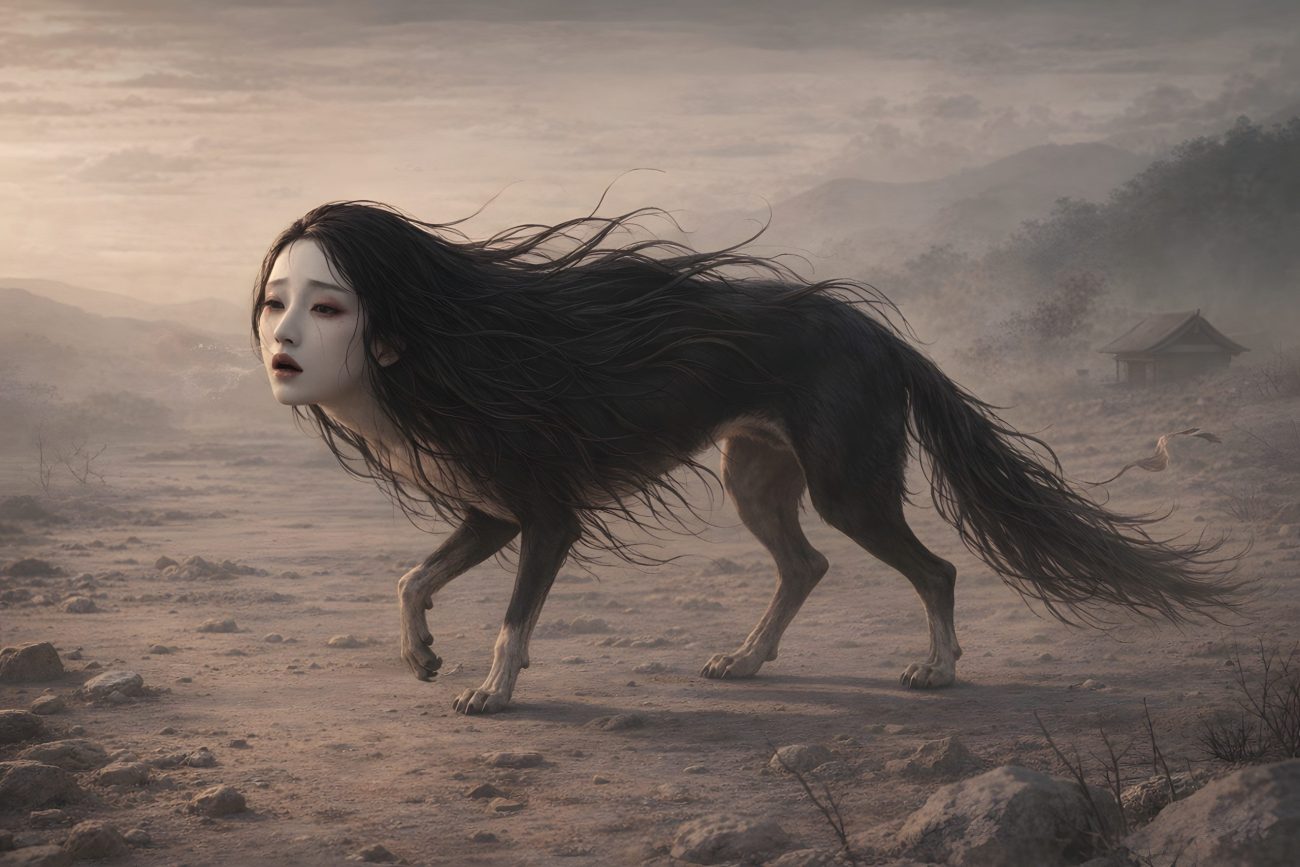
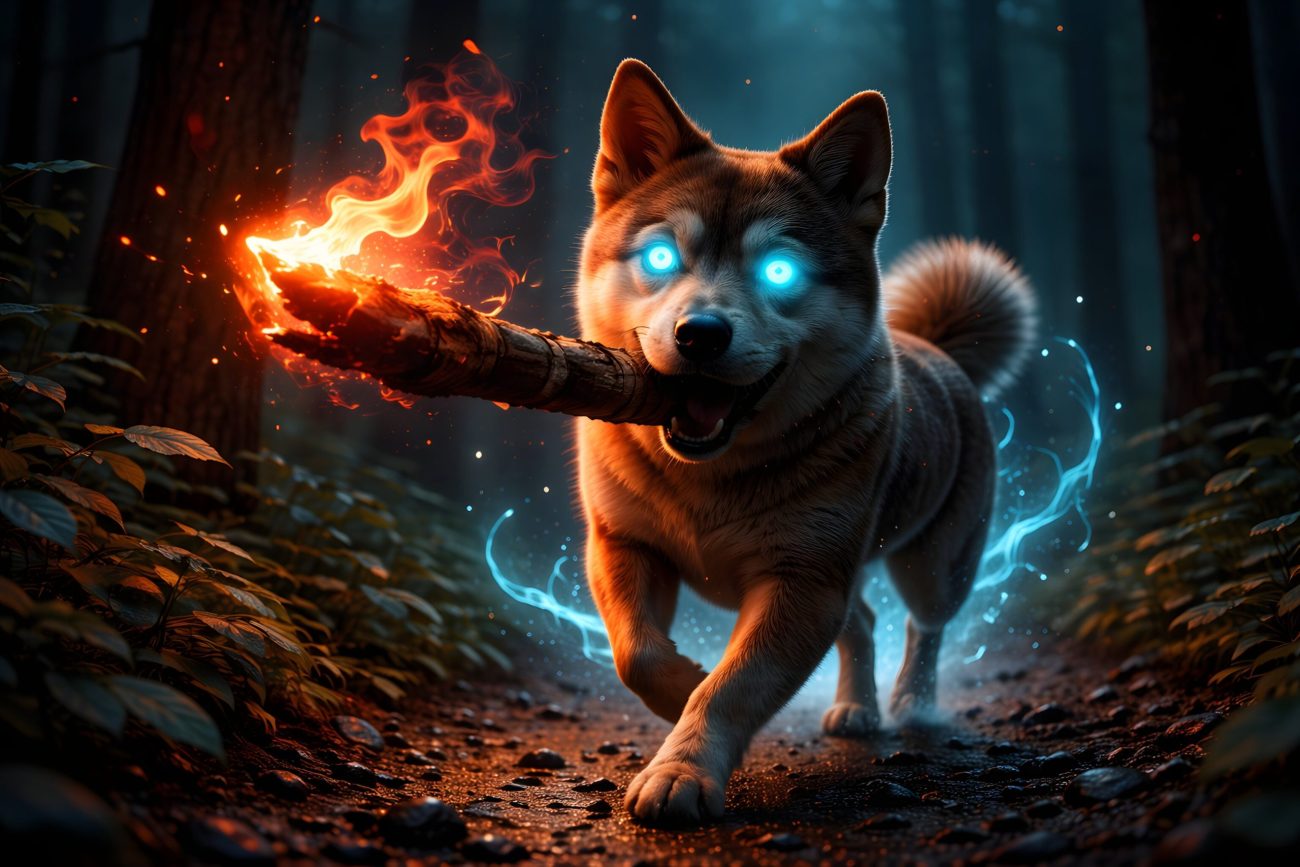
Yatsufusa was a remarkable dog said to have been born in a village beyond Toyama in Awa Province. When he was only a week old, his mother was killed by a wolf, and the pup seemed certain to die. But a raccoon dog, appearing as a drifting will-o’-the-wisp, came and nursed him with milk. The pup survived and grew into an unusually large, powerful dog with sharp eyes and a noble bearing.

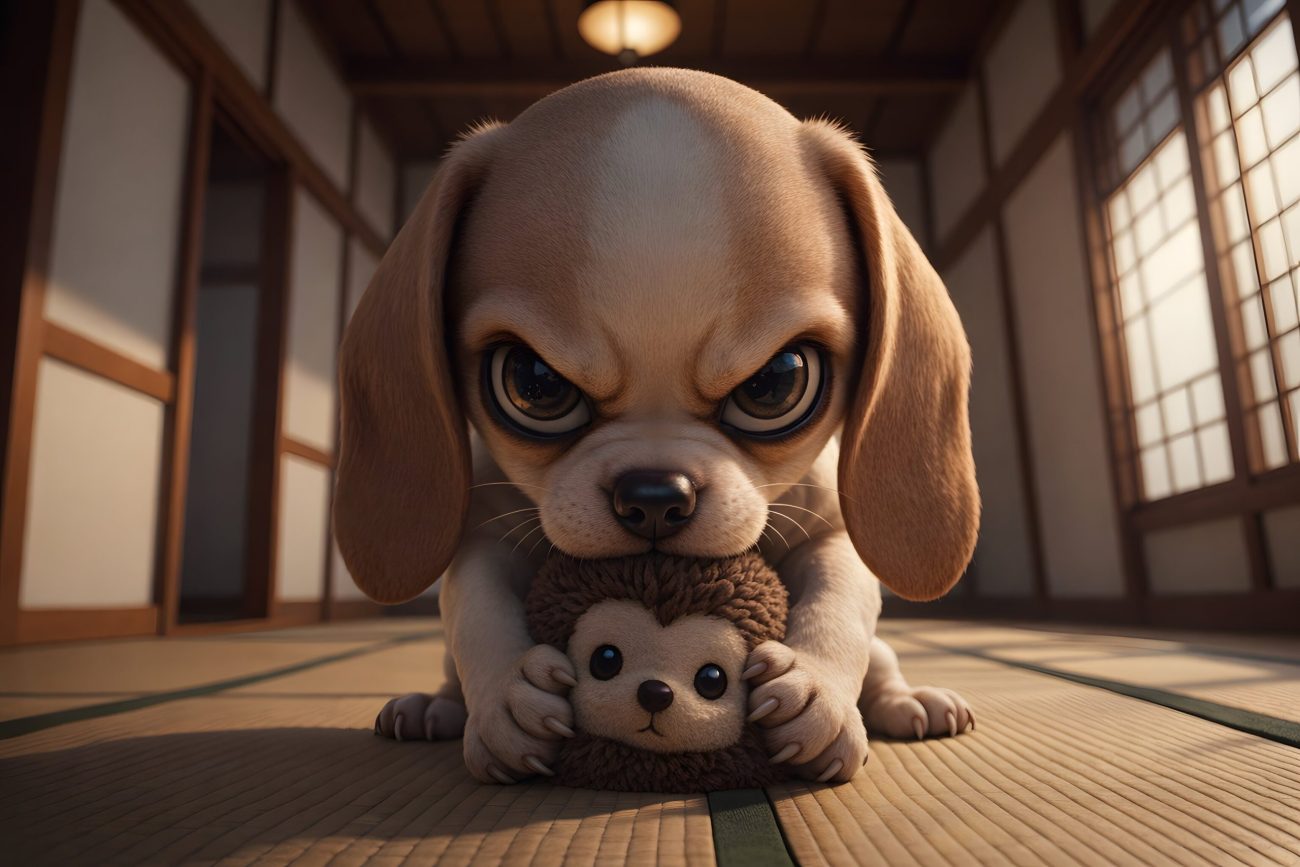
Word of this strange animal reached Satomi Yoshizane, lord of Awa, who summoned the dog to his court. The dog’s black-and-white coat bore eight peony-like markings, and so he was named Yatsufusa, “Eight Tufts.” He became the Satomi family’s cherished pet and grew deeply attached to Yoshizane’s daughter, Princess Fusehime, never leaving her side.

Years later, famine weakened the Satomi lands, and the enemy lord Anzai Kagetsura invaded. The castle stood on the brink of collapse. In desperation, Yoshizane jokingly told the starving Yatsufusa that if he killed the enemy general, he would reward him with Fusehime’s hand in marriage.

That night, Yatsufusa returned carrying the severed head of Kagetsura. The promise, made in jest, had been fulfilled in earnest. Yoshizane rewarded the dog with rich food and servants, but Yatsufusa refused all comforts, remaining beside the head as though waiting for the promised reward.

When Yoshizane realized the dog’s attachment to his daughter, he tried to drive Yatsufusa away. The dog broke loose and forced his way into the mansion, and Yoshizane prepared to kill him. Fusehime stopped her father, reminding him that a promise once spoken must be honored. Reluctantly, Yoshizane allowed her to leave with the dog.

Yatsufusa carried Fusehime into the mountains, where they lived together in a cave. She brought with her a copy of the Lotus Sutra and spent her days reciting it. Yatsufusa listened, growing calm and devoted, and never violated her. A hermit’s messenger later revealed that the dog’s true nature was bound to past grudges and karmic ties, but that the sutra’s power had begun to free him.

Through the merit of the sacred text, Fusehime conceived eight spiritual children. She later resolved that she and the dog should end their suffering and be reborn in better form. As Yatsufusa prepared to follow her into the water, a shot rang out. A warrior attempting to rescue the princess fired, and the bullet struck both dog and girl.

Fusehime died after proving her purity, and the rosary she carried burst apart, sending eight sacred beads flying into the world. From these beads would arise the Eight Dog Warriors, heroes bound by virtue.

After her death, Fusehime’s spirit was sometimes seen riding Yatsufusa, guiding the warriors who carried the beads and watching over their destinies.


Gallery


Sources

Tyz-Yokai Blog. (n.d.). Yafusa. Retrieved March 1, 2026, from https://tyz-yokai.blog.jp/archives/1069140273.html


Interpretive Lenses

Religious Readings
  • Christian Ascetic Deep Dive
Philosophical Readings
  • Nietzschean Deep Dive
Psychological Readings
  • Jungian Deep Dive
Esoteric Deep Dive
  • Hermetic Deep Dive
Political / Social Readings
  • Marxist Deep Dive

Sunekosu

Tradition / Region: Japanese Mythology
Alternate Names:
Category: Dog


The Myth

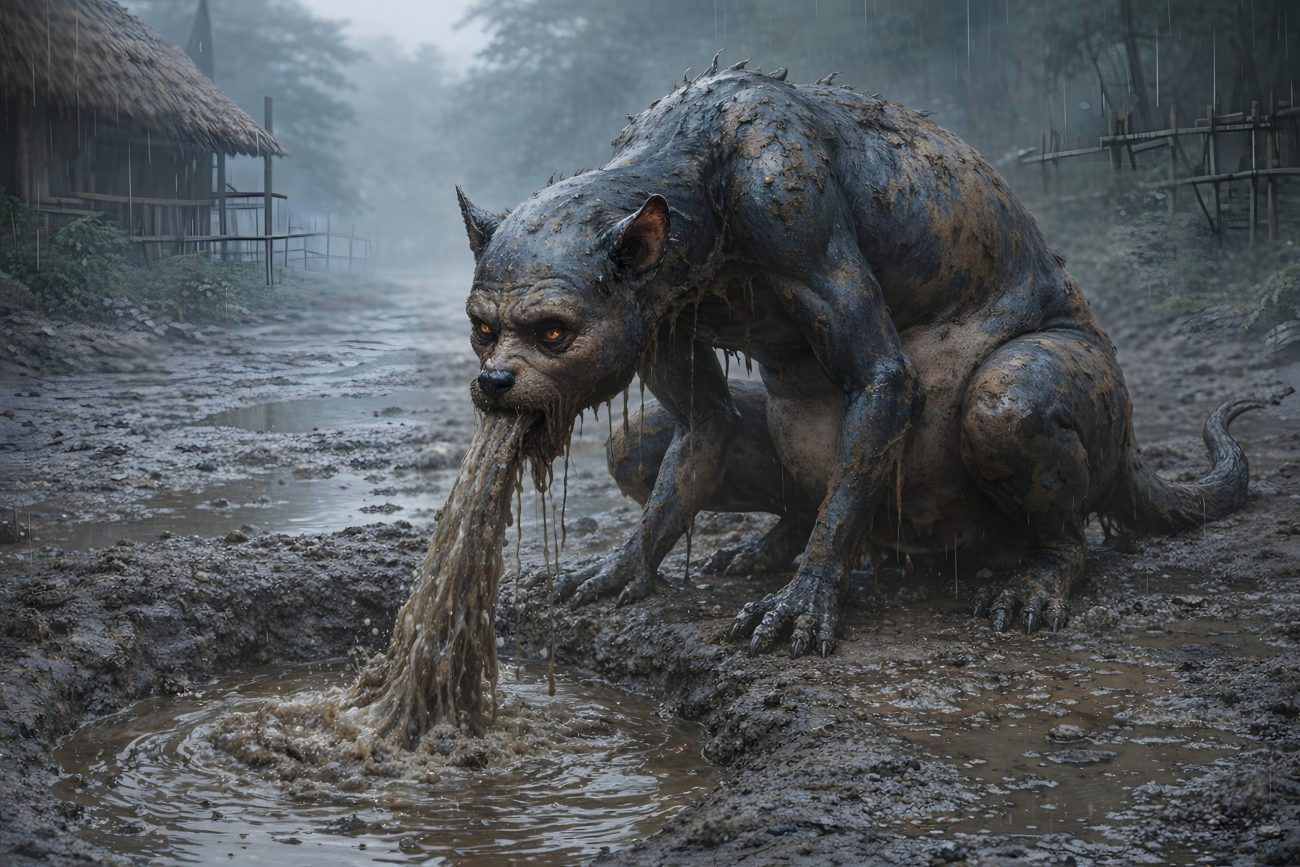
Sunekosu is a strange creature said to appear in Oda County of Okayama Prefecture. It is most often encountered on rainy nights, when the roads are quiet and visibility is poor.

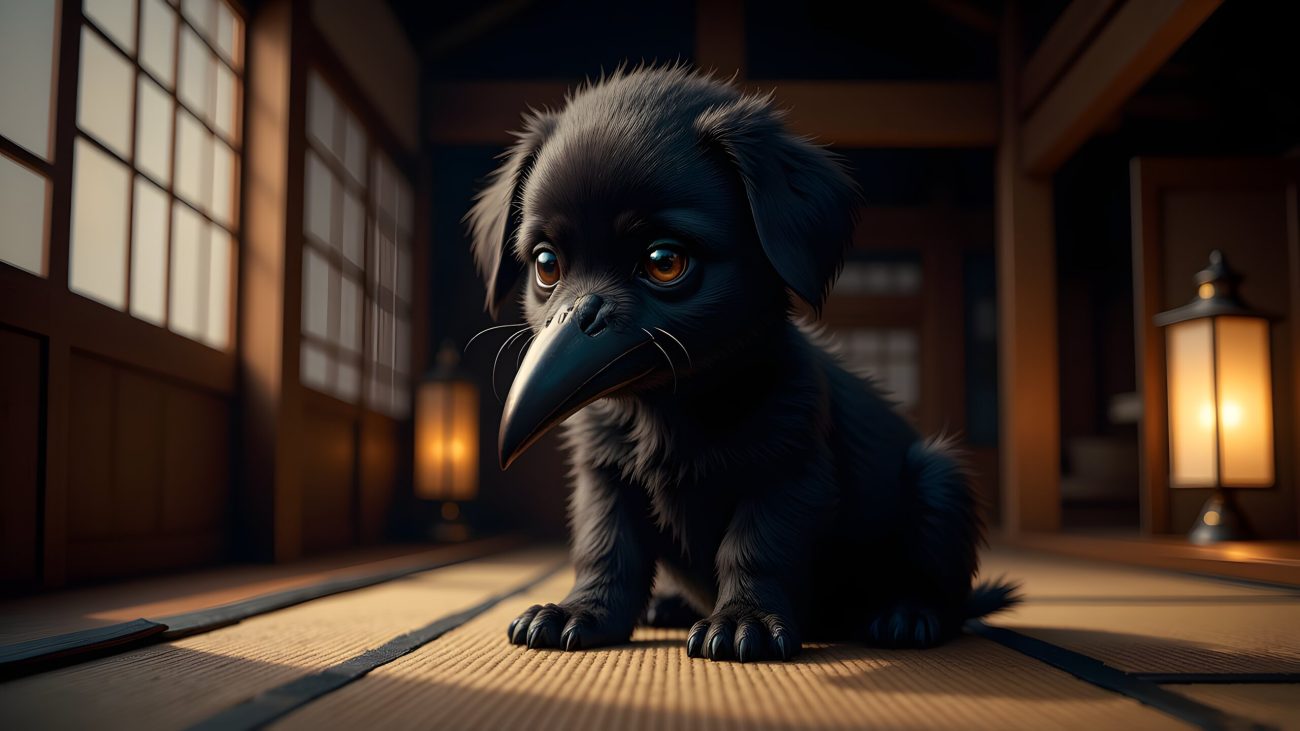
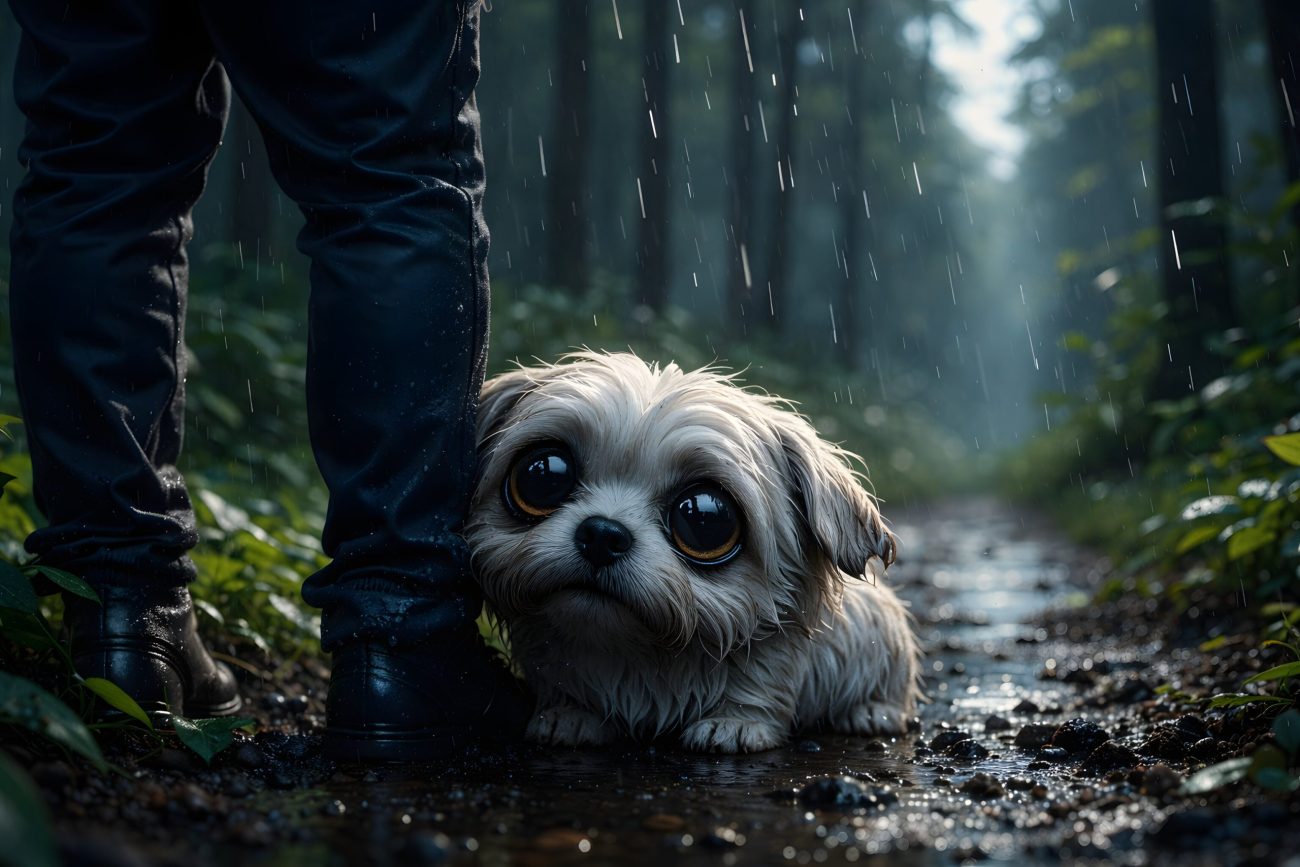
Those walking alone sometimes feel something brush suddenly against their legs. Looking down, they may glimpse the shape of a small animal like a dog slipping past them in the darkness. It moves silently and quickly, weaving between the legs of travelers before vanishing into the night.

The creature does not attack, but its sudden contact startles those who encounter it. Afterward, nothing can be seen or heard, leaving only the uneasy feeling that something unseen passed close by in the rain.


Gallery


Sources

Tyz-Yokai Blog. (n.d.). Sunekosu. Retrieved March 1, 2026, from https://tyz-yokai.blog.jp/archives/1010654292.html


Interpretive Lenses

Religious Readings
  • Christian Ascetic Deep Dive
Philosophical Readings
  • Nietzschean Deep Dive
Psychological Readings
  • Jungian Deep Dive
Esoteric Deep Dive
  • Hermetic Deep Dive
Political / Social Readings
  • Marxist Deep Dive

Poreskoro

Tradition / Region: Romani Mythology, Czech Mythology
Alternate Names: “The Tailed,” “The Caudate”
Category: Dog


The Myth

Poreskoro is the ninth and final child of Ana, the dread mother of disease in Romani tradition. Ana herself was born from the violent and unhappy union of the Queen of the Keshalyi and the King of the Loçolico, and her offspring were feared as embodiments of sickness and corruption.

After earlier attempts to prevent further monstrous births failed, the Keshalyi tried one last desperate measure. They fed their queen a potion made from cat hair, powdered snake, and hair taken from the hound of hell. From this dark mixture came Poreskoro.

The creature was unlike any of the others. It appeared as a strange birdlike being with four dog heads, four cat heads, and a snake’s tail ending in a forked tongue. It was both male and female, able to produce offspring without a mate.

Those offspring were not living creatures in the ordinary sense. They were the great diseases of the world — plague, cholera, smallpox, and countless other sicknesses that spread across humanity. Poreskoro dwells deep underground with these children, and when it rises to the surface its appearance is taken as a sign that pestilence and destruction will soon follow.

Even the King of the Loçolico was horrified when he saw this child. Realizing the union had brought only ruin, he and Ana separated. Ana withdrew to a remote mountain castle, kept alive by the Keshalyi, who visit her daily and give her drops of blood to sustain her. Sometimes she appears as a golden toad, but more often she is only heard whispering a single command — a word meaning “bring” or “pass.” Those who hear it must obey, tossing some small creature away, or risk being crushed by her unseen power.

Meanwhile, her children remain beneath the earth, and through Poreskoro the world’s diseases continue without end.


Gallery


Sources

A Book of Creatures. (2017, March 31). Poreskoro. From https://abookofcreatures.com/2017/03/31/poreskoro/


Interpretive Lenses

Religious Readings
  • Christian Ascetic Deep Dive
Philosophical Readings
  • Nietzschean Deep Dive
Psychological Readings
  • Jungian Deep Dive
Esoteric Deep Dive
  • Hermetic Deep Dive
Political / Social Readings
  • Marxist Deep Dive

Cerberus

Tradition / Region: Greek Mythology
Alternate Names: Kerberos
Category: Dog


The Myth

Cerberus is the monstrous hound who guards the gates of the underworld, preventing the dead from escaping and the living from entering without permission. He is the offspring of the fearsome beings Typhon and Echidna, and brother to other dreadful creatures such as the Hydra, Orthrus, and the Chimera.

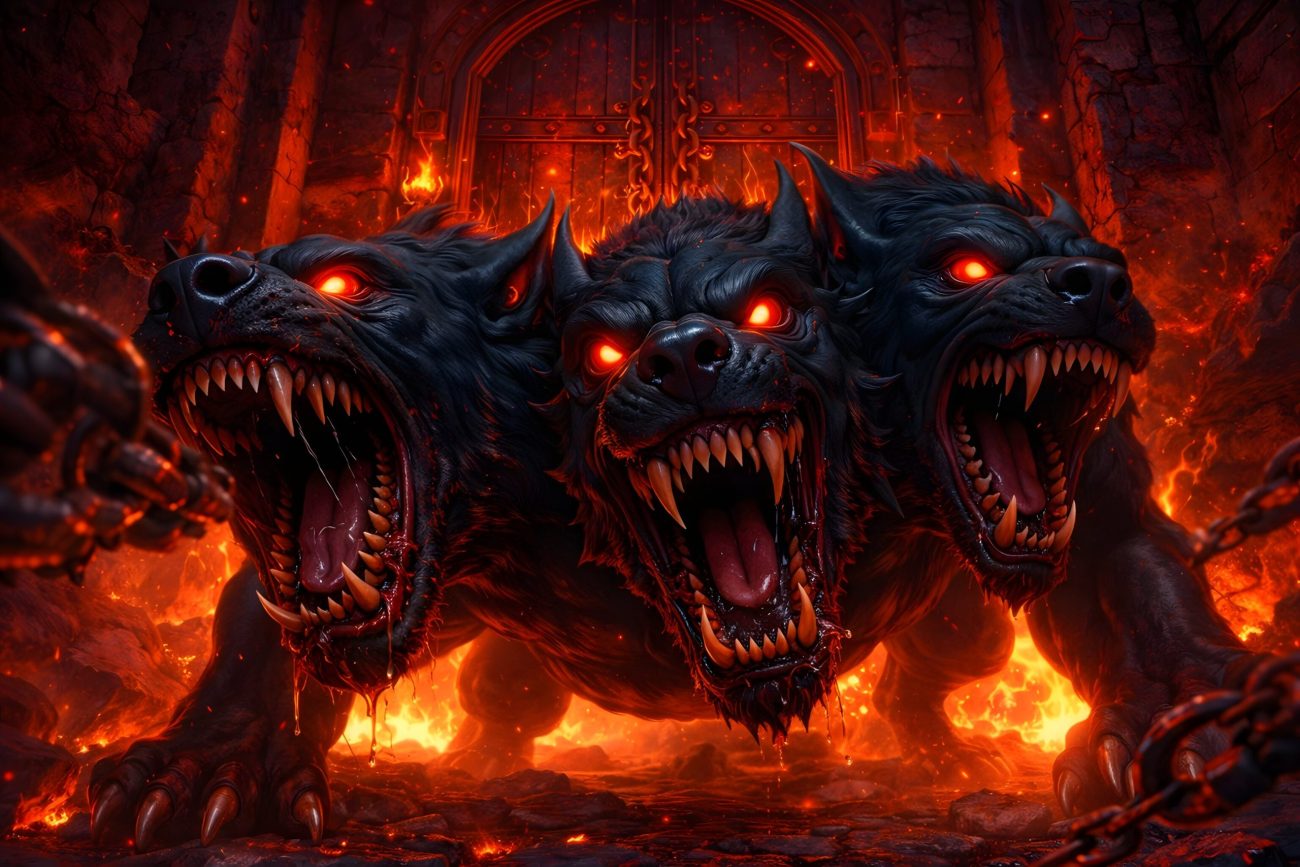
Descriptions of Cerberus vary widely. In the earliest tales he was said to have many heads — fifty, or even a hundred. Later tradition most often gives him three dog heads, though he is also described with serpent tails, snakes writhing from his body, or a mane made of serpents. His eyes were said to flash fire, his hearing was keen, and he fed on raw flesh.

Cerberus’ chief role was to stand watch at the entrance to Hades, terrifying any who approached. Yet he appears in myth most famously during the final labor of Heracles.

King Eurystheus commanded Heracles to descend into the underworld and bring Cerberus back alive — a task meant to be impossible. Before descending, Heracles was initiated into sacred rites that prepared him to walk among the dead. Guided by Hermes and aided by Athena, he entered the realm of Hades through a cavern in the earth.

There he encountered the imprisoned heroes Theseus and Pirithous, and in some tellings freed at least one of them. Then Heracles approached Hades and asked permission to take Cerberus. The god agreed on one condition: Heracles must subdue the beast without using iron weapons.

Heracles seized the monster with his bare strength, shielding himself with the lion skin he wore. After a violent struggle he forced Cerberus into submission, chained him, and dragged him up from the world of the dead.

When Cerberus first emerged into the sunlight, the sight drove him into a frenzy. Some say his foam or bile fell upon the earth and gave rise to poisonous plants. Heracles carried the beast across the land and displayed it before Eurystheus, proving the labor complete.

Once the task was fulfilled, Cerberus was returned to his post at the gates of the underworld, where he remains, the eternal watcher between the realms of the living and the dead.


Sources

Wikipedia contributors. (n.d.). Cerberus. In Wikipedia, from https://en.wikipedia.org/wiki/Cerberus


Failinis

Tradition / Region: Irish Mythology
Alternate Names: Shalinnis, Salinnis, Fer Mac
Category: Dog


The Myth

Failinis was a marvelous hound belonging to Lugh Lámhfhada of the Tuatha Dé Danann. The dog was one of the great treasures demanded as reparation from the sons of Tuireann after they killed Lugh’s father, Cian.

The hound originally came from the distant land of Iruaid, where it belonged either to a king or a royal smith. From there it passed into the hands of the sons of Tuireann, who were forced to surrender it to Lugh as part of their punishment.

Failinis was no ordinary dog. It was invincible in battle and could catch any beast it pursued, whether on land or in water. It held mastery over animals and was said to hunt everything from deer to fish. It possessed wondrous magic as well: whenever it bathed in running water, the water turned into wine or mead. In some tellings, it could even disgorge drink, gold, or silver from its mouth.

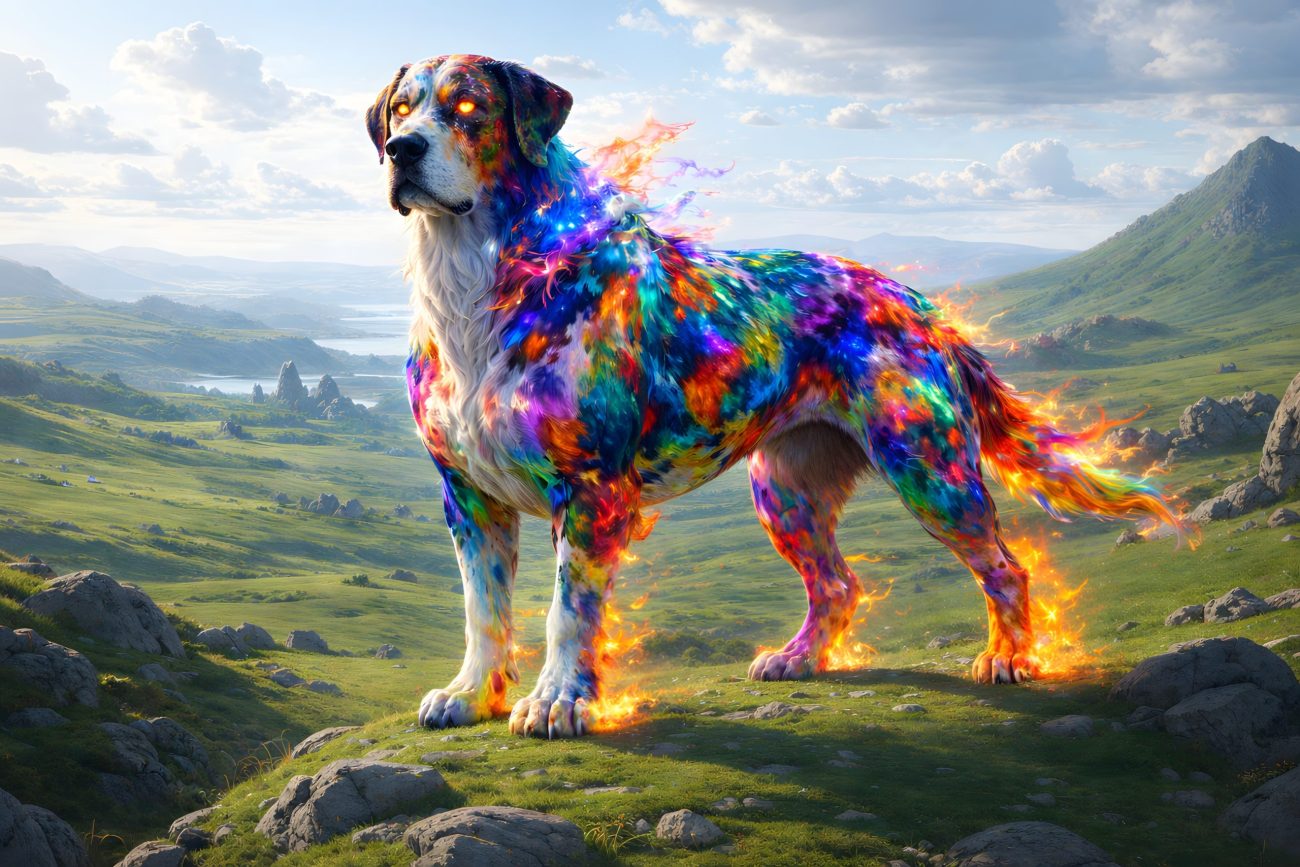
By day, the hound was immense and powerful, strong enough to overcome many warriors. By night it was like a bolt of fire, blazing and swift. Some tales describe it as beautifully colored, others as patterned in many hues — white, black, blue, and more.

In later stories of the Fenian Cycle, the same hound appears again, now in the hands of three foreign warriors from Iruaid who arrive in Ireland. They use the dog’s magic to create strong drink and defend themselves against spies. When warriors attempt to watch them in secret, the hound raises a supernatural wind with its tail that strips their weapons away. At its masters’ command it breathes upon the slain, reducing their bodies to dust so that nothing remains.

In some versions, the foreign warriors eventually lose the hound as compensation to the Fianna led by Fionn mac Cumhaill. In another telling they swear never to take the dog alive from Ireland, so they kill it and carry away its hide instead.

Thus Failinis is remembered as one of the great mythic hounds of Ireland — a creature of battle, magic, wealth, and loyalty, tied to heroes, kings, and warriors across multiple cycles of legend.


Sources

Wikipedia contributors. (n.d.). Failinis. In Wikipedia, from https://en.wikipedia.org/wiki/Failinis


Căpcăun

Tradition / Region: Romanian Mythology
Alternate Names:
Category: Dog, Ogre


The Myth

The Căpcăun is a monstrous being from Romanian tradition, remembered as one of the great enemies of humankind. It is counted among the dark creatures of folklore alongside dragons and ogres, and is often portrayed as a kidnapper of children, maidens, or princesses.

The creature’s name is believed to mean “dog-head,” and it is most often described as having the body of a man but the head of a dog. In some tales it is even more grotesque: it may have four eyes, eyes in the back of its head, or other unnatural features that mark it as something outside the human world.

The Căpcăun dwells in remote places — forests, caves, or distant lands — and is known above all for its hunger for human flesh. Stories tell of it capturing travelers or seizing the young and defenseless, carrying them away to be devoured.

In Romanian storytelling, the Căpcăun often appears as an obstacle for heroes to overcome, a symbol of brute strength, cruelty, and savagery. Its presence marks the boundary between the safe human world and the dangerous wilderness beyond.

Because of this, the word itself eventually came to be used not only for monsters but also as a name for hostile outsiders or enemies, reflecting how deeply the image of the dog-headed devourer took root in the imagination.


Sources

Wikipedia contributors. (n.d.). Căpcăun. In Wikipedia, from https://ro.wikipedia.org/wiki/C%C4%83pc%C4%83un


Gytrash

Tradition / Region: English Mythology
Alternate Names: Guytrash, Guytresh
Category: Dog, Shapeshifter


The Myth

The Gytrash is a feared spirit of northern England, especially in the West Riding of Yorkshire. It is known as a wandering shape-changer that haunts lonely roads, crossroads, and empty country paths where travelers pass after dark.

The Gytrash rarely keeps one form. It most often appears as an animal — commonly a horse, mule, calf, or large dog. When it takes the form of a dog, it is usually described as huge, shaggy, and unnatural, with strange eyes that glow in the dusk. Sometimes it drags chains or moves silently beside the road, watching those who pass.

Travelers who meet the Gytrash do not always meet the same fate. In many tales it is dangerous, leading wanderers astray into marshes, forests, or darkness from which they may never return. Its appearance is often taken as a bad omen, a sign of misfortune or death.

Yet in other stories the spirit is not wholly malevolent. Some say the Gytrash may guide a lost traveler back onto the proper road, escorting them silently through the night until safety is reached before vanishing again.

The spirit became widely known through the stories of the Brontë family. In one famous account, a lone traveler walking at dusk sees what she believes to be a Gytrash: first a spectral horse approaching, then a huge black-and-white dog gliding along the hedge, its presence filling the road with unease.

The Gytrash is remembered as a restless being of the night — neither ghost nor demon nor fairy, but a wandering spirit that moves between shapes, appearing where the road is empty and the darkness is deep.


Sources

Wikipedia contributors. (n.d.). Gytrash. In Wikipedia, from https://en.wikipedia.org/wiki/Gytrash


Luison

Tradition / Region: Paraguay Mythology, Argentine Mythology
Alternate Names: Luisõ, Luisón, Lobizón
Category: Dog


The Myth

Luison is one of the seven monstrous sons born to Tau, a spirit of evil, and Kerana, a mortal woman. Of their seven children, Luison is the seventh and most accursed. He is feared throughout Guaraní tradition and in parts of Paraguay, Argentina, and neighboring regions.

Luison appears as a hideous, giant dog-like creature, grotesque in form and repulsive to behold. He prowls at night, haunting graveyards and lonely places, feeding on carrion and the corruption of the dead.

According to the legend, the curse did not remain only with the original beast. It spread into the human world. Families believed that if a household had seven sons in succession, the youngest would be destined to become Luison. On his thirteenth birthday, the transformation would begin. The boy would change into a monstrous dog-creature and wander the night, driven by hunger and doom.

Because of this belief, traditions arose to prevent the curse. In some regions, the seventh son would be given special protection, baptized with powerful rituals, or even adopted by a godfather of high status so the curse could be broken.

Though feared as a devourer of the dead, Luison is also remembered as a tragic figure — a being born not by choice, but by fate, condemned to roam between the worlds of the living and the dead.


Sources

Wikipedia contributors. (n.d.). Luison. In Wikipedia, from https://en.wikipedia.org/wiki/Luison


Garmr

Tradition / Region: Norse Mythology
Alternate Names: Garm
Category: Dog


The Myth

Garmr is the terrifying hound of the Norse underworld, associated with Hel, death, and the final cataclysm of Ragnarök. He is described as a blood-stained guardian who watches over the entrance to the realm of the dead, often said to be bound at the cave Gnipahellir.

In the Poetic Edda, Garmr is named as the greatest of hounds, and his howling is a prophetic sign of the world’s end. In the poem Völuspá, his cry is repeated as a refrain, each time marking another step toward Ragnarök — the breaking of bonds, the rise of chaos, and the coming destruction of the gods.

Another poem, Baldrs draumar, tells how Odin rides to the underworld and encounters a fearsome hell-hound, bloody on its chest and howling at him from afar. Though unnamed in the poem, this dog is often identified as Garmr.

In the Prose Edda, Garmr’s fate is sealed: when Ragnarök arrives, his bonds will snap and he will run free. He will fight the god Týr, and the two will slay one another in the final battle.

Because of his role as a guardian of the dead and his connection to apocalyptic prophecy, Garmr is often compared to other mythic hellhounds such as Cerberus, and in some traditions he is even equated with the monstrous wolf Fenrir.


Gallery


Sources

Wikipedia contributors. (n.d.). Garmr. In Wikipedia, from https://en.wikipedia.org/wiki/Garmr


Interpretive Lenses

Religious Readings
  • Christian Ascetic Deep Dive
Philosophical Readings
  • Nietzschean Deep Dive
Psychological Readings
  • Jungian Deep Dive
Esoteric Deep Dive
  • Hermetic Deep Dive
Political / Social Readings
  • Marxist Deep Dive

Dormarch

Tradition / Region: Welsh Mythology
Alternate Names: Dormarth
Category: Dog


The Myth

Dormarch is a supernatural hound from Welsh tradition, closely tied to the Otherworld and the Wild Hunt. Though hounds in myth often serve mortal hunters, Dormarch belongs to the otherworldly ruler Gwyn ap Nudd, king of Annwn and leader of the spectral hunt that gathers the souls of fallen warriors.

Some traditions claim the hound was once owned by the historical Welsh king Maelgwn Gwynedd, but later passed into the service of Gwyn ap Nudd, reflecting its shift from earthly to supernatural master.

Dormarch’s appearance is unusual even among mythic dogs. He is said to have one head and two front legs, but his body tapers quickly behind the chest and ends in three fish-like tails, blending features of land, sky, and water. His natural domain is described as “ar wybir” — riding upon the clouds — suggesting that he moves through the skies and mountain peaks alongside the Wild Hunt.

As a result, Dormarch represents not just a hunting dog, but a liminal creature of the air and Otherworld, tied to death, the passage of souls, and the supernatural chase.


Sources

Wikipedia contributors. (n.d.). Dormarch. In Wikipedia, from https://en.wikipedia.org/wiki/Dormarch