Shan

Tradition / Region: Chinese Mythology
Alternate Names: Shan Zi
Category: Dog

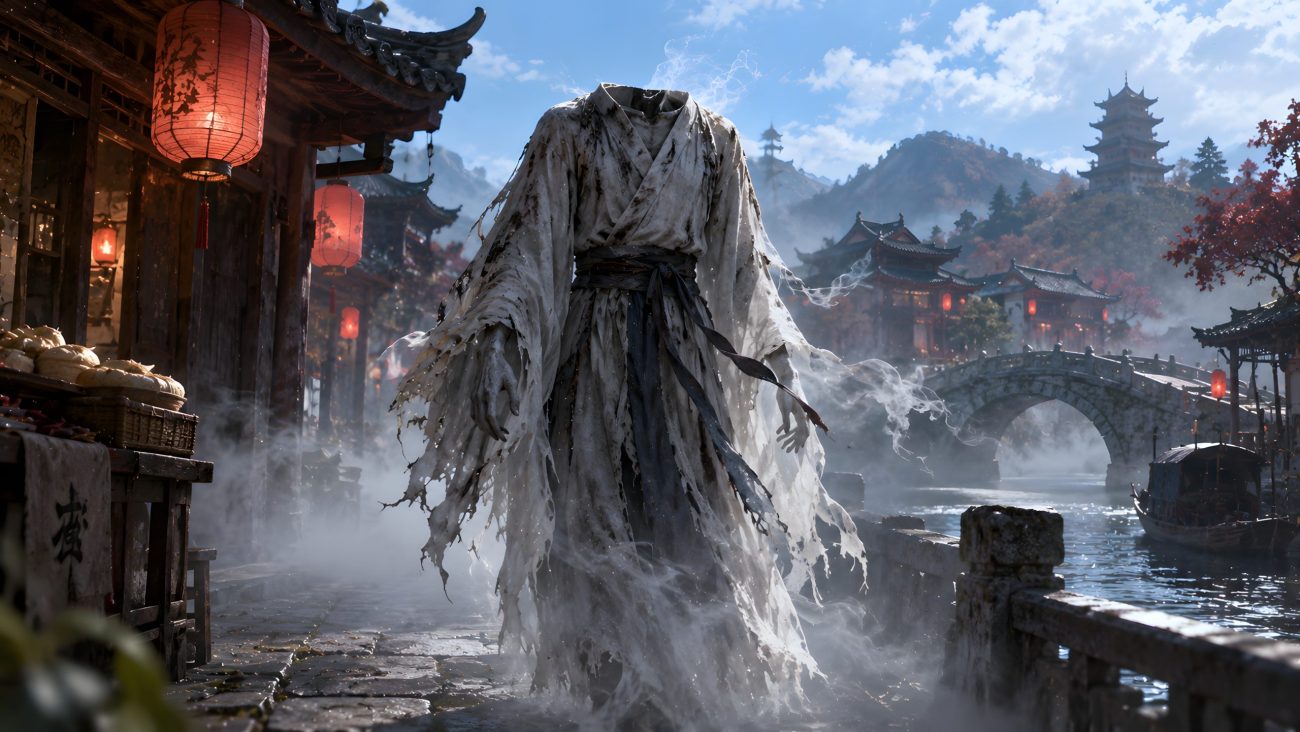
In ancient Chinese legend there is mention of a strange creature known as Shan.

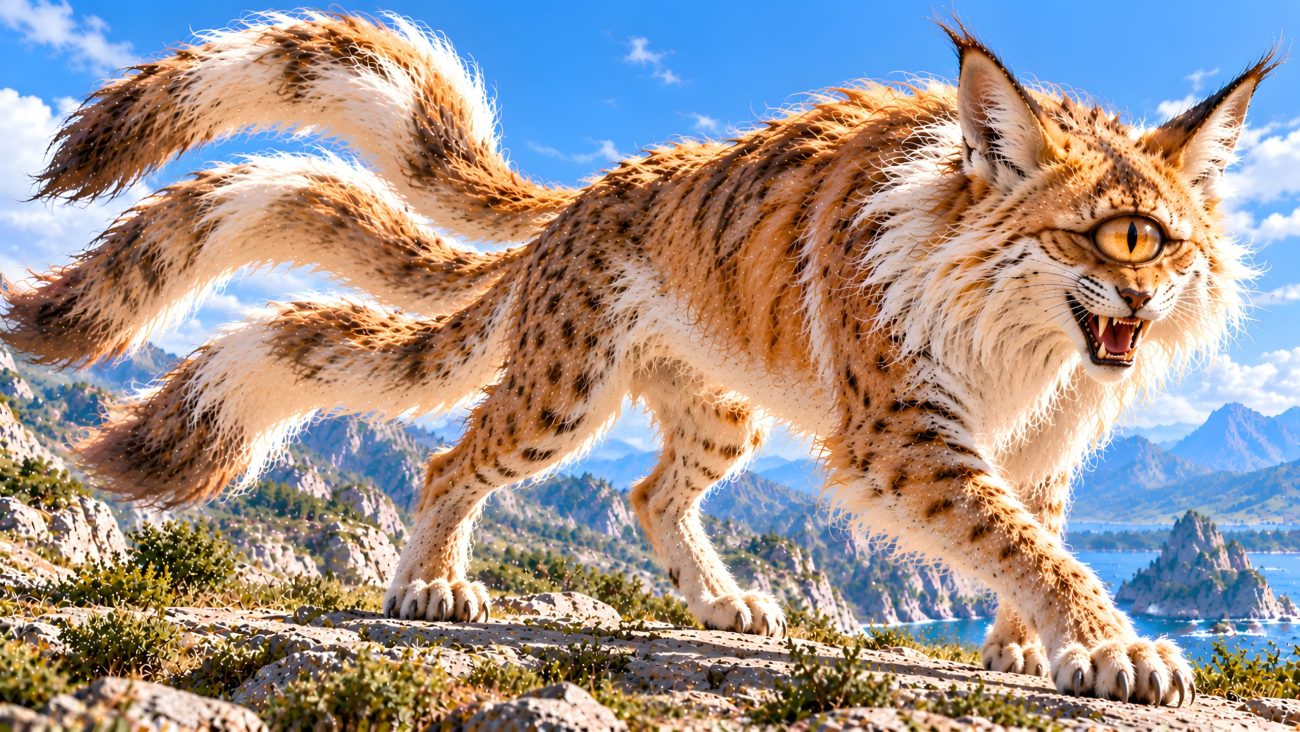
It was described as a dog with the face of a human. When it encountered people, it was said to smile, an unsettling expression that marked it as something unnatural. The creature moved with great speed, running like the wind itself.

Its appearance was not considered fortunate. Wherever Shan was seen, it was believed that strong winds or destructive storms would soon follow. Because of this, its presence was taken as a sign that a wind disaster was near.

Thus Shan was remembered as a swift, human-faced dog of ill omen, whose smile foretold the coming of violent winds.


Gallery


Sources

Wikipedia contributors. (n.d.). 山𤟤. In Wikipedia, from https://zh.wikipedia.org/wiki/%E5%B1%B1%F0%A4%9F%A4


Interpretive Lenses

Religious Readings
  • Christian Ascetic Deep Dive
Philosophical Readings
  • Nietzschean Deep Dive
Psychological Readings
  • Jungian Deep Dive
Esoteric Deep Dive
  • Hermetic Deep Dive
Political / Social Readings
  • Marxist Deep Dive
Other
  • How to Invite The Kuygorozh

Wild Dogs

Tradition / Region: Chinese Mythology
Alternate Names: —
Category: Dog

The Myth

In strange tales recorded in old Chinese stories, there is mention of terrifying creatures known as the Wild Dogs.

They were not ordinary animals but monstrous beings said to roam battlefields and places of death. Their bodies were beast-like, while their heads resembled those of humans. They fed not on flesh alone but on the brains of the dead, tearing open skulls to suck out what lay within.

One story tells of a man named Li Hualong who fled into the mountains during a time of rebellion and war. Dead bodies lay everywhere across the land. When he saw soldiers approaching, he feared he would be captured and killed. To escape notice, he lay down among the corpses and pretended to be dead.

While he lay there, a creature approached. It had a human-like head and moved among the bodies, gnawing at their skulls and feeding on their brains. When it came near him, Li Hualong seized a stone and struck it in the mouth. The monster fled, leaving a trail of blood behind as it escaped into the wild.

Afterward, in the place where the creature had bled, two of its teeth were found. They were long, curved, and sharp, proof that the thing had not been a dream but one of the dreadful Wild Dogs that haunted the aftermath of war.

Thus these creatures were remembered as horrors of desolate places — dog-like monsters that followed death itself, feeding upon the fallen where no one dared remain.


Gallery


Sources

Wikipedia contributors. (n.d.). 野狗子. In Wikipedia, from https://zh.wikipedia.org/wiki/%E9%87%8E%E7%8B%97%E5%AD%90


Interpretive Lenses

Religious Readings
  • Christian Ascetic Deep Dive
Philosophical Readings
  • Nietzschean Deep Dive
Psychological Readings
  • Jungian Deep Dive
Esoteric Deep Dive
  • Hermetic Deep Dive
Political / Social Readings
  • Marxist Deep Dive
Other
  • How to Invite The Kuygorozh

Huodou

Tradition / Region: Chinese Mythology
Alternate Names: Disaster-Fighting Beast, Scourge beast
Category: Dog


The Myth

In ancient Chinese lore there is mention of a strange and dangerous animal known as the Huodou.

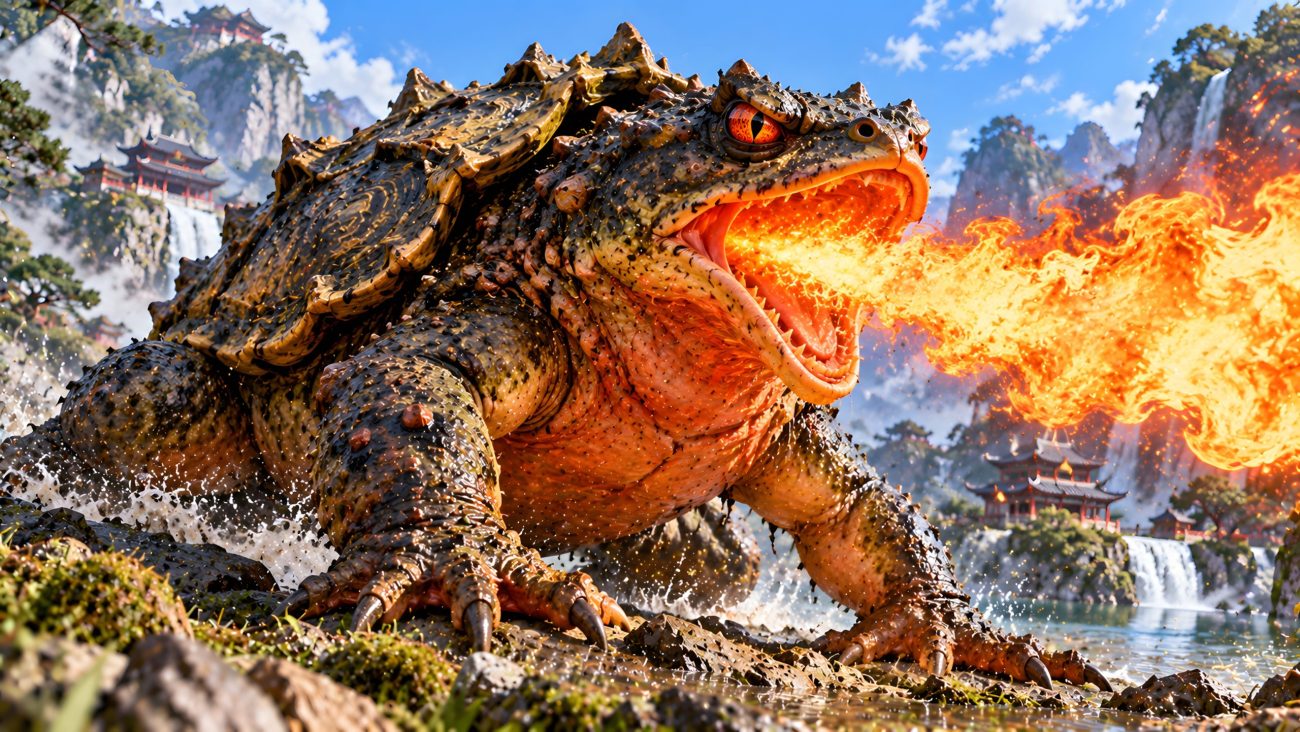
It was said to live in a distant southern land near the dark mountains. In that country, people were believed to withstand fire and even eat burning charcoal. Among them lived a creature that also fed on fire. This beast was described as black in color and shaped somewhat like a dog.

The creature’s nature was considered deeply ominous. Though it could consume flames, it was also said to breathe fire itself, spreading destruction wherever it went. Because of this, it was taken as a sign of disaster.

A later tale tells of a young man named Wu Kan, who lived alone until he discovered a mysterious white snail. When he brought it home, the snail transformed into a beautiful woman who became his wife and helped him with his household.

The local magistrate grew jealous and sought to cause them trouble. He demanded that Wu Kan bring him strange and dangerous things. Each time, the wife managed to provide what was asked. At last, the magistrate demanded a Scourge Beast.

The woman obtained a creature shaped like a dog and gave it to her husband to deliver. The beast consumed fire, but what it expelled afterward was also fire. Soon after it was brought to the magistrate’s house, flames spread from it and the building burned completely to ashes.

After this, Wu Kan and his wife disappeared, and nothing more was known of them.

Thus the Scourge Beast was remembered as a black, dog-like creature tied to fire and destruction — a being that could swallow flames yet also bring ruin wherever it appeared.


Gallery


Sources

Wikipedia contributors. (n.d.). 禍斗. In Wikipedia, from https://zh.wikipedia.org/wiki/%E7%A6%8D%E6%96%97


Interpretive Lenses

Religious Readings
  • Christian Ascetic Deep Dive
Philosophical Readings
  • Nietzschean Deep Dive
Psychological Readings
  • Jungian Deep Dive
Esoteric Deep Dive
  • Hermetic Deep Dive
Political / Social Readings
  • Marxist Deep Dive
Other
  • How to Invite The Kuygorozh

Tiangou

Tradition / Region: Chinese Mythology
Alternate Names: Heavenly Dog
Category: Dog


The Myth

Tiangou, the Heavenly Dog, is a powerful creature of the sky known throughout ancient China.

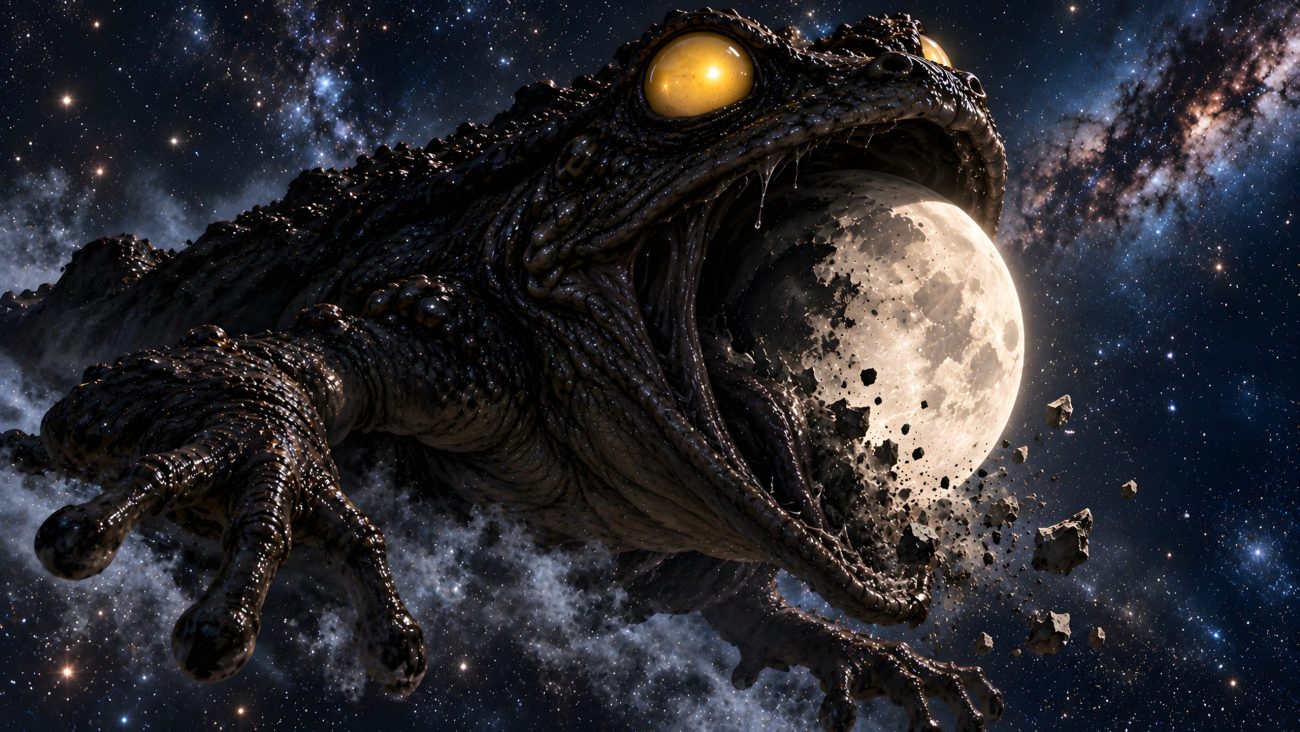
In one form, it is seen as a dark, enormous dog that appears during eclipses. When the Sun or Moon suddenly darkens, people said it was because Tiangou had risen into the heavens and begun to devour it. The creature was believed to swallow the heavenly body, causing the sky to dim until the light returned again.

One story tells that after the hero Hou Yi shot down the nine extra suns that scorched the world, he received an elixir of immortality from the Queen Mother of the West. Before he could drink it, his wife Chang’e secretly consumed the potion herself and began to float upward toward the heavens.

At that moment, Hou Yi’s black dog entered the room and licked the remaining drops of the elixir. The magic transformed it. Growing larger and more powerful, the dog leapt into the sky and chased after Chang’e. Terrified, she fled to the Moon and hid there.

The dog followed her and swallowed the Moon itself, taking Chang’e with it.

When the Queen Mother of the West learned what had happened, she seized the creature. Recognizing that it had once belonged to Hou Yi, she did not destroy it. Instead, she ordered the dog to release the Moon and Chang’e, and she set it as a guardian of the gates of Heaven. From then on, it was known as Tiangou, the Heavenly Dog.

In other traditions, Tiangou is not only feared but also respected. In a more benevolent form it appears as a celestial guardian, linked to the stars and said to protect against misfortune, robbers, and danger.

Another story tells that a divine archer named Zhang Xian watches the sky for the Heavenly Dog. When Tiangou threatens the heavens, Zhang Xian draws his bow and shoots to drive it away, protecting both the sky and the lives of the people below.

Thus Tiangou is remembered as both a devourer of the Moon and a guardian of Heaven — a celestial dog whose presence explains the darkening of the sky and whose power reaches across both myth and the stars.


Gallery


Sources

Wikipedia contributors. (n.d.). Tiangou. In Wikipedia, from https://en.wikipedia.org/wiki/Tiangou


Interpretive Lenses

Religious Readings
  • Christian Ascetic Deep Dive
Philosophical Readings
  • Nietzschean Deep Dive
Psychological Readings
  • Jungian Deep Dive
Esoteric Deep Dive
  • Hermetic Deep Dive
Political / Social Readings
  • Marxist Deep Dive

Rhinoceros Dog

Tradition / Region: Chinese Mythology
Alternate Names:
Category: Dog


The Myth

In old Chinese tales there is mention of a rare and mysterious creature known as the Rhinoceros Dog, an animal believed to bring prosperity to the household that possesses it.

One story tells that during the reign of Emperor Hui of the Jin dynasty, a man named Huai Yao lived in Lou County in the region of Wu. One day his family began hearing the sound of a dog barking from beneath the ground. When they searched for the source, they found only a tiny hole in the earth, no larger than the burrow of a worm.

Curious, Huai Yao prodded the ground with a stick and then began digging. After digging several feet down, he struck something. Continuing to dig, he uncovered two small puppies, one male and one female. Their eyes had not yet opened, and though young, they seemed larger than ordinary newborn dogs.

He took them home and fed them, and soon word spread. Neighbors gathered to see the strange animals. Among them was an elder who, upon seeing the pups, declared that they were Rhinoceros Dogs. He told Huai Yao that whoever obtained such creatures would see their family prosper and flourish, and that they should be carefully raised.

From then on, the Rhinoceros Dog was remembered as a rare and fortunate animal, one that might appear in unexpected places and bring wealth and good fortune to those who found it.


Gallery


Sources

Wikipedia contributors. (n.d.). 犀犬. In Wikipedia, from https://zh.wikipedia.org/wiki/%E7%8A%80%E7%8A%AC


Interpretive Lenses

Religious Readings
  • Christian Ascetic Deep Dive
Philosophical Readings
  • Nietzschean Deep Dive
Psychological Readings
  • Jungian Deep Dive
Esoteric Deep Dive
  • Hermetic Deep Dive
Political / Social Readings
  • Marxist Deep Dive

Peng Hou

Tradition / Region: Chinese Mythology
Alternate Names:
Category: Dog


The Myth

Peng Hou is a strange spirit said to dwell inside ancient trees. It is believed that when a tree has stood for a thousand years, something may begin to live within it, and that being is called Peng Hou.

One story tells of a man who ordered a great camphor tree to be cut down. As the woodcutters struck the trunk, something astonishing happened — the tree began to bleed, as if it were alive. From the split in the trunk a creature suddenly leapt out.

It had a human-like head but the body of a black dog. It had no tail, and its appearance was both unsettling and uncanny, as though it belonged to neither the world of beasts nor that of spirits.

The creature was captured. Instead of fearing it, the people cooked and ate it. Those who tasted the flesh said it was very similar to dog meat.

Peng Hou was known in old Chinese records of strange beings, where it was counted among the spirits and monsters that inhabit the natural world. It was said to be one of the hidden lives that grow alongside trees, emerging only when the tree is cut or disturbed.

In later times the story traveled beyond China, and tales of tree-dwelling creatures shaped like dogs appeared in other lands as well. Some believed that echoes heard in mountains or forests might be caused by such spirits moving unseen among the trunks.

Thus Peng Hou is remembered as a being born from ancient wood — a creature that sleeps within trees for centuries, only revealing itself when the axe splits the living trunk.


Gallery


Sources

Wikipedia contributors. (n.d.). 彭侯. In Wikipedia, from https://zh.wikipedia.org/wiki/%E5%BD%AD%E4%BE%AF


Interpretive Lenses

Religious Readings
  • Christian Ascetic Deep Dive
Philosophical Readings
  • Nietzschean Deep Dive
Psychological Readings
  • Jungian Deep Dive
Esoteric Deep Dive
  • Hermetic Deep Dive
Political / Social Readings
  • Marxist Deep Dive

Nine-Eared Dog

Tradition / Region: Chinese Mythology
Alternate Names:
Category: Dog


The Myth

In old tales from southern China, hunters spoke of a strange and wondrous animal known as the Nine-Eared Dog.

This creature looked like an ordinary hunting dog at first glance, but it possessed nine ears. It was said to be a spiritual animal whose ears revealed the outcome of a hunt. Whenever the dog’s ears moved, it foretold what its master would gain that day. If one ear twitched, one animal would be caught. If several ears stirred, several beasts would fall. The more ears that moved, the richer the hunt would be.

One story tells of a hunter named Chen from Leizhou, a man who had no children and made his living by hunting. He owned such a dog, and it never failed him. Before each hunt, he would watch its ears to learn what fortune awaited him in the wilds.

One day, as he prepared to set out, all nine ears of the dog suddenly moved at once. Chen was overjoyed, believing he would return with more game than ever before. Certain of great success, he followed the dog deep into the wilderness.

But instead of leading him to prey, the dog brought him into a thorny and tangled place where it circled restlessly, unable to move onward. Confused, Chen searched the ground and discovered something hidden among the brush — a massive egg, nearly a foot across.

He carried the strange object home. When the egg finally opened, it did not reveal a bird or beast but a human child. On the child’s hands were markings, and upon them were written the characters for “Thunder” and “Zhou.”

Thus the Nine-Eared Dog did not lead its master to animals that day, but to a discovery of far greater mystery — a sign that the spirit-dog’s gifts did not always point to the hunt, but sometimes to fate itself.


Gallery


Sources

Wikipedia contributors. (n.d.). 九耳犬. In Wikipedia, from https://zh.wikipedia.org/wiki/%E4%B9%9D%E8%80%B3%E7%8A%AC


Interpretive Lenses

Religious Readings
  • Christian Ascetic Deep Dive
Philosophical Readings
  • Nietzschean Deep Dive
Psychological Readings
  • Jungian Deep Dive
Esoteric Deep Dive
  • Hermetic Deep Dive
Political / Social Readings
  • Marxist Deep Dive

Chiyou

Tradition / Region: Chinese Mythology
Alternate Names:
Category: Cow, God


The Myth

In the ancient age before the rise of dynasties, when the tribes of the world still fought for dominion, there ruled a powerful leader named Chiyou, chief of the Nine Li.

From birth he was unlike other men. His body was human, but his head was that of a bull, crowned with great horns. His brow was said to be as hard as bronze or iron, and his strength was immense. Some said his limbs were like those of a beast, and that he carried many weapons, wielding them with unstoppable force. Wherever he marched, it was as though a great animal thundered across the land.

Chiyou led his people into battle as a bull lowers its head before the charge. He possessed knowledge of ancient magic and commanded the powers of wind and storm. In war he called down rain and thick, blinding fog that swallowed entire armies.

At the great Battle of Zhuolu, he used this power against the Yellow Emperor. A vast mist covered the battlefield so that soldiers wandered helplessly, unable to find their way. Under this shroud Chiyou fought fiercely, supported by his many followers, whether counted as eighty-one brothers or eighty-one tribes bound to him.

Yet in the end the Yellow Emperor overcame him through skill and divine aid. Chiyou fell, and the power of his people was broken.

Though defeated, he was not forgotten. In later times warriors honored him as a spirit of battle, remembering the bull-headed lord whose strength shook the earth and whose fury in war was like that of a charging ox.


Gallery


Sources

Wikipedia contributors. (n.d.). Chiyou. In Wikipedia, The Free Encyclopedia, from https://en.wikipedia.org/wiki/Chiyou


Interpretive Lenses

Religious Readings
  • Christian Ascetic Deep Dive
Philosophical Readings
  • Nietzschean Deep Dive
Psychological Readings
  • Jungian Deep Dive
Esoteric Deep Dive
  • Hermetic Deep Dive
Political / Social Readings
  • Marxist Deep Dive

Jiao Jing

Tradition / Region: China
Alternate Names: Jiaoshou
Category: Mermaid, Shapshifter, Shark


The Myth

In ancient Chinese legend there is a creature called the Jiao Jing, also known as Jiaoshou. The name “jiao” is associated with the shark, and the being is said to dwell in deep waters.

It is told that the Jiao Jing is no ordinary beast of the sea, but a spirit capable of transformation. In certain accounts, the mermaid spirit can assume the form of a beautiful woman, or even that of a man. In this guise it walks among human beings, hiding its true nature beneath flawless skin and graceful form.

One tale speaks of a young woman who appeared before a household bearing sorrowful claims. She said she had been mistreated and abused by her stepmother, and a kindly couple of the Zhao family took pity on her and offered her shelter. She was quiet, strange, and unlike other women. In time it was discovered that she was not human at all, but a shark spirit in disguise.

Thus the Jiao Jing is remembered as a being of the waters who may rise from the depths wearing human beauty as a mask, moving silently between sea and shore.


Gallery


Sources

Wikipedia contributors. (n.d.). 鲛精. In Wikipedia, The Free Encyclopedia. Retrieved February 14, 2026, from https://zh.wikipedia.org/wiki/%E9%B2%9B%E7%B2%BE


Interpretive Lenses

Religious Readings
  • Christian Ascetic Deep Dive
Philosophical Readings
  • Nietzschean Deep Dive
Psychological Readings
  • Jungian Deep Dive
Esoteric Deep Dive
  • Hermetic Deep Dive
Political / Social Readings
  • Marxist Deep Dive
Other
  • How to Invite The Jiao Jing

Mouryō

Tradition / Region: Chinese mythology
Alternate Names: Hōryō, Hōliang, Hōxiang, Hongliang, Mizuha
Category: Mountain dweller, Zombie, Demon


The Myth

In the deep places of the world—where mountains rise thick with trees and rivers slip silently through stone—there dwell beings known as the mouryō. They are not born as humans are, but arise from the spirit of the land itself: from forests, streams, roots, and shadows beneath the earth.

Ancient texts say that the mouryō appear like small children, no taller than three-year-olds, yet their forms are unsettling. Their skin is dark and reddish, their eyes glow red, their ears are long, and their hair is strangely beautiful. Though they resemble children, they are not innocent. They linger near graves, riverbanks, and old pine trees, places where the boundary between life and death is thin.

At night, the mouryō creep from the roots of trees or from wet earth. They dig into burial grounds and feast upon the livers of corpses, sustaining themselves on the remains of the dead. Because of this, people once feared them greatly, believing that graves left unguarded would invite these beings. Some said that when a corpse vanished, carried away in the night, it was not the work of hellfire or demons from below, but the mouryō dragging the body back into the forest.

In later tales, the mouryō became confused with other corpse-stealing monsters. Some claimed they were the same as the fiery kasha, while others insisted they were water spirits, haunting rivers and marshes. Still others said they were kin to the kappa, born of stagnant waters and rot. No matter the explanation, the fear remained the same: the mouryō were creatures that thrived where decay met neglect.

Travelers avoided old trees at night, and families guarded their dead, for it was said that once a mouryō had tasted a corpse, it would return again and again. Silent, patient, and hungry, the mouryō endured as a reminder that the land itself remembers death—and that some spirits feed upon what humans leave behind.


Gallery


Sources

TYZ-Yokai Blog contributors. (n.d.). 魍魎 (Mouryō). In TYZ-Yokai Blog, from https://tyz-yokai.blog.jp/archives/1072334859.html


Interpretive Lenses

Religious Readings
  • Christian Ascetic Deep Dive
Philosophical Readings
  • Nietzschean Deep Dive
Psychological Readings
  • Jungian Deep Dive
Esoteric Deep Dive
  • Hermetic Deep Dive
Political / Social Readings
  • Marxist Deep Dive
Other
  • How to Invite The Mouryō