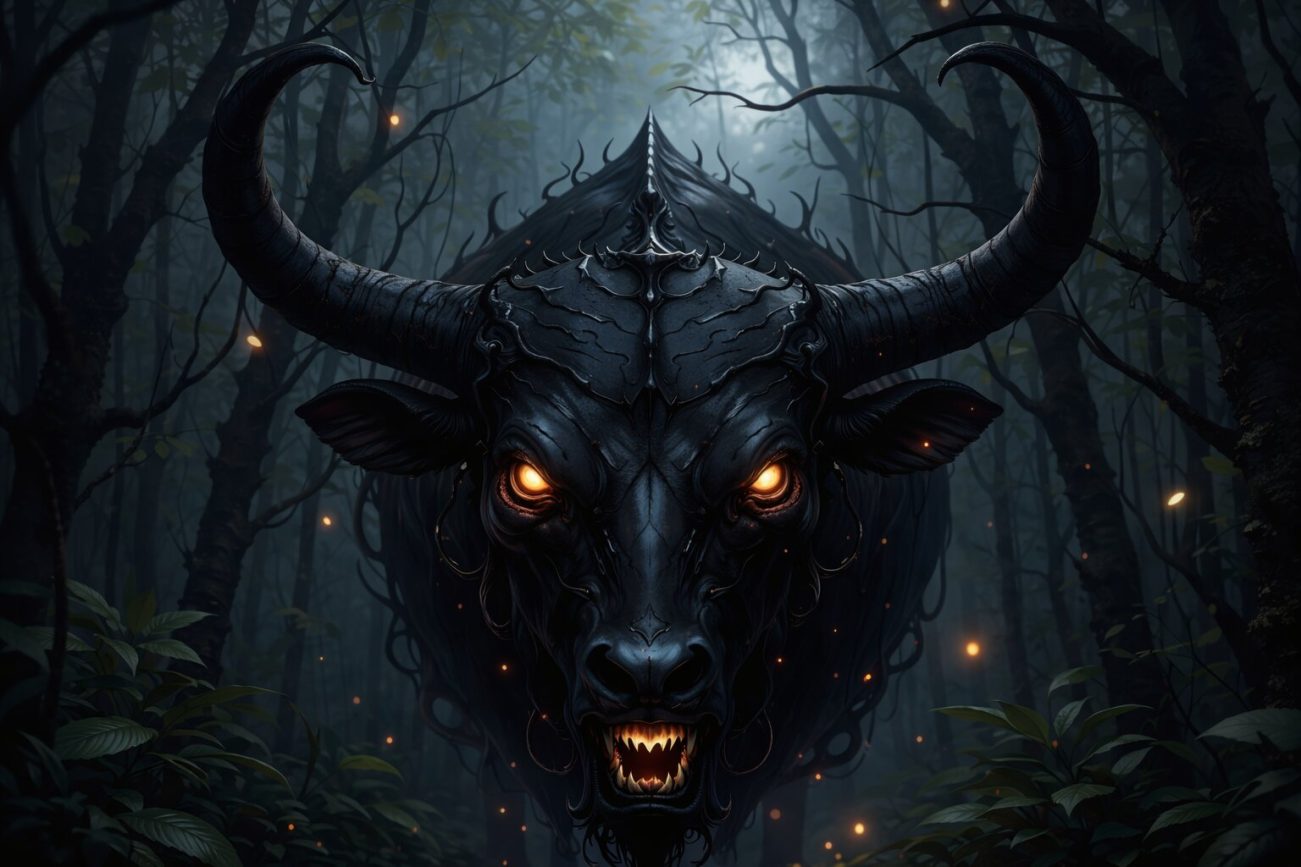
Teju Jagua

Tradition / Region: Paraguay Mythology, Brazilian Mythology
Alternate Names: Teju Jagua, Teju Jagua’i
Category: Dog, Snake, Cave dweller


The Myth

Teju Jagua is the firstborn son of Tau and Kerana, and the eldest of the seven cursed monsters of Guaraní tradition. Because Tau had angered the heavens, all of his children were born deformed and monstrous, and Teju Jagua was the first sign of that curse.

He is described as a gigantic reptilian creature with multiple dog heads — most often seven — each with blazing eyes that can shoot fire. Some stories say he has only a single enormous dog head, but all agree that his body is vast, heavy, and awkward, making it difficult for him to move swiftly.

Although his appearance is the most terrifying of the seven brothers, his nature is not cruel. Tupã, the great god, softened his spirit so that he would not be savage. Instead of preying on people, Teju Jagua lives quietly in caves and hidden places.

He feeds on fruit rather than flesh, and his brother Yasy Yateré brings him honey, which is his favorite food. Because of this peaceful life, he is remembered not as a destroyer but as a guardian.

Teju Jagua became lord of the caves and protector of buried treasures. He is said to dwell among gold and precious stones, and after long years rolling among them, his skin grew smooth and shining.

Thus he is feared for his monstrous form and fiery gaze, yet also respected as a watchful keeper of hidden riches beneath the earth.


Gallery


Sources

Wikipedia contributors. (n.d.). Teju Jagua. In Wikipedia, from https://en.wikipedia.org/wiki/Teju_Jagua


Interpretive Lenses

Religious Readings
  • Christian Ascetic Deep Dive
Philosophical Readings
  • Nietzschean Deep Dive
Psychological Readings
  • Jungian Deep Dive
Esoteric Deep Dive
  • Hermetic Deep Dive
Political / Social Readings
  • Marxist Deep Dive

Iara

Tradition / Region: Brazilian Mythology
Alternate Names: Uiara, Yara, Hiara, Mãe das Águas (“Mother of the Waters”)
Category: Mermaid


The Myth

In the great rivers of the Amazon there lives a being called Iara, the Mother of the Waters. She appears as a beautiful maiden of the river, sometimes sitting upon rocks beneath the sun, combing her long hair and singing with a voice sweeter than any human song.

Men who hear her voice cannot resist it. Drawn by her song, they approach the water and follow her into the depths. Some are drowned at once. Others vanish into her underwater dwelling, where they remain with her until they grow old and die, while she herself never ages. Those who escape her spell return changed—haunted, restless, and forever drawn back toward the river.

One tale tells how a young warrior, son of a chief, heard Iara’s voice at a waterfall. Each night he returned to meet her, ignoring the pleas of his mother and the warnings of his people. At last the villagers saw him with the river maiden. Soon after, he disappeared forever into the waters, and no trace of him was ever found again.

Another story tells how Iara herself was once human. She had been a warrior of great skill, stronger and braver than her brothers. Jealous, they attacked her in the night, but she fought them off and they died by her hand. When her father discovered what had happened, he punished her by casting her into the river to drown. But the fish of the river or the moon-spirit took pity on her and transformed her into a river maiden. From that day on, she lured men to the water in vengeance for the injustice done to her.

Thus Iara is remembered as both enchantress and avenger, the beautiful woman of the river whose song still drifts across the Amazon at dusk, calling the unwary into the deep.


Gallery


Sources

Wikipedia contributors. (n.d.). Iara (mythology). In Wikipedia, The Free Encyclopedia. Retrieved February 14, 2026, from https://en.wikipedia.org/wiki/Iara_(mythology)


Interpretive Lenses

Religious Readings
  • Christian Ascetic Deep Dive
Philosophical Readings
  • Nietzschean Deep Dive
Psychological Readings
  • Jungian Deep Dive
Esoteric Deep Dive
  • Hermetic Deep Dive
Political / Social Readings
  • Marxist Deep Dive
Other
  • How to Invite The Iara

Boi-Vaquim

Tradition / Region: Brazilian mythology
Alternate Names:
Category: Cow


The Myth

On the wide southern plains of Brazil, where cowboys rode beneath endless skies, people told of a bull unlike any other. They called it the Boi-Vaquim.

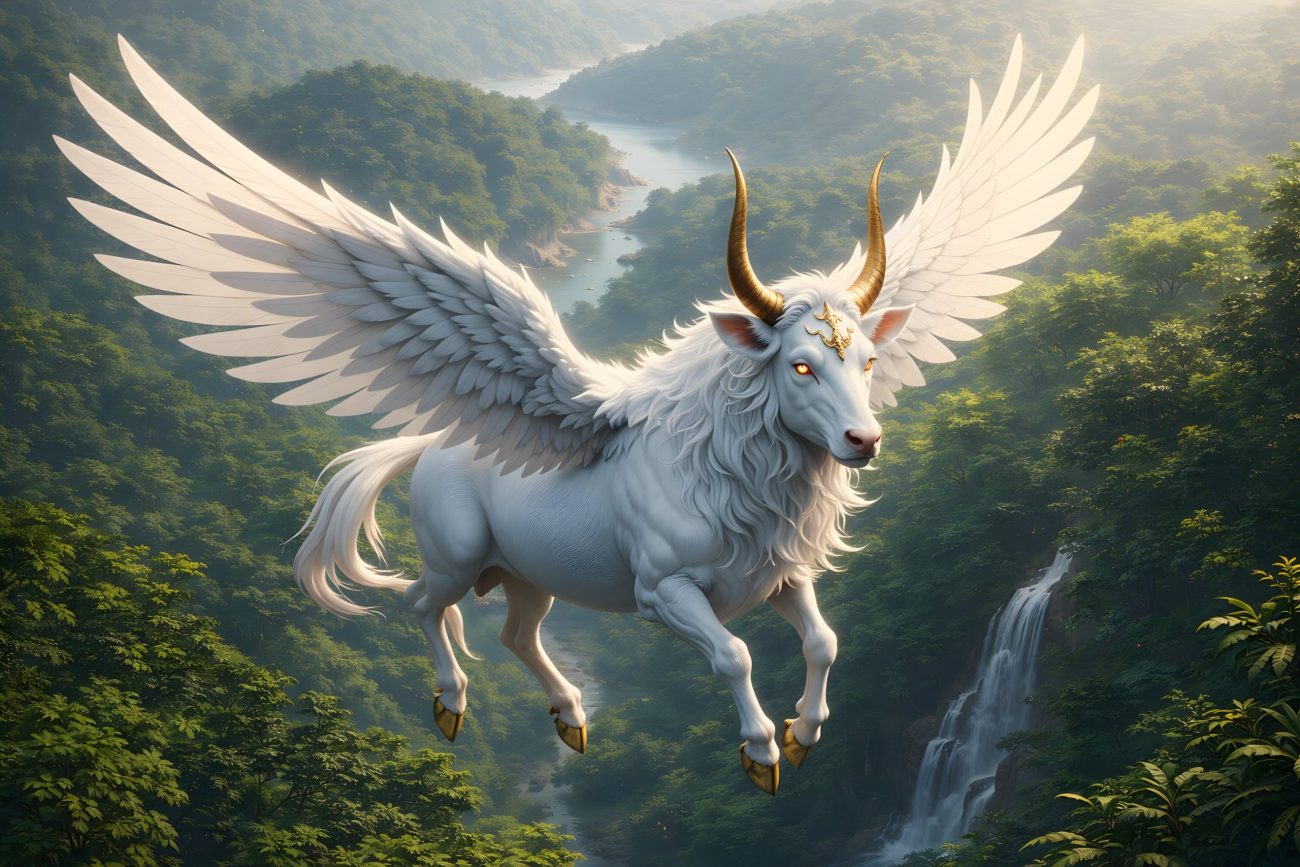
Its horns shone like gold, and its eyes glittered like diamonds. From its body leapt sparks of fire, flashing as it moved across the grasslands. To glimpse it was to feel both awe and dread, for the creature was as beautiful as it was dangerous.

The Boi-Vaquim was said to have wings like a great bird, spreading wide as it crossed the plains, and hooves of gold that left the ground shimmering where they struck. When it charged, the air itself seemed to burn, and even the bravest rider felt his heart falter beneath its gaze.

Some cowhands dreamed of capturing it, imagining the glory of lassoing such a beast and proving their courage before all others. But only a rider of extraordinary strength, mounted on a horse swift and unshakable, could even hope to face it. Many tested their resolve from afar, measuring their nerve against the bull’s blazing presence.

Yet no tale tells of the Boi-Vaquim ever being mastered. It remained free, untamed, and unconquered—a living emblem of the wild southern lands, inspiring fear, respect, and wonder in all who spoke its name.


Gallery


Sources

Contribuidores da Wikipédia. (2022, May 10). Boi Vaquim. https://pt.wikipedia.org/wiki/Boi_Vaquim


Interpretive Lenses

Religious Readings
  • Christian Ascetic Deep Dive
Philosophical Readings
  • Nietzschean Deep Dive
Psychological Readings
  • Jungian Deep Dive
Esoteric Deep Dive
  • Hermetic Deep Dive
Political / Social Readings
  • Marxist Deep Dive
Other
  • How to Invite The Boi-Vaquim

Boitáta

Tradition / Region: Brazilian mythology
Alternate Names:
Category: Cow


The Myth

In Santa Catarina, people speak of a Boitáta unlike the ancient serpent of older tales. Here it appears as a bull—vast, unnatural, and terrifying to behold.

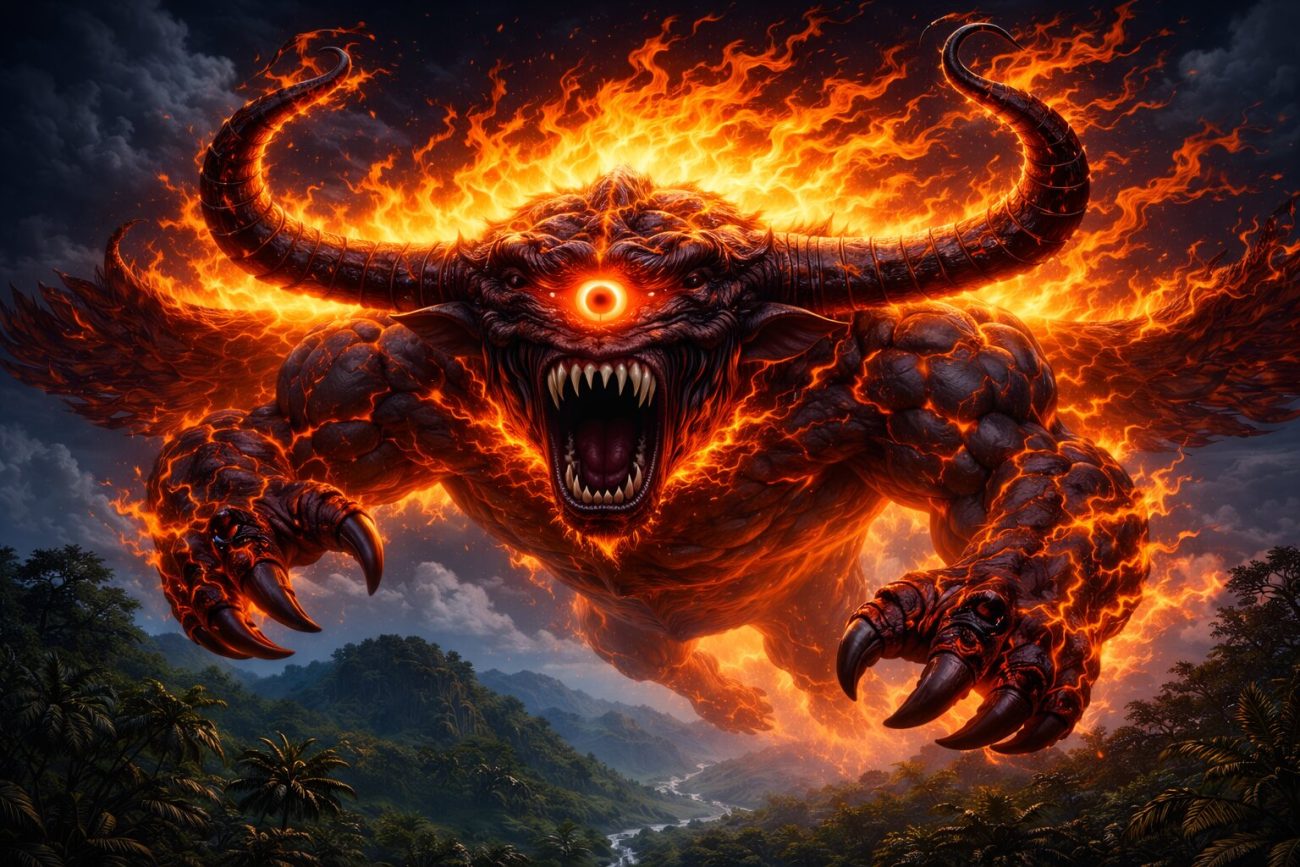
Its body is as large as a bull’s, but its limbs end not in hooves, but in massive paws like those of a giant. In the center of its forehead burns a single enormous eye, blazing like living fire, cutting through darkness, mist, and night. No one knows where it dwells, nor what sustains it, and those who see it rarely remain long enough to learn more.

This Boitáta is not bound to the earth. At times it charges into the sea, skimming across the waves like a monstrous seahorse. At other times it rises into the air, flying above forests as if born of flame and shadow. Land, water, and sky offer no refuge from its passage.

Some say its shape was born from confusion and fear, when the fiery serpent of old stories was mistaken for something else and slowly took on horns, bulk, and the form of cattle. Over time, this bull-shape became fixed in the imagination of the people.

In visions and whispered stories, the Boitáta appears with a bovine head, sometimes horned, sometimes winged, sometimes standing upright like a man. Yet one thing never changes: the burning eye that watches without blinking.

To see it is an omen of terror. To follow it is to vanish. And to mistake it for an ordinary bull is to invite destruction, for this Boitáta is not a creature of pasture, but fire given flesh.


Gallery


Sources

Wikipedia contributors. (n.d.). Boitatá. In Wikipedia, The Free Encyclopedia, from https://en.wikipedia.org/wiki/Boitat%C3%A1


Interpretive Lenses

Religious Readings
  • Christian Ascetic Deep Dive
Philosophical Readings
  • Nietzschean Deep Dive
Psychological Readings
  • Jungian Deep Dive
Esoteric Deep Dive
  • Hermetic Deep Dive
Political / Social Readings
  • Marxist Deep Dive
Other
  • How to Invite The Boitáta

Boi Laranja

Tradition / Region: Brazilian mythology
Alternate Names:
Category: Cow


The Myth

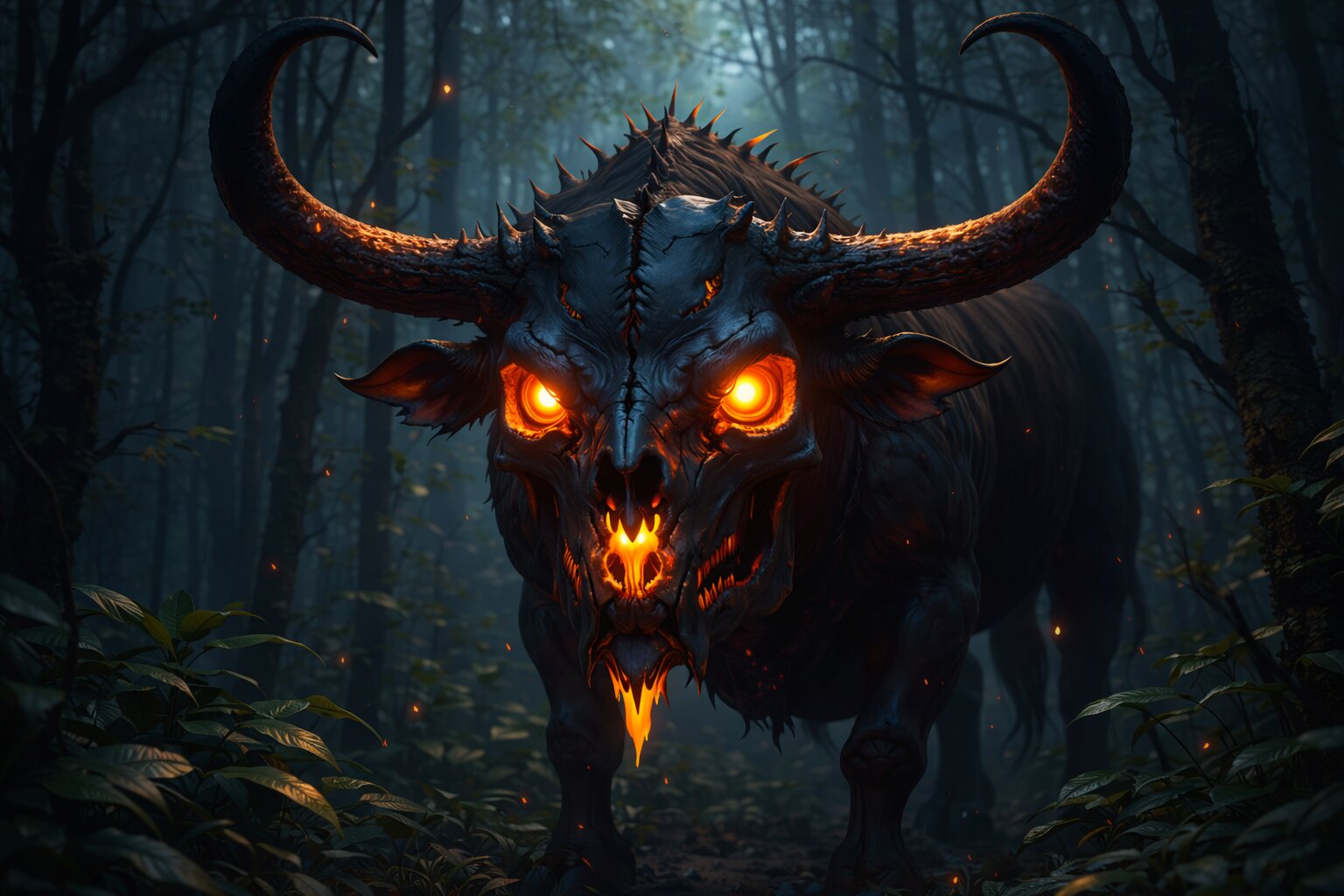
They say the Boi Laranja was once an ordinary bull that lived among other cattle in a pasture, alongside beasts such as the Boi Jardim. Yet even in life, it was never truly one of the herd. It kept to itself, standing apart as if it wished no company from animals or people alike.

At night, the land where it stayed became a place of dread. Those who passed nearby felt an unexplainable fear settle over them. Some claimed that a single look from the bull was enough to make their legs tremble and their hearts race, as though its gaze carried a weight no living creature should possess.

When the Boi Laranja finally died, the fear did not fade.

Travelers began to report sightings near the same pasture. In the darkness, a massive shape would appear where the bull once stood. Others felt watched as they crossed the land, certain that something unseen was still there, guarding the ground it had claimed in life.

Even now, people warn against passing too close to that place. They say the Boi Laranja did not depart with its death, and that its presence still lingers in the pasture, silent, watchful, and unwilling to let go of the land it once called its own.


Gallery


Sources

História Jardim contributors. (2022). História e Lenda do Boi Laranja. In HistoriaJardim.blogspot.com, from https://historiajardim.blogspot.com/2022/05/historia-e-lenda-do-boi-laranja-para.html


Interpretive Lenses

Religious Readings
  • Christian Ascetic Deep Dive
Philosophical Readings
  • Nietzschean Deep Dive
Psychological Readings
  • Jungian Deep Dive
Esoteric Deep Dive
  • Hermetic Deep Dive
Political / Social Readings
  • Marxist Deep Dive
Other
  • How to Invite The Boi Laranja

Boi de Conchas

Tradition / Region: Brazilian mythology
Alternate Names: Ratambufe; Shell Ox
Category: Cow


The Myth

Along the shores where rivers meet the sea, the people tell of a wondrous ox born not only of land, but of water and promise. This creature is known as Boi de Conchas, the Shell Ox.

It was said that a calf was born on Saint Peter’s Day, the feast of the fisherman saint. Because of this sacred timing, its owner promised the young ox that one day it would be taken to see the sea. The promise lingered, carried by time and tide, until it became something more than words.

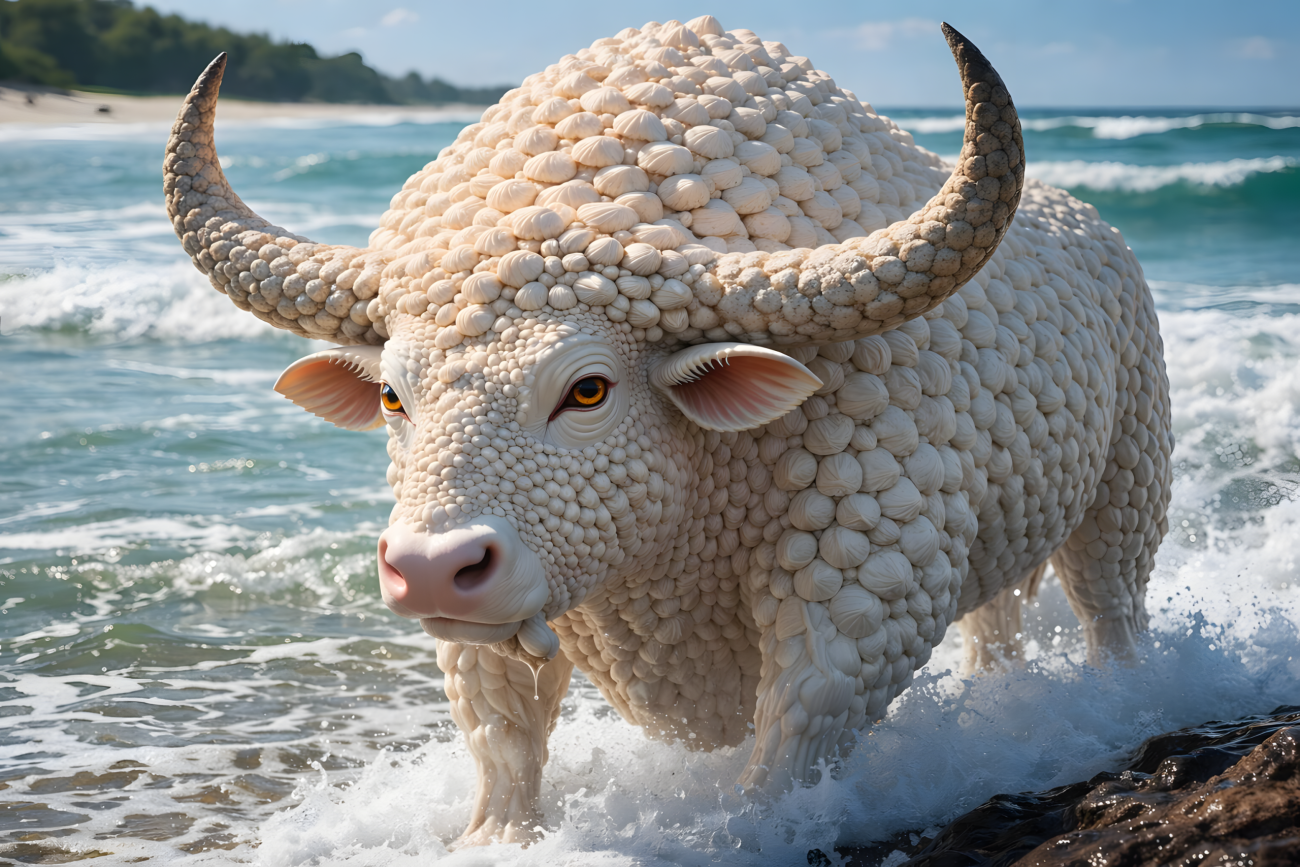
In later years, people along the coast spoke of a vision rising from the water: an ox entirely white, its body covered in gleaming shells, as if the sea itself had clothed it. This was the Shell Ox, born of devotion and fulfilled promise, emerging where waves touch the land.

Those who saw it said the creature was calm and radiant, neither wild nor fearful. It appeared briefly, a living bridge between earth and ocean, before returning to the waters from which it came.

Thus the Boi de Conchas remains in memory as a gentle marvel—an ox shaped by faith, timing, and the pull of the sea, reminding all who hear the tale that promises, once made, may take on lives of their own.


Gallery


Sources

São Pedro da Barra, A. M. Ficha 10–Boi Laranja.

Santos, L. G. D. (2020, March 30). Ratambufe – A lenda do Boi de Conchas – FundArt. FundArt. https://fundart.com.br/ratambufe-a-lenda-do-boi-de-conchas/


Interpretive Lenses

Religious Readings
  • Christian Ascetic Deep Dive
Philosophical Readings
  • Nietzschean Deep Dive
Psychological Readings
  • Jungian Deep Dive
Esoteric Deep Dive
  • Hermetic Deep Dive
Political / Social Readings
  • Marxist Deep Dive
Other
  • How to Invite The Boi de Conchas

Boi da Cara Preta

Tradition / Region: Brazilian mythology
Alternate Names: Black-Faced Ox
Category: Cow


The Myth

In Brazil, when night falls and children resist sleep, a familiar name is sometimes whispered: the Black-Faced Ox.

Boi da Cara Preta is imagined as an ox with a darkened face, something both ordinary and unsettling. It is not a beast of fields or farms, but a figure that comes when children refuse to rest or misbehave. Parents sing of it softly, not as a roar or threat, but as a presence that listens from the dark.

In the lullaby, the ox is called upon to come and take the child who will not sleep, especially one who is afraid of silly faces and shadows. The song is gentle, almost playful, yet behind it lingers the idea that something waits just beyond the cradle and the candlelight.

The Black-Faced Ox has no long tale of origins or deeds. It does not rampage or destroy. It exists in the space between comfort and fear, carried by melody rather than story. To children, it is a warning; to adults, a tool; to memory, a shadow shaped like an ox.

And so Boi da Cara Preta endures—not as a monster that acts, but as one that might, lingering in song, rocking back and forth with the rhythm of sleep.


Gallery


Sources

Guerra, D. (2010). Acalantos afro-brasileiros. Revista África e Africanidades, 8, 1-5.


Interpretive Lenses

Religious Readings
  • Christian Ascetic Deep Dive
Philosophical Readings
  • Nietzschean Deep Dive
Psychological Readings
  • Jungian Deep Dive
Esoteric Deep Dive
  • Hermetic Deep Dive
Political / Social Readings
  • Marxist Deep Dive
Other
  • How to Invite The Boi da Cara Preta

Auñ Pana

Tradition / Region: Yanomami Mythology, Brazilian Mythology, Venezualian Mythology
Alternate Names: Pehiwetinome
Category: Fish


The Myth

In the deep waters of the Yanomami world dwell the Auñ Pana, enormous fish feared by all who travel rivers and crossings. Though they are fish, they bear arms like humans, and their bodies are covered in coarse hair. They are said to possess dark, uncanny powers, and their hunger is for human flesh.

The Auñ Pana do not swim alone. They move in schools with creatures known as the Pehiwetinome, beings just as vast and just as murderous as themselves. Together they haunt the deepest waters, waiting for the careless or the unlucky.

Once, a group of Yanomami people attempted to cross a bridge spanning the river. As they passed over it, Auñ Pana and Pehiwetinome rose from below and began to bite through the wooden supports. Their teeth tore the bridge apart until it collapsed into the water, breaking into a drifting raft.

Some of the Yanomami survived the fall, but they did not remain human. In the aftermath of the destruction, they were transformed into monkeys and pigs, condemned to live forever changed.

Thus the Auñ Pana are remembered as beings of the depths who devour flesh, destroy human works, and blur the boundary between human and animal through terror and transformation.


Gallery


Sources

A Book of Creatures contributors. (n.d.). Aun-pana. In A Book of Creatures, from https://abookofcreatures.com/2015/09/11/aun-pana/


Interpretive Lenses

Religious Readings
  • Christian Ascetic Deep Dive
Philosophical Readings
  • Nietzschean Deep Dive
Psychological Readings
  • Jungian Deep Dive
Esoteric Deep Dive
  • Hermetic Deep Dive
Political / Social Readings
  • Marxist Deep Dive
Other
  • How to Invite The Auñ Pana

Mastopogon

Tradition / Region: Brazilian Mythology
Alternate Names: Aegomastus, Egomastus; Houperou, Huperus
Category: Fish


The Myth

Sailors off the coast of South America once spoke of a strange fish glimpsed in deep waters, a creature with a beard hanging from its chin like the udder of a goat. Its body bore sharp, pointed fins, and along its back rose a long, threatening spine. Though unnamed at first, this creature would later be called the Mastopogon—the breast-beard.

In the same waters lived a far more feared being, known as the Houperou. It was said to be immense and ravenous, devouring all other sea creatures without mercy, save for one small carp-like fish. This lesser fish followed closely in the Houperou’s shadow, unharmed, protected by the terror its companion inspired. None dared approach the pair.

The Houperou’s skin was rough as sandpaper, like that of a dogfish. Its teeth were sharp, its strength overwhelming. Anyone it seized in the water was attacked, drowned, and torn apart. The coastal peoples, knowing its danger, shot it with arrows whenever it was seen. Some said its true name was uperu, the local word for shark, distorted by foreign tongues.

Over time, the two creatures—Mastopogon and Houperou—became entangled in description and image. Scholars depicted the Houperou as a giant pike, while the Mastopogon gained a name at last. As the years passed, their forms blurred further, until they were scarcely separable.

In later tellings, the Mastopogon was said to be a kind of Houperou, shaped like a salmon with immense thorny fins, its dorsal spine stretching nearly to the tail. The Houperou itself grew stranger still, now bearing the mammary beard beneath its jaw, ear-like knobs upon its head, rough scales, a long spined back, and a straight, powerful tail.

Thus the Mastopogon and the Houperou became one tangled legend: a single terror of the sea, half-bearded monster and half-devouring shark, born from sailors’ fear and the shifting shapes of deep water.


Gallery


Sources

A Book of Creatures contributors. (n.d.). Mastopogon. In A Book of Creatures, from https://abookofcreatures.com/2016/02/26/mastopogon/


Interpretive Lenses

Religious Readings
  • Christian Ascetic Deep Dive
Philosophical Readings
  • Nietzschean Deep Dive
Psychological Readings
  • Jungian Deep Dive
Esoteric Deep Dive
  • Hermetic Deep Dive
Political / Social Readings
  • Marxist Deep Dive
Other
  • How to Invite The Mastopogon

Akui-Khalava

Tradition / Region: Brazilian Mythology
Alternate Names:
Category: Forest Dweller


The Myth

Among the Paresi people of western Mato Grosso, who live along the Buruti, Verde, Guaporé, Juba, Juruena, and Papagayo rivers, there is a forest being known as Akui-Khalava.

He is described as a forest man with long white hair and a handsome appearance. Though human in shape, he is said to be a cannibal. He sings constantly, repeating a refrain rendered as “Amm-lalala, amm-lalala.” He is fond of plums, songs, women, and local beer.

Akui-Khalava is believed to live in trees, especially fruit trees. From there he throws fruit pits—particularly plum pits—at people who pass beneath. He is known to enter villages and force his way into the homes of both single and married women, demanding beer and meat. Because his lips are pierced, he spills beer when he drinks, which is said to provoke annoyance among those who witness it.

After receiving beer, Akui-Khalava kills and eats women, carrying them away into the forest. He is described as ill-tempered and solitary, and he is never said to have a wife.

Some believe that Akui-Khalava originated from an old story about foreign sailors who somehow reached the Amazon. According to this idea, the name Akui-Khalava may have come from words frequently spoken by uninvited guests, which were distorted by people unfamiliar with the language. His love of beer, singing, and women is sometimes cited in support of this belief, though such explanations remain speculative.


Gallery


Sources

Bestiary.us contributors. (n.d.). Eterari. In Bestiary.us, from https://www.bestiary.us/eterari/


Interpretive Lenses

Religious Readings
  • Christian Ascetic Deep Dive
Philosophical Readings
  • Nietzschean Deep Dive
Psychological Readings
  • Jungian Deep Dive
Esoteric Deep Dive
  • Hermetic Deep Dive
Political / Social Readings
  • Marxist Deep Dive
Other
  • How to Invite The Akui-Khalava