Baki

Tradition / Region: Japanese Mythology
Alternative names: Horse Demon (馬鬼, Baki)
Category: Horse


The Myth

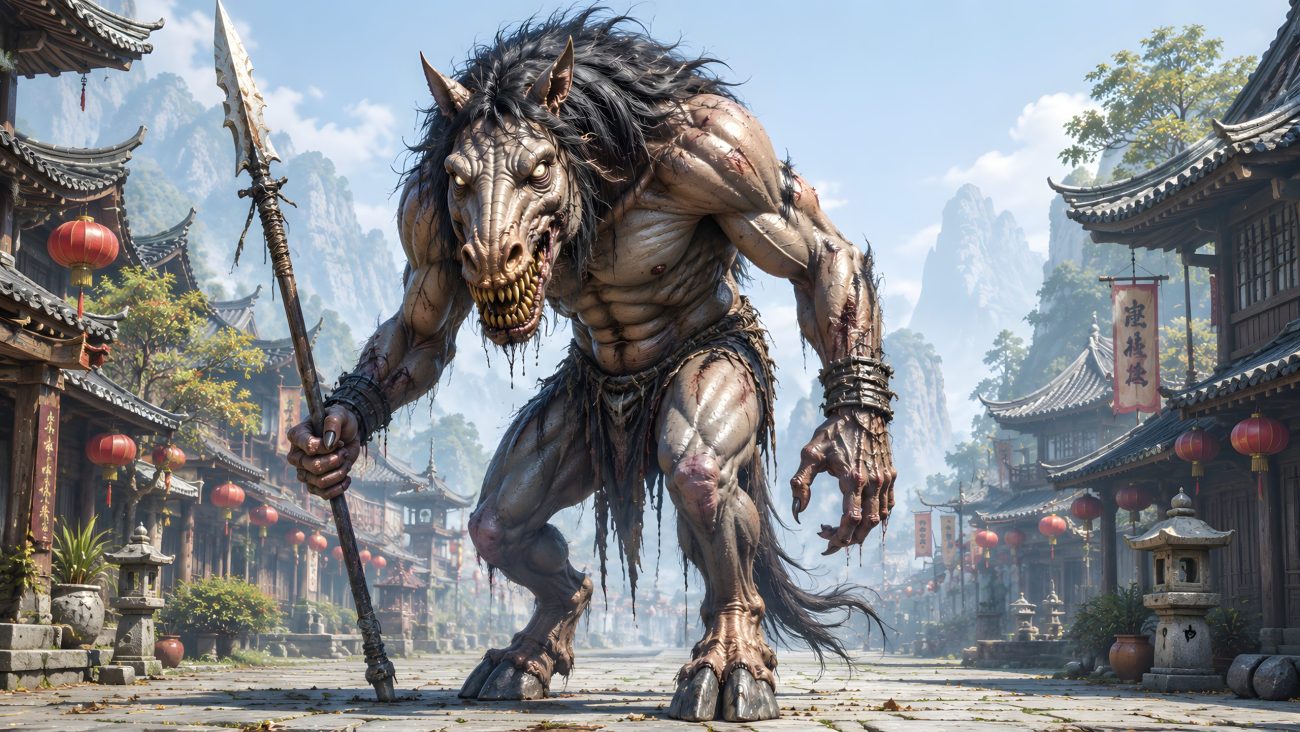
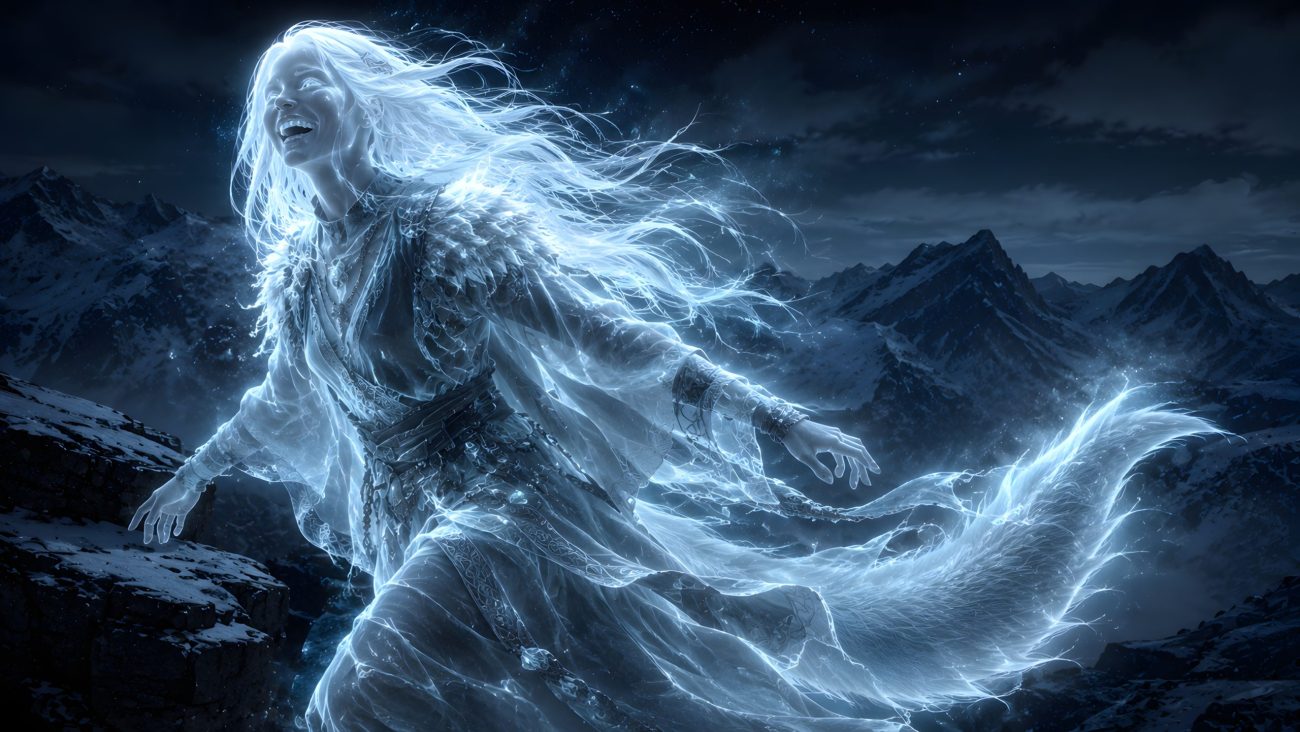
Baki is a modern yōkai described by Ariyuki Sato in his Yokai Encyclopedia (1980). According to Sato, it is born from the curse of a horse that suffered cruel treatment at the hands of humans. After death, the animal’s resentment transforms it into a supernatural horse demon.

The creature is not based on an older traditional legend. Its illustration in the encyclopedia uses a still photograph of the Uma-oni from the 1968 Daiei films Yokai Hyaku Monogatari and Yokai Daisenso. However, that film monster was originally depicted as a prison guard and has no traditional connection to the yōkai called Baki.

For this reason, Baki is generally regarded as a modern yōkai created by Ariyuki Sato rather than a creature from classical Japanese folklore.


Sources

TYZ. (n.d.). バキ (Baki). In 新版TYZ 妖怪図鑑. Retrieved June 29, 2026, from https://tyz-yokai.blog.jp/archives/1010655032.html


Bái Lóngmǎ

Tradition / Region: Chinese Mythology
Alternative names: White Dragon Horse, Jade Dragon, Yì Mǎ (Will Horse)
Category: Horse, Dragon


The Myth

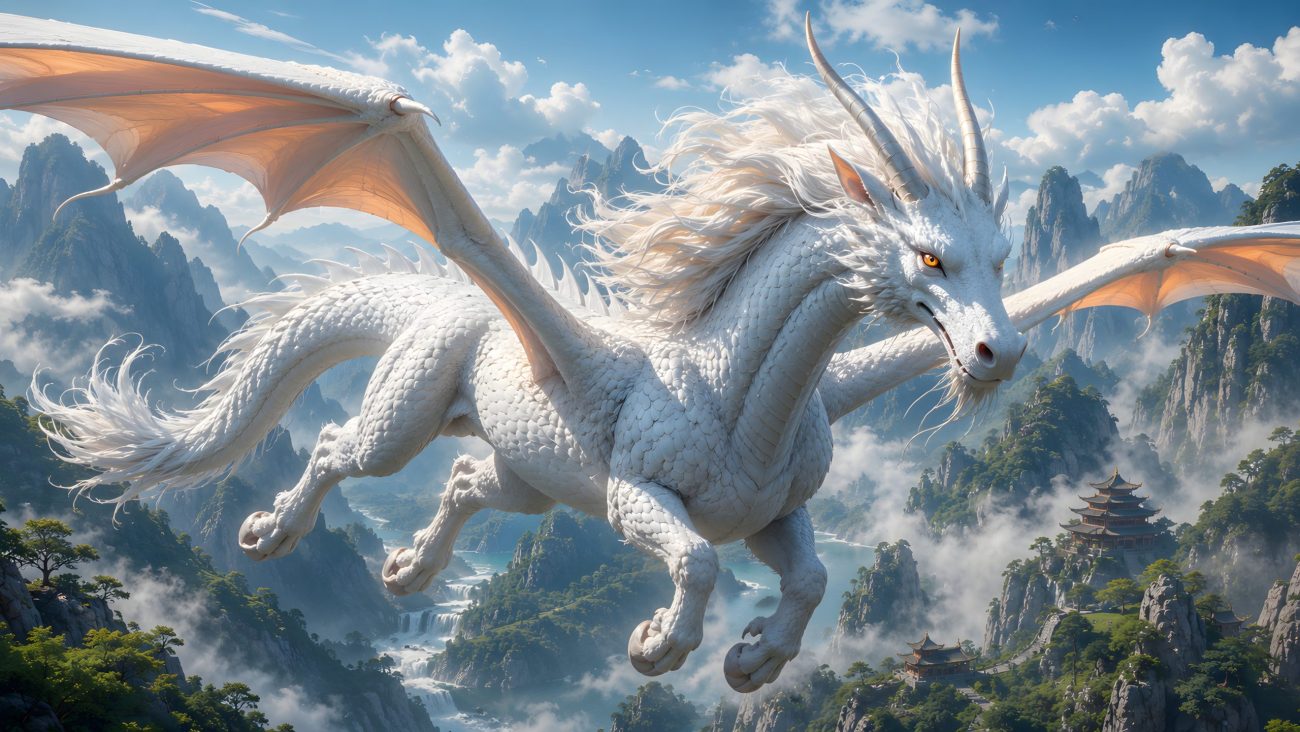
The White Dragon Horse was originally the third son of Ao Run, the Dragon King of the Western Sea. After accidentally burning a sacred pearl bestowed by the Jade Emperor, he was sentenced to death. Guanyin Bodhisattva intervened, sparing his life and instructing him to wait at Eagle Sorrow Gorge for the monk Tang Sanzang, whose pilgrimage to India would become his path to redemption.

Before recognizing the monk, the dragon emerged from the river and devoured Tang Sanzang’s white horse. Guanyin then revealed his true purpose and ordered him to transform into a white horse to replace the one he had eaten. After shedding his dragon horns and scales, he became Tang Sanzang’s faithful mount, carrying the monk throughout the long journey to obtain the Buddhist scriptures.

Unlike Sun Wukong, Zhu Bajie, and Sha Wujing, the White Dragon Horse rarely fought. He quietly endured the hardships of the journey, serving with unwavering loyalty while transporting his master across mountains, rivers, and deserts.

His greatest act of heroism came when Tang Sanzang was captured by the Yellow-Robed Demon after Sun Wukong had been dismissed from the pilgrimage. Realizing that the entire quest would fail if he remained passive, the White Dragon Horse cast off his saddle, transformed back into his dragon form, and infiltrated the demon’s palace disguised as a palace maid. Although he was defeated and wounded in battle, he escaped and urged Zhu Bajie to seek out Sun Wukong and beg him to return, leading to Tang Sanzang’s rescue.

After the successful completion of the pilgrimage and the return with the sacred scriptures, the Buddha rewarded the White Dragon Horse for his faithful service by elevating him to the rank of Guangli Bodhisattva of the Eight Heavenly Dragons. He then regained his true dragon form in the Dragon Transformation Pool and took his place among the celestial dragon guardians of the Buddhist paradise.


Sources

Wikipedia contributors. (n.d.). 白龙马. In 维基百科,自由的百科全书. Retrieved June 29, 2026, from https://zh.wikipedia.org/wiki/%E7%99%BD%E9%BE%99%E9%A9%AC


Arion

Tradition / Region: Greek Mythology
Alternative names: Areion
Category: Horse


The Myth

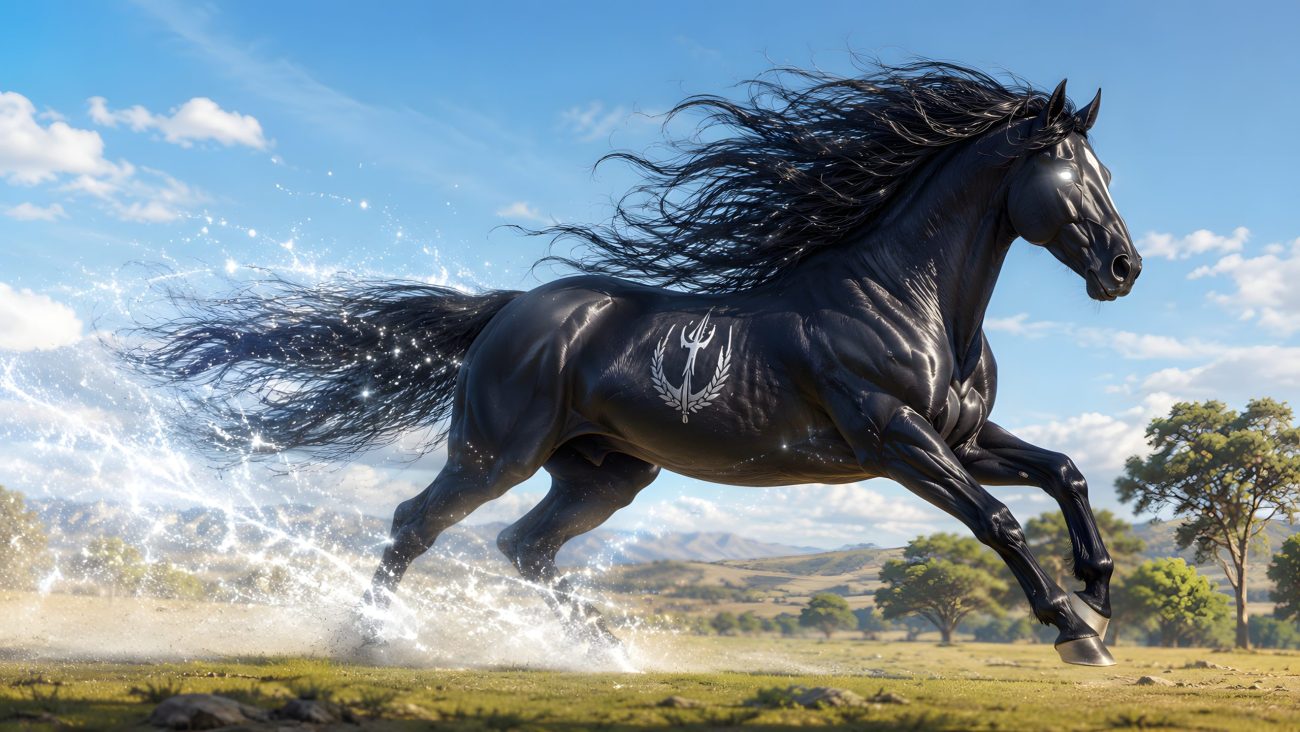
Arion was a divine, black-maned horse renowned for its incredible speed, intelligence, and heavenly origin. It was considered one of the greatest horses in Greek mythology.

According to the most common tradition, Arion was born when the sea god Poseidon pursued Demeter as she searched the world for her abducted daughter Persephone. To escape him, Demeter transformed herself into a mare and hid among a herd of horses in Arcadia. Poseidon discovered her, became a stallion himself, and their union produced the immortal horse Arion. Other traditions instead claim Arion was born from Gaia (Earth) or from the West Wind Zephyrus and a Harpy.

Arion was eventually given to Heracles, who rode the divine horse during several of his campaigns, including his battle against Cycnus, the son of Ares, and his expedition against Elis. After these adventures, Heracles presented Arion to King Adrastus of Argos.

The horse became most famous during the legendary war of the Seven Against Thebes. Before the campaign, Arion won the horse race at the first Nemean Games, demonstrating his unmatched speed. When the expedition ended in disaster and every other Argive leader was killed, Arion alone succeeded in carrying Adrastus safely away from the battlefield, saving his master’s life through his extraordinary swiftness.

Ancient poets describe Arion as far more than an ordinary horse. He was said to be almost impossible to control in his youth, moving with the speed of the wind and even racing across the sea beside Poseidon’s divine steeds. Later, after years beside heroic riders, he became calmer while losing none of his supernatural speed.

Some traditions even attributed speech to Arion, placing him among the rare intelligent horses of Greek mythology. Throughout Greek literature he symbolizes divine favor, heroic endurance, and the miraculous bond between a legendary hero and an immortal steed.


Sources

Wikipedia contributors. (n.d.). Arion (horse). In Wikipedia. Retrieved June 29, 2026, from https://en.wikipedia.org/wiki/Arion_(horse)


Anggitay

Tradition / Region: Philippines Mythology
Alternative names:
Category: Horse


The Myth

The Anggitay is a mythical creature with the upper body of a woman and the lower body of a horse, making it the Philippine counterpart of the female centaur. Some depictions also give the Anggitay a single horn in the center of its forehead, resembling a unicorn.

According to tradition, the Anggitay is the female counterpart of the Tibalang. It is especially attracted to precious gemstones and jewelry.

The Anggitay is also believed to appear when rain falls while the sky remains clear, a phenomenon sometimes associated with its presence.


Sources

Bestiary.us. (n.d.). Anggitay. In New Bestiary: Encyclopedia of Imaginary Beings. Retrieved June 29, 2026, from https://www.bestiary.us/anggitai/en


Karkadann

Tradition / Region: Persia, Arabia, India, Iran
Alternative names: Karkaddan, Kardunn, Karkadan, Karkend
Category: Horse


The Myth

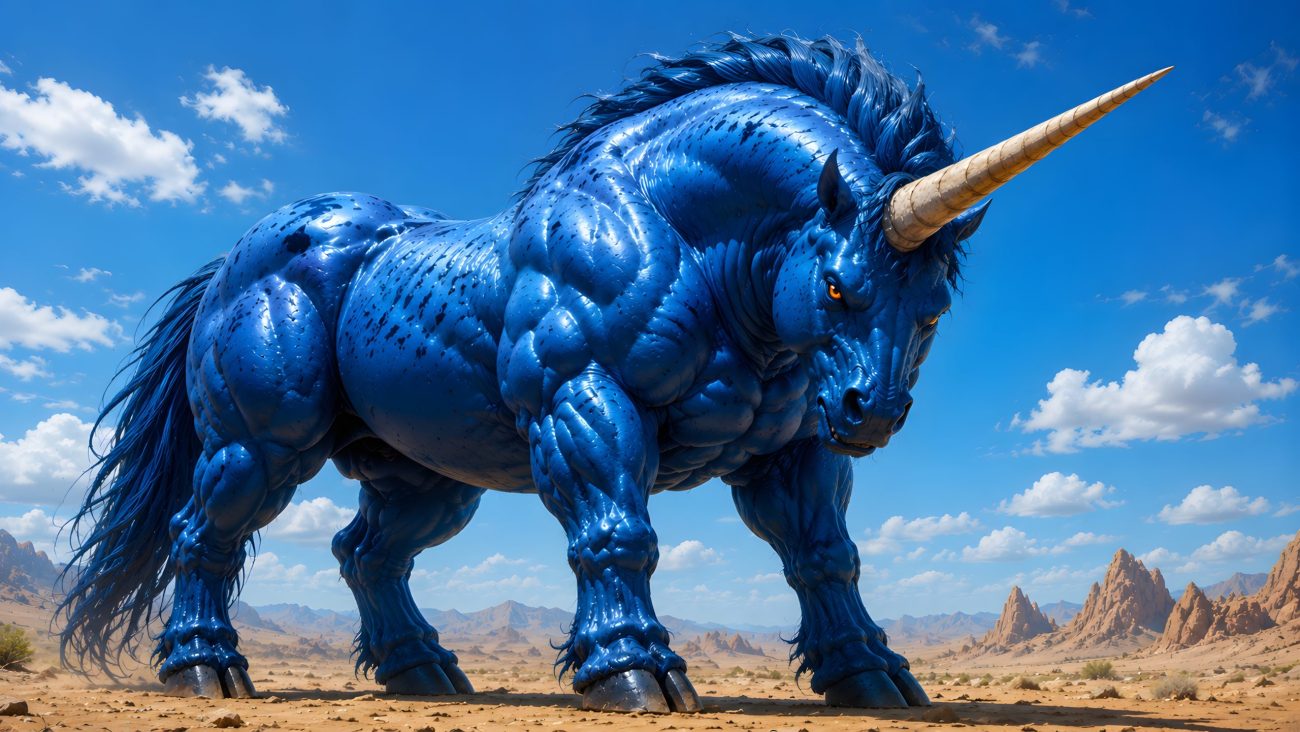
The Karkadann is a legendary beast from Persian and Arabic tradition, originally based on the Indian rhinoceros but gradually transformed into a mythical creature resembling a unicorn.

Early descriptions portray it as a powerful animal with the body of a buffalo, thick black scaly skin, donkey-like ears, three-toed feet, and a single horn growing from its nose. Later traditions changed its appearance, giving it a long, straight horn growing from its forehead, making it increasingly resemble the unicorn of medieval legend.

The Karkadann was feared for its ferocity. It was said to attack and drive away even elephants, fiercely defending its territory. Despite its savage nature, it could be calmed and subdued by a virgin, a motif that later became closely associated with the European unicorn.

Its horn was believed to possess extraordinary medicinal powers. It could detect or neutralize poison, cure ailments such as epilepsy and lameness, relieve constipation, and serve as a powerful antidote against toxins. Because of these properties, the horn was highly prized and was sometimes fashioned into knife handles and other valuable objects.

In later Persian and Arabic folklore, the Karkadann became the mythical counterpart of the rhinoceros—a wild and dangerous beast whose miraculous horn combined immense destructive power with the ability to heal and protect.


Sources

Wikipedia contributors. (n.d.). Karkadann. In Wikipedia. Retrieved June 29, 2026, from https://en.wikipedia.org/wiki/Karkadann


Abada

Tradition / Region: Congo Mythology
Alternative names: Nillekma, Arase
Category: Horse


The Myth

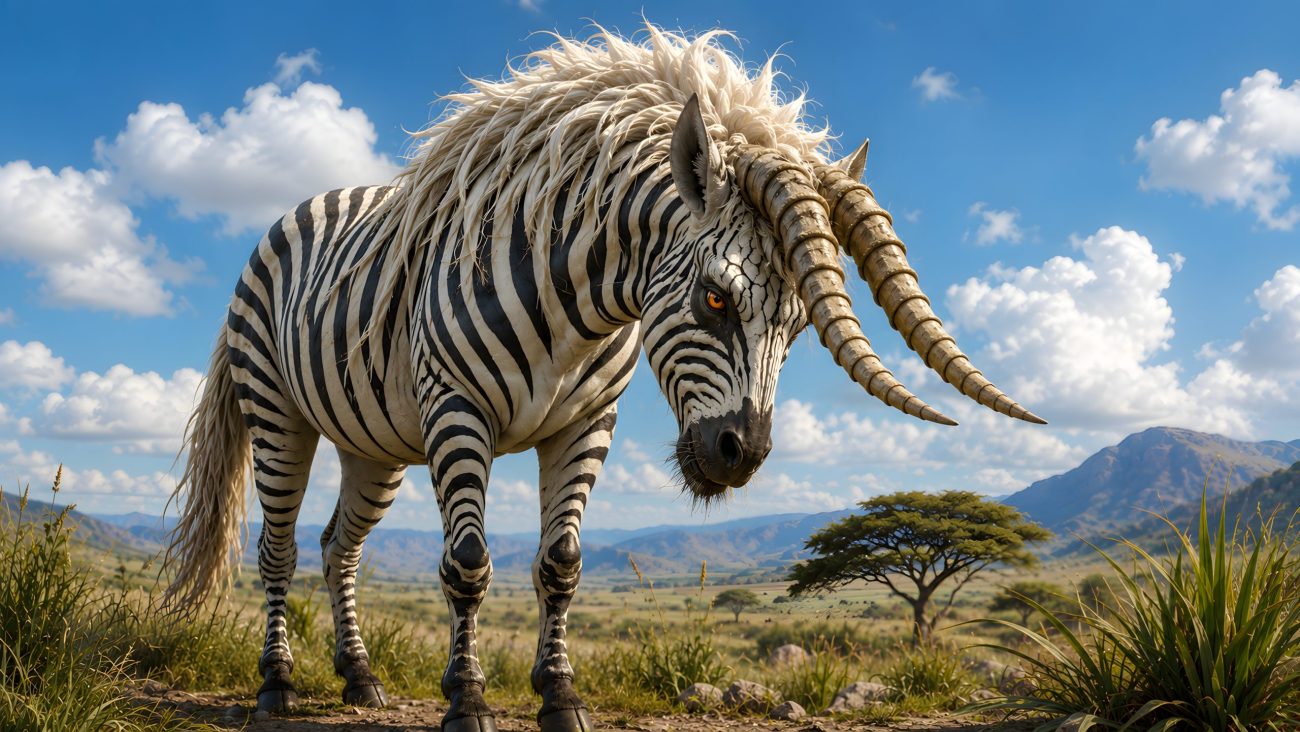
The Abada is a rare mythical beast from Kongo tradition, often compared to a unicorn, though it differs in one important respect: instead of a single horn, it bears two crooked horns. These horns possess remarkable healing powers and are believed to neutralize poison and cure disease.

The creature is about the size of a small donkey and has a sturdy body with the tail of a boar. Despite its unusual appearance, the Abada is not portrayed as a fearsome or majestic beast, but as one associated with endurance, healing, and survival.

According to tradition, the Abada appears during times of great hardship. It is encountered when travelers lose their way, when illness persists beyond ordinary remedies, or when danger quietly threatens a person’s life. Rather than confronting evil through violence, the Abada offers the possibility of recovery and restoration through the healing power of its horns.

The Abada symbolizes hope arriving when human strength is no longer enough. Instead of preventing suffering, it appears when suffering has reached its greatest point, embodying the belief that healing and assistance can emerge even in humanity’s darkest moments.


Sources

Wikipedia contributors. (n.d.). Abada (unicorn). In Wikipedia. Retrieved June 29, 2026, from https://en.wikipedia.org/wiki/Abada_(unicorn)


Jiliang

Tradition / Region: Chinese Mythology
Alternative name: Jiliang, Jiliang Horse, Jisi’s Chariot
Category: Horse


The Myth

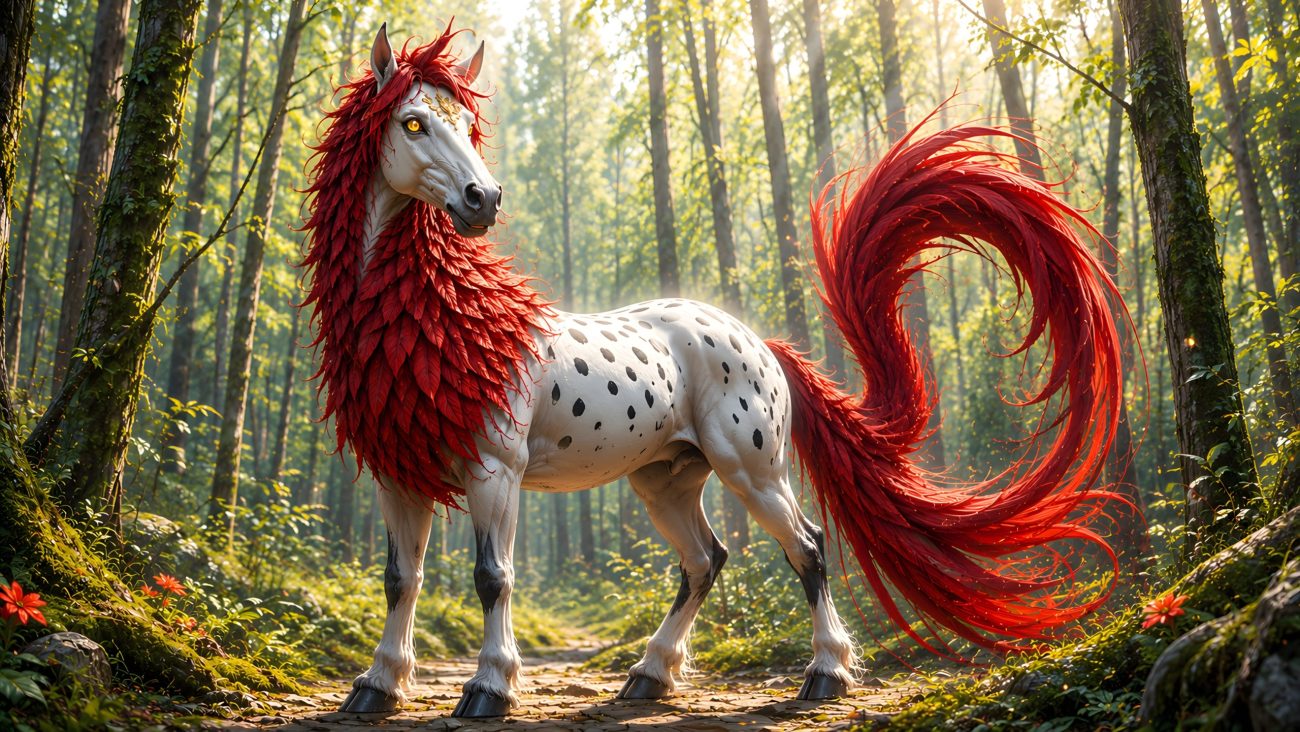
Jiliang is a divine horse described in the Classic of Mountains and Seas. It has a white or spotted white body, a red mane, golden eyes, and a long neck ending in feathers that resemble a rooster’s tail.

The horse is said to live in the Kingdom of Quanfeng. It is regarded as a supernatural steed whose greatest power is the gift of longevity. Anyone who rides Jiliang is granted a lifespan of one thousand years, making it one of the most auspicious mythical horses in Chinese mythology.


Sources

Wikipedia contributors. (n.d.). 吉量. In 维基百科,自由的百科全书. Retrieved June 29, 2026, from https://zh.wikipedia.org/wiki/%E5%90%89%E9%87%8F


Thorgeir’s Bull

Tradition / Region: Icelandic Mythology
Alternative Name: –
Category: Cow


The Myth

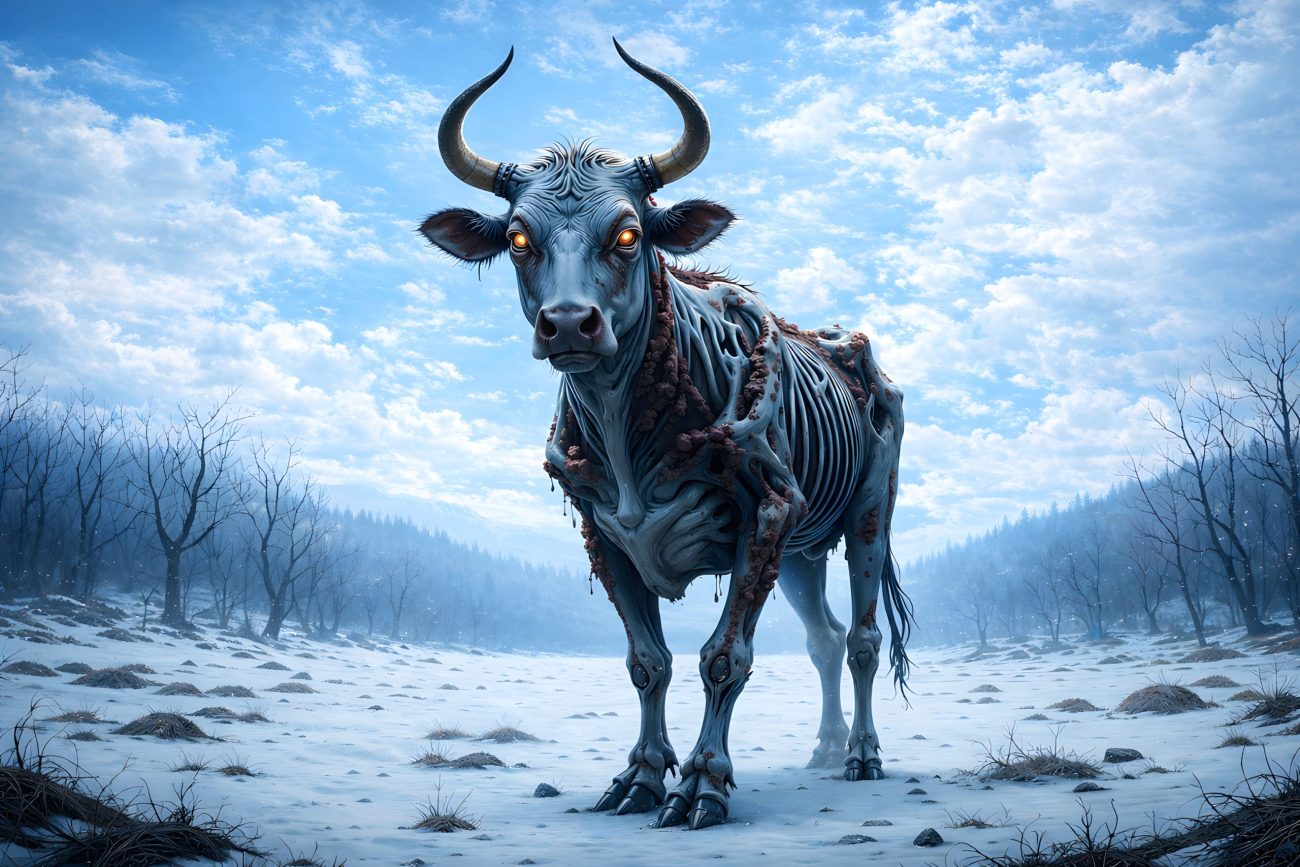
Thorgeir’s Bull was a powerful magical creature created by the Icelandic sorcerer Thorgeir the Wizard. To make it, Thorgeir flayed the hide from a newborn calf while it was still alive. He then placed inside the hide the bones or essence of eight different creatures—a bird, a man, a dog, a cat, a mouse, and two kinds of sea beasts, together with the calf itself—giving the Bull the combined nature of nine beings. Because of this, it could travel on land, in the sea, or through the air, and could appear in whatever form suited it best.

Thorgeir intended the Bull to help him win a feud with a woman named Gudrun after she rejected him. The Bull relentlessly hunted her, making her life miserable. Even when she fled between farms with armed escorts, it continued to pursue her. It tormented her so severely that she eventually died, and afterward her ghost was said to haunt the place where she had suffered.

After Gudrun’s death, the Bull remained devoted to Thorgeir and carried out his commands. It was used to stampede other people’s cattle, scatter horses, and perform acts of destruction. However, it also became increasingly dangerous to its own master. Whenever Thorgeir ordered it to perform some task, it would later return and attack him in revenge. Even Thorgeir, despite his magical knowledge, struggled to defend himself from the creature.

One day the Bull tried to kill Thorgeir. He fled into his house while his wife held their infant child. Believing the Bull wanted a sacrifice, she begged him to offer one of their heifers instead. Thorgeir released the animal, and the Bull tore it to pieces, sparing the family.

The Bull could also change shape. It sometimes appeared as a man, a dog, a grey cat, or even a black puppy, but most often it took the form of a gigantic horned bull draped in a flayed hide. Its appearance was so terrifying that anyone who saw it was filled with fear.

According to tradition, the Bull remained with Thorgeir until his death, and some claimed it was seen crouching upon his chest as he lay dying before vanishing forever.


Sources

Simpson, J. (Comp.). (1972). Icelandic folktales and legends. University of California Press.


Nauthveli

Tradition / Region: Icelandic Mythology
Alternative Name: –
Category: Whale, Cow


The Myth

The Nauthveli, also called the Ox-Whale, is one of Iceland’s feared illhveli (“evil whales”) and is said to be the second largest of these monstrous sea creatures. Like the other evil whales, it is considered inedible, and tradition warns that merely speaking its name aloud can summon it.

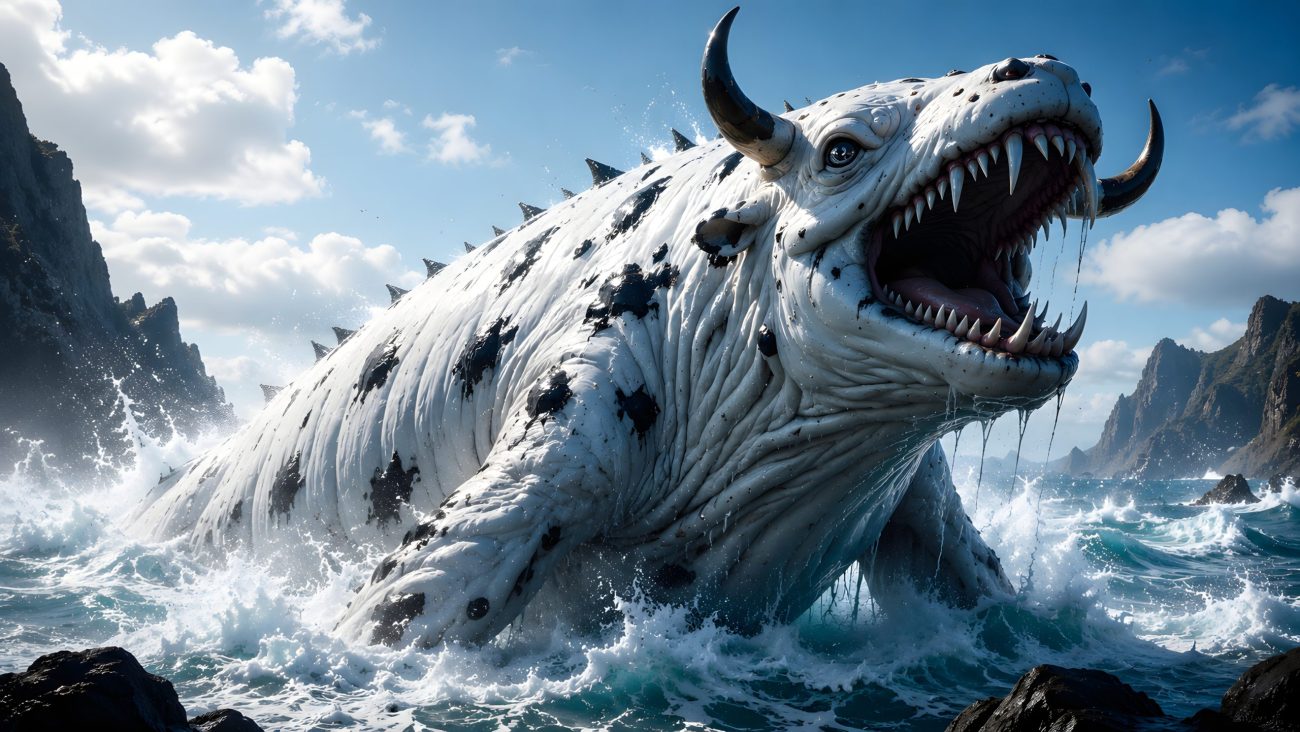
The Nauthveli is a massive toothed whale with a black-and-white body resembling a cow. Its enormous head resembles that of a bull, bearing two large nodules, while its long body narrows into a worm-like tail without fins.

Its most terrifying feature is its voice. When hungry, the Nauthveli lets out an immense bull-like bellow that echoes across the sea and coastline. The sound resembles the roar of enraged cattle and can be heard over great distances. Its vibrations shake the ground and are powerful enough to knock oars from sailors’ hands. Whenever its bellow is heard, people refuse to sail.

Like all evil whales, the Nauthveli attacks boats and delights in killing people, but it has a particular craving for cattle. Its supernatural bellow hypnotizes cows and bulls, compelling them to run over cliffs and plunge into the sea. Once they reach the water, the whale toys with them like a cat playing with a mouse before biting them in half and devouring them.

The creature is also drawn to cattle carried aboard ships. One legend tells of a Nauthveli that relentlessly pursued a vessel near Grímsey until the sailors released the single cow they were transporting. The animal immediately leapt into the sea, satisfying the monster.

After the Nauthveli has been heard, cattle are traditionally kept locked away for several days until its enchantment fades. In areas where the monster was believed to roam, herding cattle near the coast was discouraged. According to tradition, sacrificing a single bull or cow would appease the Nauthveli, making the sea safe once more.


Sources

Wikipedia contributors. (n.d.). Fylgja. In Wikipedia. Retrieved June 29, 2026, from https://en.wikipedia.org/wiki/Fylgja


Fylgja

Tradition / Region: Norse Mythology
Alternative Name: –
Category: Spirit


The Myth

A Fylgja is a supernatural spirit that accompanies a person throughout life and is closely connected to their fate and fortune. Although its name means “follower,” it often appears ahead of its owner, foreshadowing important events. As death approaches, however, it stays close to the person.

A Fylgja most commonly appears in one of two forms: an animal or a woman.

In its animal form, the Fylgja reflects the nature of the person it belongs to. Gentle or dependable individuals might be accompanied by an ox, goat, or boar, while fierce or cunning people could have a wolf, fox, bear, eagle, falcon, serpent, deer, lion, or other powerful animal as their spirit companion. The animal often appears in dreams as an omen, foretelling future events or the owner’s destiny. In some sagas, the Fylgja is also linked to shape-shifting, with warriors taking on the forms of bears or wolves in battle.

In its female form, the Fylgja appears as a mysterious woman, especially in dreams. She acts as a guardian spirit for an individual or an entire family, warning of danger or revealing a person’s fate. Some heroes are visited by both a benevolent and a malevolent dream-woman, representing opposing destinies or influences.

Seeing one’s own Fylgja while awake is considered a grave omen, often foretelling the person’s imminent death. The sagas describe several warriors and poets who recognized their Fylgja shortly before they died.

According to one traditional belief, the Fylgja originates at birth. It may take the form of the first animal that consumes a newborn’s afterbirth, linking that animal to the child’s life. Because of this connection, the Fylgja is regarded not merely as a guardian but as a person’s spiritual double, sharing their life and ultimately perishing when they die.


Sources

Wikipedia contributors. (n.d.). Fylgja. In Wikipedia. Retrieved June 29, 2026, from https://en.wikipedia.org/wiki/Fylgja