Dragon of Goldkaul

Tradition: Luxembourgish Mythology
Alternative Names: Goldkaul Dragon
Category: Dragon


The Myth

In ancient times, a knight’s castle stood in the area called Burgkopf near Consdorf. A widow lived there with her daughter, and the two were constantly quarrelling. Although the daughter was still underage, she was already eager to marry and demanded her inheritance in gold every day.

The widow refused to give it to her. As their arguments grew more bitter, the mother’s patience finally broke. She took a chest filled with money, threw it at her daughter’s feet, and cursed her into the depths of the earth.

The mother’s curse came true. The greedy girl disappeared into the abyss together with her chest, and the nearby village of Eonsbrück vanished with her. The place is still called Goldkaul.

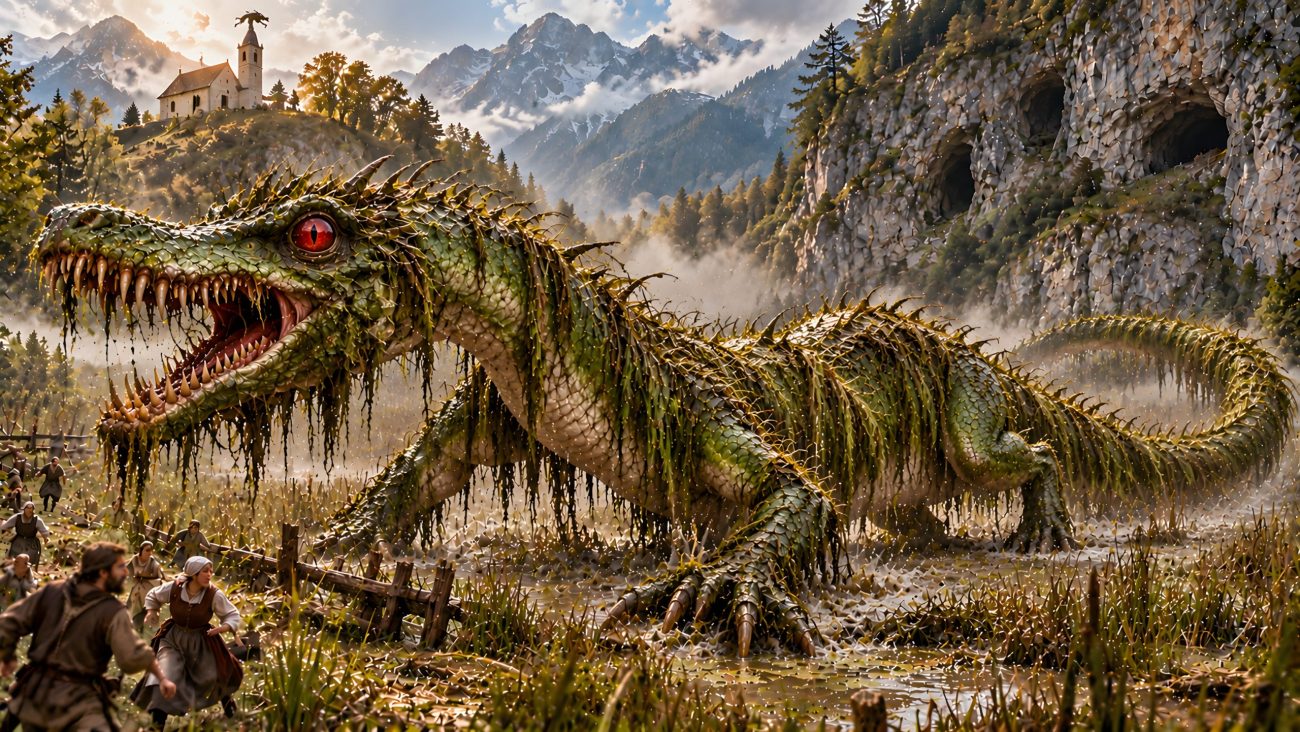
During the day, an eerie mist rises from the pit. It is said to be either the breath of the unfortunate girl or the breath of a fierce dragon whose fiery jaws guard the key to the chest of gold.

When the full moon shines at midnight, the shadowy figure of the cursed daughter can be seen flying from tree to tree. She waits for someone to free her, but only a person in a state of grace and filled with holy courage will be able to approach the dragon and seize the key from its possession.


Sources

“Der Kampf mit dem Lindwurm.” SAGEN.at – Traditionelle Sagen aus Österreich (Kärnten). Reproduced by SAGEN.at.
https://www.sagen.at/texte/sagen/oesterreich/kaernten/franz_pehr/kampfmitlindwurm.html


Linddur of Klagenfurt

Tradition: Austrian Mythology
Alternative Names: Klagenfurt Linddur, Lindwurm of Klagenfurt
Category: Dragon


The Myth

In the time of Duke Karast, the place where Klagenfurt now stands was a wild, swampy wilderness covered in thick thickets. People lived only on the surrounding mountains, for anyone who entered the misty marsh—or sent an animal into it—was unlikely to return. Hidden among the reeds and undergrowth lived a monstrous Linddur that devoured every living thing it could find. Even the bravest men were afraid to venture into the swamp, and shepherds would not dare search for animals that had wandered into it.

To confront the creature, the duke ordered a sturdy tower to be built at the edge of the swamp and summoned brave men from across the land. From the safety of the tower, they were to destroy the monster through cunning or force. He promised freedom, land, and a rich reward to whoever succeeded.

A group of courageous men devised a trap. They fastened a fat bull to a long chain fitted with a barbed hook and concealed themselves inside the tower. The bull’s terrified bellowing echoed across the swamp, drawing the Linddur from its hiding place.

The monster came rushing through the marsh like an arrow. Its wings beat against the water, its body was covered in enormous scales, and its snarling jaws were filled with terrible teeth. It seized the bull with its claws and began to devour it, but suddenly became caught on the barbed hook.

The Linddur thrashed violently, whipping the water with its enormous tail and struggling to escape. Yet every attempt only drove the iron barb deeper into its throat. Unable to free itself, the monster was finally overwhelmed, and the duke’s servants killed it with iron clubs.

With the Linddur dead, the people were finally able to settle the lowlands without fear. The dense undergrowth was cleared, the swamp was drained, and the land was cultivated. The duke eventually replaced the old tower with a castle, and the settlement became the earliest habitation in the Klagenfurt Basin.

The memory of the battle survives in Klagenfurt, where a huge stone dragon stands in New Square and the city’s coat of arms depicts the legendary creature beside the tower.


Sources

“Der Kampf mit dem Lindwurm.” SAGEN.at – Traditionelle Sagen aus Österreich (Kärnten). Reproduced by SAGEN.at.
https://www.sagen.at/texte/sagen/oesterreich/kaernten/franz_pehr/kampfmitlindwurm.html

Amberg Worm

Tradition: Austrian Mythology
Alternative Names: Amberg Lindworm, Worm of Amberg
Category: Dragon


The Myth

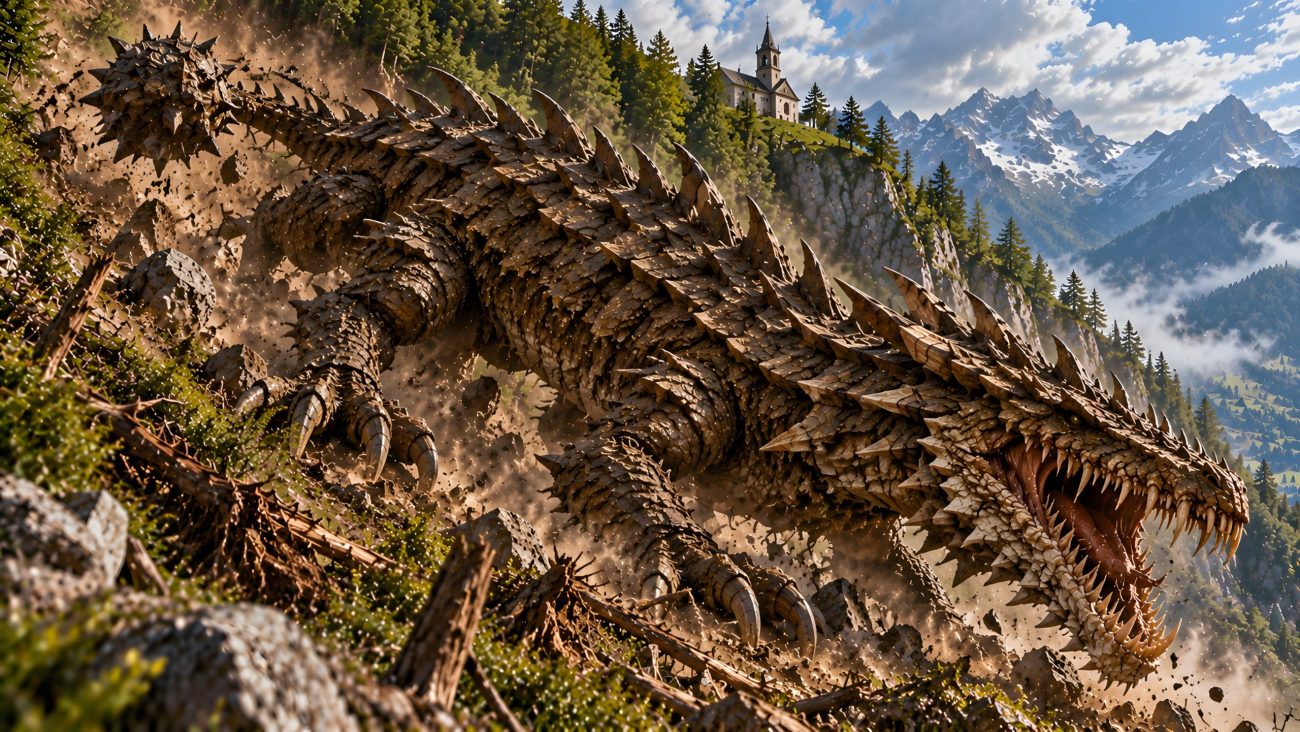
In the mountains above the Drava Valley, near the village of Amberg, a great lake once filled the basin where the farmers’ homes now stand. The lake was known as the Black Lake, and deep within its waters lived a hideous dragon that terrorized the surrounding country. Neither people nor animals were safe from the monster.

One day, a tailor came to Amberg and boldly vowed to rid the inhabitants of the dragon. He went to a blacksmith and had a long, pointed needle forged for him. Armed with this strange weapon, he crept into a rocky cave near the dragon and began stabbing and provoking the beast.

The dragon became so furious that it thrashed its enormous tail through the water, whipping the lake into chaos. In its rage, the creature eventually split the surrounding rock, allowing the waters of the Black Lake to rush out toward the Drava River.

The dragon itself was swept away by the rushing water and carried down into the valley, where it perished. Deep cracks and fissures in the rocks are said to remain from the struggle, descending into depths that no one has dared to explore.

The field where the monster finally died is still known as “the Worm.”


Sources

“Der Ambergerwurm.” SAGEN.at – Traditionelle Sagen aus Österreich (Kärnten). Reproduced by SAGEN.at.
https://www.sagen.at/texte/sagen/oesterreich/kaernten/allgemein/ambergerwurm.html


Dragon of Guflina

Tradition: Liechtenstein Mythology
Alternative Names: Guflina Dragon
Category: Dragon


The Myth

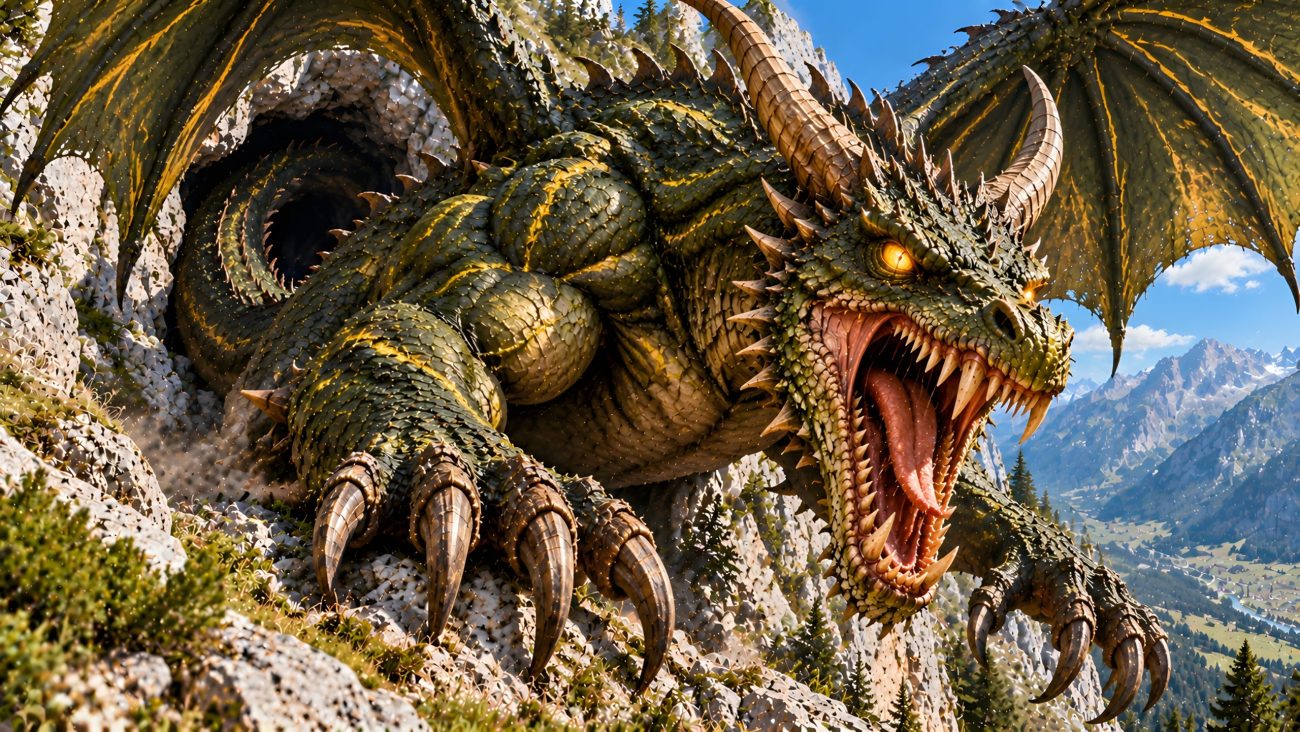
Deep within a rugged cliff on the heights of Silum lived a dragon of terrible size. It was a winged beast with horns upon its head and eyes that burned like two blazing torches.

The dragon was the terror of the miners and mountain folk. Each spring and autumn, when the herds of cattle were driven to the Silum alpine pasture and the Bargella Alp, the monster emerged from its cave at night and attacked the animals, causing great destruction. The attacks brought misery and fear to the people who depended upon the mountain pastures.

At last, the Giant of Guflina dared to face the beast. The dragon emerged from its cave and lunged at the giant, snorting with fury. It struck him heavily across the shoulders and attempted to bury its powerful claws in his flesh and strangle him.

The giant endured the attack. With a sudden movement, he seized the dragon by the neck and drove it against the rocky cliff with both hands. He squeezed with such force that the dragon’s bones cracked, and its throat released a terrible howl that echoed across the mountains.

The miners rushed to the scene and found the dragon lying dead upon the ground. A great cheer rose through the Alpine valleys. With the monster slain, the mountain folk could once again drive their herds safely to the high pastures.


Sources

“Guflina.” SAGEN.at – Traditionelle Sagen aus Liechtenstein. Reproduced by SAGEN.at.
https://www.sagen.at/texte/sagen/liechtenstein/seger/guflina.html


Dragon of Bleika

Tradition: Liechtenstein Mythology
Alternative Names: Dragon of the Bleika
Category: Dragon


The Myth

In the Bleika, a tract of land north of the church of Triesenberg covered with beech forest and meadows, a dragon is said to lie hidden beneath the earth.

The dragon will remain there until the stones of the chapels at Litze and St. Wolfgang at Meierhof have all fallen from their places. When not a single stone remains upon another, the dragon will break free, and the entire Bleika will slide down into the valley as a gigantic landslide.


Sources

“Bleika.” SAGEN.at – Traditionelle Sagen aus Liechtenstein. Reproduced by SAGEN.at.
https://www.sagen.at/texte/sagen/liechtenstein/seger/bleika.html


Lindworm of Laubwinkel

Tradition: Liechtenstein Mythology
Alternative Names: Lindworm of Mäls
Category: Dragon


The Myth

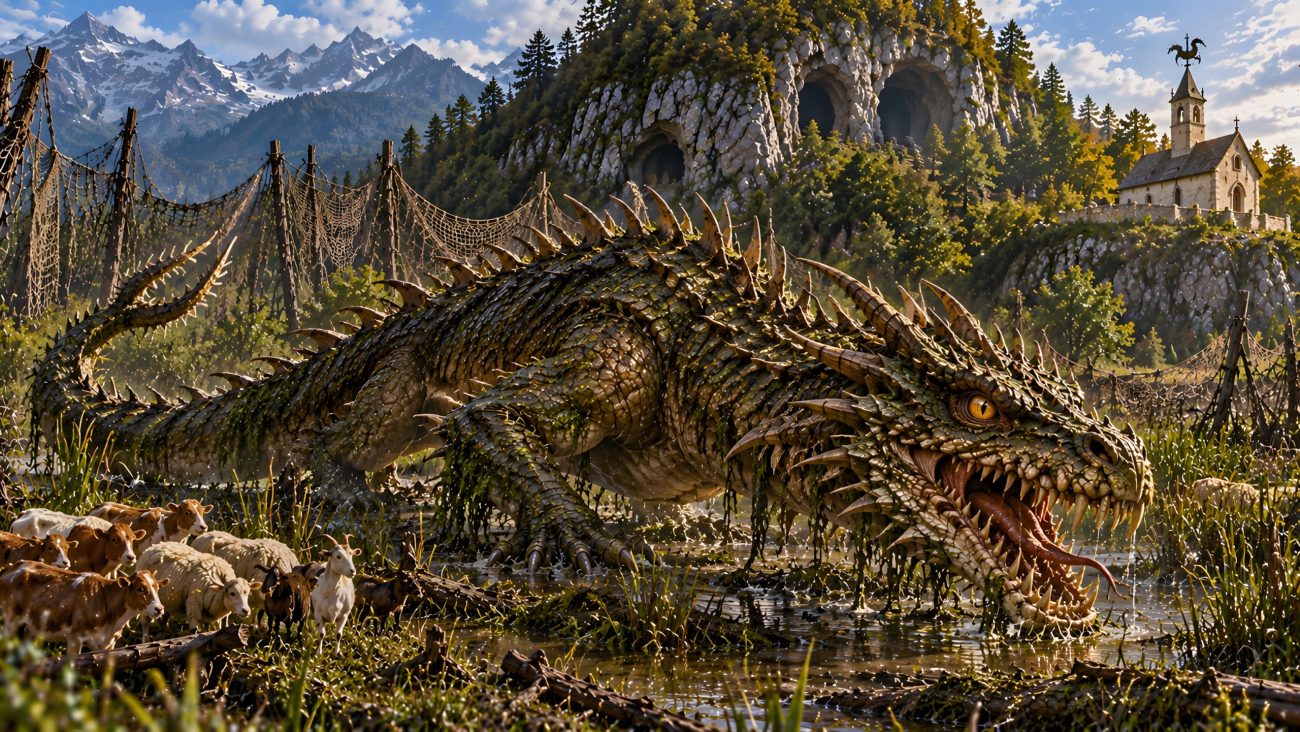
In ancient times, a terrible Lindworm lived at the northern foot of Ellberg, in a place called Laubwinkel. It terrified the inhabitants of Mäls, especially around the swamp where the creature was said to dwell. The area that is now known as Oberfeld was then a wild, marshy landscape washed by the Rhine, covered with oak forests, hedges, and dense bushes.

The people of Mäls tried to keep the Lindworm away from the village by carrying food out to it. Calves, sheep, and goats were taken to the edge of the swamp and left there for the monster to eat. When this failed to rid them of the creature, the villagers tried another method. Large nets were stretched across the northern end of Ellberg, hoping that the Lindworm would become entangled in them. The beast escaped the traps, however, and continued to haunt the people of Mäls.

Since the monster could not be overcome by natural means, the villagers turned to the Virgin Mary. They vowed that if the Lindworm disappeared, they would build a chapel in her honor, and they held a nine-day devotion dedicated to Mary.

Their prayer was answered. The Lindworm suddenly vanished and never appeared again. In gratitude, the villagers are said to have built the pilgrimage chapel of Mariahilf, which was later enlarged. A dragon’s head made of sheet metal can still be seen on the church tower, while several large holes high in the nearby rock face are known in local tradition as the “dragon holes.”


Sources

“Der Lindwurm.” SAGEN.at – Traditionelle Sagen aus Liechtenstein. Reproduced by SAGEN.at.
https://www.sagen.at/texte/sagen/liechtenstein/seger/lindwurm.html


Lindworm of Balzers

Tradition: Liechtenstein Mythology
Alternative Names: The Lindworm of Mals, Mariahilf Lindworm
Category: Dragon


The Myth

Long ago, a terrible Lindworm roamed a swamp near the village of Mals, close to Balzers, causing great harm to the local inhabitants. The villagers tried every means they could think of to keep the monster away or drive it from the area, but nothing worked.

Unable to defeat the beast by natural means, the villagers turned to supernatural help. They held a nine-day devotion in honor of the Virgin Mary and made a solemn vow: if the dragon disappeared, they would build a chapel in her honor.

Their prayers were answered. The Lindworm suddenly vanished and was never seen again.

In gratitude, the villagers built the pilgrimage church of Mariahilf, which was gradually enlarged over time. The memory of the monster remains part of the site: a dragon’s head made of sheet metal sits atop the church tower, while several large holes high in the nearby rock face are still known locally as the “dragon holes.”


Sources

“Die Drachenlöcher.” SAGEN.at – Traditionelle Sagen aus Liechtenstein. Reproduced by SAGEN.at.
https://www.sagen.at/texte/sagen/liechtenstein/drachenloecher.htm


Dragon of Koumariá

Tradition: Greek mythology
Alternative Names: Koumariá Dragon
Category: Dragon


The Myth

In the deep ravine of Koumariá, an area near Arachova named after the strawberry tree, there once lived a fearsome dragon.

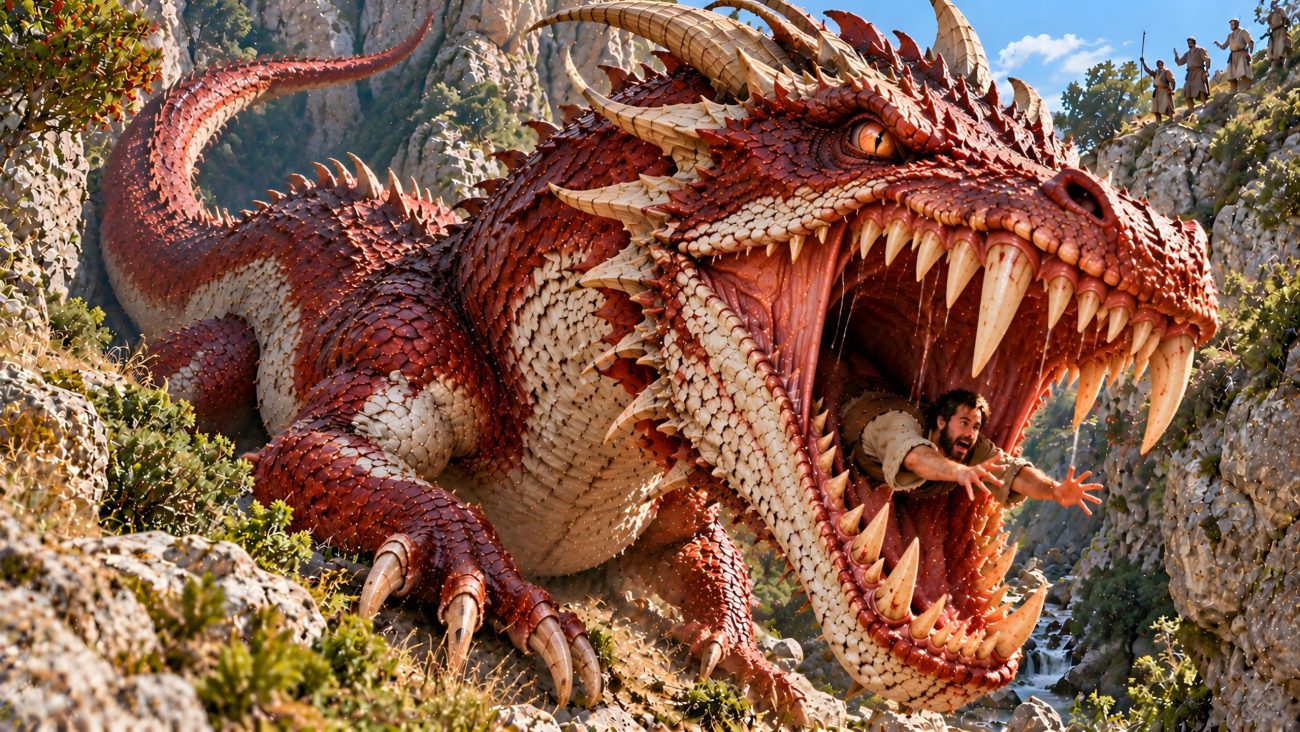
One day, the dragon seized a man who had come from far away and began dragging him into its jaws. The unfortunate man was swallowed up to his armpits, leaving him desperately struggling and crying out for help while several people watched from a distance.

One of the onlookers called to him, telling him to fold his hands together so that the dragon would release him and shorten his torment. Desperate to escape, the man followed the advice and folded his hands together.

The dragon immediately swallowed him whole.


Sources

“Der Drache von Koumaria.” SAGEN.at – Traditionelle Sagen aus Griechenland. Reproduced by SAGEN.at. https://www.sagen.at/texte/sagen/griechenland/drache_koumaria.html


Lindworm of Altenburg

Tradition: German Mythology
Alternative Names: Altenburg Lindworm
Category: Dragon


The Myth

In ancient times, a terrible Lindworm lived on the Kanzel of Altenburg near Nebra. Each year, the beast chose one of the maidens of Nebra and carried her away.

On a particular day each year, the maidens were required to dress in white and adorn themselves for their grim procession to Altenburg. There, one of them would be claimed by the Lindworm.

Eventually, a courageous knight offered to fight the monster. After a fierce battle, he succeeded in killing the Lindworm and freed the maiden from her terrible fate.


Sources

“Die Sage von Altenburg.” SAGEN.at – Traditionelle Sagen aus Deutschland (Sachsen-Anhalt). Reproduced by SAGEN.at.
https://www.sagen.at/texte/sagen/deutschland/sachsen_anhalt/altenburg.html


Dragon of Nebra

Tradition: German Mythology
Alternative Names: Dragon of Nebra
Category: Dragon


The Myth

A terrible dragon lived in a cave near the spring below Nebra Castle, guarding the source of water that the besieged defenders desperately needed. During a siege, the enemy seized the spring outside the castle walls, leaving the defenders trapped inside without water. The heat and drought became unbearable, and with no rain in sight, the men began to despair.

Knowing that the spring was their only hope, a young noblewoman from the castle secretly slipped out during the night and made her way down to the spring at the foot of the castle hill. As she bent down to collect the precious water, a hideous dragon suddenly burst from a nearby cave and threatened to kill her.

Before the dragon could strike, however, Saint George rode in from the direction of Wendelstein with a company of armed men. The knight charged the enormous beast with his lance. He drove the sharp steel deep into the dragon’s poisonous throat and entrails, causing the creature to rear violently before collapsing dead upon the earth.

Saint George had not only rescued the young woman but also freed the castle’s defenders from their desperate situation. With the dragon dead, the spring was once again accessible, allowing the besieged soldiers to drink their fill and regain their strength.

The memory of the battle lives on in the coat of arms of Nebra, where Saint George is depicted fighting the dragon.


Sources

“St. Georg und der Drache.” SAGEN.at – Traditionelle Sagen aus Deutschland (Sachsen-Anhalt). Reproduced by SAGEN.at.
https://www.sagen.at/texte/sagen/deutschland/sachsen_anhalt/georg_drache.html