Tradition / Region: Latvia Alternate Names: House spirit, house god, lord of the house Category: House dweller, Frog, Insect, Beetle, Snake
The Myth
Mājas gars is a household spirit in Latvian mythology that protects the inhabitants of a home from evil and brings prosperity and good fortune. It is regarded as one of the lower deities (dieviņi) and is sometimes called Mājas kungs, the Lord of the House. The spirit is associated with the hearth and may dwell behind the stove, beneath the floor, or elsewhere in the farmstead, and it could still be honored in some places as late as 1935.
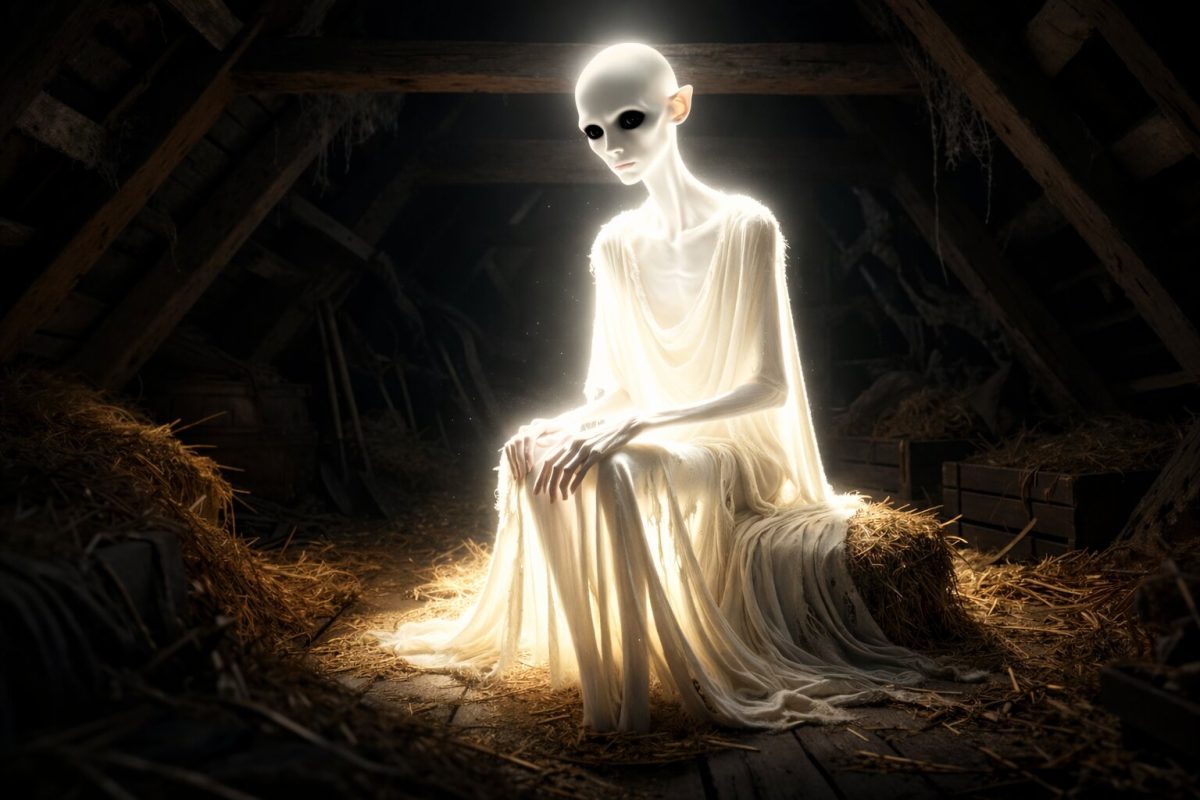
Mājas gars watches over the household and everything within it, ensuring the protection of the home and the well-being of the family. The spirit may appear to people in different forms, sometimes as a man or woman dressed in white, and at other times as an animal connected to the home, such as a toad, a snake, or a beetle. It is understood as a presence guarding the house, living near the hearth or elsewhere on the farmstead, and acting as the household’s protective spirit, bringing good fortune and keeping away harmful forces.
Tradition / Region: Costa Rican mythology Alternate Names: — Category: Lake dweller, Cow, Snake
The Myth
Beneath the dark waters of Lake Arenal, it is said that an enormous creature lies hidden. Few have seen it clearly, for it dwells in the depths and rises only briefly, as if unwilling to be known.
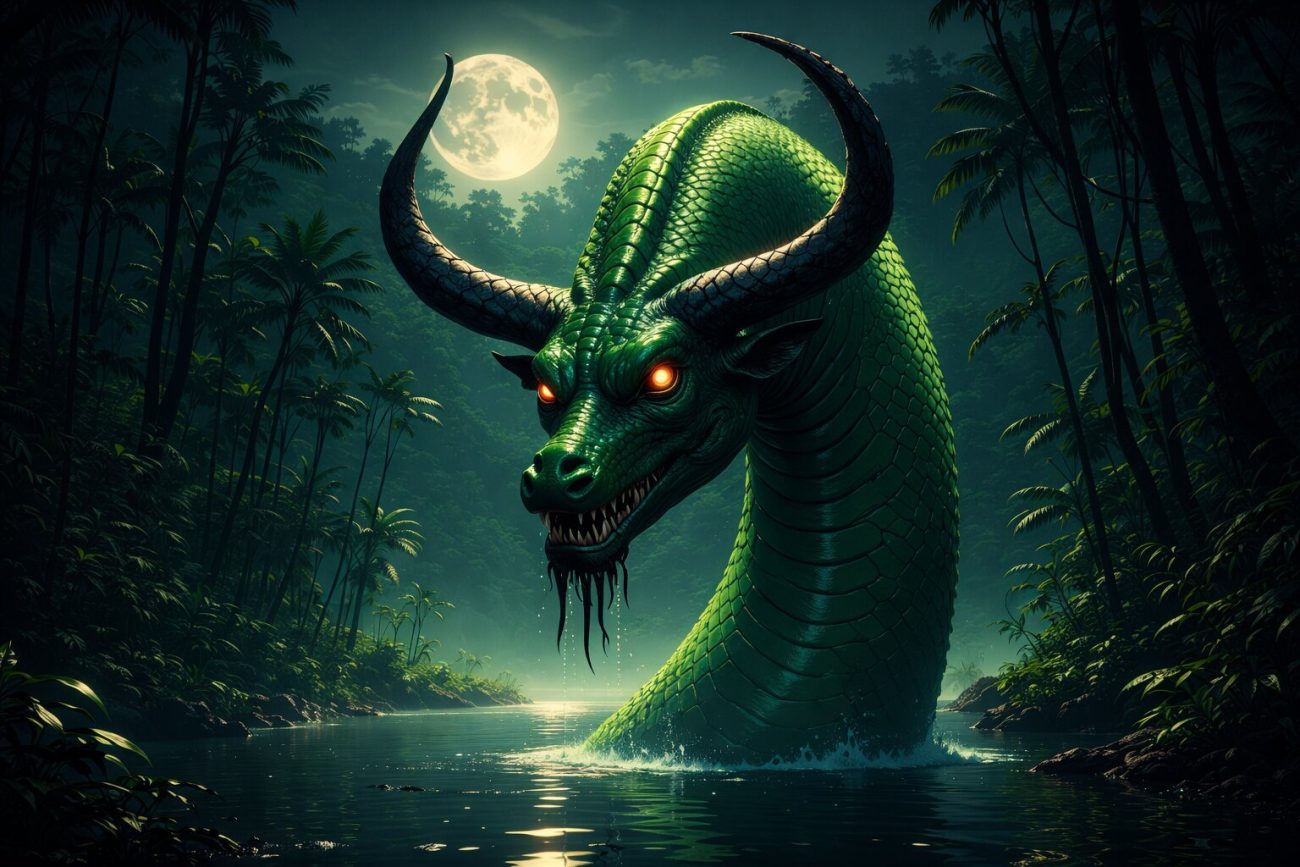
Those who glimpse it speak of a beast with the head of a cow, crowned with curving horns, joined to a long, serpentine body that moves through the lake with silent power. When it shifts below, the water above trembles, rippling as though something immense has turned in its sleep.
The creature is said to surface only at certain moments—at dawn or dusk, or when storms draw near and the lake grows uneasy. In those times, a dark shape may break the surface, a horned head may rise for a breath and sink again, and the waters quickly return to calm.
No trace of the beast remains once it vanishes. No proof can be held, only stories carried by fishermen and villagers who know the lake too well to believe it is empty.
Thus the people say that Lake Arenal is never truly still, for deep below its surface coils a horned, cow-headed serpent, unseen yet always present.
In Kiwai Papuan folklore, etengena are mythical beings associated with particular places in the natural world. They are said to dwell in large trees, springs, and similar locations where nature is dense and undisturbed. Some etengena are believed to watch over vegetable gardens, guarding them from harm or intrusion.
Etengena do not have a single fixed appearance. At times they may take on human form, while at other times they reveal themselves as animals. They are known to appear as snakes, birds, or other creatures, depending on the situation and the person who encounters them.
The idea of the etengena overlaps in part with that of the ororarora, another class of mythical beings known in Kiwai belief. Because of this, the boundaries between these beings are not always clear, and their roles and forms may blend into one another in stories and traditions.
Tradition / Region: Papua New Guinea Mythology Alternate Names: Sorea, snake of Davare Category: Snake
The Myth
The Tabio people once encountered an enormous snake in the bush at Davare. When they attempted to kill it, the creature did not flee or strike. Instead, it coiled itself into a great ring, placing its head at the center. From there, it beckoned to them, moving its head and flickering its tongue.
This, the people understood, was the way of snakes when they wished to make friends. To show this intent more clearly, the snake also beat the ground with its tail, signaling peace rather than threat.
The people named the snake Sorea. Rather than destroying it, they chose to settle at Davare, living alongside the great serpent. Sorea became their ororora—a protective and ancestral being bound to the land and the people.
One night, Sorea moved through the land with great force, cleaving a path as it crawled. This track became the Sorea-creek, known as Soreaturi, a lasting mark of the serpent’s passage through the earth.
Thus Sorea remained not as a monster, but as a guardian and origin-being, shaping the land and establishing a bond between the Tabio people and the place they came to call home.
Gallery
Sources
Landtman, G. (1970). The Kiwai Papuans of British New Guinea: A nature-born instance of Rousseau’s ideal community.
Beneath the ground of Abuara Island lives a being known as Wiobadara.
By day, Wiobadara is seen in the form of a snake, moving unseen beneath the sand. By night, he sometimes emerges in human shape, revealing that his nature is not bound to a single form. His presence is known not by his appearance alone, but by the changes he leaves upon the land.
Wiobadara pushes the sand upward into small hills and ridges. At times, he alters the ground so thoroughly that women searching for crabs can no longer find the holes where they usually dig. Paths become unfamiliar, signs are erased, and the shore no longer responds as it should.
When this happens, the women do not confront him with force. Instead, they place food upon the ground for Wiobadara and speak to him respectfully, asking that he restore the land and allow them to find crabs again.
If properly appeased, Wiobadara relents. The sand settles, the hidden signs return, and the crabs once more reveal themselves. In this way, Wiobadara is understood as a powerful being of the earth—capable of withholding sustenance, but also of granting it when approached with respect.
Gallery
Sources
Landtman, G. (1970). The Kiwai Papuans of British New Guinea: A nature-born instance of Rousseau’s ideal community.
At Haemuba lives a being named Tube, one of the etengena—spirits connected to the land and its fertility.
Tube is closely bound to a particular man of the Mawata people. To him, Tube appears in dreams, teaching the knowledge of garden medicines and the proper ways to use them. The man, in turn, shares this knowledge with others, spreading what Tube has revealed.
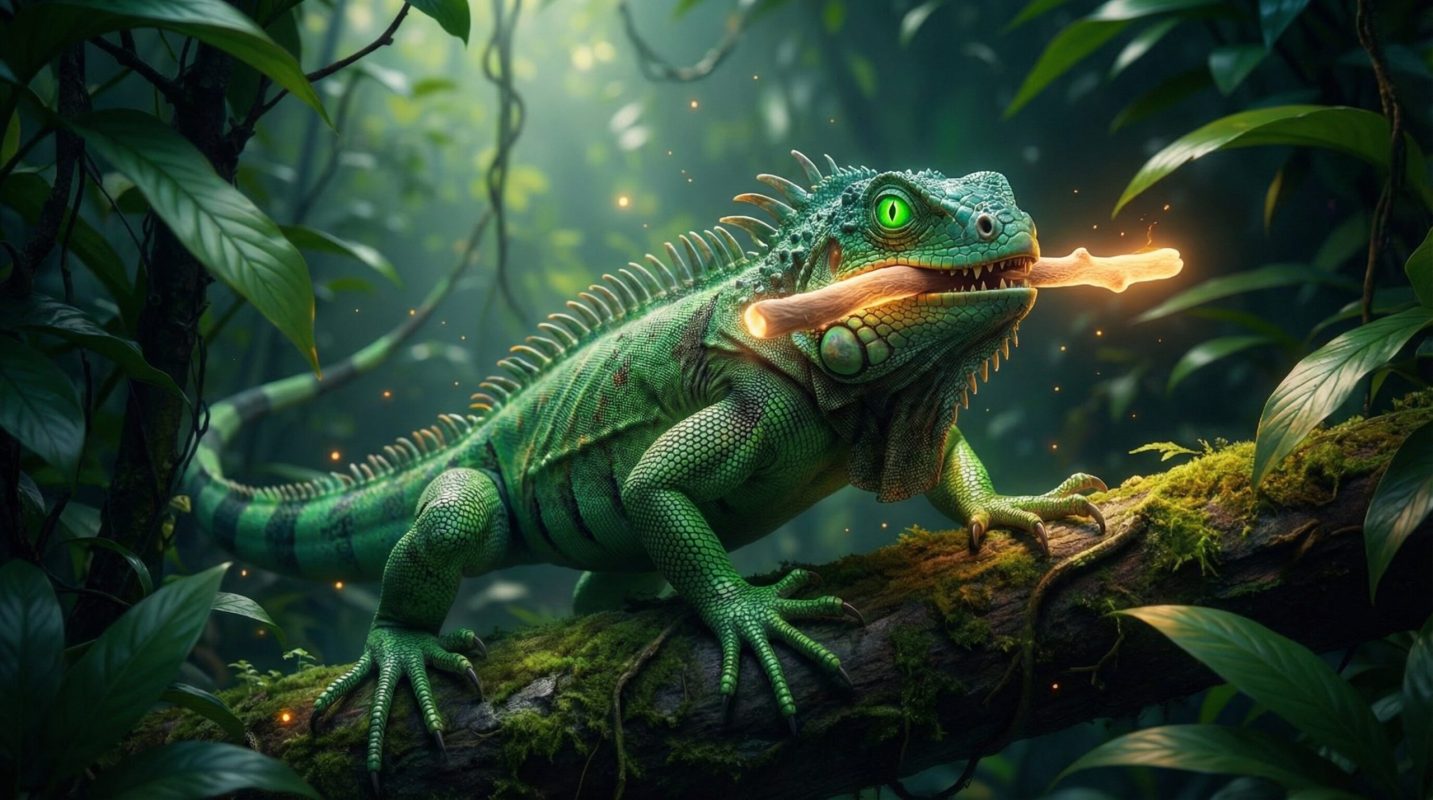
At times, Tube does not remain unseen. He may appear in the garden or the bush in the form of a snake or an iguana. Though his shape is that of an animal, the man recognizes him by signs made with the creature’s head, subtle movements that reveal its true identity.
Once, the man encountered Tube in the bush in the form of an iguana. The animal held a small branch in its mouth—a branch that was itself a medicine. The man gently patted the creature on the head, and by this act received the medicine from Tube.
The bond between them is sealed through sharing. When the first taro is pulled from the ground, it is divided between the man and Tube, acknowledging the spirit’s role in the growth of the garden and honoring the partnership between human and land-being.
Thus Tube remains a quiet teacher and guardian of cultivated ground, passing knowledge through dreams, signs, and shared harvest, and ensuring that the wisdom of the land continues among the people.
Gallery
Sources
Landtman, G. (1970). The Kiwai Papuans of British New Guinea: A nature-born instance of Rousseau’s ideal community.
Umibake is a yōkai known only from monster picture scrolls drawn after the Edo period. It appears among collections of strange beings painted together, without a written tale to explain its origin or deeds.
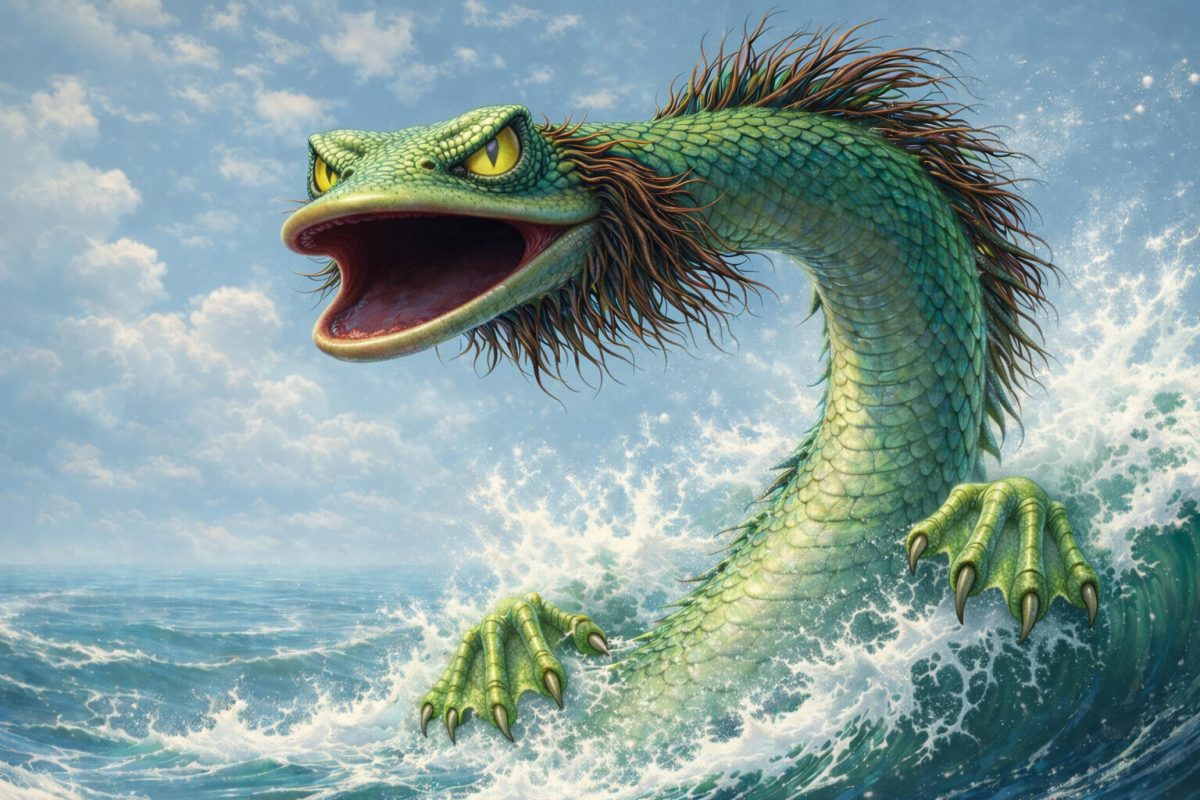
The Umibake emerges upon the surface of the water. Its body is long and slender like that of a serpent, stretching across the waves as it rises. Though its form is aquatic and elongated, its face and the shape of its hands resemble those of a familiar kind of yōkai often seen in monster scrolls, giving it an oddly human presence despite its inhuman body.
No story tells what Umibake does when it appears, nor why it comes forth from the water. It is simply seen there, floating or rising, a quiet and unsettling shape upon the surface of the sea.
Like many yōkai preserved only in pictures, Umibake remains a vision without explanation—its meaning carried only in its form, suspended between water and imagination.
From the deepest darkness before the world was formed, Abyzou came forth. She rose from the primeval waters, from the abyss that existed before heaven and earth were divided. In that endless sea she was born barren, and from her barrenness grew envy without limit.
Abyzou wandered the world without rest or sleep. She moved silently through night and shadow, drawn to the cries of women in labor and the breath of newborn children. She was said to feel no mercy, for what she desired most had been denied her forever. Because she could not give life, she sought to take it.
When a woman lay ready to give birth, Abyzou would draw near. If she was not driven away, she strangled infants in their cradles, stole them in the night, or brought sickness upon them so that they wasted away. She whispered illness into bodies, closing throats, blinding eyes, twisting minds, and filling flesh with pain. Wherever she passed, suffering followed.
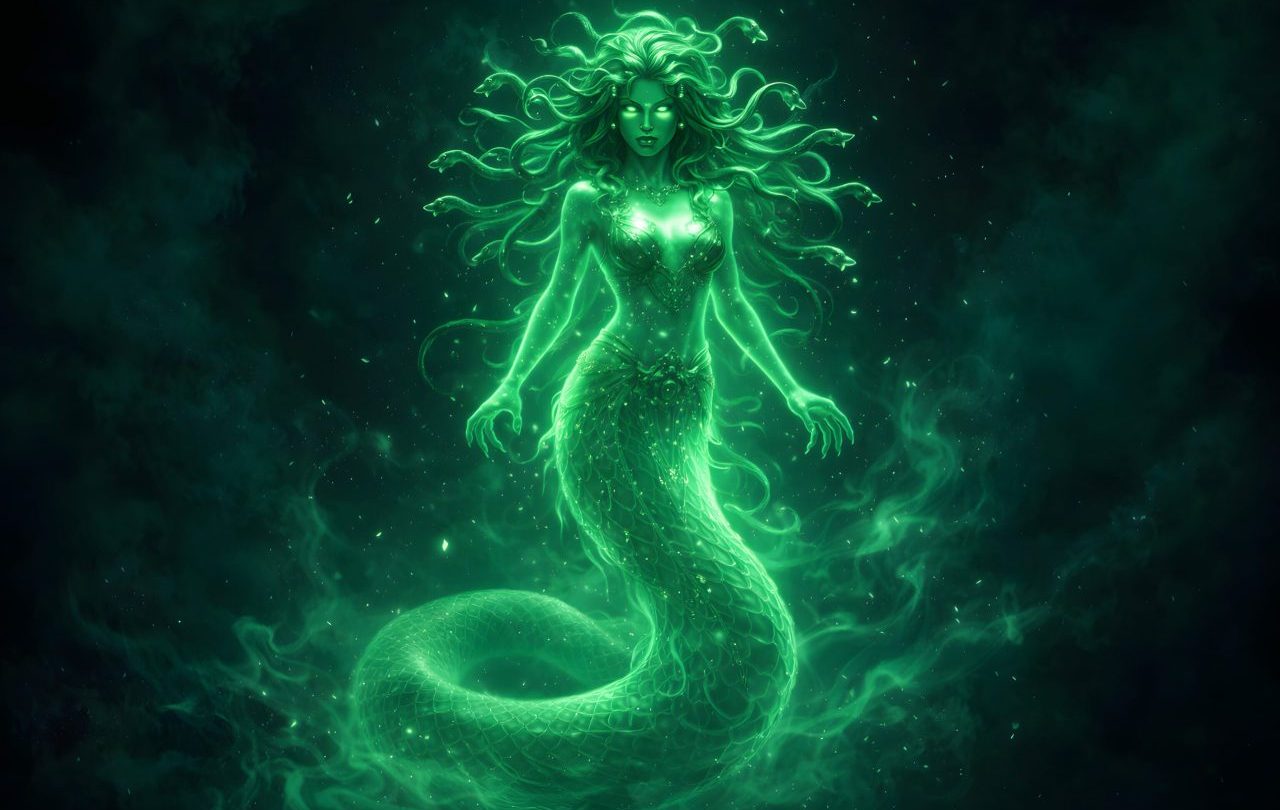
Abyzou did not walk openly among mortals. Her form was half-seen: a greenish, gleaming face framed by writhing, serpent-like hair, while the rest of her body dissolved into darkness. Sometimes she appeared with the scales or tail of a fish or serpent, for she belonged to the ancient waters. She claimed to possess countless names and shapes, changing them constantly so that none might easily command her.
In ancient times, King Solomon encountered her while binding demons to build the Temple. When she was brought before him in chains, she confessed her deeds freely, boasting that she never slept and that each night she sought children to destroy. Solomon ordered her bound by her own hair and displayed before the Temple, so that all might see the demon who preyed upon mothers and infants.
Yet Abyzou could never be destroyed. She could only be driven away.
Thus people learned to defend themselves through sacred names, seals, and charms. Her name was written on amulets, spoken aloud in childbirth, carved into metal and stone. When she was named correctly, she was forced to flee. When the names of her enemies—angels, saints, or divine protectors—were invoked, she recoiled in fury and envy.
In Egypt she was known as Alabasandria. In Byzantium she was Gylou or Gello. In each land she took a new name, but her hunger remained the same. Riders trampled her beneath their horses in sacred images. She was whipped, bound, cursed, and cast out in spells, yet always returned when vigilance failed.
Only one thing could stop her: knowledge of her names. When a woman about to give birth wore an amulet bearing those names, Abyzou was powerless. Forced by oath, she would turn away and retreat to the dark waters from which she had come.
And so Abyzou still wanders the edges of night, driven by envy, searching for life she can never possess—an ancient shadow born from the abyss, feared wherever children are born.