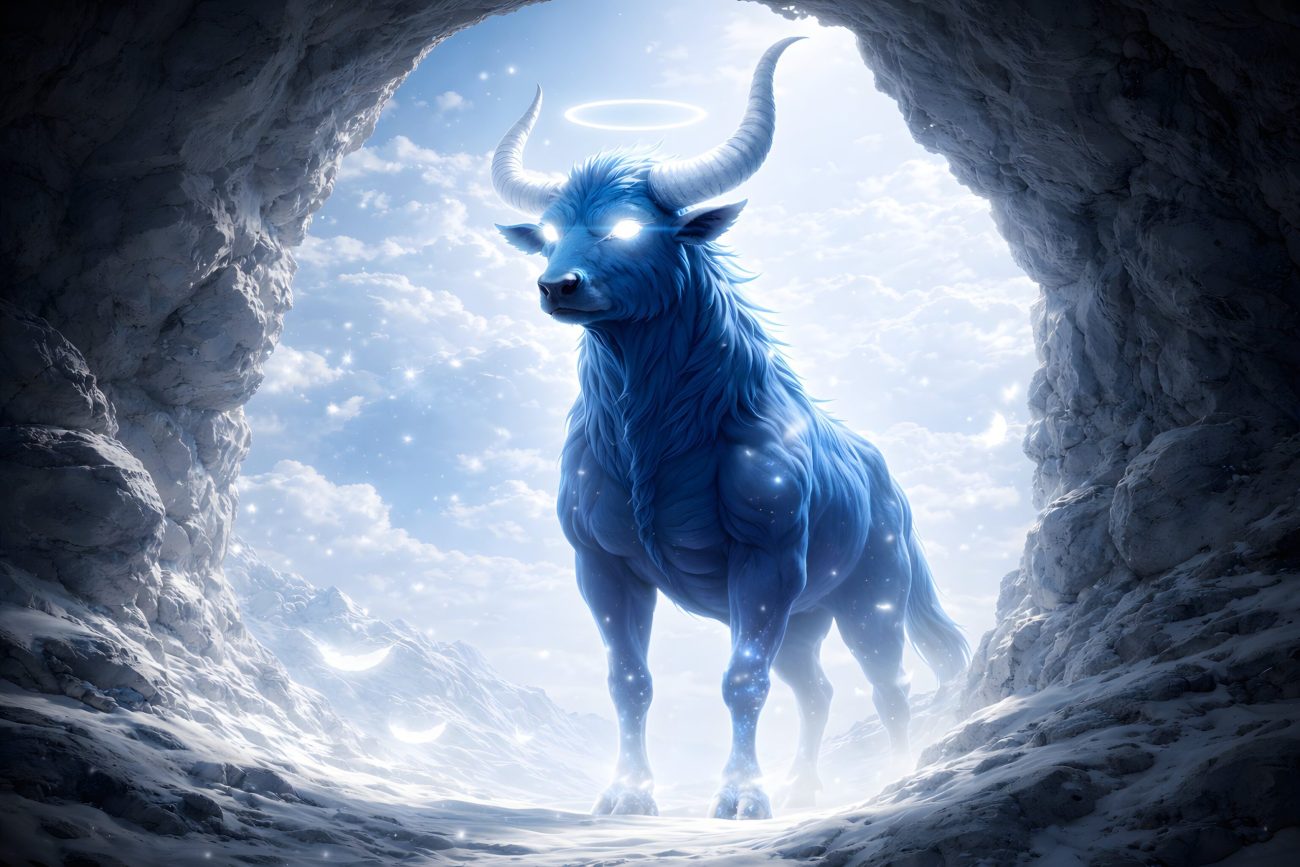
Bukha-Noyon

Tradition / Region: Buryat mythology, Russian Mythology
Alternate Names:
Category: Cow


The Myth

In the oldest stories of the Buryat people, Bukha-Noyon was the first bull-father, the ancestor from whom the people themselves were born. He was the son of the great sky deity, and from the heavens he descended to the earth. He did not belong to one form alone. At times he appeared as a man, and at other times as a mighty bull, and through this shifting shape he moved freely between the upper sky, the middle world of humans, and the depths below.

On one of his journeys, Bukha-Noyon came to the land of Taizha-khan, where rich herds grazed. There he took the form of a powerful, mottled bull and challenged the bulls of that country. None could withstand him. When the daughter of Taizha-khan saw this overwhelming bull, she conceived, and in time gave birth to children who would become the ancestors of human lineages. Thus the people were said to descend from Bukha-Noyon, born of the union between heaven, earth, and the bull.

In other tellings, Bukha-Noyon wandered the steppe and mountains until he finally shed his human form and became wholly a bull. He climbed into the highlands and disappeared from the world of people. There, his body turned to stone. In the Sayan Mountains, it is said that his vast shape can still be seen in the land itself, like a great bull lying upon the slopes, watching over the earth.

From Bukha-Noyon came strength, fertility, and continuity. Where he was honored, cattle flourished and the people endured. He was remembered as both ancestor and guardian—the bull who gave life to the people, and whose spirit still lives in stone, mountain, and herd.


Sources

Toronova, E. M. (2015). Transformation of the mythological image of Bukha-noyon in the works of the Buryat artists. Vestnik Vostochno-Sibirskogo Gosudarstvennogo Universiteta Tekhnologiy i Upravleniya, (4 (55)). Retrieved from https://sciup.org/transformacija-mifologicheskogo-obraza-buha-nojona-v-proizvedenijah-burjatskih-142148225-en
Akshit

Tradition / Region: Egyptian mythology
Alternate Names:
Category: Cow, Deity


The Myth

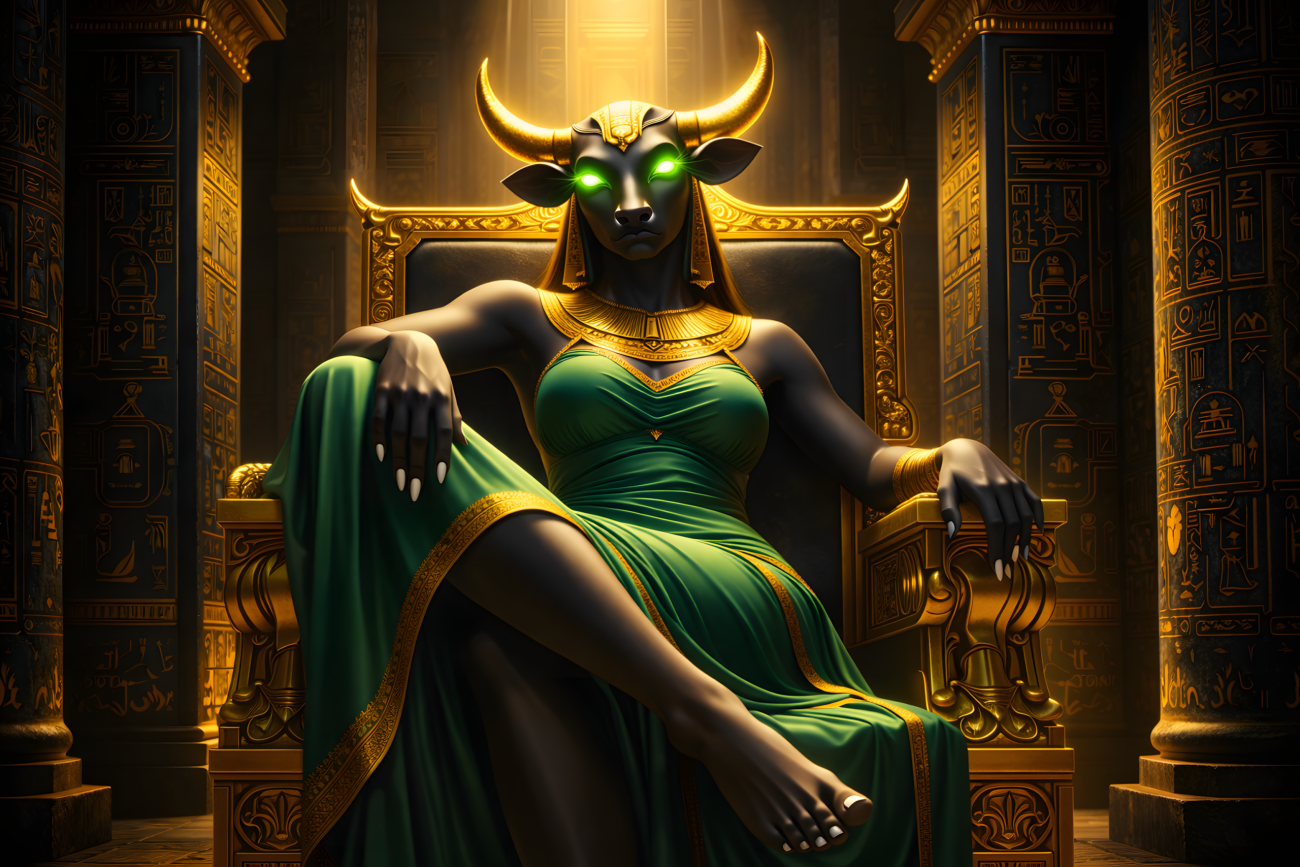
In the city of Oxyrhynchus there was honored a quiet goddess named Akshit, a sacred cow whose destiny was bound to the gods themselves. From her body was born Apis, the holy bull, chosen to walk among humans as a living sign of divine power.

Akshit nurtured her son knowing he was more than a calf. Within him lived fertility, strength, and the will of the gods. As Apis grew, he became the center of reverence: temples rose for him, offerings were brought, and the people watched his movements for meaning. Through him, the gods spoke without words.

Akshit remained in the background of this sacred life, yet everything depended on her. Without her care, the divine bull could not exist. As his mother, she guarded the passage by which divine force entered the world in living form.

Thus Akshit was remembered not for command or spectacle, but for creation itself—the sacred mother who gave the gods a body through which they could dwell among humankind.


Gallery


Sources


Budge, E. A. W. (1920). An Egyptian hieroglyphic dictionary : with an index of English words, king list and geological list with indexes, list of hieroglyphic characters, coptic and semitic alphabets, etc. (p. 95) J. Murray.


Epimetheus

Tradition / Region: Greek mythology
Alternate Names: Afterthought, Late Counsel
Category: Titan god


The Myth

Epimetheus was one of the Titan sons of Iapetos, brother to Prometheus, Atlas, and Menoitios. Where Prometheus was clever and foresighted, Epimetheus was slow to consider consequences, acting first and understanding only afterward. Because of this nature, the gods named him Afterthought.

When the time came for the mortal world to be filled with life, the gods entrusted Prometheus and Epimetheus with the task. Epimetheus asked that he be allowed to distribute the gifts of survival himself, while Prometheus would later inspect his work. Prometheus agreed.

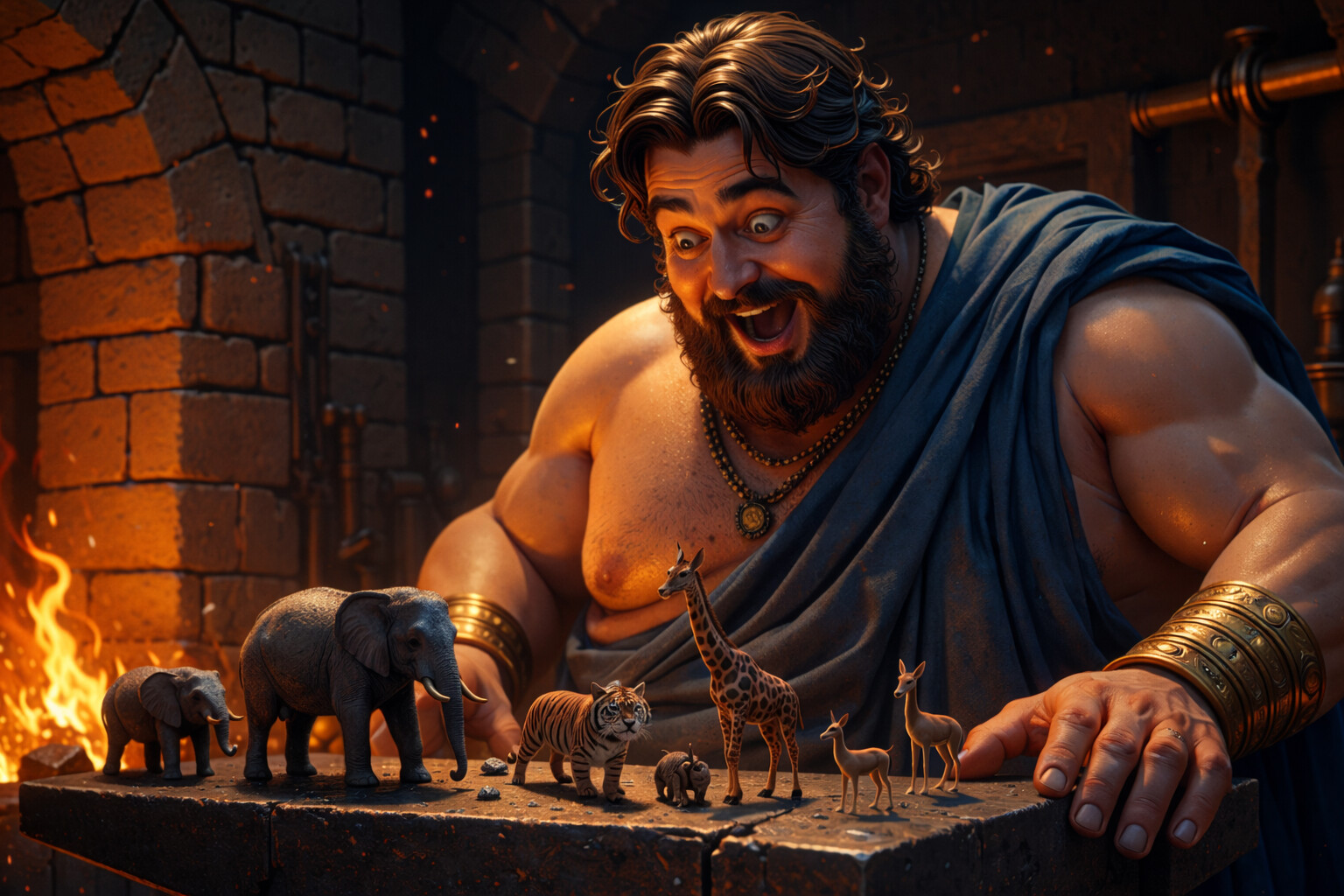
Epimetheus moved eagerly among the creatures of the earth. To some he gave great strength, to others speed. He armed some with claws, tusks, and horns, and gave thick hides and fur to those who would face cold and heat. Birds received wings, beasts received burrows, hooves, shells, or venom. To preserve balance, he ensured that prey multiplied quickly while predators were few. By the time he had finished, every animal was well equipped for life.

Only then did Epimetheus come to mankind.

And he found that he had nothing left.

Humans stood naked and unarmed, without claws or fur, without swiftness or strength, unable to defend themselves from beasts or the harshness of the world. Epimetheus was struck with terror at what he had done. He could not undo his mistake, and the appointed hour for humanity’s emergence had already arrived.

When Prometheus came to inspect the work, he saw at once the disaster. To save mankind, he climbed secretly into the workshops of the gods and stole fire, along with the arts of metalwork, craft, and skill. With these gifts, humans learned to build, to cook, to forge weapons, and to survive.

But Zeus saw the theft, and his anger was terrible.

As punishment, Zeus devised a slow and beautiful ruin for mankind. He commanded Hephaistos to shape a woman from earth, and Athena clothed her in fine garments and taught her weaving. Aphrodite gave her beauty and longing, Hermes placed cunning words and deception in her heart, and the other gods each bestowed a gift. Because of this, she was named Pandora, the All-Gifted.

Zeus sent Pandora to Epimetheus as a gift.

Prometheus warned his brother again and again: never accept gifts from Zeus. But Epimetheus did not heed him. Captivated by Pandora’s beauty, he welcomed her into his house and took her as his wife.

Pandora carried with her a sealed jar, entrusted to her by the gods. One day, moved by curiosity placed in her by divine design, she lifted the lid. From the jar burst sickness, pain, hunger, toil, madness, old age, and every misery that had never before existed. They spread across the earth and entered the lives of all mortals.

Only one thing remained inside the jar when Pandora closed it again.

Hope.

From that day onward, humans lived with suffering, yet were not entirely without comfort.

Epimetheus understood his error only after the evils had already escaped. He had failed mankind twice: first by leaving them helpless, and again by welcoming the instrument of their sorrow. Because of him, Prometheus was later chained and punished, and humanity inherited a world of labor and grief.

The poets said that Epimetheus was the father of Excuse, for he always understood too late. And so his name endured as a warning: wisdom that comes only afterward is no wisdom at all.


Sources

Theoi.com contributors. (n.d.). Epimetheus. In Theoi Greek Mythology, from https://www.theoi.com/Titan/TitanEpimetheus.html