Spirit on Gapfahl

Tradition: Liechtenstein Mythology
Alternative Names: The Headless Spirit of Gapfahl
Category: Ghost


The Myth

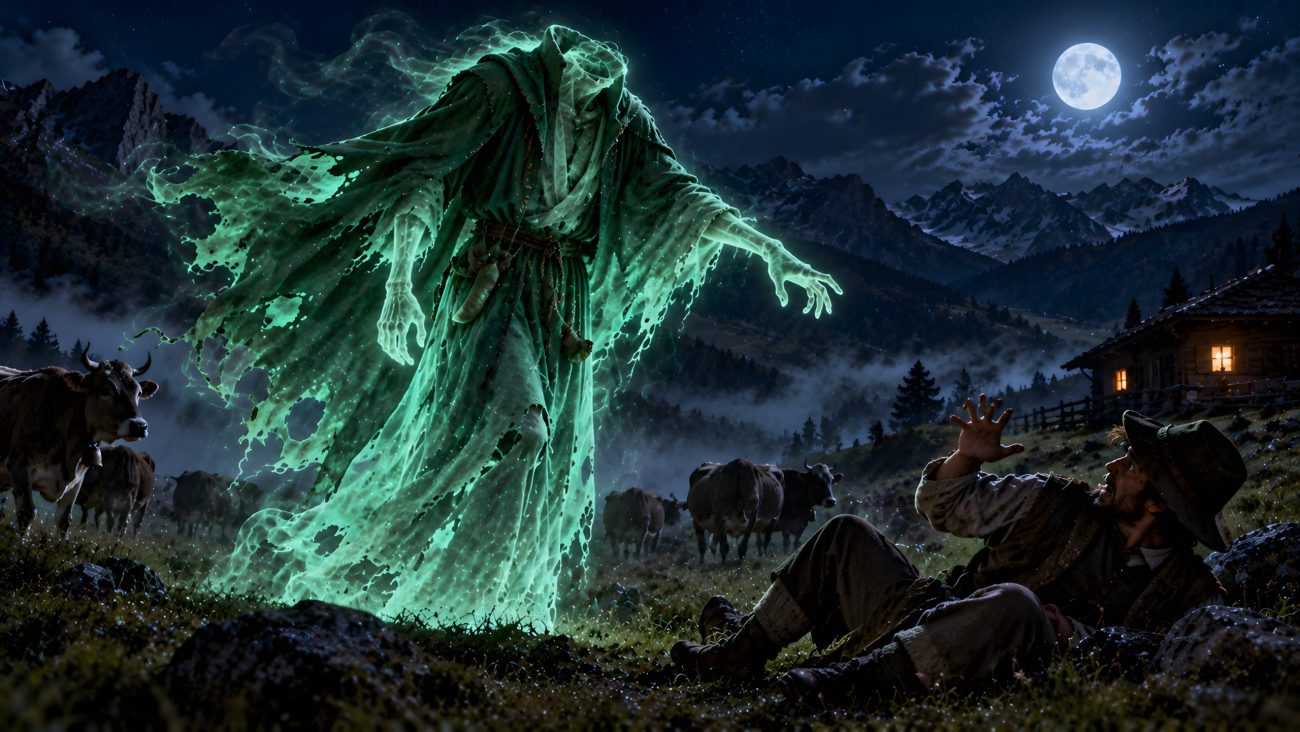
The Spirit on Gapfahl is a headless ghost said to haunt the alpine pastures of Liechtenstein. It appears as a slender figure wearing a green cloak, but without a head. Those who encounter the apparition are overcome with terror. One cowherd experienced this while tending his cattle on the pasture. As he rested on a stone before returning to the alpine hut, he suddenly saw the headless figure standing before him. His face turned as white as chalk, and he stumbled back to the hut in such a state of shock that everyone who saw him was horrified. It took him an hour before he could speak and describe what had happened.

The ghost’s origin lies in a terrible act of violence committed long ago. A hot-tempered herdsman once killed a boy by beheading him with a forest axe. The boy’s unfortunate soul could find no peace after his violent death. Condemned to wander the land without a head, his ghost continues to haunt Gapfahl, appearing to those who venture across its lonely alpine pastures.


Sources

“Der Geist auf Gapfahl.” SAGEN.at – Liechtensteiner Sagen, collected by Otto Seger. Reproduced by SAGEN.at. https://www.sagen.at/texte/sagen/liechtenstein/seger/gapfahl.html


Bergi Woman

Tradition: Liechtenstein Mythology
Alternative Names: The Ghost of Bergi
Category: Ghost


The Myth

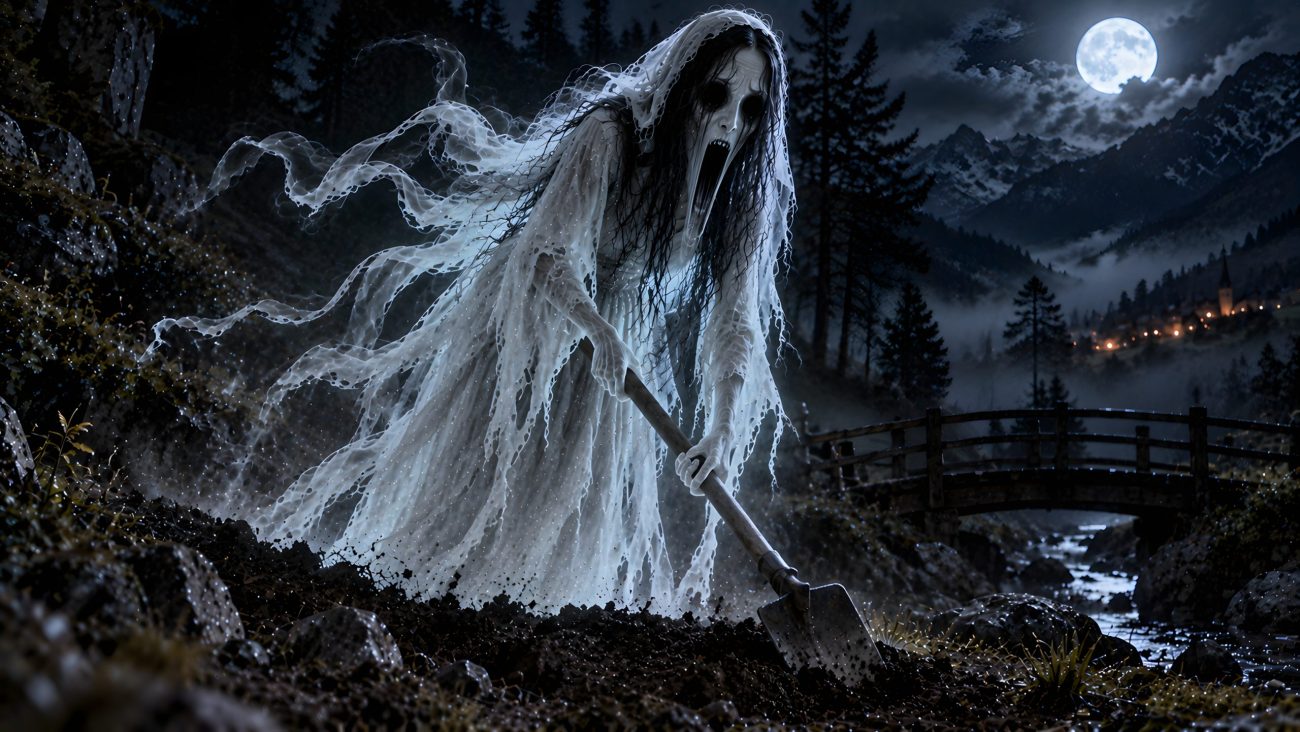
The Bergi Woman is the restless spirit of a woman who committed a terrible deed in the mountains near Triesenberg, Liechtenstein. In ancient times, farmers lived on Bergi, also known as the Bergle Alp. Among them was a woman who gave birth to a child she did not want. Carrying the infant and a hoe, she descended from the mountain and crossed a footbridge toward Valorsch.

In a secluded place, the woman dug a hole with her hoe, laid the child inside, and covered it with earth. She abandoned the infant there and returned from the mountains, but her terrible deed would not go unpunished.

The woman died soon afterward, but her spirit was condemned to atone for her crime at the very place where she had buried her child. Every night, she must descend from Bergi and travel through Valorsch, carrying the same hoe in her hand. She returns to the spot where the child lies buried, repeating her sorrowful journey night after night for all eternity.


Sources

“Das Bergi-Wiebi.” SAGEN.at – Liechtensteiner Sagen, collected by Otto Seger. Reproduced by SAGEN.at. https://www.sagen.at/texte/sagen/liechtenstein/seger/bergiwiebi.html


Sad White Woman

Tradition: Liechtenstein Mythology
Alternative Names: The White Woman of Mäls
Category: Ghost


The Myth

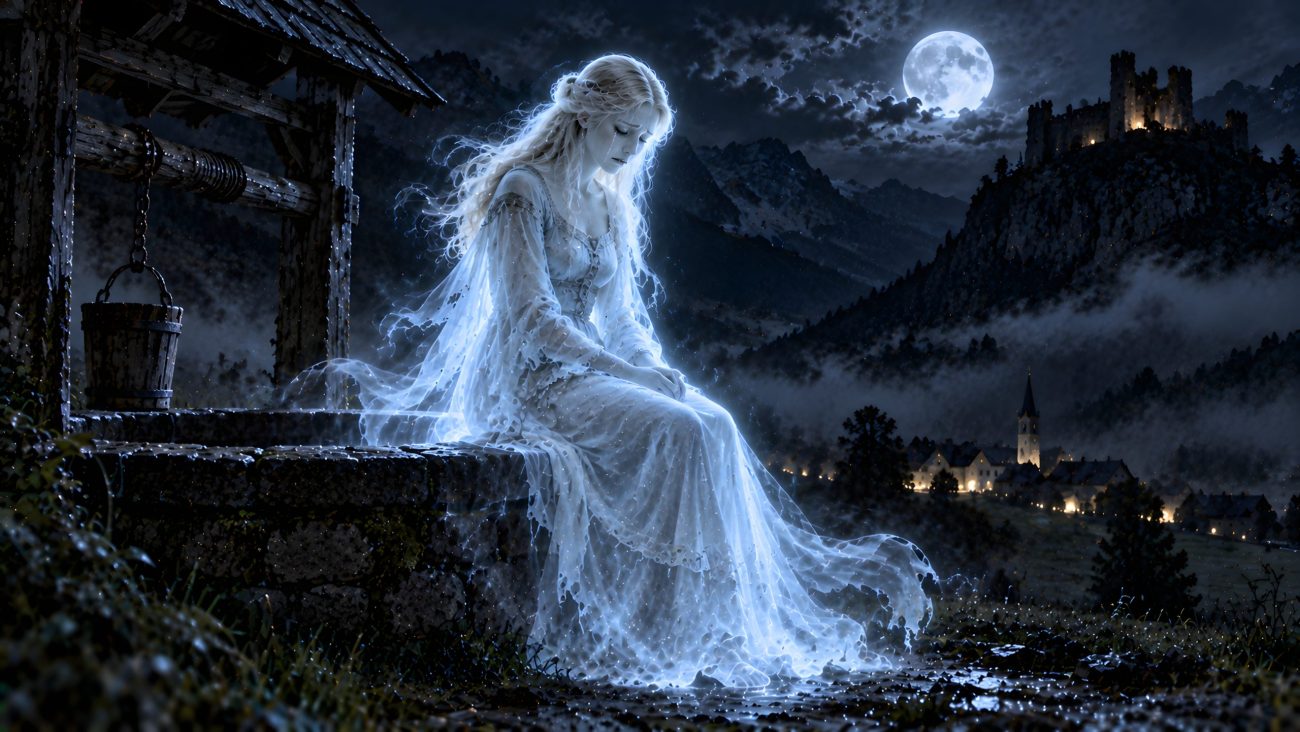
The Sad White Woman is a ghostly figure said to appear in Mäls, Liechtenstein. She is described as a woman with long blonde hair reaching down to her shoulders, dressed in a long white gown. Sometimes she appears wearing the clothing of noblewomen from an earlier age. Her presence is often accompanied by a beautiful, mysterious song, which can be heard near the village well.

According to one tale, the apparition appeared while the relatives of a recently deceased peasant woman were keeping vigil beside her body. Hearing a beautiful voice outside, they went to an open window and saw the white-clad woman near a field known as Under the Stone. The mysterious figure sat beside the village well before continuing on her way. A man secretly followed her and watched as she stopped at a place called Anaresch, where a pond once stood, and wept bitterly. Local tradition holds that the sorrowful woman had drowned her own child in that pond and could find no peace afterward.

Another version of the legend describes the ghost sitting beside the well, singing a wondrous song before slowly walking toward the old castle. As she travels, she weeps pitifully, her sorrow echoing through the night. Her appearances are believed to be the restless wanderings of a woman burdened by a terrible deed, unable to escape the grief that binds her spirit to the places where she once lived.


Sources

“Die weiße Frau.” SAGEN.at – Liechtensteiner Sagen, collected by Otto Seger. Reproduced by SAGEN.at. https://www.sagen.at/texte/sagen/liechtenstein/seger/weissefrau.html


Sücca-Keres

Tradition: Liechtenstein Mythology
Alternative Names: Keres, The Spirit of Sücca
Category: Ghost


The Myth

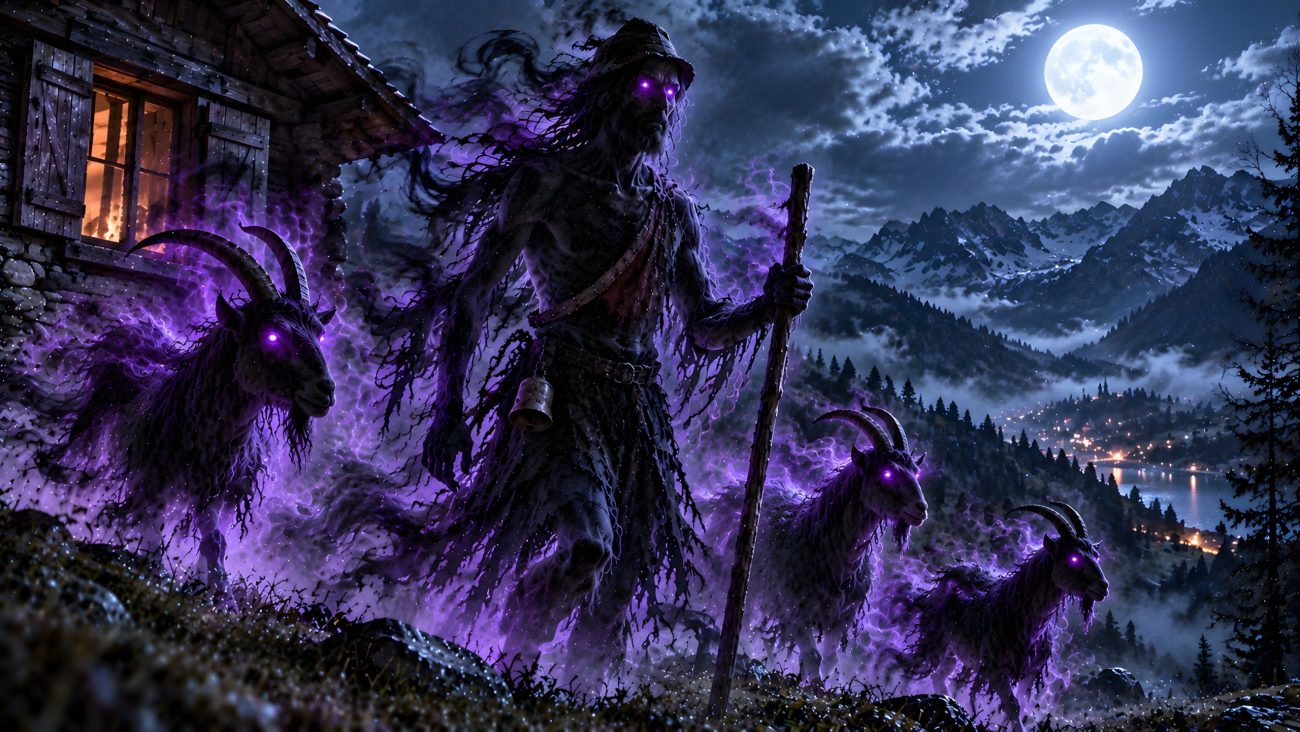
Sücca-Keres was once a herdsman who worked on the Sücca alpine pasture on Kulm Mountain in Liechtenstein. When he took the position, he was required to swear an oath promising faithful and honest service to his master. However, Keres broke his oath by secretly stealing cheese and butter and selling them in the village of Triesen. He often walked back and forth near the Guferwald forest while carrying out his activities.

After Keres died, he was buried in Triesen. When people later attempted to dig up his body, three fingers emerged from the earth. His body looked exactly as it had when he was buried, except that it had turned black. Frightened, the people immediately covered the grave again. Soon afterward, nobody wanted to work as a herdsman on the Sücca pasture, because Keres’s ghost haunted the old herdsman’s hut. People travelling from the Malbuntal and Älpelti valleys sometimes saw him looking out of its window, wearing a leather cap and loincloth just as he had when he was alive.

Eventually, a priest was summoned to drive the ghost away. Keres begged to remain on the hilltop, where he could still hear the bells of the Sücca herdsmen and look down upon his father’s estate. The priest allowed him to retreat into a hole on the hilltop, which became known as the Keres Hole. Another version says that two Capuchin monks banished him there. When they asked why he was condemned to wander, Keres replied that it was not the theft that had condemned him, but the broken oath.

Even after his disappearance from the herdsman’s hut, Keres continued to frighten people near the hilltop. Schoolgirls once approached the hut to collect walking sticks left behind by the herdsmen, but a shutter suddenly flew open and a broad-faced man wearing a leather cap and a red breast cloth peered out. Recognizing him as Keres, the girls fled in terror. On another occasion, goats suddenly bolted across the hillside, and their shepherd later saw Keres looking out of the hut’s window. The shepherd thought the animals had sensed the ghost before he did.

The Keres Hole remained a place of fear. When a poor widow’s goat fell into it, a shepherd climbed down on a rope to rescue the animal. Inside, he thought he saw a hand illuminated by a strange light, holding up three fingers as if taking an oath. Terrified, he scrambled out, and the people above covered the hole with chopped wood. Another tale tells of a boy who threw stones into the hole and then ran away in fright, claiming that a man had climbed out. The ghost of Sücca-Keres was believed to remain bound to the place because he had violated the oath he had sworn as a herdsman.


Sources

“Keres.” SAGEN.at – Liechtensteiner Sagen, collected by Otto Seger. Reproduced by SAGEN.at. https://www.sagen.at/texte/sagen/liechtenstein/seger/keres.html
Spirit of the Cloister Woman

Tradition: Liechtenstein Mythology
Alternative Names: The Ghost of the Nun
Category: Ghost


The Myth

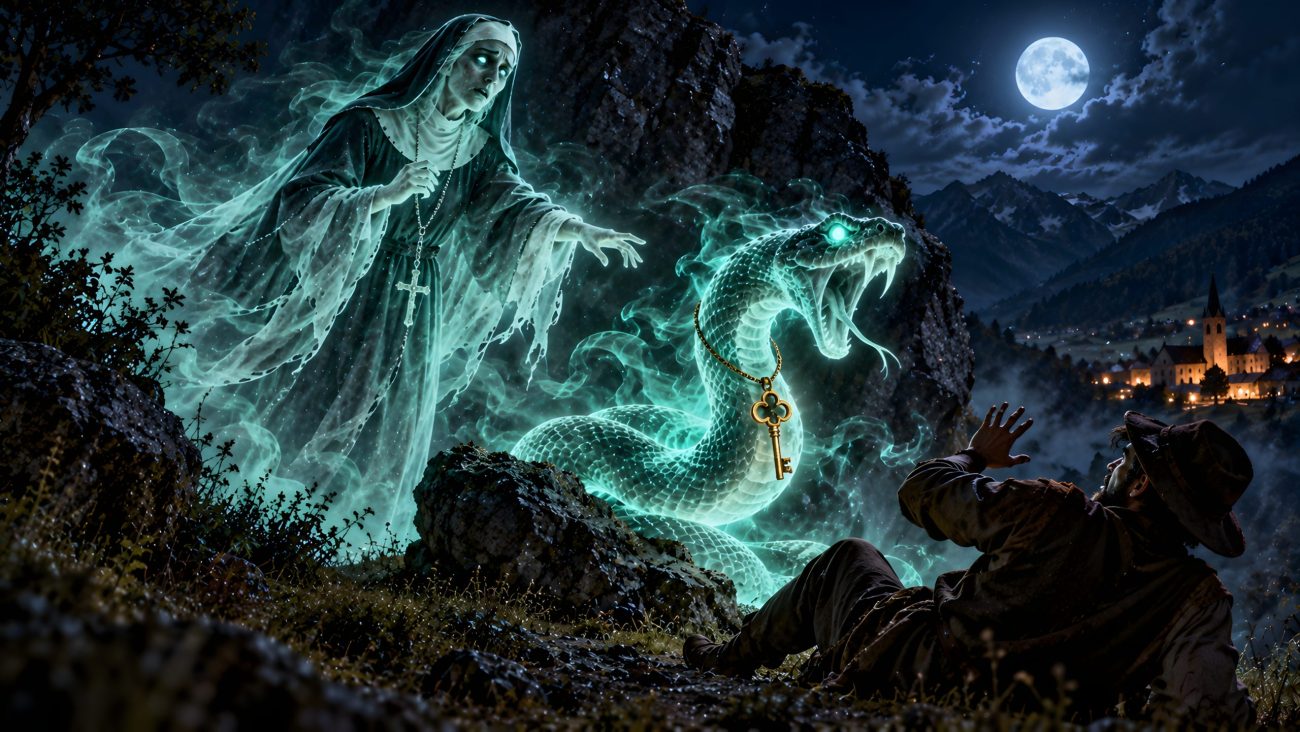
The Spirit of the Cloister Woman is the ghost of a nun who cannot find peace because she died before revealing where she had hidden a sum of money. She wanders near Triesenberg, waiting for someone who will help her recover the hidden treasure and free her spirit. One day, a farmer accidentally set out to feed his flock at two o’clock in the morning instead of four. Along the way, he encountered an unfamiliar nun who explained her predicament and asked for his help.

The nun told the farmer that he would soon stand before a large rock, where she would appear as a snake with a key hanging around its neck. To release her, he had to take the key from the serpent without being afraid. In return, she promised that he would enjoy good fortune in life and receive a place in heaven. The farmer agreed to help her.

Suddenly, a tremendous rushing and roaring sound filled the air, as though the world were coming to an end. The farmer found himself standing before a great rock, and a snake with its jaws wide open approached him. A key hung from its neck, just as the nun had described. But when the creature came close, the farmer was overcome with fear and jumped aside rather than taking the key.

The snake disappeared, and the nun appeared before him once more, weeping bitterly. She lamented that many years might pass before another person arrived at the right hour, and she could not know whether that person would have the courage to free her. With a sorrowful sigh, the nun vanished, condemned to continue wandering until someone brave enough to take the key finally appeared.


Sources

“Die Klosterfrau.” SAGEN.at – Liechtensteiner Sagen, collected by Otto Seger. Reproduced by SAGEN.at. https://www.sagen.at/texte/sagen/liechtenstein/seger/klosterfrau.html


Eggapont Mold

Tradition: Liechtenstein Mythology
Alternative Names: Eggapont’s Ghost
Category: Ghost


The Myth

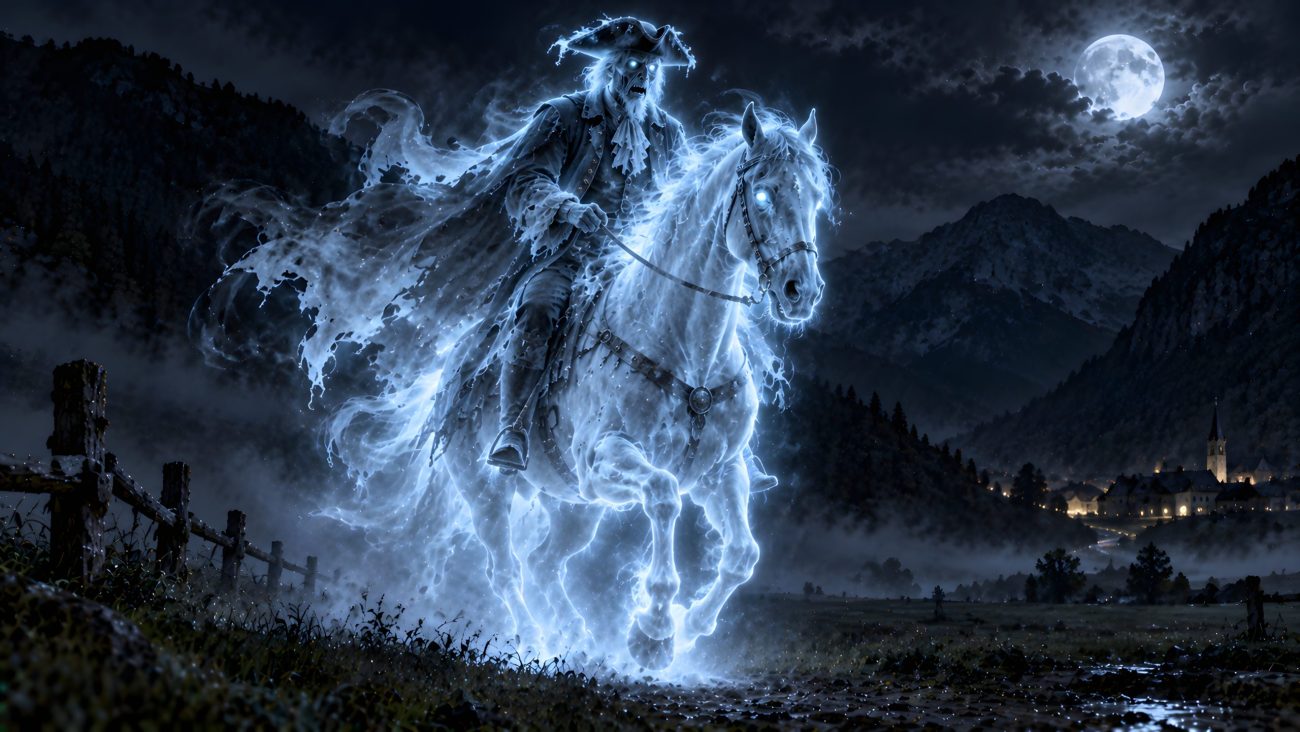
The Eggapont Mold is the ghost of a miserly and dishonest little man who once lived near Eggapont, a meadow below the weaving mill in Triesen, Liechtenstein. The man was consumed by greed and wanted to possess everything he saw. Nothing was safe from his desire to own more, and one day he stole a white horse despite already having two brown horses in his stable.

After his death, the greedy man was said to haunt the meadow where he had lived. At night, his ghost rides through Eggapont on the stolen white horse, appearing as a spectral horseman. Many residents of Triesen have heard the unmistakable sounds of hooves galloping and the horse neighing in the darkness, even when no living rider could be seen.


Sources

“Der Eggapontschimmel.” SAGEN.at – Liechtensteiner Sagen, collected by Otto Seger. Reproduced by SAGEN.at. https://www.sagen.at/texte/sagen/liechtenstein/seger/eggapontschimmel.html


Unjust Judge

Tradition: Liechtenstein Mythology
Alternative Names: The Ghost of the Unjust Judge
Category: Ghost


The Myth

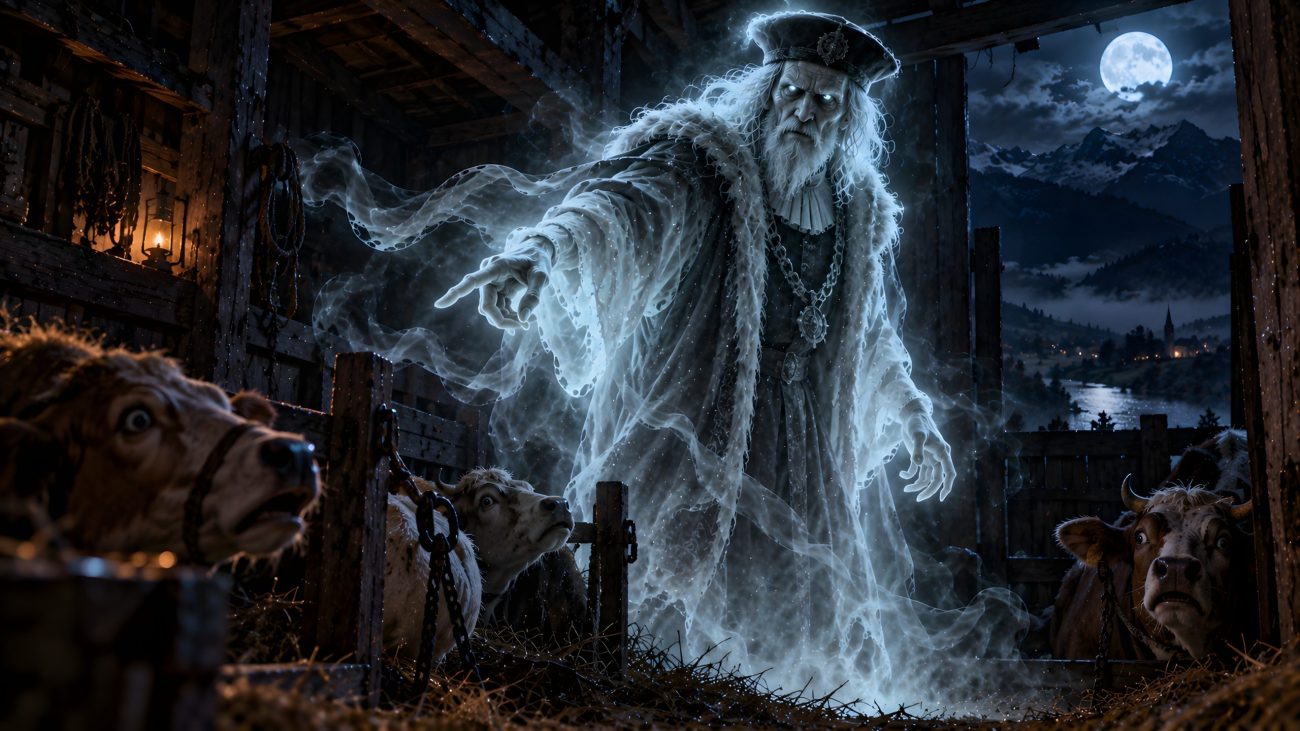
The Unjust Judge is the ghost of a former village headman from Triesen who acquired land through a dishonest exchange. In the past, the people of Triesen owned extensive land on the Swiss side of the Rhine. When the river was to be dammed, men from across the river offered the judge a piece of land in Triesen in exchange for the land across the Rhine. The judge immediately accepted the deal, despite the land belonging to the community. He built a barn on his newly acquired property, but it brought him no good fortune. After several years, he died, and the property passed to his daughter.

One evening, the judge’s daughter drove her healthy cattle into the barn. The following morning, she discovered that the cows were nearly suffocating. The animals were either loose from their chains or tied so tightly that they could barely breathe. She had the barn blessed several times, but the strange disturbances continued. Eventually, the young farmer’s wife summoned a Capuchin friar to investigate.

Inside the stable, the friar encountered the ghost of the deceased judge. He attempted to banish the spirit to the Lawenatobel ravine, but when he arrived there, the ghost had vanished. Returning to the stable, he found the apparition standing by the door. The friar demanded to know why the ghost would not leave the people and their animals in peace. The spirit replied that the time for his redemption had come and demanded that the land be returned to the community or used for good purposes.

The judge’s daughter refused to believe the story and would not surrender the property. From then on, no animals could be kept in the barn. The haunted building, situated between Triesen and Balzers, remained empty, and the ghost continued to be remembered as a warning against unjustly acquiring land that belonged to others.


Sources

“Der Richter.” SAGEN.at – Liechtensteiner Sagen, collected by Otto Seger. Reproduced by SAGEN.at. https://www.sagen.at/texte/sagen/liechtenstein/seger/richter.html


Toad of Grafenberg

Tradition: Liechtenstein Mythology
Alternative Names: The Treasure Toad of the Old Castle
Category: Frog


The Myth

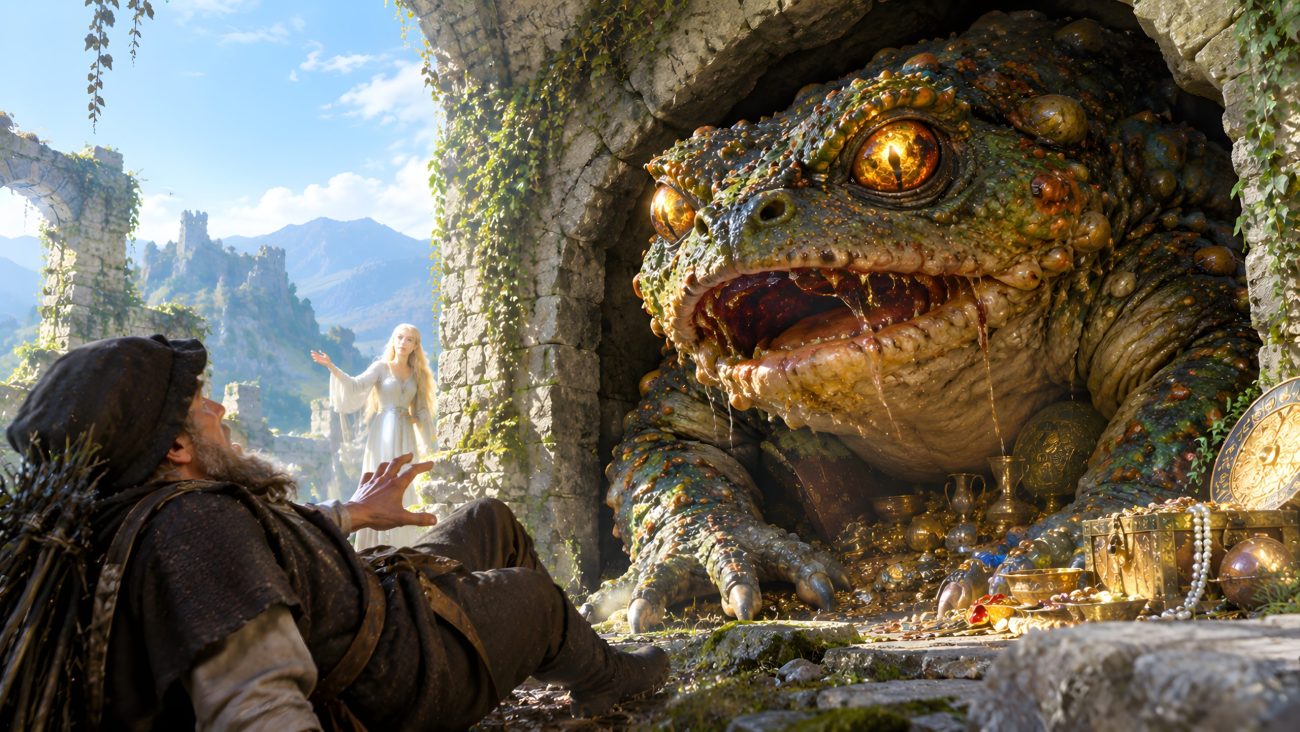
The Toad of Grafenberg is a mysterious supernatural creature that guards a hidden treasure within a vault beneath the ruins of the old castle Grafenberg in Liechtenstein. It appears as a wild, monstrous toad concealed in a niche in the wall. When disturbed, it grows larger and larger, while its eyes sparkle and spit fire. The creature’s terrifying appearance makes it a formidable obstacle for anyone seeking the treasure.

One day, an old chimney sweep from Balzers was gathering brushwood for making brooms in the undergrowth near a place known as the Old Schlüssle. Tired from his work, he sat down to rest upon an old wall. Suddenly, a maiden appeared before him and silently beckoned him to follow her. She led him into a great underground vault, where she revealed that he could become wealthy and free her from her enchantment if he knocked down the wild toad hidden in a niche in the wall.

The chimney sweep approached the creature and attempted to touch it, but the toad began to grow enormously. Its eyes glittered and spewed fire, filling him with terror. Unable to overcome his fear, the man leapt away and fled. In an instant, he found himself back at the very spot where he had originally sat down to rest. The treasure remained undiscovered, and the maiden’s enchantment remained unbroken.


Sources

“Grafenberg.” SAGEN.at – Liechtensteiner Sagen, collected by Otto Seger. https://www.sagen.at/texte/sagen/liechtenstein/seger/grafenberg.html


Fairy of Gutenberg

Tradition: Liechtenstein Mythology
Alternative Names: Fairy of Gutenberg
Category: Fairy


The Myth

The Fairy of Gutenberg appears as an extraordinarily beautiful woman dressed in flowing white robes, with long blond hair and gentle, soulful eyes. She is an enchanted princess who has been trapped for hundreds of years and is bound to a treasure hidden near Gutenberg Castle. Every hundred years, on a particular day, she is allowed to return to the earthly world with her treasure, but she must remain there guarding it until the time passes.

One morning at sunrise, a peasant boy walking past Gutenberg Castle notices a dazzling gleam above the castle wall. Climbing the slope, he discovers countless snail shells scattered through the grass, but these are no ordinary shells: they are made entirely of gold. As he admires the treasure, the fairy appears and tells him that he can gain both her freedom and the treasure if he has enough courage. He must take her in his arms and swing her around three times without speaking or letting go. The boy eagerly agrees. He succeeds with the first turn and then the second, while the fairy sighs with growing happiness. During the third and final turn, however, he suddenly feels cold snakes in his hands. Horrified, he cries out and releases her. The snakes vanish, leaving his hands empty.

The boy has failed at the final moment. The fairy mourns that she must now guard Gutenberg’s treasure for another hundred years, and she disappears into the morning sunlight like mist. At the same instant, the golden treasure vanishes, leaving only ordinary snail shells scattered through the grass. The boy searches through the undergrowth but finds nothing and eventually returns to the road without the fortune he had imagined would buy him a farm, cows, horses, and an alpine pasture. Yet the encounter leaves him wondering whether another opportunity might await someone who passes the castle again a century later.


Sources

Dino Larese. “Die Fee von Gutenberg.” In Liechtensteiner Sagen. Basel, 1970, p. 52. Reproduced by SAGEN.at. https://www.sagen.at/texte/sagen/liechtenstein/larese/fee_gutenberg.html


Dragon of Guflina

Tradition: Liechtenstein Mythology
Alternative Names: Guflina Dragon
Category: Dragon


The Myth

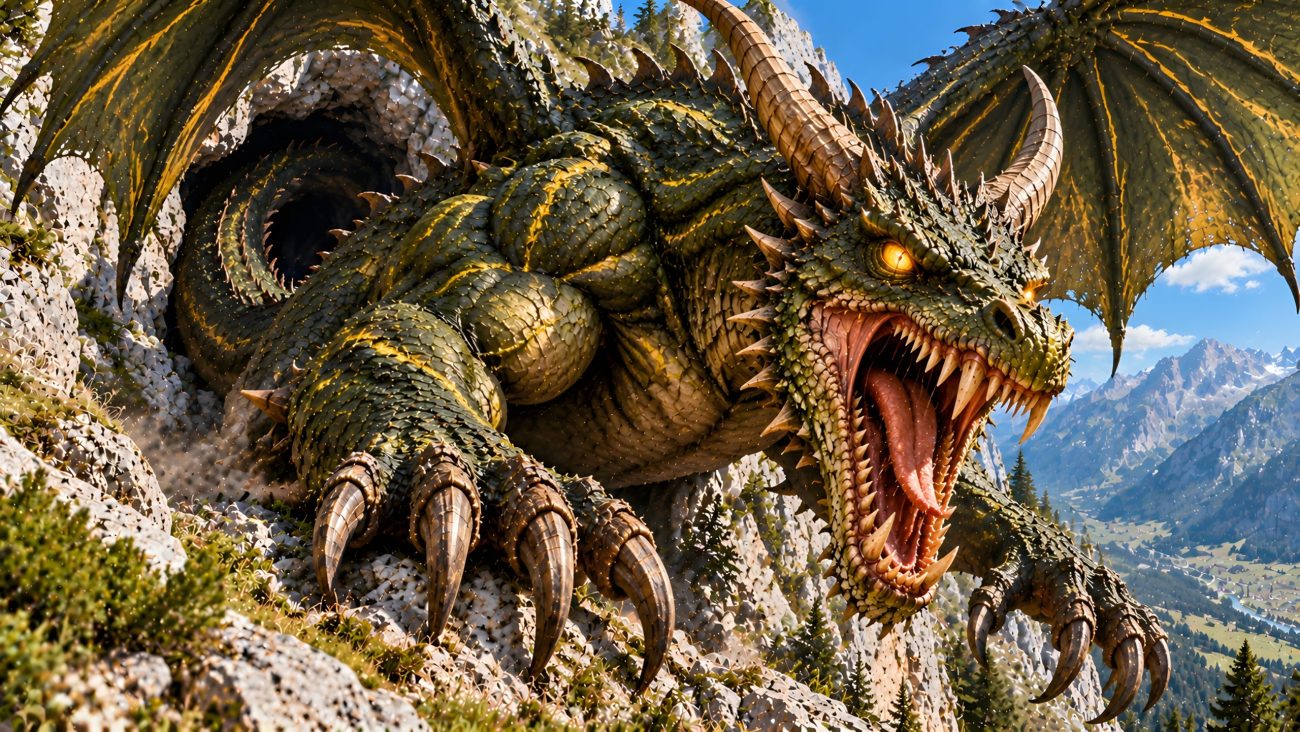
Deep within a rugged cliff on the heights of Silum lived a dragon of terrible size. It was a winged beast with horns upon its head and eyes that burned like two blazing torches.

The dragon was the terror of the miners and mountain folk. Each spring and autumn, when the herds of cattle were driven to the Silum alpine pasture and the Bargella Alp, the monster emerged from its cave at night and attacked the animals, causing great destruction. The attacks brought misery and fear to the people who depended upon the mountain pastures.

At last, the Giant of Guflina dared to face the beast. The dragon emerged from its cave and lunged at the giant, snorting with fury. It struck him heavily across the shoulders and attempted to bury its powerful claws in his flesh and strangle him.

The giant endured the attack. With a sudden movement, he seized the dragon by the neck and drove it against the rocky cliff with both hands. He squeezed with such force that the dragon’s bones cracked, and its throat released a terrible howl that echoed across the mountains.

The miners rushed to the scene and found the dragon lying dead upon the ground. A great cheer rose through the Alpine valleys. With the monster slain, the mountain folk could once again drive their herds safely to the high pastures.


Sources

“Guflina.” SAGEN.at – Traditionelle Sagen aus Liechtenstein. Reproduced by SAGEN.at.
https://www.sagen.at/texte/sagen/liechtenstein/seger/guflina.html