Inu

Tradition / Region: Japanese Mythology (Chikugo, Fukuoka)
Alternate Names: Feathered Dog
Category: Dog, Legendary Animal, Place-Name Spirit


The Myth

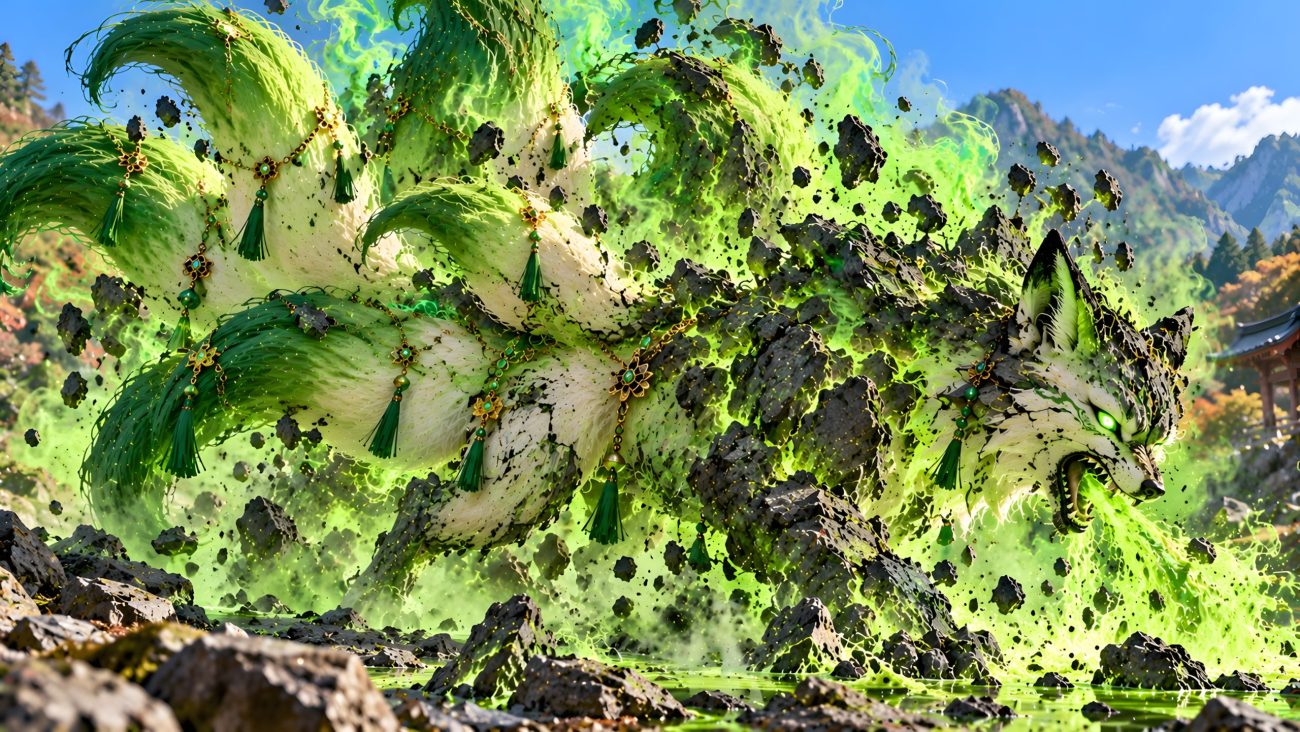
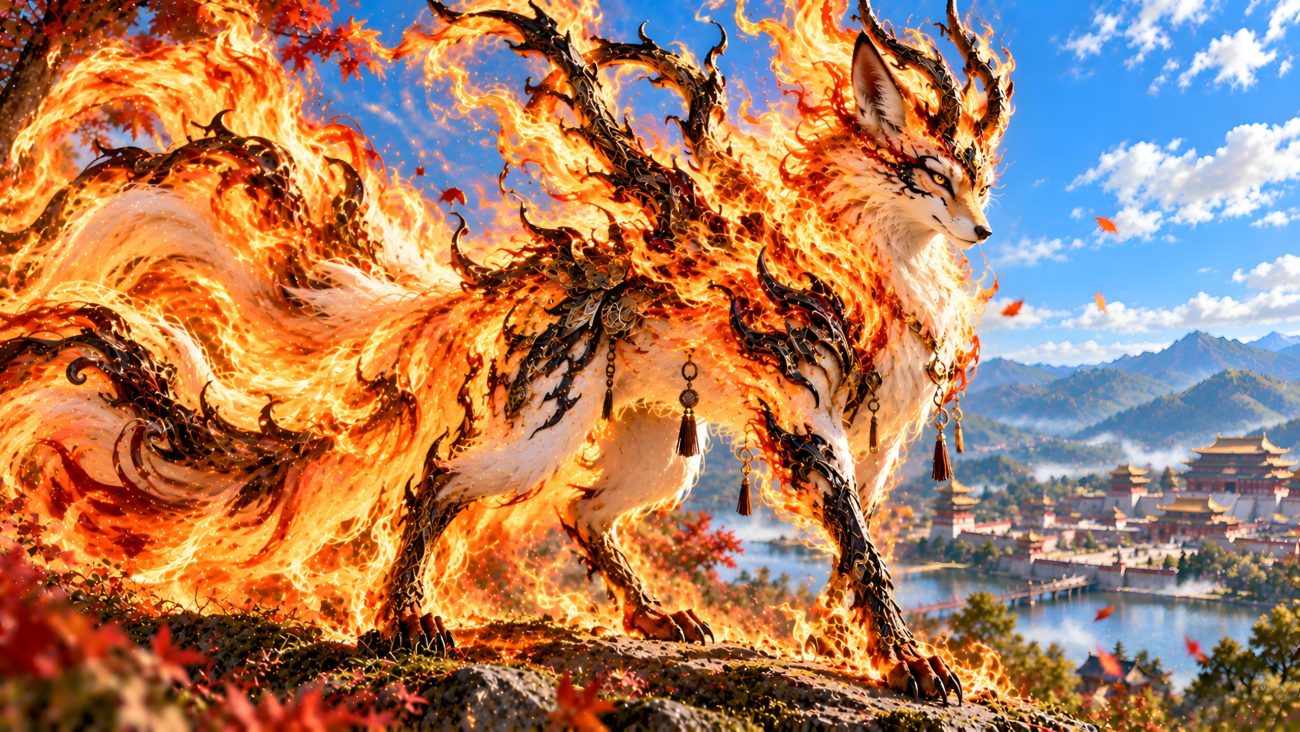
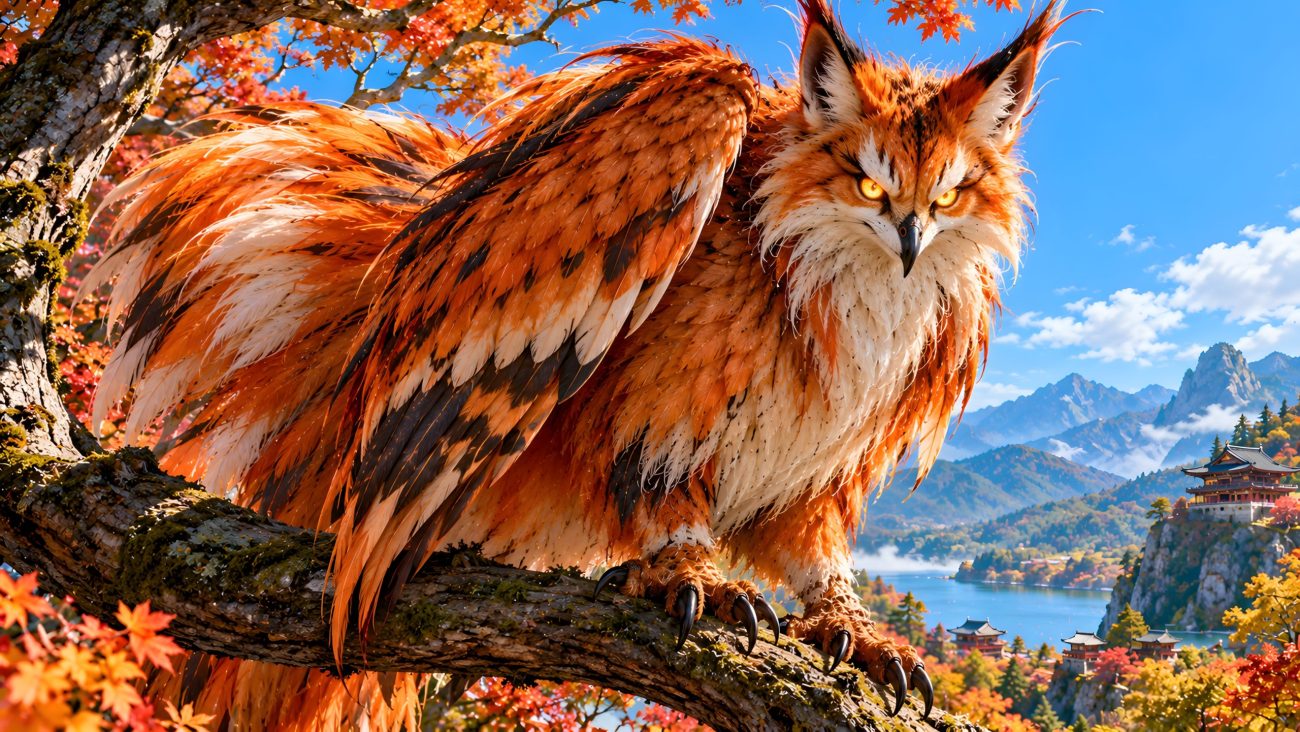
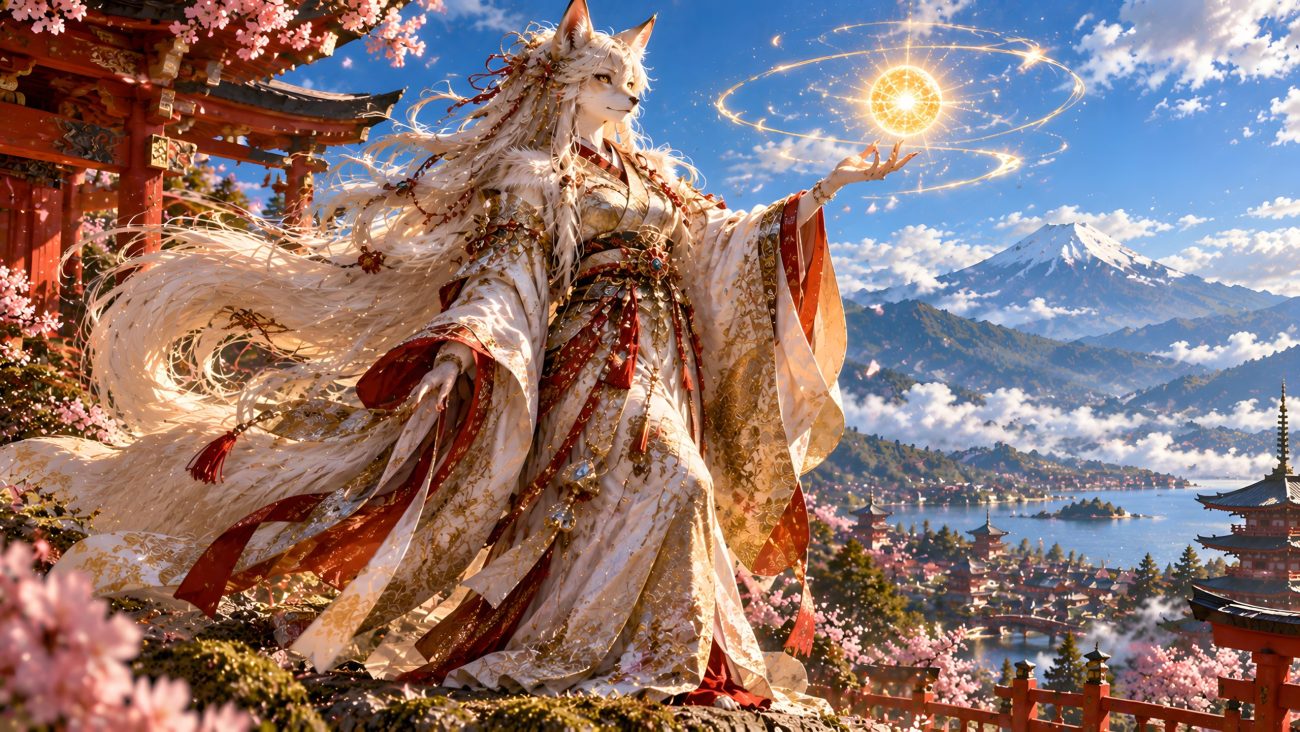
The legend of Inu, the Feathered Dog, is said to explain the origin of the place name Hainuzuka (“Feathered Dog Mound”) in Chikugo, Fukuoka.

One tradition tells that in 1587, when Toyotomi Hideyoshi led his campaign to subdue the Shimazu clan in Kyushu, he brought with him a strange and wondrous dog that had wings. The animal was beloved by him and followed his army through the campaign.

While passing through the region of present-day Chikugo, the dog died — either from illness or from being struck by an enemy arrow. Hideyoshi mourned the creature deeply, and a burial mound was raised in its honor. The place where the dog was laid to rest came to be known as the Feathered Dog Mound.

Another version of the tale says that the feathered dog was not Hideyoshi’s companion, but a fearsome and mysterious beast that lived in the region. It was said to attack both humans and animals, causing terror among the villagers. During his Kyushu campaign, Hideyoshi ordered his troops to hunt down and kill the creature. After it was slain, a mound was built to commemorate the powerful beast and its fierce spirit.

To this day, what is believed to be the dog’s tomb remains at Sōgakuji Temple in Hainuzuka, and statues of the winged dog stand in the area as reminders of the old legend.


Gallery


Sources

Tyz-Yokai Blog. (n.d.). Inu. Retrieved March 1, 2026, from https://tyz-yokai.blog.jp/archives/1069206594.html


Interpretive Lenses

Religious Readings
  • Christian Ascetic Deep Dive
Philosophical Readings
  • Nietzschean Deep Dive
Psychological Readings
  • Jungian Deep Dive
Esoteric Deep Dive
  • Hermetic Deep Dive
Political / Social Readings
  • Marxist Deep Dive

Umi-inu

Tradition / Region: Japanese Mythology (Tosa, Wakayama, coastal regions)
Alternate Names: Sea Dog
Category: Dog


The Myth

Umi-inu, the “sea dog,” is a mysterious creature said to dwell in coastal waters and harbors. It is rarely seen, but its presence is known through the damage it leaves behind.

One tale tells of a port official who went fishing one night. While he was out at sea, the water suddenly grew rough and waves rose violently. From the bow of his boat he heard a strange sound, as if something had clung to the wood and was gnawing at it. Fearing for his life, he rowed back to shore as quickly as he could.

The next morning, he examined the boat and found deep bite marks on the bow, each several inches wide. No one could explain them, but an old man declared that they must have been made by a sea dog.

Another story tells of a fisherman whose boat was seized in the night by something beneath the water. The vessel would not move no matter how he struggled. Only after he prayed repeatedly did the grip loosen and allow him to return home. When the rudder was inspected the next day, it bore several deep tooth marks, and two broken teeth were found embedded in the wood. The teeth were unusually white, one small and one large, and no one could identify what creature they belonged to.

In the Kumano region, a related belief speaks of a blue sea dog, said to be the spirit of a drowned child that wanders the ocean. It moves unseen beneath the waves and may approach boats in silence.

Because of these tales, fishermen feared the unseen creature of the water, believing that when something struck a boat from below, it might be the work of the Umi-inu.


Gallery


Sources

Tyz-Yokai Blog. (n.d.). Umi-inu. Retrieved March 1, 2026, from https://tyz-yokai.blog.jp/archives/1069165897.html


Interpretive Lenses

Religious Readings
  • Christian Ascetic Deep Dive
Philosophical Readings
  • Nietzschean Deep Dive
Psychological Readings
  • Jungian Deep Dive
Esoteric Deep Dive
  • Hermetic Deep Dive
Political / Social Readings
  • Marxist Deep Dive

Shokera

Tradition / Region: Japanese Mythology
Alternate Names: Shokira
Category: Demon, Dog


The Myth

Shokera is a strange creature known from monster scrolls such as the Hyakkai Zukan and the Gazu Hyakki Yagyō. In some depictions it appears as a pale, dog-like being that walks on two legs, while in others it is shown as an oni-like figure peering down into houses through skylights.

Its presence is tied to the night of Kōshin, a day that comes once every sixty days. On this night, people believed that the sanshi—three spirit-insects living inside the human body—would leave their host while they slept and ascend to Heaven to report the person’s sins to the Heavenly Emperor. If the report was unfavorable, the Emperor would shorten that person’s lifespan.

To prevent this, people held Kōshin-machi, gatherings where they stayed awake all night in strict discipline so the insects could not escape.

It was said that if someone fell asleep on this night, the demon Shokera would appear. The creature would bring sickness, misfortune, and a shortening of life to those who failed to remain vigilant. To protect themselves, people sometimes recited special chants meant to ward Shokera away until dawn.

Thus the Shokera became a warning figure: a watcher in the darkness, said to visit the careless, and a reminder that on certain nights, sleep itself could invite disaster.


Gallery


Sources

Tyz-Yokai Blog. (n.d.). Shokera. Retrieved March 1, 2026, from https://tyz-yokai.blog.jp/archives/1010653518.html


Interpretive Lenses

Religious Readings
  • Christian Ascetic Deep Dive
Philosophical Readings
  • Nietzschean Deep Dive
Psychological Readings
  • Jungian Deep Dive
Esoteric Deep Dive
  • Hermetic Deep Dive
Political / Social Readings
  • Marxist Deep Dive

Jinmenken

Tradition / Region: Japanese Mythology
Alternate Names: Human-Faced Dog
Category: Dog


The Myth

Stories of dogs with human-like faces have appeared in Japan since the early modern period. Essays and collections of strange tales recorded rumors of such animals being born, often linked to human wrongdoing. One tale told that a dog in Edo gave birth to a puppy with a human face because a diseased man had lain with the animal in hopes of curing himself. Other stories repeated similar ideas of moral cause and supernatural consequence.

In the early twentieth century, newspapers reported another case in Ibaraki, where a household dog was said to have birthed a human-faced pup. The strange animal was reportedly kept and raised by its owner, becoming the subject of local fascination.

Much later, toward the end of the twentieth century, new rumors spread of a wandering creature called the Jinmenken. This being was described as having the body of a dog but the face of a human. It was said to appear in busy towns at night, rummaging through trash or darting along highways at unnatural speed. When people tried to approach it, the creature would speak in an annoyed human voice, telling them to leave it alone or to be quiet.

Many explanations were whispered about its origin. Some claimed it was the result of strange scientific experiments. Others said it was formed from the restless spirits of people and their dogs killed in accidents. Whatever its origin, the Jinmenken became known as a mysterious creature glimpsed only briefly before it vanished into the darkness.


Gallery


Sources

Tyz-Yokai Blog. (n.d.). Jinmenken. Retrieved March 1, 2026, from https://tyz-yokai.blog.jp/archives/1069515221.html


Interpretive Lenses

Religious Readings
  • Christian Ascetic Deep Dive
Philosophical Readings
  • Nietzschean Deep Dive
Psychological Readings
  • Jungian Deep Dive
Esoteric Deep Dive
  • Hermetic Deep Dive
Political / Social Readings
  • Marxist Deep Dive

Inukashira Ito

Tradition / Region: Japanese Mythology
Alternate Names: Dog’s Head Thread, Kentō Thread
Category: Dog


The Myth

Long ago in Mikawa Province, a county governor had two wives. Both women raised silkworms and produced fine silk. One year, however, all of the silkworms belonging to one of the wives suddenly died. Her husband lost interest in her and stopped visiting her home, and she gradually fell into poverty.

One day, she discovered a single surviving silkworm on a mulberry leaf. She cared for it tenderly, hoping it would save her fortunes. But before it could grow, her white dog swallowed it.

Though she was overcome with grief, she decided not to punish the dog for the loss of a single worm. Instead, she wept in despair over her misfortune. As she cried before the animal, the dog suddenly sneezed, and from each of its nostrils emerged a thin white thread.

Curious, she pulled the threads, and they continued to unravel without end. She reeled in an enormous amount of silk—so much that it piled up around her like snow. At last, after producing an immense quantity, the dog collapsed and died.

The woman believed that the Buddha had taken the form of a dog to aid her in her suffering. She buried the animal at the foot of a mulberry tree in her field.

Later, her husband passed by her house and, seeing its desolation, entered out of pity. Inside he found his wife living quietly among heaps of beautiful silk, shining white and fine beyond compare. When he heard her story, he regretted abandoning a woman so clearly blessed by divine favor. From then on he remained with her and did not return to the other wife.

The mulberry tree above the dog’s grave grew strong, and the silkworms raised there produced exceptional thread. The silk became known as Inukashira Ito, the “Dog’s Head Thread,” and was sent as tribute to the Imperial Court, where it was valued highly and even used in the Emperor’s garments.

People said that the wife’s virtue from a previous life had brought her both divine aid and the restoration of her marriage, and that the faithful dog had given its life so that she might prosper.


Gallery


Sources

Tyz-Yokai Blog. (n.d.). Inukashira-ito. Retrieved March 1, 2026, from https://tyz-yokai.blog.jp/archives/1073346122.ht


Interpretive Lenses

Religious Readings
  • Christian Ascetic Deep Dive
Philosophical Readings
  • Nietzschean Deep Dive
Psychological Readings
  • Jungian Deep Dive
Esoteric Deep Dive
  • Hermetic Deep Dive
Political / Social Readings
  • Marxist Deep Dive

Chōshichi-inu

Tradition / Region: Japanese Mythology
Alternate Names:
Category: Dog


The Myth

Near Hyōgo in Settsu Province lived a sake merchant named Chōshichi. Having lost both his parents and still unmarried, he lived in deep loneliness. To comfort himself, he began raising a small female pet dog, cherishing it greatly. He taught it tricks, fed it from the same bowls as humans, and even held it while sleeping at night.

At the urging of a friend, Chōshichi eventually married. From the moment his wife entered the household, the dog showed her hostility. It barked constantly, refused food from her, and sometimes tried to bite her. Thinking the animal only feared strangers, the couple tried to calm it with treats and patience, but its resentment only grew stronger.

One day, while the wife slept, the dog leapt at her throat. Though it only tore her clothing, the attack terrified her. Unable to endure living with the animal, she begged Chōshichi to get rid of it.

He tried to give the dog away, but no one would take such a dangerous creature. When it was abandoned far from the village, it always found its way back. Even when placed aboard a ship bound for Kyūshū, it jumped into the sea and swam home.

At last, with no other option, Chōshichi strangled the dog and buried it beneath a tree. After this, peace returned to the household.

Not long afterward, his wife became pregnant. When the child was finally born after days of difficult labor, the infant appeared strange. Though human in shape, its body and limbs were covered in thick hair, and its cries sounded like those of a dog. The baby died soon after birth. Following a proper funeral, nothing unusual troubled the household again.


Gallery


Sources

Tyz-Yokai Blog. (n.d.). Choshichi’s dog. Retrieved March 1, 2026, from https://tyz-yokai.blog.jp/archives/1069489801.html


Interpretive Lenses

Religious Readings
  • Christian Ascetic Deep Dive
Philosophical Readings
  • Nietzschean Deep Dive
Psychological Readings
  • Jungian Deep Dive
Esoteric Deep Dive
  • Hermetic Deep Dive
Political / Social Readings
  • Marxist Deep Dive

Koiyamainu

Tradition / Region: Japanese Mythology
Alternate Names:
Category: Dog


The Myth

Koiyamainu appears in the second part of Kyokutei Bakin’s tale Musobe Kocho Monogatari. It is described as one of the strange beings found in Bonnoukyo, a distant foreign land visited by the story’s protagonist.

The creature is said to resemble a beast with the face of a human — sometimes that of a woman — while its long, loose hair trails down its back like a tail. Its appearance is unsettling, caught somewhere between person and animal.

Koiyamainu wanders while crying out in a mournful voice. Its call sounds like, “I want to see you, I want to see you — owwow, owwow.” The cry echoes through the land, filled with longing and sorrow.

Its name reflects this nature: a play on the idea of lovesickness and that of a diseased or troubled dog. The creature’s lament expresses yearning for someone absent, its voice carrying the pain of desire that cannot be fulfilled.


Gallery


Sources

Tyz-Yokai Blog. (n.d.). Koiyamainu. Retrieved March 1, 2026, from https://tyz-yokai.blog.jp/archives/1069382555.html


Interpretive Lenses

Religious Readings
  • Christian Ascetic Deep Dive
Philosophical Readings
  • Nietzschean Deep Dive
Psychological Readings
  • Jungian Deep Dive
Esoteric Deep Dive
  • Hermetic Deep Dive
Political / Social Readings
  • Marxist Deep Dive

Ken’etsu

Tradition / Region: Japanese Mythology
Alternate Names: Inuetsu, Dog’s Delight
Category: Dog


The Myth

Ken’etsu appears in the humorous illustrated work Mubō Sanzai Zue. Rather than a fearsome monster, it belongs to the strange and satirical creatures sometimes described in Edo-period folklore and parody bestiaries.

It is said that Ken’etsu was born from mud, and its body bears the color of damp earth — a bluish-black tone like wet soil. Like birds whose feathers resemble leaves or fish whose scales mirror the ripples of water, Ken’etsu’s appearance reflects the place of its origin.

The creature is described as a dog that vomits everything it eats, never needing to defecate. It drinks enormous quantities of water, and as it does so, its complexion shifts and changes. From this image comes an old saying about a dog that “vomits and changes color.”

In some depictions, Ken’etsu is shown in a more humanlike form — a figure crawling on all fours, retching repeatedly, illustrating the comparison between the creature and a drunken person who has made themselves sick. Because of this, the name “Dog’s Delight” also came to be used as a humorous expression for a drunkard who vomits and grows pale, likened to a dog contentedly eating its own sick.

Thus Ken’etsu lives on less as a terrifying spirit and more as a grotesque and comic yokai, a muddy creature of excess, sickness, and satire.


Gallery


Sources

Tyz-Yokai Blog. (n.d.). Inuyoshi. Retrieved March 1, 2026, from https://tyz-yokai.blog.jp/archives/1069367415.html


Interpretive Lenses

Religious Readings
  • Christian Ascetic Deep Dive
Philosophical Readings
  • Nietzschean Deep Dive
Psychological Readings
  • Jungian Deep Dive
Esoteric Deep Dive
  • Hermetic Deep Dive
Political / Social Readings
  • Marxist Deep Dive

Innu

Tradition / Region: Japanese Mythology (Okinawa, Nakagami County)
Alternate Names: Innu fī kutē atchūn
Category: Dog, Flame


The Myth

In the folklore of Okinawa, there is said to be a mysterious yokai known as Innu, a name that simply means “dog” in the local language. The creature is remembered mainly through brief written references rather than long stories, but those mentions describe it as something uncanny and supernatural.

According to one early account, the Innu is a strange being that wanders about while dealing with fire. Some traditions say it roams the night devouring flames, moving from place to place as if feeding on burning light. Other interpretations describe it not as eating fire, but as carrying it, walking through the darkness with flames in its presence like a living torch.

Though little detail survives about its appearance or behavior beyond this, the Innu is remembered as a roaming, fire-associated dog spirit, moving silently through the night in the villages of Okinawa, its presence tied to mysterious lights and wandering flames.


Gallery


Sources

Tyz-Yokai Blog. (n.d.). Innu. Retrieved March 1, 2026, from https://tyz-yokai.blog.jp/archives/1069220364.html


Interpretive Lenses

Religious Readings
  • Christian Ascetic Deep Dive
Philosophical Readings
  • Nietzschean Deep Dive
Psychological Readings
  • Jungian Deep Dive
Esoteric Deep Dive
  • Hermetic Deep Dive
Political / Social Readings
  • Marxist Deep Dive

Beaked Dog

Tradition / Region: Japanese Mythology
Alternate Names: Monster Born from a Dog; Beaked Dog of Tojinmachi
Category: Dog


The Myth

During the Kanpō era in the mid-18th century, a strange event was said to have occurred in Tojinmachi in Fukuoka. A household dog gave birth to a litter in which one of the newborns was unlike the others.

This puppy was described as having the body of a normal dog but a head shaped like the thick, curved beak of a crow. The unnatural appearance shocked those who saw it, and word spread quickly through the town. Such abnormal births were often regarded as signs or warnings, and people treated the creature with a mixture of fear and curiosity.

Despite its unusual form, the puppy was cared for. It was fed rice and fish like any other household animal, but it survived only a short time before dying.

The incident was later recorded in illustrated works such as Kaikaidan Ekotoba. Although the scroll itself did not give the creature a specific name, later sources referred to it simply as “the monster born from a dog.” In modern references, it is often called the Beaked Dog of Tojinmachi, remembered as one of the strange births and ominous wonders noted in Edo-period tales.


Gallery


Sources

Tyz-Yokai Blog. (n.d.). Beaked Dog. Retrieved March 1, 2026, from https://tyz-yokai.blog.jp/archives/1069207156.html


Interpretive Lenses

Religious Readings
  • Christian Ascetic Deep Dive
Philosophical Readings
  • Nietzschean Deep Dive
Psychological Readings
  • Jungian Deep Dive
Esoteric Deep Dive
  • Hermetic Deep Dive
Political / Social Readings
  • Marxist Deep Dive