Kukokujin

Tradition / Region: Chinese Mythology
Alternate Names: People of the Dog Country, Dog-Headed People
Category: Dog


The Myth

The Kukokujin were said to be a strange people living far beyond the lands of China, known from old encyclopedic works such as the Sancai Tuhui and later introduced into Japan through similar texts.

According to these accounts, the men of the Dog Country had the heads of dogs and the bodies of humans. They were long-haired and, unless dressed in proper clothing, could not speak human language, communicating instead through barking. Their wives, however, were entirely human. They spoke Chinese, wore fine marten furs, and lived differently from their husbands.

The people of this land were said to dwell in caves. The men ate their food raw like beasts, while their wives and daughters prepared cooked meals in the human manner.

One story tells of a woman of the Dog Country who longed to return to the human world. When she fled, she carried many pairs of chopsticks with her. As she ran, she dropped a pair every few miles along the road. Her dog-headed husband pursued her, but each time he found a pair of chopsticks, his nature compelled him to stop and pick them up. Delayed again and again, he failed to catch her, and she escaped safely to the human realm, reaching the city of Nanjing.

Stories of the Dog Country spread widely, and their strange inhabitants appeared in illustrated books, prints, and later works of fiction in Japan, where they were imagined as one of the many strange peoples said to exist at the edges of the world.


Gallery


Sources

Tyz-Yokai Blog. (n.d.). Kukokujin. Retrieved March 1, 2026, from https://tyz-yokai.blog.jp/archives/1069528372.html


Interpretive Lenses

Religious Readings
  • Christian Ascetic Deep Dive
Philosophical Readings
  • Nietzschean Deep Dive
Psychological Readings
  • Jungian Deep Dive
Esoteric Deep Dive
  • Hermetic Deep Dive
Political / Social Readings
  • Marxist Deep Dive

Earth Wolf

Tradition / Region: Chinese Mythology
Alternate Names: Burrow Wolf
Category: Wolf


The Myth

The Earth Wolf is a strange and ominous creature said to dwell beneath the ground. It is believed to live in burrows deep under the earth, rarely seen unless it is uncovered by accident.

At first it appears as a white wolf, covered in pale fur. Yet legends claim that over time it can change form. By feeding on human corpses, it may gradually take on a more human-like shape, becoming something between wolf and man.

The appearance of an Earth Wolf is always regarded as a bad omen. Ancient chronicles record several times when people heard howling or movement beneath their homes and dug into the ground to investigate. In these stories, pairs of white wolves — often a male and female — were discovered living underground.

Each time such wolves were captured and kept, they soon died. Not long afterward, disaster followed. Officials or householders connected with the discovery were later killed in uprisings, executions, or violent conflict. Because of these repeated events, people came to believe that uncovering an Earth Wolf foretold misfortune and death.

Thus the Earth Wolf is remembered not as a roaming


Gallery


Sources

Wikipedia contributors. (n.d.). 地狼. In Wikipedia, from https://zh.wikipedia.org/wiki/%E5%9C%B0%E7%8B%BC


Interpretive Lenses

Religious Readings
  • Christian Ascetic Deep Dive
Philosophical Readings
  • Nietzschean Deep Dive
Psychological Readings
  • Jungian Deep Dive
Esoteric Deep Dive
  • Hermetic Deep Dive
Political / Social Readings
  • Marxist Deep Dive

Lintao Giant

Tradition / Region: Chinese mythology
Alternate Names:
Category: Giant


The Myth

The Lintao Giant is a giant recorded in Chinese legend. It is said that in the twenty-sixth year of Qin Shi Huang’s reign, giants appeared at Lintao. They were extremely tall, about 8 meters in height, with feet about 1.4 meters long, and wore foreign clothing. Some accounts say there were twelve of them.

It is said that after these giants appeared, twelve bronze statues were made to resemble them.


Gallery


Sources

Wikipedia contributors. (n.d.). 临沮巨人. In Wikipedia, from https://zh.wikipedia.org/wiki/%E4%B8%B4%E6%B4%AE%E5%B7%A8%E4%BA%BA


Interpretive Lenses

Religious Readings
  • Christian Ascetic Deep Dive
Philosophical Readings
  • Nietzschean Deep Dive
Psychological Readings
  • Jungian Deep Dive
Esoteric Deep Dive
  • Hermetic Deep Dive
Political / Social Readings
  • Marxist Deep Dive

Bingfeng

Tradition / Region: Chinese mythology
Alternate Names: Ping Feng, Ping Peng
Category: Pig


The Myth

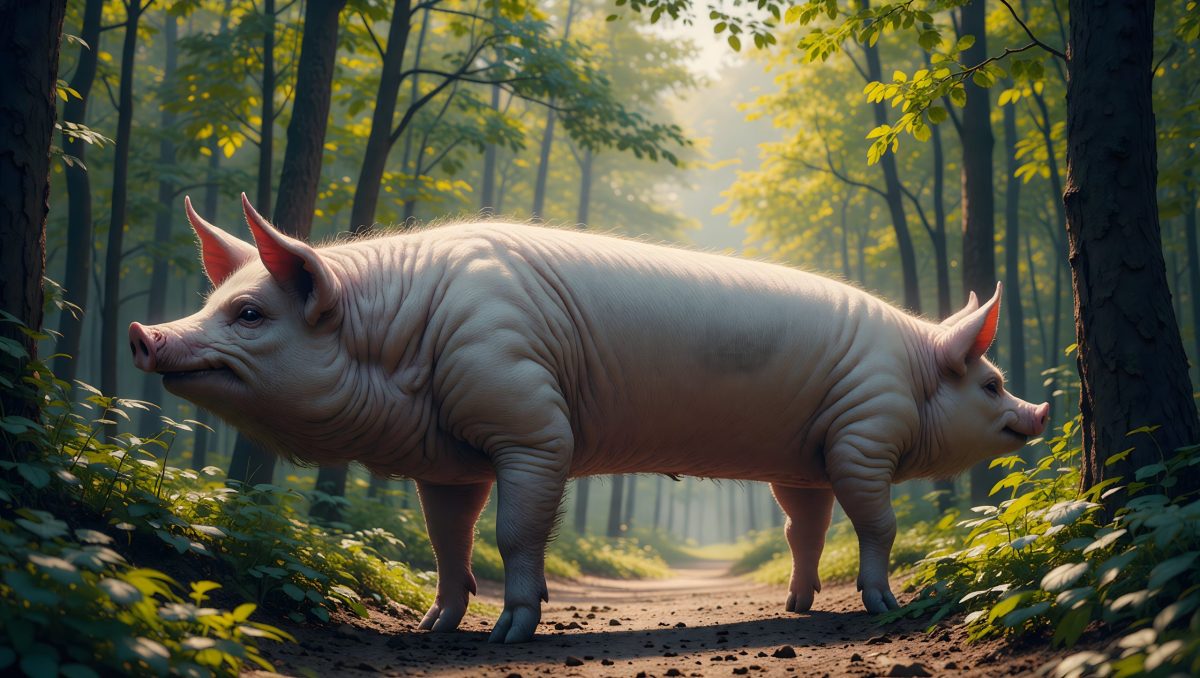
Bingfeng is a strange creature in Chinese legend that lives to the east of the Wuxian Kingdom. It is shaped like a pig but has a head at both the front and the back, and its body is black. It is described as having a demonic aura. Those who touch it may be injured. It cannot move forward normally and instead moves in a tilted manner.

It is recorded in the Classic of Mountains and Seas, including the Overseas Western Classic, and is also referred to in the Great Wilderness West Classic, where it is called Ping Feng or Ping Peng and regarded as the same being. Notes connected to these texts describe it as a beast form and compare it with other creatures having two heads, such as snakes or birds, saying they share the same type of form. Another note describes it as resembling a totem-like dried body of two pigs.

A two-headed pig resembling this creature was also depicted in later printed illustrations.


Gallery


Sources

Wikipedia contributors. (n.d.). 并封. In Wikipedia, from https://zh.wikipedia.org/wiki/%E5%B9%B6%E5%B0%81


Interpretive Lenses

Religious Readings
  • Christian Ascetic Deep Dive
Philosophical Readings
  • Nietzschean Deep Dive
Psychological Readings
  • Jungian Deep Dive
Esoteric Deep Dive
  • Hermetic Deep Dive
Political / Social Readings
  • Marxist Deep Dive

Shan

Tradition / Region: Chinese Mythology
Alternate Names: Shan Zi
Category: Dog

The Myth

In ancient Chinese legend there is mention of a strange creature known as Shan.

It was described as a dog with the face of a human. When it encountered people, it was said to smile, an unsettling expression that marked it as something unnatural. The creature moved with great speed, running like the wind itself.

Its appearance was not considered fortunate. Wherever Shan was seen, it was believed that strong winds or destructive storms would soon follow. Because of this, its presence was taken as a sign that a wind disaster was near.

Thus Shan was remembered as a swift, human-faced dog of ill omen, whose smile foretold the coming of violent winds.


Gallery


Sources

Wikipedia contributors. (n.d.). 山𤟤. In Wikipedia, from https://zh.wikipedia.org/wiki/%E5%B1%B1%F0%A4%9F%A4


Interpretive Lenses

Religious Readings
  • Christian Ascetic Deep Dive
Philosophical Readings
  • Nietzschean Deep Dive
Psychological Readings
  • Jungian Deep Dive
Esoteric Deep Dive
  • Hermetic Deep Dive
Political / Social Readings
  • Marxist Deep Dive
Other
  • How to Invite The Kuygorozh

Wild Dogs

Tradition / Region: Chinese Mythology
Alternate Names: —
Category: Dog

The Myth

In strange tales recorded in old Chinese stories, there is mention of terrifying creatures known as the Wild Dogs.

They were not ordinary animals but monstrous beings said to roam battlefields and places of death. Their bodies were beast-like, while their heads resembled those of humans. They fed not on flesh alone but on the brains of the dead, tearing open skulls to suck out what lay within.

One story tells of a man named Li Hualong who fled into the mountains during a time of rebellion and war. Dead bodies lay everywhere across the land. When he saw soldiers approaching, he feared he would be captured and killed. To escape notice, he lay down among the corpses and pretended to be dead.

While he lay there, a creature approached. It had a human-like head and moved among the bodies, gnawing at their skulls and feeding on their brains. When it came near him, Li Hualong seized a stone and struck it in the mouth. The monster fled, leaving a trail of blood behind as it escaped into the wild.

Afterward, in the place where the creature had bled, two of its teeth were found. They were long, curved, and sharp, proof that the thing had not been a dream but one of the dreadful Wild Dogs that haunted the aftermath of war.

Thus these creatures were remembered as horrors of desolate places — dog-like monsters that followed death itself, feeding upon the fallen where no one dared remain.


Gallery


Sources

Wikipedia contributors. (n.d.). 野狗子. In Wikipedia, from https://zh.wikipedia.org/wiki/%E9%87%8E%E7%8B%97%E5%AD%90


Interpretive Lenses

Religious Readings
  • Christian Ascetic Deep Dive
Philosophical Readings
  • Nietzschean Deep Dive
Psychological Readings
  • Jungian Deep Dive
Esoteric Deep Dive
  • Hermetic Deep Dive
Political / Social Readings
  • Marxist Deep Dive
Other
  • How to Invite The Kuygorozh

Huodou

Tradition / Region: Chinese Mythology
Alternate Names: Disaster-Fighting Beast, Scourge beast
Category: Dog


The Myth

In ancient Chinese lore there is mention of a strange and dangerous animal known as the Huodou.

It was said to live in a distant southern land near the dark mountains. In that country, people were believed to withstand fire and even eat burning charcoal. Among them lived a creature that also fed on fire. This beast was described as black in color and shaped somewhat like a dog.

The creature’s nature was considered deeply ominous. Though it could consume flames, it was also said to breathe fire itself, spreading destruction wherever it went. Because of this, it was taken as a sign of disaster.

A later tale tells of a young man named Wu Kan, who lived alone until he discovered a mysterious white snail. When he brought it home, the snail transformed into a beautiful woman who became his wife and helped him with his household.

The local magistrate grew jealous and sought to cause them trouble. He demanded that Wu Kan bring him strange and dangerous things. Each time, the wife managed to provide what was asked. At last, the magistrate demanded a Scourge Beast.

The woman obtained a creature shaped like a dog and gave it to her husband to deliver. The beast consumed fire, but what it expelled afterward was also fire. Soon after it was brought to the magistrate’s house, flames spread from it and the building burned completely to ashes.

After this, Wu Kan and his wife disappeared, and nothing more was known of them.

Thus the Scourge Beast was remembered as a black, dog-like creature tied to fire and destruction — a being that could swallow flames yet also bring ruin wherever it appeared.


Gallery


Sources

Wikipedia contributors. (n.d.). 禍斗. In Wikipedia, from https://zh.wikipedia.org/wiki/%E7%A6%8D%E6%96%97


Interpretive Lenses

Religious Readings
  • Christian Ascetic Deep Dive
Philosophical Readings
  • Nietzschean Deep Dive
Psychological Readings
  • Jungian Deep Dive
Esoteric Deep Dive
  • Hermetic Deep Dive
Political / Social Readings
  • Marxist Deep Dive
Other
  • How to Invite The Kuygorozh

Tiangou

Tradition / Region: Chinese Mythology
Alternate Names: Heavenly Dog
Category: Dog


The Myth

Tiangou, the Heavenly Dog, is a powerful creature of the sky known throughout ancient China.

In one form, it is seen as a dark, enormous dog that appears during eclipses. When the Sun or Moon suddenly darkens, people said it was because Tiangou had risen into the heavens and begun to devour it. The creature was believed to swallow the heavenly body, causing the sky to dim until the light returned again.

One story tells that after the hero Hou Yi shot down the nine extra suns that scorched the world, he received an elixir of immortality from the Queen Mother of the West. Before he could drink it, his wife Chang’e secretly consumed the potion herself and began to float upward toward the heavens.

At that moment, Hou Yi’s black dog entered the room and licked the remaining drops of the elixir. The magic transformed it. Growing larger and more powerful, the dog leapt into the sky and chased after Chang’e. Terrified, she fled to the Moon and hid there.

The dog followed her and swallowed the Moon itself, taking Chang’e with it.

When the Queen Mother of the West learned what had happened, she seized the creature. Recognizing that it had once belonged to Hou Yi, she did not destroy it. Instead, she ordered the dog to release the Moon and Chang’e, and she set it as a guardian of the gates of Heaven. From then on, it was known as Tiangou, the Heavenly Dog.

In other traditions, Tiangou is not only feared but also respected. In a more benevolent form it appears as a celestial guardian, linked to the stars and said to protect against misfortune, robbers, and danger.

Another story tells that a divine archer named Zhang Xian watches the sky for the Heavenly Dog. When Tiangou threatens the heavens, Zhang Xian draws his bow and shoots to drive it away, protecting both the sky and the lives of the people below.

Thus Tiangou is remembered as both a devourer of the Moon and a guardian of Heaven — a celestial dog whose presence explains the darkening of the sky and whose power reaches across both myth and the stars.


Gallery


Sources

Wikipedia contributors. (n.d.). Tiangou. In Wikipedia, from https://en.wikipedia.org/wiki/Tiangou


Interpretive Lenses

Religious Readings
  • Christian Ascetic Deep Dive
Philosophical Readings
  • Nietzschean Deep Dive
Psychological Readings
  • Jungian Deep Dive
Esoteric Deep Dive
  • Hermetic Deep Dive
Political / Social Readings
  • Marxist Deep Dive

Rhinoceros Dog

Tradition / Region: Chinese Mythology
Alternate Names:
Category: Dog


The Myth

In old Chinese tales there is mention of a rare and mysterious creature known as the Rhinoceros Dog, an animal believed to bring prosperity to the household that possesses it.

One story tells that during the reign of Emperor Hui of the Jin dynasty, a man named Huai Yao lived in Lou County in the region of Wu. One day his family began hearing the sound of a dog barking from beneath the ground. When they searched for the source, they found only a tiny hole in the earth, no larger than the burrow of a worm.

Curious, Huai Yao prodded the ground with a stick and then began digging. After digging several feet down, he struck something. Continuing to dig, he uncovered two small puppies, one male and one female. Their eyes had not yet opened, and though young, they seemed larger than ordinary newborn dogs.

He took them home and fed them, and soon word spread. Neighbors gathered to see the strange animals. Among them was an elder who, upon seeing the pups, declared that they were Rhinoceros Dogs. He told Huai Yao that whoever obtained such creatures would see their family prosper and flourish, and that they should be carefully raised.

From then on, the Rhinoceros Dog was remembered as a rare and fortunate animal, one that might appear in unexpected places and bring wealth and good fortune to those who found it.


Gallery


Sources

Wikipedia contributors. (n.d.). 犀犬. In Wikipedia, from https://zh.wikipedia.org/wiki/%E7%8A%80%E7%8A%AC


Interpretive Lenses

Religious Readings
  • Christian Ascetic Deep Dive
Philosophical Readings
  • Nietzschean Deep Dive
Psychological Readings
  • Jungian Deep Dive
Esoteric Deep Dive
  • Hermetic Deep Dive
Political / Social Readings
  • Marxist Deep Dive

Peng Hou

Tradition / Region: Chinese Mythology
Alternate Names:
Category: Dog


The Myth

Peng Hou is a strange spirit said to dwell inside ancient trees. It is believed that when a tree has stood for a thousand years, something may begin to live within it, and that being is called Peng Hou.

One story tells of a man who ordered a great camphor tree to be cut down. As the woodcutters struck the trunk, something astonishing happened — the tree began to bleed, as if it were alive. From the split in the trunk a creature suddenly leapt out.

It had a human-like head but the body of a black dog. It had no tail, and its appearance was both unsettling and uncanny, as though it belonged to neither the world of beasts nor that of spirits.

The creature was captured. Instead of fearing it, the people cooked and ate it. Those who tasted the flesh said it was very similar to dog meat.

Peng Hou was known in old Chinese records of strange beings, where it was counted among the spirits and monsters that inhabit the natural world. It was said to be one of the hidden lives that grow alongside trees, emerging only when the tree is cut or disturbed.

In later times the story traveled beyond China, and tales of tree-dwelling creatures shaped like dogs appeared in other lands as well. Some believed that echoes heard in mountains or forests might be caused by such spirits moving unseen among the trunks.

Thus Peng Hou is remembered as a being born from ancient wood — a creature that sleeps within trees for centuries, only revealing itself when the axe splits the living trunk.


Gallery


Sources

Wikipedia contributors. (n.d.). 彭侯. In Wikipedia, from https://zh.wikipedia.org/wiki/%E5%BD%AD%E4%BE%AF


Interpretive Lenses

Religious Readings
  • Christian Ascetic Deep Dive
Philosophical Readings
  • Nietzschean Deep Dive
Psychological Readings
  • Jungian Deep Dive
Esoteric Deep Dive
  • Hermetic Deep Dive
Political / Social Readings
  • Marxist Deep Dive