Ostrovets Tsmok

Tradition: Belarusian Mythology, Lithuanian Mythology
Alternative Names: Ostrovets Tsmok, Tsmok
Category: Dragon, Cow


The Myth

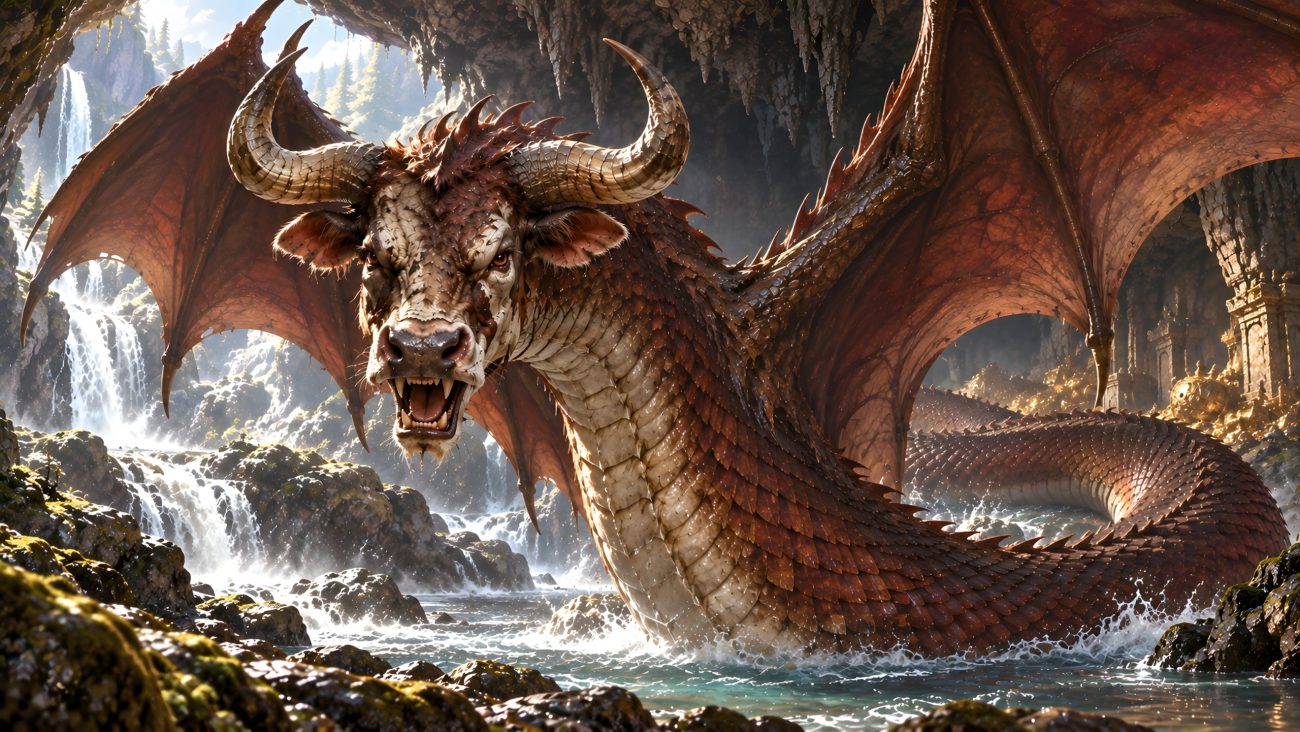
The Ostrovets Tsmok has the body of a snake and the head of a cow. It is a strong and frightening creature, with a large body and horns resembling those of a cow. The Tsmok lives in forests and underground burrows, and is associated with hidden places, rivers, caves, and buried treasures.

The most famous Ostrovets Tsmok comes from the village of Voleikiški in the Ostrovets district. It was said to live in ancient times in a remote forest near the village. One legend says that it was a very kind creature, despite its frightening appearance. It helped people who were poor, and it was said to have guarded treasure hidden underground.

Another tradition says that the Tsmok was a dangerous creature. It lived in a forest or underground and would sometimes emerge from its burrow. People were warned not to approach it. Some stories describe a red snake living beneath the ground, with one such creature inhabiting each forest.

One local story tells of children who were forbidden to swim in the Viliya because a cow-headed creature lived there. The Tsmok was said to emerge from the water and suck the blood of swimmers.

Other stories connect the Tsmok with cattle. In one tale, a child was herding cows when he suddenly heard a sharp mooing sound. He followed the sound and discovered that one of the cows had a strange bite on its lip. No one could explain what had bitten it.

The Tsmok was also associated with hidden treasure. One legend says that gold was concealed beneath a pile of stones in the forest. The treasure was guarded by a Tsmok, which frightened away anyone who attempted to retrieve it. People said that whoever was brave enough to defeat the Tsmok could take the treasure.

The creature was particularly associated with underground places. Stories describe Tsmoks living in burrows and caves, sometimes hiding beneath hills or near rivers. One tradition even says that Tsmoks could construct stone barriers in rivers, marking dangerous shallows and places where the water was difficult to cross.

The Ostrovets Tsmok was therefore connected with both the natural landscape and the hidden world beneath it: forests, rivers, underground passages, buried treasure, cattle, and dangerous places.


Sources

“Ostrovetskii Tsmok.” New Bestiary (Bestiary.us). Accessed September 19, 2026. https://www.bestiary.us/ostrovetskii-tsmok

Lepel Tsmok

Tradition: Belarusian Mythology
Alternative Names: Lepel Tsmok, Lepel Dragon, Poozersky Tsmok
Category: Dragon, Deer


The Myth

The Lepel Tsmok is one of the most famous Belarusian tsmoks, a type of aquatic dragon associated with the Poozerie region. It is said to inhabit Lake Lepel and the surrounding waterways of northern Belarus.

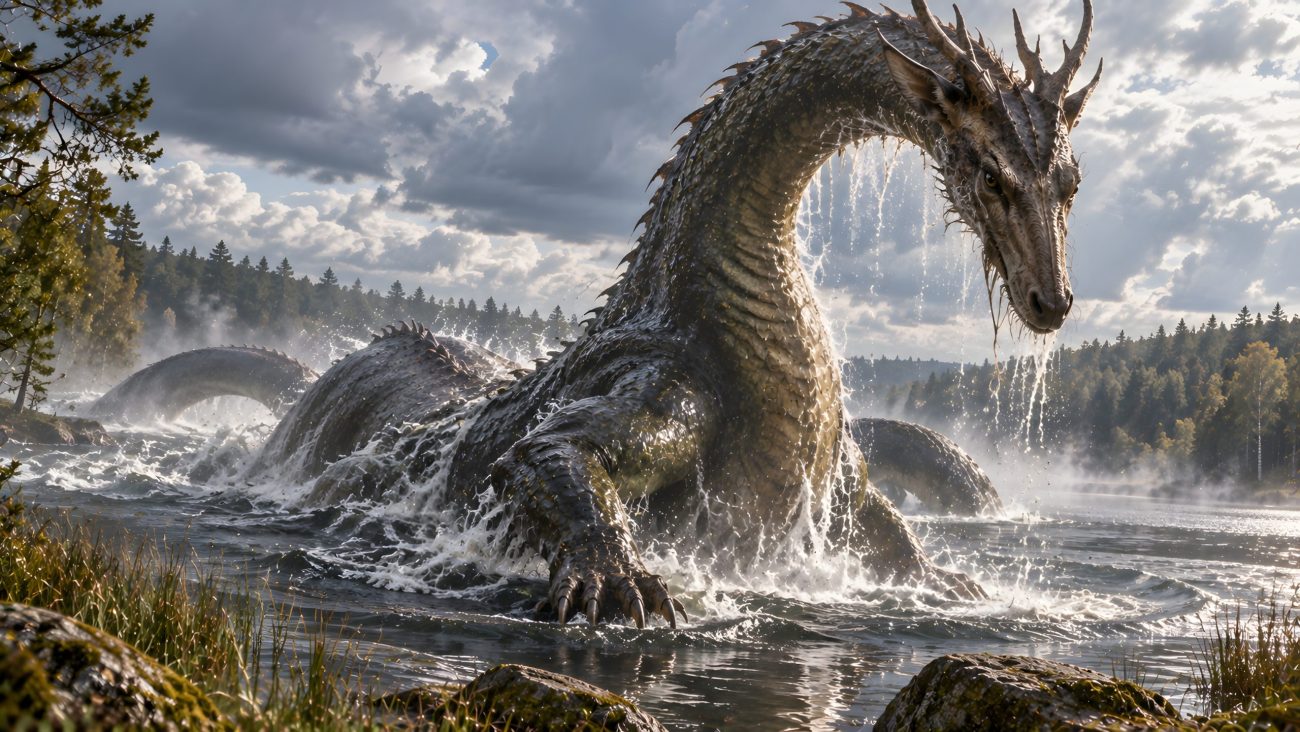
Descriptions of the creature vary, but it is generally imagined as a gigantic serpent-like or dragon-like animal. One description compares it to a large snake with a long neck and a head resembling that of a deer, with a mouth full of sharp teeth. Another describes a creature resembling a gigantic fish, with a head like a horse or a deer. Accounts also give it enormous size and strength, with some saying that its body could stretch for great distances through the water.

The Lepel Tsmok was traditionally feared as a powerful creature of the lakes and rivers. Stories tell of it appearing in the water, frightening people, and occasionally attacking or interfering with boats. Its appearance was often associated with mysterious disturbances in the lakes of the Lepel region.

According to local tradition, the great lake dragons appeared in the Belarusian lakes hundreds of years ago. One tradition connects their disappearance with the legend of Saint Ambrose of Kuteyn. When the saint encountered the dragons and their supernatural presence, he is said to have cursed them and driven them away from the lakes.

Another tradition tells of the disappearance of the Lepel Tsmok through the actions of the villagers themselves. The creature was said to have lived in the lake and surrounding waterways, while people avoided disturbing it. Stories nevertheless persisted of enormous creatures moving beneath the surface and occasionally appearing near the shore.

The Lepel region also preserved ritual traditions connected with the tsmok. In one account, people went to the lakes and rivers to make offerings and pray for protection. The local people regarded the waters as inhabited by powerful supernatural beings, and certain days were considered especially dangerous for entering them.

Stories of the Lepel Tsmok continued into modern times. People claimed to have seen a huge serpent-like creature swimming in the rivers and lakes of the region. Witnesses described an enormous body moving through the water, sometimes with only the head and part of the back visible above the surface.

The creature also became connected with Belarusian literary culture. Vladimir Korotkevich used the traditions surrounding the Lepel Tsmok and the ancient lake dragons in his writings, helping preserve the creature as one of the best-known legendary monsters of Belarus.


Sources

“Лепельский Цмок (Lepelskiy Tsmok).” New Bestiary (Bestiary.us). Accessed September 5, 2026. https://www.bestiary.us/lepelskij-cmok