Tradition: Roman Mythology, Greek Mythology, Italian Mythology
Alternative Names: Faunus
Category: Sheep
The Myth
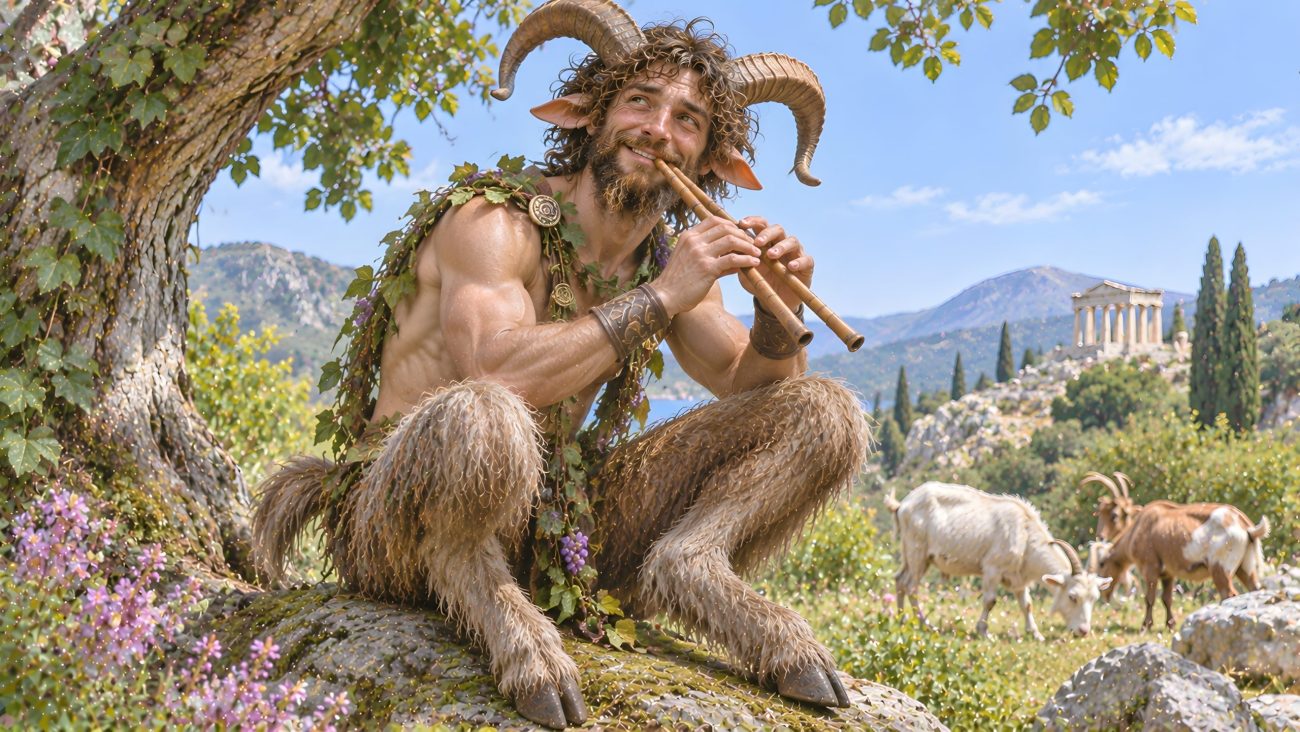
The faun is a supernatural woodland being traditionally depicted with the upper body of a human and the lower body of a goat. By the Renaissance, fauns commonly had human heads, torsos and arms, combined with goat horns, legs, tails and pointed ears.
In early Roman tradition, fauns were spirits of the countryside and rural places, regarded as lesser supernatural beings associated with their chief, Faunus. They were originally represented as naked men, but over time their appearance changed under the influence of Greek satyrs. The satyrs themselves had once been depicted with horse-like features, although later representations increasingly gave them goat-like characteristics. Their appearance was also influenced by the Greek god Pan.
Fauns were believed to inhabit wild and lonely places, where they could frighten travellers passing through remote forests and countryside. Yet they were not always hostile and could also guide people who had lost their way or needed assistance. In some versions of the fable The Satyr and the Traveller, Roman authors even replaced the satyr with Faunus.
Although fauns and satyrs eventually became closely associated, they were traditionally distinguished by their temperaments. Fauns were considered comparatively foolish and were associated with rural peace and fertility, while satyrs were portrayed as more cunning and amorous.
Their chief, Faunus, was a Roman god associated with enchanted woods and the countryside, eventually identified with the Greek god Pan. A goddess named Fauna was also connected with goat-like beings.
Sources
Wikipedia contributors. (n.d.). Faun. Wikipedia. https://en.wikipedia.org/wiki/Faun