Pesanta

Tradition / Region: Catalan Mythology
Alternate Names: —
Category: Dog


The Myth

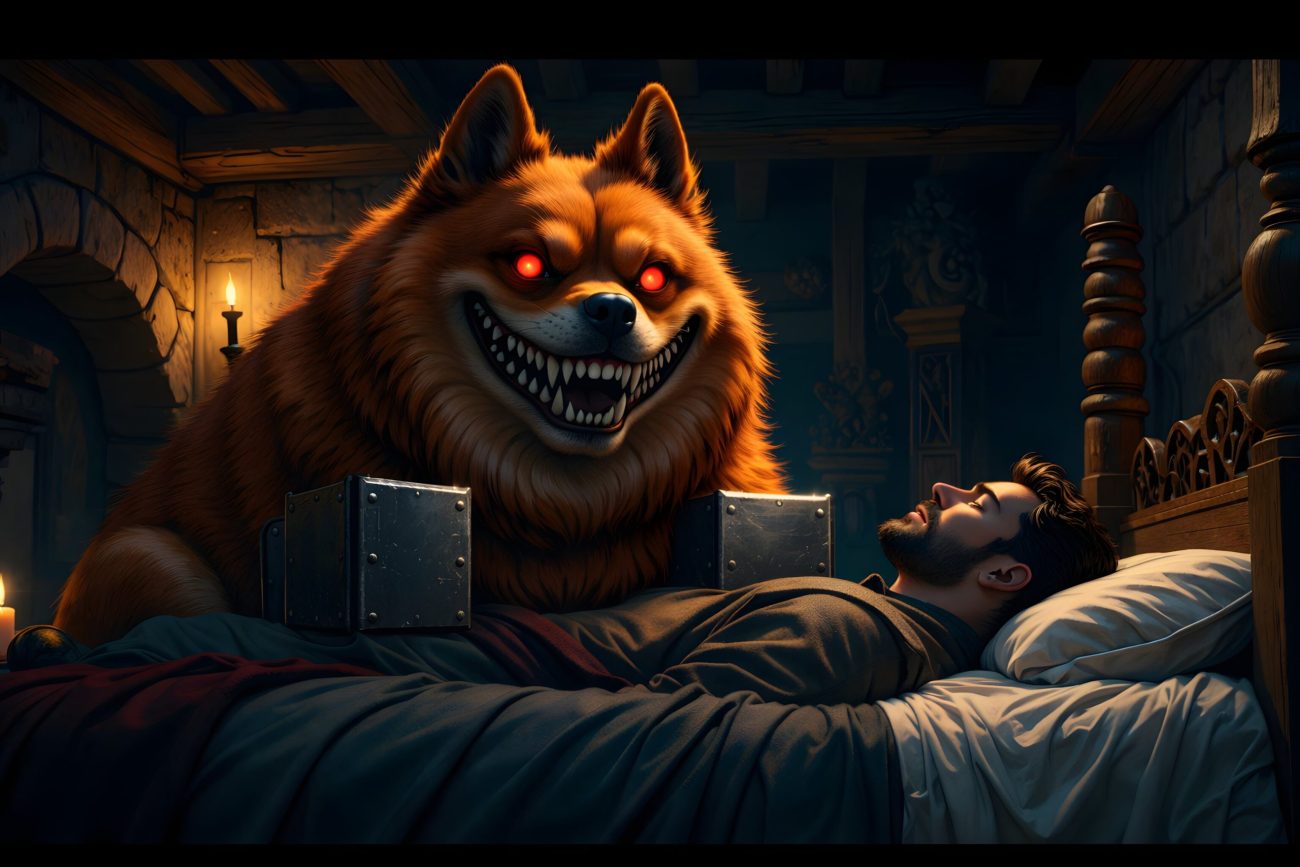
In Catalan tradition, the Pesanta is a creature of the night that enters houses while people sleep.

It is described as an enormous animal, sometimes appearing as a dog and sometimes as a cat. Its body is black and covered in thick hair, and its paws are said to be made of iron. Yet these paws are strange, for they have holes in them, marking the creature as something unnatural.

The Pesanta comes silently into homes after dark and climbs onto the chest of a sleeping person. There it presses down with its heavy weight, making it difficult to breathe. Those who suffer its visit cannot cry out or move, and they are left struggling beneath the creature as terror and nightmares fill their sleep.

By morning, the victim wakes exhausted, shaken, and often certain that something dreadful has visited in the night.

Thus the Pesanta was remembered as a night-walking beast — a great black dog-like spirit that crept into homes and weighed upon sleepers, bringing fear, suffocation, and dark dreams.


Gallery


Sources

Wikipedia contributors. (n.d.). Pesanta. In Wikipedia, from https://en.wikipedia.org/wiki/Pesanta


Interpretive Lenses

Religious Readings
  • Christian Ascetic Deep Dive
Philosophical Readings
  • Nietzschean Deep Dive
Psychological Readings
  • Jungian Deep Dive
Esoteric Deep Dive
  • Hermetic Deep Dive
Political / Social Readings
  • Marxist Deep Dive
Other
  • How to Invite The Kuygorozh

Candide Chapter 1 Maximus the Confessor (c. 580–662)

You place before me a passage from Candide—and you ask what I think. Good. This text is not innocent, though it wears the mask of simplicity.


On Pangloss and the lie of easy harmony

What you read is a parody of providence.

Pangloss speaks of causes and ends, but he knows neither true cause nor true end. He mistakes necessity for goodness. He says: things cannot be otherwise than they are—and from this he dares to conclude that all is for the best.

This is not wisdom. This is fatalism dressed as philosophy.

In the faith I confess, the world is created good, yes—but it is not finished, nor mechanically determined. Creation groans because it is called toward transfiguration, not frozen in its present state. To say “all is for the best” while ignoring suffering, disorder, and misuse of freedom is to excuse evil rather than heal it.

Providence is not a diagram.
Providence is a patient struggle toward deification.


On Candide’s innocence

Candide is gentle, receptive, unformed. He believes because he has not yet discerned. This is not sin—it is spiritual childhood.

But notice: his innocence is quickly wounded. Why?

Because false teachings collapse at the moment of embodied reality. The kiss behind the screen shatters the metaphysical castle. Pangloss’s tidy explanations cannot survive desire, shame, power, or violence.

This is always so.

When philosophy does not account for eros, suffering, and freedom, it becomes a toy of the comfortable.


On Cunegonde, curiosity, and the fall

Cunegonde’s curiosity is not evil. Desire for knowledge is natural. But knowledge severed from virtue becomes confusion.

She learns “causes and effects” without wisdom. What follows is not illumination, but disorder—blushing, trembling, secrecy, punishment. Not because bodies are evil, but because no one taught them how desire is meant to ascend.

Eros is meant to rise toward God.
Here it collapses inward, then downward.


On the Baron and false order

The Baron represents authority without logos—power that preserves appearances but understands nothing. He sees “cause and effect,” but not meaning. Thus he kicks Candide out rather than heal or instruct.

Where truth is shallow, punishment becomes the only language.


The deeper wound Voltaire is pointing to

This chapter exposes a world where:

  • God is reduced to a theoretical guarantee
  • Reason is detached from ascesis
  • Morality is replaced by social performance
  • Suffering is explained instead of redeemed

Voltaire mocks Pangloss—but he also reveals a real danger:
Explaining the world instead of transforming the self.


What I would say to you, personally

Do not cling to systems that promise peace without struggle.
Do not trust teachings that justify the world as it is without calling you to change.

Truth is not “all is for the best.”
Truth is: all is called toward the Good—but only through freedom, love, and the cross.

Alicanto

Tradition / Region: Chilean Mythology
Alternate Names: —
Category: Bird


The Myth

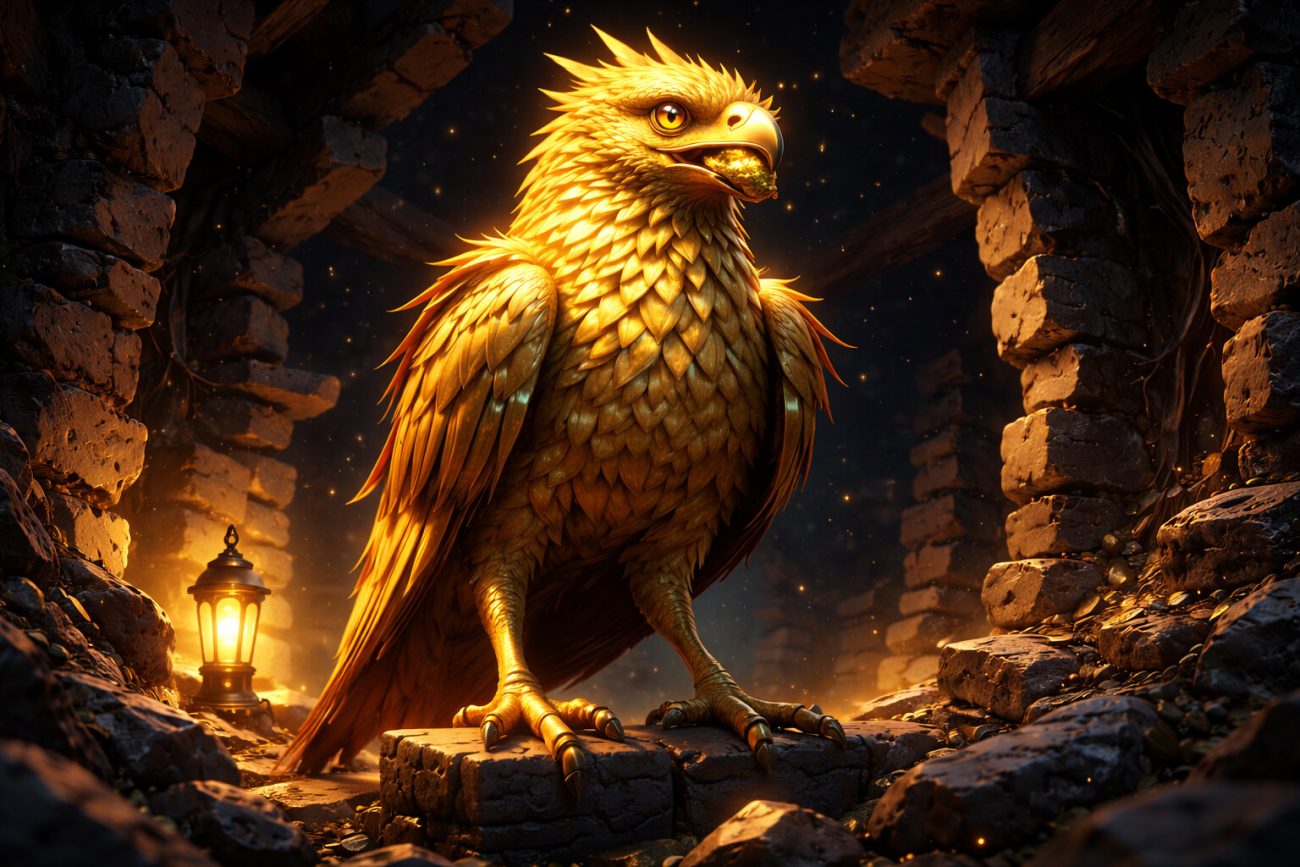
Deep within the mountains of Chile lives the Alicanto, a radiant bird that feeds not on seeds or flesh, but on gold and silver. Wherever rich veins of ore lie hidden, the Alicanto is said to wander through tunnels and ravines, its wings glowing with metallic light. Some shine like molten gold, others like polished silver, and their brilliance is strong enough to illuminate the darkest mine.

Though it has wings, the Alicanto cannot fly. The more precious metal it consumes, the heavier it becomes. As its body grows dense with wealth, its movements slow, and it walks carefully through the mountain paths, shining ever more brightly as its freedom fades.

Miners who see its glow believe they are close to great riches, for the Alicanto appears only where the earth is full of treasure. Many have followed its light, hoping it would guide them to fortune. But the bird is dangerous to pursue. If it senses greed or realizes it is being watched, it suddenly extinguishes its glow and disappears, leaving the seeker lost in complete darkness.

Sometimes the Alicanto continues to shine while being followed. In such cases, it may lead miners deeper and deeper into the mountains—toward collapsed tunnels, sheer drops, or places from which there is no return. Those who survive say that only prayer, humility, and the absence of greed can save a person led astray by its light.

The Alicanto does not attack, speak, or judge. It does not choose who lives or dies. It merely shines. In this way, it embodies the lure of hidden wealth itself: beautiful, silent, and indifferent, offering light that may reveal riches—or ruin—to those who follow it too far.


Sources

A Book of Creatures contributors. (2015). Alicanto. In ABookOfCreatures.com, from https://abookofcreatures.com/2015/06/24/alicanto/


Shojo

Tradition / Region: Chinese-, and Japanese Mythology
Alternate Names: Kaishojō
Category: Monkey, Alcohol


The Myth

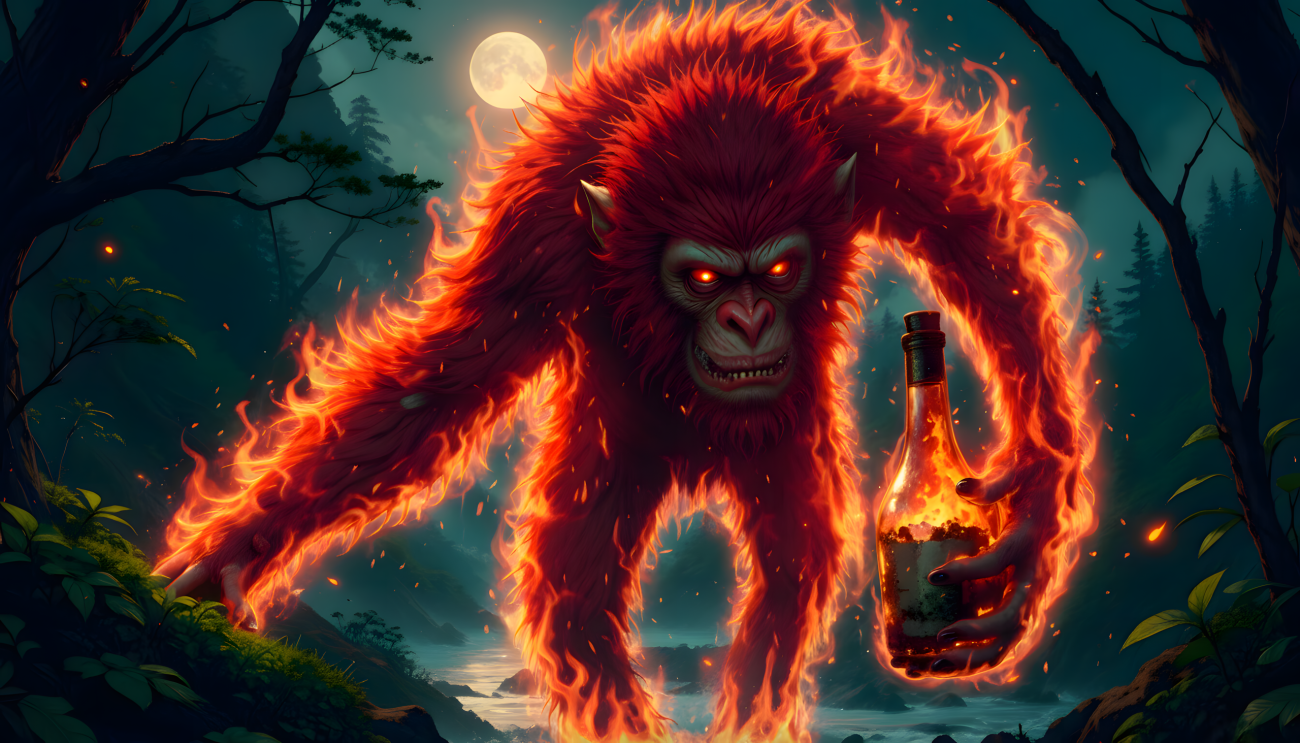
Shojo is a red-haired, red-bodied being that speaks like a human and loves alcohol above all else. Its hair burns like flame, and its blood is said to be so vividly red that cloth dyed with it becomes a special crimson known as shojohi.

Shojo dwell near the sea, and many stories tell of their fondness for sake. Along the coasts, people say that when sake is brought close to the shore, a Shojo will inevitably appear. In one tale, a Shojo rose from the sea after discovering a sake barrel buried in the sand. It drank eagerly until it became so drunk that it toppled into the barrel and could not climb back out.

In another story, a Shojo living beneath the waves heard the sound of a young man’s flute drifting across the sea. Enchanted by the music, she emerged and gifted him a fishing hook tied with strands of her own hair. With this hook, he could catch any fish he wished, without bait, for as long as he lived.

Elsewhere, a castle lord ordered huts to be filled with sake barrels along the shore. When Shojo came up from the sea to drink, they became intoxicated and were easily captured, just as planned.

Some Shojo are said to be female, others male, and some appear as stranger sea beings known as kaishojō, creatures that blur the line between Shojo and ghostly spirits of drowned sailors. In certain regions, kaishojō are feared as ominous sea apparitions, while in others they are playful and generous.

Shojo also appear in ritual and performance. In lion dances passed down in western Japan, a kaishojō leads the procession, commanding the beasts with authority. Because of their bright red color, Shojo became associated with protection against disease, especially smallpox, and dolls and masks in their likeness were used as charms to ward off evil.

Thus Shojo remain beings of contradiction—joyful and dangerous, drunken and magical—emerging from the sea with laughter, red hair streaming, and sake never far from their grasp.


Gallery


Sources

Tyz-Yokai Blog contributors. (n.d.). [Title of entry]. In TYZ-Yokai Blog, from https://tyz-yokai.blog.jp/archives/1010654279.html


Interpretive Lenses

Religious Readings
  • Christian Ascetic Deep Dive
Philosophical Readings
  • Nietzschean Deep Dive
Psychological Readings
  • Jungian Deep Dive
Esoteric Deep Dive
  • Hermetic Deep Dive
Political / Social Readings
  • Marxist Deep Dive
Other
  • How to Invite The Shojo

Flower Spirits (Huā Yāo / Huā Xiān) — How To Invite This Spirit

Tradition / Region: Chinese folklore
Alternate Names: Huā Yāo (花妖), Huā Xiān (花仙), Huā Jīng (花精)
Category: Plant Spirit / Flower Spirit


The Kind of Person This Spirit Draws Near To

A person who moves slowly enough for beauty to notice them.

Not someone chasing pleasure or novelty, but someone capable of sustained attention and care. This person does not rush growth, demand results, or exploit what is delicate. They accept impermanence without resentment.

They understand that nothing beautiful owes them permanence.


How This Person Thinks

Mental habits

  • Attentive, lingering thought
  • Sensitivity to small changes
  • Appreciation without urgency

How they approach ideas

  • Ideas are cultivated, not extracted
  • Meaning is allowed to ripen
  • Insight is welcomed gently

How they relate to uncertainty

  • Uncertainty is natural
  • Outcomes are secondary to process

What they obsess over / ignore

  • Obsess over harmony, timing, and balance
  • Ignore ambition, conquest, and haste

How This Person Deals With Problems

  • They tend rather than fix
  • Adjust conditions instead of forcing solutions
  • Allow problems to reveal themselves over time

Response to obstacles

  • Patience
  • Care
  • Withdrawal from aggression

They do not dominate difficulty —
they outlast it.


How This Person Responds to Stress

Stress behavior

  • Slowing down
  • Seeking quiet environments
  • Returning to routine care

Collapse or sharpening

  • Stress sharpens gentleness rather than force

What they cling to

  • Ritual
  • Daily attention
  • Small acts of maintenance

Emotional Landscape

When Calm

  • Soft
  • Receptive
  • Present

When Angry

  • Anger fades quickly
  • Expressed as sadness or disappointment

When Afraid

  • Fear leads to withdrawal, not attack

When Joyful

  • Joy is quiet and sustained
  • Never grasping

Relationship to Time

  • Seasonal
  • Cyclical
  • Oriented toward long durations

Time is cultivation, not pressure.


Relationship to Pleasure and Comfort

  • Pleasure is aesthetic, not consumptive
  • Comfort is modest and clean
  • Excess dulls sensitivity

Beauty is something to keep alive, not use up.


Living Space

  • Ordered but not rigid
  • Natural light
  • Living plants or traces of nature

The space breathes.


Relationship Patterns

  • Gentle intimacy
  • Emotional attentiveness
  • Care without possession

Love is offered without demand.


How This Person Works

  • Slow, consistent rhythm
  • Comfortable with repetition
  • Little interest in scale or recognition

Work is tending, not producing.


What Makes the Spirit Stay

  • Long-term care without expectation
  • Respect for cycles of bloom and decline
  • Protection of fragile things
  • Willingness to let go

Flower spirits remain where beauty is allowed to age.


What Makes the Spirit Leave

  • Exploitation of beauty
  • Forcing growth or affection
  • Neglect disguised as freedom
  • Treating impermanence as failure

When beauty is rushed or consumed, the spirit withers.


The Cost of Keeping This Spirit Close

  • Emotional vulnerability
  • Exposure to loss
  • A life that cannot be armored

What is lost is hardness.
What remains is sensitivity that feels everything.


Final Human–Spirit Portrait

“A life lived slowly enough that beauty dares to appear — and honestly enough to let it fade without protest.”

Jarjacha

Tradition / Region: Andean Folklore (Southern Peru; Ayacucho, Junín)
Alternate Names: —
Category: Llama / Shapeshifter / Mountain dweller


The Myth

In the mountain regions of southern Peru, especially around Ayacucho, people speak of a nocturnal creature known as the Jarjacha. It is said to appear after nightfall, wandering the hills and remote paths near villages. Its presence is announced by a piercing call—“Jar-jar-jar” or “Qar-qar-qar”—a sound that echoes through the mountains and strikes fear into those who hear it.

According to tradition, the cry of the Jarjacha signals that a grave transgression has occurred within the community, most often incest. The creature is believed to be the transformed result of such an act, condemned to roam the night and reveal the hidden wrongdoing through its voice. When the call is heard, villagers know that someone nearby carries a secret that has violated the deepest social and moral boundaries.

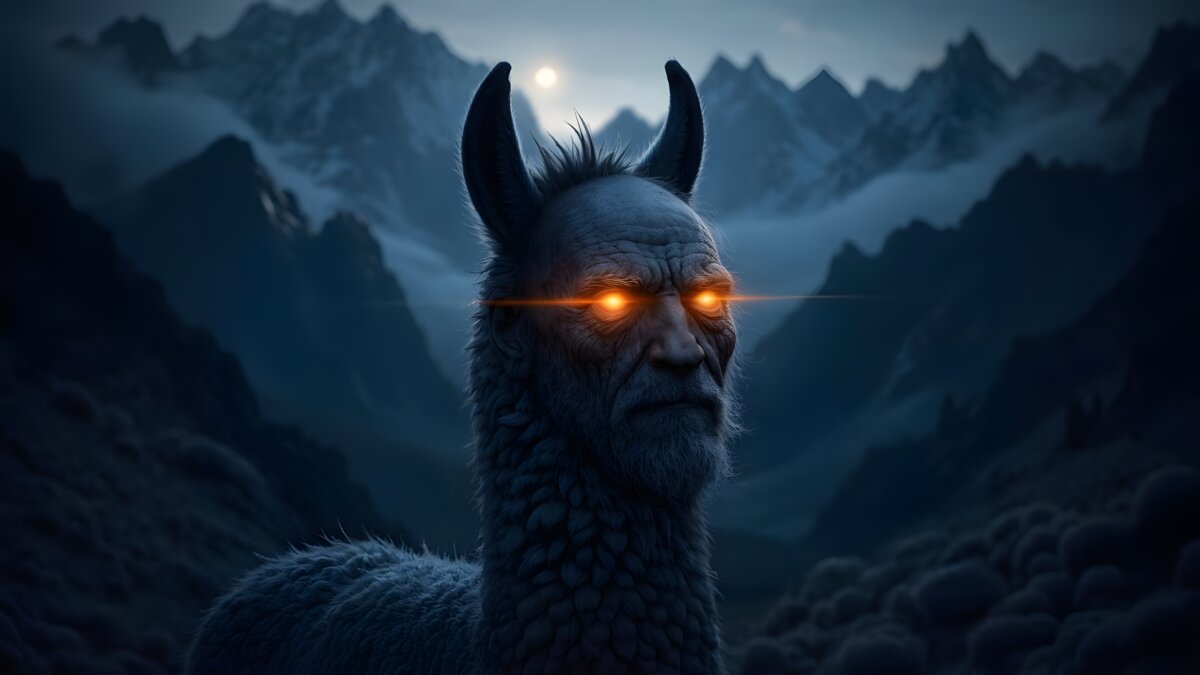
Descriptions of the Jarjacha vary by region. Most accounts connect it to llamas or alpacas. Some say it appears as a llama with a human head; others describe it as a two-legged creature resembling a llama or alpaca, sometimes with two or even three heads. In certain stories, its glowing eyes shine unnaturally in the darkness, making it unmistakable even from a distance.

The Jarjacha is not bound to a single form. Some tales claim it can briefly disguise itself as a dog or even as a human, allowing it to move unnoticed among people before returning to its true shape at night. Though rarely said to attack directly, its appearance brings fear, shame, and unrest to the community.

When dawn comes, the Jarjacha disappears, retreating into the mountains until night falls again. Its cries linger in memory, a reminder that hidden acts cannot remain concealed forever, and that the night itself will give them voice.


Interpretive Lenses

Religious Readings
  • Christian Ascetic Deep Dive
Philosophical Readings
  • Nietzschean Deep Dive
Psychological Readings
Esoteric Deep Dive
  • Hermetic Deep Dive
Political / Social Readings
  • Marxist Deep Dive
Other

Jarjacha — How To Invite This Spirit

Tradition / Region: Andean folklore (Southern Peru; Ayacucho, Junín)
Alternate Names: —
Category: Nocturnal Spirit / Shapeshifter


The Kind of Person This Spirit Draws Near To

A person who breaks a fundamental boundary and then tries to live as if nothing changed.

Not impulsive, not ignorant — but someone who knowingly crosses a line that holds a community together, and then hides it. They attempt to preserve normalcy while carrying a secret that cannot coexist with it.

Jarjacha draws near where belonging is faked.


How This Person Thinks

Mental habits

  • Compartmentalized thinking
  • Strong separation between “what happened” and “daily life”
  • Persistent internal justification

How they approach ideas

  • Ideas are bent to preserve secrecy
  • Moral reasoning becomes selective

How they relate to uncertainty

  • Uncertainty feels dangerous
  • Exposure is feared more than wrongdoing

What they obsess over / ignore

  • Obsess over concealment and normal appearance
  • Ignore the social fabric their actions strain

How This Person Deals With Problems

  • Avoidance rather than repair
  • Silence rather than confession
  • Preservation of appearance at all costs

Response to obstacles

  • Deception
  • Withdrawal
  • Increased secrecy

They manage fallout —
not consequence.


How This Person Responds to Stress

Stress behavior

  • Heightened vigilance
  • Hyper-awareness of others’ reactions
  • Sleeplessness

Collapse or sharpening

  • Stress sharpens fear but erodes coherence

What they cling to

  • Routine
  • Familiar roles
  • The hope that time will bury the act

Emotional Landscape

When Calm

  • Artificial calm
  • Tension beneath surface

When Angry

  • Anger redirected outward
  • Irritation at scrutiny

When Afraid

  • Fear of recognition
  • Fear of being named

When Joyful

  • Joy feels false
  • Quickly undercut by dread

Relationship to Time

  • Nocturnal
  • Daytime is performance
  • Night brings exposure

Time splits into seen and unseen.


Relationship to Pleasure and Comfort

  • Pleasure is muted
  • Comfort is unstable
  • Rest is shallow

The body remembers what the mind hides.


Living Space

  • Familiar
  • Close-knit
  • Charged with unspoken tension

The space knows.


Relationship Patterns

  • Strained intimacy
  • Fear of closeness
  • Overcompensation through normalcy

Relationships are maintained through silence.


How This Person Works

  • Functional
  • Distracted
  • Motivated by avoidance

Work fills time —
it does not resolve.


What Makes the Spirit Stay

  • Continued concealment
  • Nighttime movement
  • Remaining within the community without repair
  • Refusal to name the transgression

Jarjacha remains where the unspeakable is lived with.


What Makes the Spirit Leave

  • Exposure
  • Confession
  • Exile or ritual separation
  • Breaking the pretense of normal belonging

Once the secret is no longer carried alone, the spirit loses voice.


The Cost of Keeping This Spirit Close

  • Loss of trust
  • Community destabilization
  • Identity fractures into roles

What is lost is belonging.
What remains is a voice that cries what cannot be said.


Final Human–Spirit Portrait

“A life lived in daylight as if whole, while the night walks the truth aloud for everyone to hear.”

Shiro (Shirodawashi)

Tradition / Region: Japanese Mythology
Alternate Names: Shirodashi, Shirodawashi (White Scrubber)
Category: Mountain Dweller, Cave Dweller


The Myth

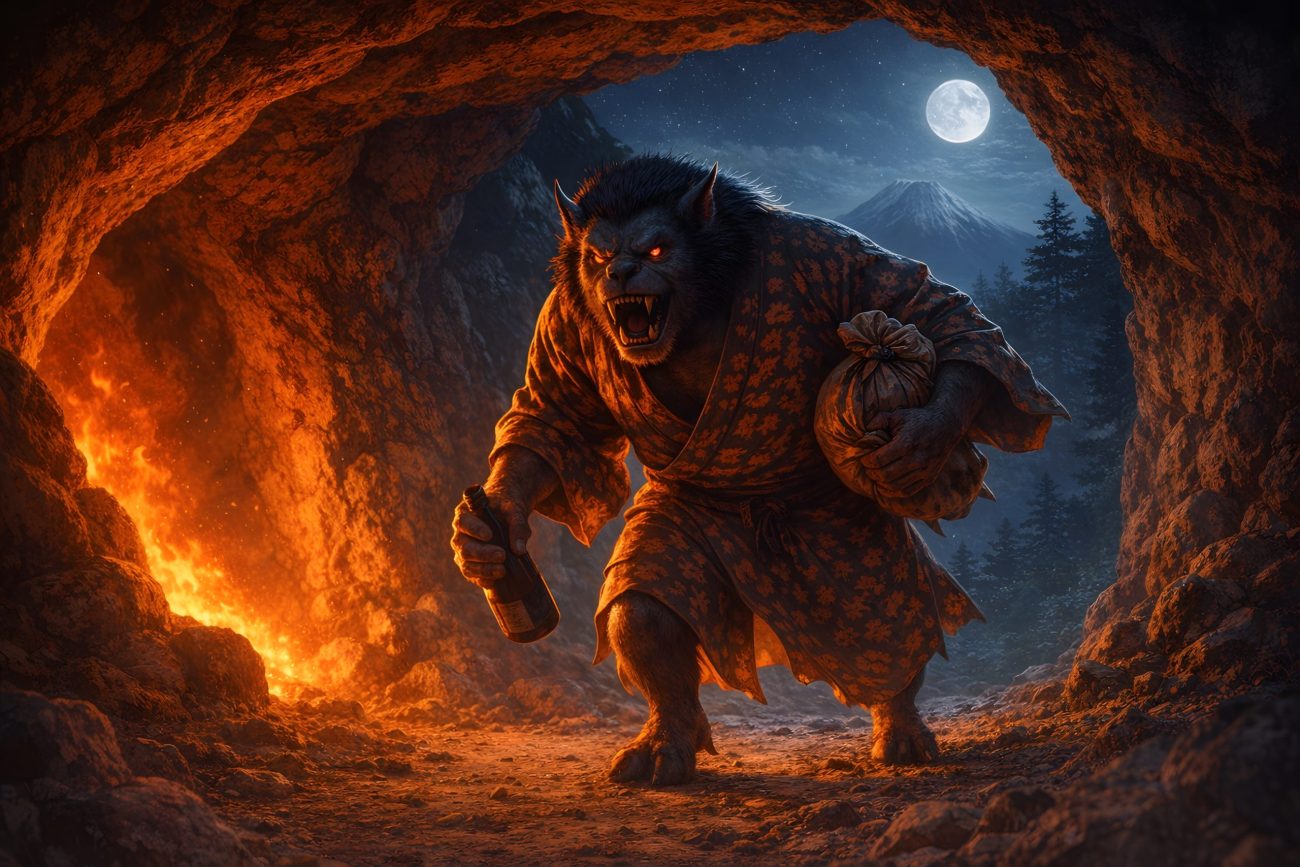
Shiro, also called Shirodawashi, was a yōkai known for his beast-like face, hooves, and a kimono patterned with scrubbing brushes. He lived in a cave near a remote mountain settlement and first appeared as a friendly and helpful figure.

A pair of monsters, Mōryō and his wife Ochiyobon, fled from Ushū to the mountains beyond Hakone and settled in a ruined house. Shiro assisted them in establishing their new home, but his friendliness soon revealed another nature. He was a heavy drinker and a troublemaker who repeatedly visited their house, demanding food, drink, and money.

Shiro became infatuated with Ochiyobon and schemed to take her for himself. One day, he borrowed a padded robe from Mōryō and never returned it. When Ochiyobon came to demand its return, Shiro claimed he had pawned it and left to retrieve it. Instead, he went to Mōryō’s shack armed with a blade and declared that Ochiyobon was now his wife. Intimidated and afraid, Mōryō surrendered, giving Shiro all his possessions, including clothing, bedding, and cosmetics.

When Ochiyobon learned what had happened, she was devastated. Shiro responded brutally, declaring that since she was now his wife, she must submit. Other monsters gathered, and even Momojii, the master of the cave dwellings, appeared. Momojii attempted to restore Ochiyobon to her husband, but Mōryō, fearing public shame, refused reconciliation and announced plans to remarry.

Abandoned, Ochiyobon grew close to Momojii, who treated her with kindness. Enraged, Shiro attacked Momojii with an oak log, but Momojii overpowered him with a massive axe and drove him away. To settle the conflict, Momojii arranged for Shiro to marry a beautiful female ghost.

Despite her beauty, the ghost suffered under Shiro’s relentless desire. Unable to endure him, she abandoned her lingering grudge against the living and wished to return to the underworld. When demons arrived to claim her, Shiro fought them fiercely. During the chaos, the ghost passed on peacefully, leaving the demons with no soul to seize. They attempted to drag Shiro to hell instead, but along the way a mysterious boy appeared and gave Shiro demon-slaying sake. The boy revealed himself to be the tanuki Kakubei, who slew the demons.

Grateful, Kakubei asked Shiro to help abduct the daughter of a fox whose marriage proposal had been rejected. Shiro eagerly agreed and joined the tanuki in attacking the wedding procession, successfully capturing the bride’s palanquin. However, he soon encountered Mikoshi Nyūdō, who defeated him and took him prisoner. Impressed by Shiro’s boldness, Mikoshi Nyūdō eventually released him, predicting he might serve a greater purpose someday.

Later, tanuki thieves stole the White Fox Jewel and entrusted it to Shiro. When monsters and foxes came to retrieve it, they heard a woman’s voice from within Shiro’s cave. Ochiyobon emerged, holding a bloodstained knife and the jewel. Having been disgraced and betrayed, she took revenge by killing Shiro and returning the treasure to its rightful owners.

Thus ended Shirodawashi, remembered as a violent, cunning, and lust-driven yōkai whose ambition and cruelty ultimately led to his downfall.