Dragon of Guflina

Tradition: Liechtenstein Mythology
Alternative Names: Guflina Dragon
Category: Dragon


The Myth

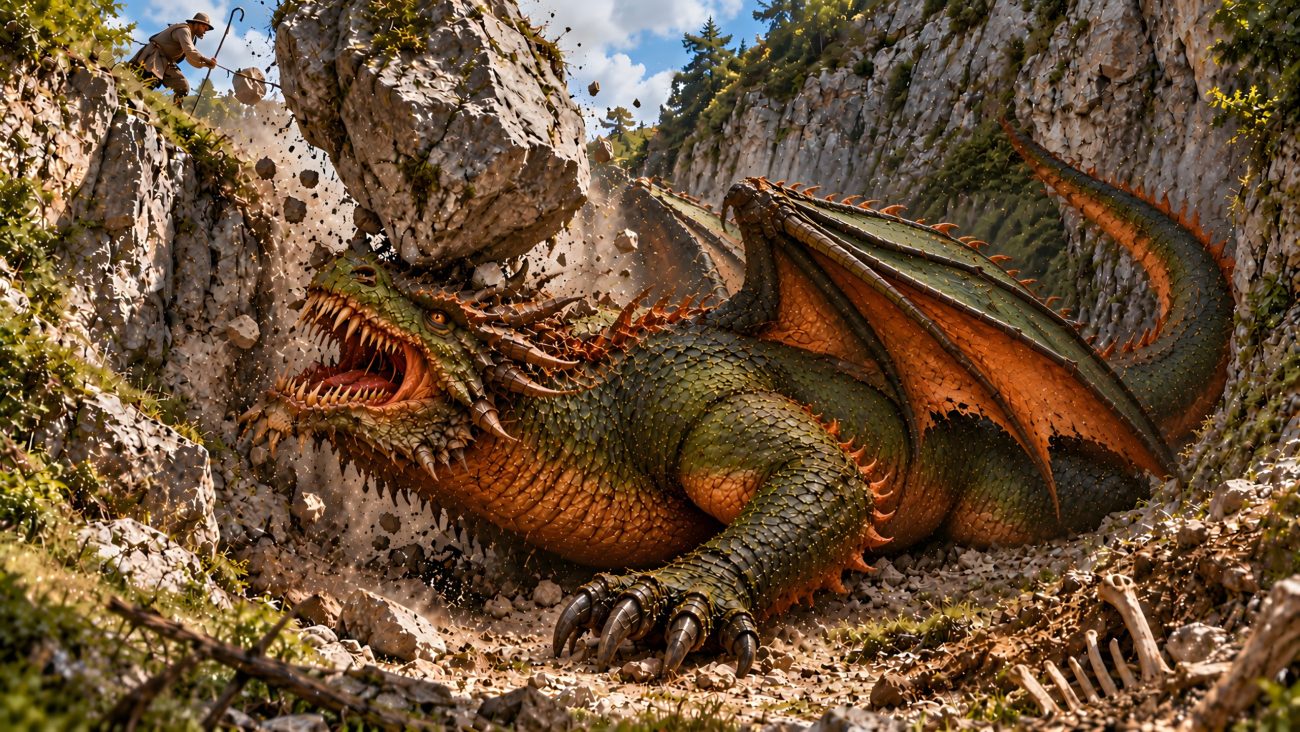
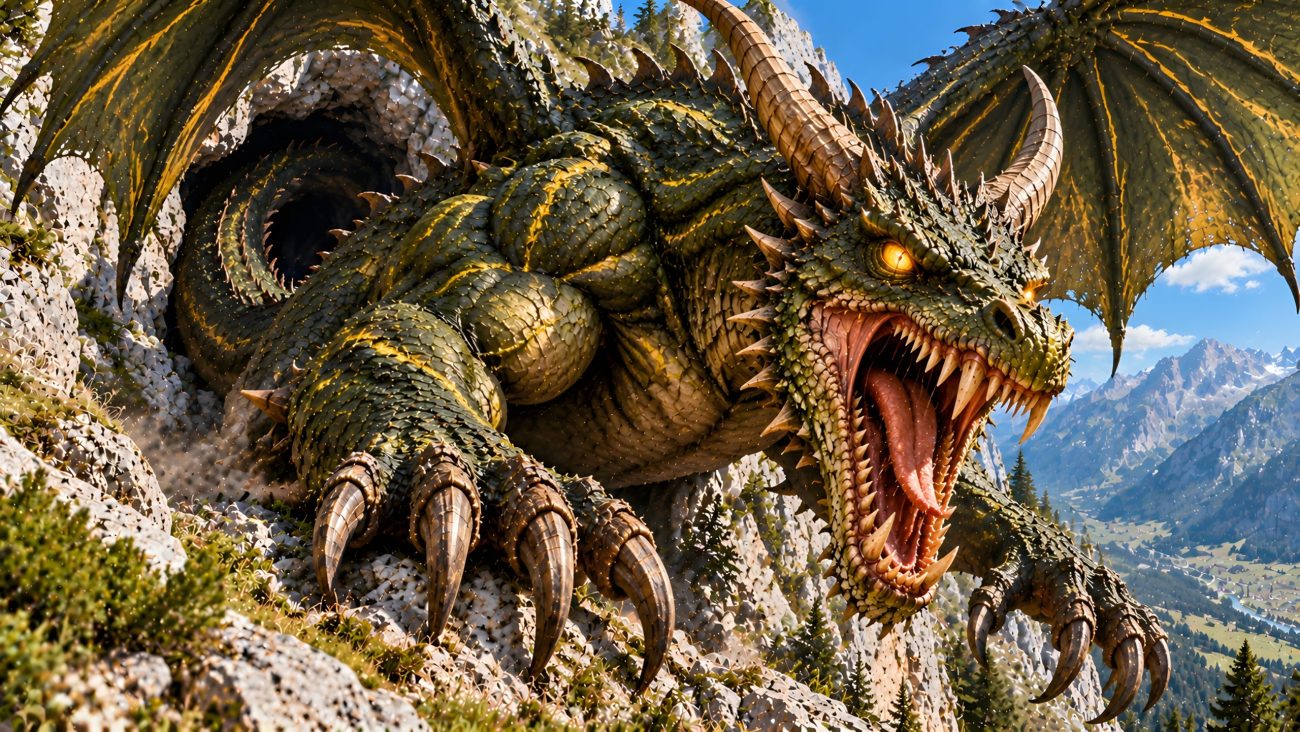
Deep within a rugged cliff on the heights of Silum lived a dragon of terrible size. It was a winged beast with horns upon its head and eyes that burned like two blazing torches.

The dragon was the terror of the miners and mountain folk. Each spring and autumn, when the herds of cattle were driven to the Silum alpine pasture and the Bargella Alp, the monster emerged from its cave at night and attacked the animals, causing great destruction. The attacks brought misery and fear to the people who depended upon the mountain pastures.

At last, the Giant of Guflina dared to face the beast. The dragon emerged from its cave and lunged at the giant, snorting with fury. It struck him heavily across the shoulders and attempted to bury its powerful claws in his flesh and strangle him.

The giant endured the attack. With a sudden movement, he seized the dragon by the neck and drove it against the rocky cliff with both hands. He squeezed with such force that the dragon’s bones cracked, and its throat released a terrible howl that echoed across the mountains.

The miners rushed to the scene and found the dragon lying dead upon the ground. A great cheer rose through the Alpine valleys. With the monster slain, the mountain folk could once again drive their herds safely to the high pastures.


Sources

“Guflina.” SAGEN.at – Traditionelle Sagen aus Liechtenstein. Reproduced by SAGEN.at.
https://www.sagen.at/texte/sagen/liechtenstein/seger/guflina.html
Dragon of Bleika

Tradition: Liechtenstein Mythology
Alternative Names: Dragon of the Bleika
Category: Dragon


The Myth

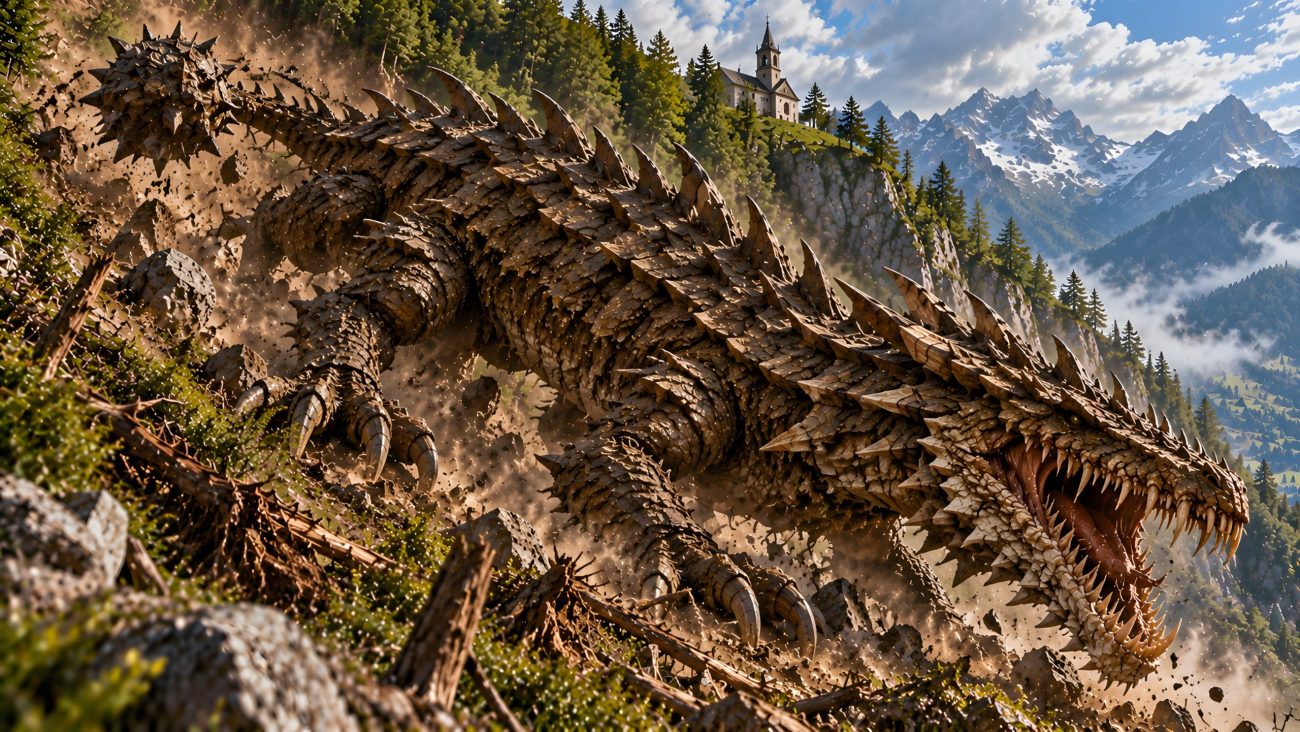
In the Bleika, a tract of land north of the church of Triesenberg covered with beech forest and meadows, a dragon is said to lie hidden beneath the earth.

The dragon will remain there until the stones of the chapels at Litze and St. Wolfgang at Meierhof have all fallen from their places. When not a single stone remains upon another, the dragon will break free, and the entire Bleika will slide down into the valley as a gigantic landslide.


Sources

“Bleika.” SAGEN.at – Traditionelle Sagen aus Liechtenstein. Reproduced by SAGEN.at.
https://www.sagen.at/texte/sagen/liechtenstein/seger/bleika.html


Lindworm of Laubwinkel

Tradition: Liechtenstein Mythology
Alternative Names: Lindworm of Mäls
Category: Dragon


The Myth

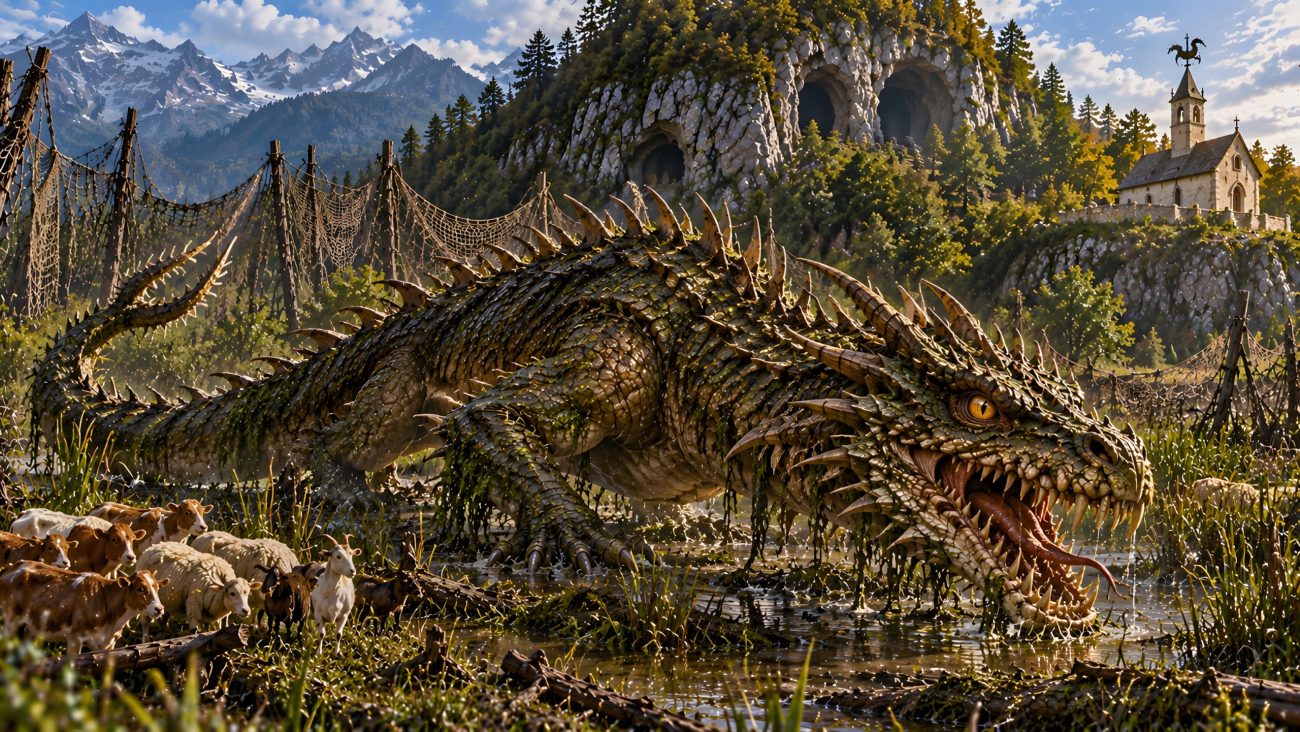
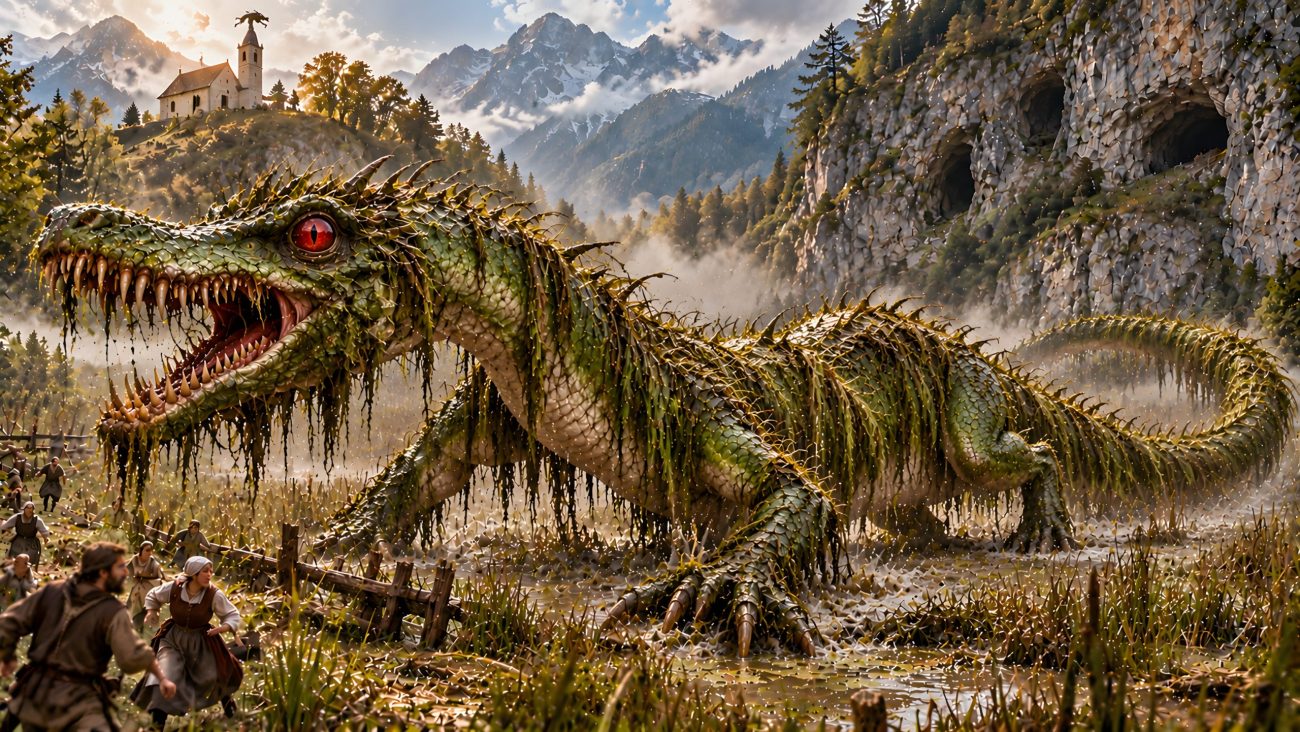
In ancient times, a terrible Lindworm lived at the northern foot of Ellberg, in a place called Laubwinkel. It terrified the inhabitants of Mäls, especially around the swamp where the creature was said to dwell. The area that is now known as Oberfeld was then a wild, marshy landscape washed by the Rhine, covered with oak forests, hedges, and dense bushes.

The people of Mäls tried to keep the Lindworm away from the village by carrying food out to it. Calves, sheep, and goats were taken to the edge of the swamp and left there for the monster to eat. When this failed to rid them of the creature, the villagers tried another method. Large nets were stretched across the northern end of Ellberg, hoping that the Lindworm would become entangled in them. The beast escaped the traps, however, and continued to haunt the people of Mäls.

Since the monster could not be overcome by natural means, the villagers turned to the Virgin Mary. They vowed that if the Lindworm disappeared, they would build a chapel in her honor, and they held a nine-day devotion dedicated to Mary.

Their prayer was answered. The Lindworm suddenly vanished and never appeared again. In gratitude, the villagers are said to have built the pilgrimage chapel of Mariahilf, which was later enlarged. A dragon’s head made of sheet metal can still be seen on the church tower, while several large holes high in the nearby rock face are known in local tradition as the “dragon holes.”


Sources

“Der Lindwurm.” SAGEN.at – Traditionelle Sagen aus Liechtenstein. Reproduced by SAGEN.at.
https://www.sagen.at/texte/sagen/liechtenstein/seger/lindwurm.html


Lindworm of Balzers

Tradition: Liechtenstein Mythology
Alternative Names: The Lindworm of Mals, Mariahilf Lindworm
Category: Dragon


The Myth

Long ago, a terrible Lindworm roamed a swamp near the village of Mals, close to Balzers, causing great harm to the local inhabitants. The villagers tried every means they could think of to keep the monster away or drive it from the area, but nothing worked.

Unable to defeat the beast by natural means, the villagers turned to supernatural help. They held a nine-day devotion in honor of the Virgin Mary and made a solemn vow: if the dragon disappeared, they would build a chapel in her honor.

Their prayers were answered. The Lindworm suddenly vanished and was never seen again.

In gratitude, the villagers built the pilgrimage church of Mariahilf, which was gradually enlarged over time. The memory of the monster remains part of the site: a dragon’s head made of sheet metal sits atop the church tower, while several large holes high in the nearby rock face are still known locally as the “dragon holes.”


Sources

“Die Drachenlöcher.” SAGEN.at – Traditionelle Sagen aus Liechtenstein. Reproduced by SAGEN.at.
https://www.sagen.at/texte/sagen/liechtenstein/drachenloecher.htm


Dragon of Koumariá

Tradition: Greek mythology
Alternative Names: Koumariá Dragon
Category: Dragon


The Myth

In the deep ravine of Koumariá, an area near Arachova named after the strawberry tree, there once lived a fearsome dragon.

One day, the dragon seized a man who had come from far away and began dragging him into its jaws. The unfortunate man was swallowed up to his armpits, leaving him desperately struggling and crying out for help while several people watched from a distance.

One of the onlookers called to him, telling him to fold his hands together so that the dragon would release him and shorten his torment. Desperate to escape, the man followed the advice and folded his hands together.

The dragon immediately swallowed him whole.


Sources

“Der Drache von Koumaria.” SAGEN.at – Traditionelle Sagen aus Griechenland. Reproduced by SAGEN.at. https://www.sagen.at/texte/sagen/griechenland/drache_koumaria.html


Lindworm of Altenburg

Tradition: German Mythology
Alternative Names: Altenburg Lindworm
Category: Dragon


The Myth

In ancient times, a terrible Lindworm lived on the Kanzel of Altenburg near Nebra. Each year, the beast chose one of the maidens of Nebra and carried her away.

On a particular day each year, the maidens were required to dress in white and adorn themselves for their grim procession to Altenburg. There, one of them would be claimed by the Lindworm.

Eventually, a courageous knight offered to fight the monster. After a fierce battle, he succeeded in killing the Lindworm and freed the maiden from her terrible fate.


Sources

“Die Sage von Altenburg.” SAGEN.at – Traditionelle Sagen aus Deutschland (Sachsen-Anhalt). Reproduced by SAGEN.at.
https://www.sagen.at/texte/sagen/deutschland/sachsen_anhalt/altenburg.html


Dragon of Nebra

Tradition: German Mythology
Alternative Names: Dragon of Nebra
Category: Dragon


The Myth

A terrible dragon lived in a cave near the spring below Nebra Castle, guarding the source of water that the besieged defenders desperately needed. During a siege, the enemy seized the spring outside the castle walls, leaving the defenders trapped inside without water. The heat and drought became unbearable, and with no rain in sight, the men began to despair.

Knowing that the spring was their only hope, a young noblewoman from the castle secretly slipped out during the night and made her way down to the spring at the foot of the castle hill. As she bent down to collect the precious water, a hideous dragon suddenly burst from a nearby cave and threatened to kill her.

Before the dragon could strike, however, Saint George rode in from the direction of Wendelstein with a company of armed men. The knight charged the enormous beast with his lance. He drove the sharp steel deep into the dragon’s poisonous throat and entrails, causing the creature to rear violently before collapsing dead upon the earth.

Saint George had not only rescued the young woman but also freed the castle’s defenders from their desperate situation. With the dragon dead, the spring was once again accessible, allowing the besieged soldiers to drink their fill and regain their strength.

The memory of the battle lives on in the coat of arms of Nebra, where Saint George is depicted fighting the dragon.


Sources

“St. Georg und der Drache.” SAGEN.at – Traditionelle Sagen aus Deutschland (Sachsen-Anhalt). Reproduced by SAGEN.at.
https://www.sagen.at/texte/sagen/deutschland/sachsen_anhalt/georg_drache.html


Dragon of Drachenwinkel

Tradition: German Mythology
Alternative Names: Drachenwinkel Dragon
Category: Dragon


The Myth

Near Laucha, in a narrow gorge, there once lived a wicked dragon. Humans and livestock were constantly taken by the monster, and there seemed to be no way to stop it. The western part of the gorge became known as Kummerberg, the “Mountain of Sorrow,” while the gorge itself was called the Drachenwinkel, the “Dragon’s Corner,” because this was where the dragon dragged its victims.

Among those who suffered was a shepherd from Hirschroda whose beloved had been taken and devoured by the dragon. Determined to avenge her, he secretly prepared an enormous boulder, laboriously dragging it into position above the gorge.

One day, when the dragon had settled down within the ravine, the shepherd released the great stone. It came crashing down upon the monster and smashed its skull, killing the dragon.

From that day onward, the terrible creature was never seen again.

But the legend acquired a strange postscript. Toward the end of the nineteenth century, enormous skeletal remains were discovered near the gorge during earthworks. Whether these bones belonged to the dragon killed by the shepherd was left as a mystery.


Sources

“Der Drachenwinkel.” SAGEN.at – Traditionelle Sagen aus Deutschland (Sachsen-Anhalt). Reproduced by SAGEN.at.
https://www.sagen.at/texte/sagen/deutschland/sachsen_anhalt/drachenwinkel.html


Nußdorf Lindworm

Tradition: German Mythology
Alternative Names: Lindwurm of the Legendary Lake
Category: Dragon


The Myth

In ancient times, a great lake was said to have occupied the broad hollow stretching west of Grainbach on the Samerberg toward Nußdorf am Inn. Remains of its supposed shores could still be recognized in the landscape, where enormous stones with holes running through their centers were found. These stones were believed to have been used for fastening the boats of fishermen who once sailed across the vanished lake.

Within its waters lived a terrifying Lindwurm. With its enormous tail, the monster smashed fishing boats and dragged the unfortunate fishermen down into the depths, where they disappeared forever. Again and again, courageous men attempted to destroy the creature.

Armed men would ride up from Nußdorf to hunt the dragon, but none ever managed to pass the place known as the Reiterstiegl. There, along the Grainbacher Achen, a small stream suddenly becomes very deep. The monster regularly blocked its enemies there.

The Lindwurm would open its enormous jaws and breathe fire and smoke toward the approaching warriors. Then it would beat its gigantic bat-like wings, creating such a violent storm that the men could go no farther. Those who had come to kill the monster were forced to turn back, while others were seized by the dreadful creature and torn apart, crushed, or devoured.

Although every attempt ended in failure, people continued to disturb the dragon in its lake. Eventually the constant attacks enraged it so greatly that it began thrashing about in the water. In its fury, it tore apart the shore toward Mühltal, weakening the banks until the day came when the lake finally broke through above Nußdorf.

The waters burst forth with a terrible roar, rushing down toward the village in a foaming torrent. Half of Nußdorf was swept away, carrying away everything and everyone caught in its path.

The flood reached even the heights where Castle Clammenstein then stood. The rocks supporting the castle walls were so severely undermined by the rushing water that the entire fortress collapsed. The once-proud and formidable Castle Clammenstein was utterly destroyed, with not a single stone left upon another.

Thus the Lindwurm that had once terrorized the fishermen became the force behind an even greater catastrophe: enraged by the people who repeatedly sought to kill it, the dragon tore open its own lake and unleashed its waters upon the valley.


Sources

“Der Lindwurm.” SAGEN.at – Traditionelle Sagen aus Deutschland (Bayern, Inntal). Reproduced by SAGEN.at.
https://www.sagen.at/texte/sagen/deutschland/bayern/inntal/lindwurm.html


Dragon of Trettach

Tradition: German Mythology
Alternative Names: Dragon of Trettach
Category: Dragon


The Myth

In ancient times, a terrible dragon lived in the Trettach region south of Oberstdorf. The creature caused great harm throughout the surrounding countryside and spread terrible fear among the inhabitants.

One day, a wandering scholar, known as a “fahrender Schuelar,” arrived in the region. When he heard about the terrifying monster, he voluntarily offered to free the local people from the dragon.

He told those who wished to witness the deed to gather at noon at the Zwink Bridge in Dietersberg. There, he promised, they would see him ride upon the dragon.

At the appointed hour, the wandering scholar appeared beneath the bridge. He was indeed riding upon the dragon—but the creature was beneath the water, so that nobody could see its body. Only a single hand could be seen protruding above the surface of the water.

From that moment onward, the dragon was gone, and the people of the region were finally freed from the creature that had terrorized them.


Sources

“Der Drache.” SAGEN.at – Traditionelle Sagen aus Deutschland (Bayern, Allgäu). Reproduced by SAGEN.at.
https://www.sagen.at/texte/sagen/deutschland/bayern/allgaeu/drache_2.html