Waterwolf

Tradition / Region: Dutch Mythology
Alternate Names: None recorded
Category: Wolf

The Myth

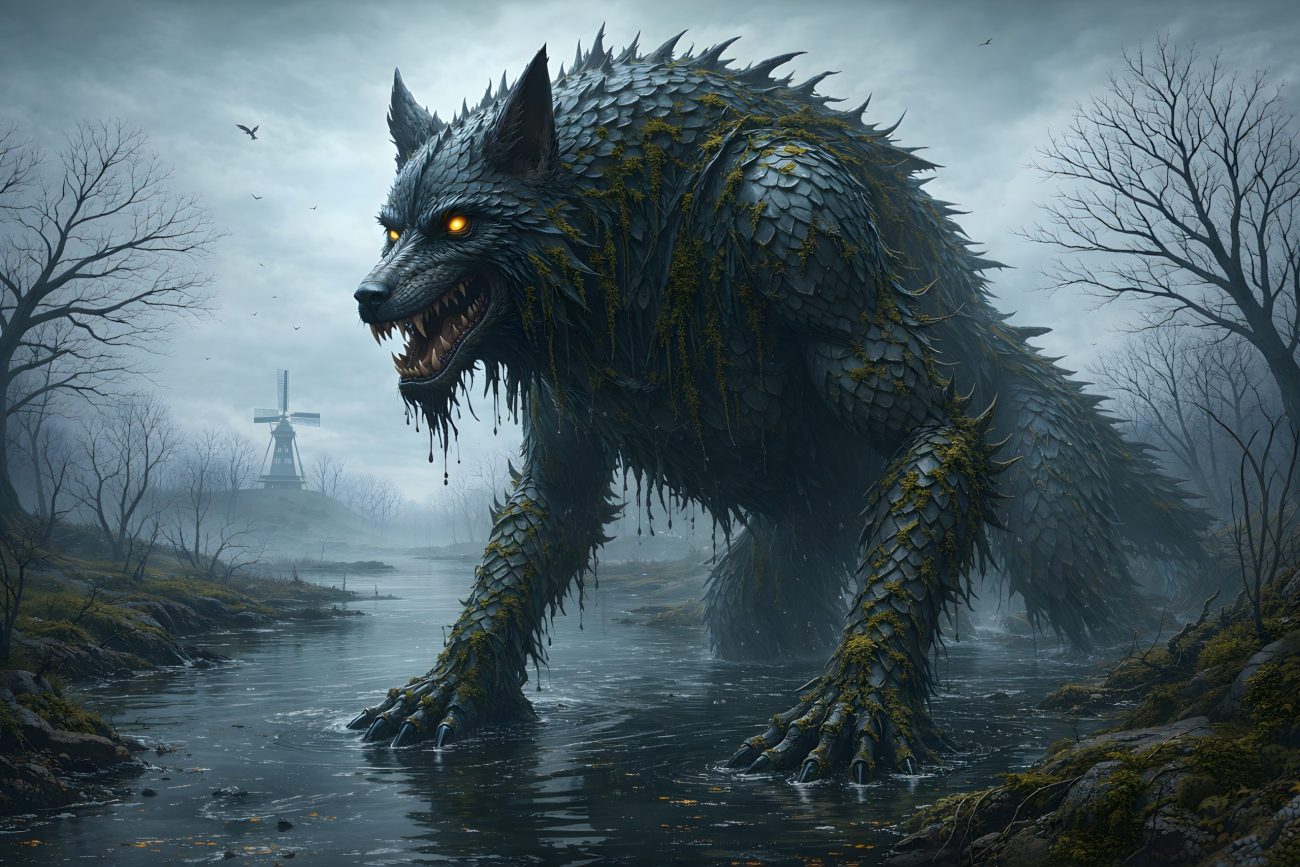
The Waterwolf is a dangerous spirit said to appear in the form of a wolf adapted to life in the water. Unlike a normal wolf, its body is covered in scales, over which moss and water plants such as algae and weeds have grown. It moves silently through rivers, marshes, and flooded lands, propelled by two large fins that allow it to glide swiftly and almost invisibly beneath the surface.

The creature is feared as a predator of humans, especially children. According to the stories, it lurks near banks and shorelines, dragging the unwary into the water where they disappear without a trace.

Like many Dutch water legends, the Waterwolf reflects anxieties about the dangers of marshes, floods, and deep water, giving those natural threats a monstrous, animal form.


Sources

Abe de Verteller. (n.d.). Van aardmannetje tot zwarte juffer: Een lijst van Nederlandse en Vlaamse elfen en geesten. From https://abedeverteller.nl/van-aardmannetje-tot-zwarte-juffer-een-lijst-van-nederlandse-en-vlaamse-elfen-en-geesten/


Korenwolf

Tradition / Region: Dutch Mythology
Alternative name: –
Category: Wolf


The Myth

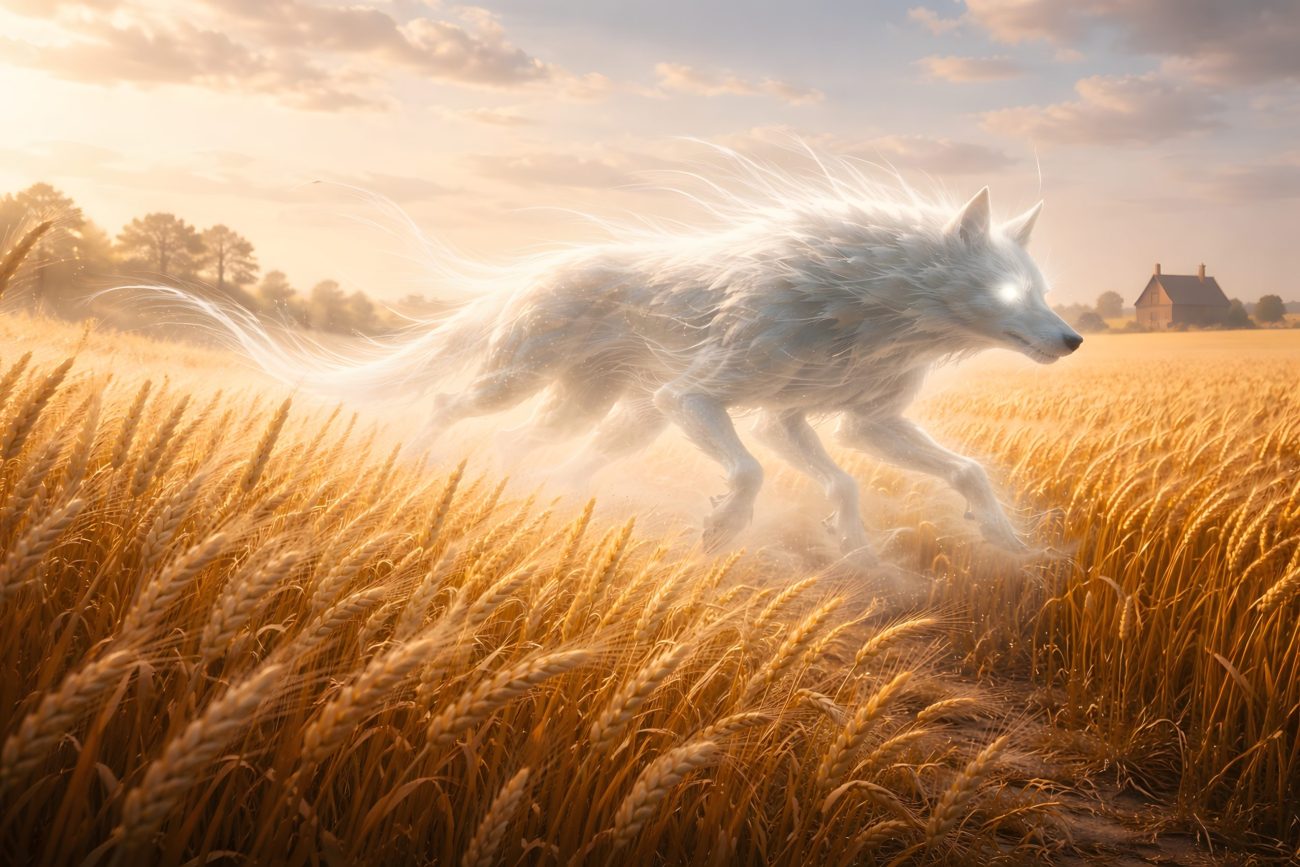
The Korenwolf or Roggewolf is not a literal wolf but the spirit believed to dwell within grain fields. It lives especially in the last sheaf left standing during harvest, and when that final bundle is cut, the spirit is thought to be captured.

Because of this belief, the last reaper was sometimes jokingly or ritually called “the wolf,” as if they had caught — or temporarily embodied — the field spirit.

The Korenwolf is invisible and can only be sensed through the strange rippling of grain in the wind, as if something unseen moves through it. When calm, it brings fertility to the fields; when angered, it may strip the ears from the grain and ruin the harvest.

It also serves as a warning figure in folklore. Children were told not to wander into the fields, since the Korenwolf might seize or devour them.

Some stories describe the spirit as having six legs, marking it as unnatural — a being of the harvest rather than an ordinary animal.


Sources

Abe de Verteller. (n.d.). Van aardmannetje tot zwarte juffer: Een lijst van Nederlandse en Vlaamse elfen en geesten. From https://abedeverteller.nl/van-aardmannetje-tot-zwarte-juffer-een-lijst-van-nederlandse-en-vlaamse-elfen-en-geesten/


Wulver

Tradition / Region: Scottish Mythology
Alternate Names: Wullver
Category: Wolf, Cave Dweller


The Myth

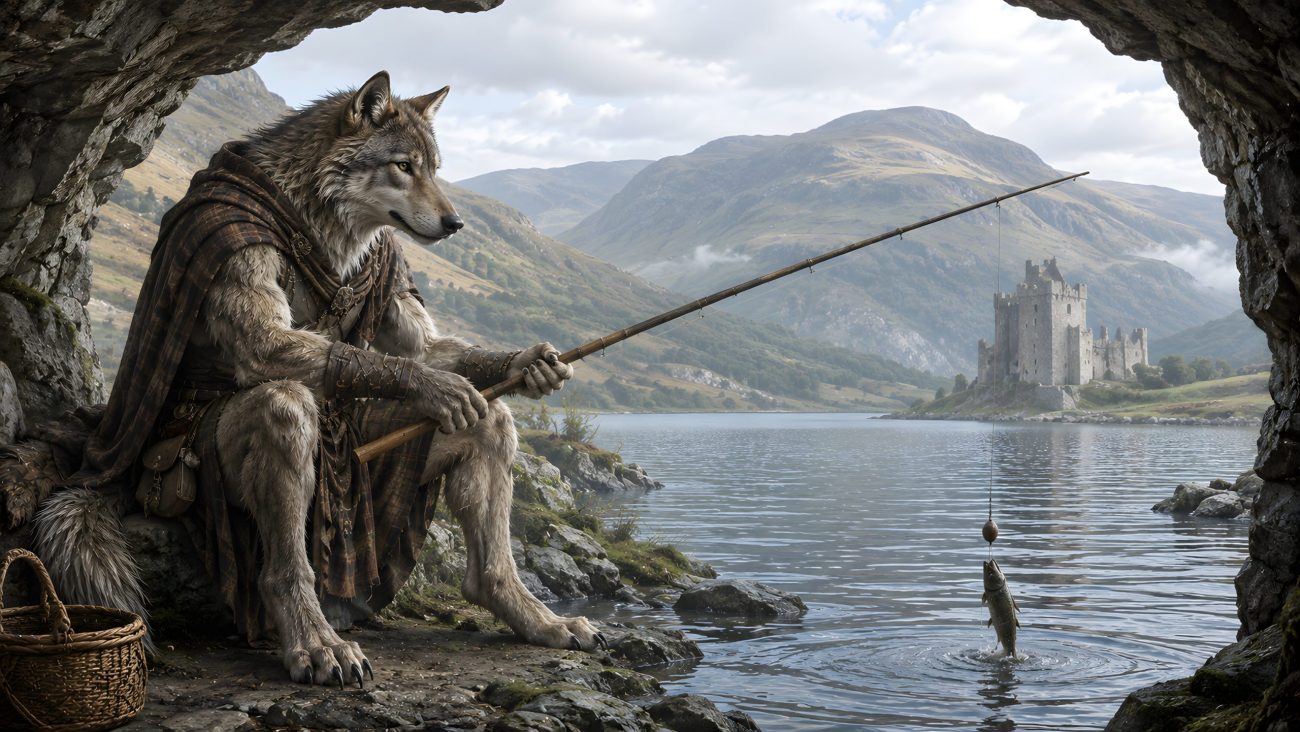
The Wulver is a strange being said to dwell in the Shetland Islands. Unlike many wolf-creatures of legend, it is not remembered as savage, but as solitary and oddly kind.

The Wulver is described as having the body of a man covered in short brown hair, with the head of a wolf. It lives alone in a cave dug into the side of a hill, keeping to itself and rarely approaching human settlements.

Though fearsome in appearance, the Wulver is not known to attack people without cause. Instead it spends its time fishing along the shore. It is said to sit for hours upon a rock in deep water, catching fish with patience and skill.

In many stories, the Wulver shows quiet generosity. After a successful catch, it sometimes leaves fish on the windowsills of poor families, slipping away unseen before anyone can thank it. Because of this, locals came to regard it not as a monster but as a strange neighbor — a creature of the wild who could be respected if left in peace.

The Wulver remains a figure of solitude rather than terror: a wolf-headed being who lives apart from mankind, neither fully beast nor fully human, sharing the land without seeking to rule it.


Sources

Wikipedia contributors. (n.d.). Wulver. In Wikipedia, from https://en.wikipedia.org/wiki/Wulver


Amaguq

Tradition / Region: Inuit Mythology, Canadian Mythology
Alternate Names:
Category: Wolf, Shapeshifter


The Myth

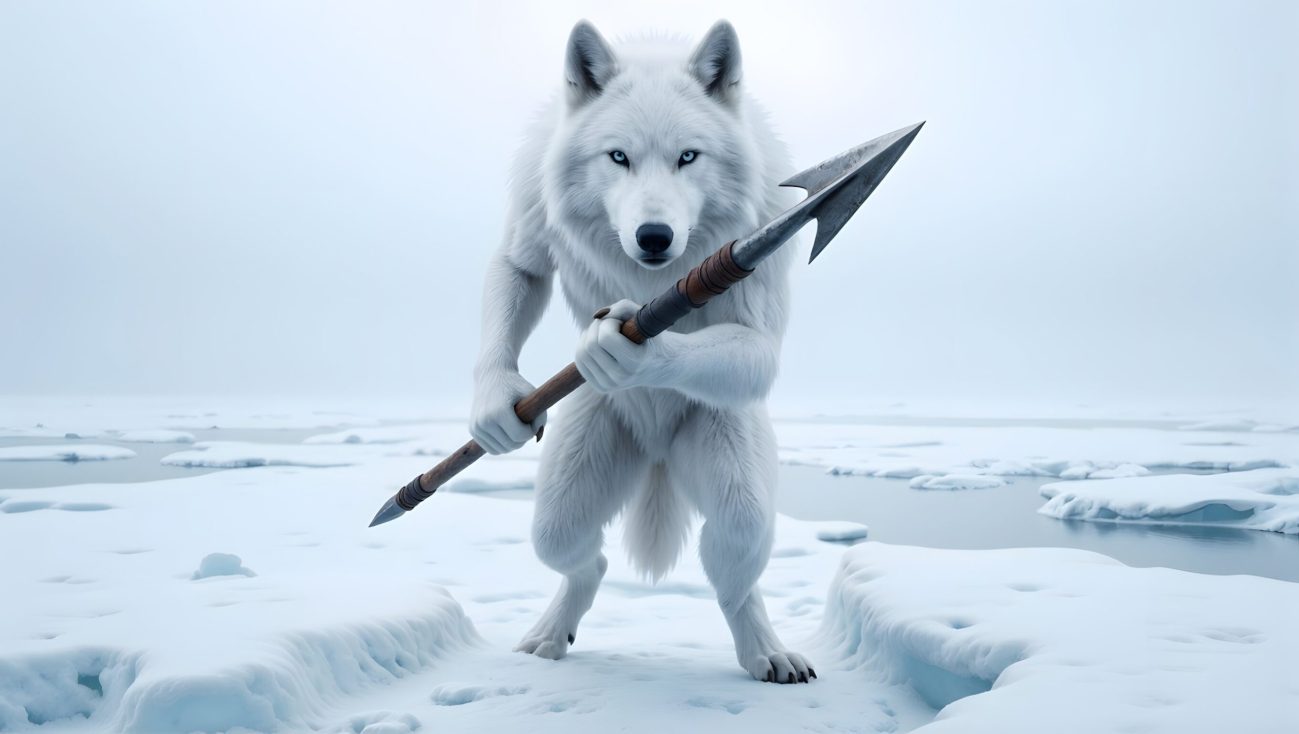
Amaguq is a wolf spirit of Inuit tradition, known for cunning, unpredictability, and the ability to change form. The name itself simply means “wolf,” yet in story it refers to something far more than an ordinary animal.

Amaguq moves between shapes and roles, sometimes appearing as a wolf, sometimes as something closer to human, and sometimes as a spirit whose presence is felt rather than seen. Like many trickster beings, it does not belong clearly to the side of good or evil.

In some tales Amaguq misleads hunters, steals food, or interferes with travel across the tundra. In others it acts as a teacher, forcing people to learn caution, humility, or cleverness in order to survive. Its actions are unpredictable: it may help or harm depending on the moment, the person, or its own whims.

Because of this, Amaguq is remembered not as a simple monster, but as a wild spirit of the northern world — a reminder that wolves, like the land itself, can be both guide and danger, both teacher and threat.


Sources

Wikipedia contributors. (n.d.). Amaguq. In Wikipedia, from https://en.wikipedia.org/wiki/Amaguq


Earth Wolf

Tradition / Region: Chinese Mythology
Alternate Names: Burrow Wolf
Category: Wolf


The Myth

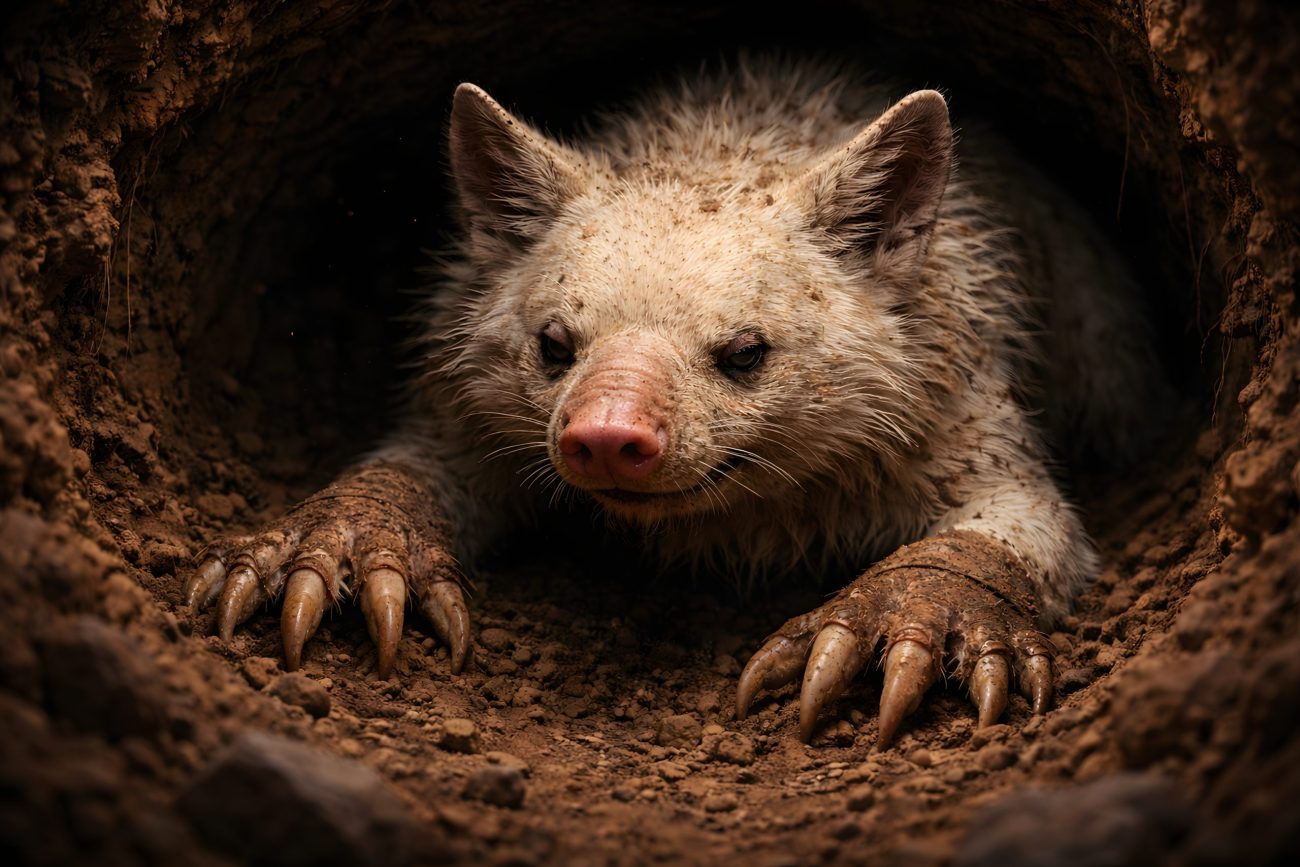
The Earth Wolf is a strange and ominous creature said to dwell beneath the ground. It is believed to live in burrows deep under the earth, rarely seen unless it is uncovered by accident.

At first it appears as a white wolf, covered in pale fur. Yet legends claim that over time it can change form. By feeding on human corpses, it may gradually take on a more human-like shape, becoming something between wolf and man.

The appearance of an Earth Wolf is always regarded as a bad omen. Ancient chronicles record several times when people heard howling or movement beneath their homes and dug into the ground to investigate. In these stories, pairs of white wolves — often a male and female — were discovered living underground.

Each time such wolves were captured and kept, they soon died. Not long afterward, disaster followed. Officials or householders connected with the discovery were later killed in uprisings, executions, or violent conflict. Because of these repeated events, people came to believe that uncovering an Earth Wolf foretold misfortune and death.

Thus the Earth Wolf is remembered not as a roaming


Gallery


Sources

Wikipedia contributors. (n.d.). 地狼. In Wikipedia, from https://zh.wikipedia.org/wiki/%E5%9C%B0%E7%8B%BC


Interpretive Lenses

Religious Readings
  • Christian Ascetic Deep Dive
Philosophical Readings
  • Nietzschean Deep Dive
Psychological Readings
  • Jungian Deep Dive
Esoteric Deep Dive
  • Hermetic Deep Dive
Political / Social Readings
  • Marxist Deep Dive

Poreskoro

Tradition / Region: Romani Mythology, Czech Mythology
Alternate Names: “The Tailed,” “The Caudate”
Category: Dog


The Myth

Poreskoro is the ninth and final child of Ana, the dread mother of disease in Romani tradition. Ana herself was born from the violent and unhappy union of the Queen of the Keshalyi and the King of the Loçolico, and her offspring were feared as embodiments of sickness and corruption.

After earlier attempts to prevent further monstrous births failed, the Keshalyi tried one last desperate measure. They fed their queen a potion made from cat hair, powdered snake, and hair taken from the hound of hell. From this dark mixture came Poreskoro.

The creature was unlike any of the others. It appeared as a strange birdlike being with four dog heads, four cat heads, and a snake’s tail ending in a forked tongue. It was both male and female, able to produce offspring without a mate.

Those offspring were not living creatures in the ordinary sense. They were the great diseases of the world — plague, cholera, smallpox, and countless other sicknesses that spread across humanity. Poreskoro dwells deep underground with these children, and when it rises to the surface its appearance is taken as a sign that pestilence and destruction will soon follow.

Even the King of the Loçolico was horrified when he saw this child. Realizing the union had brought only ruin, he and Ana separated. Ana withdrew to a remote mountain castle, kept alive by the Keshalyi, who visit her daily and give her drops of blood to sustain her. Sometimes she appears as a golden toad, but more often she is only heard whispering a single command — a word meaning “bring” or “pass.” Those who hear it must obey, tossing some small creature away, or risk being crushed by her unseen power.

Meanwhile, her children remain beneath the earth, and through Poreskoro the world’s diseases continue without end.


Gallery


Sources

A Book of Creatures. (2017, March 31). Poreskoro. From https://abookofcreatures.com/2017/03/31/poreskoro/


Interpretive Lenses

Religious Readings
  • Christian Ascetic Deep Dive
Philosophical Readings
  • Nietzschean Deep Dive
Psychological Readings
  • Jungian Deep Dive
Esoteric Deep Dive
  • Hermetic Deep Dive
Political / Social Readings
  • Marxist Deep Dive

Cerberus

Tradition / Region: Greek Mythology
Alternate Names: Kerberos
Category: Dog


The Myth

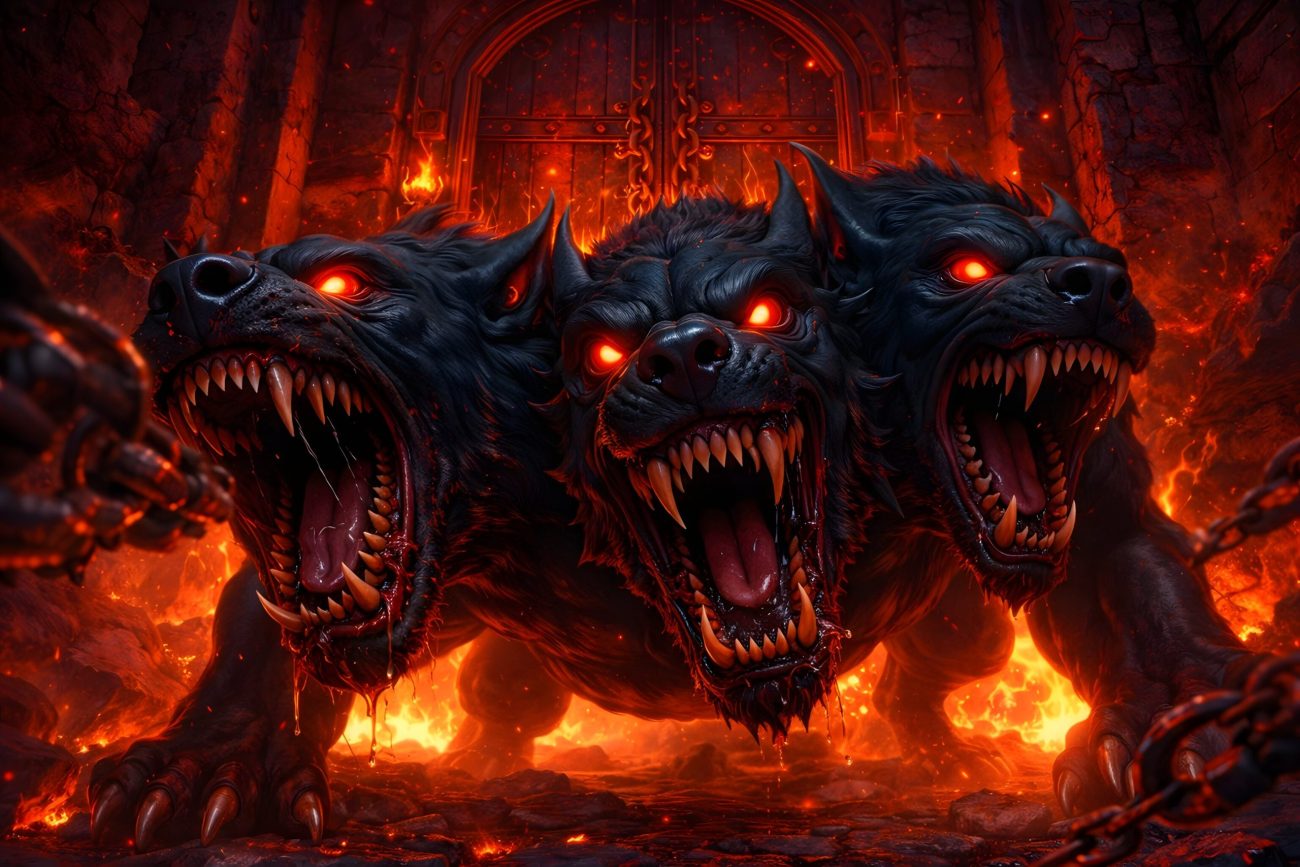
Cerberus is the monstrous hound who guards the gates of the underworld, preventing the dead from escaping and the living from entering without permission. He is the offspring of the fearsome beings Typhon and Echidna, and brother to other dreadful creatures such as the Hydra, Orthrus, and the Chimera.

Descriptions of Cerberus vary widely. In the earliest tales he was said to have many heads — fifty, or even a hundred. Later tradition most often gives him three dog heads, though he is also described with serpent tails, snakes writhing from his body, or a mane made of serpents. His eyes were said to flash fire, his hearing was keen, and he fed on raw flesh.

Cerberus’ chief role was to stand watch at the entrance to Hades, terrifying any who approached. Yet he appears in myth most famously during the final labor of Heracles.

King Eurystheus commanded Heracles to descend into the underworld and bring Cerberus back alive — a task meant to be impossible. Before descending, Heracles was initiated into sacred rites that prepared him to walk among the dead. Guided by Hermes and aided by Athena, he entered the realm of Hades through a cavern in the earth.

There he encountered the imprisoned heroes Theseus and Pirithous, and in some tellings freed at least one of them. Then Heracles approached Hades and asked permission to take Cerberus. The god agreed on one condition: Heracles must subdue the beast without using iron weapons.

Heracles seized the monster with his bare strength, shielding himself with the lion skin he wore. After a violent struggle he forced Cerberus into submission, chained him, and dragged him up from the world of the dead.

When Cerberus first emerged into the sunlight, the sight drove him into a frenzy. Some say his foam or bile fell upon the earth and gave rise to poisonous plants. Heracles carried the beast across the land and displayed it before Eurystheus, proving the labor complete.

Once the task was fulfilled, Cerberus was returned to his post at the gates of the underworld, where he remains, the eternal watcher between the realms of the living and the dead.


Sources

Wikipedia contributors. (n.d.). Cerberus. In Wikipedia, from https://en.wikipedia.org/wiki/Cerberus


Teju Jagua

Tradition / Region: Paraguay Mythology, Brazilian Mythology
Alternate Names: Teju Jagua, Teju Jagua’i
Category: Dog, Snake, Cave dweller


The Myth

Teju Jagua is the firstborn son of Tau and Kerana, and the eldest of the seven cursed monsters of Guaraní tradition. Because Tau had angered the heavens, all of his children were born deformed and monstrous, and Teju Jagua was the first sign of that curse.

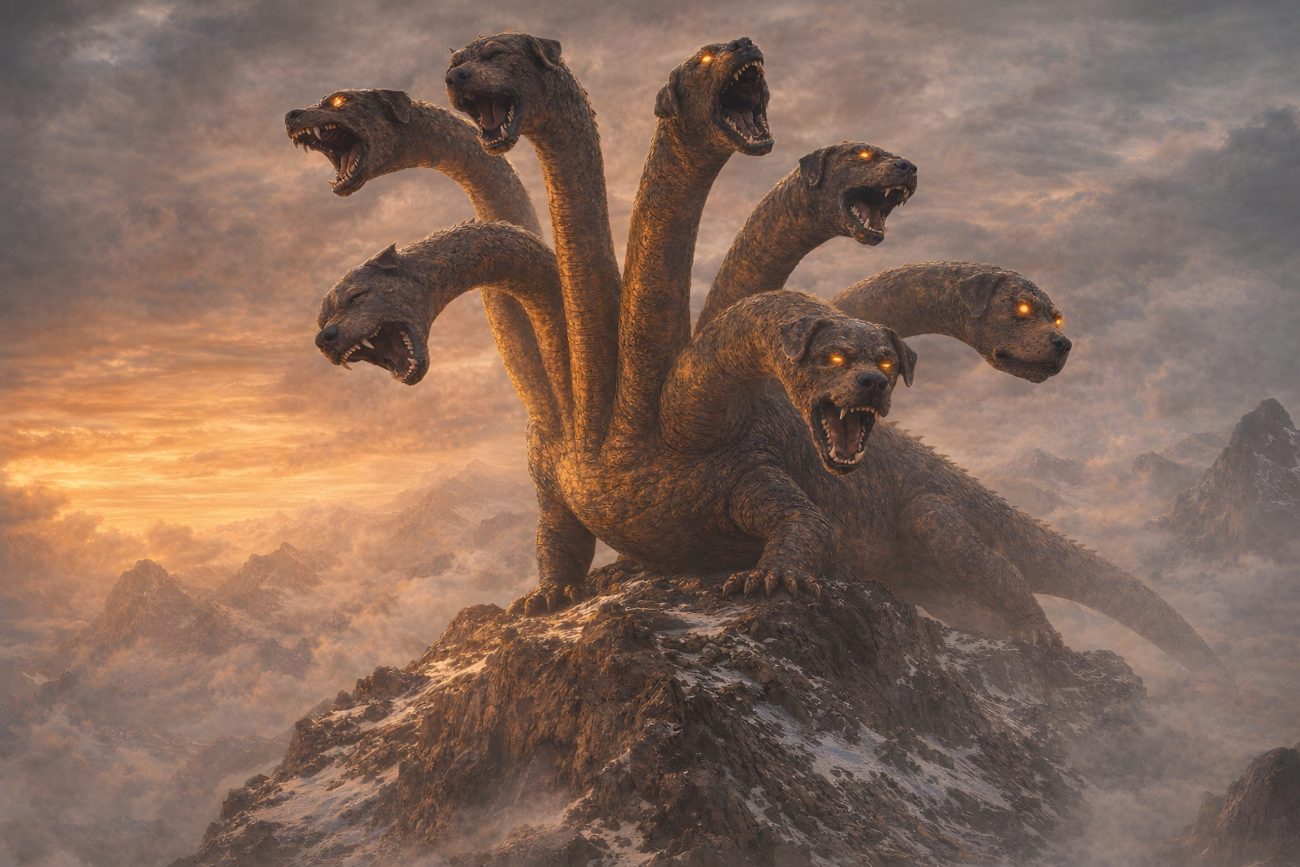
He is described as a gigantic reptilian creature with multiple dog heads — most often seven — each with blazing eyes that can shoot fire. Some stories say he has only a single enormous dog head, but all agree that his body is vast, heavy, and awkward, making it difficult for him to move swiftly.

Although his appearance is the most terrifying of the seven brothers, his nature is not cruel. Tupã, the great god, softened his spirit so that he would not be savage. Instead of preying on people, Teju Jagua lives quietly in caves and hidden places.

He feeds on fruit rather than flesh, and his brother Yasy Yateré brings him honey, which is his favorite food. Because of this peaceful life, he is remembered not as a destroyer but as a guardian.

Teju Jagua became lord of the caves and protector of buried treasures. He is said to dwell among gold and precious stones, and after long years rolling among them, his skin grew smooth and shining.

Thus he is feared for his monstrous form and fiery gaze, yet also respected as a watchful keeper of hidden riches beneath the earth.


Gallery


Sources

Wikipedia contributors. (n.d.). Teju Jagua. In Wikipedia, from https://en.wikipedia.org/wiki/Teju_Jagua


Interpretive Lenses

Religious Readings
  • Christian Ascetic Deep Dive
Philosophical Readings
  • Nietzschean Deep Dive
Psychological Readings
  • Jungian Deep Dive
Esoteric Deep Dive
  • Hermetic Deep Dive
Political / Social Readings
  • Marxist Deep Dive

Failinis

Tradition / Region: Irish Mythology
Alternate Names: Shalinnis, Salinnis, Fer Mac
Category: Dog


The Myth

Failinis was a marvelous hound belonging to Lugh Lámhfhada of the Tuatha Dé Danann. The dog was one of the great treasures demanded as reparation from the sons of Tuireann after they killed Lugh’s father, Cian.

The hound originally came from the distant land of Iruaid, where it belonged either to a king or a royal smith. From there it passed into the hands of the sons of Tuireann, who were forced to surrender it to Lugh as part of their punishment.

Failinis was no ordinary dog. It was invincible in battle and could catch any beast it pursued, whether on land or in water. It held mastery over animals and was said to hunt everything from deer to fish. It possessed wondrous magic as well: whenever it bathed in running water, the water turned into wine or mead. In some tellings, it could even disgorge drink, gold, or silver from its mouth.

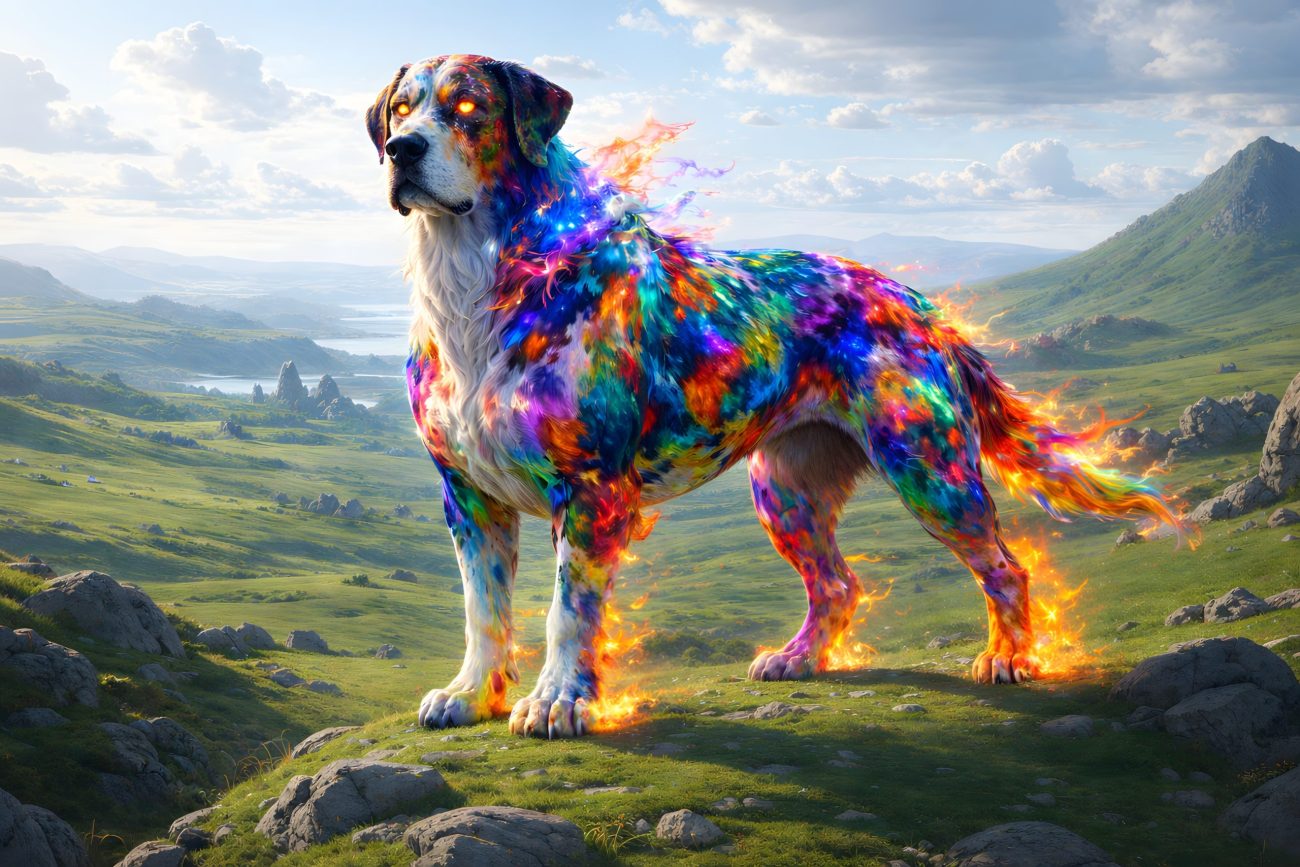
By day, the hound was immense and powerful, strong enough to overcome many warriors. By night it was like a bolt of fire, blazing and swift. Some tales describe it as beautifully colored, others as patterned in many hues — white, black, blue, and more.

In later stories of the Fenian Cycle, the same hound appears again, now in the hands of three foreign warriors from Iruaid who arrive in Ireland. They use the dog’s magic to create strong drink and defend themselves against spies. When warriors attempt to watch them in secret, the hound raises a supernatural wind with its tail that strips their weapons away. At its masters’ command it breathes upon the slain, reducing their bodies to dust so that nothing remains.

In some versions, the foreign warriors eventually lose the hound as compensation to the Fianna led by Fionn mac Cumhaill. In another telling they swear never to take the dog alive from Ireland, so they kill it and carry away its hide instead.

Thus Failinis is remembered as one of the great mythic hounds of Ireland — a creature of battle, magic, wealth, and loyalty, tied to heroes, kings, and warriors across multiple cycles of legend.


Sources

Wikipedia contributors. (n.d.). Failinis. In Wikipedia, from https://en.wikipedia.org/wiki/Failinis

Căpcăun

Tradition / Region: Romanian Mythology
Alternate Names:
Category: Dog, Ogre


The Myth

The Căpcăun is a monstrous being from Romanian tradition, remembered as one of the great enemies of humankind. It is counted among the dark creatures of folklore alongside dragons and ogres, and is often portrayed as a kidnapper of children, maidens, or princesses.

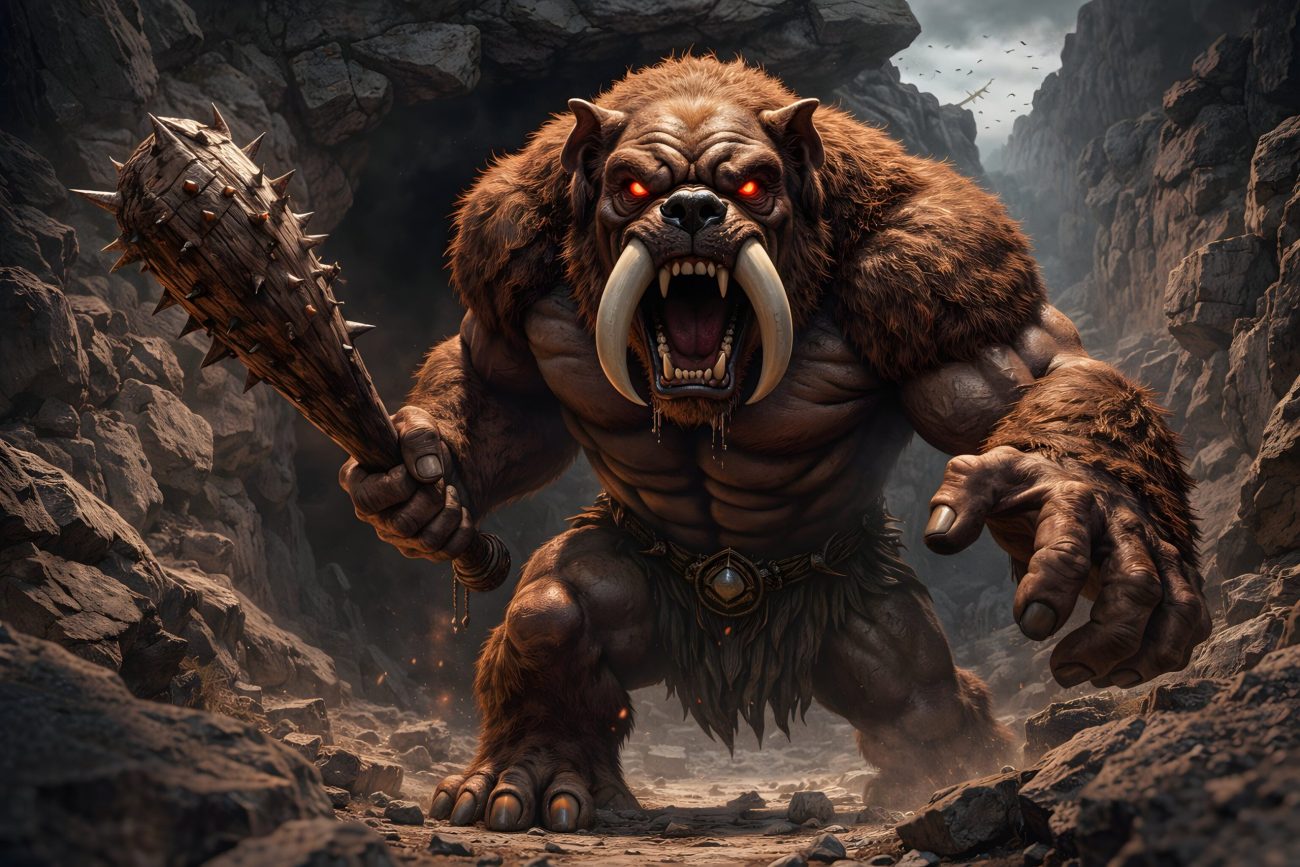
The creature’s name is believed to mean “dog-head,” and it is most often described as having the body of a man but the head of a dog. In some tales it is even more grotesque: it may have four eyes, eyes in the back of its head, or other unnatural features that mark it as something outside the human world.

The Căpcăun dwells in remote places — forests, caves, or distant lands — and is known above all for its hunger for human flesh. Stories tell of it capturing travelers or seizing the young and defenseless, carrying them away to be devoured.

In Romanian storytelling, the Căpcăun often appears as an obstacle for heroes to overcome, a symbol of brute strength, cruelty, and savagery. Its presence marks the boundary between the safe human world and the dangerous wilderness beyond.

Because of this, the word itself eventually came to be used not only for monsters but also as a name for hostile outsiders or enemies, reflecting how deeply the image of the dog-headed devourer took root in the imagination.


Sources

Wikipedia contributors. (n.d.). Căpcăun. In Wikipedia, from https://ro.wikipedia.org/wiki/C%C4%83pc%C4%83un