Osabi

Tradition: Japanese Mythology
Alternative Names: –
Category: Flame


The Myth

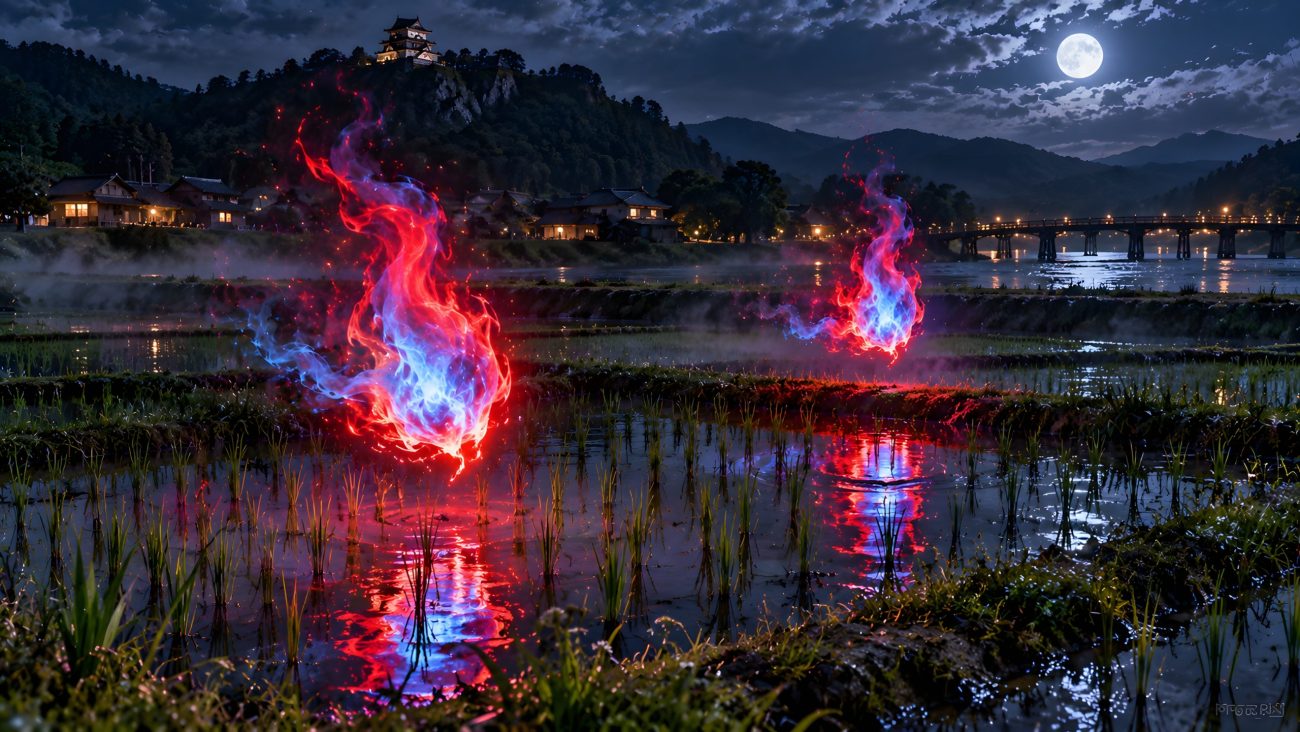
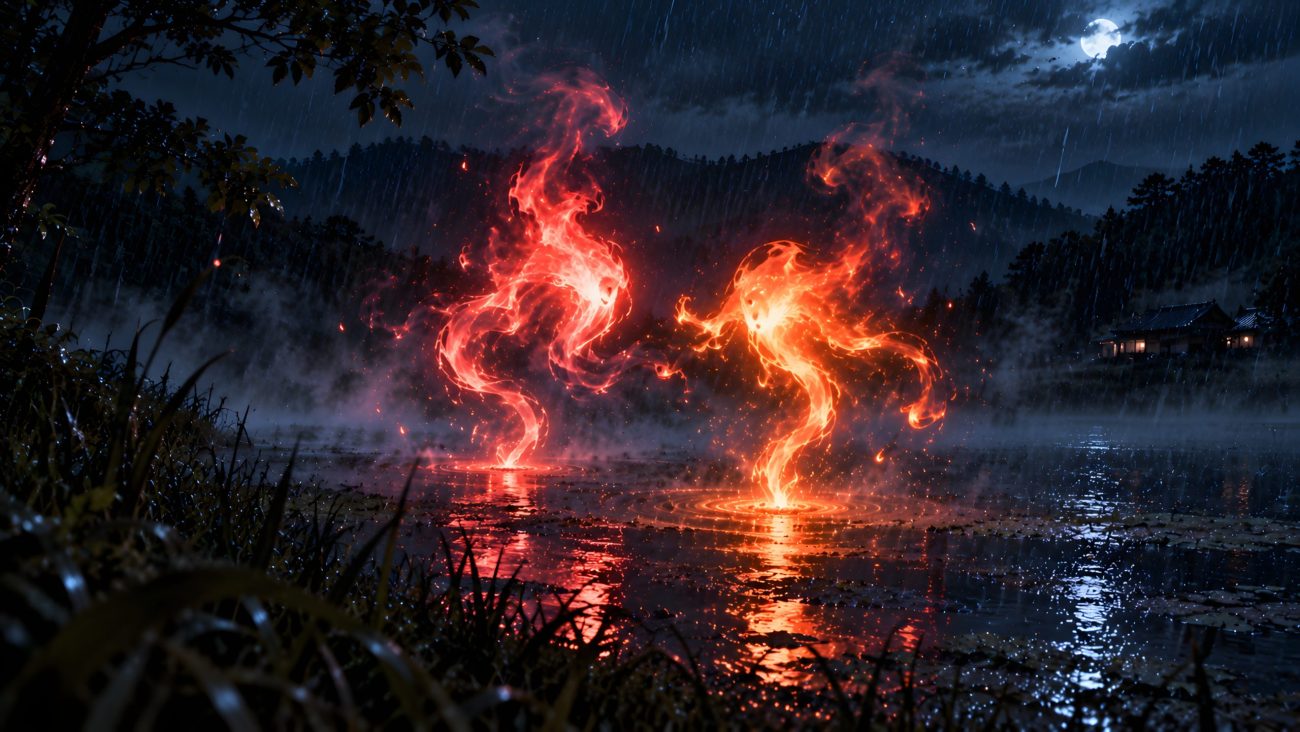
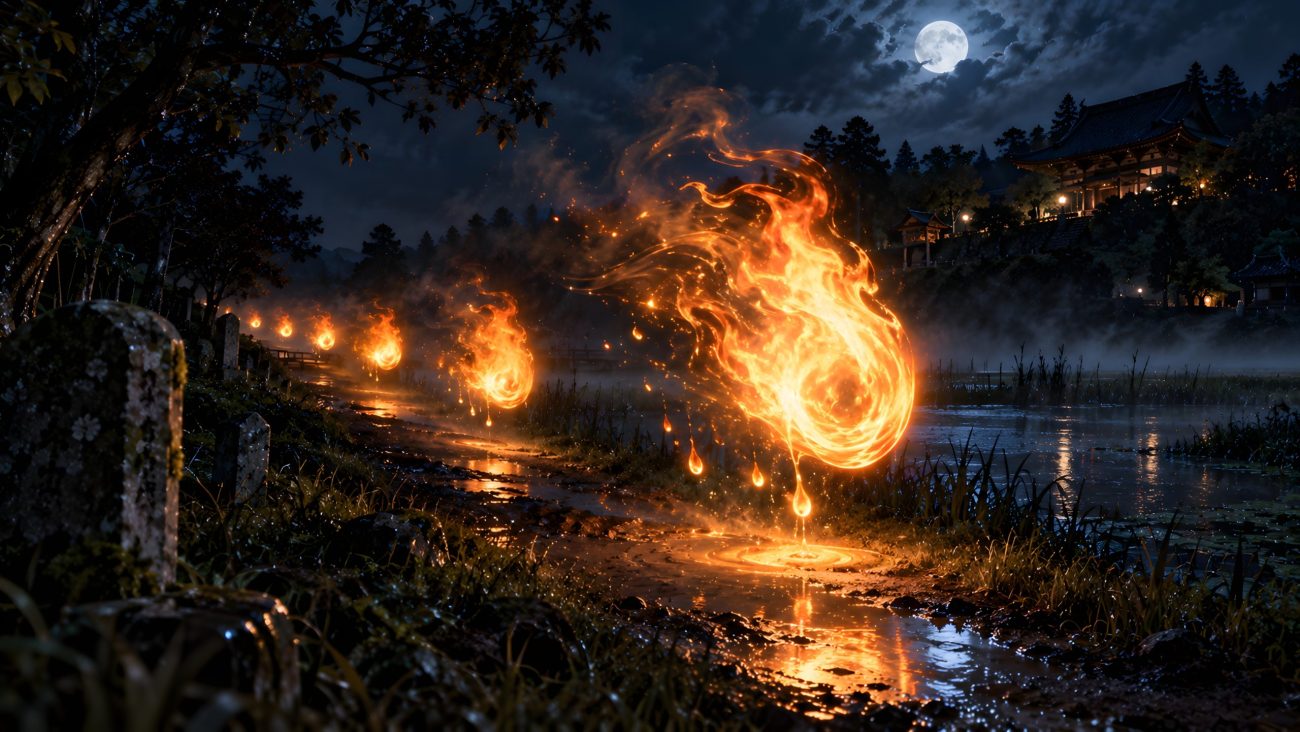
Osabi is a mysterious supernatural fire said to appear on rainy nights at Sankakuike Pond in the Nobeoka region of Miyazaki Prefecture, Japan. The phenomenon is described as two separate flames that emerge near the water and appear to struggle or fight with one another. Sightings were reportedly known in the area until around the middle of the Meiji era.

According to local legend, the strange lights originated from a quarrel between two women over the lending and borrowing of an osa, a comb-like tool used to straighten the folds of woven cloth. During their argument, one of the women fell into the pond and drowned. The two fires are believed to represent the women, continuing their conflict even after death.

The name Osabi was recorded by folklorist Kunio Yanagita in Yokai Meii, included in Yokai Dangi, drawing on the account Nobeoka Zatsudan. Yanagita also mentioned a similar mysterious fire from Nagoya known as Kantarōbi.


Sources

“Osabi.” 新版TYZ 妖怪図鑑 (New TYZ Yokai Encyclopedia). https://tyz-yokai.blog.jp/archives/1077434909.html
Kusakaribi

Tradition: Japanese Mythology
Alternative Names: –
Category: Flame


The Myth

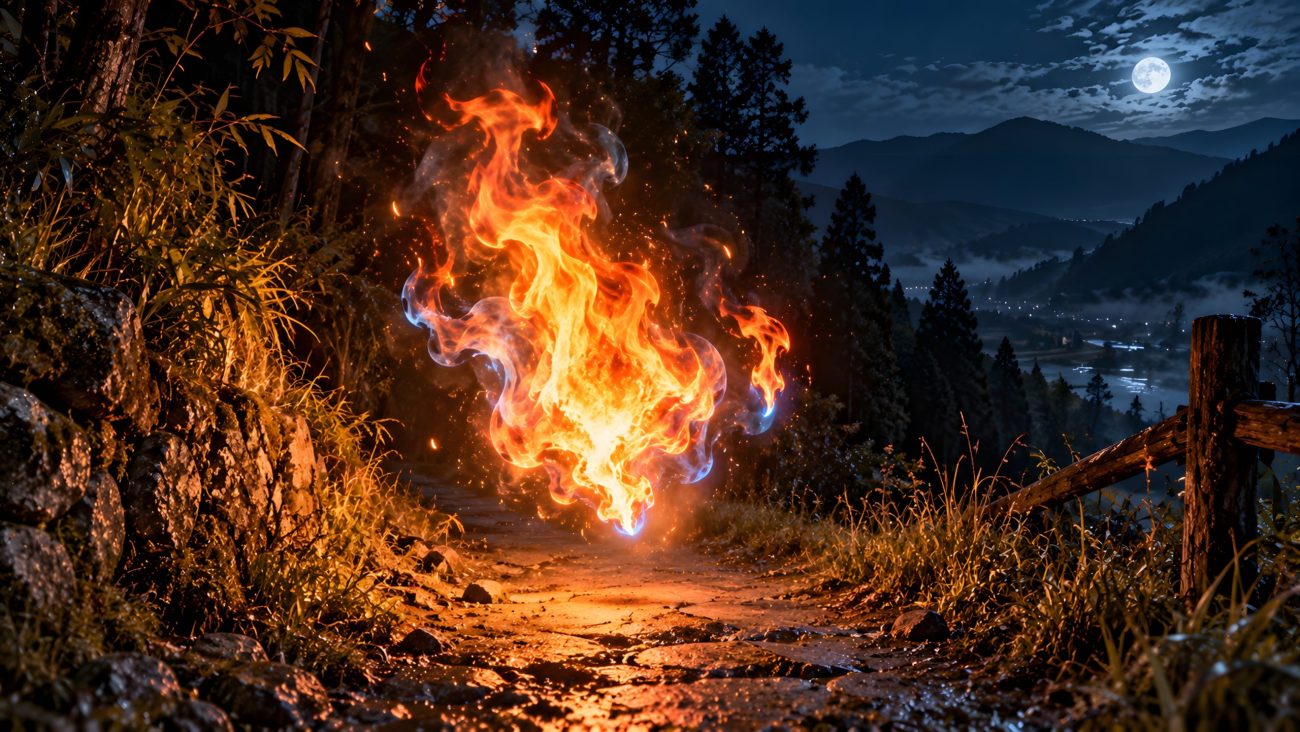
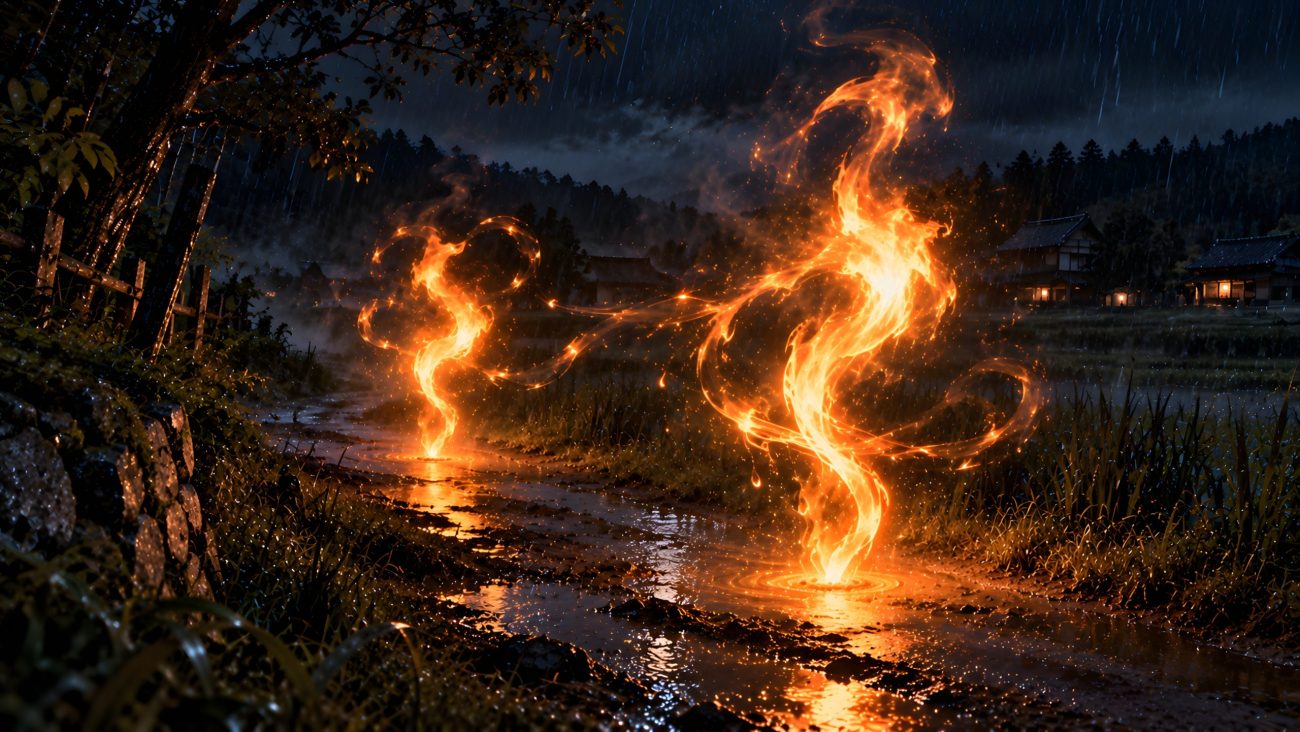
Kusakaribi, meaning Grass-Cutting Fire, is a mysterious supernatural flame from the Himeji region of Japan. It appears unexpectedly along roads at night, sometimes emerging as a single flame before multiplying into several fires that twist and intertwine with one another. These strange lights vanish as suddenly as they appear, leaving travellers unsettled by the unexplained spectacle.

At the beginning of the Genbun era (1736–1741), during the rainy season in May, a man named Hanshichi from Sayo Village was staying in Himeji. When his business failed to progress as he had hoped, he decided one evening to visit an acquaintance in Kamata Village. As he travelled through intermittent rain, darkness fell before he reached his destination. Suddenly, a flame burst forth from the middle of the road. As Hanshichi stopped to watch, another appeared, and the two fires twisted and tangled together before abruptly disappearing. After a short while, another flame appeared and vanished in the same mysterious fashion.

Uneasy after witnessing the strange lights, Hanshichi continued his journey and eventually reached his acquaintance’s home. When he described what he had seen, his host explained that the fire had been witnessed on other occasions and was known as the Kusakaribi. According to local legend, two boys who worked cutting grass had once quarrelled and killed each other with their sickles. Their violent deaths supposedly left behind a supernatural presence that continued to appear as a demonic fire along the road. The account was reportedly based on a story that the author, Haruna Tadanari, heard directly from Hanshichi himself.


Sources

“Kusakaribi.” 新版TYZ 妖怪図鑑 (New TYZ Yokai Encyclopedia). https://tyz-yokai.blog.jp/archives/1077434946.html


Aburakae

Tradition: Japanese Mythology
Alternative Names: Morubi, Moribi
Category: Flame


The Myth

Aburakae, meaning Oil Return, is a mysterious supernatural fire associated with Konyo in Itami City, Hyogo Prefecture, Japan. It appears on dark nights in early summer and on cold winter nights, particularly around Konyo Pond. The strange flame is known for its peculiar sounds and its unusual journey through the surrounding landscape.

The Aburakae is said to emerge from the grave of Senso, located south of Konyo Pond, before travelling along the banks of Konyo Pond and Mizugaike Pond. It then follows the Tenjin River toward Nakayama-dera Temple. As it moves, the fire flashes with a repeated “pa-pa-pa-pa” sound, accompanied by a voice calling “ocha-ocha-ocha-ocha.” It advances rapidly without turning back, producing a further sound described as “tobo-tobo-tobo-tobo.”

The true nature of the Aburakae remains uncertain, and several explanations have been offered for its appearance. One tradition claims that it is the restless soul of someone who stole oil from Nakayama-dera Temple and now returns as a supernatural flame. Other accounts identify it as a fox wedding taking place on the northern bank of Konyo Pond, or as a fire kindled by a wolf near Senso’s grave. These different explanations surround the Aburakae with mystery, linking its strange journey to stolen oil, supernatural gatherings, and animals associated with the uncanny.


Sources

“Aburakae.” 新版TYZ 妖怪図鑑 (New TYZ Yokai Encyclopedia). https://tyz-yokai.blog.jp/archives/1010654248.html


Morubi

Tradition: Japanese Mythology
Alternative Names: Morubi, Moribi
Category: Flame


The Myth

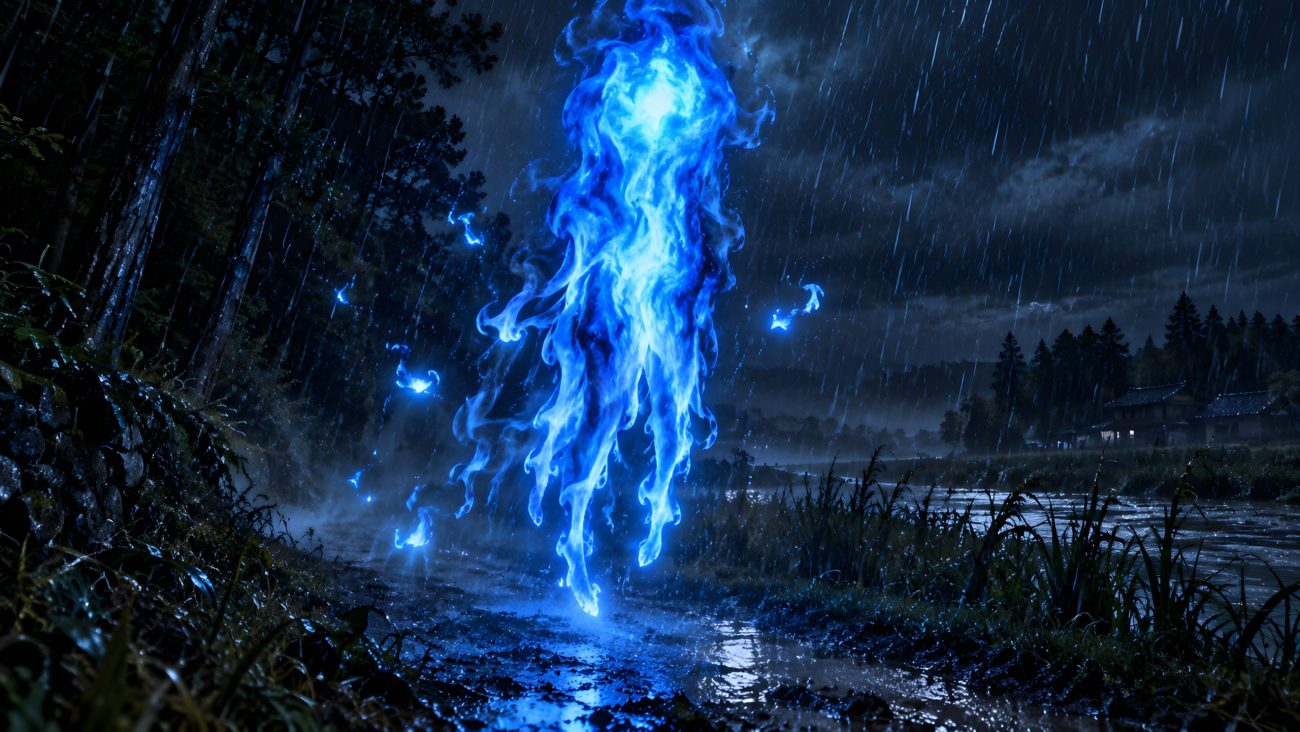
The Morubi is a terrifying supernatural fire from Goshogawara City in Aomori Prefecture, Japan. It appears as a bright blue flame, particularly on rainy nights in places where people have drowned or hanged themselves. Its body is strangely shaped: the section from its head to its torso is thicker than a human finger, while the parts resembling legs hang loosely beneath it. Floating in the air, this eerie fire is regarded as one of the most frightening supernatural beings.

The Morubi is known to follow people who speak ill of it. Even when struck and shattered into pieces, it does not necessarily stop pursuing its victim, making it difficult to escape once it has taken an interest in someone. Its persistence and association with places of tragic death have earned it a fearsome reputation among local supernatural legends.

Those who encounter a Morubi are advised to chant Buddhist prayers or seek refuge inside a room illuminated by a light. These precautions are believed to offer protection from the relentless blue flame, which may otherwise continue following its chosen victim.


Sources

“モルビ (Morubi).” 新版TYZ 妖怪図鑑 (New TYZ Yokai Encyclopedia). https://tyz-yokai.blog.jp/archives/1010653520.html


Haka no hi

Tradition / Region: Japanese Mythology
Alternate Names: 墓の火 (Haka no hi)
Category: Flame


The Myth

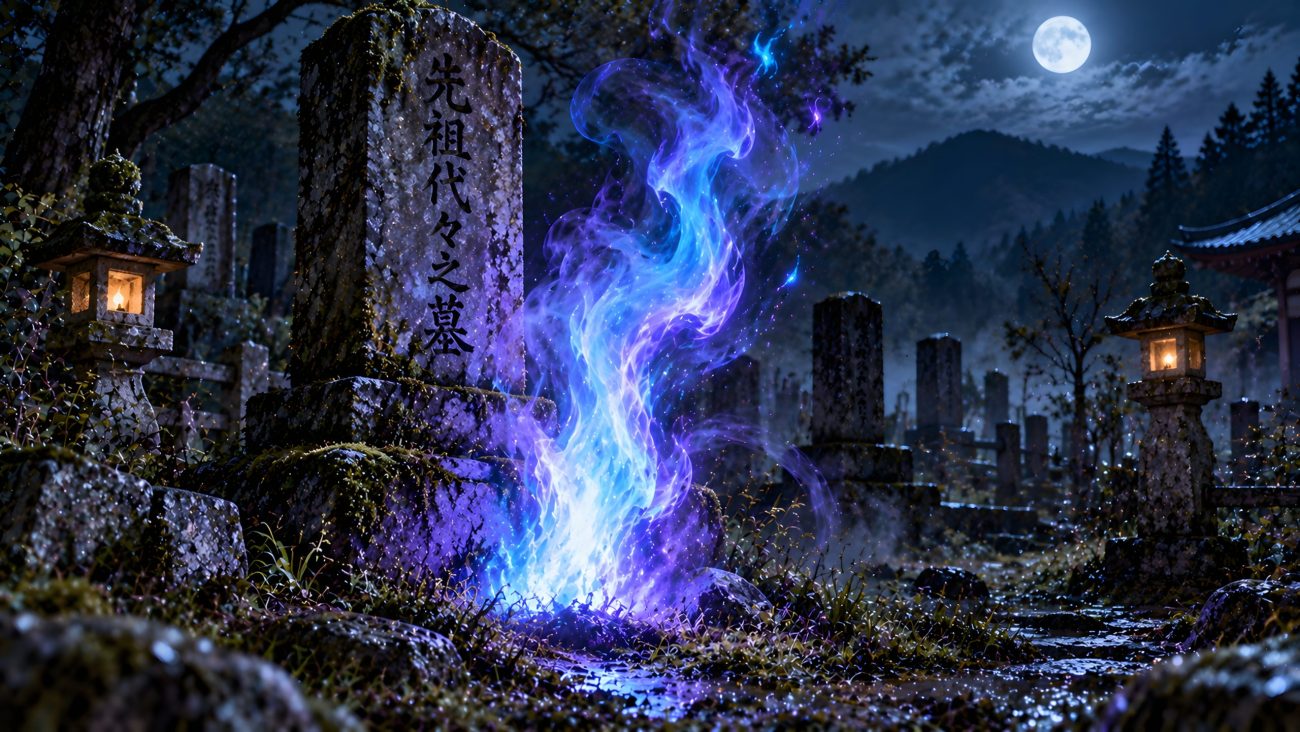
Haka no hi are mysterious supernatural fires, or kaika, that spout forth from the base of graves.

The cause of Haka no hi is unknown. It is commonly believed to result from the failure of the grave’s owner to reach enlightenment and pass on to Nirvana. The flames are thought to be residual energy from worldly attachments, or feelings of grudge or resentment, coming from the remains interred in the grave.


Sources

“Hakanohi.” Yokai.com: The Database of Japanese Folklore. https://yokai.com/hakanohi/


Kangoro-bi

Tradition / Region: Japanese Mythology
Alternate Names: Kantarō Fire, Kangoro
Category: Flame


The Myth

Kangoro-bi is a mysterious fire from Inuyama City, Aichi Prefecture, and other areas.

In Hashizume, Inuyama City, a farmer named Kangoro once lived with his elderly mother. Kangoro was eighteen years old, dutiful, honest, and known for his hard work.

One summer, a long drought caused the water in Kangoro’s rice paddy to dry up, while a neighboring rice paddy still had some water. Before dawn, Kangoro secretly cut down the embankment and diverted the water into his own rice paddy.

When the villagers discovered what he had done, they surrounded him with murderous intent. Kangoro was unable to escape and was beaten to death.

His elderly mother searched for her missing son, but the villagers refused to tell her what had happened. Understanding the situation, she stopped eating and died while continuously calling out Kangoro’s name.

From then on, every summer night, two shadowy flames wandered over the rice fields of Hashizume. For the next 400 years, the Aoki River also flooded many times, causing suffering to the villagers. The river finally calmed when Abbot Taiyo of Inuyama Tokuju Temple prayed for the spirits of Kangoro and his mother.

In Yatsurugi-cho, Iwakura City, the Kangoro fire is said to be the hand lamp of a mother searching for her son Kangoro, who went missing while catching fireflies. It is a bluish-red bare flame that can be seen at any time of year, but was said to be particularly common during the rice-planting season.


Sources

“Kangorobi.” 新版TYZ 妖怪図鑑 (New TYZ Yokai Encyclopedia). https://tyz-yokai.blog.jp/archives/1077434933.html


Onibi

Tradition: Japanese Mythology
Alternative Names: Ghost Fire, Onibi
Category: Flame


The Myth

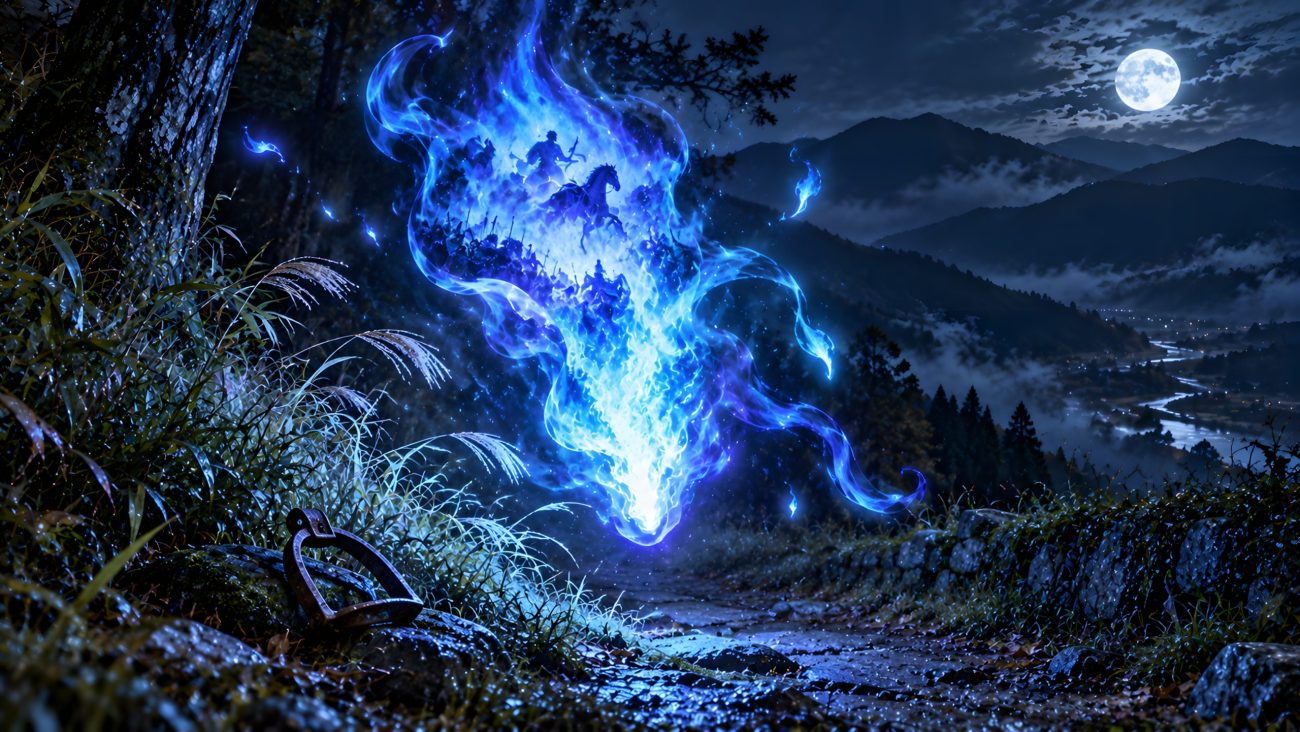
Onibi, meaning ghost fire, is a mysterious supernatural flame said to appear in various regions of Japan. It is most often described as a blue fire, sometimes resembling a burning torch, although accounts also describe flames of other colours. These strange lights appear without an ordinary source and are associated with spirits and the lingering presence of the dead.

According to the Wakan Sansai Zue, which cites the Chinese Bencao Gangmu, onibi are formed from the blood of fallen soldiers or cattle and horses that seeps into the earth and transforms over time. This account distinguishes them from will-o’-the-wisps and shadow fires, which are also described as transformations of spirits. Onibi are said to gather together and separate as they approach people, absorbing their life force. However, they can reportedly be made to disappear by producing a sound, such as striking them with a horse’s stirrups.

The name onibi is also used more broadly for mysterious flames of uncertain origin. Depending on the account, it may refer to foxfire, fires born from the resentment of the dead, or other unexplained supernatural lights. These varying descriptions make onibi a broad category of eerie flames associated with spirits, death, and mysterious occurrences.


Sources

“鬼火 [おにび] (Onibi).” 新版TYZ 妖怪図鑑 (New TYZ Yokai Encyclopedia). https://tyz-yokai.blog.jp/archives/1010652578.html


Nojukubi

Tradition: Japanese Mythology
Alternative Names: –
Category: Flame


The Myth

Nojukubi is a mysterious supernatural fire that appears along country roads, highways, and in the mountains of Japan. It manifests in places where no people are present, burning briefly before suddenly going out, only to appear again somewhere nearby. Unlike ordinary fires, it seems to arise without any visible cause, illuminating lonely and deserted places before vanishing into the darkness.

The Nojukubi is distinguished from foxfire and other natural-looking mysterious flames. Its appearances are unpredictable, and it is sometimes accompanied by strange sounds, including the noise of people talking excitedly or singing. These unexplained voices, heard alongside the flickering flames, give the phenomenon an eerie quality, as though an unseen gathering were taking place in the wilderness.


Sources

“Nojukubi.” 新版TYZ 妖怪図鑑 (New TYZ Yokai Encyclopedia). https://tyz-yokai.blog.jp/archives/1010653472.html


Katawaguruma Nyūdō

Tradition / Region: Japanese Mythology
Alternative names: One-Wheeled Monk / Flaming Wheel Monk
Category: Yokai, Flame


The Myth

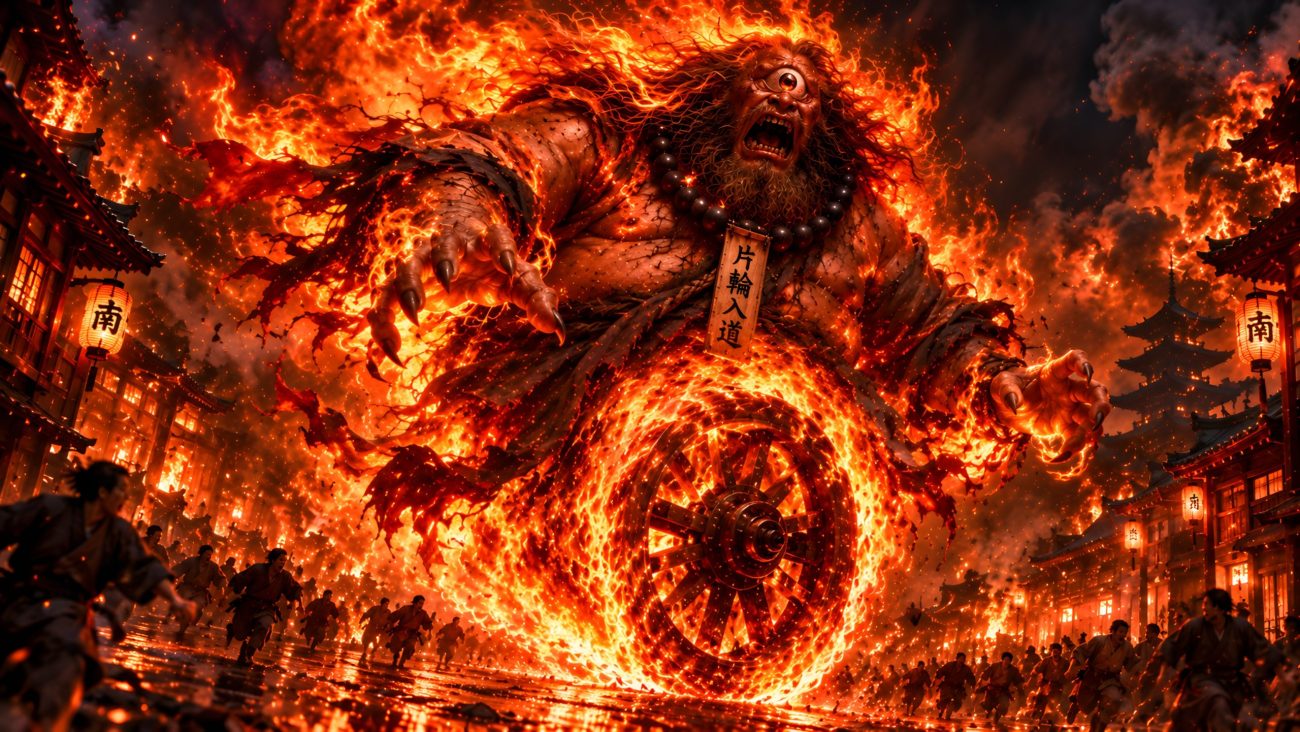
The Katawaguruma Nyūdō is a terrifying yokai that roams the streets of Kyoto at night. It appears as a gigantic hairy monk with a fierce face and enormous strength, riding upon a single wheel engulfed in flames. The burning wheel races through the darkness like a cart from hell, spreading fire and fear wherever it passes.

According to legend, the creature was once a powerful and wealthy monk who lived in the Rokuhara district of Kyoto. Cruel and arrogant, he delighted in the suffering of others and committed countless wicked deeds without fear of divine punishment. Although he enjoyed great prosperity during his life, his evil eventually caught up with him.

Divine punishment descended upon the monk, and he was consumed by supernatural flames. Transformed into a monstrous spirit, he became the Katawaguruma Nyūdō, forever condemned to wander Kyoto upon his fiery wheel.

One night, a woman living nearby put her three children to sleep and, through a knot hole in her door, secretly watched the terrible apparition pass by. The flaming monk noticed her gaze and shouted:

“Look to your children instead of looking at me!”

Terrified, the woman rushed to her children, but it was too late. The Katawaguruma Nyūdō seized all four members of the family and carried them away into the night, and they were never seen again.

Thus the One-Wheeled Monk became one of Kyoto’s most feared supernatural beings — a burning spirit born from greed and cruelty, whose fiery wheel still races through the darkness searching for those unfortunate enough to witness its passage.


Sources

TYZ. (n.d.). Katawaguruma Nyudo [片輪車入道]. In 新版TYZ 妖怪図鑑. Retrieved June 13, 2026, from https://tyz-yokai.blog.jp/archives/1079937229.html


Kitsunebi

Tradition / Region: Japanese Mythology
Alternate Names: Fox Lantern, Fox Torch, Kitsunebi
Category: Fox, Flame


The Myth

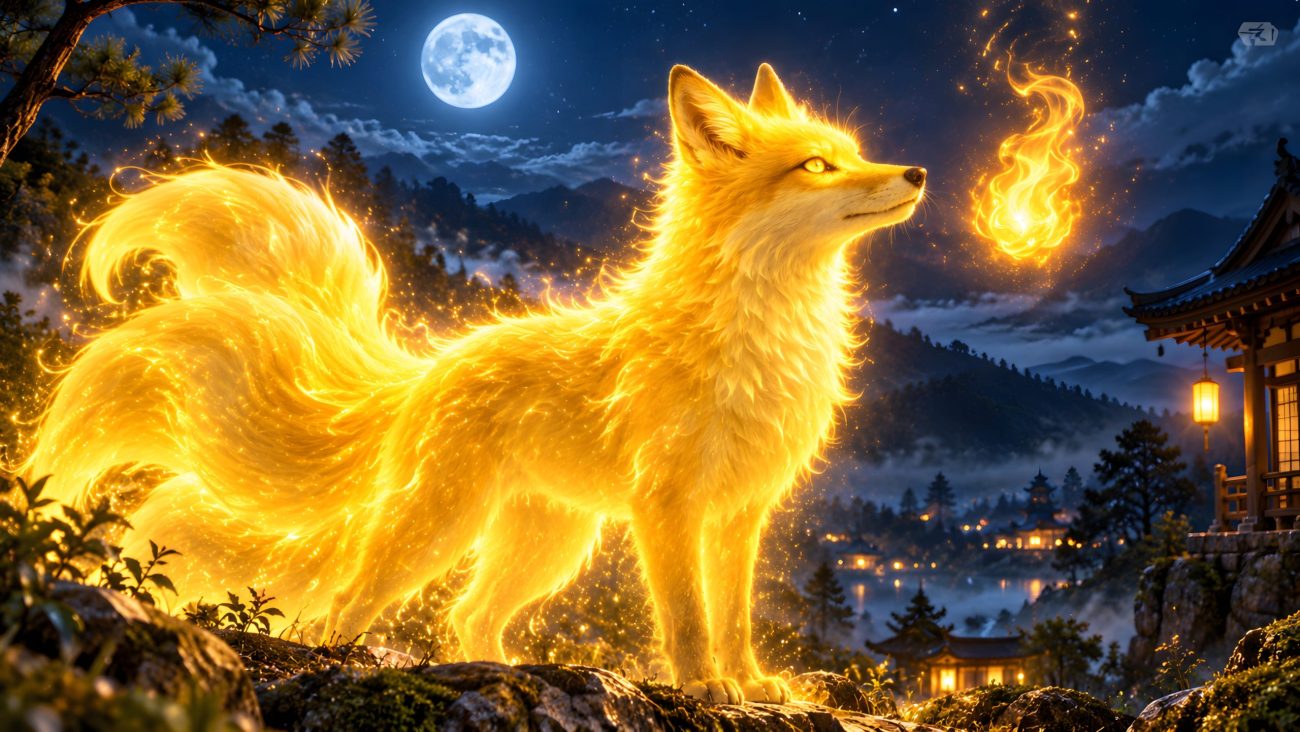
Across many parts of Japan, people have long spoken of mysterious lights appearing in the night, known as Fox Fire.

These flames are said to be created by foxes. Some believe the fire comes from their breath, glowing as they exhale into the darkness. Others say foxes strike their tails together to spark the light, or that they kindle it from strange materials such as bones. Sometimes the fire appears as floating balls of light that drift across fields and roads.

Because of its steady glow, the light is often called a fox lantern or fox torch. When many of these lights appear at once and move together through the night, people say a fox wedding is taking place somewhere unseen.

One famous tradition tells that at Ōji Inari Shrine in Edo, foxes from across the Kantō region gathered on New Year’s Eve. On that night, countless fox fires were said to dance across the fields as the foxes assembled to receive ranks from their deity. Villagers would watch the number and movement of the lights, believing they foretold whether the coming year would bring a good harvest.

Thus Fox Fire became known as both a sign of the hidden world and a message carried in light — a glow in the night that revealed the unseen presence of foxes and the mysteries that followed them.


Sources

Tyz-Yokai Blog. (n.d.). Kitsunebi. Retrieved March 1, 2026, from https://tyz-yokai.blog.jp/archives/1010653498.html