Jiro Saburo Sai

Tradition: Japanese Mythology
Alternative Names: Jiro Saburo’s Wife, Demon Wife
Category: Demon


The Myth

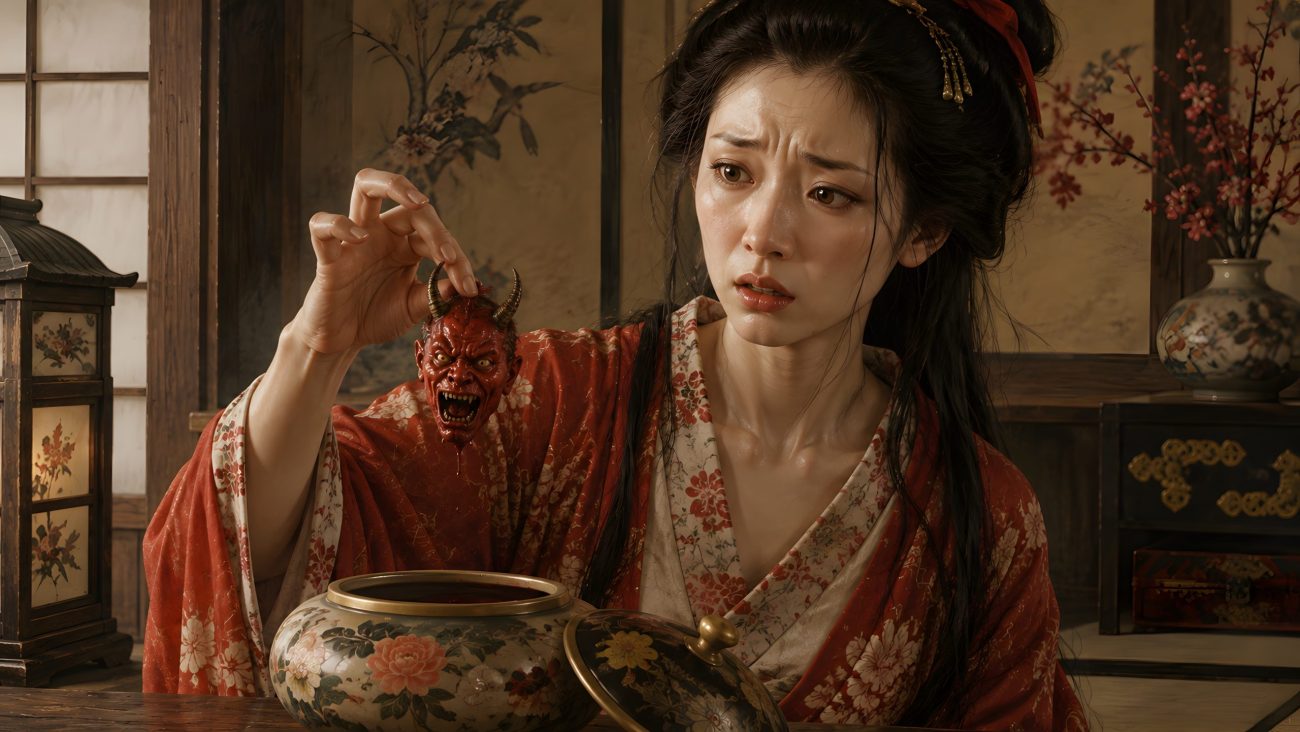
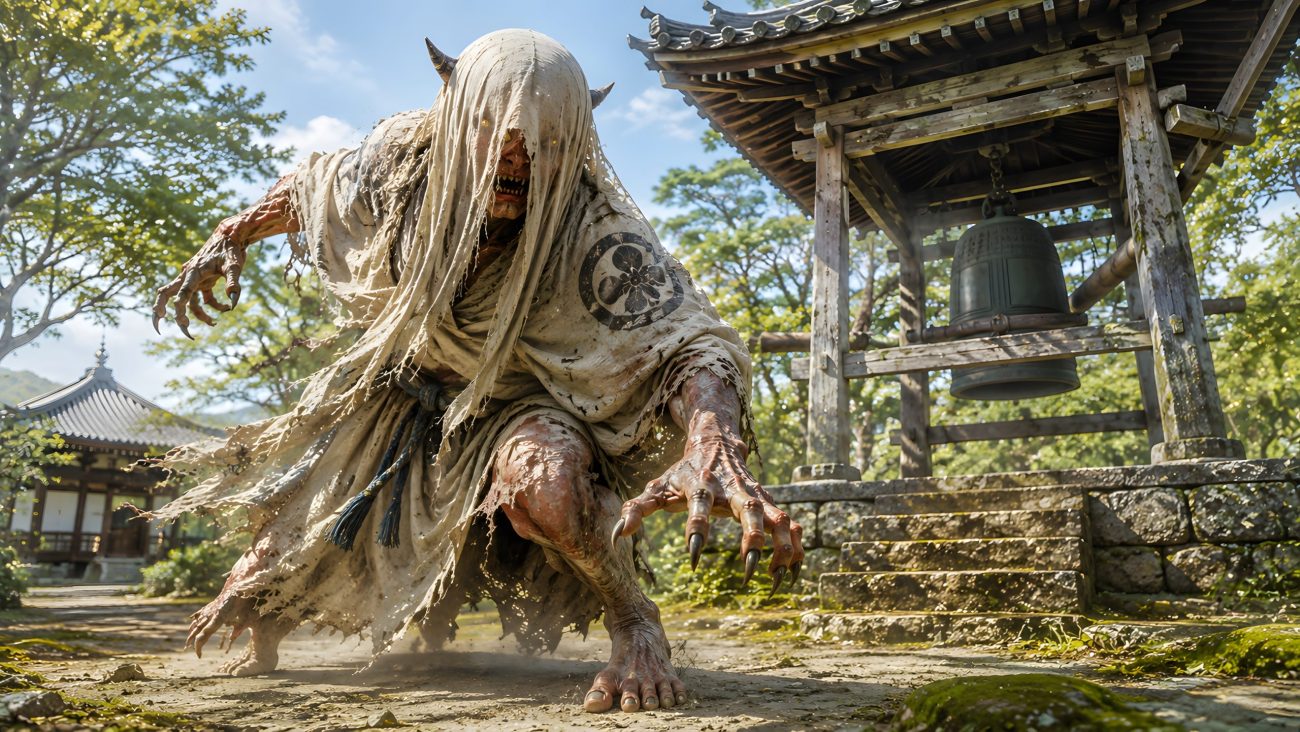
Jiro Saburo’s wife was a cruel and intensely jealous woman who eventually transformed into a terrifying demon after her husband abandoned her. Before her transformation, she was already known for her vicious temper and unbearable jealousy, particularly toward the female servants of her household.

She became furious whenever a female servant even looked at her husband or spoke with him. Her constant abuse eventually drove all of the servants away. As the family’s wealth declined, her behavior became increasingly bitter and violent, and she refused to listen to anyone who tried to correct her.

Jiro Saburo finally warned her that if she did not change, he would leave the household. Enraged, she attacked him and choked him, declaring that even if she could not kill him while alive, she would kill him after her death. She accused him of wanting to leave her for another woman.

Jiro Saburo eventually disappeared. When his wife discovered that he had fled, she became consumed by hatred. She searched everywhere for him, repeatedly swearing that she would never allow him to escape her. During the day she wandered about looking for him, while at night she wept and repeated that she hated him for abandoning her.

After forty or fifty days, she had become almost unrecognizable. Her eyes were bloodshot, her cheekbones protruded, and she had become filthy and disheveled. She refused to wash or eat and behaved so strangely that the villagers became afraid of her.

Then her house suddenly became silent. At midnight, however, the villagers heard her speaking inside as though someone had come to visit her. The following day the house was silent again. Several brave villagers eventually looked through a hole in the wall and saw something horrifying.

Two horns had grown from the woman’s head. Her mouth had split almost to her ears, and fangs had emerged from both sides. Her eyes shone fiercely, making her indistinguishable from a demon. Terrified, the villagers abandoned the neighborhood.

People who knew where Jiro Saburo was hiding hurried to warn him. He remembered his wife’s threat that she would return from the dead to kill him and feared that she would find him.

A traveling monk named Gen’ō was staying nearby. He was the famous monk said to have destroyed the Sesshō-seki, the Killing Stone. Jiro Saburo went to him, explained everything, and begged for help.

Gen’ō told him that his wife’s obsession had transformed her into a demon. She had entered the demonic realm with nothing in her heart except the desire to kill her husband. According to Gen’ō, six days had passed since her death, and that night she would receive permission from the Sixth Heaven to travel through the three thousand worlds in a single night.

Gen’ō instructed Jiro Saburo to return home. There they found the corpse of his wife lying in the ruined house, its face already resembling that of a demon or rakshasa.

The monk stripped Jiro Saburo naked and covered his body with the Nio Hannya Sutra. He then ordered him to climb onto the demoness’s back, wrap his arms around her neck, and never let go.

Jiro Saburo obeyed despite his terror. As night fell, Gen’ō left him alone and told him that his survival depended entirely on holding on. Jiro Saburo remained clinging to the corpse and continuously recited Buddhist names.

In the middle of the night, the demoness’s cold body gradually began to grow warm. Suddenly it rose to its feet. Its eyes shone brightly, flames came from its mouth, and it spoke.

“Oh, how wonderful! Tonight I have been granted permission to kill you. Now, let’s see where you are.”

The demoness ran away, carrying Jiro Saburo on her back. She raced across mountains, rivers, and valleys like a bird flying through the night, searching everywhere for him. Jiro Saburo realized that this was his only chance to survive and held onto her neck with all his strength, determined not to release her even if his arms were torn away.

The demon searched throughout the night but never realized that Jiro Saburo was clinging to her back. When dawn approached, she returned home in frustration.

“I’ve searched so hard, but I can’t find you. I suppose you must have died before me.”

She laughed bitterly, lamenting that she had failed to find him. Immediately afterward, the demoness collapsed to the ground, and Jiro Saburo lost consciousness.

At dawn, Gen’ō returned and woke Jiro Saburo. Seeing that he had followed his instructions and survived the night, the monk told him that he no longer needed to fear his wife. Together they buried the demoness’s corpse and gave her a proper burial.

Not long afterward, Jiro Saburo cut off his topknot and became a disciple of Gen’ō.


Sources

Takahashi, Toshihiro. “次郎三郎妻 [じろうさぶろうさい] (Jirō Saburō Sai).” 新版TYZ 妖怪図鑑 (New TYZ Yokai Encyclopedia). June 16, 2019. https://tyz-yokai.blog.jp/archives/1074775106.html
Akanyūdō

Tradition: Japanese mythology
Alternative Names: Aoandon, Blue Lantern
Category: Demon


The Myth

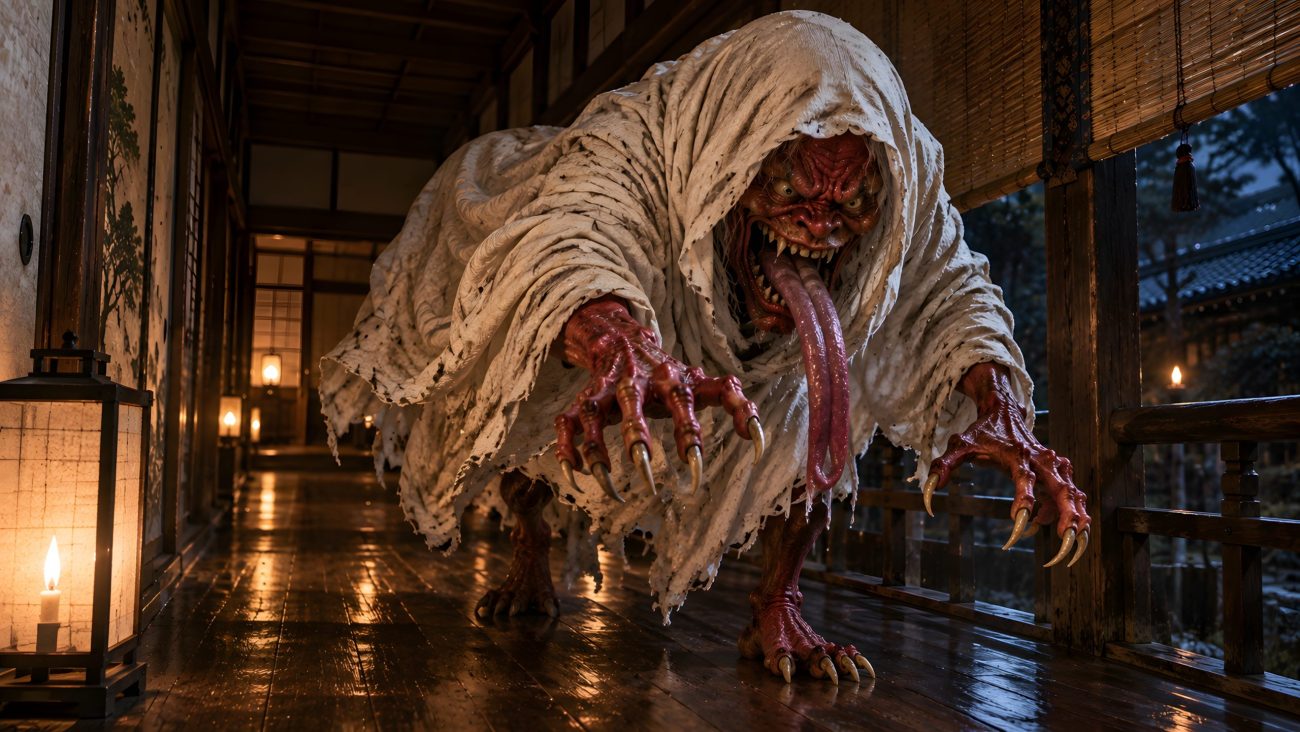
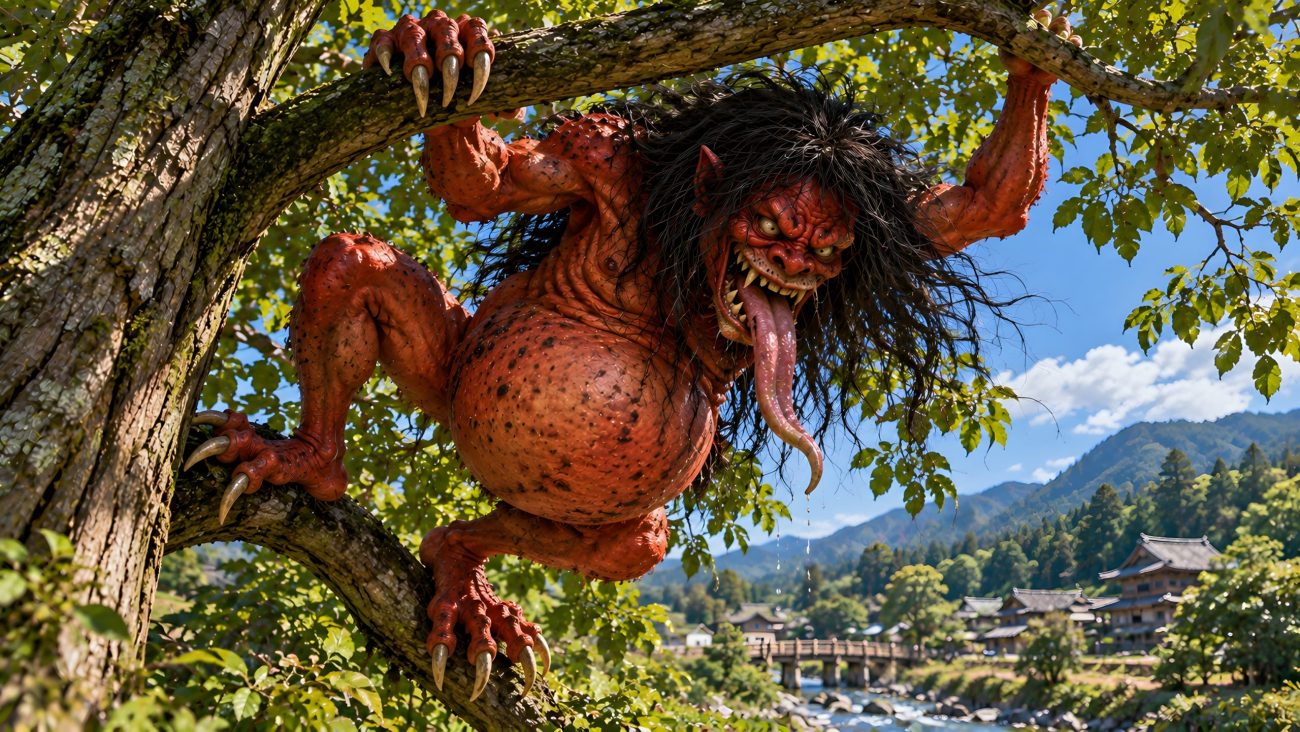
Akanyūdō is a red yōkai wearing a white cloth. It has the appearance of a Buddhist monk or priest, with its body and face covered in a vivid red color.

The creature is depicted in the Hyakki Yagyō Emaki, a Japanese scroll of supernatural creatures. Akanyūdō is shown in the same posture as another yōkai that is identified as Ganjōji (元興寺) in other works. No further legend or behavior is given for Akanyūdō in the source.


Sources

Takahashi, Toshihiro. “赤入道 [あかにゅうどう] (Akanyūdō).” 新版TYZ 妖怪図鑑 (New TYZ Yokai Encyclopedia). August 1, 2015. https://tyz-yokai.blog.jp/archives/1035781303.html


Kowabakarachiki

Tradition: Japanese mythology
Alternative Names: Kowabakarachiki
Category: Demon


The Myth

Kowabakarachiki is a strange monster depicted stomping on a man. Its barking cry is described as “akirence,” while the man being stepped on cries out, “Oya wo ya, whatever.”

The creature appears in the Hyakki Yakō Monogatari, where it is listed as “Bamba Kowabakarachiki.” It does not appear in the Chinese texts associated with Heian and Han traditions, and the source describes it as a later local creation.

Kowabakarachiki was created as a wordplay based on the Yuri language, or Kaku language. Its name is said to play on a phrase meaning roughly “Koha — this is, well, stupid.” The strange cry of the monster and the words shouted by the man are constructed in the same playful manner.

The creature is therefore a yokai built around deliberately strange, foreign-sounding speech, turning unfamiliar language into a source of humor and supernatural absurdity.


Sources

Takahashi, Toshihiro. “コワバカラチキ (Kowabakarachiki).” 新版TYZ 妖怪図鑑 (New TYZ Yokai Encyclopedia). October 19, 2013. https://tyz-yokai.blog.jp/archives/1010654442.html


Dodomeki

Tradition: Japanese mythology
Alternative Names: 百々目鬼, どどめき
Category: Demon


The Myth

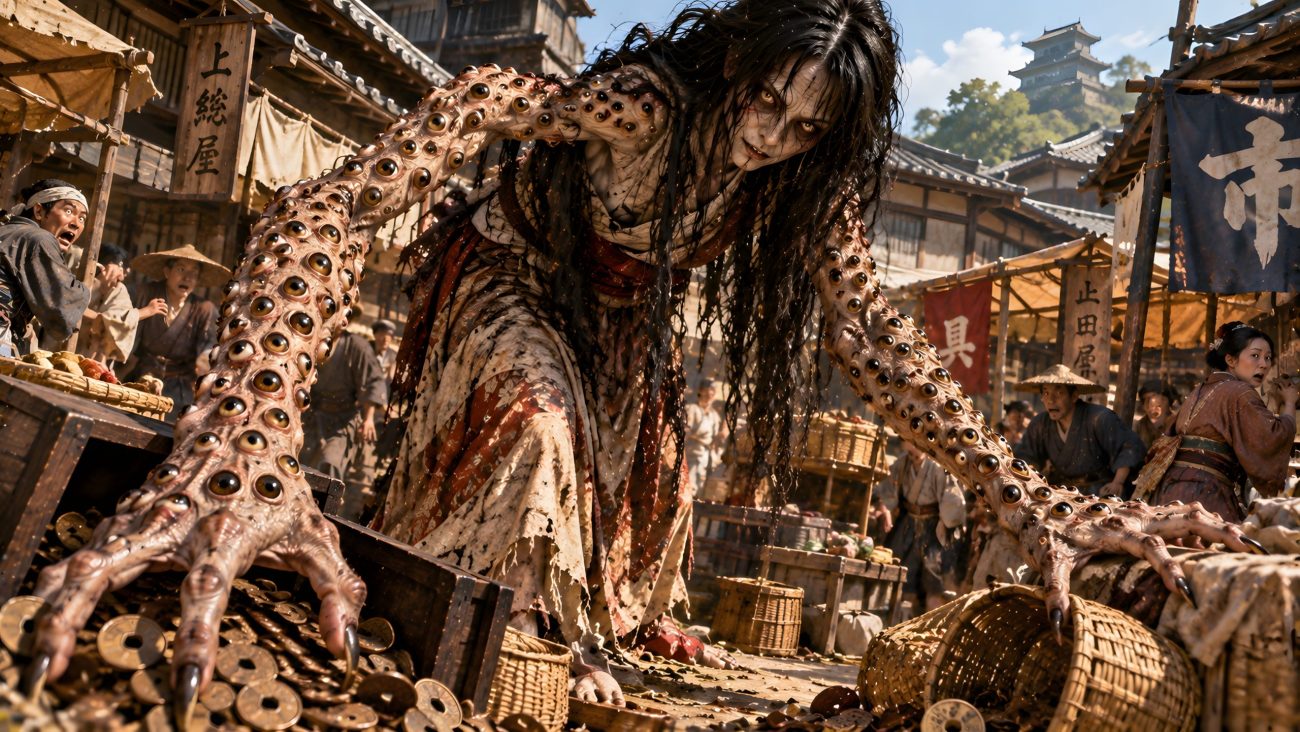
The Dodomeki is a cursed woman with exceptionally long arms covered in hundreds of tiny bird eyes. She was originally a human woman who developed a habit of stealing money. As a consequence of her wicked deeds, hundreds of small bird eyeballs eventually sprout from her arms, transforming her into a monster.

The creature’s appearance is built around a series of Japanese wordplays. Having “long arms” is an expression for someone who has a tendency to steal, so the Dodomeki possesses long arms both figuratively and literally. Copper coins, called dōsen, had holes in their centers and were colloquially called chōmoku, meaning “bird’s eye,” because of their appearance. Thus, a woman who stole copper coins became a monster whose arms were covered in bird eyes.

Money could also be called oashi, literally “feet,” because money comes and goes as though it had feet. The expression ashi ga tsuku means “to catch someone who has committed a crime.” By replacing ashi with chōmoku, which could also refer to money, the expression becomes a pun meaning “covered in bird eyes.” These wordplays were incorporated into Toriyama Sekien’s description of the yokai.

A much older legend tells of Fujiwara no Hidesato, a nobleman who had been granted the position of kokushi of Shimotsuke Province after defeating the rebel Taira no Masakado. While hunting in his newly acquired territory, Hidesato encountered an old man who warned him that an oni had appeared at the horse graveyard at Utsunomiya. Hidesato took his bow and arrows and went to investigate.

He waited at the horse graveyard until nightfall. During the hour of the ox, an enormous demon appeared and began ravenously devouring the carcasses of dead horses. It stood more than ten feet tall, possessed sharp, spiked hair, and had glowing eyes covering its entire body. Hidesato carefully aimed at the brightest eye and fired an arrow directly into it.

The arrow struck the demon, which roared in pain and fled into the woods. Eventually it collapsed at the foot of Mount Myōjin. Yet the wounded demon still possessed tremendous power. Flames erupted from its body, while its mouth split open and released poisonous fumes. The intense heat and toxic air overwhelmed Hidesato, forcing him to abandon the fight and return to his palace.

When Hidesato returned the following day, he found that a large area of ground had been blackened and burned. The demon itself, however, had disappeared.

Four hundred years later, during the Muromachi period, a village had developed on the northern slope of Mount Myōjin. Strange events began occurring there. The head priest of the local temple suffered mysterious injuries, while unexplained fires repeatedly broke out around the temple.

A new head priest, the virtuous Saint Chitoku, was summoned to discover the cause. Chitoku noticed that a young woman frequently visited the temple whenever he preached his sermons. He eventually realized that she was actually the wounded demon from Hidesato’s battle, disguised as a human woman.

After surviving the battle, the demon had retreated into nearby caves to recover. In human form, it repeatedly returned to the place where it had fallen at Mount Myōjin. There it gradually sucked back up the poisonous fumes it had released during the battle and collected the blood it had spilled. Because the village temple had been constructed directly over the old battlefield, the demon began causing fires and attacking the priest in an attempt to drive the people away.

One day, Saint Chitoku confronted the disguised demon. She revealed her true nature as a Dodomeki, but she did not attack him. While repeatedly visiting the temple, she had listened to Chitoku’s powerful sermons, and his teachings had deeply affected her.

The Dodomeki promised that she would never again commit evil. From that time onward, the area around Mount Myōjin became known as Dodomeki.


Sources

“Dodomeki.” Yokai.com: The Japanese Yokai Encyclopedia. Accessed September 7, 2026. https://yokai.com/dodomeki/


Oni no Nembutsu

Tradition: Japanese mythology
Alternative Names: Oni no Nembutsu, Demon Soliciting Alms
Category: Demon


The Myth

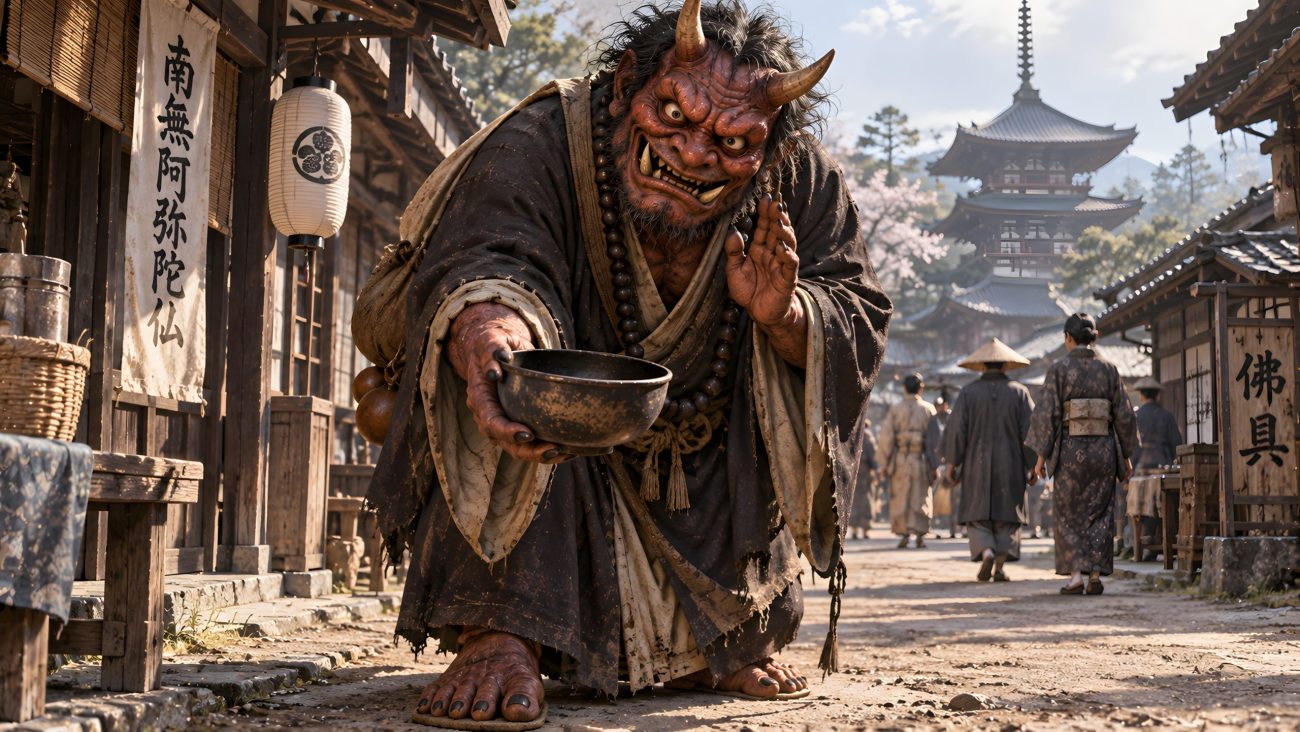
The Oni no Nembutsu is a mischievous demon depicted as an oni dressed in the robes of a Buddhist priest and begging for alms.

The creature belongs to the tradition of the oni, supernatural demons commonly portrayed as frightening but also capable of humorous and mischievous behavior. In the depiction, the demon takes on the appearance and role of a Buddhist religious figure, humorously placing a fearsome supernatural being in the position of a priest who depends upon others for offerings.

The figure was used in the popular tradition of Otsu-e, where mischievous demons could be portrayed in humorous situations and accompanied by moralizing text. The image of the demon dressed as a priest and soliciting alms became one of these humorous supernatural subjects.


Sources

University of Michigan Museum of Art. “Ôtsu-e: Demon Soliciting Alms (Oni no Nembutsu).” University of Michigan Museum of Art. 18th century. Accession no. 1964/2.102. Accessed September 6, 2026. https://umma.umich.edu/objects/otsu-e-demon-soliciting-alms-oni-no-nembutsu-1964-2-102/


Ao Andon

Tradition: Japanese mythology
Alternative Names: Ao Andō, 青行燈
Category: Demon


The Myth

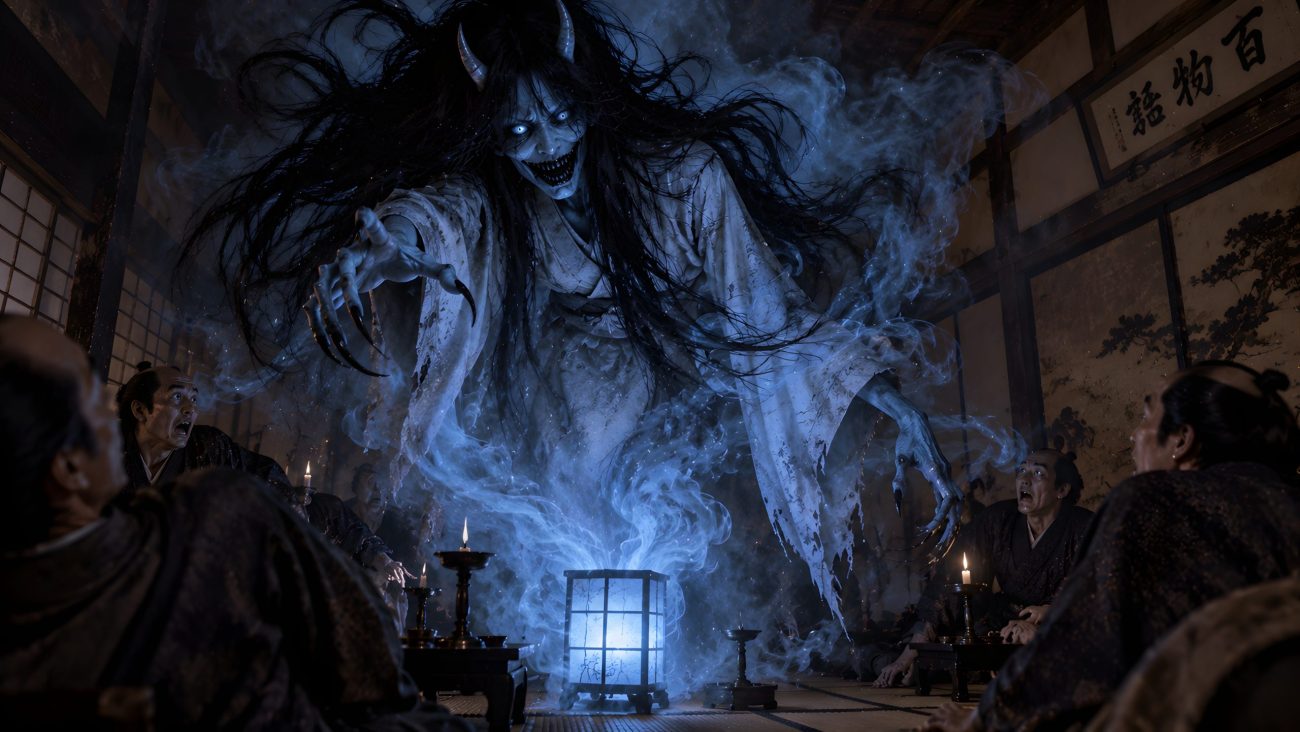
The Ao Andon, meaning “blue lantern,” is a supernatural spirit associated with the Japanese tradition of hyakumonogatari kaidankai, gatherings in which people told one hundred ghost stories. It appears as a demonic woman with long black hair, blue skin, blackened teeth, sharp claws, and horns. She wears a white or blue kimono and emits an eerie blue light.

During the Edo period, hyakumonogatari kaidankai became a popular summertime activity, particularly among the aristocratic classes. Groups gathered together to tell frightening stories in the hope that the fear would provide relief from the intense summer heat.

One hundred candles were placed inside blue paper lanterns called andon. The guests took turns telling increasingly frightening stories about yokai, demons, ghosts, and other supernatural beings. After each story, one candle was extinguished. As the night continued, the room gradually became darker until only the hundredth candle remained, its dim blue light casting long and unsettling shadows.

According to superstition, something terrible would happen when the final candle was extinguished. The accumulated fear of the participants would cause an actual spirit to materialize from the darkness. This spirit was called the Ao Andon.

The Ao Andon was said to emerge from the smoke of the final candle and attack the storytellers. Exactly what happened during this attack was never established. It might slaughter the participants in a horrific finale resembling the stories they had told, or it might simply appear suddenly and give them one final fright before disappearing.

In practice, however, the final story was traditionally never reached. By the time ninety-nine ghost stories had been told, the participants were supposedly too frightened to tell the hundredth. The gatherings therefore ended before the last candle was extinguished and the Ao Andon could appear.

The belief behind the Ao Andon was essentially that speaking about supernatural beings could cause them to appear. By gathering together, telling stories about ghosts and demons, and concentrating their fear upon them, the participants risked bringing the very spirits they discussed into the room.


Sources

“aoandon.” Yokai.com: The Japanese Yokai Encyclopedia. Accessed September 6, 2026. https://yokai.com/aoandon/


Nuribotoke

Tradition: Japanese mythology
Alternative Names: Nuribotoke
Category: Demon


The Myth

Nuribotoke is a yokai depicted in Japanese picture scrolls and illustrated collections of supernatural creatures, including Hyakkai Zukan and Toriyama Sekien’s Gazu Hyakki Yagyō (Illustrated Night Parade of One Hundred Demons).

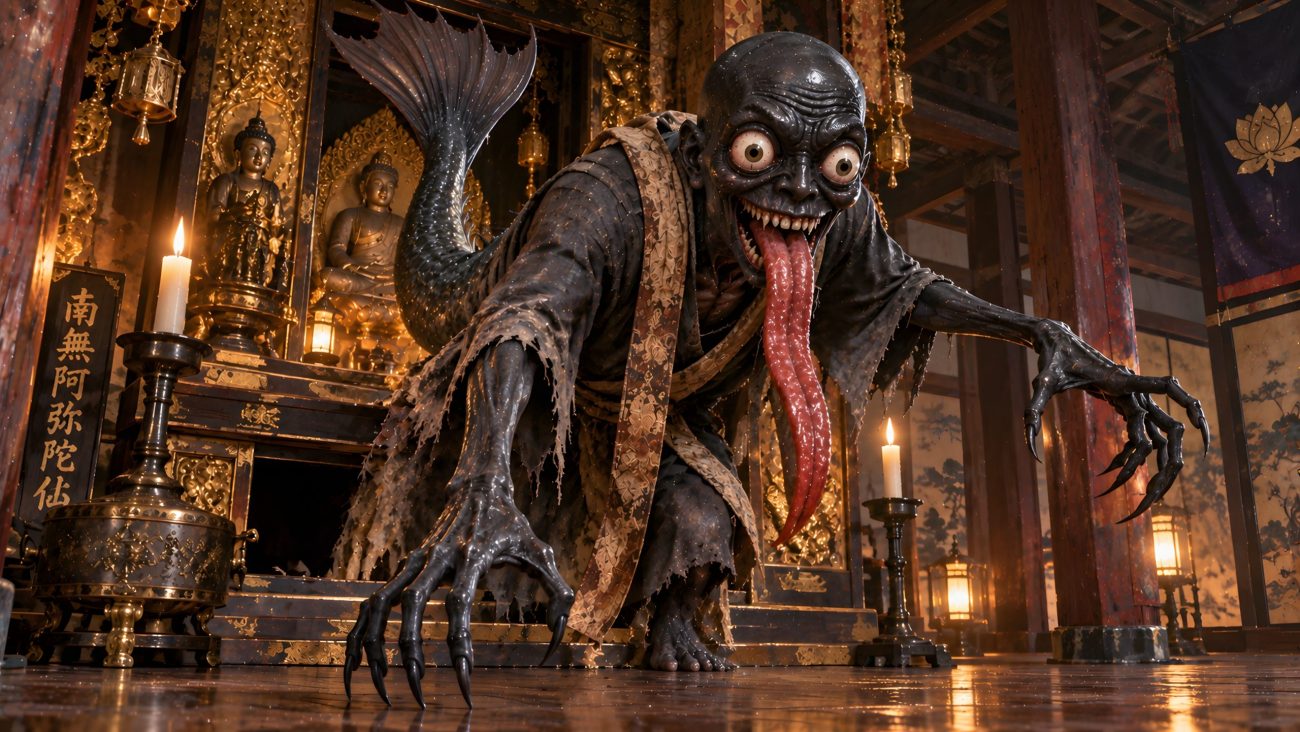
The creature is generally depicted as a completely black Buddhist monk with bulging eyes and a strange appendage resembling a fish’s tail extending from its back.

In Toriyama Sekien’s Gazu Hyakki Yagyō, the Nuribotoke appears emerging from inside a Buddhist altar. Its body is black, but unlike some other depictions, it does not have a tail on its back.

No accompanying text or explanation survives with the traditional illustrations, so there are no specific characteristics, legends, or stories associated with the Nuribotoke in these sources. In later children’s books dealing with yokai, it is sometimes described as suddenly appearing from a Buddhist altar to surprise people.


Sources

Takahashi, Toshihiro. “塗仏 [ぬりぼとけ] (Nuribotoke).” 新版TYZ 妖怪図鑑 (New TYZ Yokai Encyclopedia). October 25, 2009. https://tyz-yokai.blog.jp/archives/1010652662.html


Gaibyō-ki

Tradition: Japanese mythology
Alternative names: The Coughing Disease Oni
Category: Demon


The Myth

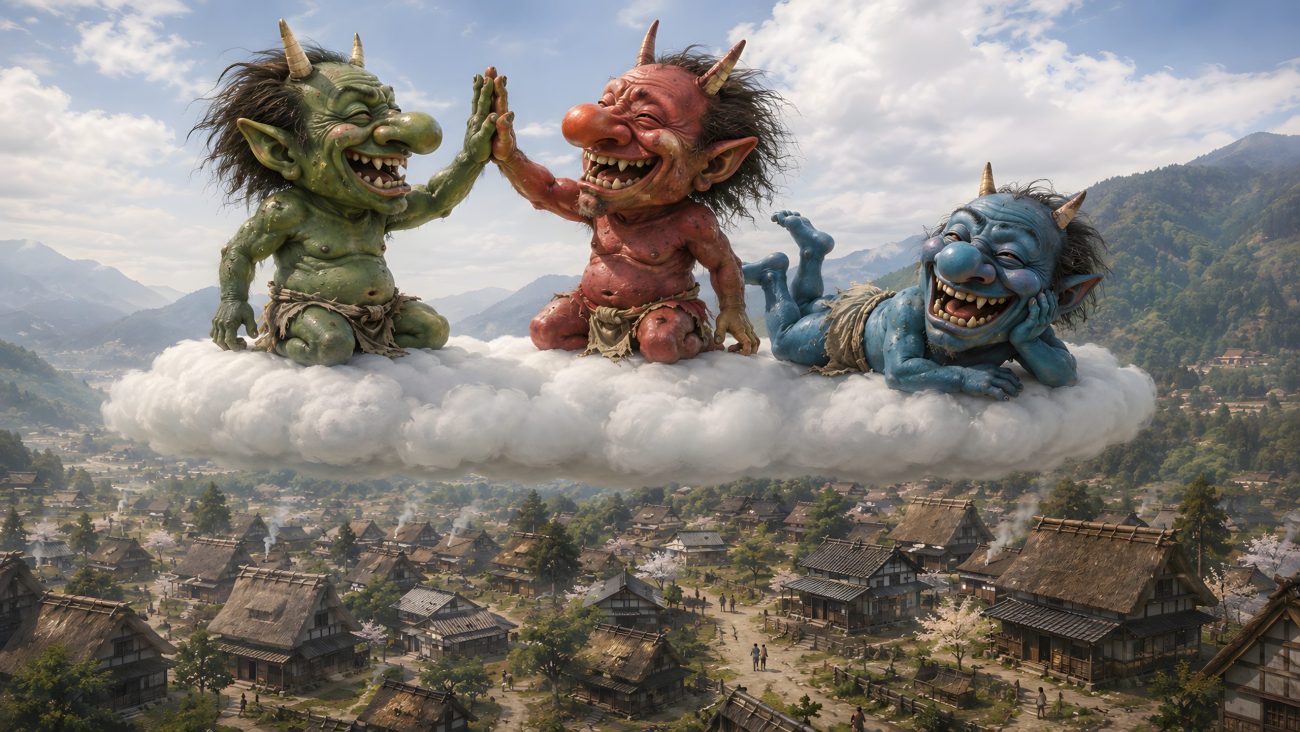
Gaibyō-ki are small oni associated with an outbreak of coughing sickness. They are depicted as three small demons riding on clouds and attempting to enter a household, where they spread the disease.

The story appears in Ehon Sayoshigure under the title Okina Ekijin o Fusegu.

Around the Eishō era (1504–1521), coughing sickness spread through four or five villages in Echizen Province. Many villagers became seriously ill and were confined to their beds.

A rōnin lived in one of the affected villages, but strangely, nobody in his household became sick.

One night, an old man appeared at the rōnin’s house and told him that he lived beneath the southeastern corner of the house. He explained that oni carrying the coughing disease had recently been entering people’s homes and causing them to suffer. Because he recognized the rōnin’s virtuous conduct, the old man had been standing guard outside the house each night to keep the oni away.

After the old man departed, the rōnin dug beneath the southeastern corner of the house. There he discovered a box buried in the ground.

Believing that the box represented the old man who had protected his household, the rōnin built a shrine and worshipped him.

The accompanying illustration shows three small oni riding through the clouds as they attempt to enter the rōnin’s home, while the old man stands before the gate and glares at them, preventing their entry.


Sources

Takahashi, Toshihiro. “咳病の鬼 [がいびょう‐き] (Gaibyō-ki).” 新版TYZ 妖怪図鑑 (New TYZ Yokai Encyclopedia). July 19, 2020. https://tyz-yokai.blog.jp/archives/1077741576.html


Kigyō-yubi

Tradition: Japanese mythology
Alternative names: Oni-shaped Finger
Category: Demon


The Myth

Kigyō-yubi is a severed human finger that appears to transform into the head of a small oni. The transformed finger is described as having a red complexion, two curled horns, and bright, star-like eyes, resembling the traditional Japanese depiction of an oni.

The story appears in the second volume of Kaishū Yakōkon, in a tale concerning a courtesan named Tatsuta.

Tatsuta was born in Kyoto and became a shirabyōshi, a female entertainer who performed songs and dances. After moving to Naniwa, she became highly sought after because of her beauty and skill at singing. She eventually fell deeply in love with a young merchant named Yamamoto Matashuke, and remained devoted to him even while continuing her work as a courtesan.

Matashuke, however, eventually abandoned her and married another woman. Tatsuta was devastated by his change of heart. She repeatedly sent him letters and, as proof of her devotion, even cut off her hair and one of her fingers and sent them to him. Matashuke regarded these gifts as troublesome and returned them.

Consumed by grief, jealousy, and resentment, Tatsuta became increasingly distraught. The severed finger remained in a container in her possession.

One day, when Tatsuta looked at the finger, she saw that it had transformed into the head of a tiny oni. It was red, had two curled horns, and possessed eyes that shone like stars. Terrified, Tatsuta covered the container and believed that her intense jealousy had caused her severed finger to become an oni.

She went to a reclusive monk named Ryōfū and confessed what had happened. When Ryōfū opened the container, however, he saw nothing unusual. The object was simply a human finger.

When he asked Tatsuta whether she still saw an oni, she insisted that she did. Ryōfū concluded that the oni was a manifestation of the demon within her own jealous mind, projected onto the severed finger.

Ryōfū taught her Buddhist teachings and gave her the ten recitations of the Buddha’s name. Three days later, Tatsuta returned and happily explained that she could no longer see the finger as an oni. She wished to shave her head and become Ryōfū’s disciple.

Ryōfū initially refused, explaining that she could not simply abandon her life as a courtesan. Instead, he taught her that she could turn her heart toward Buddhism even while remaining outwardly in her existing circumstances.

Tatsuta continued as a courtesan for some time, but eventually fulfilled her wish and became Ryōfū’s disciple. She shaved her head, took the name Eirin Bikuni, and established a hermitage at Sonezaki.


Sources

Takahashi, Toshihiro. “鬼形の指 [きぎょう‐ゆび] (Kigyo-yubi).” 新版TYZ 妖怪図鑑 (New TYZ Yokai Encyclopedia). September 22, 2018. https://tyz-yokai.blog.jp/archives/1072385607.html


Gagoze

Tradition: Japanese mythology
Alternative names: Gagojin, Gagoji, Gangoji, Gangōji, Gagoze
Category: Demon


The Myth

Gagoze is a Japanese yokai associated with the ancient Gangōji temple in Nara. In later yokai picture scrolls, it is depicted as an ogre-like figure with a cloth covering its head. These depictions are thought to have been inspired by the vengeful spirit said to have appeared in the temple’s bell tower.

During the reign of Emperor Bidatsu, a farmer from Katawa in Aichi District, Owari Province, encountered a small thunder deity that had fallen from the sky. After helping the deity return to heaven, the farmer was rewarded with a child.

The child was born with a snake wrapped around his head and grew into a person of extraordinary strength. He eventually became a temple servant at Gangōji.

At that time, a demon appeared every night in the temple’s bell tower and killed people. The exceptionally strong youth volunteered to defeat it. At midnight, he confronted the demon and fought with it. The demon eventually escaped, but the youth succeeded in tearing out some of its hair.

The following day, the monks followed the trail of blood left by the fleeing demon. It led them to a place where people who had committed evil deeds at the temple had been buried. The demon was therefore revealed to be the vengeful spirit of a wicked person who had died.

The demon’s hair was preserved at Gangōji as a temple treasure. The youth later became known as Dōjō Hōshi and became a Buddhist monk.

The names Gagoze, Gagoji, Gagojin, and Gangoji later became associated with words for monsters or bogeymen in children’s speech. During the Edo period, these names were understood as corruptions of Gangōji and were connected with the legend of the temple’s demon.


Sources

Takahashi, Toshihiro. “元興寺 [がごぜ] (Gagoze).” 新版TYZ 妖怪図鑑 (New TYZ Yokai Encyclopedia). December 6, 2010. https://tyz-yokai.blog.jp/archives/1010653554.html