Mājas gars

Tradition / Region: Latvian Mythology
Alternate Names: House spirit, house god, lord of the house
Category: House dweller, Frog, Insect, Beetle, Snake


The Myth

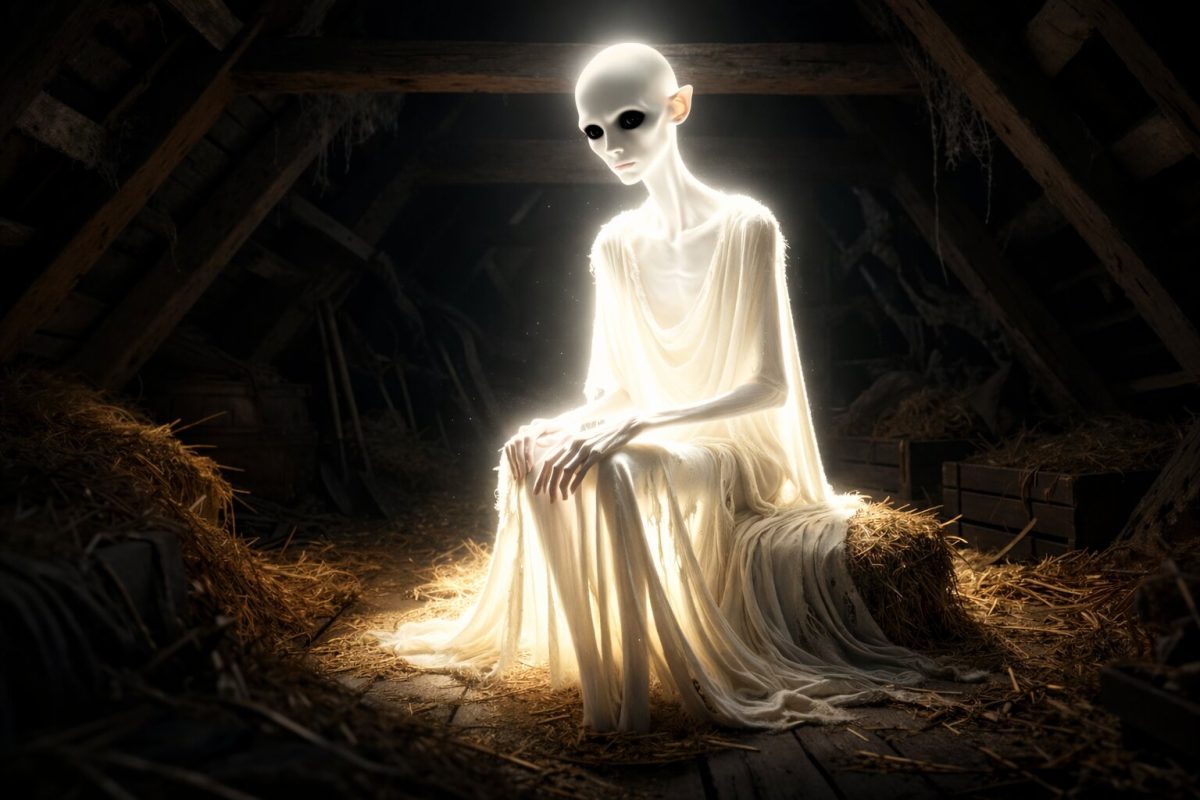
Mājas gars is a household spirit in Latvian mythology that protects the inhabitants of a home from evil and brings prosperity and good fortune. It is regarded as one of the lower deities (dieviņi) and is sometimes called Mājas kungs, the Lord of the House. The spirit is associated with the hearth and may dwell behind the stove, beneath the floor, or elsewhere in the farmstead, and it could still be honored in some places as late as 1935.

Mājas gars watches over the household and everything within it, ensuring the protection of the home and the well-being of the family. The spirit may appear to people in different forms, sometimes as a man or woman dressed in white, and at other times as an animal connected to the home, such as a toad, a snake, or a beetle. It is understood as a presence guarding the house, living near the hearth or elsewhere on the farmstead, and acting as the household’s protective spirit, bringing good fortune and keeping away harmful forces.


Sources

Wikipedia contributors. (n.d.). Mājas gars. In Wikipedia, from https://lv.wikipedia.org/wiki/M%C4%81jas_gars

Lou Carcolh

Tradition / Region: France (Gascony; Hastingues)
Alternate Names: Carcolh, Liu-Karkul
Category: Snail / dragon


The Myth

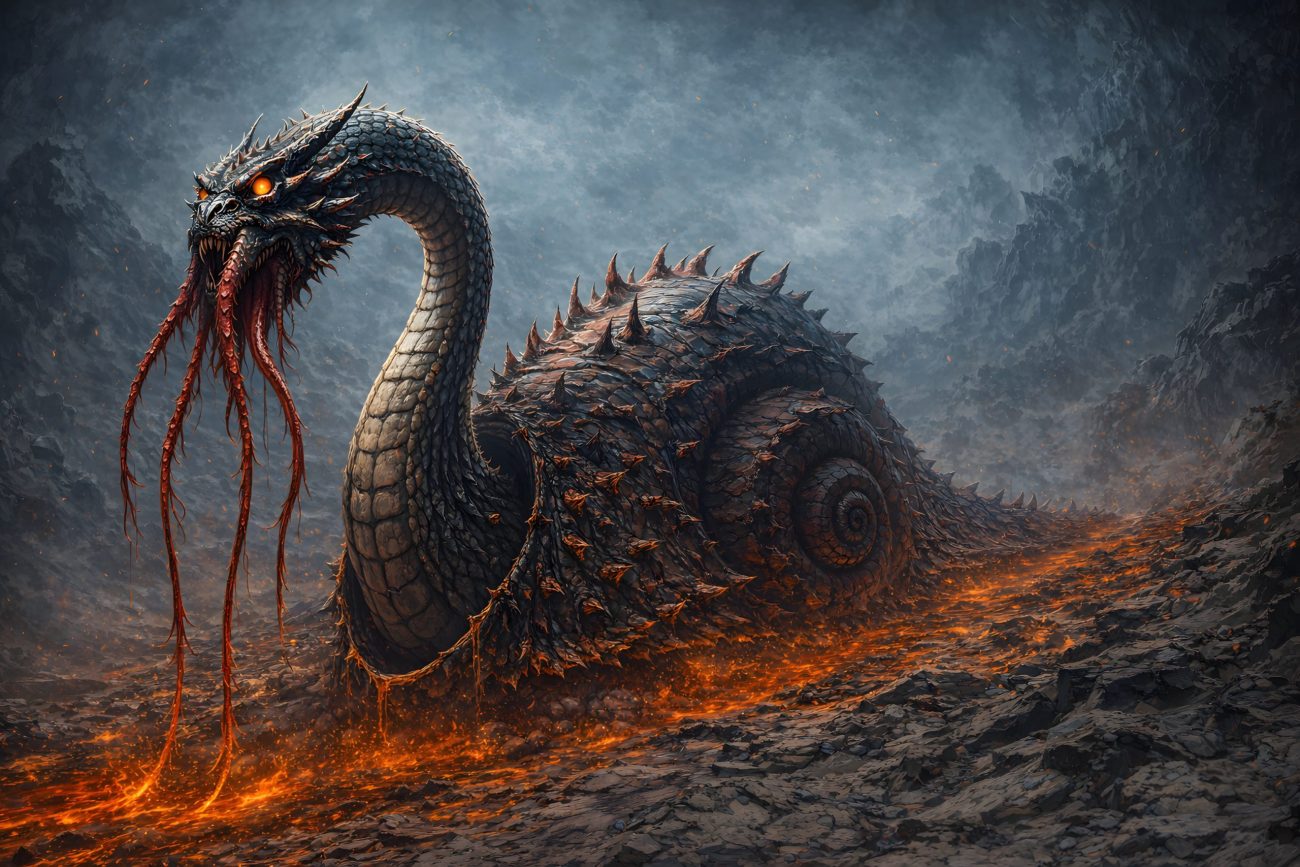
Lou Carcolh is a monstrous creature of Gascon folklore, whose name means “snail.” It is said to dwell in a deep cavern beneath the town of Hastingues in southwestern France. Half serpent and half mollusk, Lou Carcolh possesses a vast, elongated body crowned by an enormous shell as large as a house.

From its gaping mouth extend numerous long, hairy tentacles, slick with mucus. These appendages spread outward from the cave, lying flat against the ground and coated in thick slime. The tentacles can reach great distances, and anything that comes within their grasp is seized and dragged back toward the cave. Once pulled inside, the victim is swallowed whole.

People said that the creature’s slime could sometimes be seen long before Lou Carcolh itself appeared, glistening on the ground as a warning of its presence. Those who followed the trail too closely risked being taken without a sound, hauled away by the creature’s unseen reach.

Lou Carcolh became so closely associated with Hastingues that the creature’s name was used as a nickname for the town itself, which stands upon a rounded hill. In local tradition, the men of Hastingues were said to warn young women playfully, “The Carcolh will catch you,” invoking the lurking monster beneath the ground.

Through these stories, Lou Carcolh is remembered as a vast, slimy dragon-snail, hidden beneath the earth, whose silent tentacles stretched outward to claim the unwary and pull them into the darkness below.


Interpretive Lenses

Religious Readings
Philosophical Readings
Psychological Readings
Esoteric Deep Dive
Political / Social Readings
Other