Tenchishindousai

Tradition / Region: Japanese Mythology
Alternate Names: Tenshin Dōsai; Shindōsai
Category: Catfish, Fish, Yokai


The Myth

One night, during the Ansei era, a wandering rōnin arrived at a guardhouse in Edo and begged for shelter and food. He was tall, powerfully built, and strange in appearance, like a man hardened by severe training. The guards refused him, saying the guardhouse was not a place for lodging, and told him to seek an inn elsewhere.

At this, the man’s face grew pale.

He declared, “I am Tenchishindousai. There is none who does not know my name. Yet because the land has been calm for many years, people have grown contemptuous. They catch my kin, roast them, stew them, and kill them without cause. I have come to avenge them.”

He spoke of his journey: how he had shaken people to death at temple gatherings, how he had passed through province after province—mountains, capitals, and ports—causing the earth to tremble beneath his feet. Now, he said, he had arrived in Edo.

When the guards realized he claimed to be the Earthquake itself, they tried to seize him. Enraged, Tenchishindousai vanished on the spot.

At once, heaven and earth roared. The ground convulsed violently. Houses collapsed, storehouses fell, fires erupted across the city, and countless people were crushed or burned. Amid the devastation, Tenchishindousai spoke again, saying that the gods were absent from the land—and that if the deity who pins the earth were to arrive, the destruction would grow even greater.

With that, he fled north.

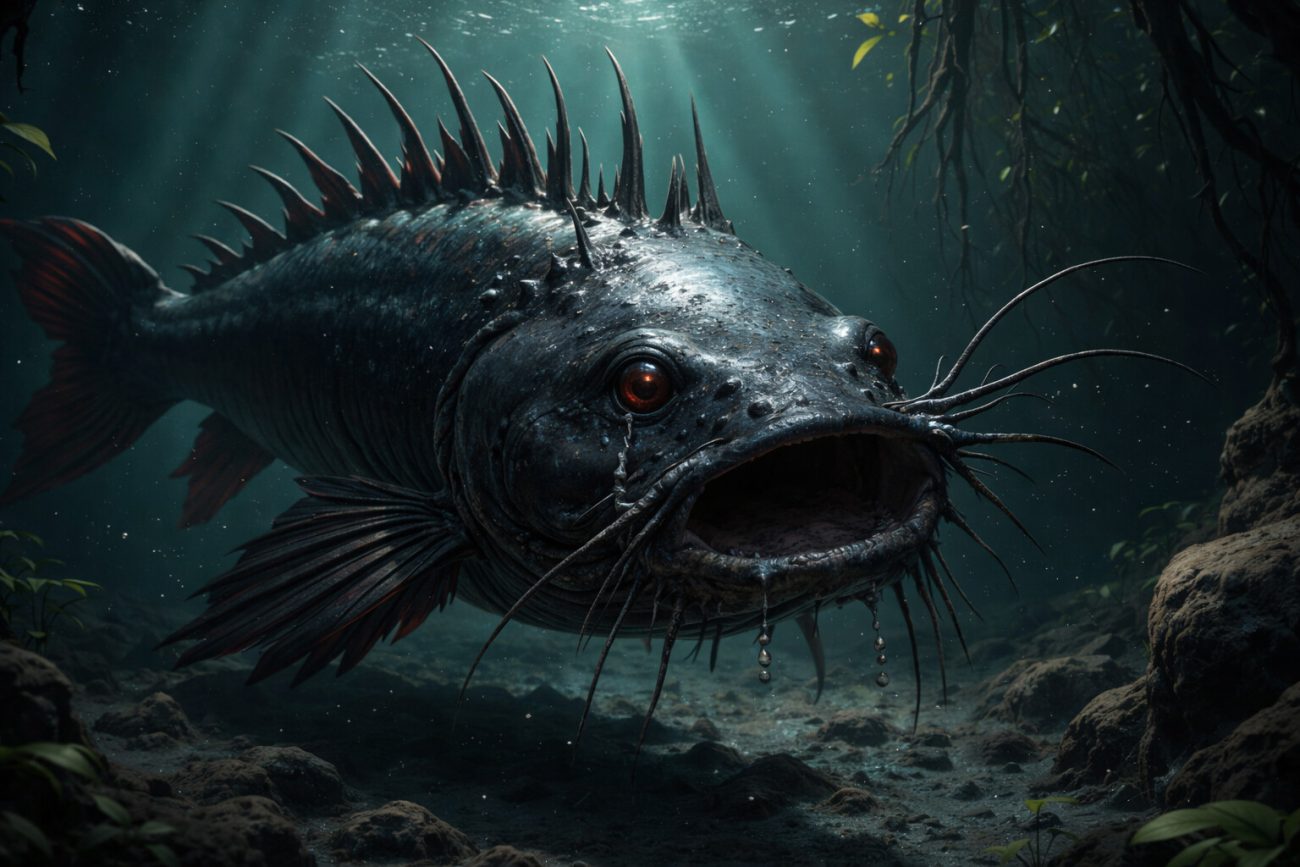
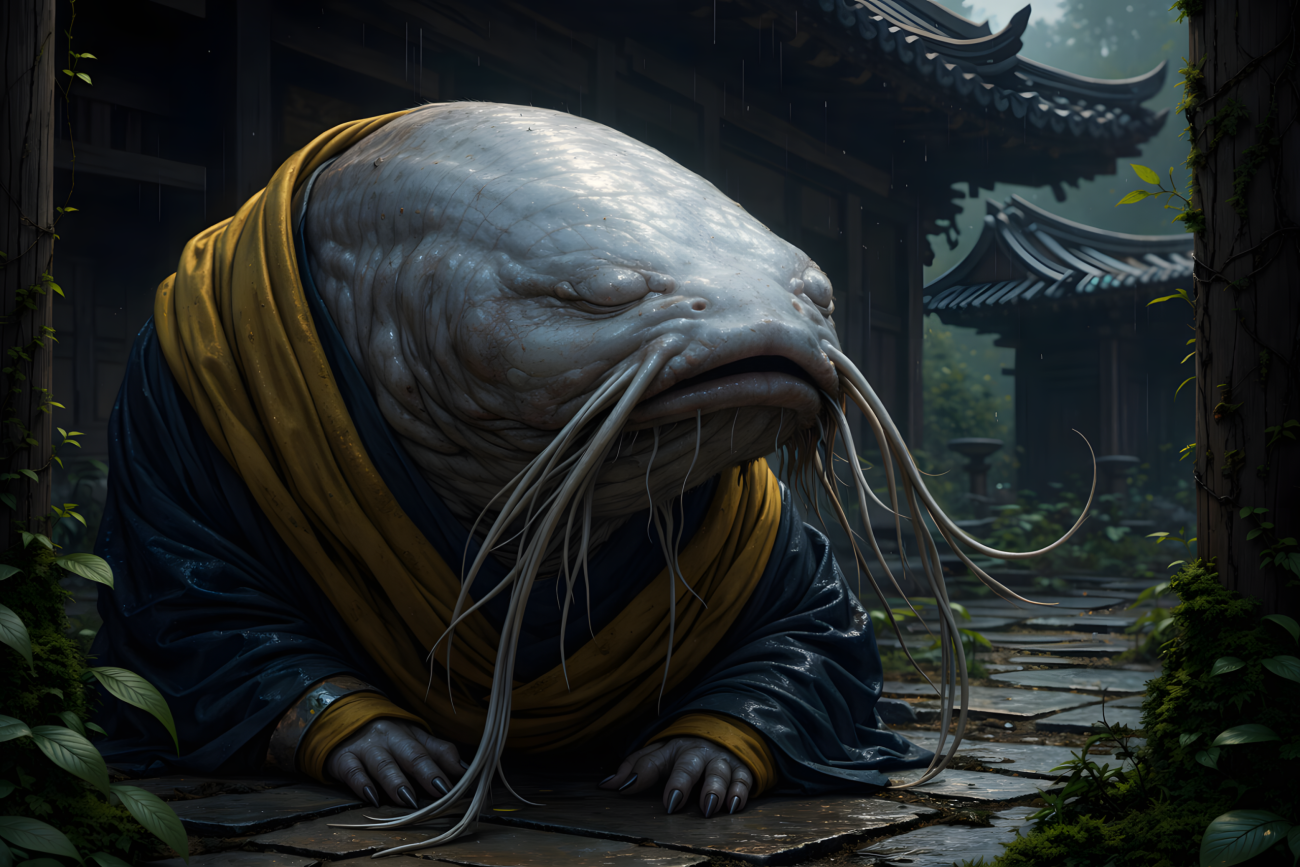
Those who saw his true form said his face was that of a giant catfish, the ancient creature that writhes beneath the land and shakes the world when angered. Thus the people believed the great earthquake was not chance, but revenge—carried out by Tenchishindousai, the living will of the trembling earth.


Gallery


Sources

TYZ-Yokai Blog contributors. (n.d.). 添地震大歳 (Tenchishindōsai). In TYZ-Yokai Blog, from https://tyz-yokai.blog.jp/archives/1069000650.html


Interpretive Lenses

Religious Readings
  • Christian Ascetic Deep Dive
Philosophical Readings
  • Nietzschean Deep Dive
Psychological Readings
  • Jungian Deep Dive
Esoteric Deep Dive
  • Hermetic Deep Dive
Political / Social Readings
  • Marxist Deep Dive
Other
  • How to Invite The Tenchishindousai

Furukawa Namazu

Tradition / Region: Japanese Mythology
Alternate Names: Furukawa Catfish
Category: Yōkai, Well dweller, Fish, Catfish


The Myth

In the Furukawa River area of Iguchi, there were many ancient wells whose origins were long forgotten. Each of these wells was said to be home to a great catfish, known as the master of the well.

One day, the young men of the village gathered together and spoke of a plan to catch these catfish. Among them sat a single young man no one recognized, who listened quietly as they talked.

That night, carrying torches, the young men went to the old wells to carry out their plan. Yet when they arrived, something was wrong. Though every well was known to have its master, not a single catfish could be found.

As they searched in confusion, one young man leaned over a large old well. Suddenly, he screamed. Startled, the others rushed to look inside, and there they saw many masters of the wells gathered together in one place.

The strangers’ secret had been revealed. One of the catfish had disguised itself as a human, slipped into the village, and overheard their discussion. The masters of the Furukawa wells had assembled to speak of the danger.

From that time on, it is said that the people of this region never again tried to catch catfish from wells.


Gallery


Sources

TYZ-Yokai Blog contributors. (n.d.). 一つ目小僧 (Hitotsume-kozo). In TYZ-Yokai Blog, from https://tyz-yokai.blog.jp/archives/1010655102.html


Interpretive Lenses

Religious Readings
  • Christian Ascetic Deep Dive
Philosophical Readings
  • Nietzschean Deep Dive
Psychological Readings
  • Jungian Deep Dive
Esoteric Deep Dive
  • Hermetic Deep Dive
Political / Social Readings
  • Marxist Deep Dive
Other
  • How to Invite The Furukawa Namazu

Pairio

Tradition / Region: Papua New Guinea Mythology
Alternate Names:
Category: Fish, Catfish


The Myth

On the reef of Kubani-kikava there lives a cat-fish called Pairio, feared by all who travel those waters. No canoe dares to pass close to her home, for Pairio destroys vessels by thrusting up her back, which is lined with sharp spines. At times a single spine is seen breaking the surface of the sea ahead of a canoe, a warning that forces the crew to turn away at once. At other times she swims behind a vessel, one spine aimed like a weapon, and the paddlers must flee with all their strength to escape destruction.

Pairio was not always a fish. In the beginning she was a malignant female being, akin to other dangerous spirits of the land. One day she was pursued by a great cloud of butterflies. They swarmed over her and settled upon her body until she was completely covered, their wings beating and clinging so tightly that she could not free herself.

To escape them, Pairio fled into the sea. The butterflies followed and were soaked by the water. Their wings hardened, their bodies changed, and spines rose along their backs. In that moment they were transformed into stone-fish and cat-fish, bright and richly colored, just as the butterflies had been.

Pairio herself remained in the reef, now fully a creature of the sea, armed with spines and power. From that time on, the waters of Kubani-kikava became dangerous to all who ventured too near, and the presence of strange, spined fish in the reef was remembered as the legacy of butterflies that once chased a spirit into the ocean.


Gallery


Sources

Landtman, G. (1970). The Kiwai Papuans of British New Guinea: A nature-born instance of Rousseau’s ideal community.


Interpretive Lenses

Religious Readings
  • Christian Ascetic Deep Dive
Philosophical Readings
  • Nietzschean Deep Dive
Psychological Readings
  • Jungian Deep Dive
Esoteric Deep Dive
  • Hermetic Deep Dive
Political / Social Readings
  • Marxist Deep Dive
Other
  • How to Invite The Pairio

Uso no Seire

Tradition / Region: Japanese Mythology
Alternate Names:
Category: Yōkai, Fish, Monk, Catfish


The Myth

Uso no Seirei is a yōkai depicted in the Bakemono Emaki (Monster Picture Scroll) preserved in the Kawasaki City Museum.

It appears in the form of a bald monk-like figure. Its face has no eyes, no nose, and no mouth. From where its face should be, long whiskers grow, resembling those of a catfish. The creature wears a kimono patterned with images believed to represent the uso, the bullfinch.

The spirit stands silently, without expression or speech. Its lack of facial features gives it an unsettling presence, as though it exists without identity or emotion. The bullfinch pattern upon its robes marks its nature, binding it to the idea of the uso itself.

Uso no Seirei does not act violently, nor does it chase or attack. It simply appears, featureless and mute, a quiet and uncanny figure among the monsters of the scroll.


Gallery


Sources

Tyz-Yokai Blog contributors. (n.d.). [Title of entry]. In TYZ-Yokai Blog, from https://tyz-yokai.blog.jp/archives/1010653494.html


Interpretive Lenses

Religious Readings
  • Christian Ascetic Deep Dive
Philosophical Readings
  • Nietzschean Deep Dive
Psychological Readings
  • Jungian Deep Dive
Esoteric Deep Dive
  • Hermetic Deep Dive
Political / Social Readings
  • Marxist Deep Dive
Other
  • How to Invite The Uso no Seire