Tradition: Peruvian Mythology, Bolivian Mythology
Alternative Names: Muqui, Mooqui, Chinchiliku, Anchanchu, Janchanchu, Jusshi
Category: Goblin
The Myth
The Muki is a goblin-like creature from the mining traditions of the Central Andes, particularly Peru and Bolivia, with related beliefs found in Ecuador and Colombia. Its name is associated in Quechua with both asphyxia and a goblin that inhabits caves. The Muki lives underground, especially within mines, where miners encounter it amid the darkness and dangers of their work. Despite regional differences in its name and appearance, stories of the Muki are widespread throughout Peru, from the southern highlands of Puno to the northern region of Cajamarca.
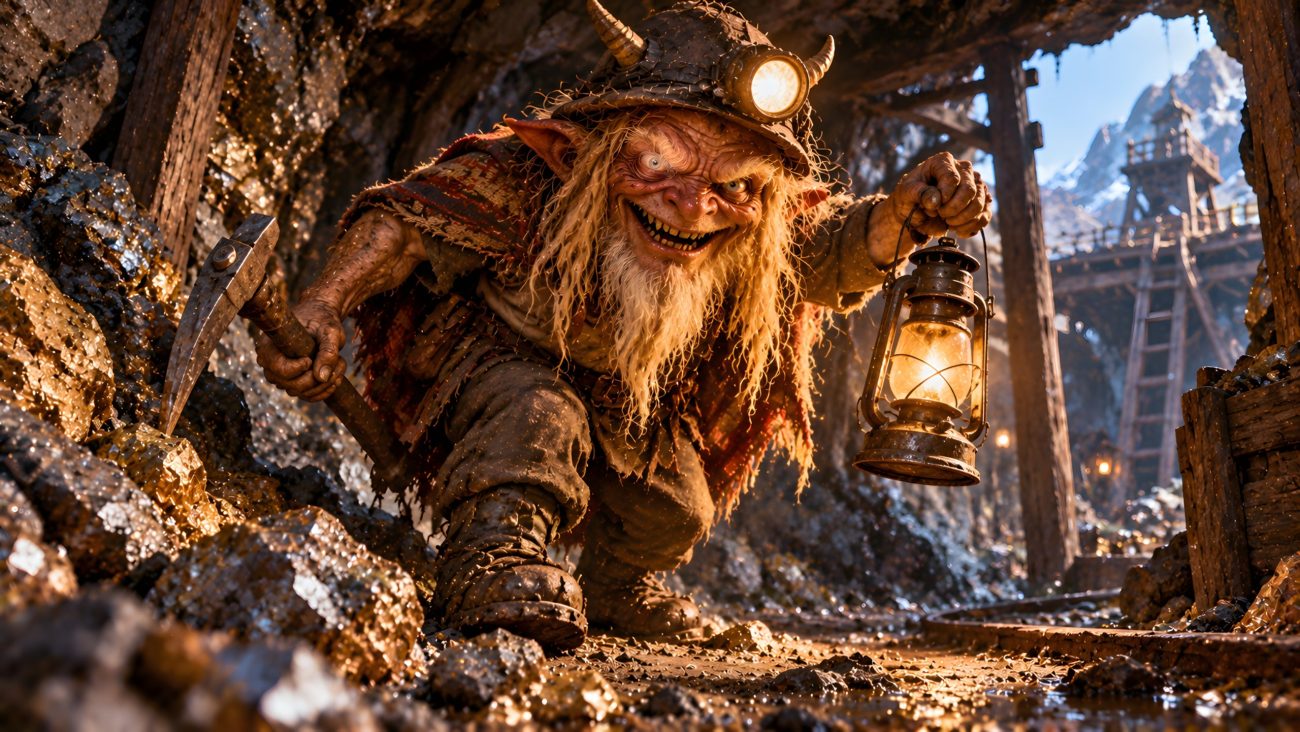
The Muki is usually described as a dwarf-like being no taller than two feet, with a stocky body and a head that appears to sit directly on its torso without a neck. In traditions from Cerro de Pasco, it has pale skin, a reddish, hairy face, long bright-blond hair, and a long white beard. Its deep, husky voice contrasts with its small stature, while its eyes reflect light like polished metal. Some accounts give it two small, shining horns that it uses to break rocks or indicate mineral veins. It may also have pointed ears and unusually large feet, causing it to walk with a waddling gait.
The Muki’s clothing often resembles that of a miner. It may wear a helmet, work clothes, and studded boots, carrying a lantern or flashlight. Other descriptions portray it in green clothing, a fine vicuña cape, or a miner’s waterproof outfit. Its appearance changes with the times: older accounts describe it wearing a vicuña poncho and carrying a gas lantern, while more recent depictions give it modern mining equipment and a battery-powered flashlight. Some traditions say it can transform into animals or take the form of a blond, light-skinned man to deceive miners. Different mining communities recognize their own local varieties of Muki, associated with particular mines and districts across the Andes.
Although the Muki can frighten or attack people, it is not always hostile. It sometimes warns favored miners of danger by whistling loudly and can influence the mineral veins underground, making them appear or disappear, or changing the hardness of the ore. It may even help with mining work or enter into agreements with individual miners. The Muki generally favors discreet, honest people who keep their promises and do not reveal their dealings with it. In return for its assistance, it may ask for coca leaves, alcohol, or companionship. Such agreements are dangerous, however, because miners may fail to fulfill their promises, provoking the Muki to take their lives.
Other stories portray the Muki as a threat to children, particularly those who have not been baptized. In some southern Peruvian traditions, unbaptized children may themselves become Mukis, while other accounts describe the creatures kidnapping children and keeping them until they transform into goblins. These beliefs reflect the blending of older Andean ideas about underground spirits with Christian concepts of baptism and spiritual protection. The Muki is associated with the Ukhu Pacha, the Andean world below, and helps explain the mysterious events, dangers, and uncertainties encountered in the mines. It may live alone or in groups, but is generally said to prefer solitude in an underground world where time does not pass and the creatures do not age.
Sources
“Muki (mythology).” Wikipedia: The Free Encyclopedia. Wikimedia Foundation. Accessed October 17, 2026. https://en.wikipedia.org/wiki/Muki_(mythology)