Tradition: Japanese Mythology
Alternative Names: 骨傘, ほねからかさ, Skeletal Umbrella
Category: Object
The Myth
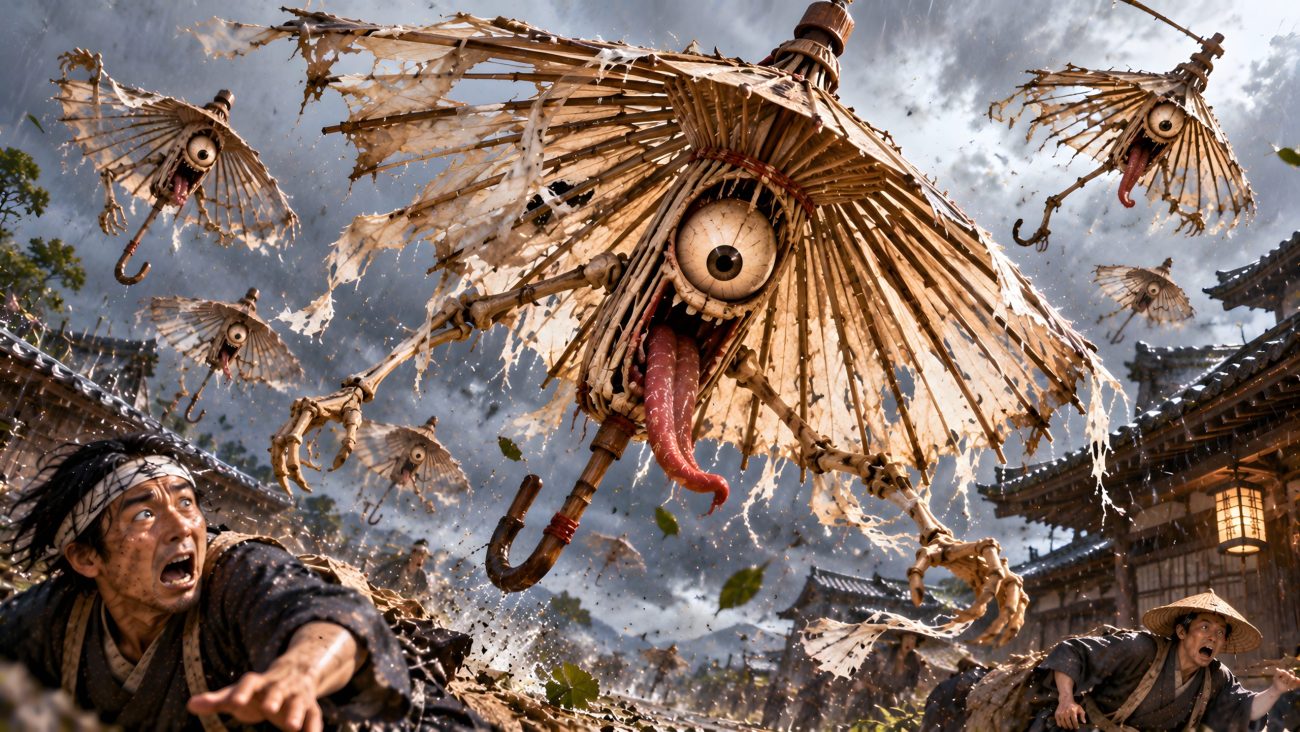
Hone Karakasa are supernatural umbrellas belonging to the Japanese tradition of tsukumogami, in which old objects acquire a life of their own. They originate from tattered and torn Chinese-style paper umbrellas whose coverings have fallen away, leaving their exposed wooden ribs resembling the bones of a fish. This skeletal appearance gives the creature its name, with hone meaning “bone.”
Hone Karakasa come to life on wet, windy days, when they leap into the air and dance across the sky like wild birds. Their sudden appearance is regarded as a sign that bad weather is approaching. Although they have no need to hunt or feed, their lively movements make them conspicuous supernatural inhabitants of stormy skies.
Hone Karakasa are closely related to the better-known Karakasa Kozō, another umbrella yokai. Both creatures reflect the Japanese belief that old household objects can develop supernatural life, transforming discarded umbrellas into strange beings associated with the wind and rain.
Sources
“Hone karakasa.” Yokai.com. https://yokai.com/honekarakasa/