Grääggi

Tradition: Swiss Mythology
Alternative Names: Gräaggi, Bachgschrei, Bachgrääggi, Gwääggi, Borzi, Wüetihöö
Category: Ghost


The Myth

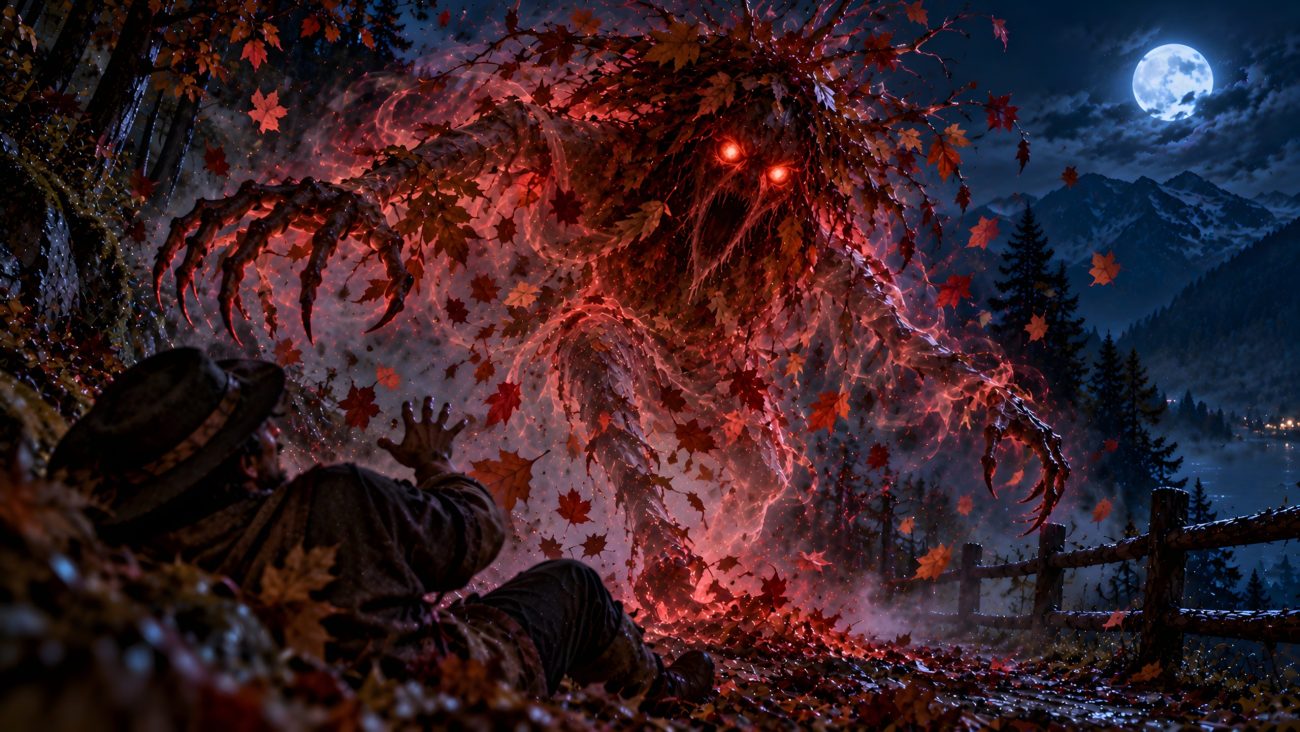
The Grääggi is a frightening nocturnal spirit that appears in many forms, including a stuffed sack of leaves, a crate, or an animal. It haunts lonely roads, wooded ravines, forest clearings, and remote mountain paths. Those who encounter it at night rarely see its shape clearly, sometimes glimpsing only two eyes glowing like burning embers in the darkness. If disturbed or teased, the Grääggi erupts into a terrifying racket of clattering, rattling, and shrieking that fills its surroundings with fear. In different parts of Switzerland, it is known by several names: Bachgschrei near Ragaz and Pfäfers, where it frequents the Fluppabach stream; Bachgrääggi in Vilters; Gwääggi or Borzi around Lake Walen; and Wüetihöö in the Rhine Valley.

One night, a shoemaker returning home from a gathering encountered what appeared to be a large cat blocking his path in the woods between Valmajus and the Rotzheldj Gorge. Curious, he approached and nudged the animal with his foot. The supposed cat suddenly tumbled down through the forest with a tremendous roar and crash, as though the bushes and trees were being torn from the ground. As it moved, it alternated between crying like a child, squealing like a sow, and bursting into mocking laughter. The shoemaker was so terrified that his hair stood on end, and he remained in bed for several days afterward.

Another encounter took place when a gamekeeper was waiting for foxes near the vineyards of Valmajus. From the wooded slope opposite him, he heard a noise like someone dragging and raking wood downhill. Each time the sound seemed to reach the meadow below, it began again higher up the slope. Believing that a gigantic figure was responsible, the gamekeeper eventually fired at it. An exceptionally large bird rose from the spot and flew away toward Plonserfeld, bringing the strange disturbance to an end. In another tale, a mountain dweller called out to a nearby Grääggi, insulting it as an unbaptized creature and ordering it to leave. The spirit answered that it was better baptized than the man himself and identified itself as Matlin, or Magdalena.

The Grääggi is sometimes compared to the Wild Huntsman and the Swiss Türst, other frightening figures associated with the night and wild places. Some people explain its appearances as the work of a great owl hunting smaller animals, but the Grääggi remains a mysterious presence in local tales. In the lonely mountains, strange noises and indistinct shapes can transform an ordinary encounter into something terrifying, and the spirit embodies the fear inspired by the darkness of remote forests and deserted paths.


Sources

“Gräaeggi.” SAGEN.at – Traditionelle Sagen aus der Schweiz (St. Gallen). Reproduced by SAGEN.at. https://www.sagen.at/texte/sagen/schweiz/st_gallen/graeaeggi.html


Disturbed Bliss

Tradition: Swiss Mythology
Alternative Names: The Forgiveness of the Dead, The Angels by the Pond
Category: Ghost


The Myth

In the Valais village of Ernen, a seven-year-old boy named Joseli lay dying. As his family gathered around him, his parents, siblings, and grandfather asked him to forgive them for any wrongs they had done to him during his short life. Joseli agreed to forgive everyone except his grandfather, who had once refused to give him bread when he was hungry. His family almost laughed at this complaint, remembering how fond the boy had been of bread, but soon Joseli died. They mourned him deeply while taking comfort in the belief that he now enjoyed eternal happiness among the angels in heaven.

That night, the old grandfather lay awake and heard Joseli’s voice calling to him. When the voice sounded for the third time, he finally answered, asking whether his grandson had not yet reached heaven. Joseli explained that he had been unable to enter because he had refused to forgive his grandfather for withholding the bread. The old man immediately declared that he forgave him and wished him to go straight to heaven. The room fell silent, but then beautiful music filled the air, accompanied by the joyful cries of Joseli as he ascended into heaven. The grandfather understood that even a small grievance could disturb a soul’s eternal peace until forgiveness was granted.

In Reiden, in the canton of Lucerne, another family suffered the loss of a young child. One day, the father was working at his oil mill while keeping an eye on his little son. Distracted by his work, he failed to notice the boy wandering toward a nearby pond. The child began throwing stones into the water, but when he tried to pick flowers along the bank, he fell in and drowned. When the father discovered what had happened, he carried the dead child home. The mother was devastated and could find no comfort, even when her husband reminded her that their son was now in heaven, where life was far better than on earth.

One night, as the grieving mother lay awake, she heard wonderful music coming from outside. Looking through her window, she saw the area around the pond illuminated as brightly as day. A great company of angels stood there, many playing golden harps and rejoicing in heavenly bliss. Among them stood her own son, dressed in a little white burial garment, but unlike the joyful angels, he appeared sorrowful and seemed unable to hear their music. When she called out and asked why he was sad despite living in eternal happiness, the boy answered that he could not be joyful while his mother continued to weep because he had entered heaven. His words pierced her heart. She dried her tears and resolved to remember him lovingly while rejoicing in his heavenly happiness. When she looked again, the angels rose toward heaven with their golden harps, and she saw her son ascending among them in a snow-white garment, now filled with joy. The darkness returned, but distant heavenly music continued to comfort her. From that night onward, the mother found peace, understanding that love for the dead need not mean endless sorrow.


Sources

“Die gestörte Seligkeit.” SAGEN.at – Traditionelle Sagen aus der Schweiz. Reproduced by SAGEN.at. https://www.sagen.at/texte/sagen/schweiz/allgemein/gestoerte_seeligkeit.html


Hüfifirn Soul

Tradition: Swiss Mythology
Alternative Names: The Penitent Women of Hüfifirn
Category: Ghost


The Myth

On the Hüfifirn glacier in the Maderanertal valley, a hunter encountered two mysterious women trapped in the ice, each enduring a different stage of supernatural punishment. The first woman was frozen up to her neck in the glacier, yet she sang beautifully, seemingly filled with joy despite her terrible confinement. Further along the ice, the hunter discovered another woman whose feet were frozen in place. Unlike the first, she wept bitterly, overwhelmed by her suffering.

Puzzled by their contrasting reactions, the hunter gathered his courage and asked the weeping woman why she mourned while the other woman, trapped almost entirely beneath the ice, sang so merrily. The second woman explained that their suffering marked different stages of their penance. Her own torment was only beginning, and she still had to sink completely into the ice before she could be redeemed. The other woman, by contrast, was approaching the end of her punishment and would soon be released.

The two women were therefore condemned to endure the glacier’s icy embrace until their respective periods of penance were complete. Their strange encounter revealed that suffering could be a sign of approaching redemption, and that even the most terrible punishment might eventually come to an end.


Sources

“Die büßenden Seelen.” SAGEN.at – Traditionelle Sagen aus der Schweiz (Uri). Reproduced by SAGEN.at. https://www.sagen.at/texte/sagen/schweiz/uri/diebuessendenseelen.html


Gescheneralp Ghost

Tradition: Swiss Mythology
Alternative Names: Martin’s Tschägg
Category: Ghost


The Myth

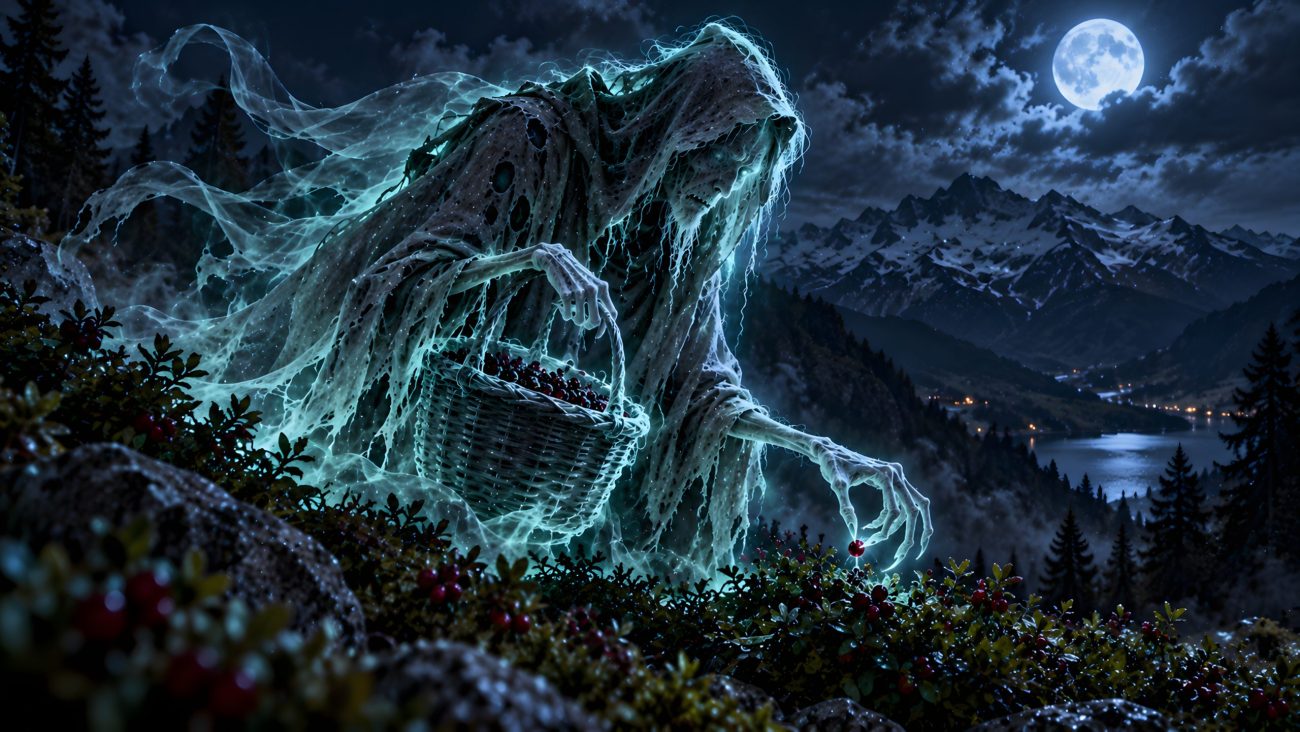
In the meadows of Gescheneralp, a cow named Tschägg, belonging to a man named Martin, died through the fault of its cowherd. The cowherd himself eventually died, but even after death, his spirit could find no peace. At certain times, especially on the evenings before major religious holidays, his ghost appeared high upon a rock overlooking the meadows. Crouching on the ground as though gathering berries, he would repeatedly call down the same words: “Martin’s Tschägg is dead.”

The ghost continued this strange ritual until Martin himself happened to pass through the area. Seeing the mysterious figure gathering berries on the rock, Martin heard him repeat the familiar words about his dead cow. Instead of expressing anger or blaming the deceased cowherd, Martin simply called back, “Yes, I know; it’s a real gift.”

With those words, the ghost was finally released from his restless existence. From that moment onward, he was never seen again. Martin’s forgiving response had redeemed the dead cowherd, allowing his spirit to find peace at last.


Sources

“Die Vergebung.” SAGEN.at – Traditionelle Sagen aus der Schweiz (Uri). Reproduced by SAGEN.at. https://www.sagen.at/texte/sagen/schweiz/uri/dievergebung.html


Rhine Falls Fisherman

Tradition: Swiss Mythology
Alternative Names: The Ghostly Boatman of the Rhine Falls
Category: Ghost


The Myth

A young fisherman once lived near Schaffhausen, the beautiful city beside the Rhine Falls. One evening, after a successful day of fishing, he rowed out into the middle of the river with his fishbox full. As twilight settled over the water, mist maidens drifted among the willows and alders along the banks. The fisherman lay down in his boat, allowing the gentle current to carry him home toward his hut above the great waterfall. Before long, he fell asleep.

His dreams began pleasantly, filled with thoughts of his beloved, but soon changed into a nightmare of roaring thunder, violent winds, and torrential rain. Suddenly, he awoke in terror and realized that his boat had been seized by the mighty current of the Rhine Falls. He cried out to God for help as the raging water dragged him toward the depths. The boat tossed wildly amid the spray and thunder, and he eventually lost consciousness. When he awoke, he found himself on the riverbank, his boat miraculously thrown ashore by the waves. Shaken but alive, he hurried home. The next day, he told the other fishermen about his terrifying journey. At first, they refused to believe him, but when he drunkenly boasted that he could survive the falls a second time, a sinister stranger sitting nearby offered him one hundred guilders if he dared to try.

The young fisherman accepted the challenge, dismissing an old man’s warning that he should thank God for his miraculous escape. He believed that what he had survived in his sleep would be easy to accomplish while awake, when he could control the boat himself. The fishermen followed him to the riverbank, where he climbed into his little boat and rowed toward the roaring falls. At first, he tried to propel the boat faster, but soon the current seized it and carried it forward with uncontrollable speed. He rushed to the steering oar, struggling desperately to turn the boat away from the waterfall, but the steering failed him. The raging water swept away his oars, and the great Rhine Rock rose before him in the middle of the river. With a terrible cry, the boat plunged into the swirling waters and disappeared over the falls.

The fishermen searched the foaming river, but neither the young man nor his boat ever emerged. When they turned to confront the sinister stranger who had encouraged the reckless voyage, he had vanished. They searched the surrounding land, but nobody else claimed ever to have seen him. Crossing themselves, the fishermen suspected that the stranger had been no ordinary man, but an evil supernatural being who had lured the young fisherman to his death. Since that time, on moonlit nights, people have sometimes seen a misty little boat carrying a phantom boatman glide between the two rocky reefs of the Rhine Falls before vanishing into the milky-white torrents below.


Sources

“Der Fischer am Rheinfall.” SAGEN.at – Traditionelle Sagen aus der Schweiz. Reproduced by SAGEN.at. https://www.sagen.at/texte/sagen/schweiz/allgemein/fischer_rheinfall.html


Schwyz Ghost

Tradition: Swiss Mythology
Alternative Names: The Liberation of Uri, Schwyz, and Unterwalden
Category: Ghost


The Myth

When the bailiffs of Uri, Schwyz, and Unterwalden learned that William Tell had killed Governor Gessler, they feared the people they had long oppressed. Rather than ruling more justly, they tightened their grip on the land, believing the rebellious shepherds could only be subdued through greater cruelty. But the time of the tyrants was coming to an end.

On New Year’s Day in 1308, the people of Schwyz rose beneath their blood-red banner, led by Werner Stauffacher and other leaders. Crossing the frozen waters of Lake Lauerz, they attacked Schwanau Castle. Its bailiff, a relative of Gessler, tried to resist but was overcome. The people seized him and threw him from the same window through which Gemma von Arth had once plunged. The ice broke beneath him, and he disappeared into the green waters. Afterwards, his ghost was said to haunt the castle walls, pursued by a white-clad maiden carrying a burning torch. Other strongholds also fell, including the castles at Küssnacht and Brunnen, which were destroyed. At Perfiden, a faithful servant managed to rescue his master from a burning castle by hiding him in a carrying basket.

The people of Uri also rose against their oppressors. William Tell, long hunted by the bailiffs, suddenly appeared in the main square of Altdorf with his crossbow. Beside him stood the bearer of Uri’s horn, who sounded the call to arms. The people gathered, and the unfinished fortress of Zwing-Uri was soon captured and razed to the ground.

In Unterwalden, however, the people faced a more difficult challenge. Bailiff Landenberg ruled from Sarnen Castle and was too powerful to defeat through a direct assault. The peasants of Obwalden therefore devised a plan. Each New Year’s Day, they were required to bring gifts to the bailiff. Twenty men approached the castle carrying calves, goats, sheep, game, and cheeses, concealing spears beneath their clothing. Landenberg, pleased with the offerings, allowed them to enter the castle and wait for him while he attended Mass. Once inside, the men secured the gate, attached spearheads to their walking sticks, and sounded the horn known as the Cow of Unterwalden. Thirty more men armed with halberds and clubs emerged from a nearby alder grove and joined the attack. The guards and servants were quickly overcome.

When Landenberg left the church in Sarnen, he saw flames rising from his castle. He hurried back but was captured by the villagers. Although they initially wanted to kill him, he begged for his life and swore never to return to the land. The peasants spared him, and he fled on his raven-black horse so hastily that the women later claimed he had ridden through the air on a four-legged devil. His castle burned to the ground.

The people of Unterwalden also captured Rotzberg Castle through cunning. A beautiful maidservant living there was in love with a young man who had sworn allegiance to the confederates at the Rütli meadow. They had arranged a secret signal: whenever the evening star appeared above the mountains, she would lower a rope ladder from her high window so that he could climb up to visit her. On the night of the uprising, he arrived with twenty brave companions hidden nearby. When the ladder descended, he climbed up first, pretending to offer his beloved New Year’s greetings. His companions followed, and before the maid could call for help, all twenty-one men had entered her chamber. They bound her and the castle’s inhabitants, including the under-bailiff, and soon flames engulfed the fortress. Rotzberg Castle collapsed and was destroyed.

That night, great bonfires blazed across the mountains of all three countries, Uri, Schwyz, and Unterwalden. Their red flames announced the return of freedom and the downfall of the hated bailiffs. The legend connects these victories with the Swiss Confederates’ oath at the Rütli meadow and explains the tradition of lighting bonfires throughout Switzerland on the night of 1 August. The fires commemorate the struggle for liberty, the courage of those who resisted tyranny, and the enduring spirit of the Swiss people.


Sources

“Die Befreiung der Länder.” SAGEN.at – Traditionelle Sagen aus der Schweiz. Reproduced by SAGEN.at. https://www.sagen.at/texte/sagen/schweiz/allgemein/befreiung_laender.html


Wuetihee

Tradition: Swiss Mythology
Alternative Names: Wütendes Heer
Category: Ghost


The Myth

The Wuetihee is a haunting spirit associated with a pond in a forest in the Swiss canton of St. Gallen. The pond lies high in the woods and feeds the stream that flows down toward the village. At night, people often hear a piercing, bone-chilling scream coming from the water.

The scream is said to belong to a woman who drowned her own child in the pond. Because of this terrible deed, she was unable to find peace in the grave. Her restless spirit remains bound to the place where the child died, and her horrifying cries disturb the silence of the forest at night.

The legend is also connected to the tradition of the Wütendes Heer, or Wild Hunt, a spectral host that was once associated with the god Wodan. As belief in Wodan faded, stories of the Wild Hunt were sometimes given new and more tangible forms, such as haunting spirits tied to particular places and tragic events.


Sources

“Wuetihee.” SAGEN.at – Traditionelle Sagen aus der Schweiz (St. Gallen). Reproduced by SAGEN.at. https://www.sagen.at/texte/sagen/schweiz/st_gallen/wuetihee.html


Giant Toad of Zurich

Tradition: Swiss Mythology
Alternative Names: Charlemagne’s Giant Toad
Category: Frog


The Myth

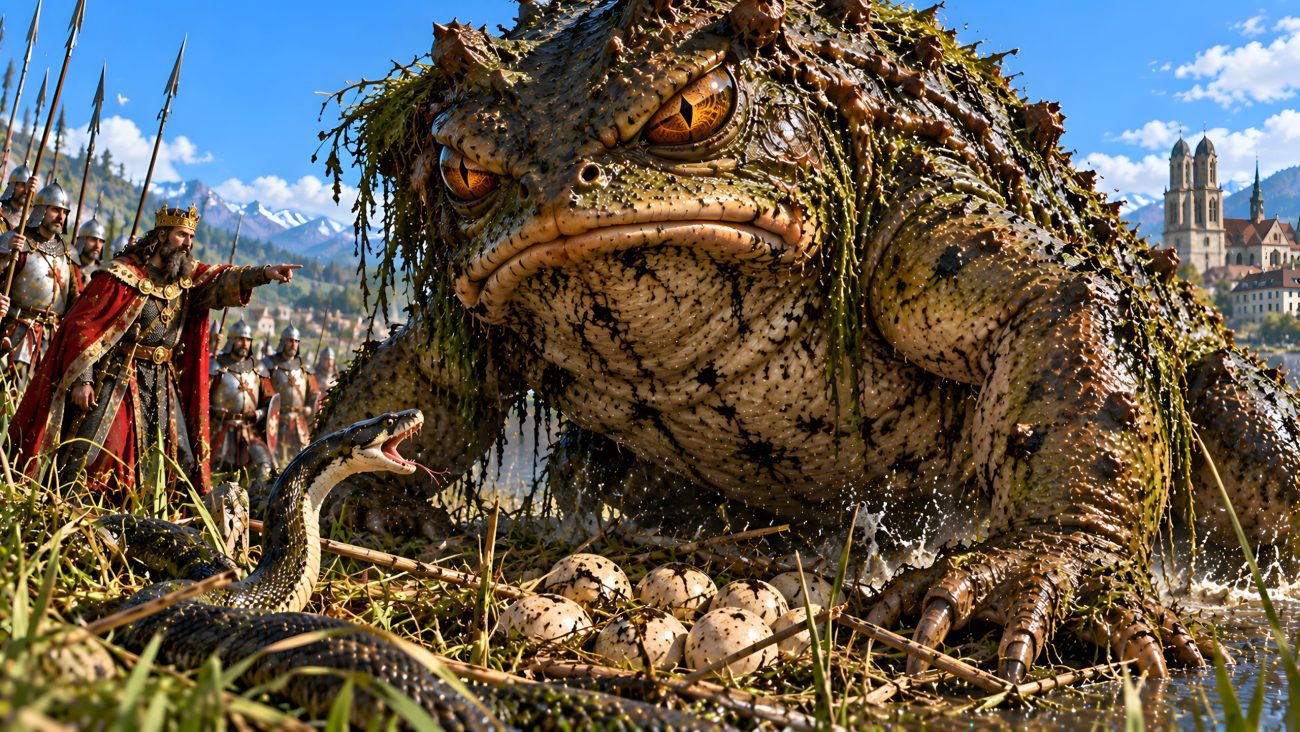
A gigantic, hideous toad once lived among the reeds at the outflow of Lake Zurich, where the Limmat River begins. The creature had settled directly upon a snake’s eggs, threatening the offspring of a serpent that would eventually seek justice from Emperor Charlemagne. The toad was so enormous and dreadful that its presence astonished the emperor when the snake led him to its nest.

The strange events began when a snake repeatedly rang a small bell attached to a pillar in Zurich, where anyone seeking justice could summon Charlemagne while he held court. At first, the emperor’s soldiers could find nobody ringing the bell. Eventually, one soldier discovered a snake coiled around the rope, pulling it to attract the emperor’s attention. Charlemagne approached the serpent, which bowed before him and led him to its nest among the reeds. There, the emperor discovered the enormous toad crouching upon the snake’s eggs.

Recognizing the creature as a threat to the snake’s offspring, Charlemagne ordered the toad removed and condemned it to death by burning. The snake’s appeal had thus been answered, and justice was carried out against the creature that had threatened its young. Some time later, the grateful serpent visited the emperor in his residence, climbed onto his table, and dropped a sparkling gemstone into his golden goblet before disappearing forever. Believing the event to be a sign from Heaven, Charlemagne ordered a church built over the place where he had discovered the snake’s nest. The church became known as the Water Church, while the emperor gave the precious gemstone to his wife, who wore it in a golden capsule over her heart for the rest of her life.


Sources

“Kaiser Karl und die Schlange.” SAGEN.at – Traditionelle Sagen aus der Schweiz. Reproduced by SAGEN.at. https://www.sagen.at/texte/sagen/schweiz/allgemein/kaiser_karl_schlange.html


Cursed Toads of Lasarraz

Tradition: Swiss Mythology
Alternative Names: The Knight of Lasarraz’s Toads
Category: Frog


The Myth

The Cursed Toads of Lasarraz are two hideous supernatural toads that cling to the face and back of a knight who commits a terrible crime against his elderly parents. The creatures possess gruesome, poisonous eyes and grip their victim so tightly that neither servants nor household attendants can tear them away. They first appear when the knight opens a magnificent venison pie beside his wife. Instead of the expected meal, two revolting toads leap from the pie and attach themselves firmly to his cheeks, drawing ever closer to his eyes as though intending to devour them.

The curse begins with the Knight of Lasarraz, a wealthy and courageous young nobleman who falls in love with the daughter of his overlord, the count. To win her hand, he promises to provide a castle and three hundred fine cows. His elderly parents willingly surrender their entire fortune to fulfil his wish, leaving themselves destitute. After the marriage, however, the knight’s wife treats the old couple cruelly, and the knight allows their suffering to continue. When winter brings bitter cold and hunger, his parents seek shelter at his magnificent palace. At his wife’s urging, he eventually casts them out into the freezing night, leaving them to wander without food or warmth.

The toads appear that very evening, as the knight enjoys a feast beside his wife. Horrified by the creatures clinging to his face, he summons servants and maids, but nobody can remove them. Realizing that his cruelty toward his parents has brought divine punishment upon him, he confesses his crime to the castle chaplain. The chaplain sends him to the bishop, who in turn directs him to the Pope in Rome. The Pope orders him to return home, find his parents, and seek their forgiveness, declaring that the shameful mark will disappear if they forgive him.

The knight searches for his parents day and night, but eventually discovers their bodies in a lonely hermitage in a snow-covered forest. They have already died from hunger and cold. Weeping, he throws himself upon them and begs for forgiveness. At once, the two toads leave his cheeks, but crawl onto his back and fasten themselves there instead. Since he found his parents too late to receive their living forgiveness, his guilt is only partially atoned for. For the next twenty years, he must carry the toads hidden beneath his clothing. His punishment continues through further family tragedy: his wife is killed by a snake, and his only son murders him out of greed for his inheritance. After the knight’s death, the son is torn apart by a bear, bringing the family line to a miserable end. In remembrance of the terrible events, a statue is erected in the castle chapel depicting the knight with two monstrous toads attached to his cheeks and back.


Sources

“Ritter Lasarraz.” SAGEN.at – Traditionelle Sagen aus der Schweiz. https://www.sagen.at/texte/sagen/schweiz/allgemein/ritter_lasarraz.html


Church Toad

Tradition: Swiss Mythology
Alternative Names: The Giant Toad Beneath the Church
Category: Frog


The Myth

A gigantic toad lies beneath a church in the canton of St. Gallen, Switzerland. It rests upon an unfathomably deep body of water hidden beneath the building. The creature remains concealed underground, its enormous body supporting a mysterious and fragile balance beneath the church.

According to the legend, the church will collapse if the giant toad ever turns over. As long as it remains still, the building stands above it, but a single movement could bring the entire structure crashing down. The tale connects the hidden creature’s movements with the sudden destruction of the church and offers a mythical explanation for the trembling of the earth.


Sources

“Die Kröte (Sargans).” SAGEN.at – Traditionelle Sagen aus der Schweiz (St. Gallen). https://www.sagen.at/texte/sagen/schweiz/st_gallen/kroete_sargans.html