Bucentaur

Tradition / Region: Spanish mythology
Alternate Names:
Category: Cow, Hybrid


The Myth

In the old tales, there is mention of a creature rarely seen and seldom challenged: the Bucentaur.

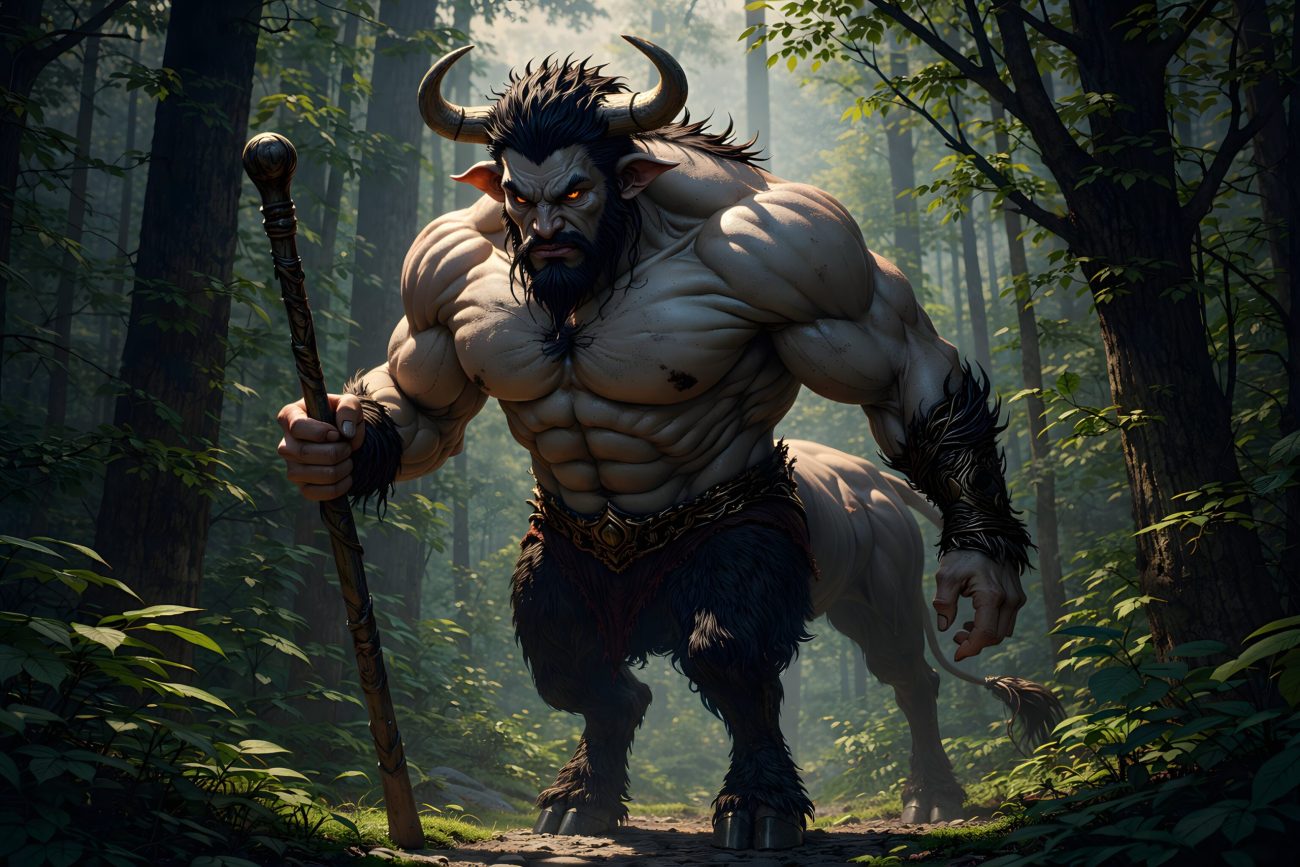
It bears the upper body of a man, broad-shouldered and upright, with human eyes that can glare with anger or dull with indifference. From the waist down, however, its body is that of a massive bull—thick-limbed, heavy, and powerful, with hooves that strike the ground like stone. In its arms lies great strength, and in its bovine form rests an immense weight that anchors it to the earth.

The Bucentaur is ill-tempered and easily provoked. When disturbed, it bellows and threatens, pawing the ground and raising its fists as if to crush whatever stands before it. Yet despite its fearsome appearance, it is slow. Its great body moves with difficulty, and its rage burns hotter than its ability to act upon it. Those who encounter it and keep their distance often find that escape is easy, for the Bucentaur cannot pursue for long.

It does not hunt, nor does it scheme. It lingers in lonely places, half man and half beast, caught between thought and instinct. It is said that its human half knows frustration, while its bull’s body binds it to brute force and inertia.

Thus the Bucentaur remains a creature of warning rather than conquest: powerful, dangerous, yet limited—an image of strength weighed down by its own nature, and of a mind trapped within the body of a beast.


Gallery


Sources

Bestiary. (n.d.). Букентавр — в европейском символизме чудовищная разновидность кентавра: получеловек, полубык. https://www.bestiary.us/bukentavr


Interpretive Lenses

Religious Readings
  • Christian Ascetic Deep Dive
Philosophical Readings
  • Nietzschean Deep Dive
Psychological Readings
  • Jungian Deep Dive
Esoteric Deep Dive
  • Hermetic Deep Dive
Political / Social Readings
  • Marxist Deep Dive
Other
  • How to Invite The Bucentaur

Aatxe

Tradition / Region: Basque mythology, Spanish Mythology, French Mythology
Alternate Names:
Category: Cow


The Myth

In the ancient Basque lands, justice was not written in books or spoken by judges. It lived in the land itself. It moved through mountains, valleys, and storms, watching quietly. One of its strongest forms was the Aatxe.

The Aatxe did not live among people. He dwelled deep within caves carved into the earth—dark places where the world opens inward. These caves were not empty hollows but living thresholds, places where the human world touched something far older. From there, the Aatxe kept watch, standing between humanity and the forces beneath the ground.

He did not emerge without reason.

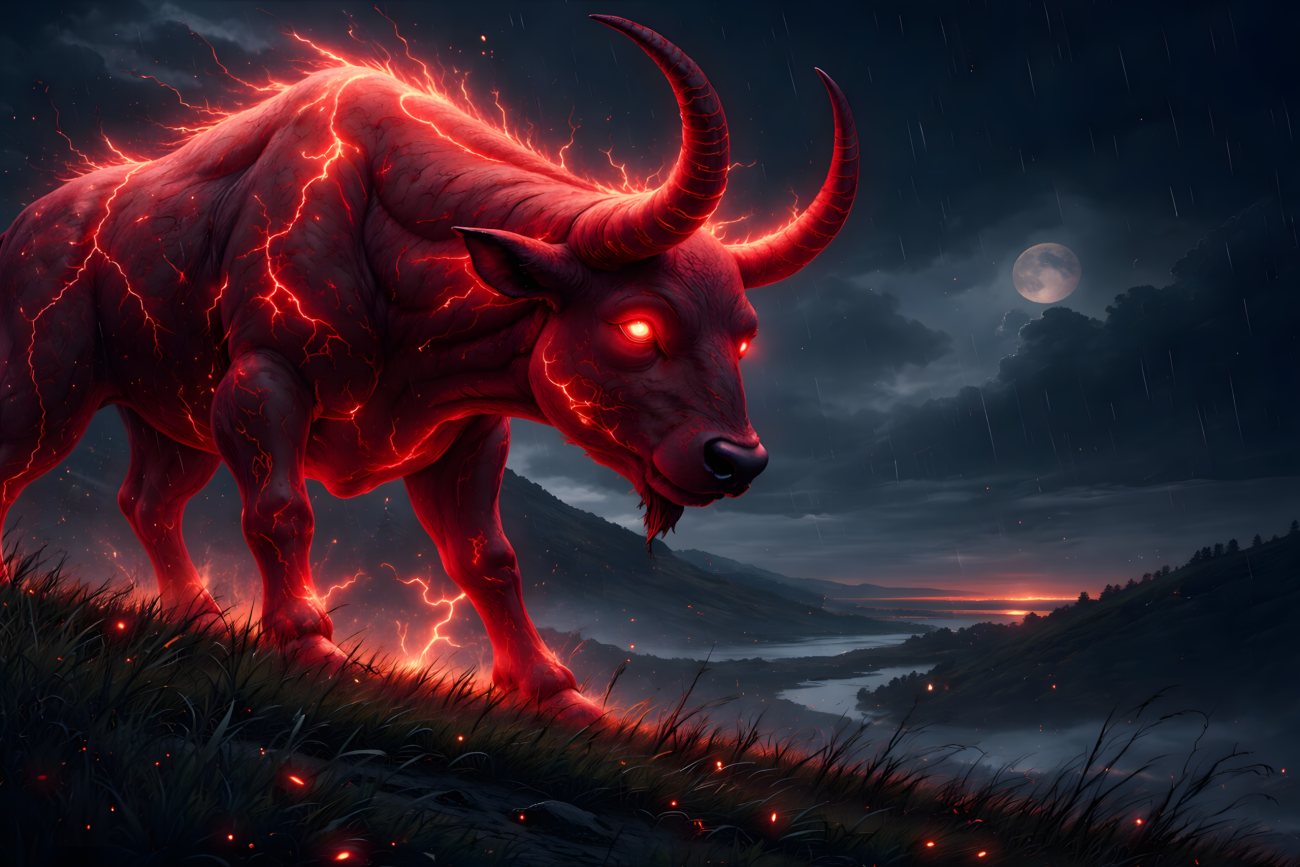
The Aatxe came forth only when rain fell. When storms covered the land, villages grew quiet and honest people stayed inside by their fires. Only those with secrets, ill intent, or guilt walked abroad in such weather. Rain stripped the world of witnesses and noise, leaving only the sound of water and footsteps. It was then, in the blurred paths and empty roads, that the Aatxe appeared.

Those who encountered him knew why he had come.

The Aatxe did not need to question or accuse. He did not bargain, hesitate, or explain. His presence alone was judgment. The guilty felt it immediately—an inescapable certainty that no excuse could undo what had already been done. Fear came not from violence, but from inevitability.

He was not an independent being, but a form taken by Mari, the great power of earth and storm. Through wind and rain, she shaped the conditions of justice, and through the Aatxe she made it visible. The storm was not a warning—it was the space in which judgment could occur.

Thus the people believed that morality was part of nature itself. To act wrongly was not merely to break a rule, but to step out of harmony with the world. And when that happened, the land would answer—quietly, patiently, and without mercy—through the coming of rain and the silent watch of the Aatxe.


Gallery


Sources

Bane, T. (2016). Encyclopedia of spirits and ghosts in world mythology (p. 13). McFarland.

Barandiaran Ayerbe, J. M. D. (n.d.). Aatxe. Auñamendi Eusko Entziklopedia. Retrieved, from https://aunamendi.eusko-ikaskuntza.eus/artikuluak/artikulua.php?id=eu&ar=5626

Julien, D. H. U. Y., and Jean-Loïc LE QUELLEC. “Les Ihizi: et si un mythe basque remontait à la préhistoire?.”

Rose, C. (1998). Spirits, Fairies, Leprechauns and Goblins. Norton.


Interpretive Lenses

Religious Readings
  • Christian Ascetic Deep Dive
Philosophical Readings
  • Nietzschean Deep Dive
Psychological Readings
  • Jungian Deep Dive
Esoteric Deep Dive
  • Hermetic Deep Dive
Political / Social Readings
  • Marxist Deep Dive
Other
  • How to Invite The Aatxe